Skip to content
Start My 3 Free Days $0 today · cancel anytime

3rd Grade KWL and KWHL Resources

11 3rd grade kwl and kwhl resources: 9 graphic organizers, 9 worksheets and 2 activities. How teachers use these

3rd Grade KWL and KWHL Resources

11 3rd grade kwl and kwhl resources: 9 graphic organizers, 9 worksheets and 2 activities. How teachers use these

Activity
Activity3rd GradeClass Critics Summarizing Activity

This class critics summarizing activity gives 3rd to 5th grade students seven organizers to summarize books, videos, and articles. Answer key included for the model and practice.

Worksheet
Worksheet3rd GradeKWL About a Topic Graphic Organizer Worksheet

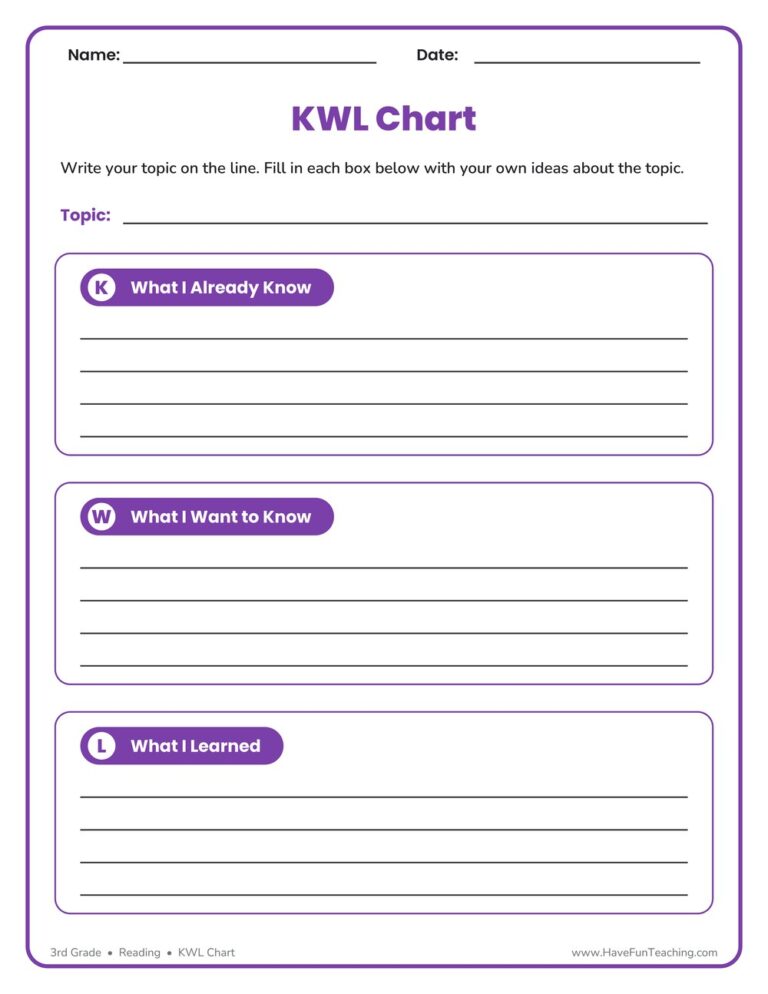
This KWL About a Topic Graphic Organizer Worksheet gives 3rd graders a roomy, full-width chart for recording what they know, what they want to know, and what they learned about any topic — a simple way to make thinking visible.

Worksheet
Worksheet3rd GradeKWHL Graphic Organizer

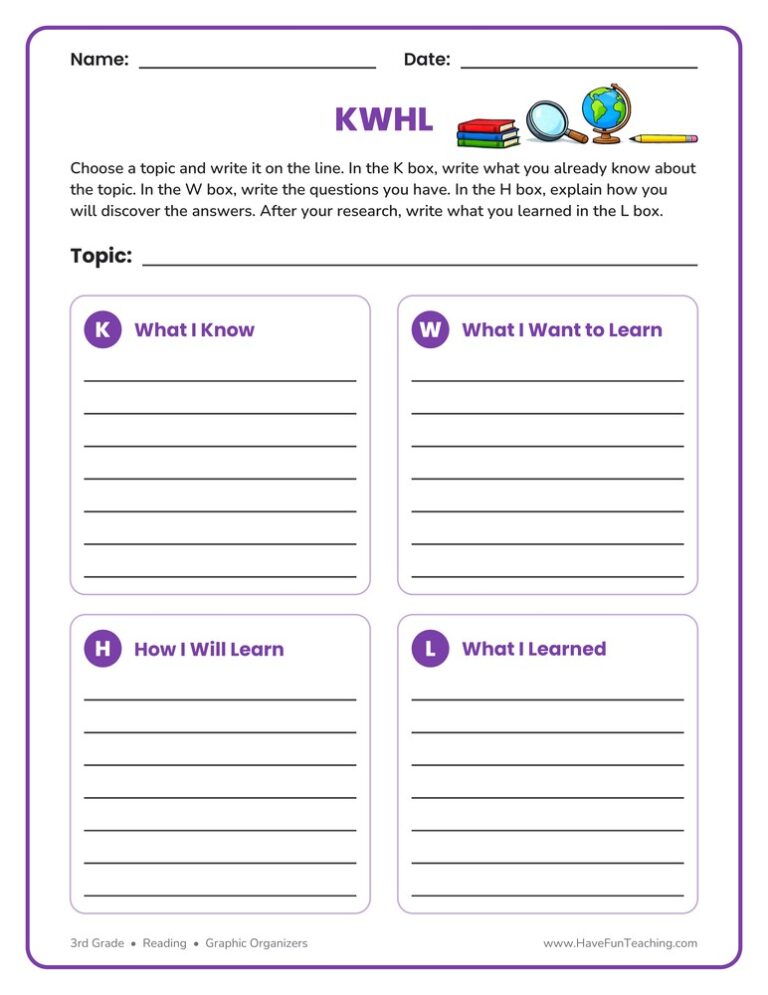
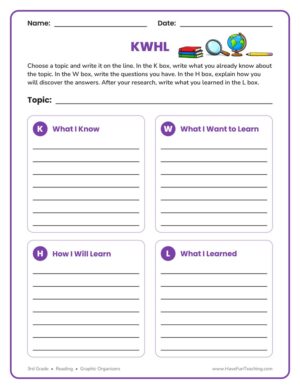
This KWHL graphic organizer helps 3rd grade students plan research on any topic by recording what they know, what they want to learn, how they will learn it, and what they discover.

Worksheet
Worksheet3rd GradeButterflies KWL Graphic Organizer

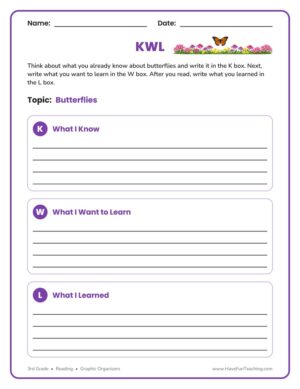
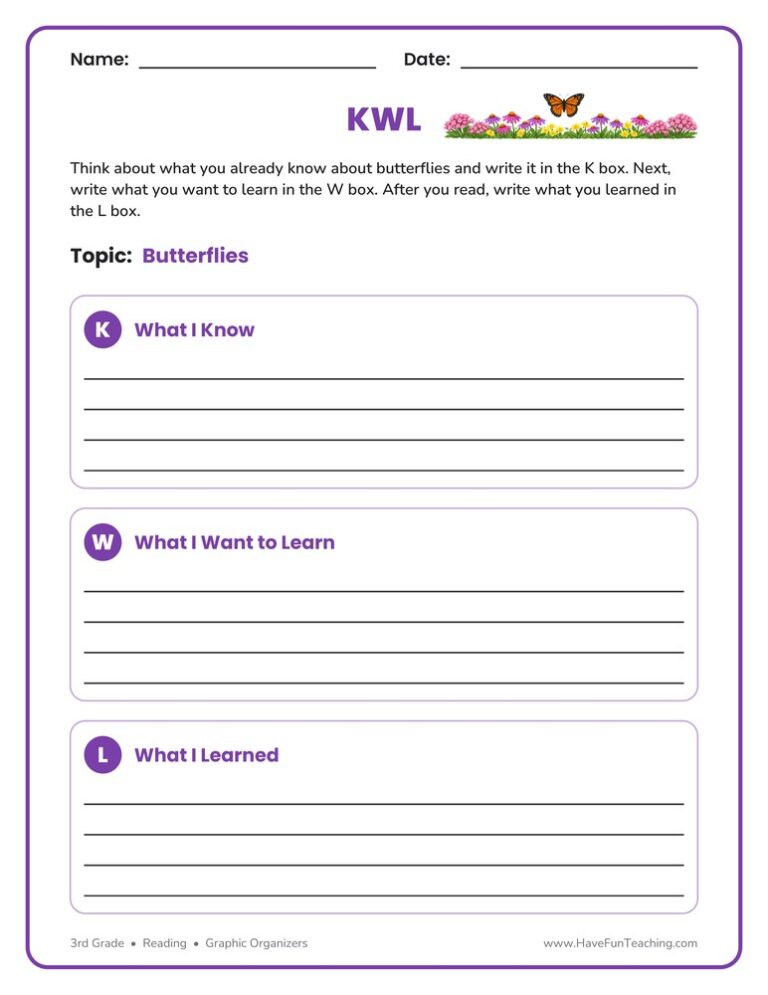
This butterflies KWL graphic organizer helps 3rd grade students record what they know, what they want to learn, and what they learned about butterflies, building strong reading and science habits.

Worksheet
Worksheet3rd GradeSchool KWL Graphic Organizer

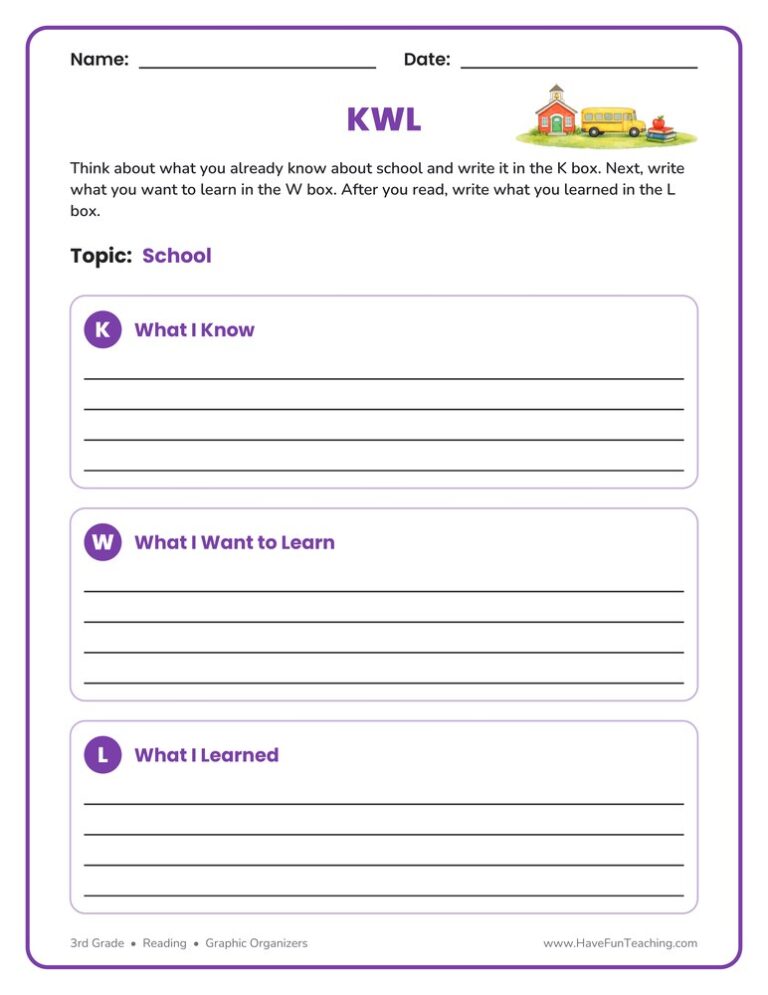
This school KWL graphic organizer lets 3rd grade students list what they know, what they wonder, and what they learn about their school, making the first weeks of class feel welcoming and organized.

Activity
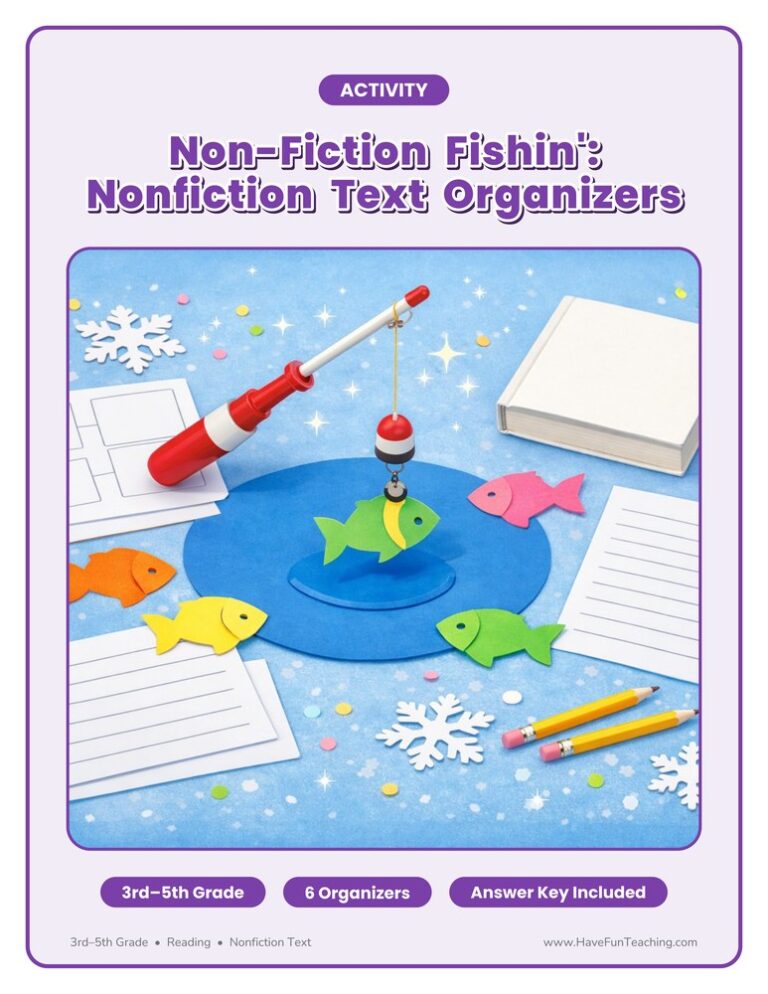
Activity3rd GradeNonfiction Fishin' Activity

This nonfiction fishin' activity gives 3rd-5th Grade readers six graphic organizers for different kinds of nonfiction text, a model article and practice, with an answer key included.

Worksheet
Worksheet3rd GradeKWL Graphic Organizer

This KWL graphic organizer helps 3rd grade students record what they know, what they want to learn, and what they learned about any topic, building strong reading and research habits.

Worksheet
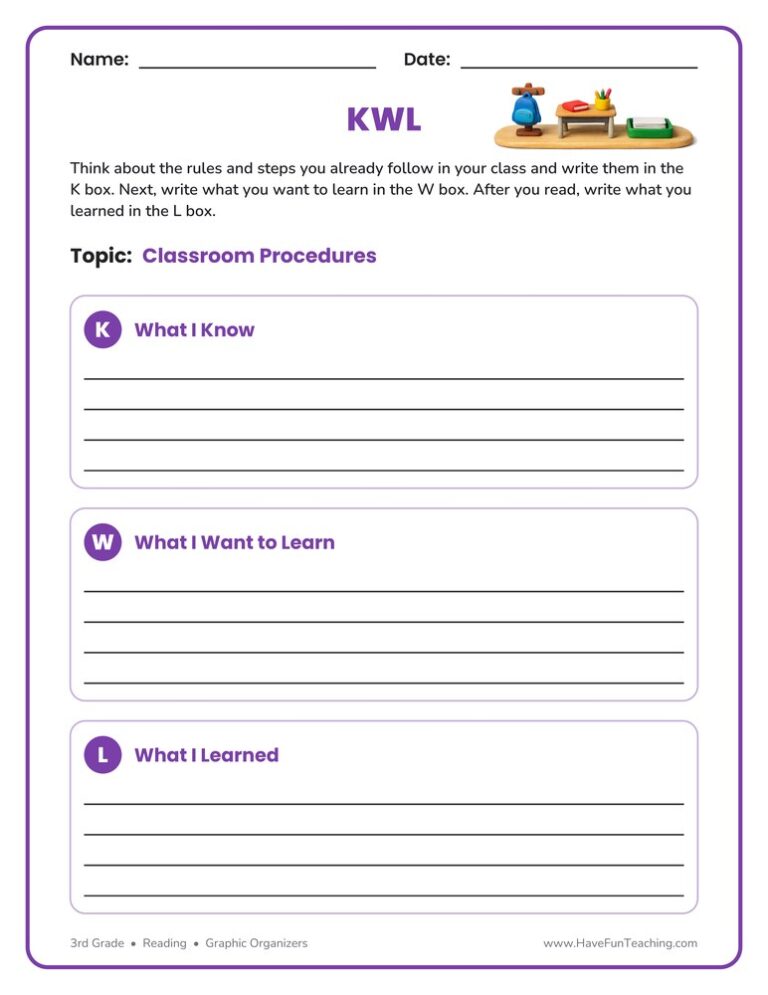
Worksheet3rd GradeClassroom Procedures KWL Graphic Organizer

This classroom procedures KWL graphic organizer helps 3rd grade students record what they know, want to learn, and learned about class routines, building a calm, confident start to the school year.

Worksheet
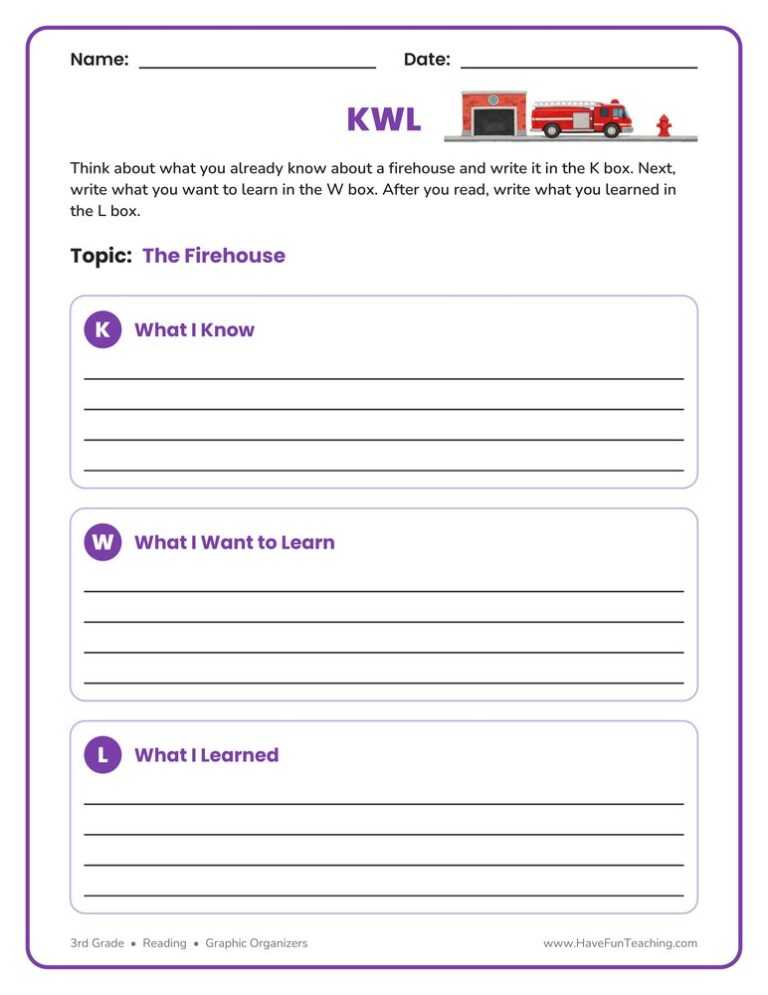
Worksheet3rd GradeFire KWL Graphic Organizer

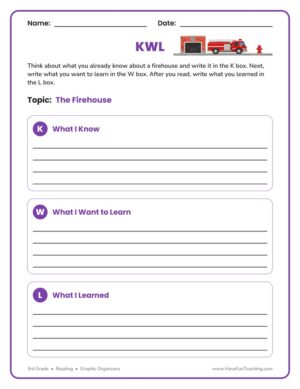
This fire KWL graphic organizer helps 3rd grade students record what they know, what they want to learn, and what they learned about the firehouse, building strong reading and research habits.

Worksheet
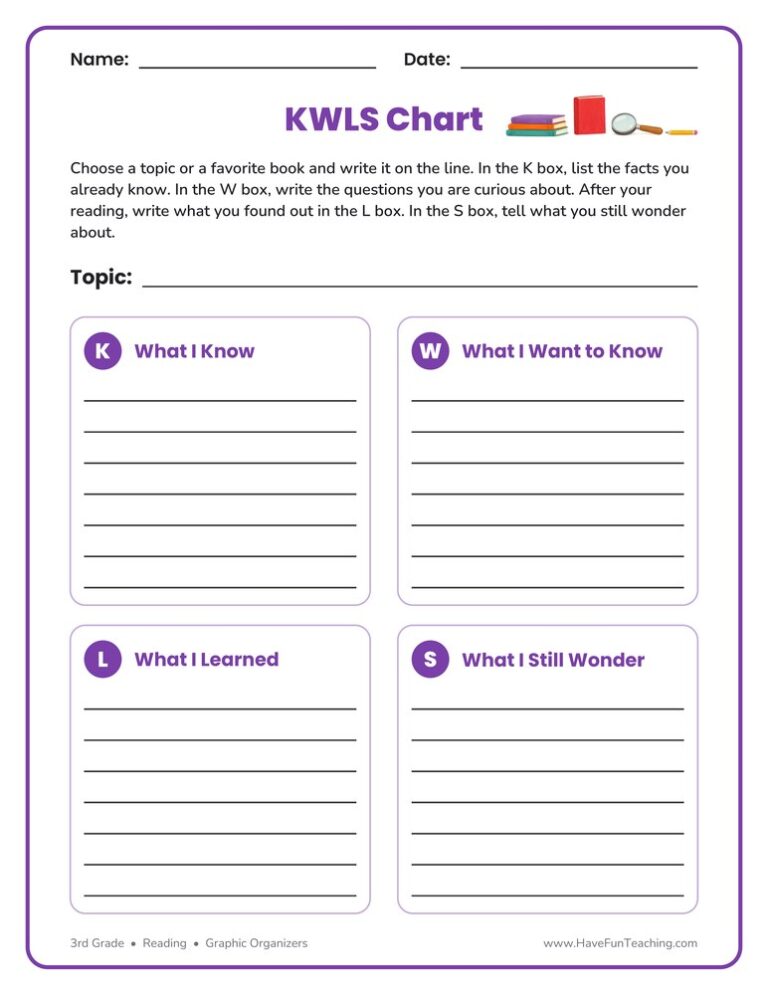
Worksheet3rd GradeKWLS Graphic Organizer Worksheet

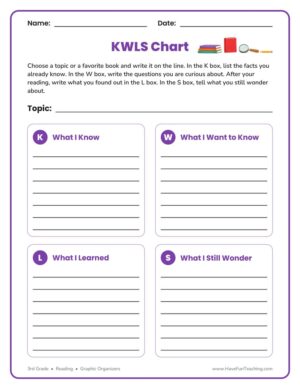
This KWLS graphic organizer worksheet guides 3rd grade readers to record what they know, want to know, learned, and still wonder about any topic or book, building curious, purposeful readers.

Worksheet
Worksheet3rd GradePlants KWL Graphic Organizer

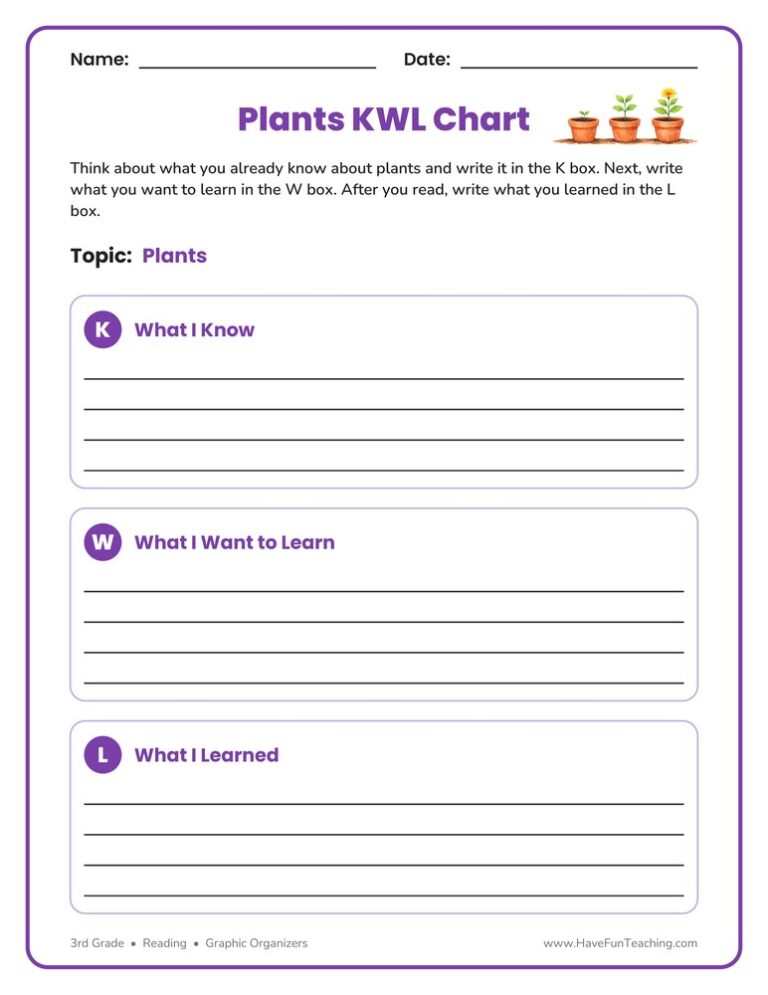
This plants KWL graphic organizer helps 3rd grade students record what they know, what they want to learn, and what they learned about plants, building strong reading and science habits.

From our teachers' playbook

Know, wonder, learn, repeat

How do 3rd graders use KWL and KWHL charts?

Third graders use KWL charts to organize their thinking before, during and after reading nonfiction. In the K column they write what they already know, in W what they want to know, and in L what they learned. A KWHL chart adds H: how they will find out, like a book, video or interview. KWLS adds S for what they still want to learn. The click moment comes when kids return to their W column and cross off questions they can now answer.

Our favorite ways to use KWL charts

A KWL chart is only as good as the thinking in it. These moves keep it active instead of a fill-in-the-blank page.

Model the questions

Before a nonfiction read, fill in the K and W columns together on a big chart. Show how to turn a fact into a question: "I know frogs lay eggs. I wonder where they lay them?" Then students try their own on a KWL about the topic.

Why it works: showing first, practicing together, then letting kids try alone is the "gradual release" model teachers have relied on for decades (Pearson and Gallagher, 1983).
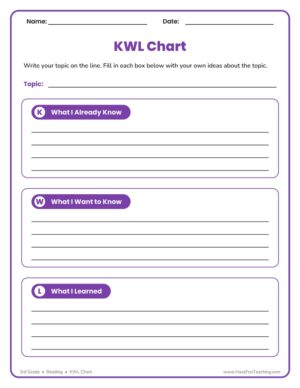
KWL About a Topic Graphic Organizer WorksheetTry it withKWL About a Topic Graphic Organizer WorksheetWorksheetsOpen it →
Add the H for research

For a research project, switch to a KWHL chart. Students list where they will look for each answer, like the library, a video or an expert. Planning the "how" makes research feel doable.

Why it works: the U.S. Department of Education's guide for teaching elementary math recommends moving from hands-on objects to drawings to numbers.

KWHL Graphic OrganizerTry it withKWHL Graphic OrganizerWorksheetsOpen it →

Come back to it

Keep the KWL chart up all week and add to the L column after each lesson. On Friday, students use a KWLS chart to note what they still want to learn. Returning to the chart shows how much they have grown.

Why it works: the brain holds on to what it meets again and again over time; spaced practice was rated among the very best methods (Dunlosky and colleagues, 2013).

KWLS Graphic Organizer WorksheetTry it withKWLS Graphic Organizer WorksheetWorksheetsOpen it →
Questions teachers and parents ask

What is a KWL chart?

A KWL chart is a graphic organizer with three columns: what I Know, what I Want to know, and what I Learned. It helps students think before, during and after reading.

What is the difference between KWL and KWHL?

KWHL adds an H column for "How will I find out?" It helps students plan where to look for answers, which is useful for research projects.

When should I use a KWL chart?

Use it at the start of a new nonfiction topic or unit. Fill in K and W before reading, then add to L during and after learning.

How do I make KWL charts more effective?

Model how to ask good questions, return to the chart often, and have students check off answered questions. A KWLS chart helps them keep wondering.