Skip to content
Start My 3 Free Days $0 today · cancel anytime

Note Taking Graphic Organizers

14 note taking graphic organizers. Teacher favorites: Who What When Where Why Graphic Organizer Worksheet and Informational Text Note-Taking Worksheet. How teachers use these

Find the perfect resource in seconds

Note Taking Graphic Organizers

14 note taking graphic organizers. Teacher favorites: Who What When Where Why Graphic Organizer Worksheet and Informational Text Note-Taking Worksheet. How teachers use these

Graphic Organizer
Graphic Organizer3rd GradeWho What When Where Why Graphic Organizer Worksheet

This who what when where why graphic organizer worksheet helps 3rd graders record the five key details — who, what, when, where, and why — from any story or article. A clear, reusable note-taking template.

Graphic Organizer
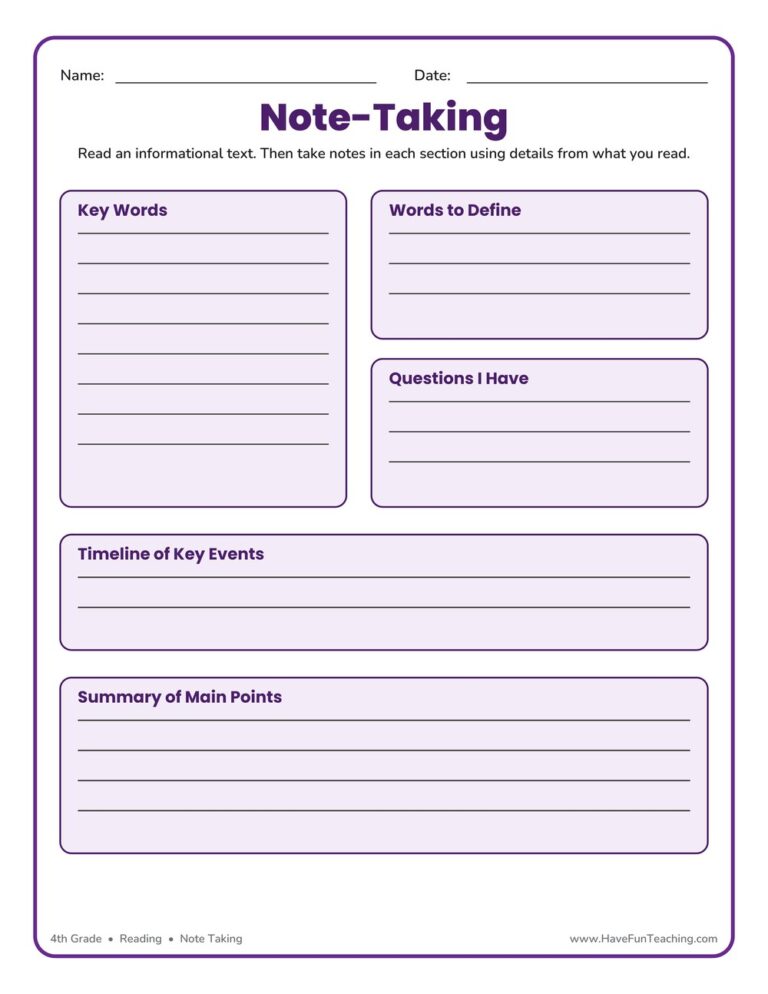
Graphic Organizer4th GradeInformational Text Note-Taking Worksheet

This Informational Text Note-Taking Worksheet gives 4th grade readers a five-section graphic organizer for recording key words, vocabulary, questions, a timeline, and a summary from any nonfiction text — a no-prep tool for building stronger comprehension.

Graphic Organizer
Graphic Organizer3rd GradeWho What When Where Why Summary Graphic Organizer Worksheet

A Who What When Where Why Summary Graphic Organizer Worksheet that walks 3rd graders from a short story to the five W answers and on to a written summary. Answer key included, so students get quick feedback and real confidence.

Graphic Organizer
Graphic Organizer5th GradeMain Idea Worksheet

This Main Idea Worksheet helps 5th graders find two main ideas in any nonfiction text, back each one with key details, and write a clear summary of what they read.

Graphic Organizer
Graphic Organizer3rd GradeNote Taking Worksheet

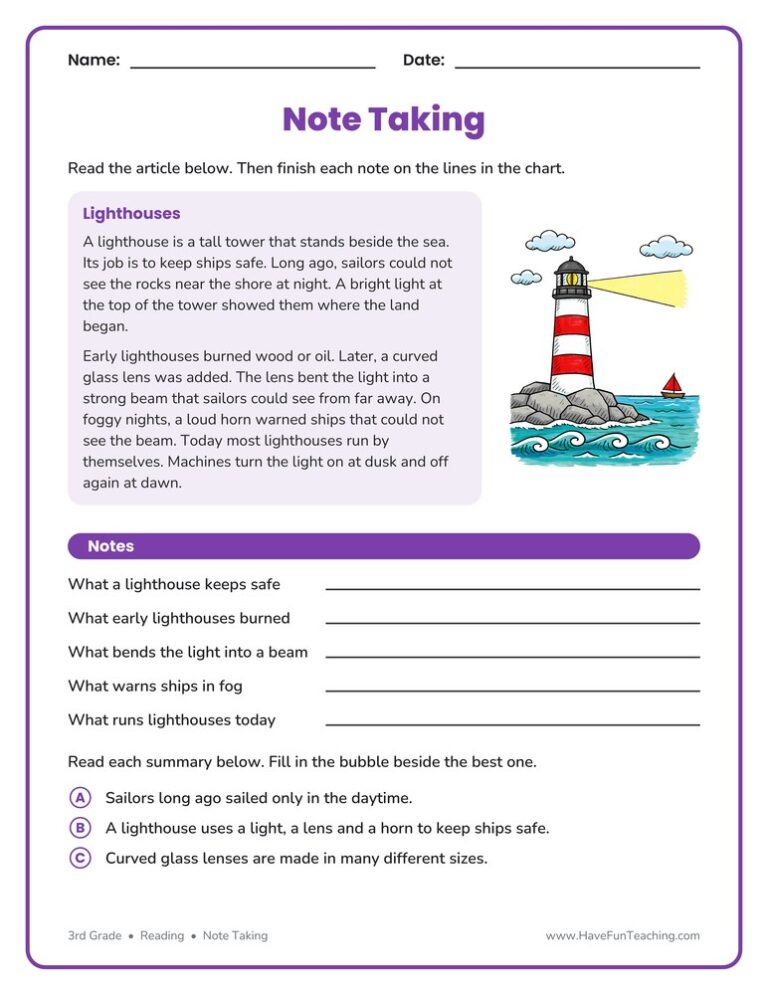
This note taking worksheet has 3rd Grade students read a short article about lighthouses, finish five notes in a chart, and choose the best summary. An answer key is included.

Graphic Organizer
Graphic Organizer3rd GradeScience Graphic Organizer Worksheet

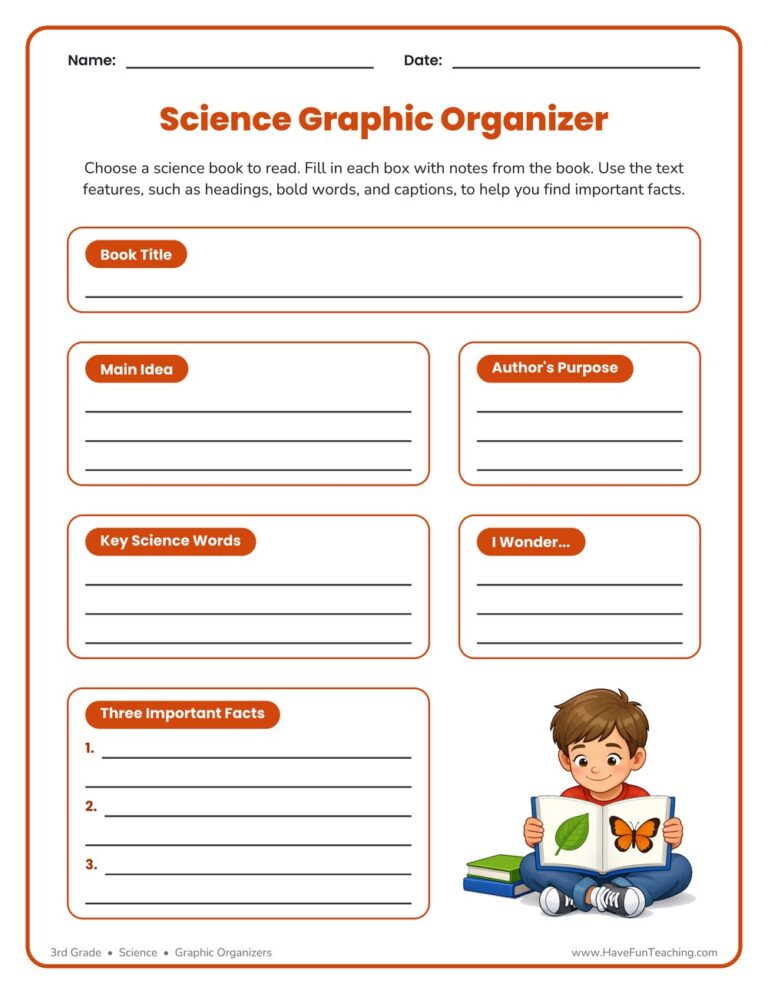
This science graphic organizer worksheet helps 3rd graders take notes on any nonfiction science book, from main idea and author’s purpose to key science words and three important facts. A reusable page that turns reading into real understanding.

Graphic Organizer
Graphic Organizer3rd GradeStory Map Worksheet

This story map worksheet lets 3rd grade students record the characters, setting, problem, main events, and solution of any story they read, building stronger comprehension and retelling skills.

Graphic Organizer
Graphic Organizer4th GradeMain Idea Graphic Organizer

This Main Idea Graphic Organizer helps 4th graders record the main idea of any nonfiction text, add four supporting details, and write a short summary that builds strong reading skills.

Graphic Organizer
Graphic Organizer5th GradeFishbone Graphic Organizer

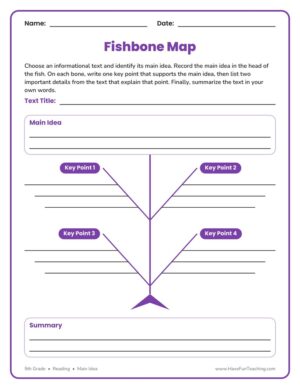
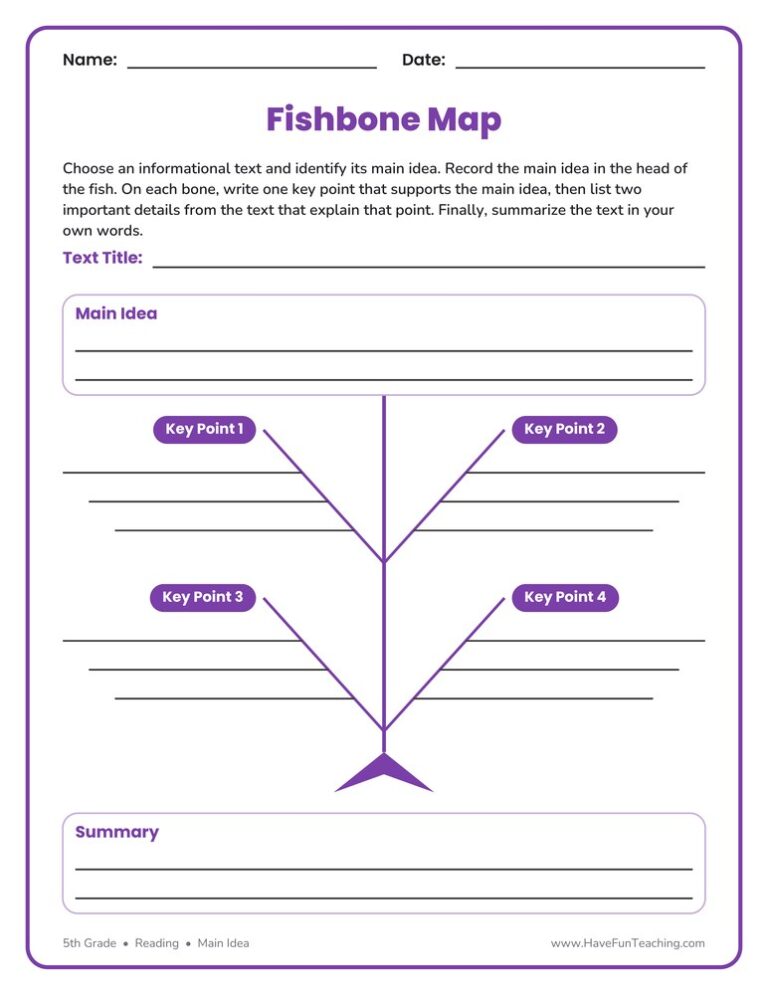
Use this fishbone graphic organizer worksheet to help 5th grade readers map a text's main idea, four key points, and supporting details, then write a clear summary.

Graphic Organizer
Graphic Organizer3rd GradePopcorn Concept Map Graphic Organizer Worksheet

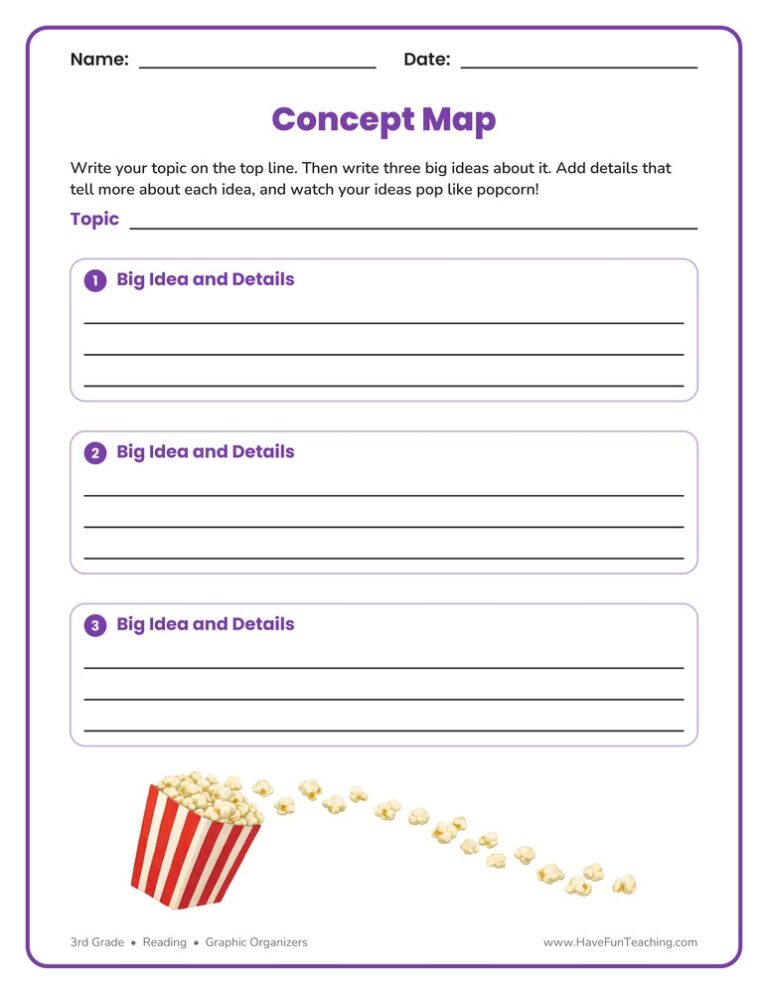
This popcorn concept map graphic organizer worksheet helps third graders sort any topic into three big ideas with supporting details, building strong note-taking habits for reading, science, and social studies.

Graphic Organizer
Graphic Organizer3rd GradeNote Taking and Summarizing Graphic Organizer

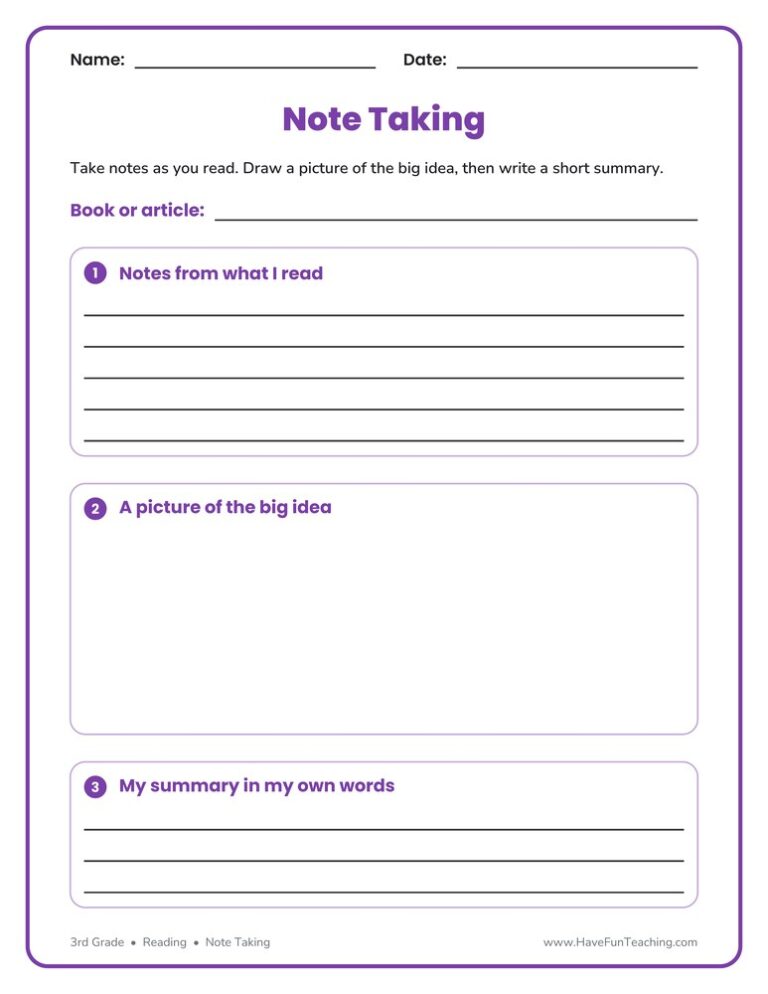
This Note Taking and Summarizing Graphic Organizer Worksheet gives 3rd Grade students one page for notes, a drawing of the big idea, and a short summary of any book or article they read.

Graphic Organizer
Graphic Organizer5th GradeHistory Vertical Timeline of Events Graphic Organizer

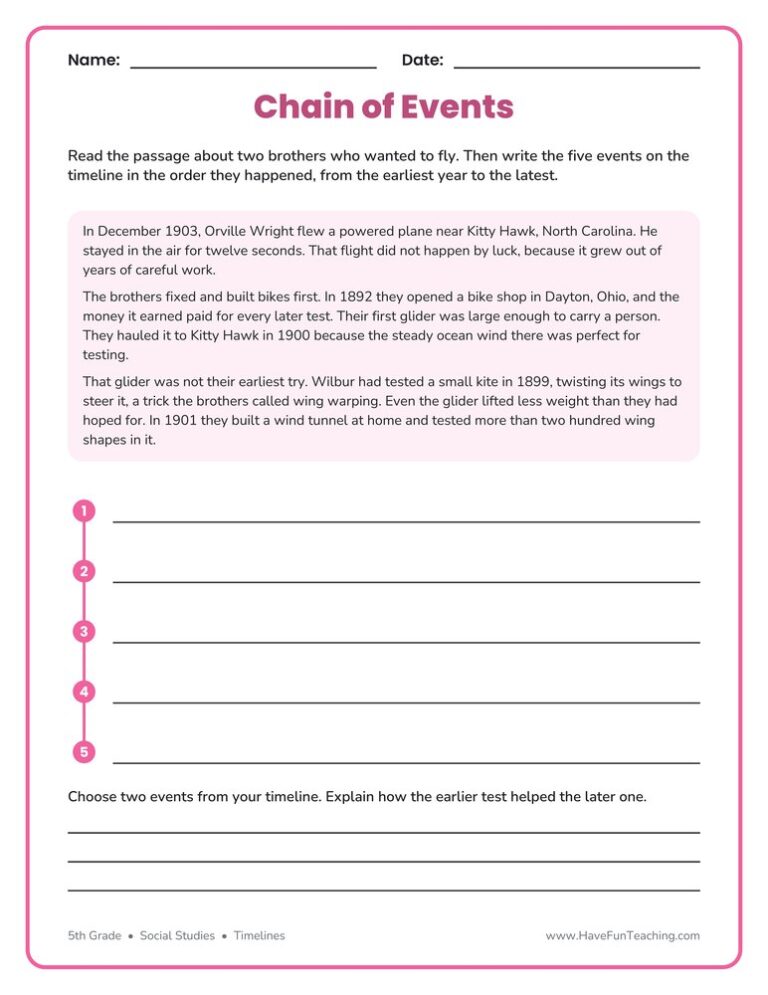
This History Vertical Timeline of Events Graphic Organizer Worksheet has 5th graders read a short Wright brothers passage and order five dated events on a vertical timeline. Answer key included.

Graphic Organizer
Graphic Organizer2nd GradeMain Idea Graphic Organizer Worksheet

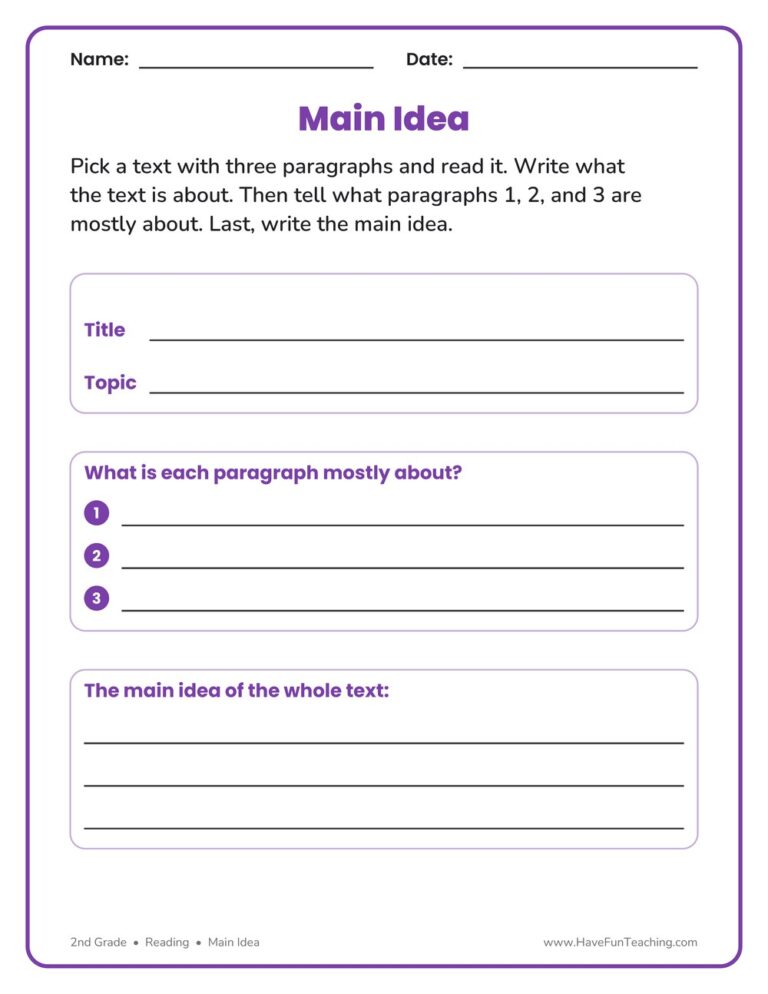
This main idea graphic organizer worksheet helps 2nd grade readers note what each of three paragraphs is about, then write the main idea of the whole text, building strong summarizing skills.

Graphic Organizer
Graphic Organizer3rd GradeOrganize Your Thinking Informational Text Activity

This organize your thinking informational text activity helps students take clear notes on nonfiction. Made for 3rd to 5th Grade, with a practice page and answer key included.

From our teachers' playbook

Catch the important stuff

What do kids learn about note taking?

Note taking is learning to grab the important ideas from what you read, see or hear, without copying every word. Young kids start by recording observations, like drawing and labeling a plant as it grows. In 3rd through 5th grade, kids take brief notes from books and articles, sort them into categories, and use them to write reports. The big idea: key words, not whole sentences. When kids learn to write in their own words, they actually understand and remember what they read.

Our favorite ways to teach note taking

Note taking is a skill kids need to see in action. These moves make it doable.

Three words or less

Read a paragraph aloud and model jotting just a few key words: "Penguins - can't fly - swim fast." Then cover the passage and retell it using only your notes. Kids see that short notes can hold a lot of information.

Why it works: handing over the work step by step, from teacher to student, is one of the most widely used teaching frameworks (Pearson and Gallagher, 1983).
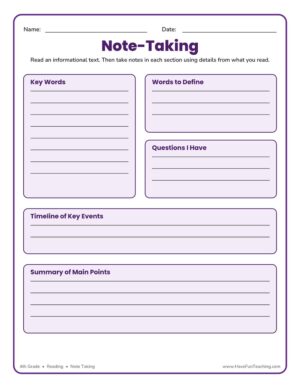
Informational Text Note-Taking WorksheetTry it withInformational Text Note-Taking WorksheetGraphic OrganizersOpen it →
Sticky note sort

When kids research a topic, have them write one fact per sticky note. Then they sort the notes into piles like food, home and body. Each pile becomes a paragraph, so the report almost writes itself.

Why it works: the U.S. Department of Education's guide for teaching elementary math recommends moving from hands-on objects to drawings to numbers.

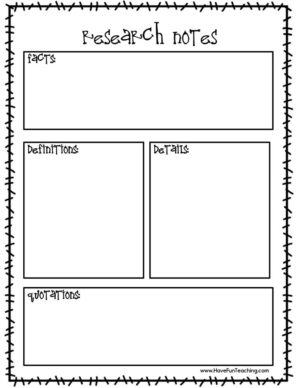
Research Notes WorksheetTry it withResearch Notes WorksheetWorksheetsOpen it →

Fishbone the cause

For science or history, use a fishbone organizer: the big event goes in the head and the causes go on the bones. Kids see how several facts connect to one result, and their notes turn into a clear explanation.

Why it works: children learn more from words and pictures together than from words alone (Mayer, 2009).

Fishbone Graphic OrganizerTry it withFishbone Graphic OrganizerGraphic OrganizersOpen it →

Note taking questions we hear a lot

How do I teach kids to take notes?

Model it first. Read a short passage, then show how you write only key words or short phrases in your own words. Give kids an organizer with spaces for main ideas and details until they can do it on their own.

What grade do kids learn note taking?

Kids record observations from the early grades, and 3rd through 5th graders learn to take brief notes from texts and sort them into categories for research projects.

What's the difference between note taking and copying?

Copying means writing the exact words from the book. Note taking means picking out the important ideas and writing them in your own words. Notes should be short.

Why is note taking important for kids?

Taking notes helps kids pay attention, find the main ideas and remember what they read. It's also the first step in writing reports and research papers.