This Sparkly Teeth Reading Comprehension Worksheet helps 2nd grade students read a short text about caring for teeth and answer questions. An answer key is included for fast checking.
The Healthy Teeth Paragraphs Worksheet lets 2nd graders write a paragraph about a toothbrush and about dental floss, turning everyday tooth care into strong informative writing practice.
This dental math word problems worksheet gives 2nd grade students five short dentist and healthy teeth stories to solve, each with its own answer box, plus an answer key so every problem can be checked in seconds.
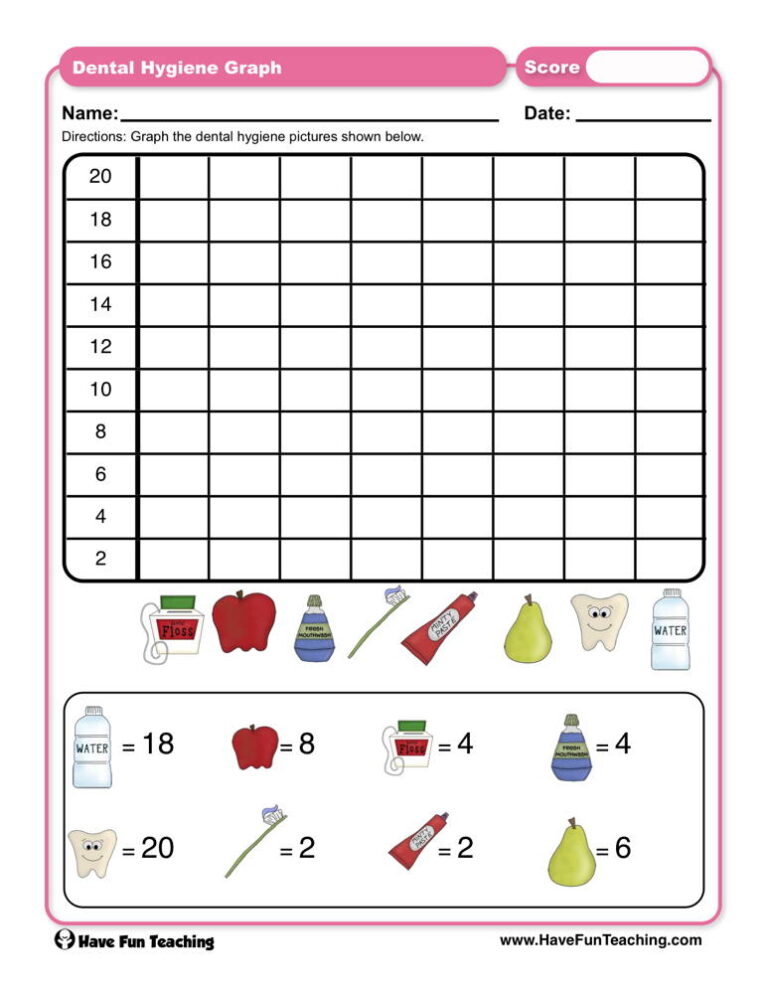
This dental hygiene graph worksheet has 2nd graders count 21 dental health pictures, build a four-category bar graph, and answer three questions. Answer key included, so checking work takes seconds.
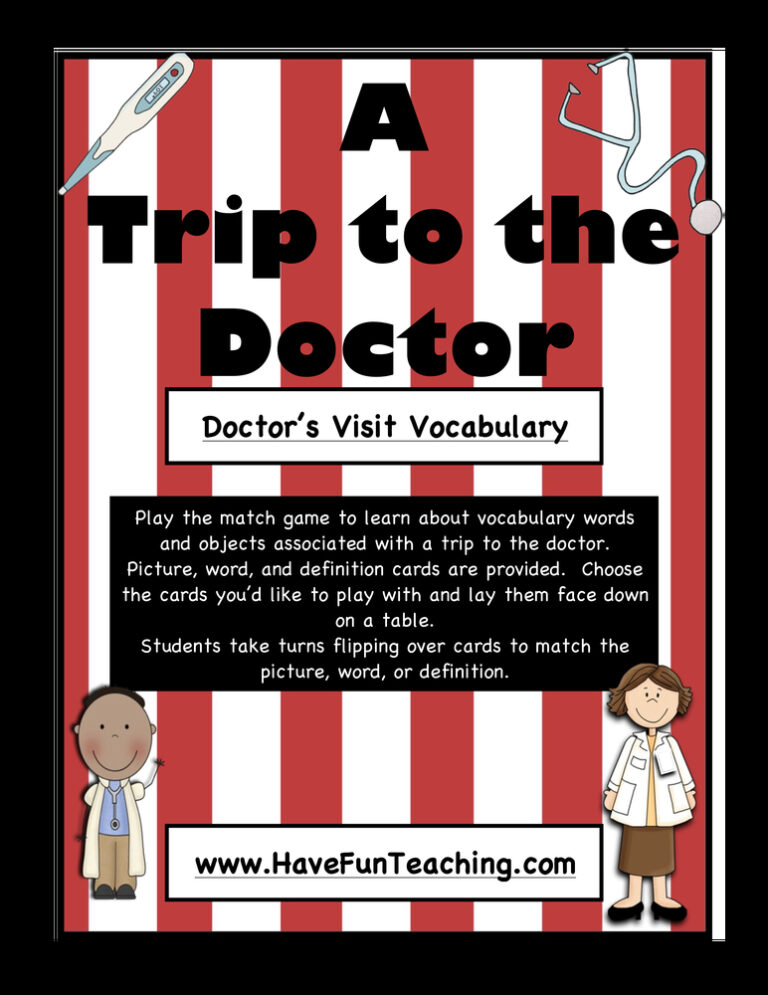
This a trip to the doctor vocabulary activity is a picture and clue memory game for kindergarten through 2nd grade. Children learn eight checkup tools and what they do, with an answer key included.
The Yellow Teeth Reading Comprehension Worksheet lets 2nd grade students read about enamel, dentin, and plaque, then answer text-based questions. An answer key is included, making it easy to check and discuss healthy smiles.
Second graders discover that the body is made of parts that work as a team. They name outside parts and meet a few big inside ones: the heart pumps blood, the lungs breathe in air, the brain is the boss, and bones and muscles help us move. They connect their five senses to the body parts that do the sensing, and they learn how to care for it all with healthy food, exercise, sleep and brushing teeth twice a day. The click comes when kids feel their own heartbeat or their ribs and realize, "That's inside me right now!"
Our favorite ways to teach the human body
Kids are fascinated by their own bodies. These moves turn that curiosity into real science.
Sing every part
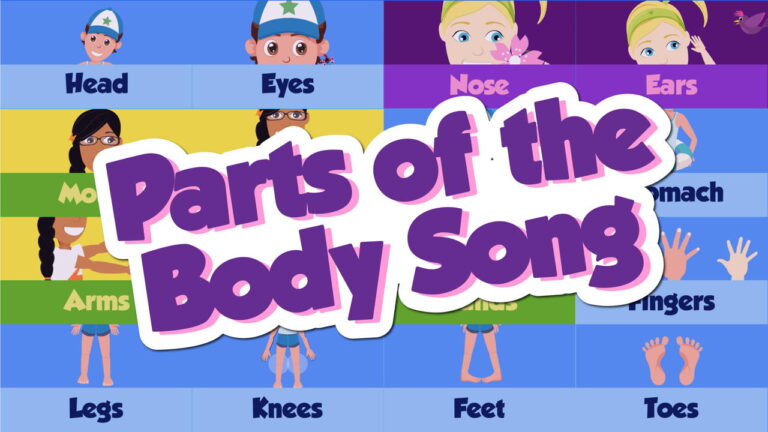
Play the parts of the body music video and have kids touch each part as it is named. Singing and touching at the same time links the word to the place. By the third play, they lead it themselves.
Why it works: words set to a repeating melody are easier to recall than the same words spoken (Wallace, 1994).
Trace one child on butcher paper and teach a lesson as you add the heart, lungs, brain and stomach in the right spots. Kids see where each organ lives and what it does. Hang the body buddy up for the rest of the unit.
Why it works: showing first, practicing together, then letting kids try alone is the "gradual release" model teachers have relied on for decades (Pearson and Gallagher, 1983).
Open each science lesson with three quick questions: "What does the heart do? Where are your lungs?" Use the mini pack pages for a short review. Recalling the answers every day builds memory far better than one test at the end.
Why it works: pulling an answer out of memory makes it stick far better than rereading it, one of the strongest findings in learning research (Dunlosky and colleagues, 2013).
They learn the main body parts, a few organs like the heart, lungs and brain, the five senses, and healthy habits. The focus is on what each part does and how to care for it.
How do you teach organs to 2nd graders?
Trace a child on paper and add each organ in the right place as you talk about its job. Songs and simple models make the names easy to remember.
Why do kids need to learn about dental health?
Healthy teeth help kids eat, speak and smile. Learning to brush twice a day and choose tooth-friendly snacks builds habits that last a lifetime.
What is a fun human body activity for kids?
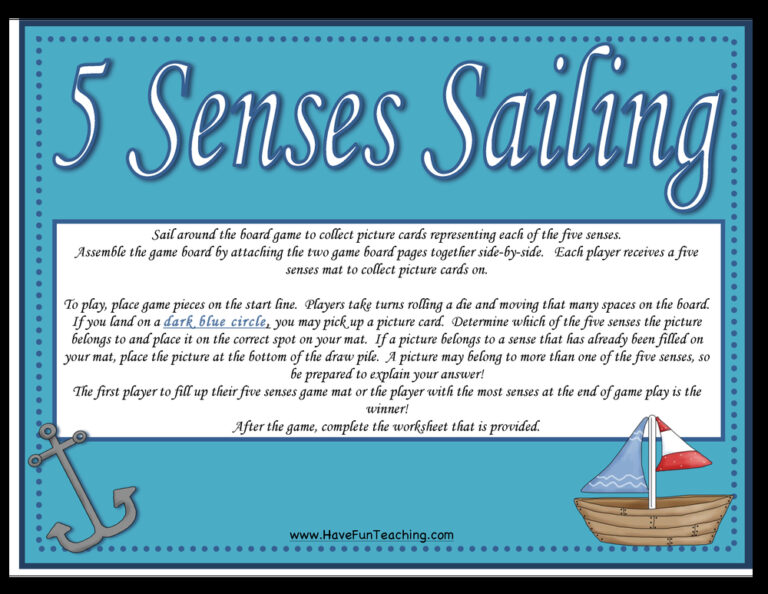
Have kids find their pulse at rest and after jumping, or play a five senses game. Anything that lets kids feel their own body working makes the lesson stick.
Written by the Have Fun Teaching team of elementary teachers and homeschoolers. Research: Wallace, W. T. (1994). Memory for music: Effect of melody on recall of text. Journal of Experimental Psychology: Learning, Memory, and Cognition, 20(6). Pearson, P. D., & Gallagher, M. C. (1983). The instruction of reading comprehension. Contemporary Educational Psychology, 8(3). Dunlosky, J., Rawson, K. A., Marsh, E. J., Nathan, M. J., & Willingham, D. T. (2013). Improving Students' Learning With Effective Learning Techniques. Psychological Science in the Public Interest, 14(1).
3 days free
2:39Ready to print!
Printables · Songs · Games
Loved by 2 million teachers & families
Where learning feels like play.
Printables, songs and games for every subject, Preschool through 6th. Ready to teach today, and kids beg for more.
$0due today
then $39.97$35.97for your first year, and $39.97 a year after that.






 Try it withParts of the Body Song (Animated Music Video)SongsOpen it →





