Skip to content
Start My 3 Free Days $0 today · cancel anytime

3rd Grade Base 10 Resources

11 3rd grade base 10 resources: 6 activities, 4 worksheets and 1 micro lesson. How teachers use these

3rd Grade Base 10 Resources

11 3rd grade base 10 resources: 6 activities, 4 worksheets and 1 micro lesson. How teachers use these

Micro Lesson
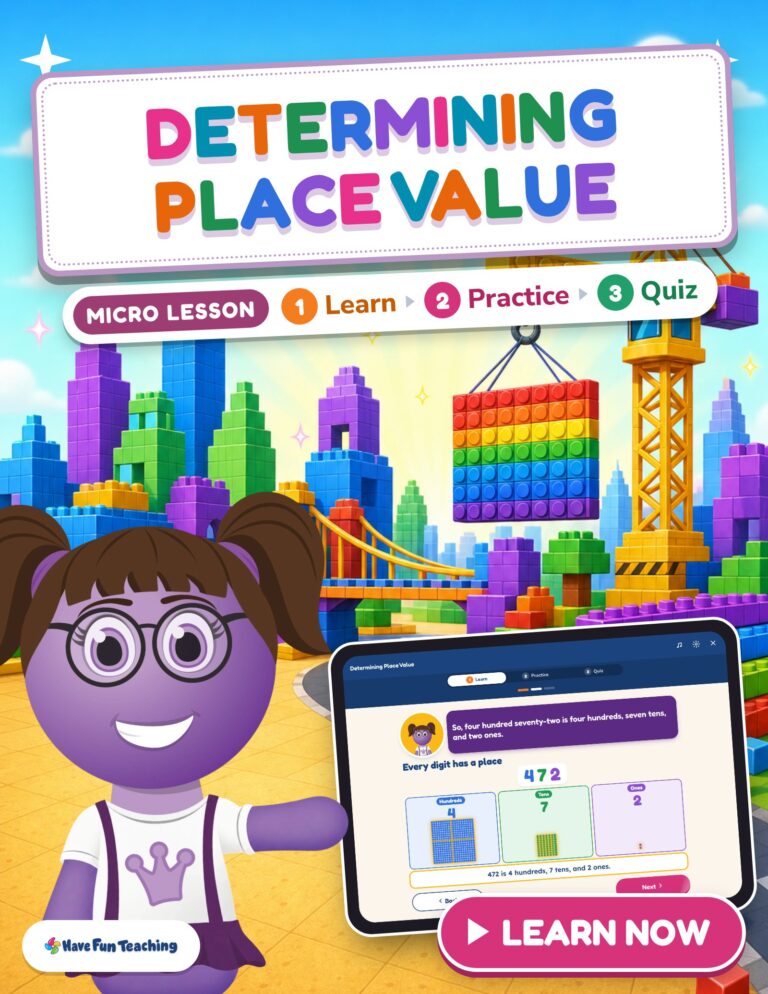
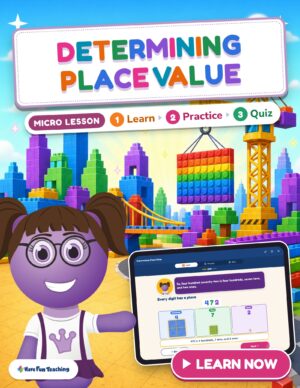
Micro Lesson3rd GradeDetermining Place Value Micro Lesson

Lexy teaches kids how to find the hundreds, tens and ones in a number, one step at a time. Kids practice with friendly hints, then show what they know in a 5-question quiz. Quiz scores go to HFT Classroom automatically.

Worksheet
Worksheet3rd GradeBreaking Apart Thousands Hundreds Tens Ones Worksheet

A breaking apart thousands hundreds tens ones worksheet that has 3rd graders build four-digit numbers from their parts and then split them back into place value boxes. Answer key included for fast, no-prep practice.

Worksheet
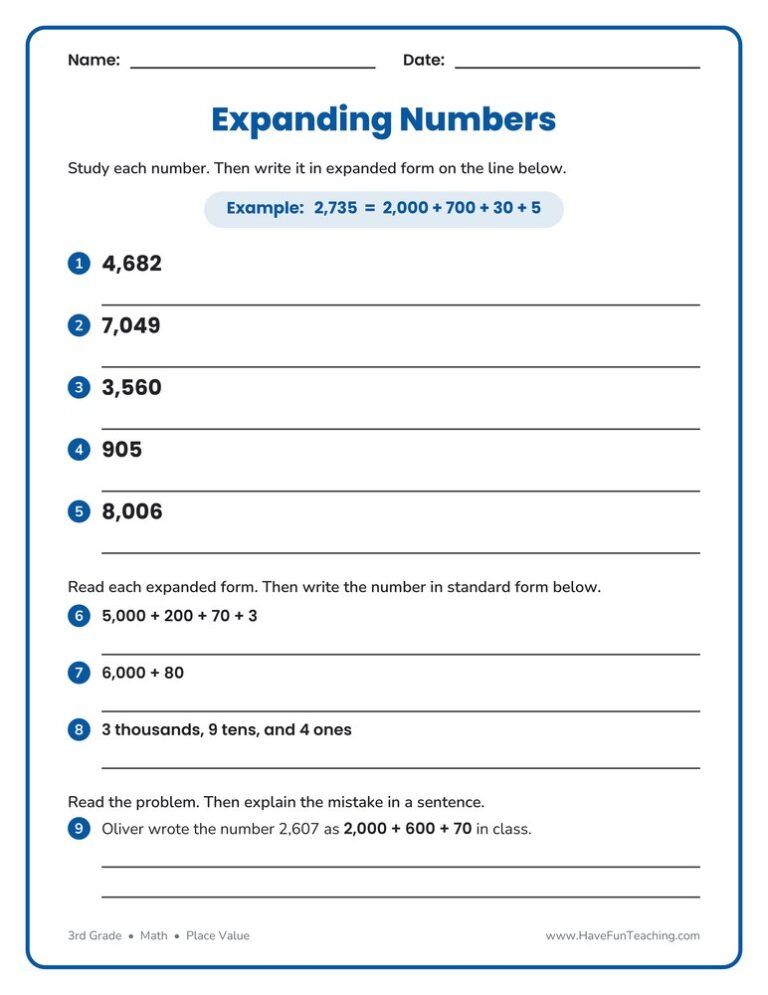
Worksheet3rd GradeExpanding Numbers Worksheet

Students use this expanding numbers worksheet to write 3- and 4-digit numbers in expanded form, switch back to standard form, and fix a mistake. Made for 3rd grade with an answer key included.

Worksheet
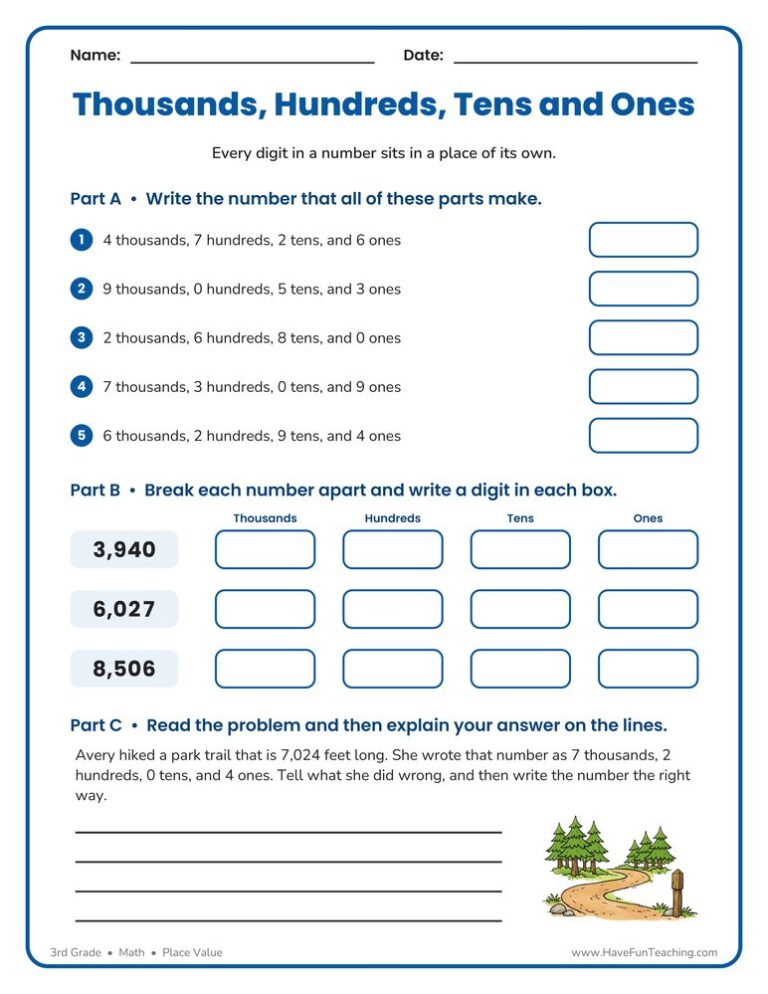
Worksheet3rd GradeThousands Hundreds Tens Ones Worksheet

This Thousands Hundreds Tens Ones Worksheet asks 3rd graders to chart four-digit numbers, rebuild numbers from their parts, and explain a place value mistake. An answer key is included for fast, no-prep practice.

Activity
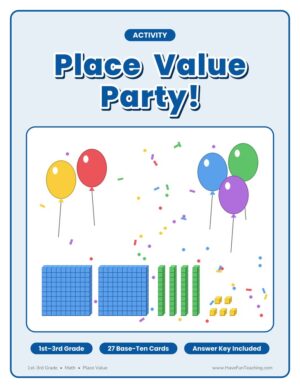
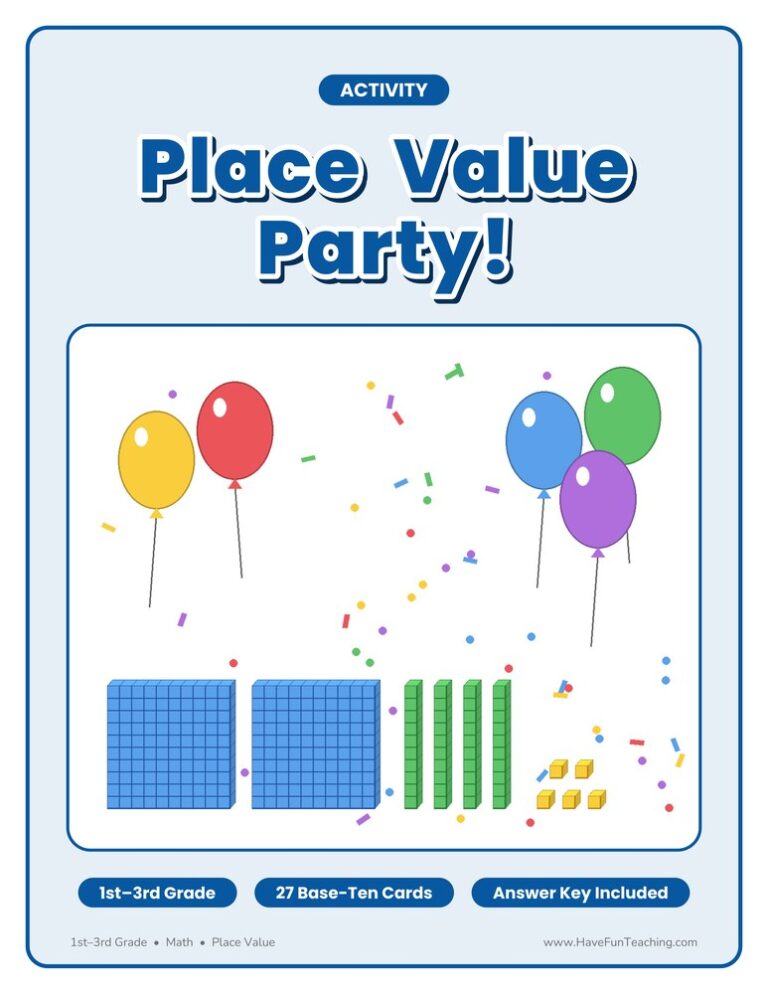
Activity3rd GradePlace Value Party Place Value Activity

The Place Value Party Place Value Activity lets 1st to 3rd Grade students spin numbers, build them with base-ten cards and write expanded form. Answer key included.

Worksheet
Worksheet3rd GradeTens Place Value Worksheet

This tens place value worksheet helps 3rd grade students name what a tens digit is worth, with number items, write-your-own challenges, word problems and an answer key.

Activity
Activity3rd Grade3.NBT.1 Common Core Activity

This 3.NBT.1 Common Core Activity lets 3rd Grade students round numbers to the nearest 10 or 100 by sorting 24 cards into Round Up and Round Down, with an answer key included.

Activity
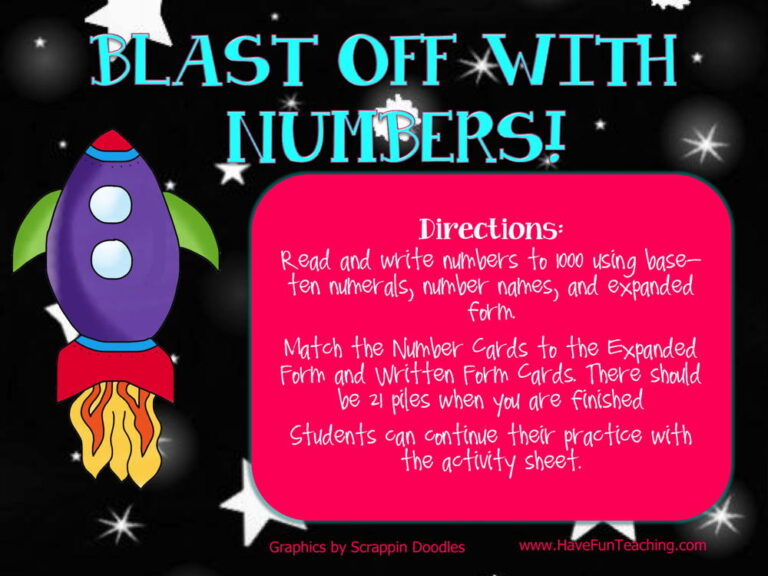
Activity3rd GradeBlast Off With Numbers Base Ten Words Expanded Form Activity

In this Blast Off With Numbers Base Ten Words Expanded Form Activity, students will read and write numbers to 1000 using base-ten numerals, number names, and expanded form.

Activity
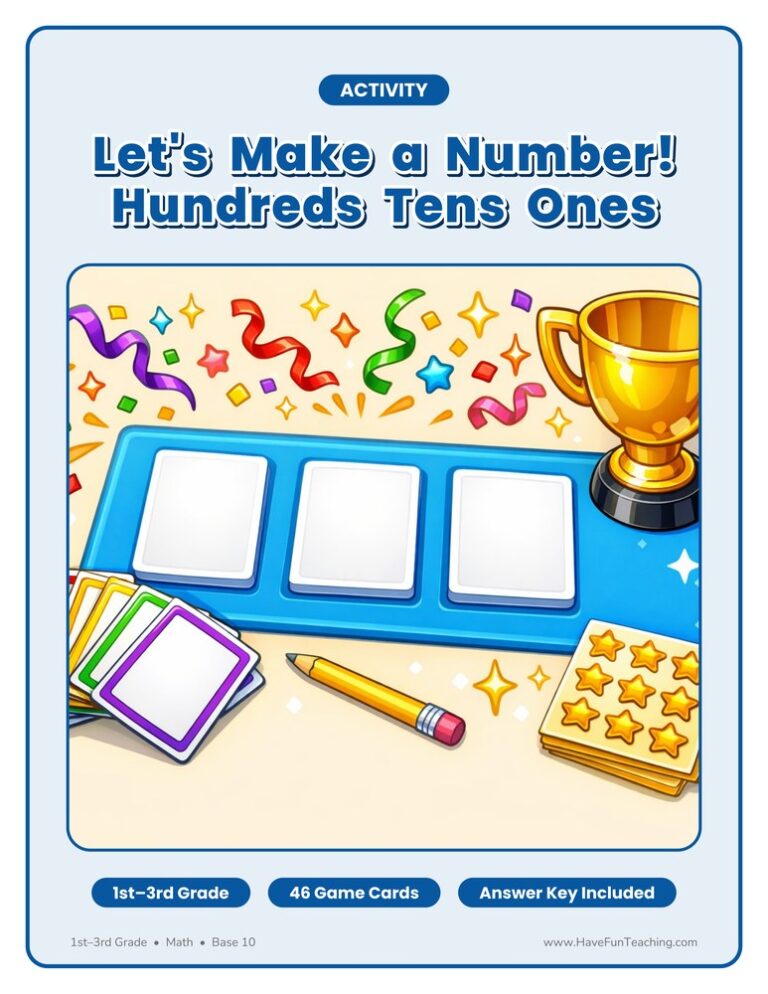
Activity3rd GradeLet's Make a Number Hundreds Tens One Activity

The Let's Make a Number Hundreds Tens One Activity has 1st to 3rd grade students build and compare three-digit numbers with cards and a place value mat. Answer key included for quick checking.

Activity
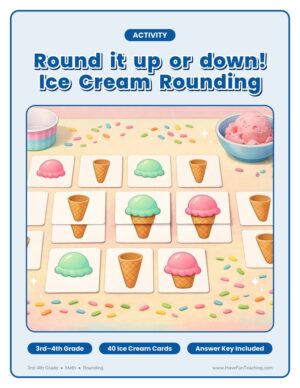
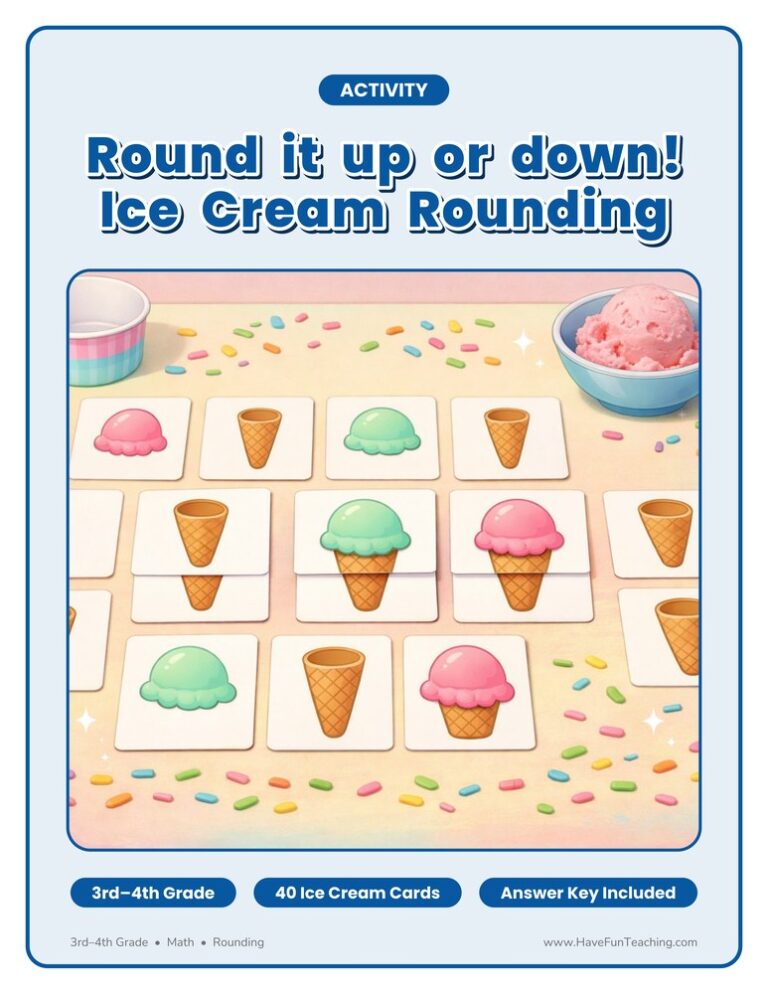
Activity3rd GradeRound it Up or Down Ice Cream Activity

This round it up or down ice cream activity has 3rd and 4th grade students match number scoops to cones by rounding to the nearest ten and hundred. Answer key included for quick checking.

Activity
Activity3rd GradeScooping Up Hundreds Rounding Activity

In this Scooping Up Hundreds Rounding Activity, students use place value understanding to round whole numbers to the nearest 100.

From our teachers' playbook

Hundreds, tens and ones to the rescue!

What do 3rd graders learn about base ten?

In 3rd grade, base ten turns into a problem-solving tool. Students use place value to round numbers to the nearest 10 or 100, to add and subtract within 1,000, and to multiply one-digit numbers by multiples of 10, like 4 × 60 = 240. They break numbers apart into expanded form, such as 2,563 = 2,000 + 500 + 60 + 3, so big numbers feel manageable. The click comes when a student rounds 487 to 500, estimates an answer first, and catches their own mistake because the real answer was way off.

How we make base ten click in 3rd grade

Base ten is the foundation for all the big-number math ahead. These moves build it strong.

Break it apart

Have kids build a number with base ten blocks, then write it in expanded form underneath. Next, change one digit and ask what happened to the total. Building and rewriting the same number connects the blocks to the digits.

Why it works: going from real objects to pictures to symbols is a core recommendation of the U.S. Department of Education's elementary math guide.
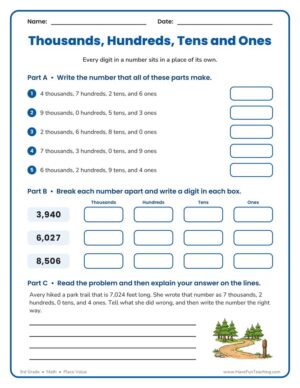
Breaking Apart Thousands Hundreds Tens Ones WorksheetTry it withBreaking Apart Thousands Hundreds Tens Ones WorksheetWorksheetsOpen it →
Watch, then try

Use a short on-screen lesson to walk through finding the value of each digit, then pause and have kids try a few on whiteboards. A clear model followed by quick practice keeps everyone on track.

Why it works: showing first, practicing together, then letting kids try alone is the "gradual release" model teachers have relied on for decades (Pearson and Gallagher, 1983).

Determining Place Value Micro LessonTry it withDetermining Place Value Micro LessonMicro LessonsOpen it →

Round a little daily

Rounding fades fast if it only lives in one unit. Put two rounding problems on the board every morning for a few weeks, nearest 10 and nearest 100. A minute a day keeps it sharp for estimating later.

Why it works: short practice spread over several days beats one long session, according to a large review of learning research (Dunlosky and colleagues, 2013).

Round it Up or Down Ice Cream ActivityTry it withRound it Up or Down Ice Cream ActivityActivitiesOpen it →

Questions parents and teachers ask

What does base ten mean in 3rd grade math?

Base ten means our number system is built on groups of ten: ten ones make a ten, ten tens make a hundred and ten hundreds make a thousand. Third graders use this to round, add, subtract and multiply by tens.

How do you teach rounding to the nearest 10 and 100?

Use a number line and ask which ten or hundred the number is closer to. If the digit to the right is 5 or more, round up; if it is less than 5, round down.

What is expanded form?

Expanded form shows a number as the sum of the value of each digit. For example, 732 is 700 + 30 + 2.

How can I practice base ten at home?

Use coins (pennies, dimes and dollars) or bundles of straws. Ask your child to build a number, then round it to the nearest ten or hundred and explain how they decided.