
Using Asking Questions about a Story Activity, students Discuss a topic or read a book aloud using Question Cards to help guide questions andanswers about the topic.

Using Story Elements Organizing What You Read Activity, students use activity worksheets and graphic organizers to describe the characters, setting and events.

Using the Talking to Peers Assessment Worksheet, students respond to questions and suggestions from peers and add details to writing as needed.
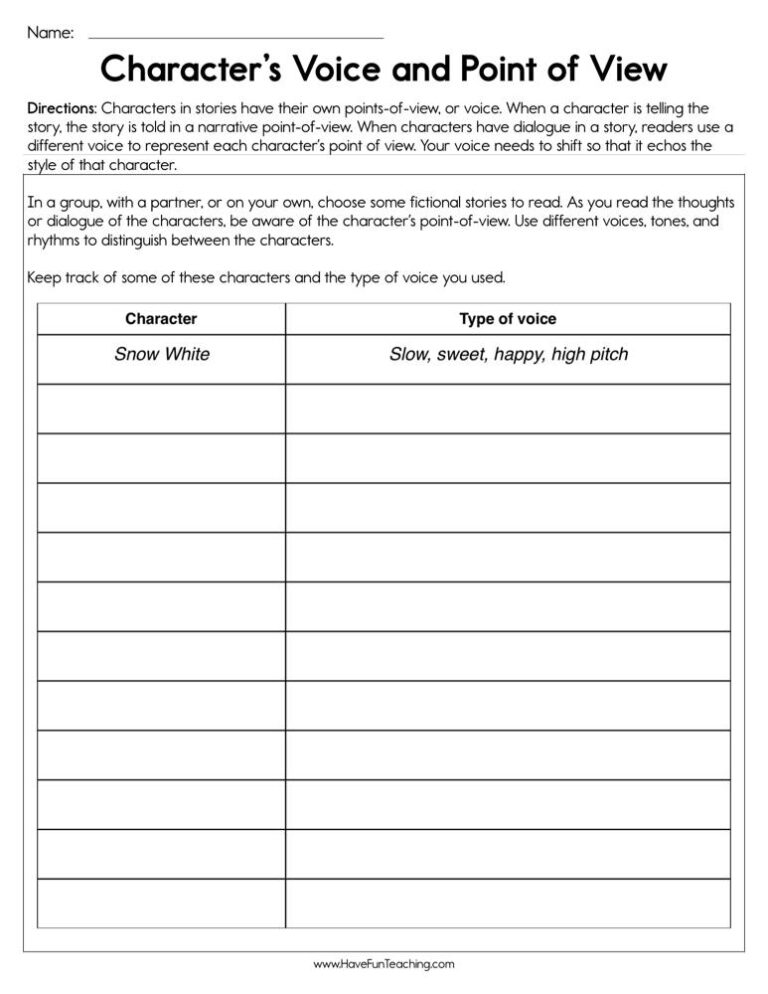
UsingCharacters Voice and Point of View Worksheet, students keep track of different types of voice characters use to show their point of view in a story.

Using Books My Students are Reading Worksheet, teachers keep track of the stories their students are reading to record the status of the class.
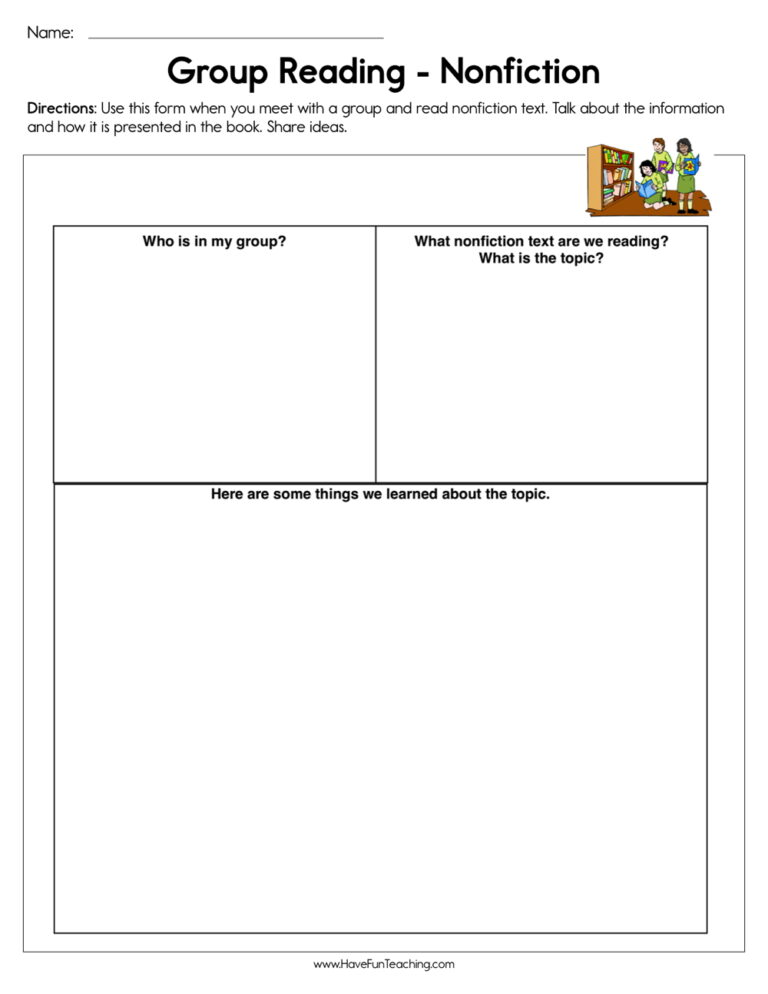
Using the Group Reading Non-Fiction Worksheet, students use this form when you meet with a group and read non-fiction text.
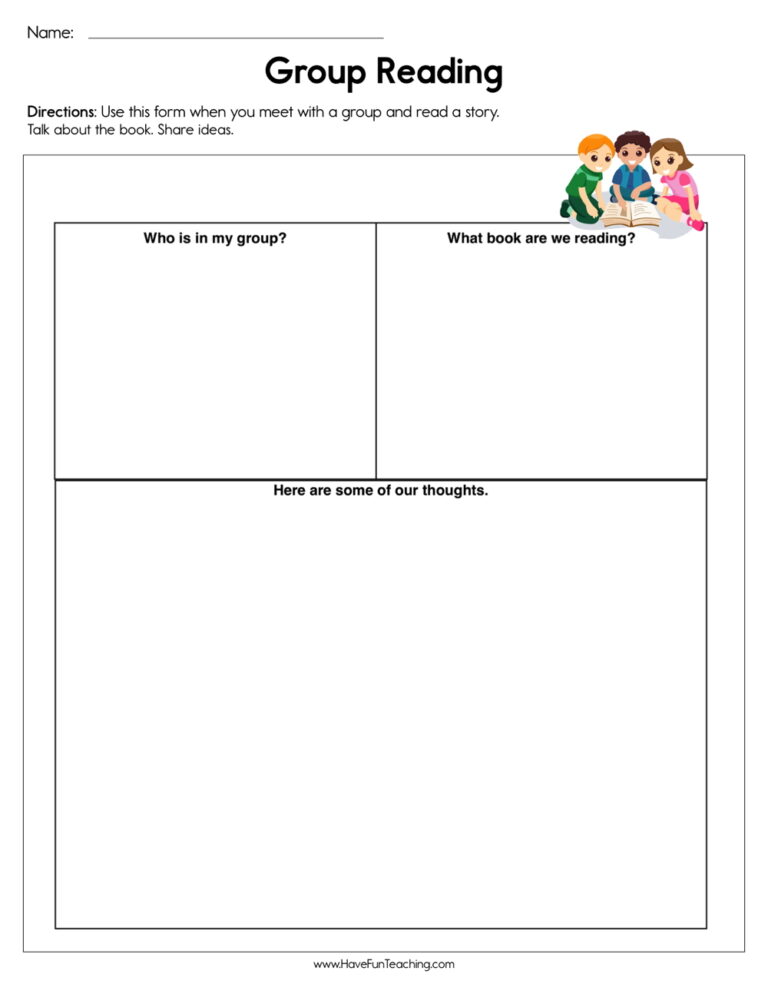
Using the Group Reading Worksheet, students use this form when you meet with a group and read fiction or non-fiction text.

Using the Comparing Themes of Two Stories Activity, students use a Venn Diagram to compare and contrast the theme of two passages.
Using this Why oh Why Story Details Activity, students answer the questions "What happened?" and "why did it happen?" while citing their textual evidence.

Using this Whose Point of View Compare and Contrast Activity, students identify whether a story is being told in a first- or third-person POV, while comparing and contrasting the two.

Using the Practice Makes Perfect Fluency Activity, students read the passage with accuracy and fluency while you take notes on their reading.

Using Animal Myth Busters Author's Purpose Activity, students read animal myths to explain how an author uses evidence to support points in a text.

Using How the Text is Organized Activity, studentsdescribe the logical connection between particular sentences and paragraphs in a text.

Using Informational Books Reading Log Activity, studentsread informational texts to build reading comprehension skills and their understanding of informational texts.

Using this Look in the Text Activity, students ask and answer questions to demonstrate understanding of a text, referring explicitly to the text as the basis for the answers.
Using Comparing Points of View Activity, students distinguish their own point of view from that of the author of a text.

Using Comparing Texts Compare and Contrast Activity, students compare and contrast the most important points and key details presented in two texts on the same topic.

Using the Small Group Checklist Worksheet, students participate in a group discussion using these small group discussion rules.
Using Gold Medal Reading Strategies Activity, students read grade-level text with purpose and understanding using graphic organizers for support.
Using Looking at the Character's Viewpoints Activity, students acknowledge differences in the points of view of characters to gain a different perspective.