Skip to content
Start My 3 Free Days $0 today · cancel anytime

3rd Grade Force and Motion Worksheets

12 3rd grade force and motion worksheets. Teacher favorites: Forces Motion Worksheet and Falling Gravity Worksheet. How teachers use these

Find the perfect resource in seconds

3rd Grade Force and Motion Worksheets

12 3rd grade force and motion worksheets. Teacher favorites: Forces Motion Worksheet and Falling Gravity Worksheet. How teachers use these

Worksheet
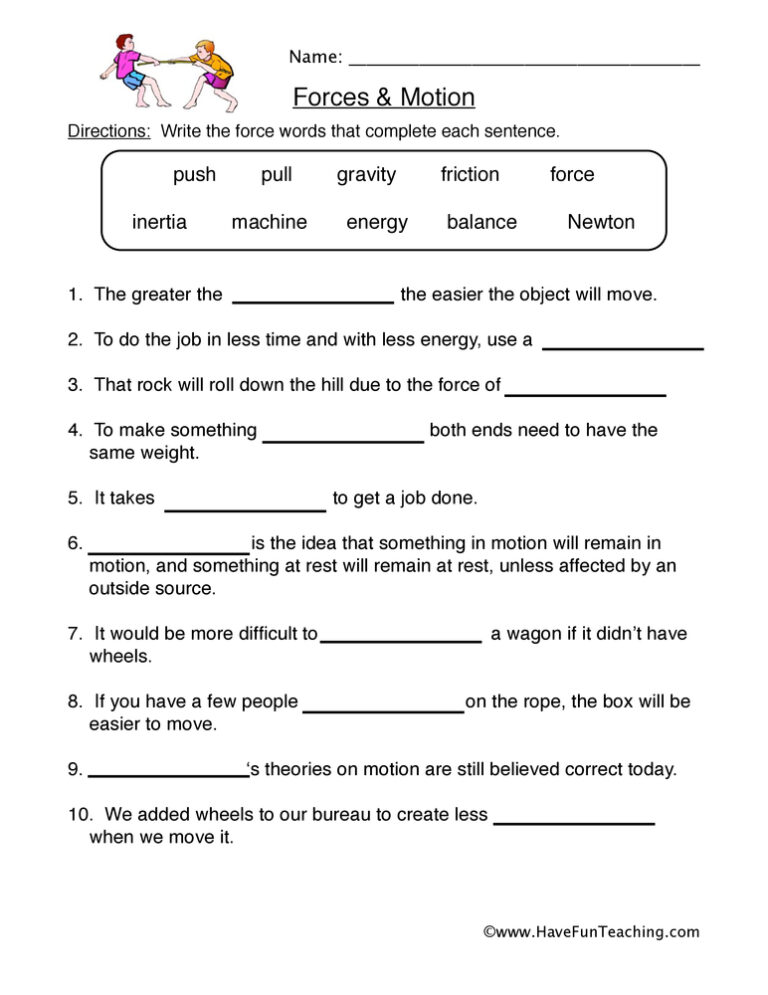
Worksheet3rd GradeForces Motion Worksheet

A 3rd grade forces motion worksheet where students use a word bank to complete eight sentences about force, push, pull, gravity, friction, motion, speed, and magnets. Includes an answer key for easy, no-prep science practice.

Worksheet
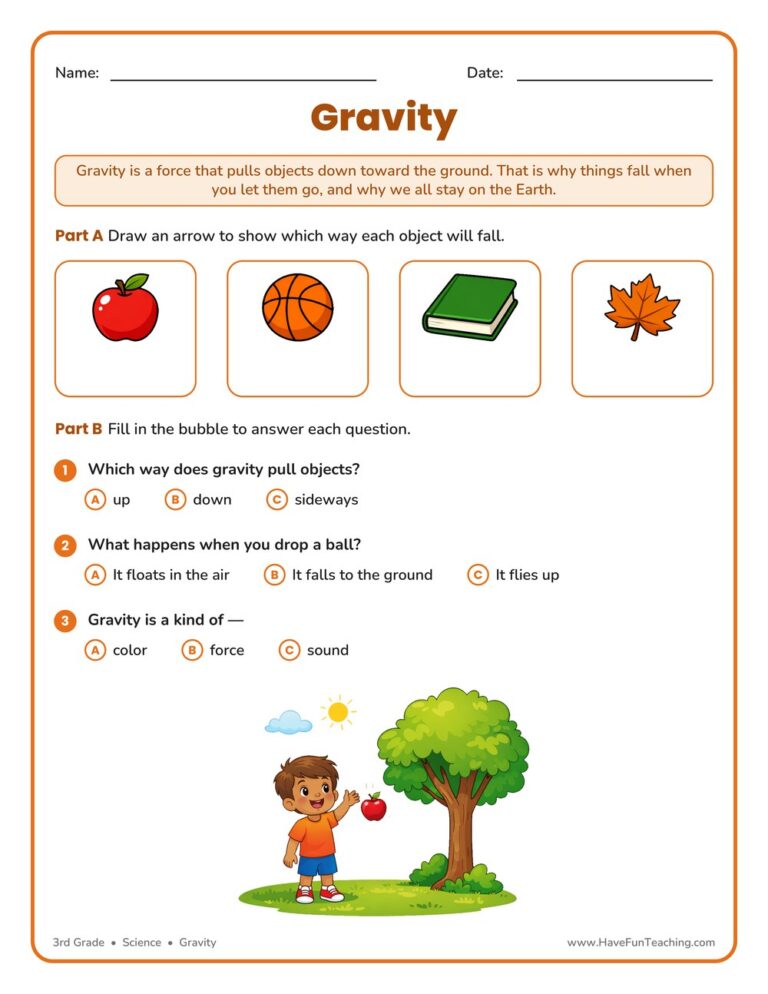
Worksheet3rd GradeFalling Gravity Worksheet

This falling gravity worksheet helps 3rd graders show which way objects fall and explain how gravity pulls things down. Answer key included — a quick, no-prep way to practice force and motion at home or in class.

Worksheet
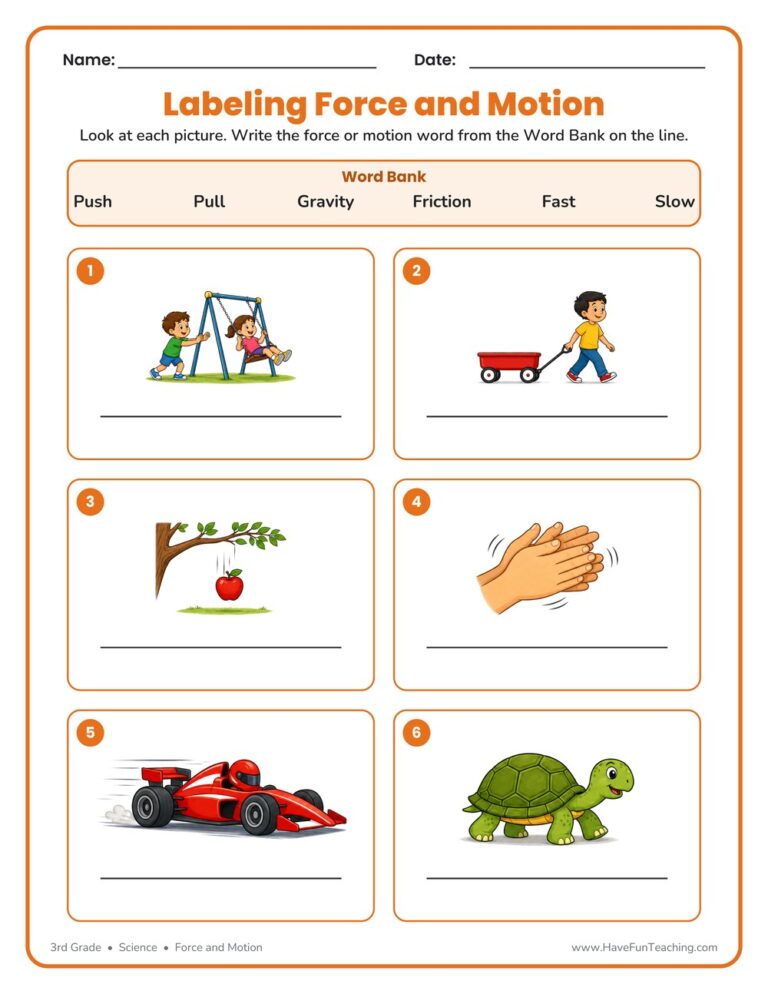
Worksheet3rd GradeLabeling Force and Motion Worksheet

The Labeling Force and Motion Worksheet has 3rd graders label six pictures with push, pull, gravity, friction, fast, and slow from a word bank. Includes an answer key for easy, no-prep science practice.

Worksheet
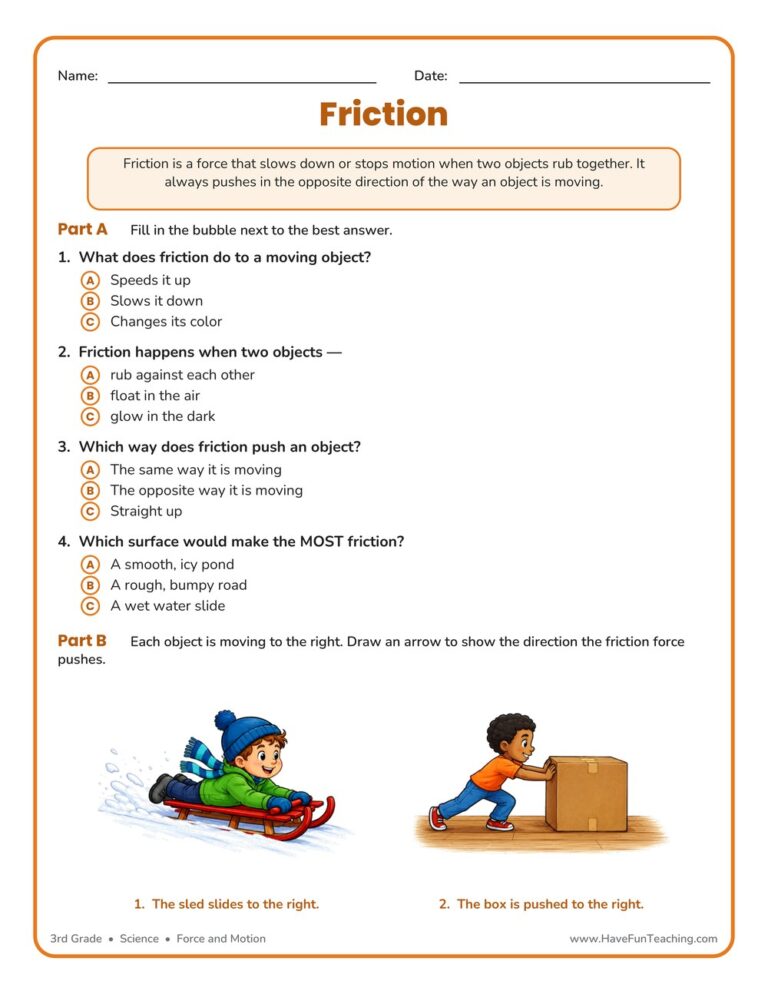
Worksheet3rd GradeDrawing Friction Worksheet

This drawing friction worksheet lets 3rd graders explore force and motion by answering questions and drawing arrows to show which way friction pushes. Answer key included for quick, no-prep science practice.

Worksheet
Worksheet3rd GradeGravity or Friction Force Worksheet

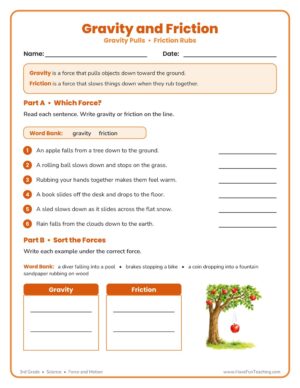
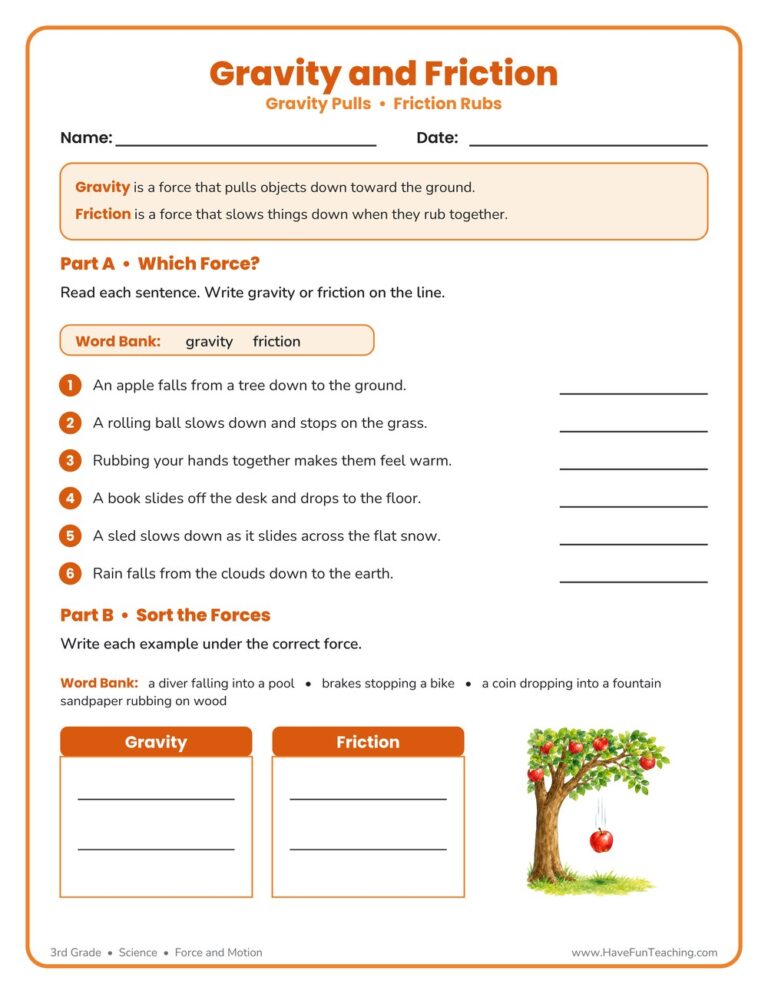
This Gravity or Friction Force Worksheet helps 3rd grade students tell the difference between gravity and friction by identifying and sorting real-life examples. Includes a complete answer key for quick, no-prep science practice.

Worksheet
Worksheet3rd GradeFall Faster Gravity Worksheet

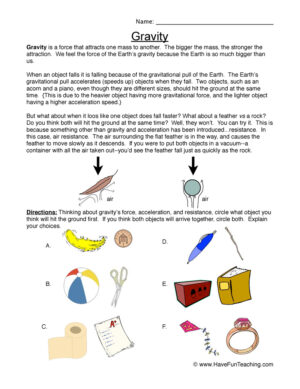
This Fall Faster Gravity Worksheet asks 3rd graders to predict which dropped object lands first and to explain why, using gravity and air resistance. Answer key included for fast, no-prep science practice.

Worksheet
Worksheet3rd GradeFriction Worksheet

This Friction Worksheet asks 3rd grade students to name the sliding, rolling, or fluid friction shown in six pictures, then explain one of them. An answer key is included, so checking work takes seconds.

Worksheet
Worksheet3rd GradeFields and Poles Magnets Worksheet

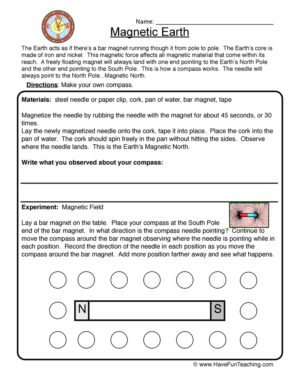
This fields and poles magnets worksheet has 3rd Grade students name the poles and field of a magnet, predict a push or a pull, and explain how a compass works. An answer key is included.

Worksheet
Worksheet3rd GradeFriction Worksheet - Draw

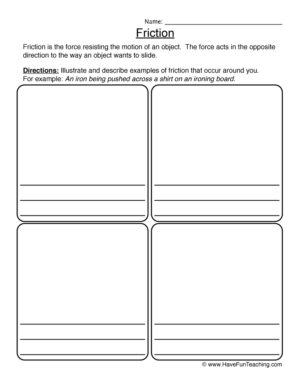
This friction drawing worksheet sends 3rd graders hunting for four real places where surfaces rub together. They sketch each one and write about it, turning an abstract force into something they can point to.

Worksheet
Worksheet3rd GradeMagnetism Experiment Worksheet

This magnetism experiment worksheet has 3rd graders sort eight objects by material, decide whether magnet poles attract or repel, and explain why steel is pulled and plastic is not. Answer key included for fast, no-prep science practice.

Worksheet
Worksheet3rd GradeMan and Fuel Powered Worksheet

This man and fuel powered worksheet asks 3rd graders to sort eight machines into people powered and fuel powered columns, then explain four more in writing. Answer key included for a no prep science lesson.

Worksheet
Worksheet3rd GradeThanksgiving Parade Balanced Forces Worksheet

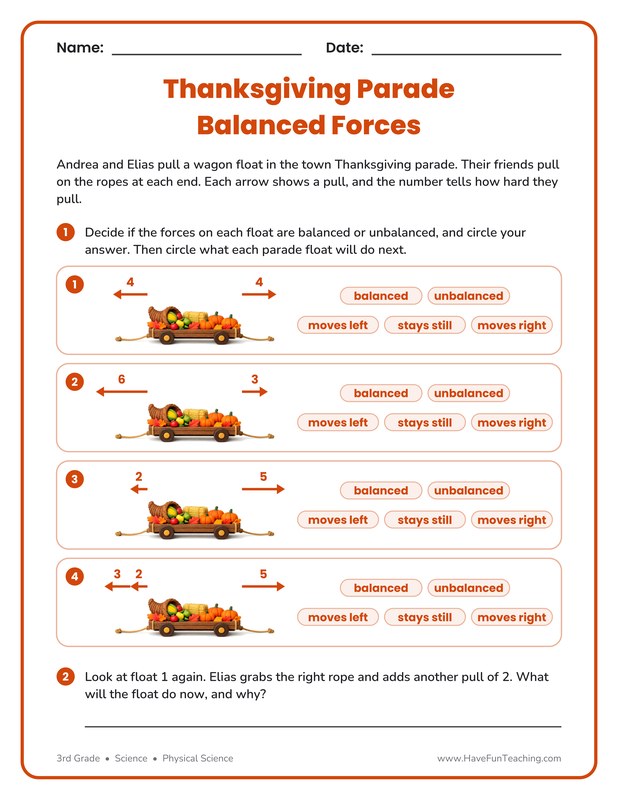
This Thanksgiving parade balanced forces worksheet has third graders read force arrows on four wagon floats, circle balanced or unbalanced and predict the motion, then explain a change. Answer key included.

From our teachers' playbook

Pushes, pulls and things on the move

What do 3rd graders learn about force and motion?

Third graders learn that a force is a push or a pull, and forces change how things move. When forces are balanced, like a tug-of-war tie, nothing changes. When they're unbalanced, an object speeds up, slows down or changes direction. Kids explore gravity (the pull toward Earth), friction (the force that slows sliding things) and magnets that push or pull without touching. They also notice patterns, like a swing that goes back and forth. The click comes when kids realize a rolling ball stops because of friction, not because it "gets tired."

Our favorite ways to teach force and motion

Force and motion is made for hands-on science. Test first, then write about it.

Draw the arrows

After each mini experiment, kids sketch the object and draw arrows for every push or pull acting on it. Bigger force, bigger arrow. Labeling forces in pictures helps kids see balanced and unbalanced forces at a glance.

Why it works: pairing a picture with each word gives kids two ways to remember it, a well-tested principle of how people learn (Mayer, 2009).
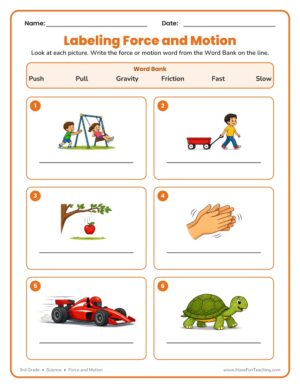
Labeling Force and Motion WorksheetTry it withLabeling Force and Motion WorksheetWorksheetsOpen it →

Test it with magnets

Give partners magnets and a pile of objects. They predict which will stick, test, and record results. Then they find how far a magnet can pull through paper. A real experiment with a recording sheet makes kids think like scientists.

Why it works: the U.S. Department of Education's guide for teaching elementary math recommends moving from hands-on objects to drawings to numbers.

Magnetism Experiment WorksheetTry it withMagnetism Experiment WorksheetWorksheetsOpen it →

Gravity or friction?

Describe a situation, like "a sled slows down on the grass," and kids decide which force is at work. Rapid-fire questions like these sort out the two forces kids mix up most.

Why it works: a big review of study methods ranked quick self-quizzing among the most powerful ways to remember (Dunlosky and colleagues, 2013).

Gravity or Friction Force WorksheetTry it withGravity or Friction Force WorksheetWorksheetsOpen it →

Force and motion questions parents and teachers ask

What is force and motion for 3rd grade?

A force is a push or a pull, and motion is how an object moves. Third graders learn that balanced forces keep things still or moving steadily, while unbalanced forces make things speed up, slow down or turn.

What are balanced and unbalanced forces?

Balanced forces are equal and opposite, so nothing changes, like a tug-of-war tie. Unbalanced forces are uneven, so the object moves toward the stronger force.

What is friction?

Friction is a force that happens when two surfaces rub together. It slows things down. Rough surfaces like carpet make more friction than smooth ones like ice.

What are easy force and motion experiments at home?

Roll a ball on different floors and measure how far it goes. Make a ramp from a book and test toy cars. Use fridge magnets to see what they attract.