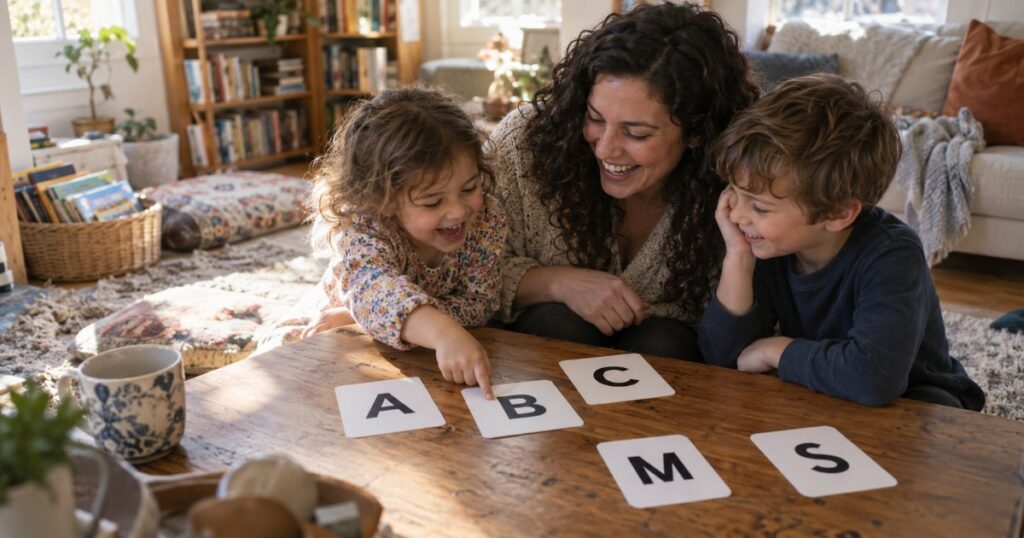
It is nine o’clock, tomorrow’s reading block is still a blank square on your plan, and the reader you are worried about is guessing at words from the picture again. Free phonics worksheets are the quickest honest fix you have. Print four pages tonight, teach them tomorrow, and you will finally see which sounds she owns and which ones she is faking.
Have Fun Teaching has 555 phonics worksheets, and they are organized the way phonics is actually taught — letter sounds first, then blending, then the patterns that unlock longer words. This post walks that order, hands you ten pages to print tonight, and points you at the songs and videos that make the sounds stick when paper alone is not enough.
The short version
3 days free
Ready for the whole library?
You’ve had your freebie — but members download 10,000+ resources for every grade, all year long. Try it free — $0 today, cancel anytime.
Free for teachers
Pick your grade. We’ll send 10 free resources.
Worksheets, activities and a video — picked for your classroom, ready to print tonight.
One free bundle per teacher. We’ll also send free teaching ideas each week — unsubscribe anytime.



- Phonics has an order. Sounds, then blending, then patterns — teach it in that order and the guessing drops away.
- Have Fun Teaching has 555 printable phonics worksheets, plus 83 songs, 87 videos and 131 activities for Preschool through 6th grade.
- Start where the child actually breaks down, not where the grade level says she should be.
- Ten focused minutes a day beats one long catch-up session on a Saturday.
What free phonics worksheets actually do for a struggling reader
A worksheet is not a whole reading program, and nobody should pretend it is. What a good phonics page does is narrow the job down to one thing. No picture to guess from, no story to carry, just a sound and the letters that spell it, over and over until it is automatic.
That matters because guessing is a habit, and it is a habit kids build when the text is a little too hard and the picture is a little too helpful. Decoding is the opposite habit. As Reading Rockets puts it in its phonics module, readers need the letter-sound relationships to be solid enough that words come off the page without a hunt. Decoding worksheets are simply the reps that make that happen.
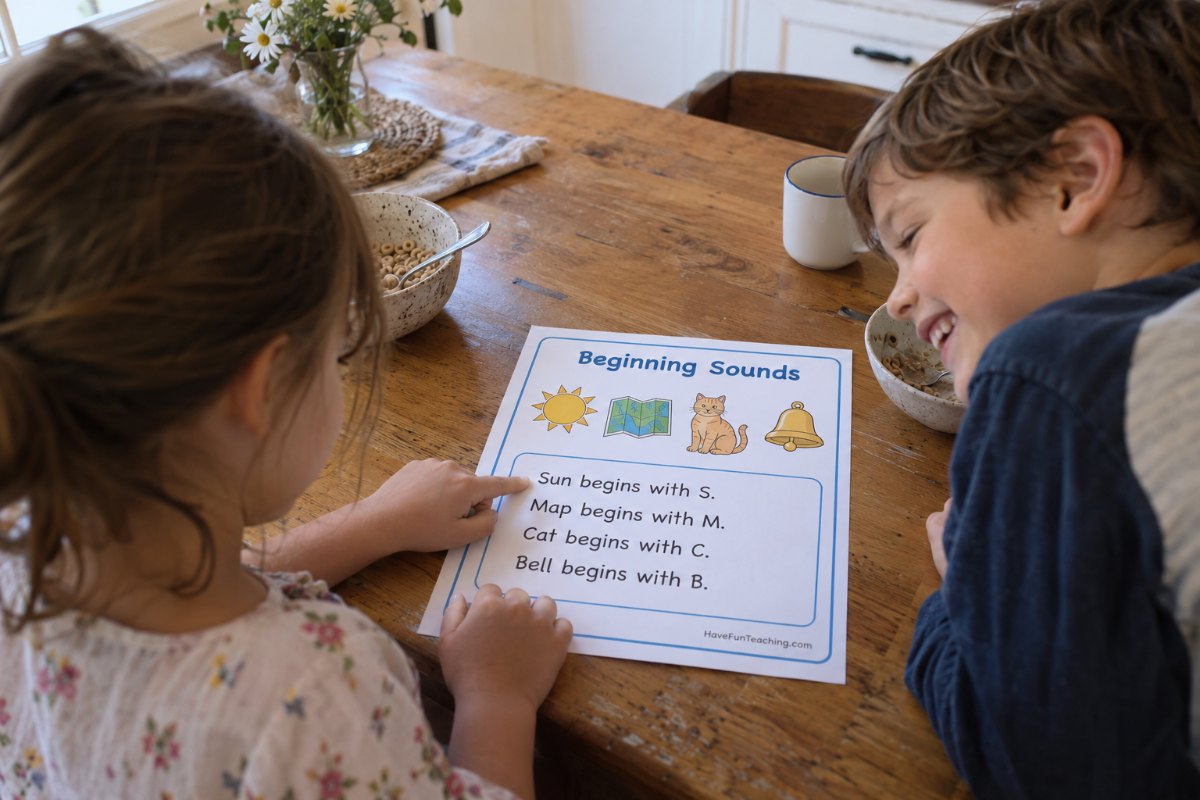
Printable phonics worksheets are also the cheapest diagnostic you own. Watch her work one page of beginning sounds and you will learn more about where she is stuck than a reading level letter will ever tell you.
The phonics order that stops kids from guessing
Skills stack. If a child cannot hear the first sound in map, blends will not help her, and a long vowel rule is just one more thing to forget. Here is the order the free phonics worksheets on Have Fun Teaching are built around.
Sounds before letter names
A child can sing the alphabet perfectly and still not know that S says /s/. Names and sounds are two different pieces of knowledge, and the sound is the one that reads words. Start with letter recognition and beginning sounds, then middle and ending sounds, until she can hear all three positions in a short word.
Blend before you build
Once she can hear the three sounds, blending is what turns them into a word. This is the step that gets skipped, and it is the one that decides everything after it. CVC practice — cat, mop, sun — is where blending becomes automatic, and word families hand her a whole set of words for the price of one pattern.
Only then do consonant blends and digraphs make sense, because those are new spellings for sounds she can already hear. Long vowels, silent e and r-controlled vowels come last, and they come much easier when the first four steps are solid.
Phonics songs and videos that make the sounds stick
Paper is only half of it. Sound is a listening skill first, which is why there are 83 phonics songs and 87 phonics videos sitting alongside the worksheets.
The Alphabet Songs collection is the backbone — a separate song for every letter, from the Letter A Song through to Z, plus classic and animated video collections that string them all together. Browse them on the phonics songs page and the phonics videos page, or watch them free on the Have Fun Teaching YouTube channel.
Pair them the lazy way: play the song while she is finding her pencil, then hand her the matching worksheet. The tune does the memorizing and the page does the proving.
10 free phonics worksheets to print tonight
These ten run in teaching order, from letter formation through to r-controlled vowels. Print the ones that match where your reader actually is, not where the calendar says she should be.
-
Kindergarten · Phonics
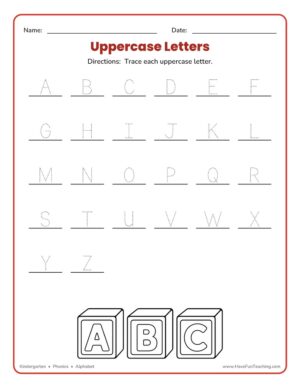
Uppercase Letters Writing Worksheet
Tracing and writing every uppercase letter. Handwriting and letter recognition in the same ten minutes, which is exactly where phonics starts.
-
Kindergarten · Phonics
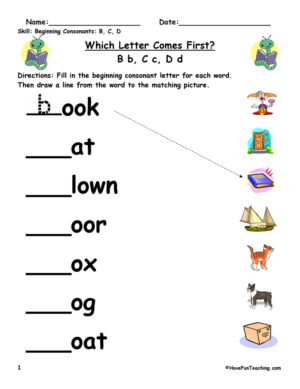
Beginning Sounds B, C, D Worksheet
Three consonants at a time, with pictures to match. Small sets like this are why it works — she is choosing between three sounds, not twenty-six.
-
Kindergarten · Phonics
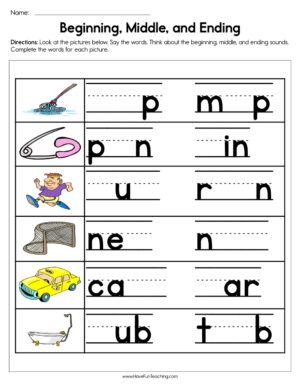
Beginning, Middle, and Ending Sounds Worksheet
The first page that asks her to hear all three positions in a word. If she can do this one, she is ready to blend.
-

Kindergarten · Phonics
One box per sound, and a counter to push into each box as she says it. The classic tool for making a word feel like separate pieces.
-
Kindergarten · Phonics
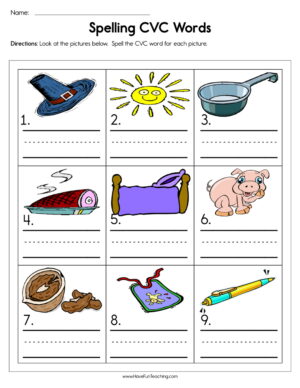
Blending in reverse. Writing the word she hears proves she has the sounds, not just the picture clue.
-
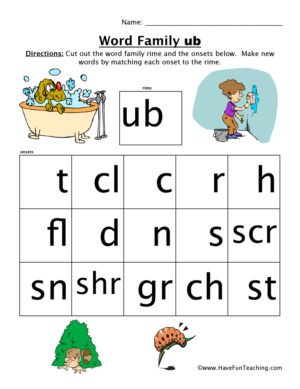
Kindergarten–2nd · Phonics
Cub, rub, tub, sub. One pattern, four words, and the moment she notices the chunk is the moment reading speeds up.
-
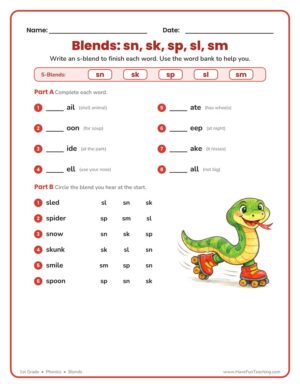
1st Grade · Phonics
Stop, slide, snail. Two consonants she already knows, pushed together — no new sounds to learn, just a new place to hear them.
-
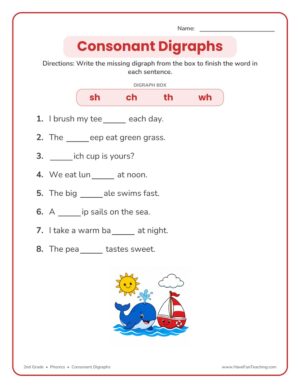
2nd Grade · Phonics
Sh, ch, th, wh. Two letters making one brand-new sound, which is the part that trips readers who are still sounding letter by letter.
-

1st Grade · Phonics
Long and Short Vowels Worksheet
Sorting the two vowel sounds side by side. Hearing the difference has to come before any rule about silent e will mean anything.
-

1st Grade · Phonics
Mark’s Barn Phonics Story Worksheet — AR Sound
A whole short story built on the AR sound, with comprehension questions after it. This is the payoff: phonics practice that finally reads like a book.
Teacher tip: when a page is too hard, do not scale down the page — scale down the number of items. Fold it in half and do five. A child who finishes five will pick up the next one; a child who quit at twenty will not.
Ready-to-print
555 phonics worksheets, sorted by skill
Every skill in this post has its own page — letter recognition, beginning sounds, CVC, word families, blends, digraphs and vowels. Filter by grade, print what you need, teach it today.
Get the Phonics Worksheets Browse free resourcesNo login needed to browse · Preschool–6th · Print in seconds
How do I know which phonics skill to teach next?
Ask her to read you five short nonsense words: mip, sut, dan, fem, lok. Made-up words are the fairest test there is, because she cannot have memorized them and there is no picture to lean on.
If she stalls on the first sound, go back to beginning sounds. If she gets all three sounds out but cannot push them together into a word, she needs blending, not more letters. If she reads all five cleanly, she is ready for blends, digraphs and vowel teams. Five words, ninety seconds, and you know what to print.
The next worksheet is not the next grade level. It is the first skill she cannot do yet.
How Have Fun Teaching helps
Everything in this post is on the site right now, and a good chunk of it is free to print. What a membership adds is the not-hunting — every phonics skill, every grade and every format in one place, with new resources added daily.
- 555 free phonics worksheets sorted by skill and grade, from letter recognition through to r-controlled vowels
- 83 phonics songs and 87 phonics videos that teach the same sounds by ear
- 107 phonics assessments and 131 activities for those same skills, so practice and checking finally match
Phonics worksheet questions teachers ask
What order should I teach phonics skills in?
Start with letter recognition and letter sounds, then beginning, middle and ending sounds. Move on to blending CVC words, then word families, then consonant blends and digraphs, and finally long vowels, silent e and r-controlled vowels. The order matters more than the pace, because each step is built out of the one before it.
Are the phonics worksheets on Have Fun Teaching free?
Hundreds of resources are free to print, and you can browse the whole library without an account. A Teacher or Family membership unlocks all 10,000+ resources, including every phonics worksheet, song and video, and it starts with a 3-day free trial that does not ask for a card.
What grade are phonics worksheets for?
Most phonics work happens between Preschool and 2nd grade, but an older reader who still guesses at words needs it too. Have Fun Teaching sorts phonics worksheets by grade from Preschool through 6th, so you can pick the skill she actually needs without handing her a page that looks too young.
Do phonics songs actually help, or are they just fun?
Both. A song gives a child a second route to the same sound, one she can replay in her head while she is decoding. Have Fun Teaching has 83 phonics songs and 87 phonics videos, including a song for every letter of the alphabet, and pairing one with the matching worksheet costs about four extra minutes.
Everything for phonics, in one place
Start a 3-day free trial and print every phonics worksheet, song and video in the library. No card required, cancel any time.
- 10,000+ ready-to-teach resources
- Preschool–6th grade
- Loved by 2M+ teachers & homeschoolers
No card required to start · Cancel anytime
3 days free
Ready for the whole library?
You’ve had your freebie — but members download 10,000+ resources for every grade, all year long. Try it free — $0 today, cancel anytime.
Free for teachers
Pick your grade. We’ll send 10 free resources.
Worksheets, activities and a video — picked for your classroom, ready to print tonight.
One free bundle per teacher. We’ll also send free teaching ideas each week — unsubscribe anytime.