Skip to content
Start My 3 Free Days $0 today · cancel anytime

CVC Worksheets

29 cvc worksheets. Teacher favorites: CVC Word Sounds Worksheet and Spelling CVC Words Worksheet. How teachers use these

CVC Worksheets

29 cvc worksheets. Teacher favorites: CVC Word Sounds Worksheet and Spelling CVC Words Worksheet. How teachers use these

Worksheet
WorksheetKindergartenCVC Word Sounds Worksheet

This CVC Word Sounds Worksheet has Kindergarten readers say six pictures and fill in the bubble beside the CVC word with the matching sounds. Answer key included for quick, no-prep phonics practice.

Worksheet
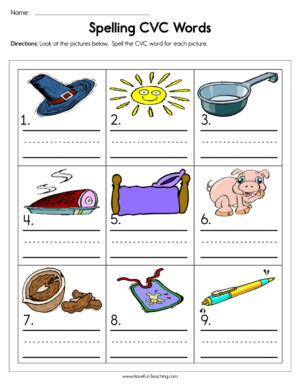
WorksheetKindergartenSpelling CVC Words Worksheet

A picture-clue Spelling CVC Words Worksheet that helps kindergarten students hear and write the beginning, middle, and ending sounds in simple three-letter words. Answer key included for quick, no-prep phonics practice.

Worksheet
WorksheetKindergartenMatching CVC Worksheet

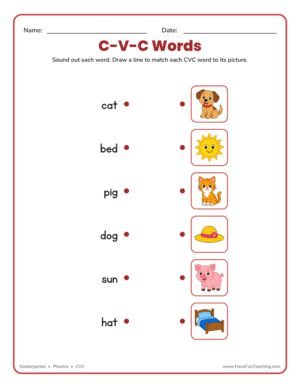
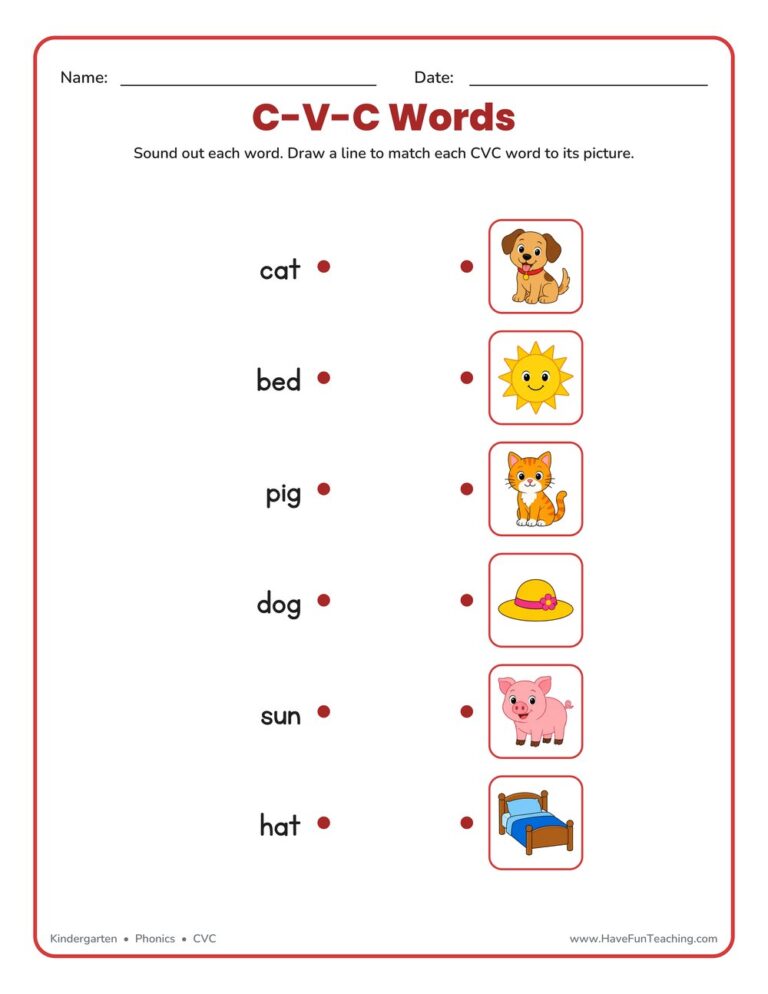
A matching CVC worksheet where kindergarten readers sound out six short words and draw a line to each picture. Includes an answer key — perfect for no-prep phonics and early decoding practice.

Worksheet
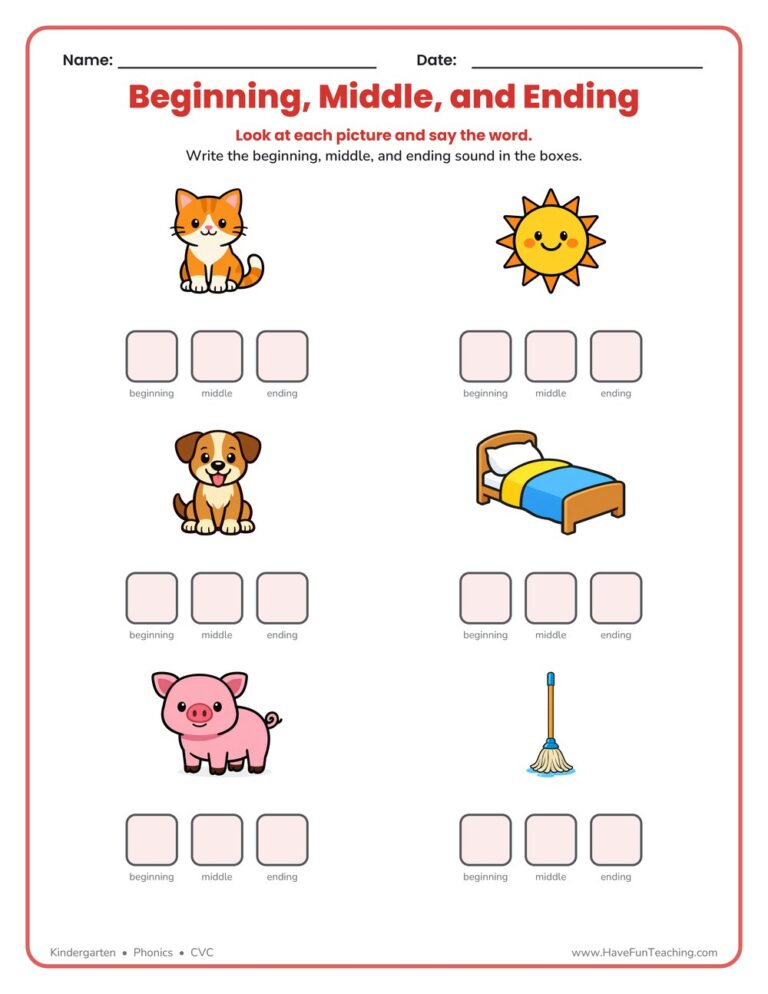
WorksheetKindergartenBeginning, Middle, and Ending Sounds Worksheet

This Beginning, Middle, and Ending Sounds Worksheet helps kindergarten learners break six CVC picture words into their beginning, middle, and ending sounds. Answer key included—great no-prep phonics practice.

Worksheet
WorksheetKindergartenCVC Practice Worksheet

This CVC practice worksheet asks Kindergarten students to say each picture, stretch out its three sounds, and write a letter in every box to spell the word. An answer key is included, so checking phonics practice takes seconds.

Worksheet
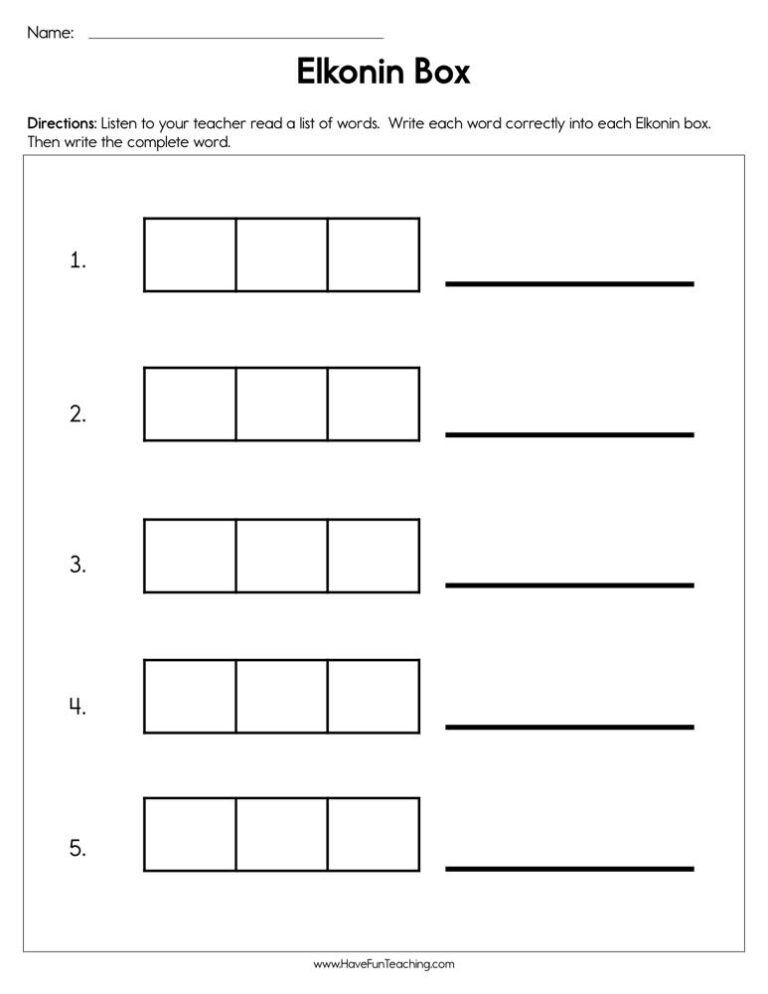
WorksheetKindergartenElkonin Box Worksheet

This Elkonin Box Worksheet gives Kindergarten students seven picture prompts and three-cell sound boxes for segmenting CVC words into beginning, middle, and ending sounds. Answer key included, so practice takes no prep.

Worksheet
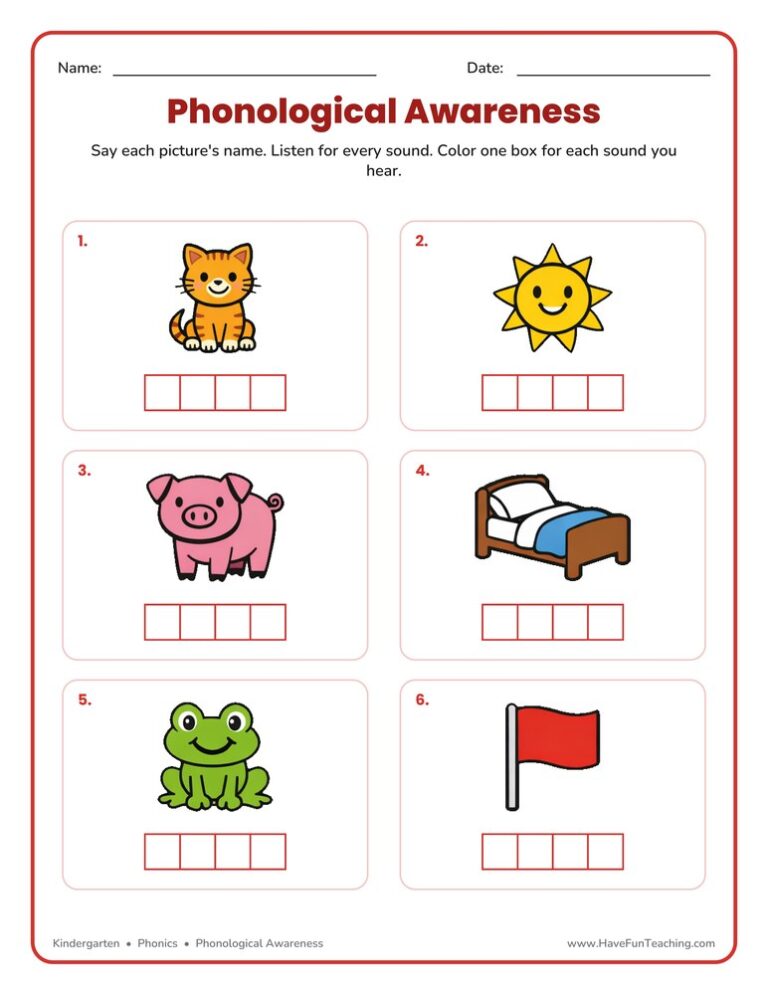
WorksheetKindergartenPhonological Awareness Worksheet

This phonological awareness worksheet helps Kindergarten students listen for each sound in a word and color one box per sound they hear. Includes a complete answer key for easy, no-prep practice of early phonics and phoneme skills.

Worksheet
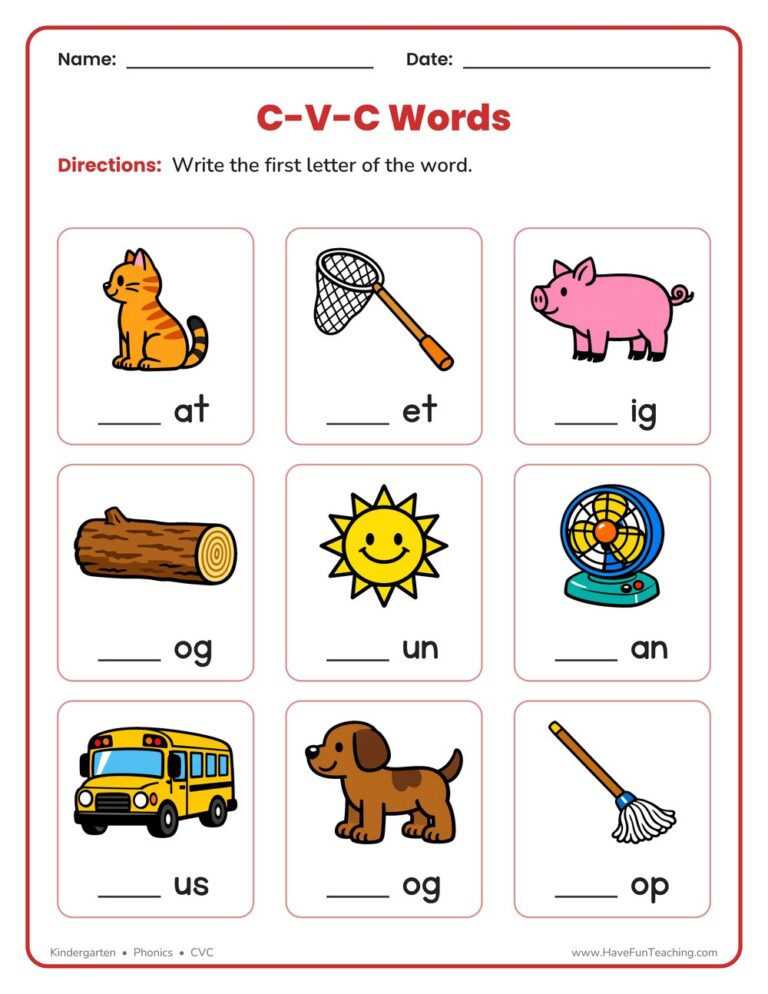
WorksheetKindergartenFill in the Beginning Letter CVC Words Worksheet

This Fill in the Beginning Letter CVC Words Worksheet gives Kindergarten students nine picture boxes and asks them to write the missing first letter. An answer key is included, so beginning-sound practice takes no prep at all.

Worksheet
WorksheetKindergartenShort I Beginning and Ending Sounds Worksheet

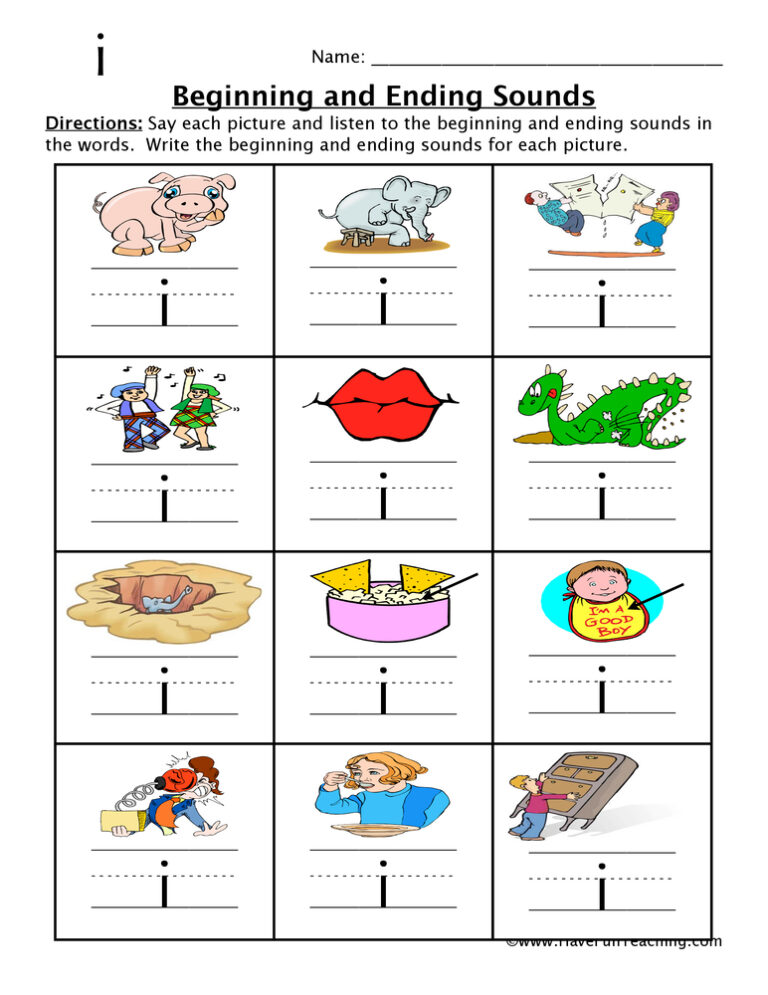
This short i beginning and ending sounds worksheet has Kindergarten readers name six pictures and write the first and last letter of each CVC word. Answer key included for fast, no-prep phonics practice.

Worksheet
Worksheet1st GradePhonemes Worksheet

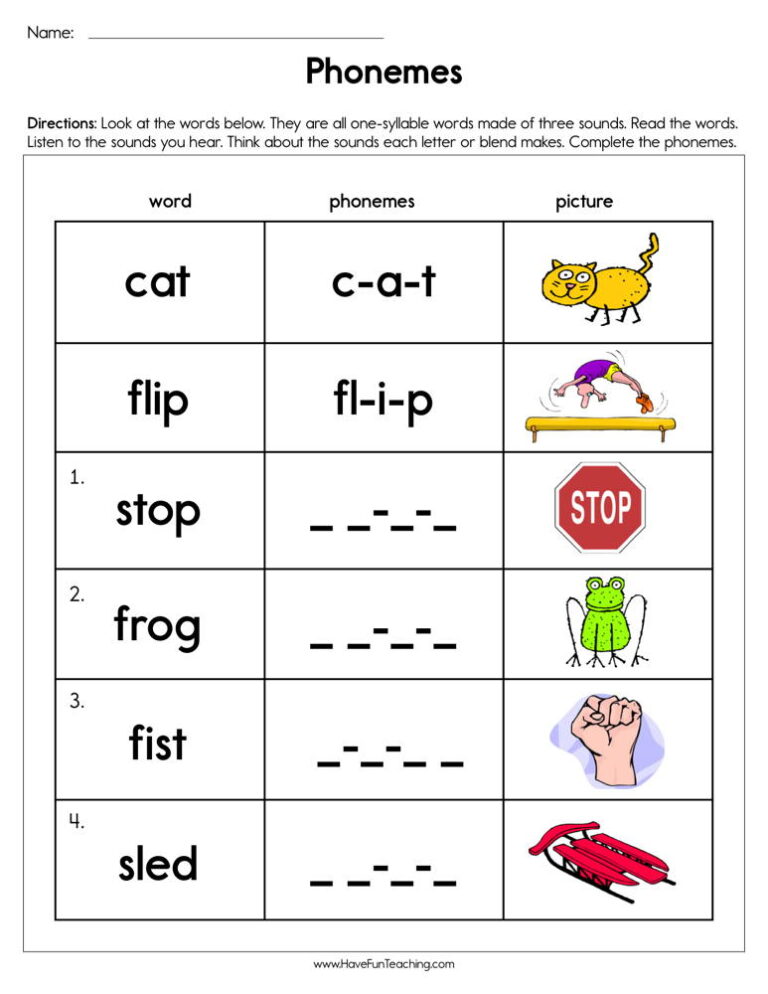
This Phonemes Worksheet gives 1st graders hands-on practice segmenting short words into their individual sounds, with picture cues and worked blend examples. Includes an answer key to build the phonemic awareness that powers reading and spelling.

Worksheet
WorksheetKindergartenShort I Words Beginning and Ending Sounds Worksheet

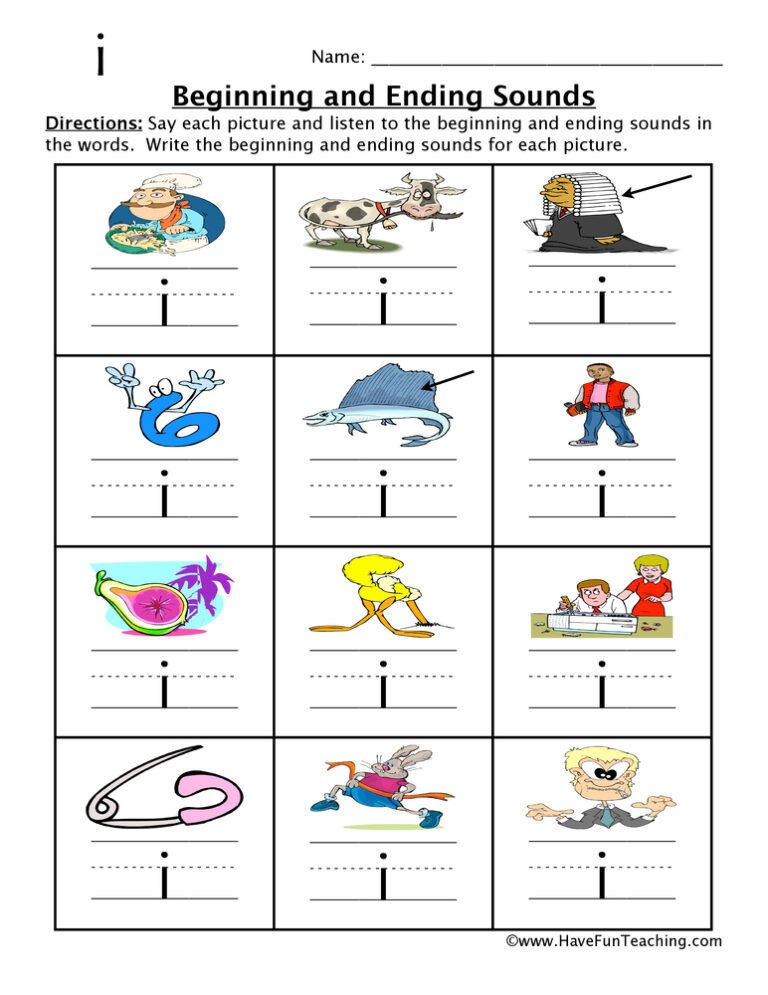
This Short I Words Beginning and Ending Sounds Worksheet has kindergarten students name six pictures and write the first and last letter of each short i word. An answer key is included for fast, no-prep phonics practice.

Worksheet
WorksheetKindergartenCVC Vowel Sounds Worksheet

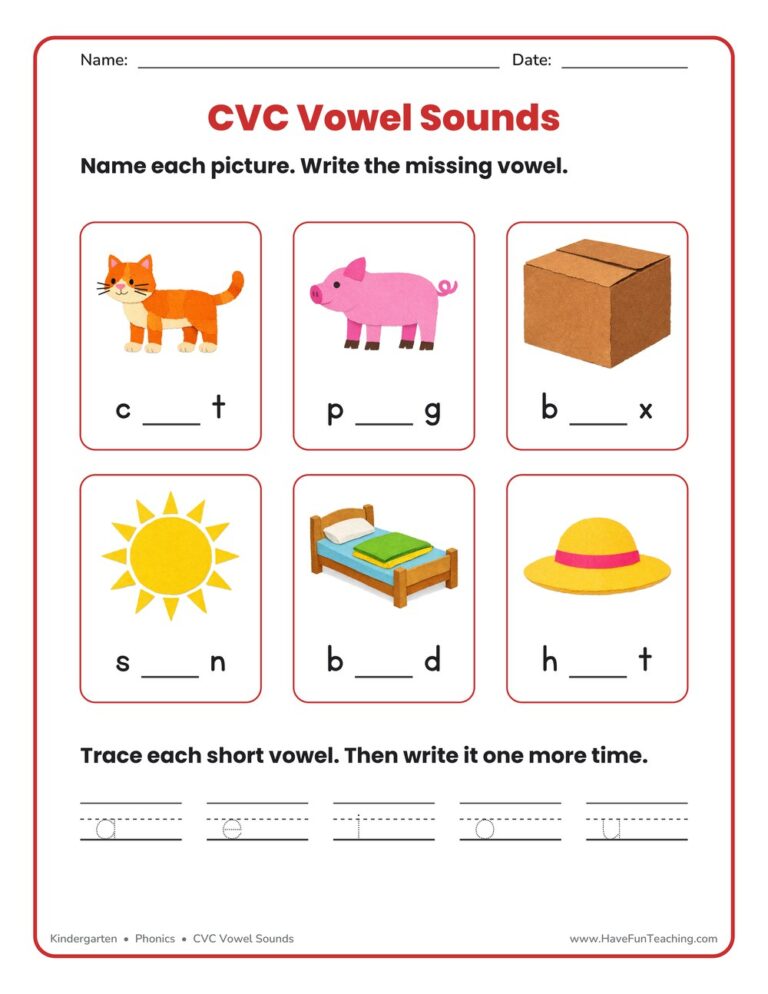
This CVC vowel sounds worksheet asks Kindergarten students to name six pictures and write the short vowel they hear in the middle. Answer key included, so beginning readers get quick, no-prep practice hearing every short vowel.

Worksheet
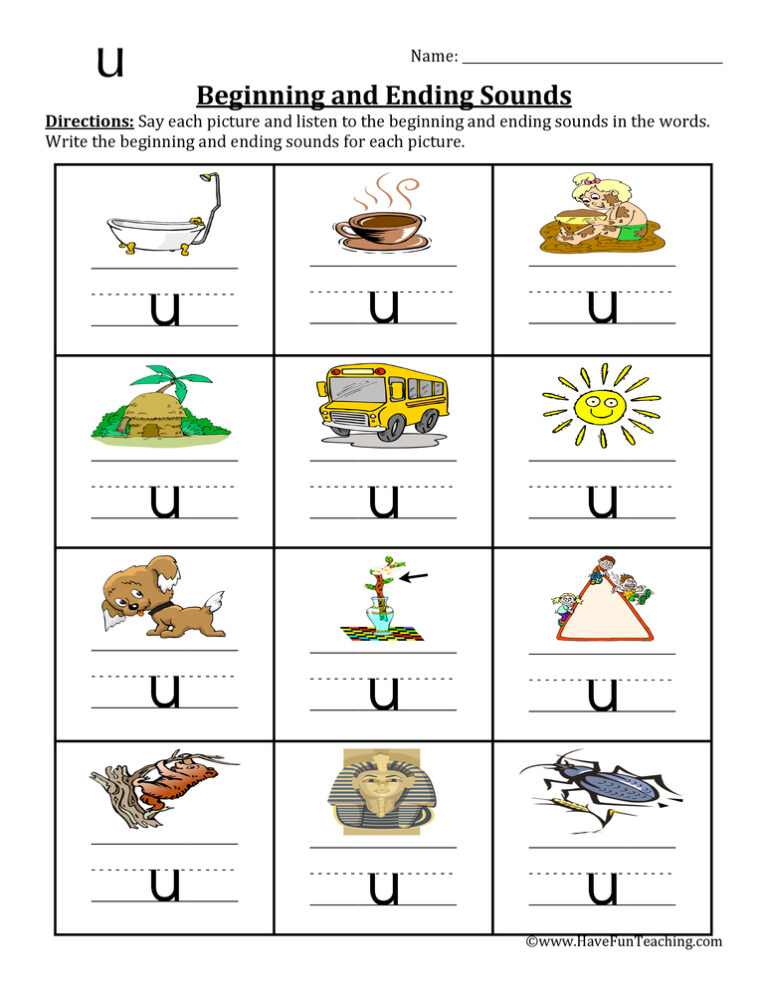
WorksheetKindergartenShort U Beginning and Ending Sounds Worksheet

This Short U Beginning and Ending Sounds Worksheet asks Kindergarten students to name six pictures and write the letter they hear at each end of the word. Answer key included for fast, no-prep phonics practice.

Worksheet
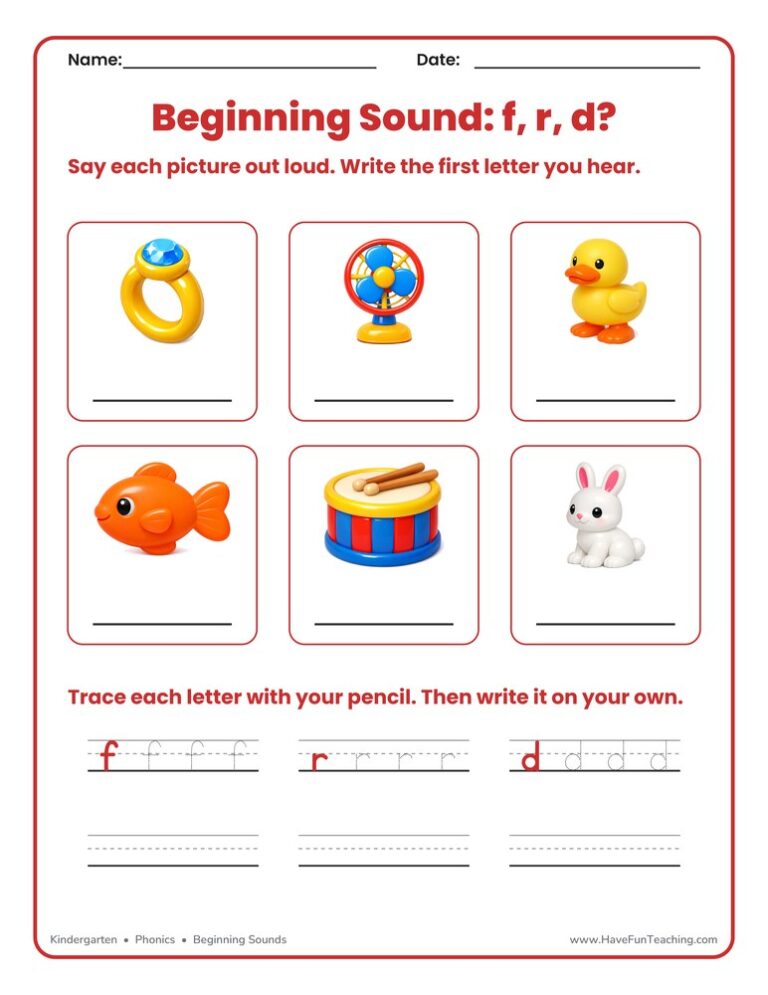
WorksheetKindergartenBeginning Sounds Worksheet - F, R, D

This Beginning Sounds Worksheet - F, R, D helps Kindergarten students say each picture, hear the first sound, and write f, r, or d, then trace all three letters. Answer key included so checking is quick.

Worksheet
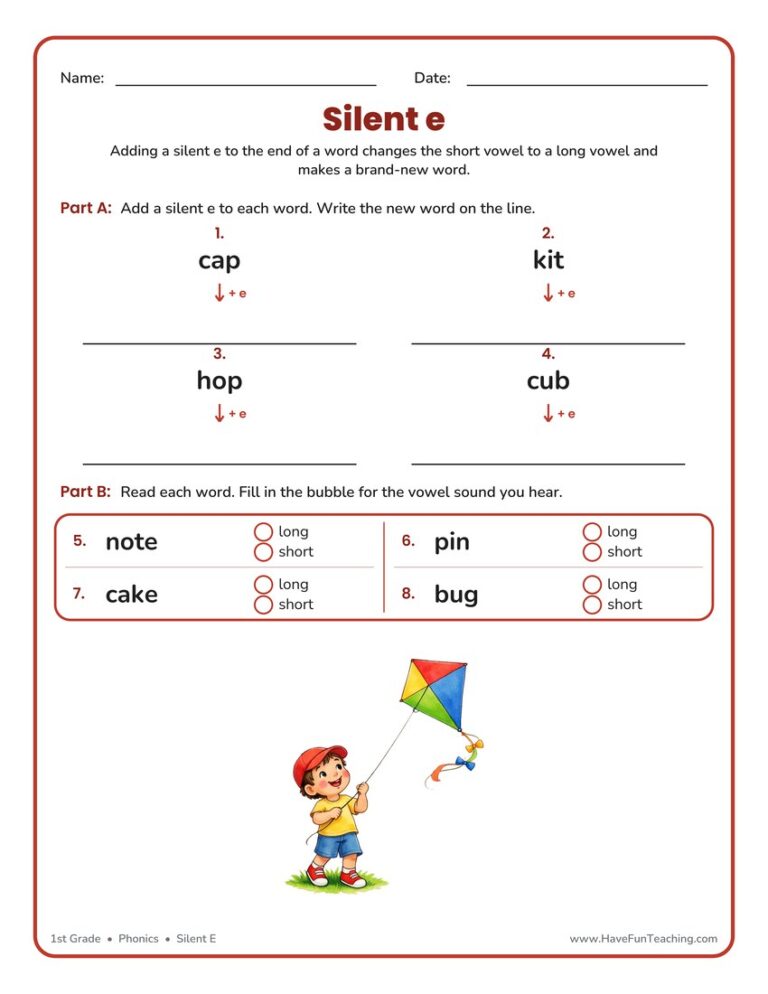
Worksheet1st GradeAdding Silent E Worksheet

This Adding Silent E Worksheet gives 1st graders fun practice turning short-vowel CVC words into long-vowel words like cape, kite, and hope. Includes a complete answer key — perfect for no-prep phonics practice at home or in class.

Worksheet
Worksheet1st GradeShort Vowels Writing Practice Worksheet

This Short Vowels Writing Practice Worksheet asks 1st graders to hear the middle vowel in six picture words, write it, then trace and spell four short-vowel words. Answer key included for fast, no-prep phonics practice.

Worksheet
WorksheetKindergartenCVC Worksheet - Write the Words

This CVC worksheet - write the words helps kindergarten students name six pictures and write each short vowel word from a word box. An answer key is included for easy checking.

Worksheet
WorksheetKindergartenFill in the Vowel CVC Worksheet

This Fill in the Vowel CVC Worksheet has Kindergarten students trace the five short vowels, then say each picture and write the vowel missing from its CVC word. Answer key included, so checking takes seconds.

Worksheet
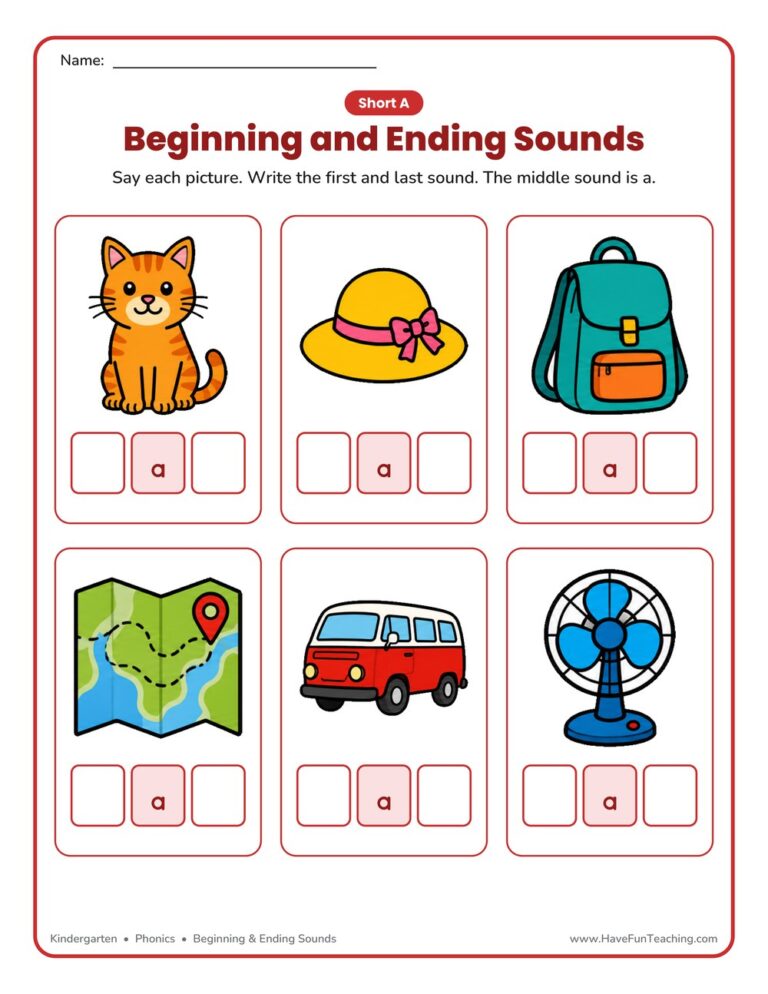
WorksheetKindergartenShort A Beginning and Ending Sounds Worksheet

This Short A Beginning and Ending Sounds Worksheet gives kindergarten students picture-based practice writing the first and last sounds in short a words. An answer key is included for quick and easy checking.

Worksheet
WorksheetKindergartenShort E Beginning and Ending Sounds Worksheet

This Short E Beginning and Ending Sounds Worksheet has kindergartners say six picture names and write the first and last letter of each short e word. An answer key is included for quick, no-prep phonics practice.

From our teachers' playbook

Cat, map, sun: let's blend!

What do kids learn about CVC words?

CVC words are the first words most kids learn to read on their own. They follow a simple pattern: consonant, vowel, consonant, like cat, dog and pin. Kids learn to say each sound and blend them together: /c/ /a/ /t/ = cat. Then they flip it around and spell by stretching a word into sounds. The short vowel in the middle is the tricky part, so most practice focuses there. The click moment is when a child sounds out a word they've never seen before, all by themselves.

How we teach CVC words

CVC practice works best when kids hear, see and move the sounds. These are our go-to moves.

Push the sounds into boxes

Draw three boxes and give each child three counters. Say "map" slowly and have them push one counter into a box for each sound: /m/ /a/ /p/. Then they write a letter in each box. Kids learn to hear every sound before they spell.

Why it works: going from real objects to pictures to symbols is a core recommendation of the U.S. Department of Education's elementary math guide.

Elkonin Box WorksheetTry it withElkonin Box WorksheetWorksheetsOpen it →
Change one letter

Write "cat" and ask kids to change one letter to make "hat," then "hot," then "hop." Each change makes them listen for just one sound. It's quick, it feels like a puzzle, and it gets kids reading dozens of words in five minutes.

Why it works: the National Reading Panel found that systematic, explicit phonics teaching clearly improves how children learn to read.

Spelling CVC Words WorksheetTry it withSpelling CVC Words WorksheetWorksheetsOpen it →

Short vowel showdown

Short vowels are where CVC words break down, so we practice them in game form. Kids hear a word and tap the matching vowel. It's fast, focused practice on the hardest sound in the word.

Why it works: in a well-known study, a few short sessions of a simple number board game measurably boosted young children's number skills (Ramani and Siegler, 2008).

Short Vowel Review GameTry it withShort Vowel Review GameGamesOpen it →

CVC word questions from teachers and parents

What are CVC words?

CVC words are three-letter words made of a consonant, a short vowel and another consonant, like cat, bed, pig, hot and sun. They're usually the first words kids learn to decode.

What age should kids read CVC words?

Most children start reading CVC words in kindergarten, around age 5. Some are ready in preschool once they know their letter sounds.

How do I teach my child to blend CVC words?

Say each sound slowly, then say them faster and faster until they become a word. Try "continuous" sounds like /m/ and /s/ first, since they're easier to stretch.

What comes after CVC words?

Next come words with blends and digraphs like stop and ship, then silent e words like cake. Strong CVC skills make all of those easier.