
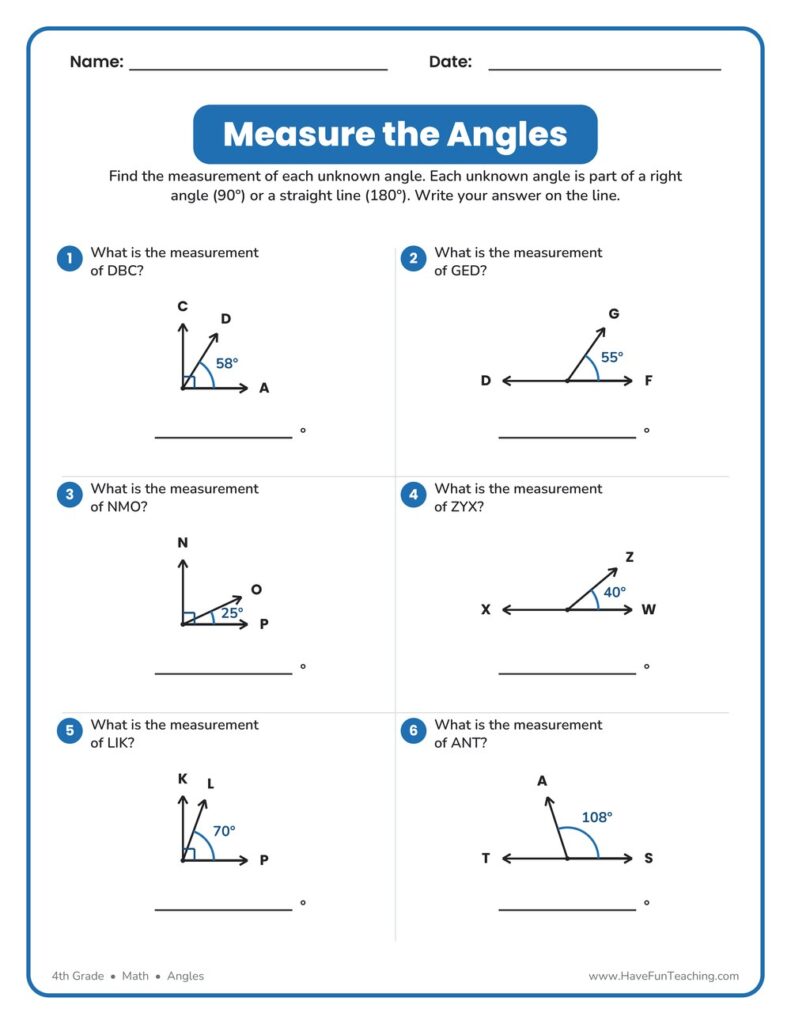
4.MD.7 Common Core Worksheet
This 4.MD.7 Common Core Worksheet gives 4th graders practice finding unknown complementary and supplementary angles using right angles and straight lines. Includes a complete answer key — perfect for no-prep angle measurement practice.
$6.97
Or free with a membership — members pay $3.33/mo for all 10,000+ resources. See plans
Want this one free?
Tell us where to send it and it’s yours — no card, no catch.
One free resource per teacher. We’ll also send free teaching ideas each week — unsubscribe anytime.
Teaching is easier with a membership
Unlimited printables, games & videos for PreK–6th — for your classroom or homeschool. Cancel anytime.
Start your 3-day free trial$0 today · cancel anytime · Instant access to 10,000+ resources
About this resource
Description
This 4.MD.7 Common Core Worksheet gives fourth grade students focused practice with additive angle measurement, the key idea behind standard 4.MD.7. Students learn that when a larger angle is broken into smaller, non-overlapping parts, the measures of those parts add up to the measure of the whole angle. On this “Measure the Angles” sheet, every unknown angle is part of either a right angle (90°) or a straight line (180°), so learners find the missing measure by adding or subtracting.
This 4th grade angles worksheet presents six clear angle diagrams, each labeled with letters and one known angle measure. Students study the diagram, decide whether the angle sits inside a right angle or along a straight line, and then write the measurement of the named angle on the line provided. To use it, hand out the page during a geometry or measurement lesson, work through the first problem together as a model, and let students complete the rest independently or with a partner. The included answer key makes checking fast and easy.
What’s Included
- 1 print-ready PDF worksheet
- Answer key
- 6 unknown-angle problems (complementary and supplementary)
There are three big reasons this 4.MD.7 Common Core Worksheet helps children learn: first, the diagrams turn an abstract rule into something students can see, so the connection between the parts and the whole angle becomes obvious. Second, mixing complementary (90°) and supplementary (180°) problems builds flexible thinking instead of one memorized trick. Third, writing each answer with a degree symbol reinforces correct notation and careful math habits that carry into later geometry work.
Teachers and parents can extend the skill in fun ways beyond the page. Have children hunt for right angles and straight angles around the classroom or home, then estimate and check the parts with a protractor. Fold paper to create angles that combine into 90° or 180°, draw and label their own angle puzzles for a friend to solve, or use a clock’s hands to talk about how angle measures add together throughout the day.
Related Resources
What teachers say
Reviews
You must be logged in to post a review.
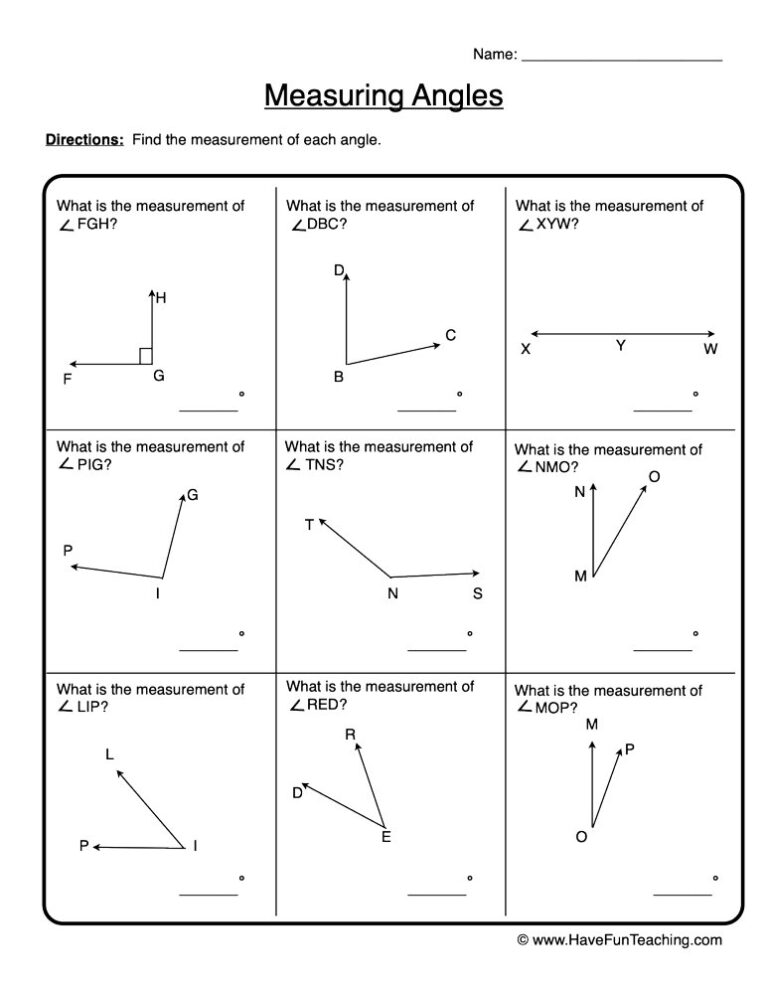
This measuring angles worksheet gives 4th graders hands-on practice using a protractor to measure angles in degrees and to name acute, right, obtuse, and straight angles. Answer key included for fast, no-prep geometry practice.
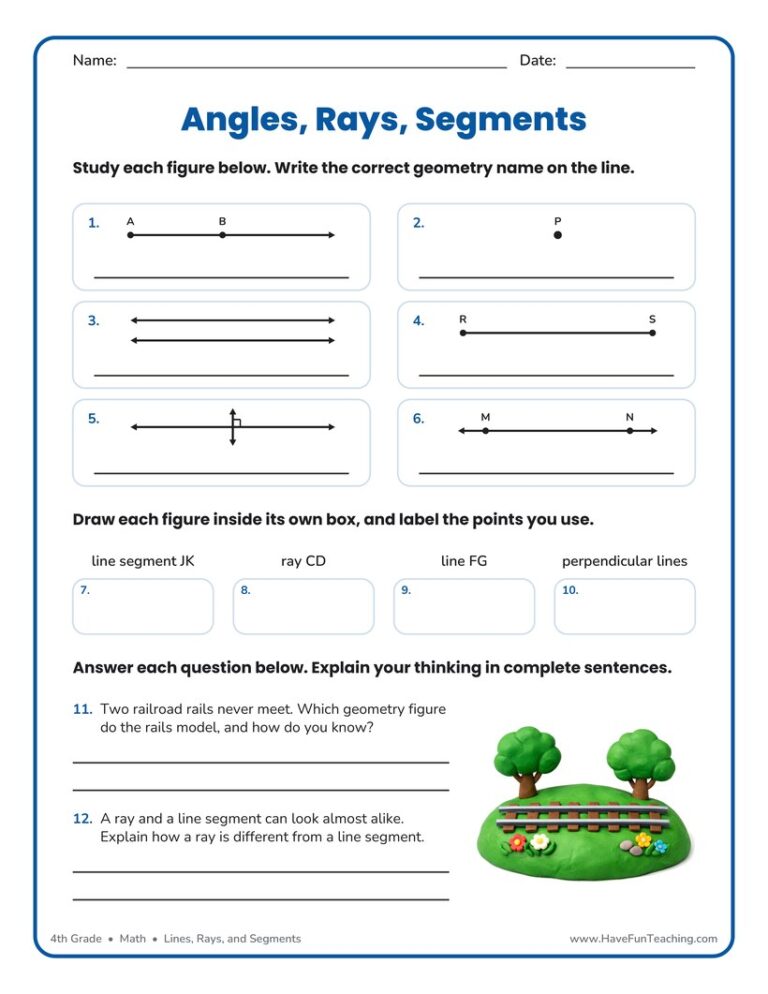
Students use this Lines Rays and Segments Worksheet to name, draw, and explain points, lines, segments, rays, and parallel and perpendicular lines. Built for 4th Grade with an answer key included, so checking takes seconds.
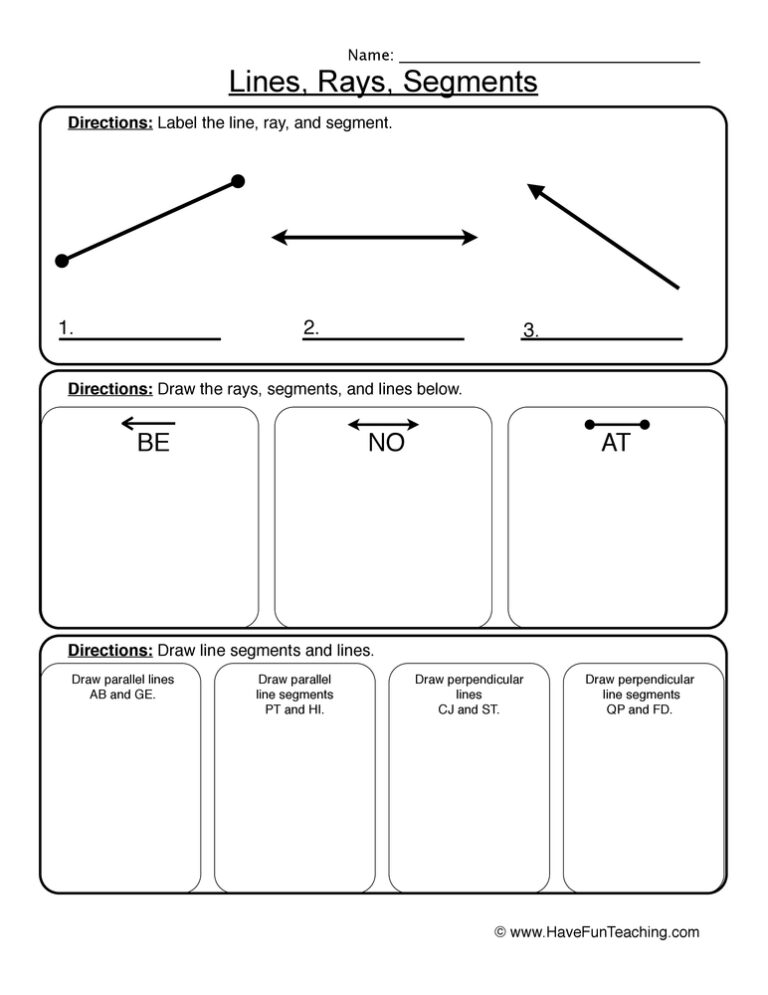
This angles rays and segments worksheet gives 4th graders practice naming and drawing lines, rays, segments, and parallel lines. An answer key is included, so checking work takes seconds.
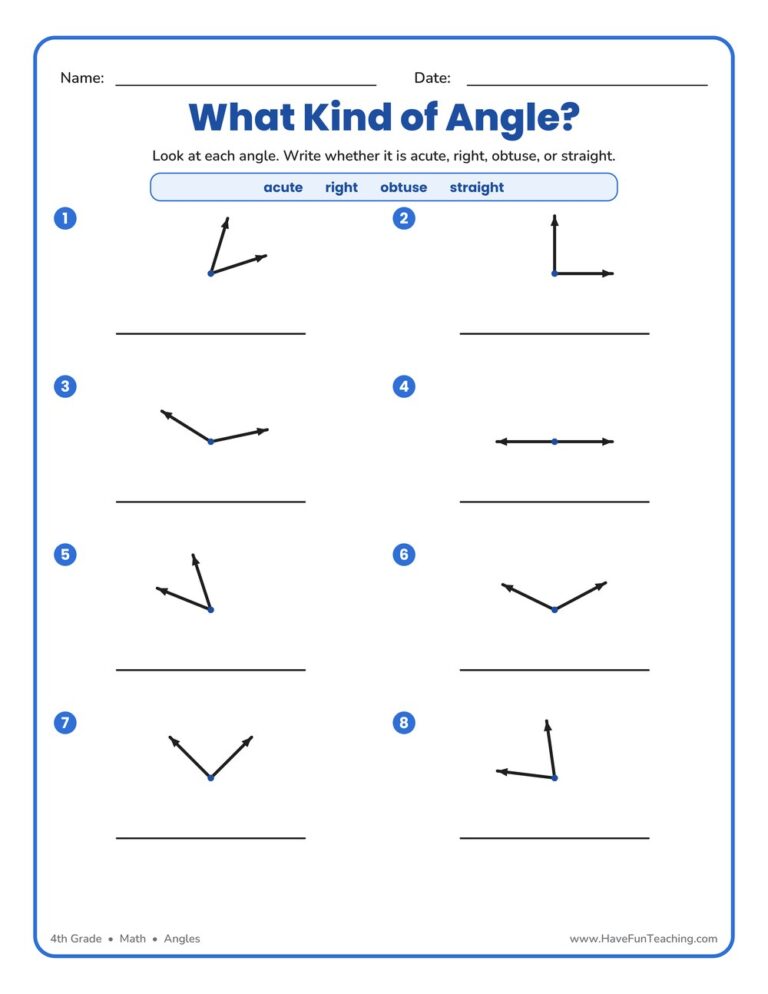
The What Kind of Angle worksheet gives 4th graders eight angles to sort as acute, right, obtuse, or straight. Answer key included for quick, no-prep geometry practice.

This angles measuring worksheet has 4th graders measure six angles with a protractor and label each one acute, obtuse, right, or straight. An answer key is included, so protractor practice checks itself in minutes.

This rays worksheet has 4th graders tell rays from lines and line segments on six labeled figures, draw ray MN from two given points, and explain the difference in writing. Answer key included.

In this Star Wars Rays and Angles Activity, students recognize angles as obtuse, acute or right by playing War!
In this 4.MD.7 Fourth Grade Common Core lesson students solve addition and subtraction problems to find unknown angles on a diagram.

Using this Measuring Monstrous Angles Activity, students measure angles in whole-number degrees using a protractor.
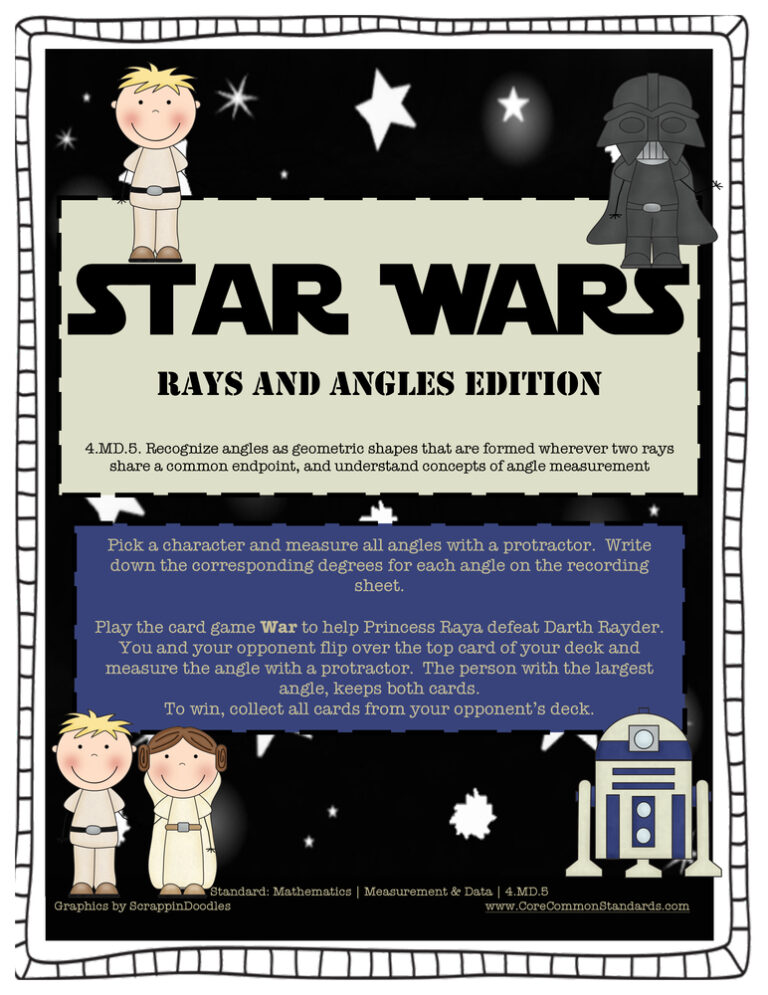
In this 4.MD.5 Common Core Activity, students recognize angles as obtuse, acute or right by playing this game of War with a partner!

In this Up, Up, and Away! Measuring Angles Activity, students solve addition and subtraction problems to find unknown angles on a diagram.

Using this Baking with Geometry Activity, students match picture cards to the appropriate geometry term, identifying points, lines, line segments, rays, and angles.


Reviews
There are no reviews yet