

Angles Measuring Worksheet
This angles measuring worksheet has 4th graders measure six angles with a protractor and label each one acute, obtuse, right, or straight. An answer key is included, so protractor practice checks itself in minutes.
$6.97
Or free with a membership — members pay $3.33/mo for all 10,000+ resources. See plans
Want this one free?
Tell us where to send it and it’s yours — no card, no catch.
One free resource per teacher. We’ll also send free teaching ideas each week — unsubscribe anytime.
Teaching is easier with a membership
Unlimited printables, games & videos for PreK–6th — for your classroom or homeschool. Cancel anytime.
Start your 3-day free trial$0 today · cancel anytime · Instant access to 10,000+ resources
About this resource
Description
Measuring angles is where 4th grade geometry stops being about naming shapes and starts being about numbers. Students learn that an angle is the amount of turn between two rays that share an endpoint, that the turn is measured in degrees, and that a protractor is the tool that reads it. This angles measuring worksheet gives students the repeated, careful practice they need to line the protractor’s center on the vertex, set one ray on the zero line, and read the correct scale. Along the way they sort every angle they measure into one of four families — acute, obtuse, right, and straight — so the number they write always comes with a meaning attached.
Part A gives students six clearly drawn angles, each in its own card with room to record the measurement in degrees and then name the type. The angles are deliberately turned to different positions on the page, so students cannot rely on one ray sitting flat along the bottom; they have to rotate the protractor and think about which scale to read. Part B moves from measuring to reasoning: students find a missing angle inside a straight angle and explain how they classify an angle without measuring it at all. Use this 4th grade angles worksheet as guided practice after a protractor mini-lesson, as an independent math-center task, or as a quick check before a geometry assessment.
What’s Included
- 1 print-ready PDF worksheet
- Answer key
- 6 measure-and-classify angle problems plus 2 written reasoning problems
This resource helps students in three ways. First, it builds real tool fluency: measuring six angles in a row turns protractor placement into a habit instead of a puzzle solved from scratch each time. Second, pairing every measurement with a classification connects the number to the concept, so students stop guessing “obtuse” by look and start justifying it with the 90-degree benchmark. Third, the written problems in this angles measuring worksheet push students past recall into explanation, which is exactly the kind of thinking state assessments ask for when they present an unfamiliar angle diagram.
Teachers and parents can extend the skill beyond the page. Send students on an angle hunt around the room and have them classify the corners of desks, open doors, clock hands, and open scissors. Fold a paper circle into quarters to make a right-angle tester, then use it to sort angles as smaller than, equal to, or larger than 90 degrees. Have students draw an angle for a partner to measure, then compare readings and discuss any difference. For extra challenge, ask students to build a straight angle out of two or three smaller angles and prove the parts add to 180 degrees.
Related Resources
What teachers say
Reviews
You must be logged in to post a review.
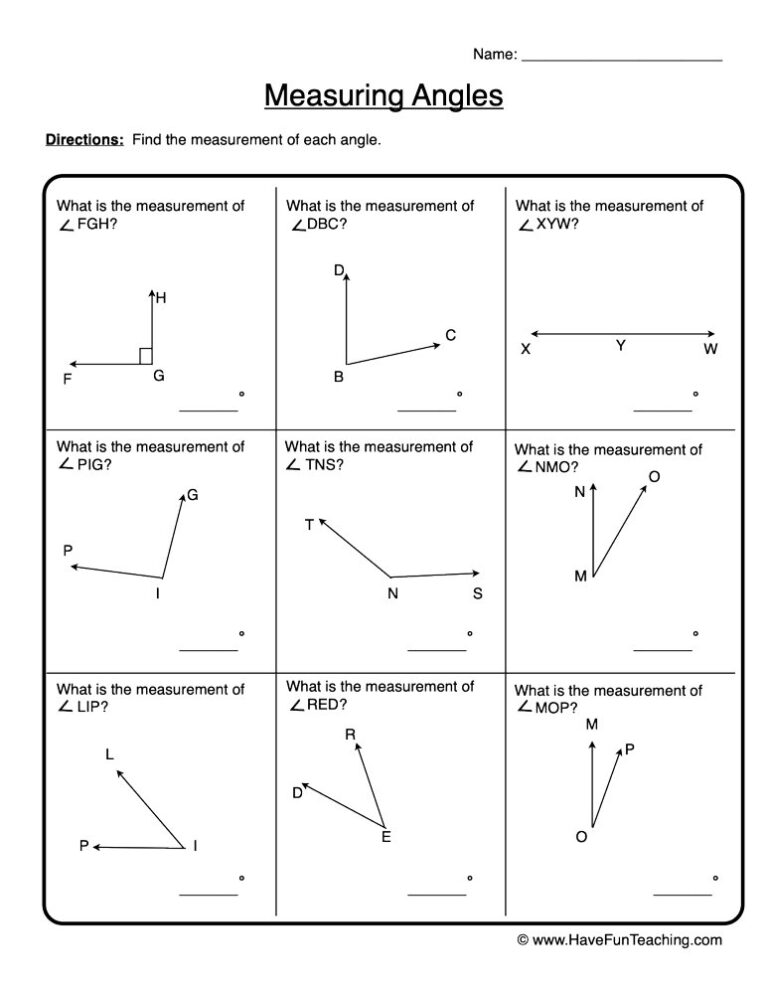
This measuring angles worksheet gives 4th graders hands-on practice using a protractor to measure angles in degrees and to name acute, right, obtuse, and straight angles. Answer key included for fast, no-prep geometry practice.
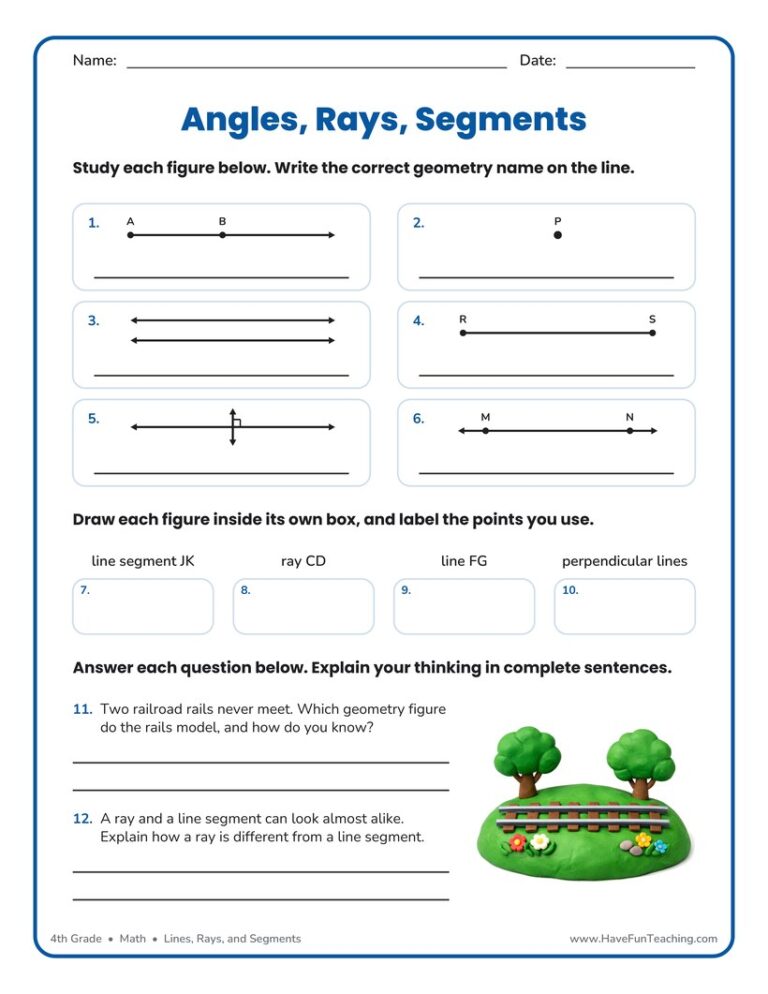
Students use this Lines Rays and Segments Worksheet to name, draw, and explain points, lines, segments, rays, and parallel and perpendicular lines. Built for 4th Grade with an answer key included, so checking takes seconds.

This 4.MD.7 Common Core Worksheet gives 4th graders practice finding unknown complementary and supplementary angles using right angles and straight lines. Includes a complete answer key — perfect for no-prep angle measurement practice.
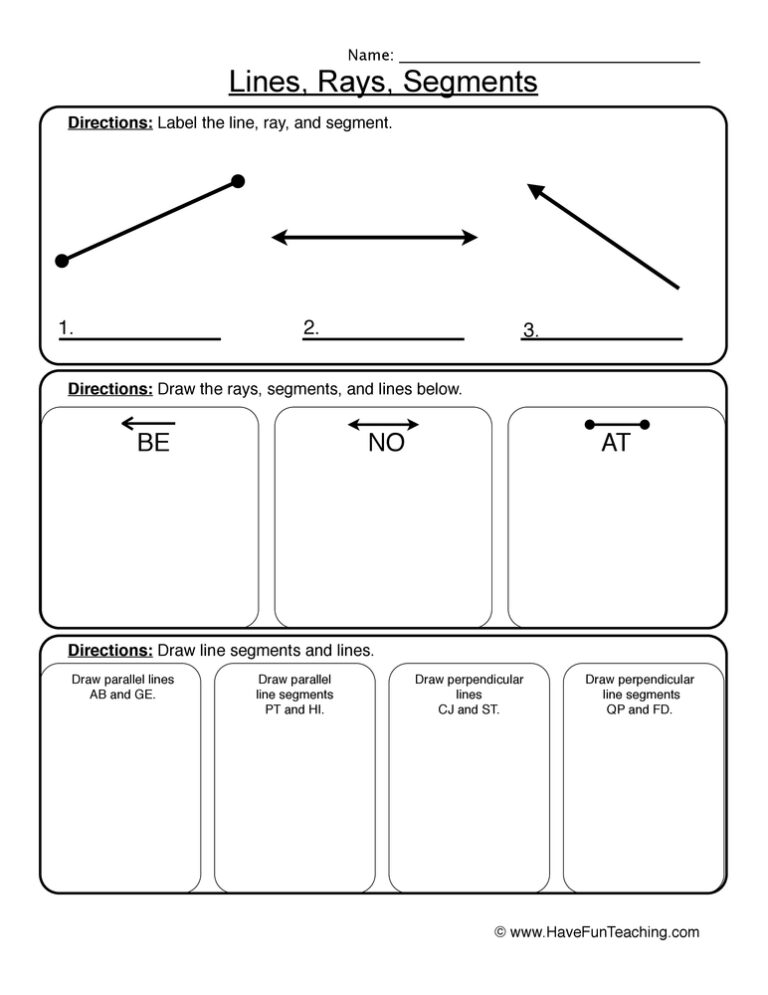
This angles rays and segments worksheet gives 4th graders practice naming and drawing lines, rays, segments, and parallel lines. An answer key is included, so checking work takes seconds.
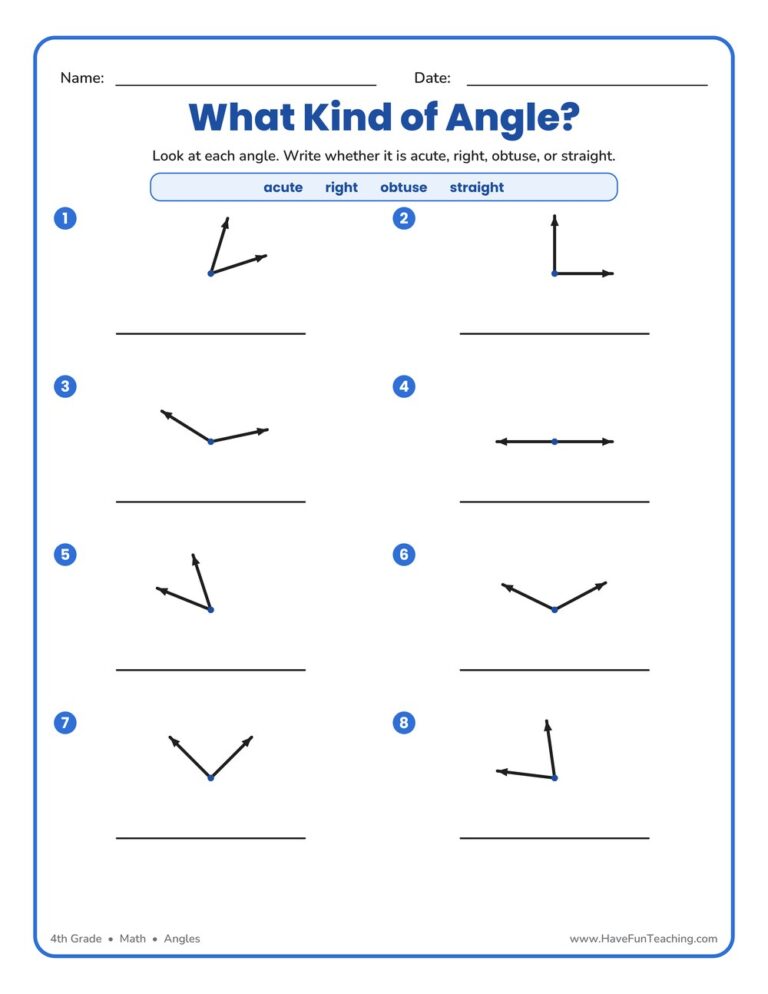
The What Kind of Angle worksheet gives 4th graders eight angles to sort as acute, right, obtuse, or straight. Answer key included for quick, no-prep geometry practice.

This rays worksheet has 4th graders tell rays from lines and line segments on six labeled figures, draw ray MN from two given points, and explain the difference in writing. Answer key included.

In this Star Wars Rays and Angles Activity, students recognize angles as obtuse, acute or right by playing War!
In this 4.MD.7 Fourth Grade Common Core lesson students solve addition and subtraction problems to find unknown angles on a diagram.

Using this Measuring Monstrous Angles Activity, students measure angles in whole-number degrees using a protractor.

In this Up, Up, and Away! Measuring Angles Activity, students solve addition and subtraction problems to find unknown angles on a diagram.
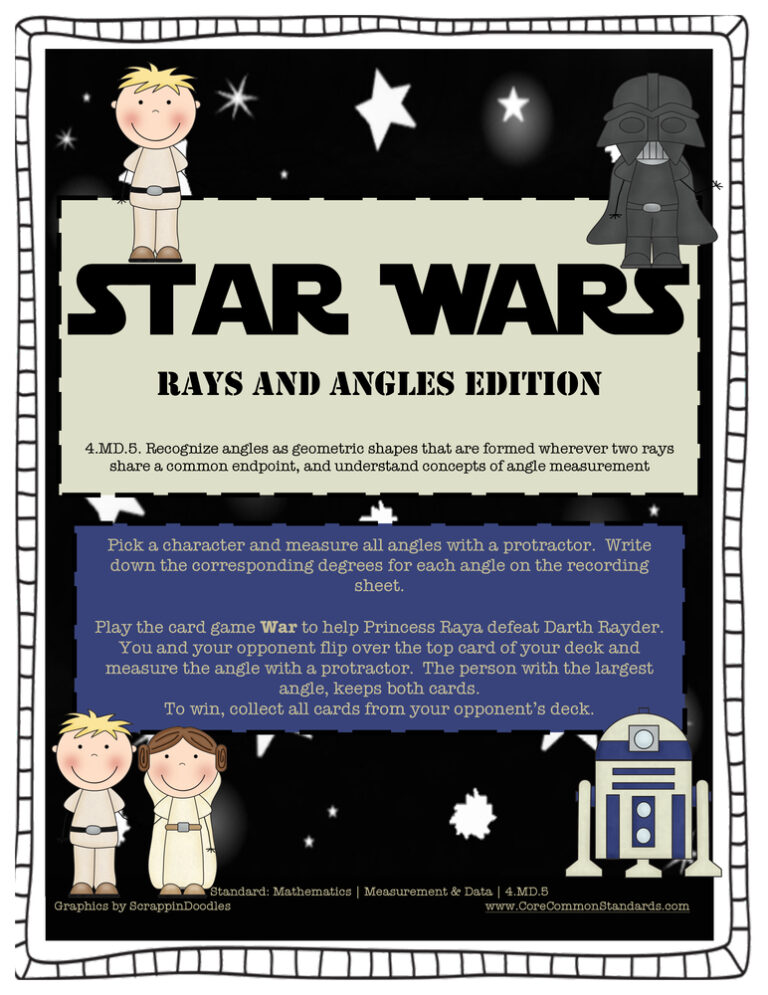
In this 4.MD.5 Common Core Activity, students recognize angles as obtuse, acute or right by playing this game of War with a partner!

In this 4.G.1 Fourth Grade Common Core Lesson, students identify points, lines, line segments, rays, angles, perpendicular and parallel lines.

Reviews
There are no reviews yet