
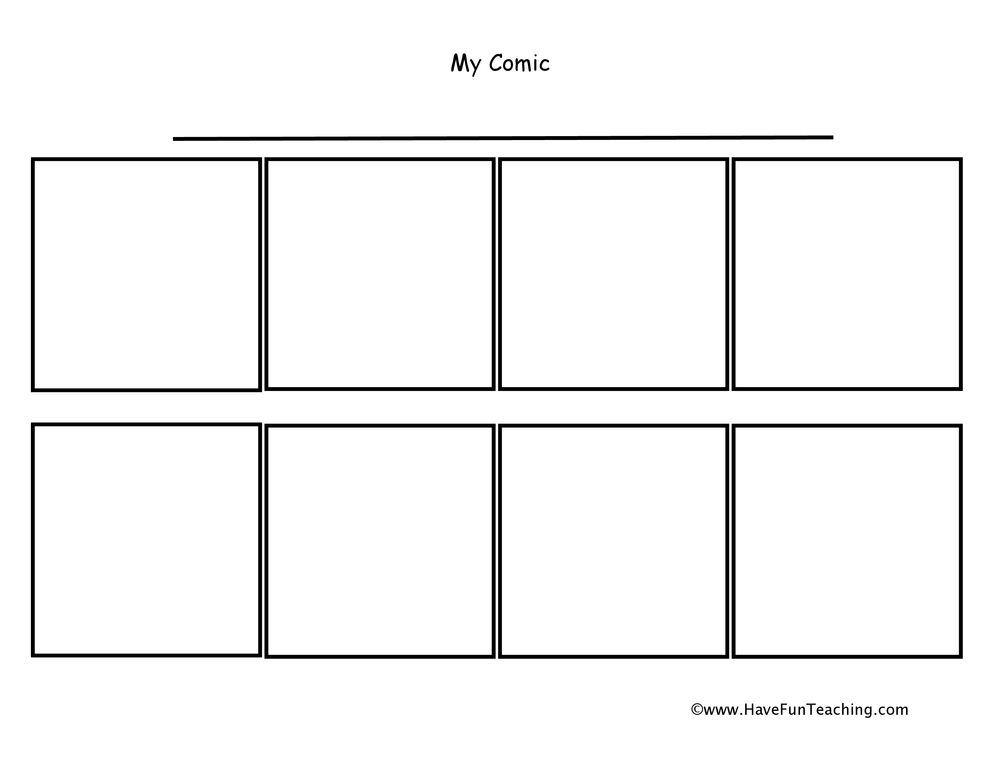
8 Boxes Comic Strip Worksheet
The 8 Boxes Comic Strip Worksheet lets 2nd graders draw and write their own eight-panel story with characters, speech bubbles, and captions – a fun, no-prep way to build creative narrative writing skills.
$6.97
Or free with a membership — get this and 10,000+ resources. See plans
Want this one free?
Tell us where to send it and it’s yours — no card, no catch.
One free resource per teacher. We’ll also send free teaching ideas each week — unsubscribe anytime.
Teaching is easier with a membership
Unlimited printables, games & videos for PreK–6th — for your classroom or homeschool. Cancel anytime.
Start your 3-day free trialNo commitment · Cancel anytime · Instant access to 10,000+ resources
About this resource
Description
Comic strips turn writing into an adventure, giving young storytellers a fun, visual way to plan a beginning, middle, and end. The 8 Boxes Comic Strip Worksheet gives students eight blank panels to draw and caption their very own story from start to finish. By combining pictures, speech bubbles, and short sentences, children practice sequencing events, developing characters, and telling a clear story — all while having a blast creating comics they are proud to share.
This comic strip writing worksheet is simple to use and works for almost any lesson. Students think of a short story idea, then fill each of the eight boxes in order, drawing what happens and adding speech bubbles for what the characters say. A writing line under every panel gives them room to write a caption or sentence that moves the story along. Use it for creative writing time, story retelling, book responses, or a quick, no-prep activity that keeps writers engaged.
What’s Included
- 1 print-ready PDF worksheet
- 8 sequenced comic panels with numbered boxes
- A caption writing line under every panel for drawings, speech bubbles, and sentences
The 8 Boxes Comic Strip Worksheet helps children in three important ways. First, it builds narrative writing skills by guiding students to organize a story into a clear sequence of events. Second, it strengthens creativity and confidence, because every child’s comic is unique and personal. Third, it connects drawing and writing, which helps reluctant writers get their ideas onto the page and makes storytelling feel approachable and fun.
Teachers and parents can extend the activity in many playful ways. Invite children to act out their finished comic, read it aloud to a friend, or turn a favorite book scene into a comic strip. Try a class challenge where everyone illustrates the same story prompt, or staple several sheets together to create a longer comic book. You can also focus on one skill at a time, such as strong dialogue, vivid describing words, or a surprise ending, to grow young writers a little more with each new comic.
Related Resources
What teachers say
Reviews
You must be logged in to post a review.
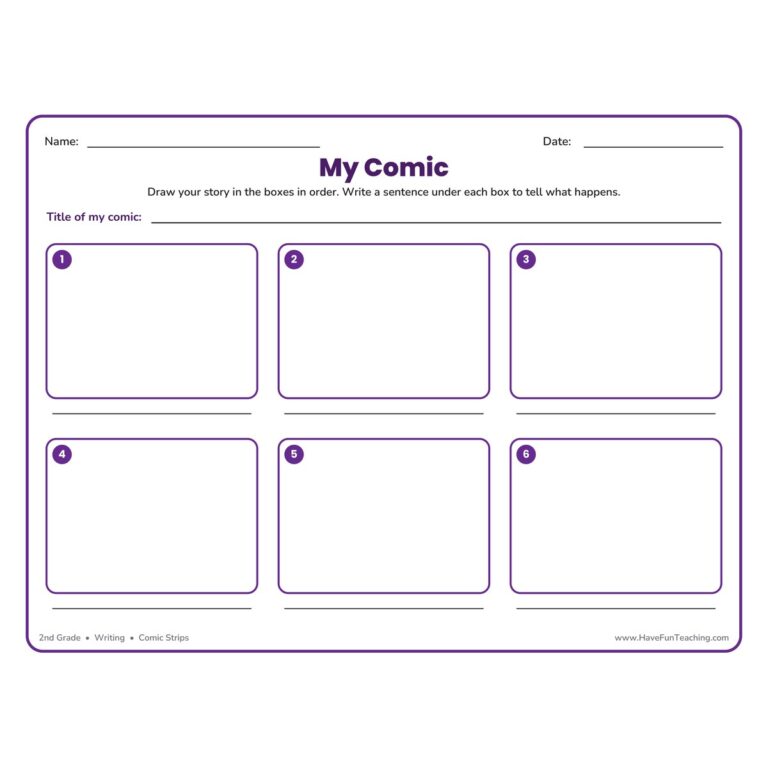
This 6 Boxes Comic Strip Worksheet gives 2nd grade students a landscape template with six panels and caption lines to draw and write their own story in order. A creative writing activity kids love.
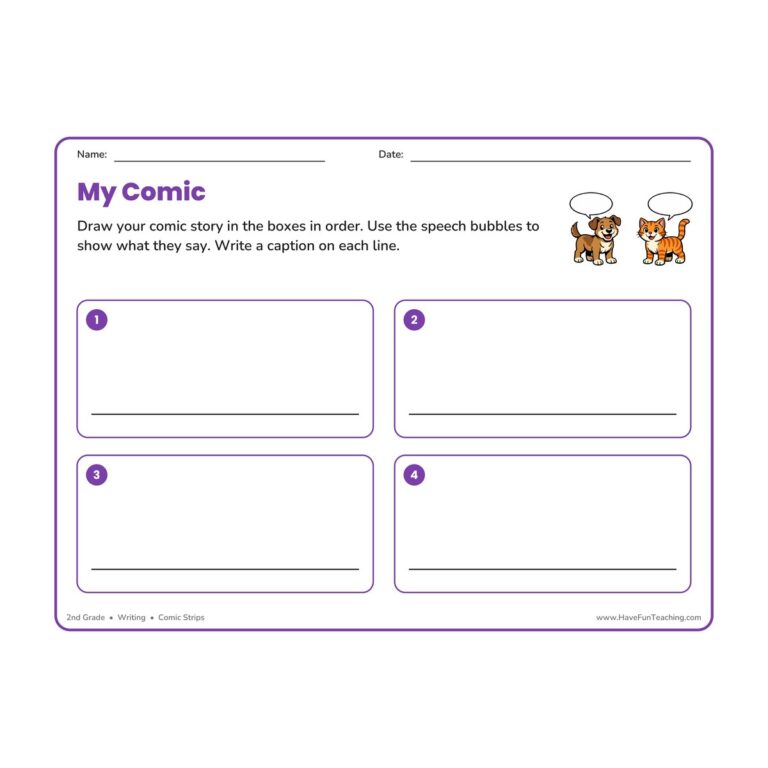
Use this 4 Boxes Comic Strip Worksheet to help 2nd Grade writers plan a story across four panels, add speech bubbles, and caption each scene so sequencing feels easy and fun.
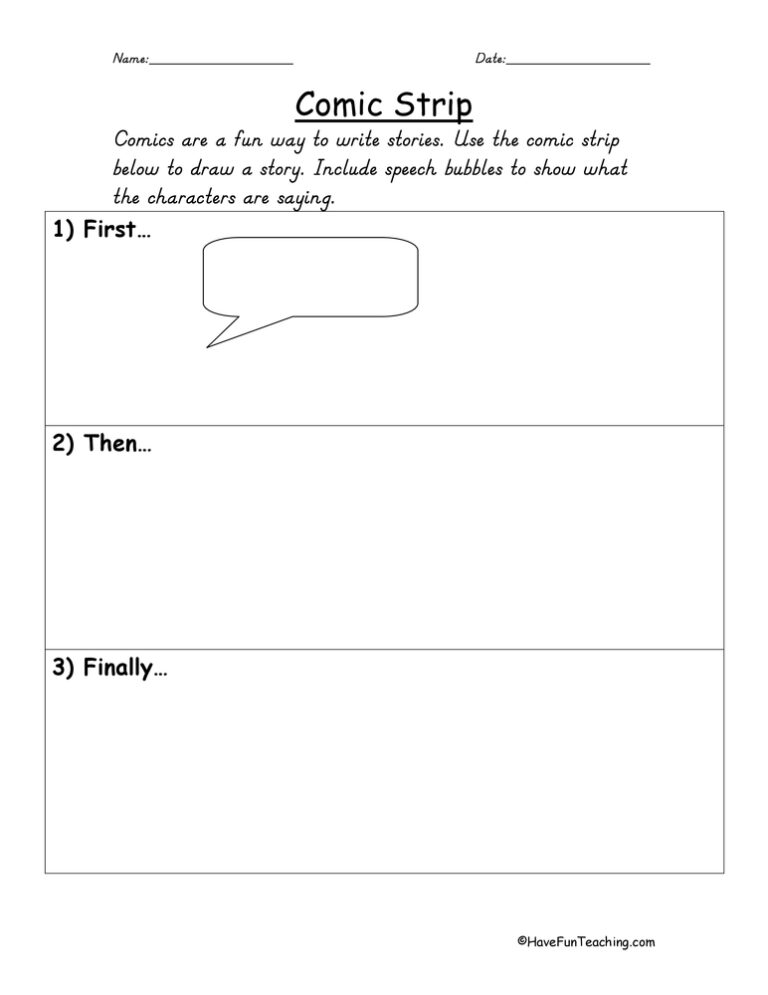
UsingCreate Your Own Comic Worksheet, students create their own comics using drawings and speech bubbles to tell a story.
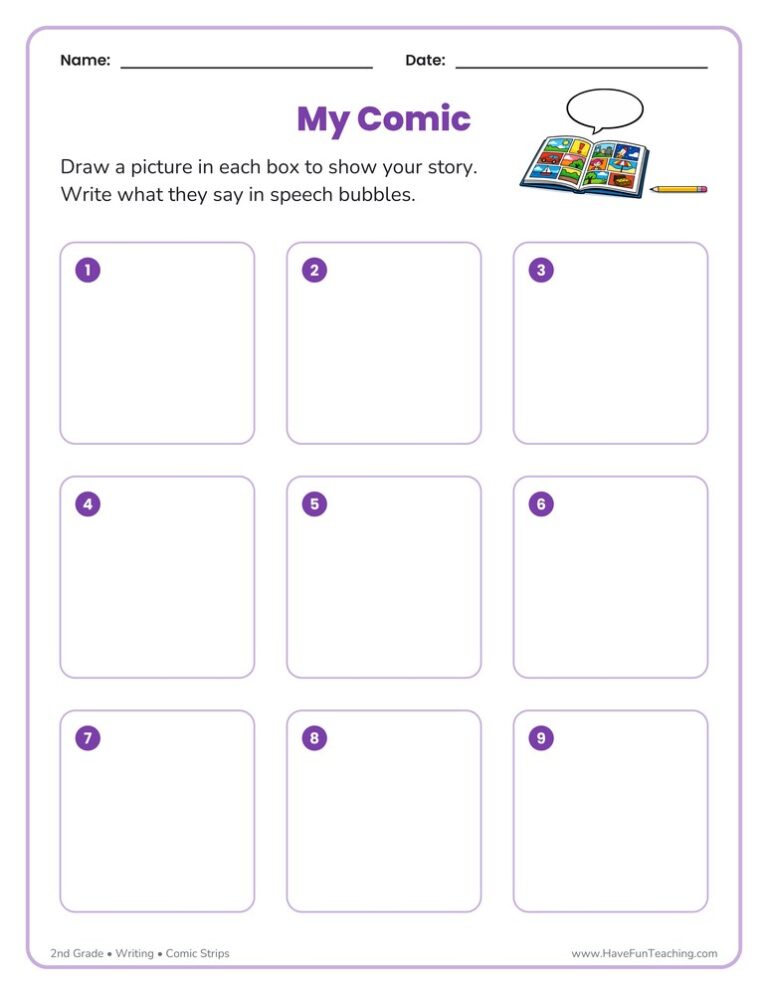
This 9 Boxes Comic Strip Worksheet gives 2nd Grade writers nine numbered panels to draw a story and add speech bubbles, turning sequencing and dialogue into a creative, no-prep writing activity.
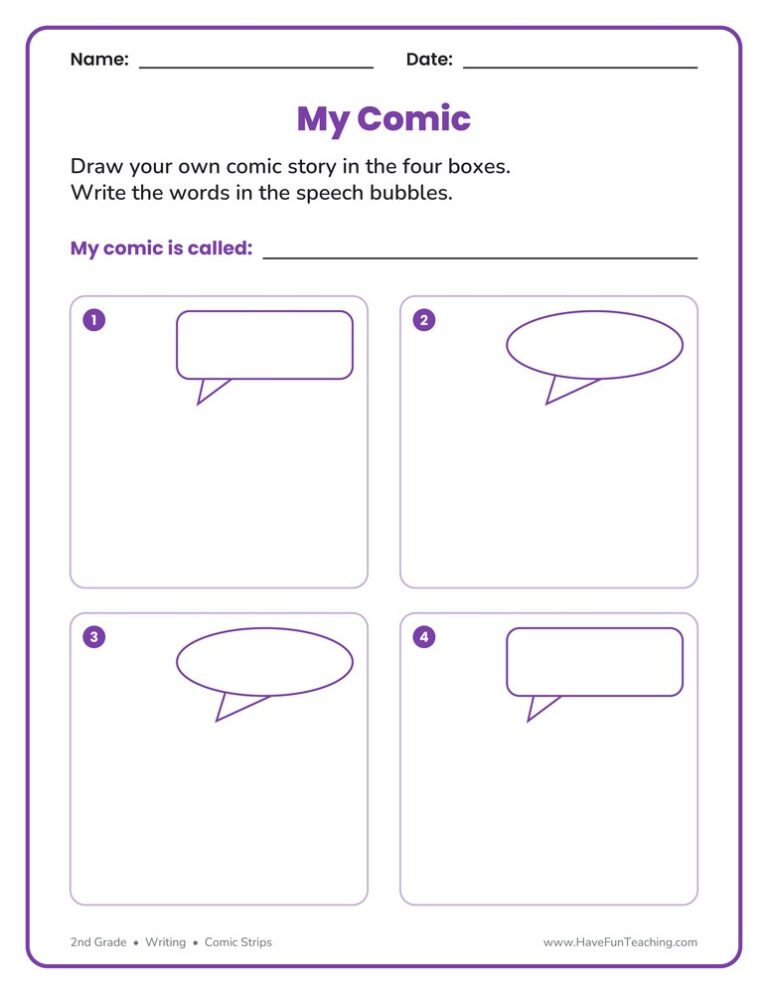
Using this Speech Bubbles Comic Strip Worksheet, 2nd Grade students draw a four-panel story and write what their characters say. An open-ended page that turns reluctant writers into storytellers.

Using Pronouns Dialogue Worksheet, students write dialogue for the characters below using pronouns to replace people, places, and things.

UsingBirds Character Dialogue Worksheet, students write dialogue that matches what they think the two pelicans could be saying to one another.
Using this 4 Rectangles Comic Strip Worksheet, studentswrite stories using characters, drawings, and speech bubbles in a fun and engaging way.

Using this Different Shapes Comic Strip Worksheet, studentswrite stories using characters, drawings, and speech bubbles in a fun and engaging way.
Using this Speech Bubbles and Boxes Comic Strip Worksheet, studentswrite stories using characters, drawings, and speech bubbles in an engaging way.
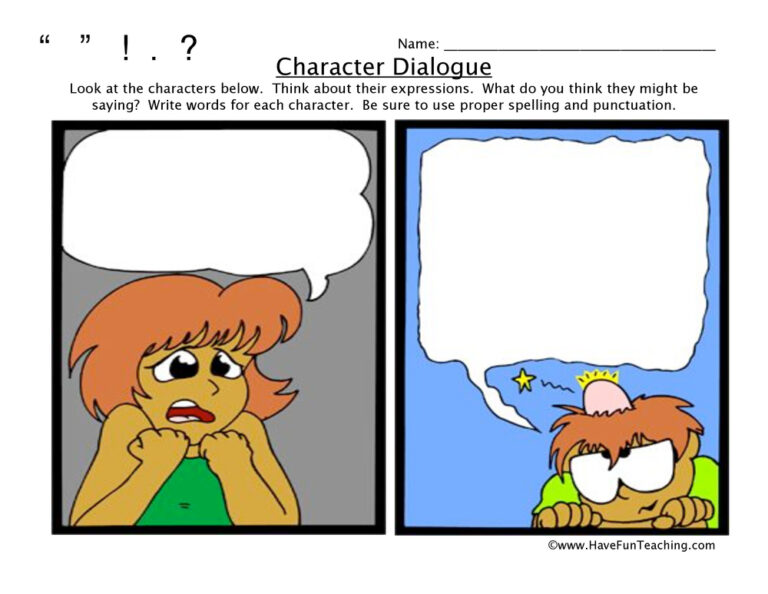
UsingCartoon Character Dialogue Worksheet, students write dialogue that matches the cartoon character's expressions.
Using this 2 Rectangles Comic Strip Worksheet, studentswrite stories using characters, drawings, and speech bubbles in a fun and engaging way.
Reviews
There are no reviews yet