

9 Boxes Comic Strip Worksheet
This 9 Boxes Comic Strip Worksheet gives 2nd Grade writers nine numbered panels to draw a story and add speech bubbles, turning sequencing and dialogue into a creative, no-prep writing activity.
$6.97
Or free with a membership — members pay $3.33/mo for all 10,000+ resources. See plans
Want this one free?
Tell us where to send it and it’s yours — no card, no catch.
One free resource per teacher. We’ll also send free teaching ideas each week — unsubscribe anytime.
Teaching is easier with a membership
Unlimited printables, games & videos for PreK–6th — for your classroom or homeschool. Cancel anytime.
Start your 3-day free trial$0 today · cancel anytime · Instant access to 10,000+ resources
About this resource
Description
Comic strips give young writers a fun, visual way to tell a story from beginning to end. This 9 Boxes Comic Strip Worksheet turns narrative writing into nine simple frames, so second graders can plan what happens first, next, and last without staring down a blank page. Each box holds one moment of the story, and the speech bubbles students draw inside them turn flat characters into people who actually talk. Sequencing, dialogue, and storytelling all come together on one page that feels much more like play than practice.
This comic strip writing worksheet is an open template, so it works with any story your students want to tell. Print one copy per child, then have them talk through their idea before a pencil ever touches the paper. Students fill each of the nine numbered boxes with a picture that moves the story forward, and add speech bubbles to show what the characters are saying. Point them toward using the first boxes to introduce the characters and the setting, the middle boxes for the problem, and the last boxes for how it all works out. The Name and Date line and the generous panel size make finished comics easy to collect and display on a bulletin board.
What’s Included
- 1 print-ready PDF worksheet
- 9 numbered comic panels for drawing and dialogue
- Open space in every panel for student-drawn speech bubbles
- Name and Date line
Three things make this 9 Boxes Comic Strip Worksheet especially useful. First, the numbered boxes make sequencing visible, so students can see that a story has an order and can move an idea around before they commit it to paper. Second, drawing lowers the barrier for reluctant writers: a child who freezes at a lined page will happily sketch a scene and then label what is happening in it. Third, speech bubbles teach dialogue naturally, giving students real practice writing the words a character says long before quotation marks show up in a grammar lesson.
Teachers and parents can stretch this activity in plenty of directions. Ask students to retell a favorite picture book as a comic, or to turn a science lesson into a nine-panel explainer. Pair two children and have them take turns drawing panels to build one shared story. Cut a finished comic apart and ask a classmate to put the panels back in the right order. Read the comics aloud with a different voice for each character, then staple a week of them together into a class anthology that students can reread all year.
Related Resources
What teachers say
Reviews
You must be logged in to post a review.
This 6 Boxes Comic Strip Worksheet gives 2nd grade students a landscape template with six panels and caption lines to draw and write their own story in order. A creative writing activity kids love.
Use this 4 Boxes Comic Strip Worksheet to help 2nd Grade writers plan a story across four panels, add speech bubbles, and caption each scene so sequencing feels easy and fun.
Using this Create Your Own Comic Worksheet, 2nd Grade students draw a three-part story and write what their characters say. An open-ended page that turns reluctant writers into storytellers.
The 8 Boxes Comic Strip Worksheet lets 2nd graders draw and write their own eight-panel story with characters, speech bubbles, and captions - a fun, no-prep way to build creative narrative writing skills.
Using this Speech Bubbles Comic Strip Worksheet, 2nd Grade students draw a four-panel story and write what their characters say. An open-ended page that turns reluctant writers into storytellers.
This 4 rectangles comic strip worksheet lets 2nd grade students draw a four-part story in order and write what their characters say in speech bubbles, building narrative writing skills in a fun way.
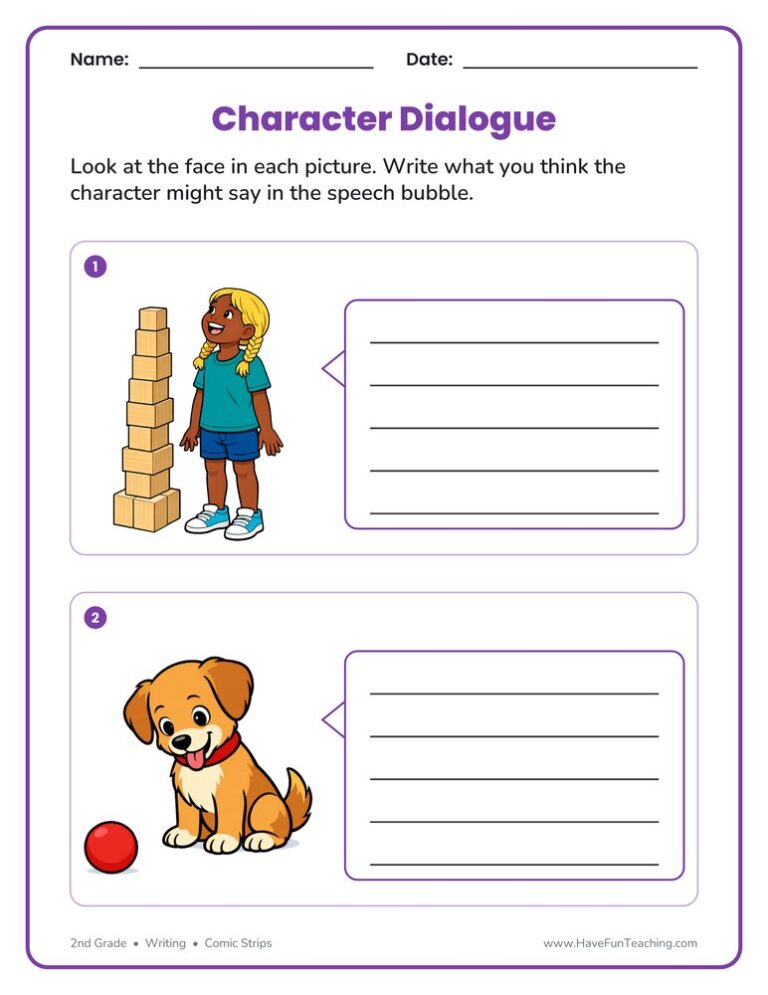
A cartoon character dialogue worksheet where 2nd graders read a character's face and write the words it might say in a big speech bubble. Open-ended, no-prep narrative writing practice.
This speech bubbles and boxes comic strip worksheet lets 2nd grade students draw a four-part story, tell what happens in narration boxes, and write what characters say in speech bubbles.
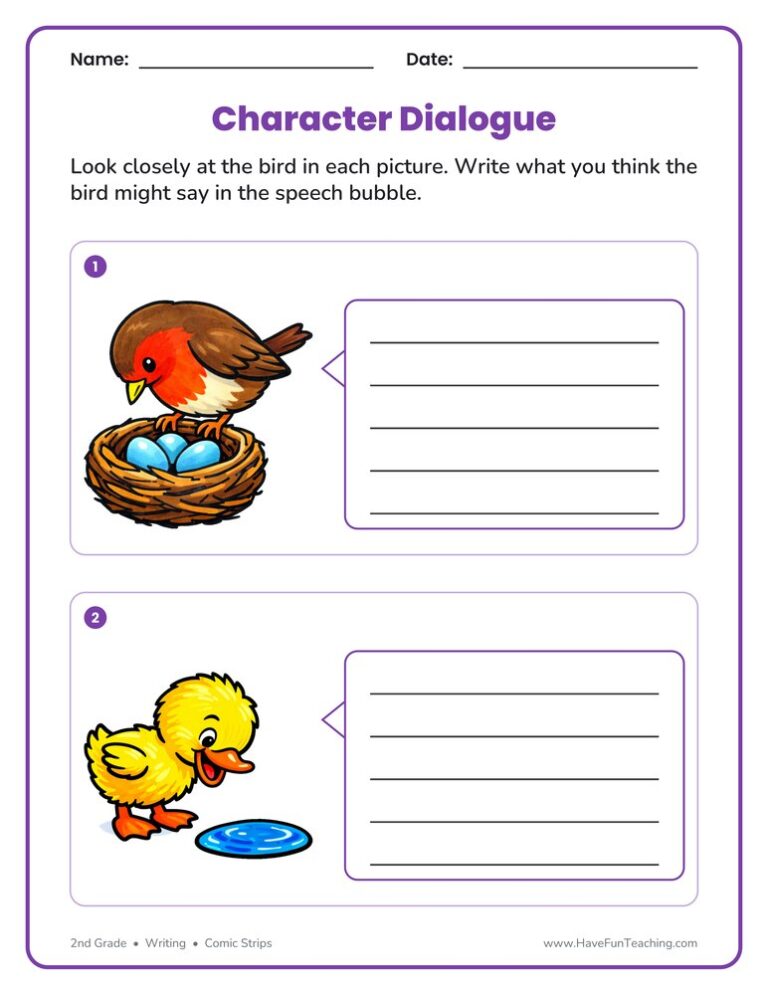
This Birds Character Dialogue Worksheet invites 2nd graders to study a proud robin and an excited duckling, then write what each bird might say in a big speech bubble. Open-ended, no-prep writing fun.

Using this 6 Circles Comic Strip Worksheet, studentswrite stories using characters, drawings, and speech bubbles in a fun and engaging way.

Using this Different Shapes Comic Strip Worksheet, studentswrite stories using characters, drawings, and speech bubbles in a fun and engaging way.

The Alphabet Songs Pack - Animated will help support your visual learners gain a better understanding of letter names and sounds by listening to this song.
Reviews
There are no reviews yet