Skip to content
Start My 3 Free Days $0 today · cancel anytime

2nd Grade Comic Strips Resources

12 2nd grade comic strips resources: 12 worksheets. How teachers use these

2nd Grade Comic Strips Resources

12 2nd grade comic strips resources: 12 worksheets. How teachers use these

Worksheet
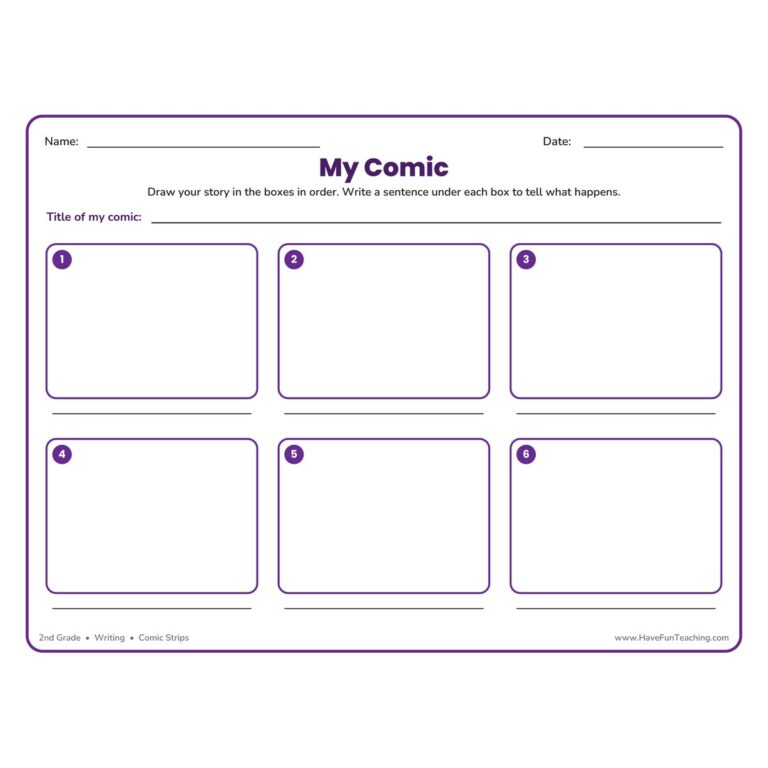
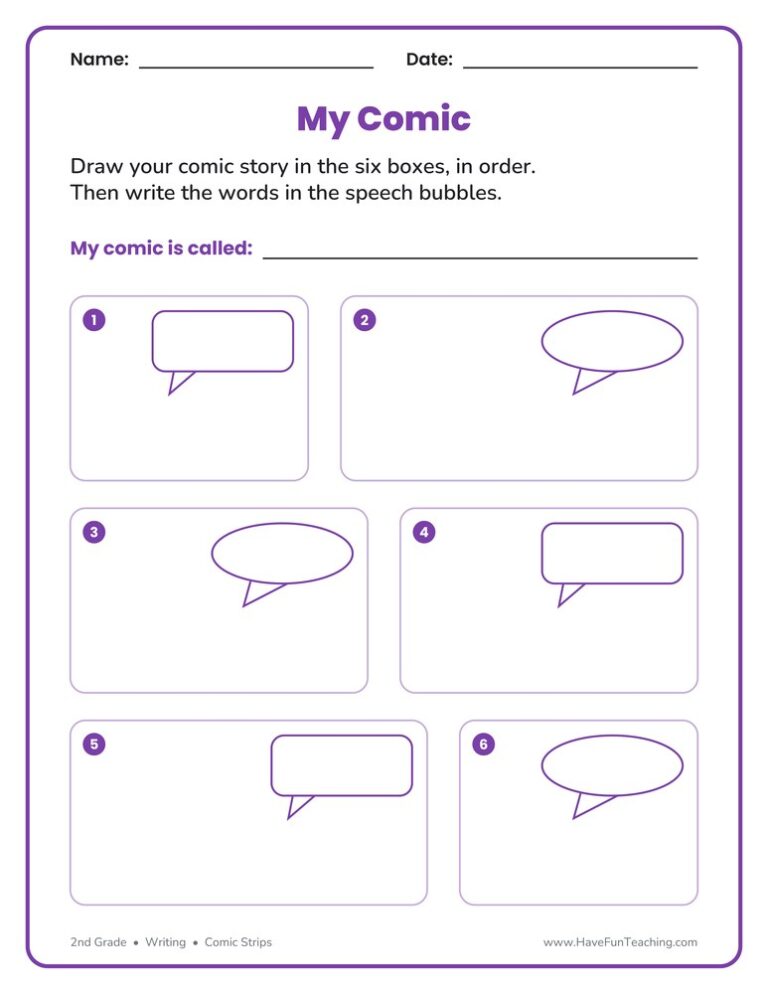
Worksheet2nd Grade6 Boxes Comic Strip Worksheet

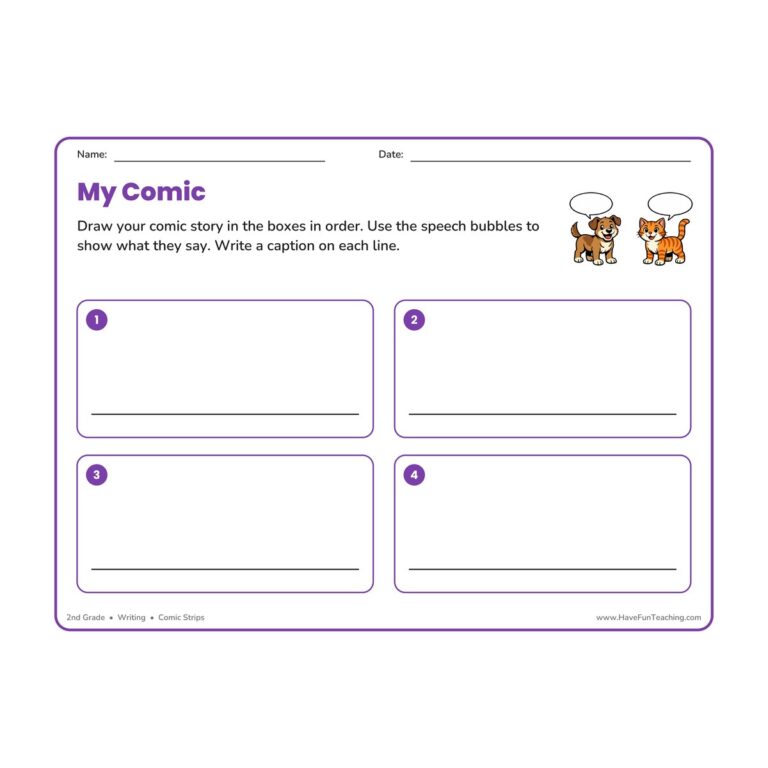
This 6 Boxes Comic Strip Worksheet gives 2nd grade students a landscape template with six panels and caption lines to draw and write their own story in order. A creative writing activity kids love.

Worksheet
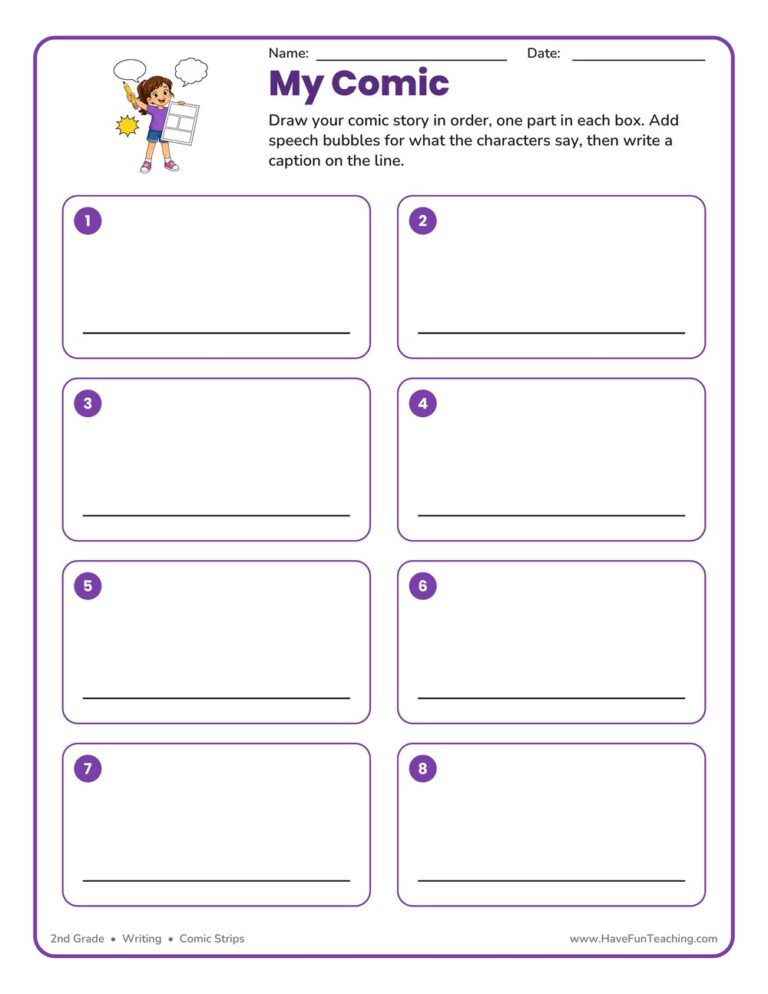
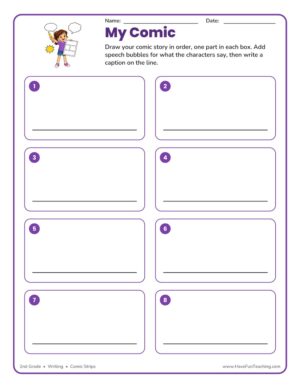
Worksheet2nd Grade8 Boxes Comic Strip Worksheet

The 8 Boxes Comic Strip Worksheet lets 2nd graders draw and write their own eight-panel story with characters, speech bubbles, and captions - a fun, no-prep way to build creative narrative writing skills.

Worksheet
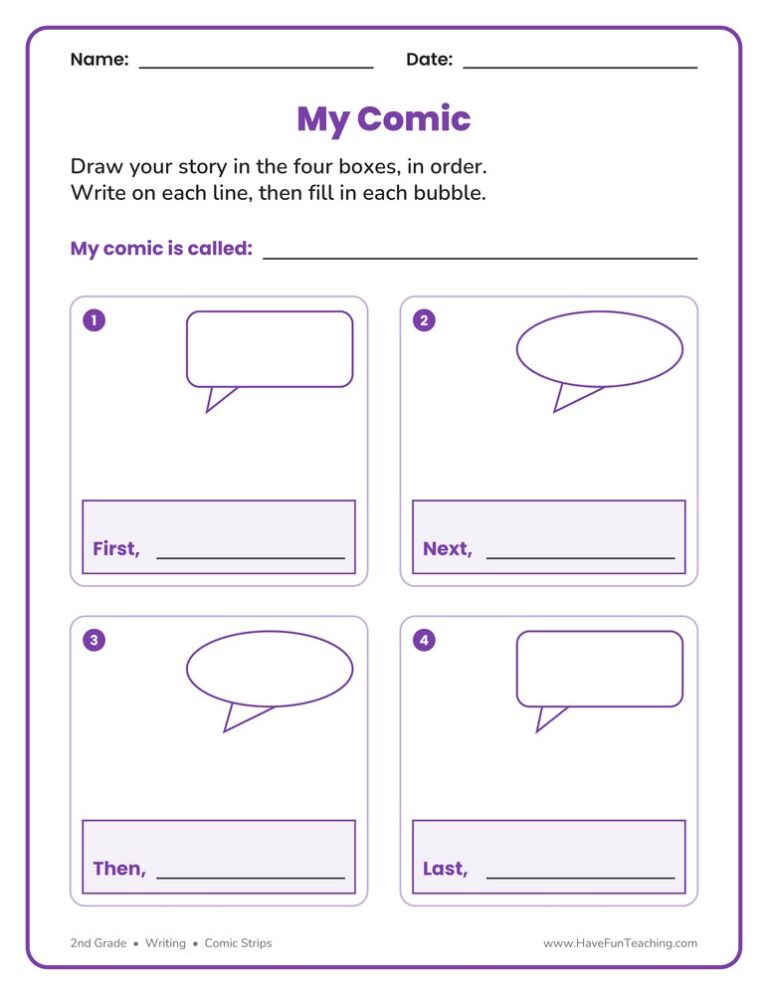
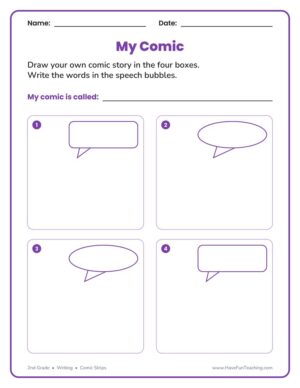
Worksheet2nd Grade4 Boxes Comic Strip Worksheet

Use this 4 Boxes Comic Strip Worksheet to help 2nd Grade writers plan a story across four panels, add speech bubbles, and caption each scene so sequencing feels easy and fun.

Worksheet
Worksheet2nd GradeSpeech Bubbles Comic Strip Worksheet

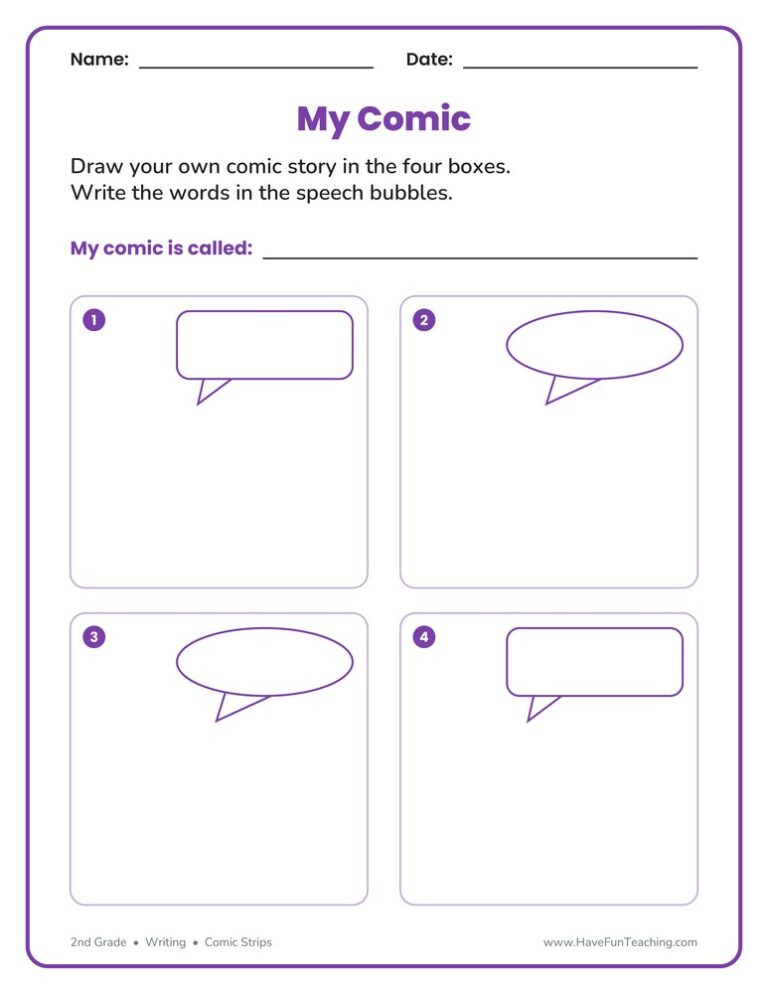
Using this Speech Bubbles Comic Strip Worksheet, 2nd Grade students draw a four-panel story and write what their characters say. An open-ended page that turns reluctant writers into storytellers.

Worksheet
Worksheet2nd Grade4 Rectangles Comic Strip Worksheet

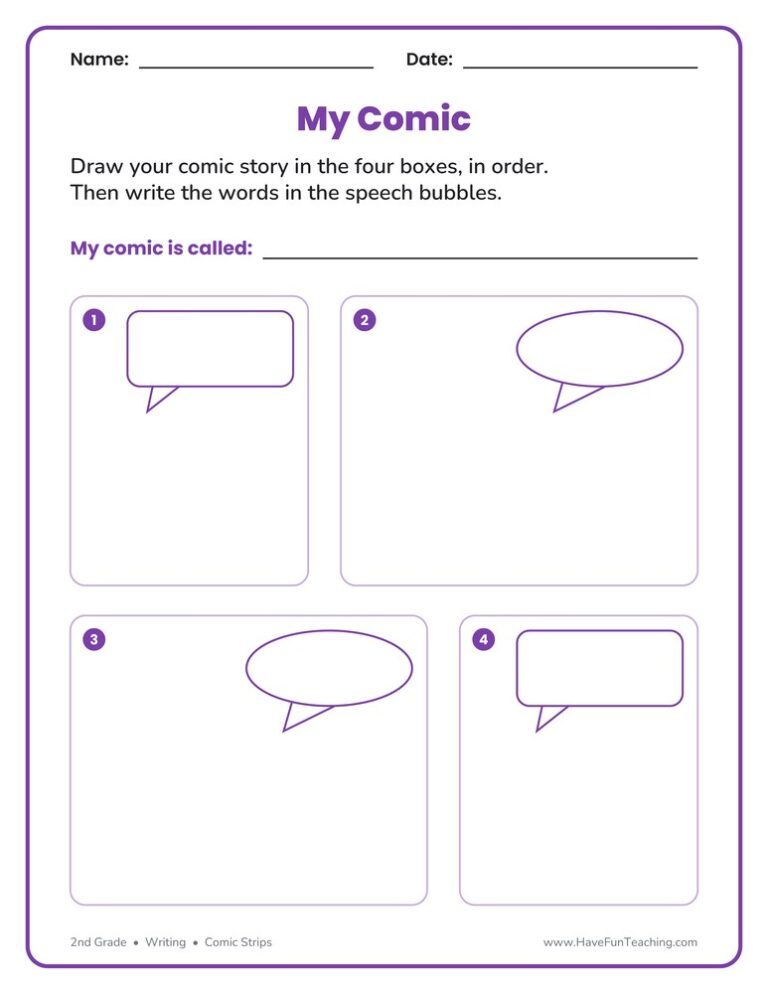
This 4 rectangles comic strip worksheet lets 2nd grade students draw a four-part story in order and write what their characters say in speech bubbles, building narrative writing skills in a fun way.

Worksheet
Worksheet2nd GradeCreate Your Own Comic Worksheet

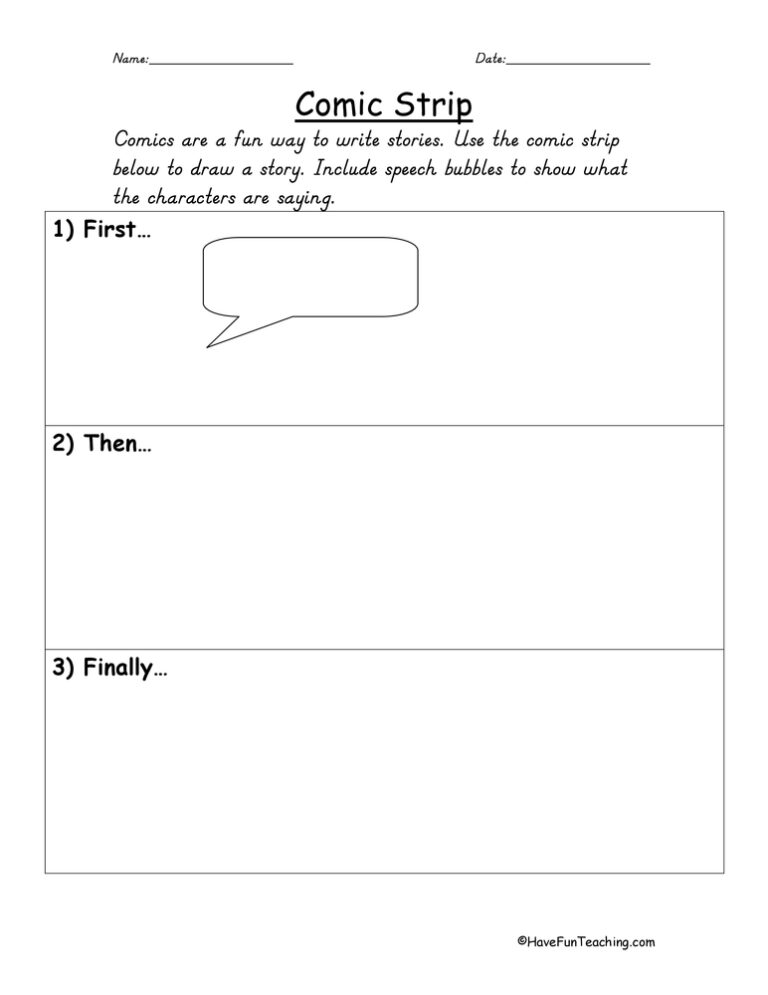
Using this Create Your Own Comic Worksheet, 2nd Grade students draw a three-part story and write what their characters say. An open-ended page that turns reluctant writers into storytellers.

Worksheet
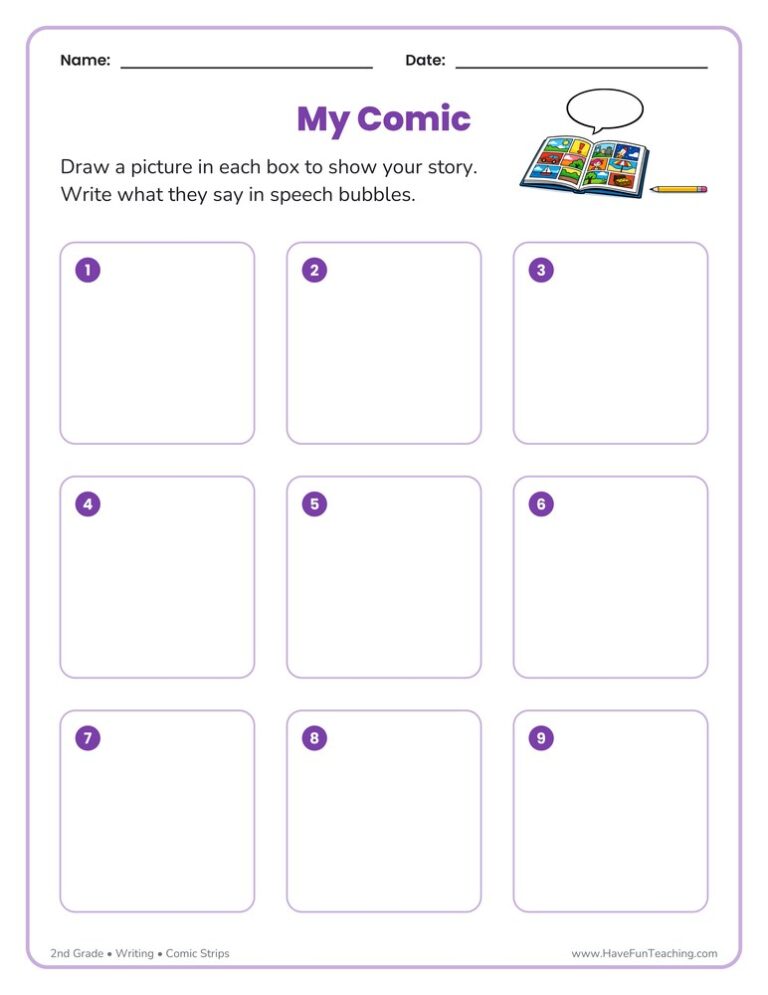
Worksheet2nd Grade9 Boxes Comic Strip Worksheet

This 9 Boxes Comic Strip Worksheet gives 2nd Grade writers nine numbered panels to draw a story and add speech bubbles, turning sequencing and dialogue into a creative, no-prep writing activity.

Worksheet
Worksheet2nd GradeSpeech Bubbles and Boxes Comic Strip Worksheet

This speech bubbles and boxes comic strip worksheet lets 2nd grade students draw a four-part story, tell what happens in narration boxes, and write what characters say in speech bubbles.

Worksheet
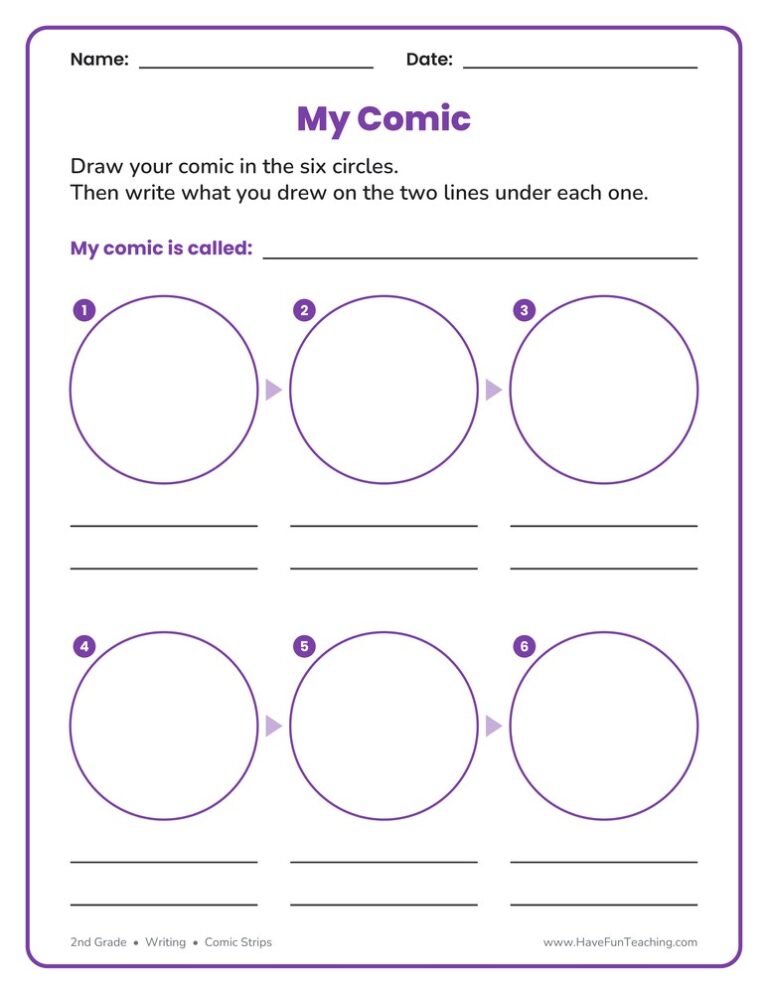
Worksheet2nd Grade6 Circles Comic Strip Worksheet

This 6 circles comic strip worksheet lets 2nd grade students draw a six-part story in order and write a sentence about each picture, building narrative writing skills in a fun way.

Worksheet
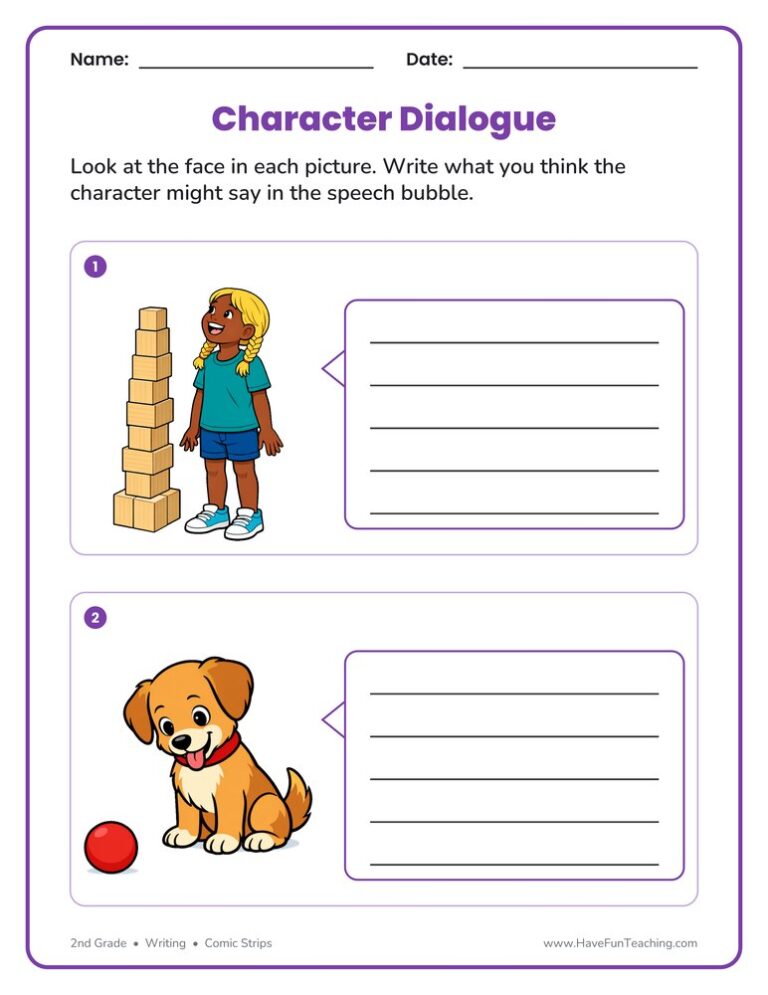
Worksheet2nd GradeCartoon Character Dialogue Worksheet

A cartoon character dialogue worksheet where 2nd graders read a character's face and write the words it might say in a big speech bubble. Open-ended, no-prep narrative writing practice.

Worksheet
Worksheet2nd GradeDifferent Shapes Comic Strip Worksheet

This different shapes comic strip worksheet lets 2nd graders draw a six-panel story in order and add dialogue in speech bubbles, building sequencing and narrative writing skills.

Worksheet
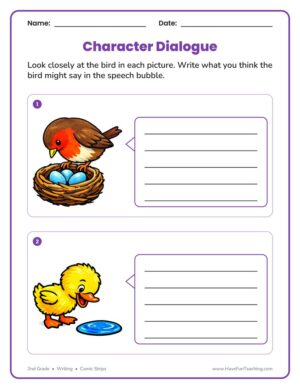
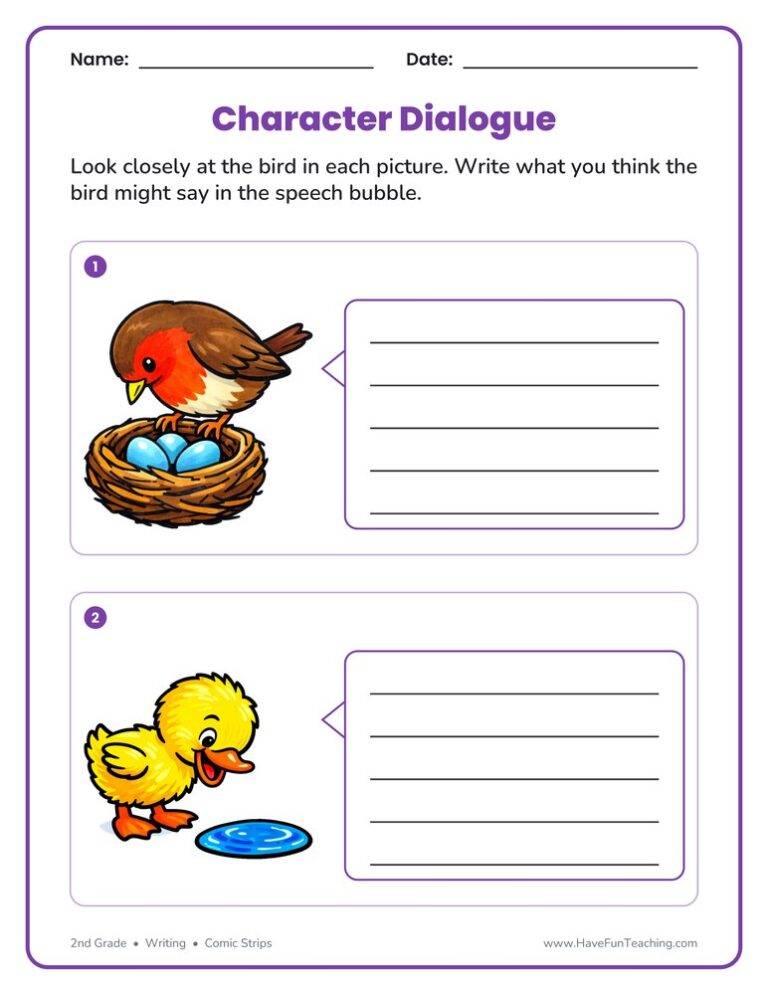
Worksheet2nd GradeBirds Character Dialogue Worksheet

This Birds Character Dialogue Worksheet invites 2nd graders to study a proud robin and an excited duckling, then write what each bird might say in a big speech bubble. Open-ended, no-prep writing fun.

From our teachers' playbook

Tell a story, one panel at a time

What do 2nd graders learn by writing comic strips?

Comic strips are a sneaky way to teach real narrative writing. Second graders plan a story with a beginning, middle and end, one panel at a time. They learn that speech bubbles show what characters say and thought bubbles show what they think, which is a fun first step into dialogue and quotation marks. Kids also practice sequencing and choosing important details, since each panel only fits a little. The click comes when a reluctant writer fills six panels and asks, "Can I make part two?"

Our favorite ways to teach comic strips

Comics hook even the most reluctant writers. These moves make sure real writing skills come along.

Plan a 4-panel story together

Draw four boxes and plan a story out loud: "Panel 1, the dog sees a ball. Panel 2, the ball rolls into a pond..." Then kids plan their own four panels with stick figures before adding details. Four panels is just right for beginning, problem, attempt and ending.

Why it works: showing first, practicing together, then letting kids try alone is the "gradual release" model teachers have relied on for decades (Pearson and Gallagher, 1983).
4 Boxes Comic Strip WorksheetTry it with4 Boxes Comic Strip WorksheetWorksheetsOpen it →
Speech bubbles are dialogue

Teach that a speech bubble holds the exact words a character says. Kids fill in bubbles for a funny scene, then you show how the same words look in a sentence with quotation marks. Comics make dialogue click.

Why it works: children learn more from words and pictures together than from words alone (Mayer, 2009).

Speech Bubbles Comic Strip WorksheetTry it withSpeech Bubbles Comic Strip WorksheetWorksheetsOpen it →
Grow the panels

Start the year with 4-panel comics, then move to 6 and 8 panels as kids add more events and details. Coming back to comics over time builds longer, more developed stories.

Why it works: short practice spread over several days beats one long session, according to a large review of learning research (Dunlosky and colleagues, 2013).

8 Boxes Comic Strip WorksheetTry it with8 Boxes Comic Strip WorksheetWorksheetsOpen it →

Comic strip questions parents and teachers ask

Why use comic strips to teach writing?

Comic strips help kids plan stories in order, choose key details and write dialogue. They're especially great for reluctant writers because drawing lowers the pressure.

How do I teach a 2nd grader to make a comic strip?

Start with a 4-panel template. Plan the story first: beginning, problem, attempt and ending. Sketch with stick figures, then add speech bubbles and color.

What is the difference between a speech bubble and a thought bubble?

A speech bubble has a pointed tail and shows what a character says out loud. A thought bubble looks like a cloud with small circles and shows what a character is thinking.

How can comics help with quotation marks?

Words inside a speech bubble are the exact words a character says. Kids can rewrite them as a sentence using quotation marks, which makes the rule easy to understand.