Skip to content
Start My 3 Free Days $0 today · cancel anytime

Comic Strips Resources

13 comic strips resources: 13 worksheets. How teachers use these

Comic Strips Resources

13 comic strips resources: 13 worksheets. How teachers use these

Worksheet
Worksheet2nd Grade6 Boxes Comic Strip Worksheet

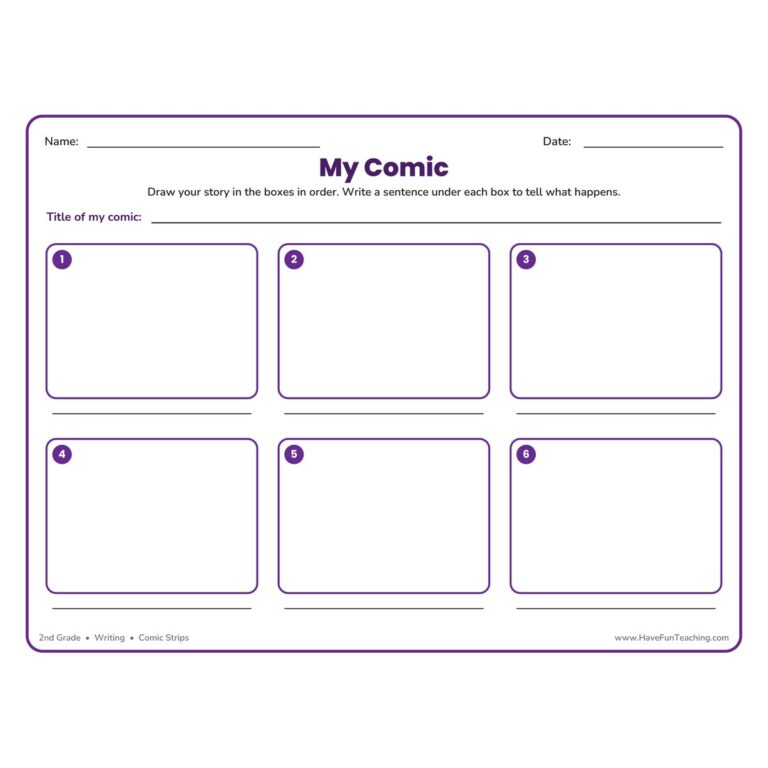
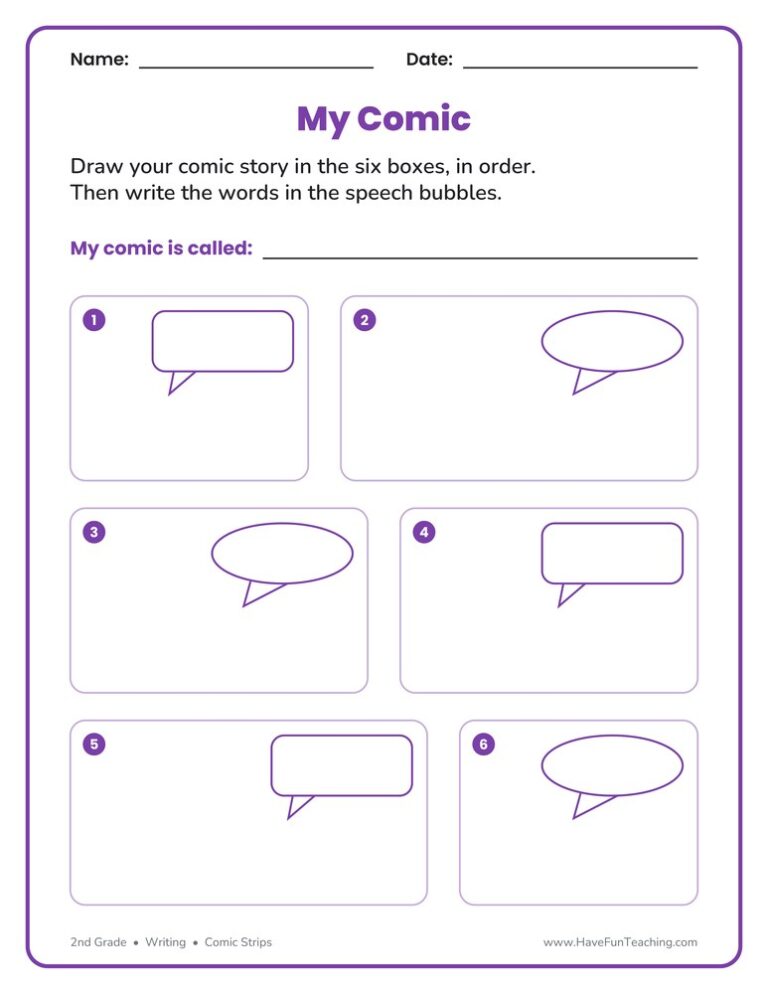
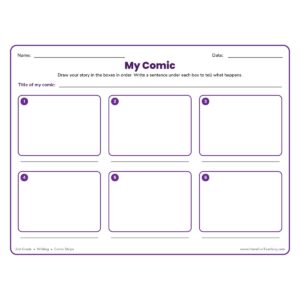
This 6 Boxes Comic Strip Worksheet gives 2nd grade students a landscape template with six panels and caption lines to draw and write their own story in order. A creative writing activity kids love.

Worksheet
Worksheet2nd Grade8 Boxes Comic Strip Worksheet

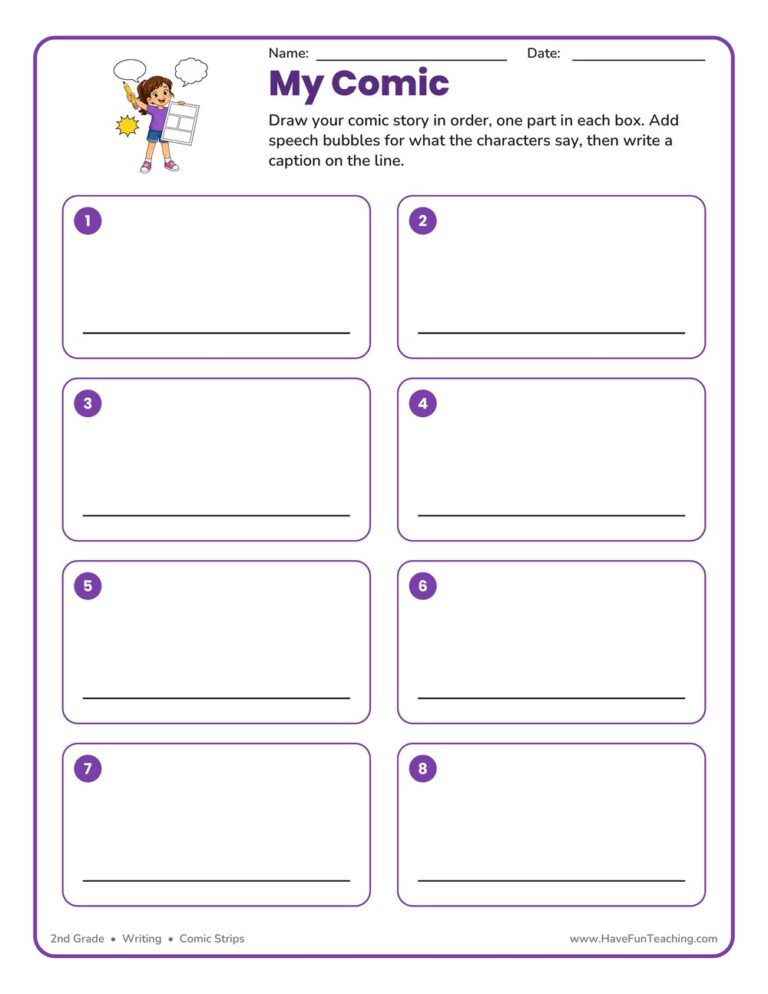
The 8 Boxes Comic Strip Worksheet lets 2nd graders draw and write their own eight-panel story with characters, speech bubbles, and captions - a fun, no-prep way to build creative narrative writing skills.

Worksheet
Worksheet2nd Grade4 Boxes Comic Strip Worksheet

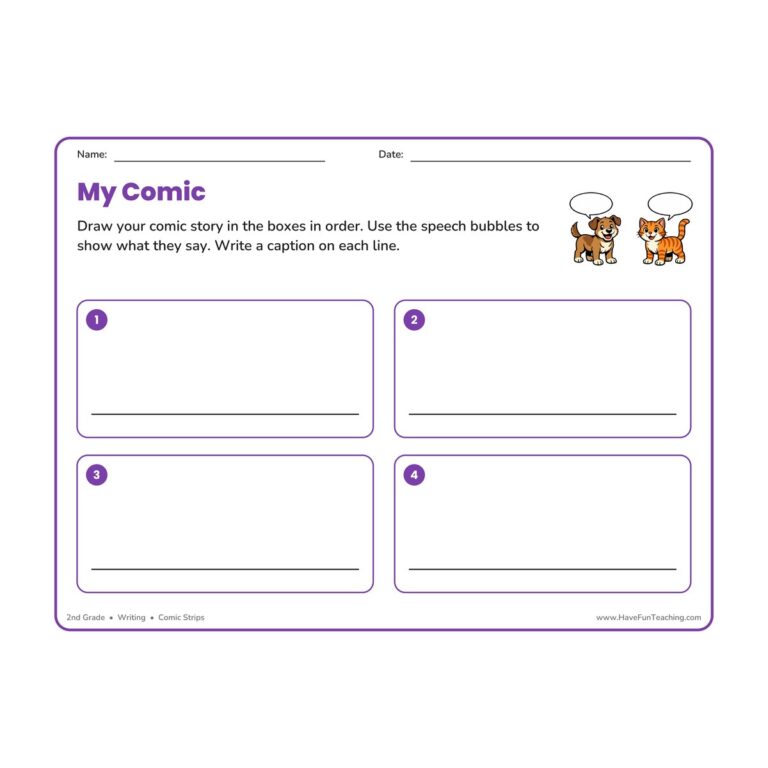
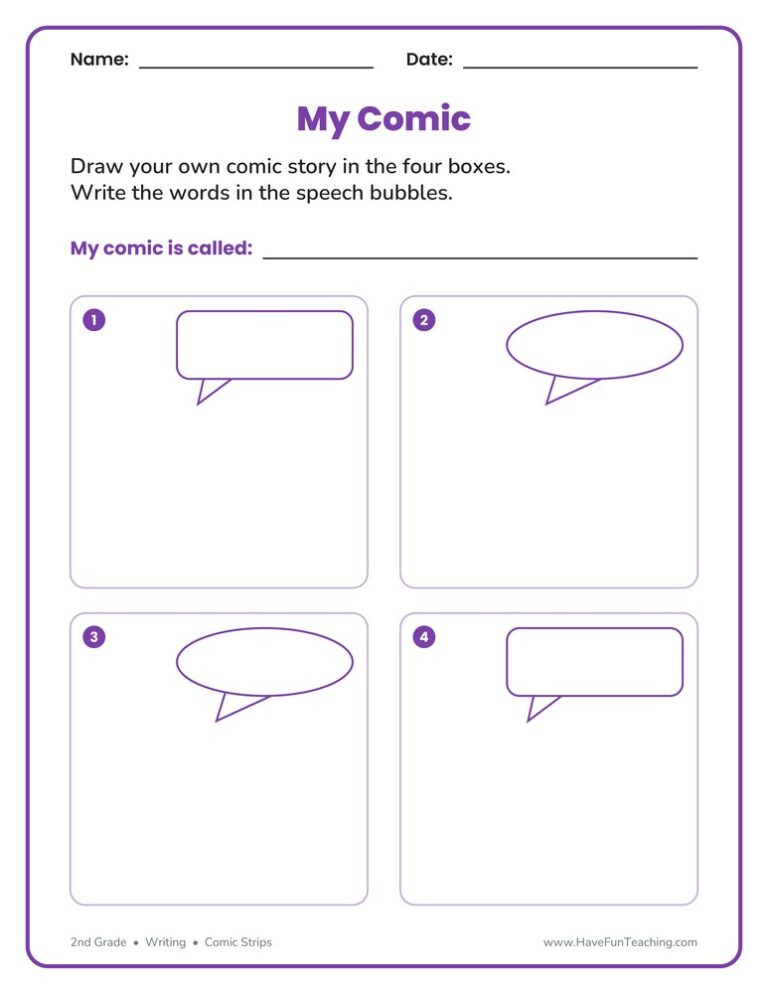
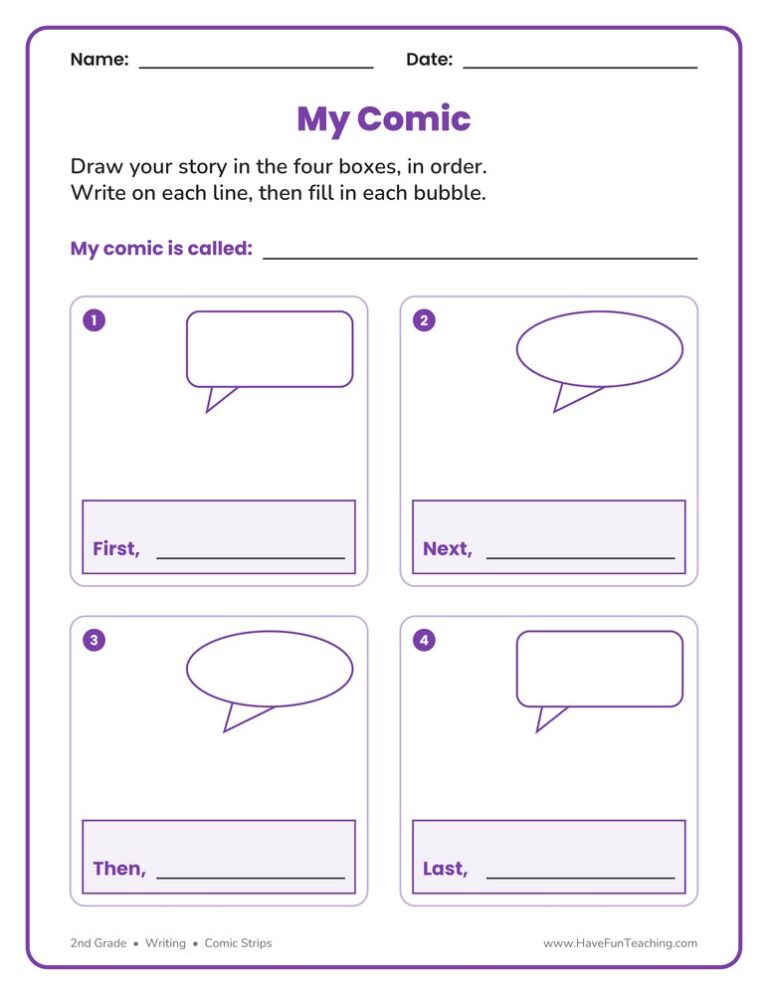
Use this 4 Boxes Comic Strip Worksheet to help 2nd Grade writers plan a story across four panels, add speech bubbles, and caption each scene so sequencing feels easy and fun.

Worksheet
Worksheet2nd GradeSpeech Bubbles Comic Strip Worksheet

Using this Speech Bubbles Comic Strip Worksheet, 2nd Grade students draw a four-panel story and write what their characters say. An open-ended page that turns reluctant writers into storytellers.

Worksheet
Worksheet2nd Grade4 Rectangles Comic Strip Worksheet

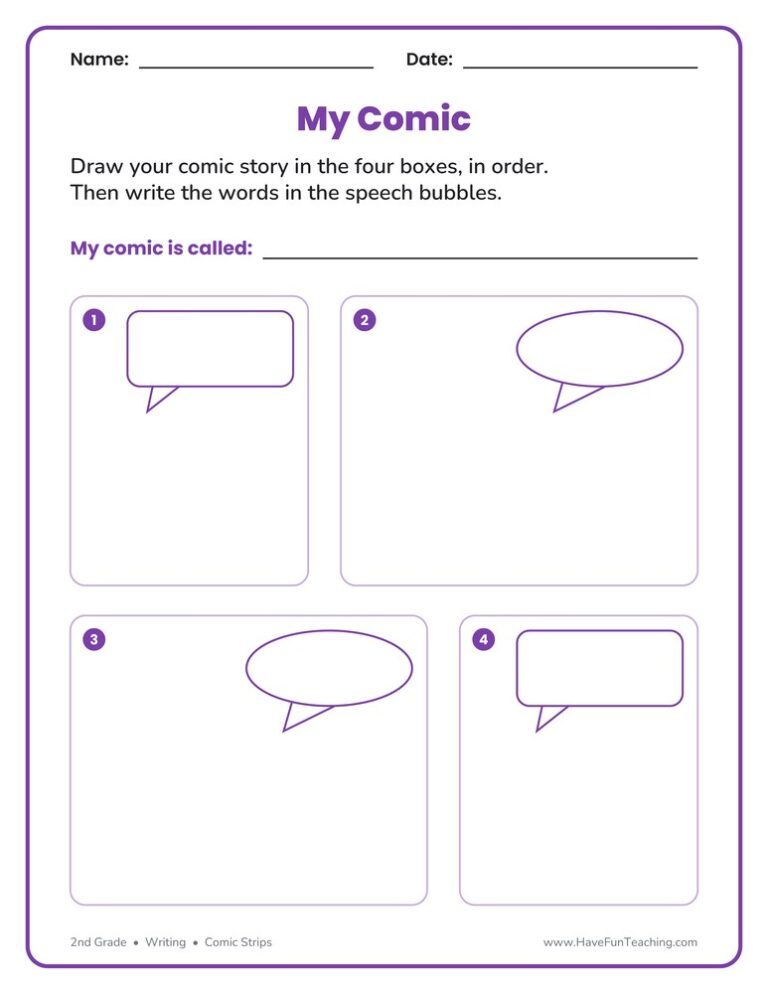
This 4 rectangles comic strip worksheet lets 2nd grade students draw a four-part story in order and write what their characters say in speech bubbles, building narrative writing skills in a fun way.

Worksheet
Worksheet2nd GradeCreate Your Own Comic Worksheet

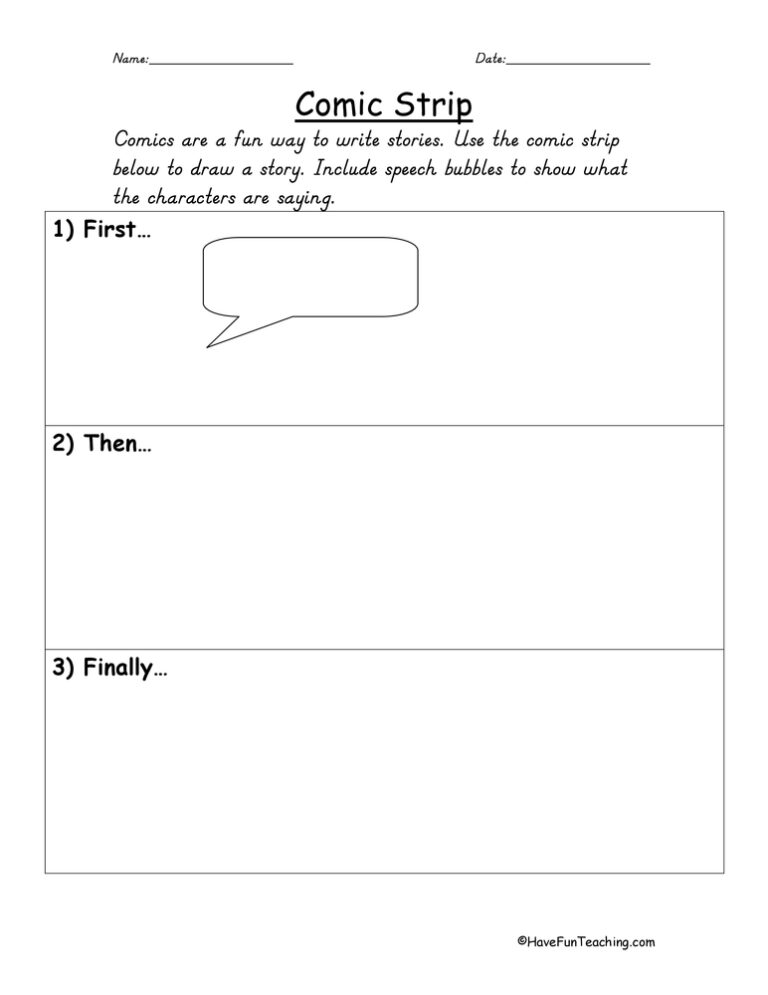
Using this Create Your Own Comic Worksheet, 2nd Grade students draw a three-part story and write what their characters say. An open-ended page that turns reluctant writers into storytellers.

Worksheet
Worksheet2nd Grade9 Boxes Comic Strip Worksheet

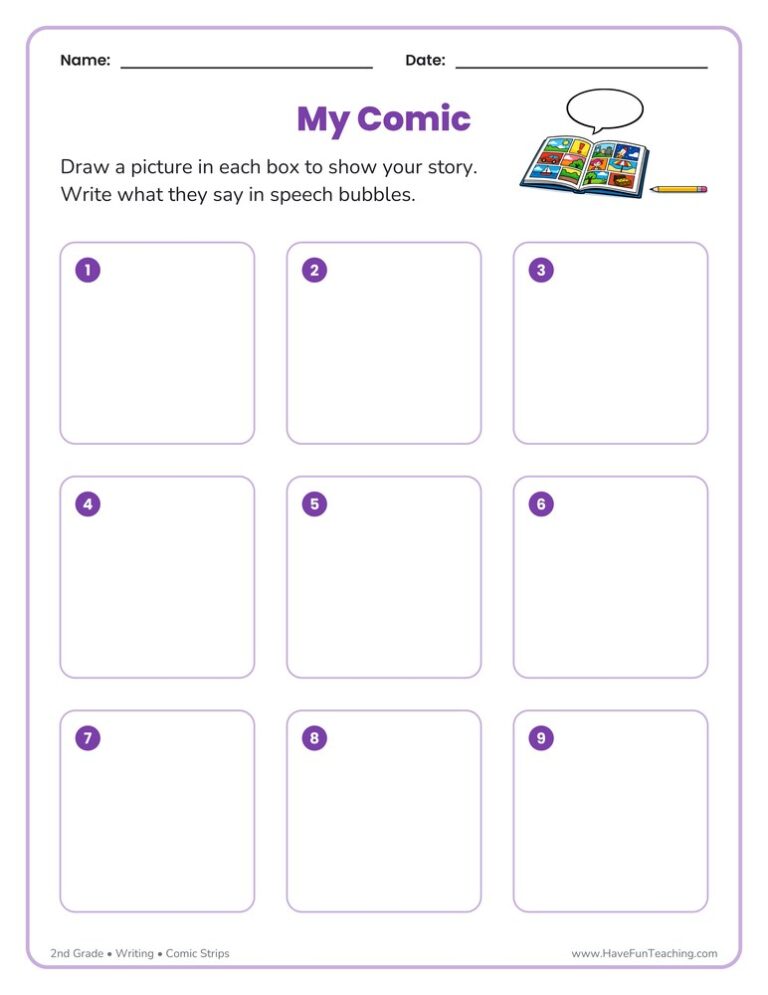
This 9 Boxes Comic Strip Worksheet gives 2nd Grade writers nine numbered panels to draw a story and add speech bubbles, turning sequencing and dialogue into a creative, no-prep writing activity.

Worksheet
Worksheet2nd GradeSpeech Bubbles and Boxes Comic Strip Worksheet

This speech bubbles and boxes comic strip worksheet lets 2nd grade students draw a four-part story, tell what happens in narration boxes, and write what characters say in speech bubbles.

Worksheet
Worksheet2nd Grade6 Circles Comic Strip Worksheet

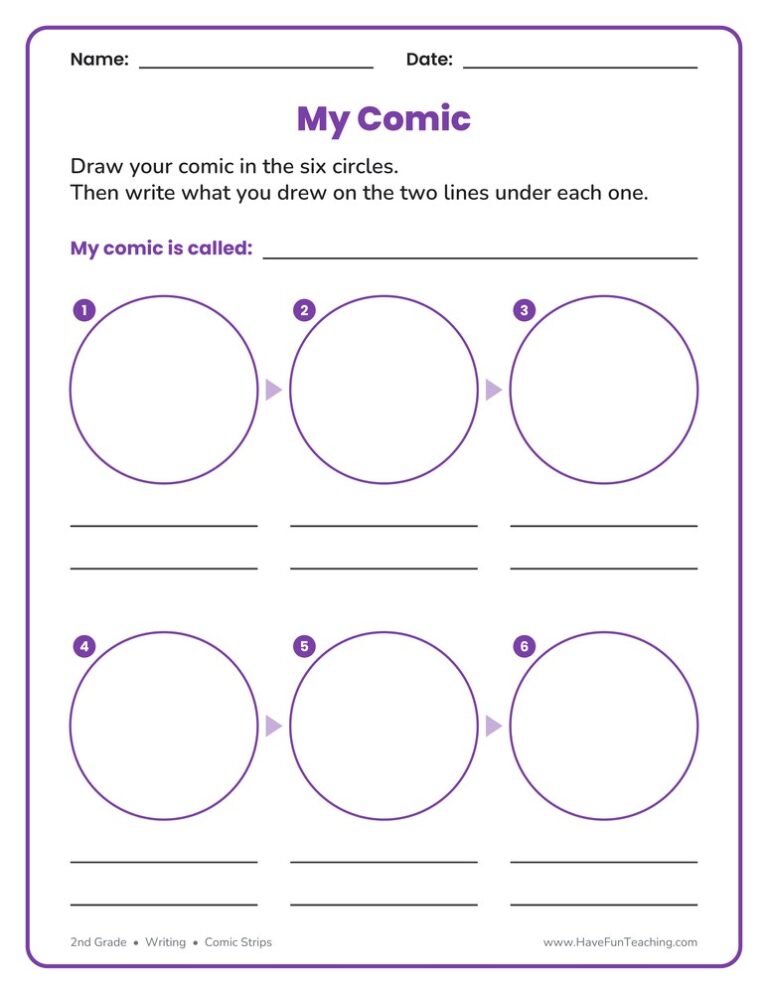
This 6 circles comic strip worksheet lets 2nd grade students draw a six-part story in order and write a sentence about each picture, building narrative writing skills in a fun way.

Worksheet
Worksheet2nd GradeCartoon Character Dialogue Worksheet

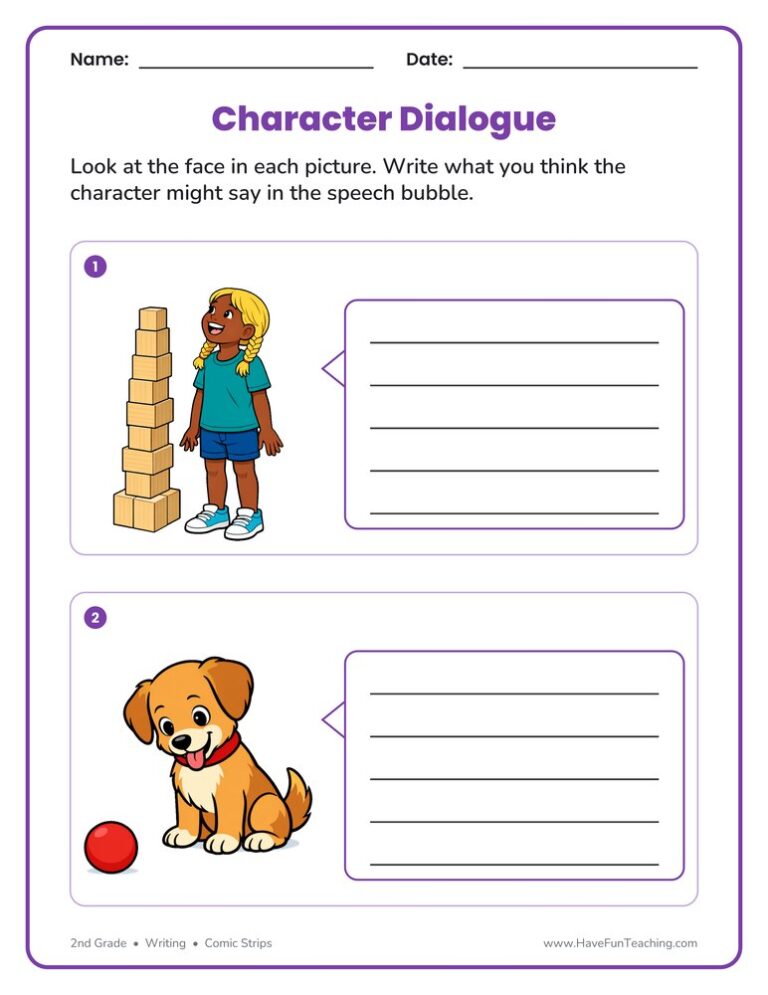
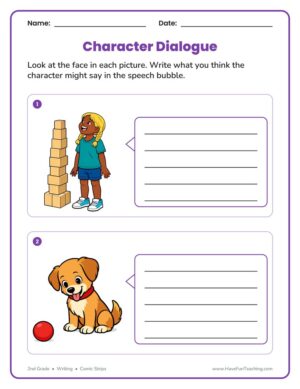
A cartoon character dialogue worksheet where 2nd graders read a character's face and write the words it might say in a big speech bubble. Open-ended, no-prep narrative writing practice.

Worksheet
Worksheet1st Grade2 Rectangles Comic Strip Worksheet

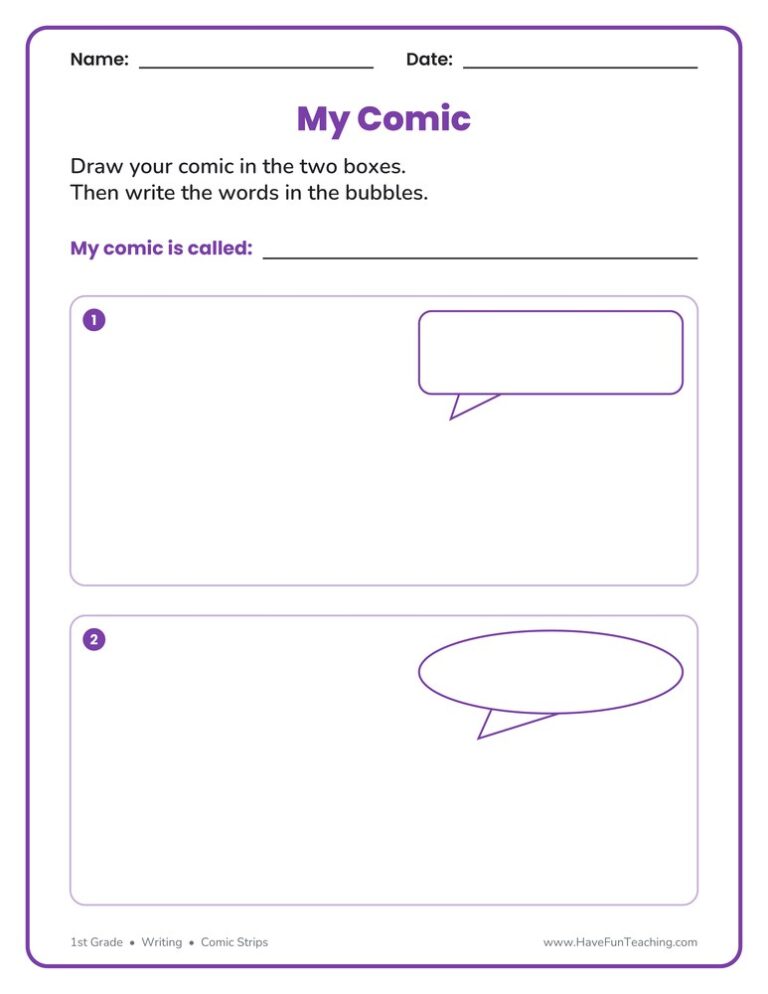
This 2 rectangles comic strip worksheet helps 1st grade students draw a two-part story and write what their characters say in speech bubbles, building early narrative writing skills in a fun way.

Worksheet
Worksheet2nd GradeDifferent Shapes Comic Strip Worksheet

This different shapes comic strip worksheet lets 2nd graders draw a six-panel story in order and add dialogue in speech bubbles, building sequencing and narrative writing skills.

Worksheet
Worksheet2nd GradeBirds Character Dialogue Worksheet

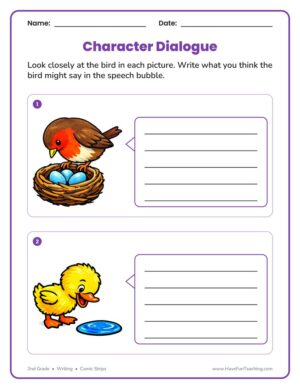
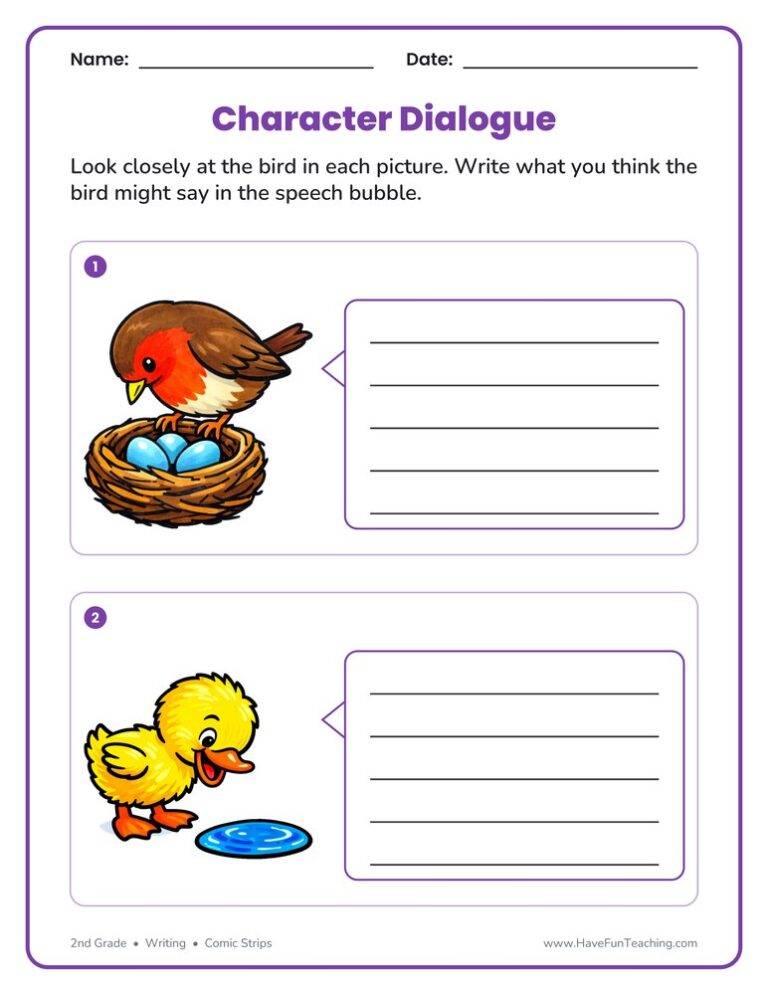
This Birds Character Dialogue Worksheet invites 2nd graders to study a proud robin and an excited duckling, then write what each bird might say in a big speech bubble. Open-ended, no-prep writing fun.

From our teachers' playbook

Boxes, bubbles and big stories!

What do kids learn from comic strips?

Comic strips teach story structure in a way kids love. Each box is one moment, so kids learn to plan a beginning, middle and end. Speech bubbles teach dialogue, thought bubbles show what characters think, and captions tell where and when. A four-box strip is a whole story: problem → try → twist → solution. The click moment is when kids realize a good comic needs a plan before the drawing, just like a good story.

Our favorite ways to teach comic strips

Comic strips sneak in serious writing skills. These moves help kids plan before they draw.

Plan four boxes out loud

Draw a quick four-box comic on the board and think aloud: "Box one, who and where. Box two, the problem. Box three, what they try. Box four, how it ends." Stick figures are fine! Kids see that planning matters more than art.

Why it works: handing over the work step by step, from teacher to student, is one of the most widely used teaching frameworks (Pearson and Gallagher, 1983).
4 Boxes Comic Strip WorksheetTry it with4 Boxes Comic Strip WorksheetWorksheetsOpen it →
Bubble talk

Show the difference between speech bubbles, thought bubbles and captions. Kids add the right kind to a few blank scenes. It's a fun way to practice dialogue and point of view.

Why it works: children learn more from words and pictures together than from words alone (Mayer, 2009).

Speech Bubbles Comic Strip WorksheetTry it withSpeech Bubbles Comic Strip WorksheetWorksheetsOpen it →
Sticky note story

Kids plan each panel on a sticky note first, then rearrange them until the story makes sense. Only then do they draw the final six-box comic. Moving notes around makes sequencing hands-on.

Why it works: the U.S. Department of Education's guide for teaching elementary math recommends moving from hands-on objects to drawings to numbers.

6 Boxes Comic Strip WorksheetTry it with6 Boxes Comic Strip WorksheetWorksheetsOpen it →
Questions parents and teachers ask us

Why use comic strips in the classroom?

Comic strips teach sequencing, dialogue and story structure in a short, fun format. Reluctant writers often write more when they can draw too.

How do I teach kids to make a comic strip?

Start with four boxes: setting, problem, attempt and solution. Have kids plan with words or sticky notes, then draw. Add speech bubbles last.

What age can kids make comic strips?

Kids can start in kindergarten with two or three boxes and simple pictures. By 2nd and 3rd grade, they can write longer strips with dialogue and captions.

What is the difference between a speech bubble and a thought bubble?

A speech bubble shows what a character says out loud. A thought bubble, often cloud-shaped, shows what a character is thinking.

Keep exploring