
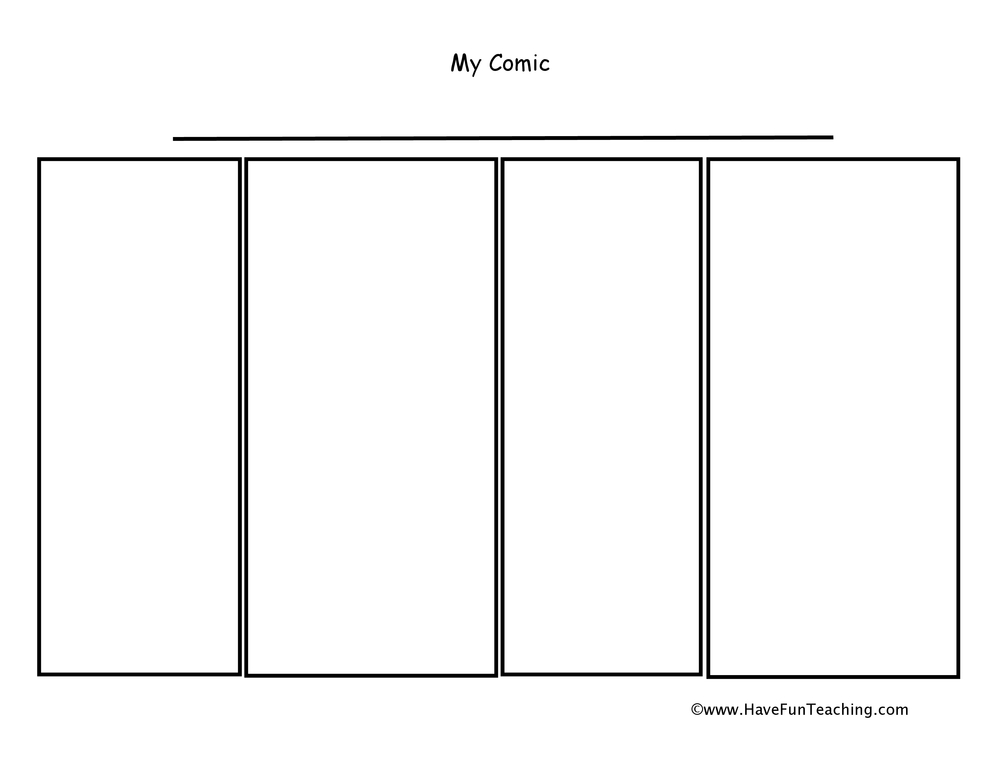
4 Rectangles Comic Strip Worksheet
This 4 rectangles comic strip worksheet lets 2nd grade students draw a four-part story in order and write what their characters say in speech bubbles, building narrative writing skills in a fun way.
$6.97
Or free with a membership — members pay $3.33/mo for all 10,000+ resources. See plans
Want this one free?
Tell us where to send it and it’s yours — no card, no catch.
One free resource per teacher. We’ll also send free teaching ideas each week — unsubscribe anytime.
Teaching is easier with a membership
Unlimited printables, games & videos for PreK–6th — for your classroom or homeschool. Cancel anytime.
Start your 3-day free trial$0 today · cancel anytime · Instant access to 10,000+ resources
About this resource
Description
Comics are a fun way for young writers to tell a whole story with pictures and words. This 4 rectangles comic strip worksheet gives second graders four panels to plan a story from beginning to end, show each event in order, and add the words their characters say. It builds narrative writing skills while feeling like play.
About This Worksheet
The page starts with a line to write the name of the comic. Below it are four numbered panels set in two rows, a narrow box beside a wide box, just like a real comic book page. Each panel has an empty speech bubble at the top and plenty of room underneath to draw. Children draw the beginning of their story in panel 1, the middle events in panels 2 and 3, and the ending in panel 4, then write what the characters say in each bubble. Because every story is the child’s own, the sheet is a single open-ended page. This 2nd grade comic strip template works well in a writing center, as morning work, or as a follow-up to a read aloud.
What’s Included
- A line to write the title of the comic
- Four numbered comic panels in narrow and wide sizes
- A speech bubble in each panel for dialogue
- A single printable page in color
Why Kids Love It
First, four panels give children a clear beginning, middle, and end, so they practice telling events in order. Second, drawing before writing helps kids plan their ideas and gives them a picture to talk about. Third, speech bubbles make writing dialogue feel natural, because students simply write what each character would say out loud.
Ideas for Teachers and Parents
Model a quick four-panel comic on the board before handing out the 4 rectangles comic strip worksheet, and think aloud about what happens first, next, then, and last. Invite students to read their finished comics to a partner using character voices. Offer a story starter, such as a lost mitten or a surprise visitor, for writers who need help getting going. Children who enjoy it can move up to a six- or nine-box comic page next.
Related Resources
What teachers say
Reviews
You must be logged in to post a review.
This 6 Boxes Comic Strip Worksheet gives 2nd grade students a landscape template with six panels and caption lines to draw and write their own story in order. A creative writing activity kids love.
Use this 4 Boxes Comic Strip Worksheet to help 2nd Grade writers plan a story across four panels, add speech bubbles, and caption each scene so sequencing feels easy and fun.
Using this Create Your Own Comic Worksheet, 2nd Grade students draw a three-part story and write what their characters say. An open-ended page that turns reluctant writers into storytellers.
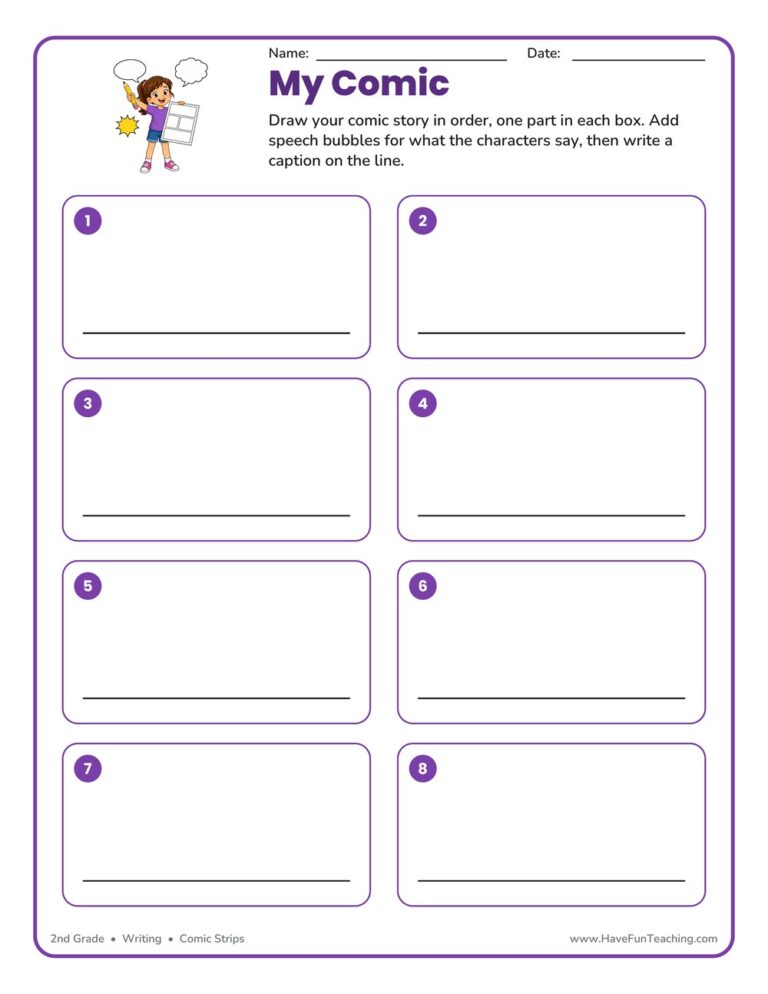
The 8 Boxes Comic Strip Worksheet lets 2nd graders draw and write their own eight-panel story with characters, speech bubbles, and captions - a fun, no-prep way to build creative narrative writing skills.
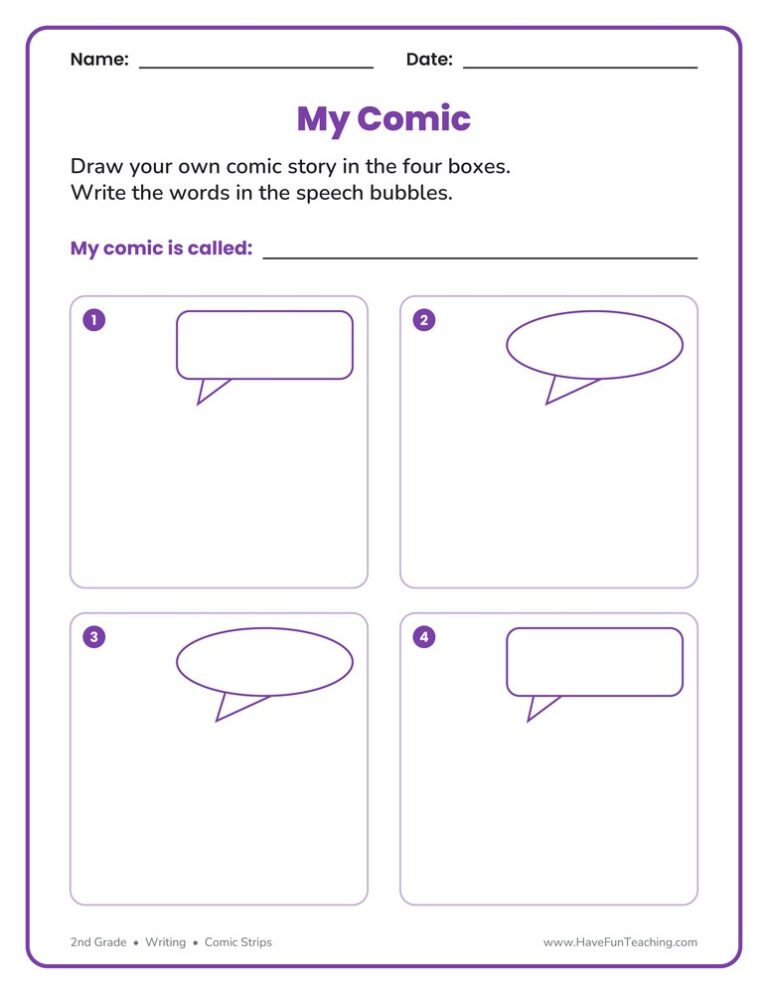
Using this Speech Bubbles Comic Strip Worksheet, 2nd Grade students draw a four-panel story and write what their characters say. An open-ended page that turns reluctant writers into storytellers.
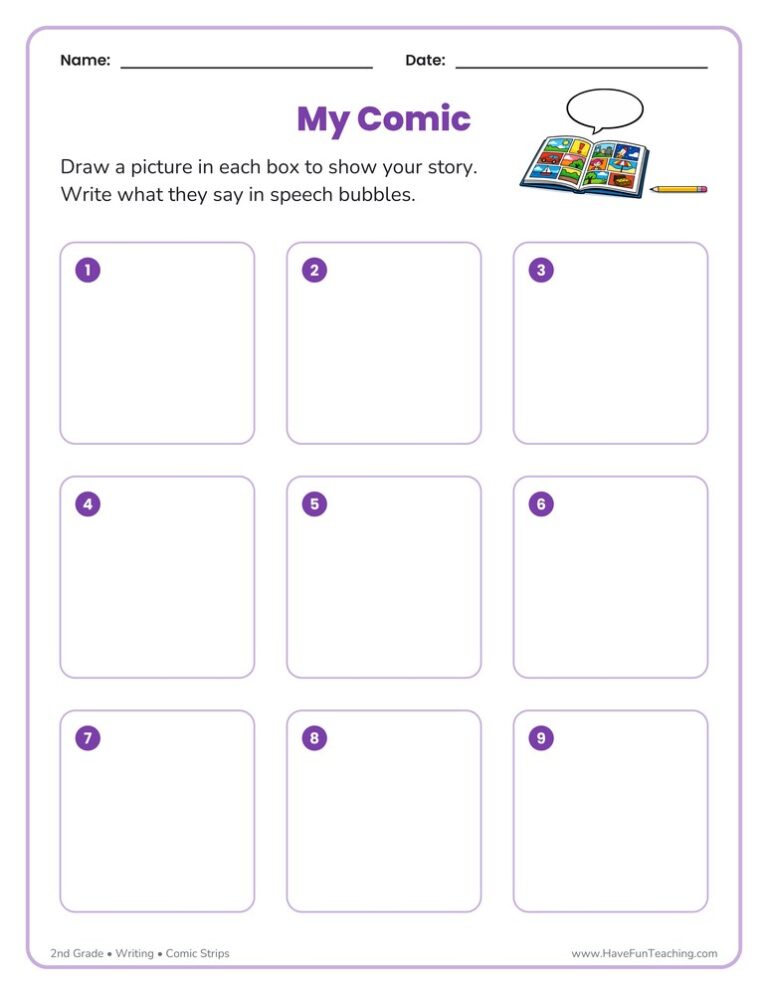
This 9 Boxes Comic Strip Worksheet gives 2nd Grade writers nine numbered panels to draw a story and add speech bubbles, turning sequencing and dialogue into a creative, no-prep writing activity.
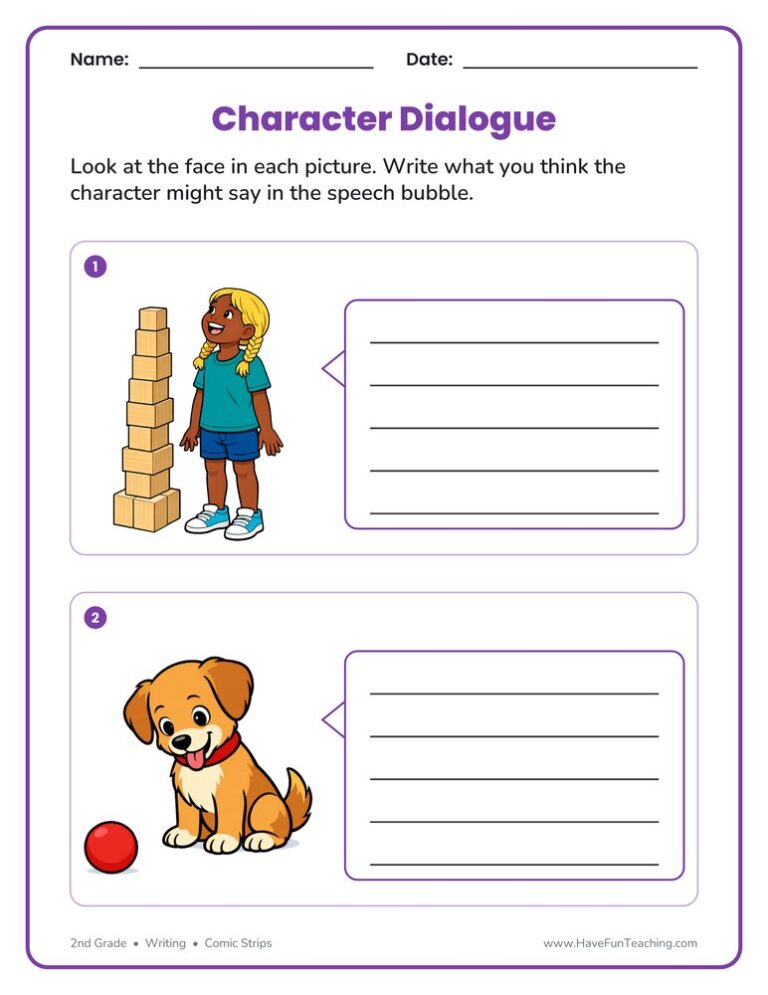
A cartoon character dialogue worksheet where 2nd graders read a character's face and write the words it might say in a big speech bubble. Open-ended, no-prep narrative writing practice.
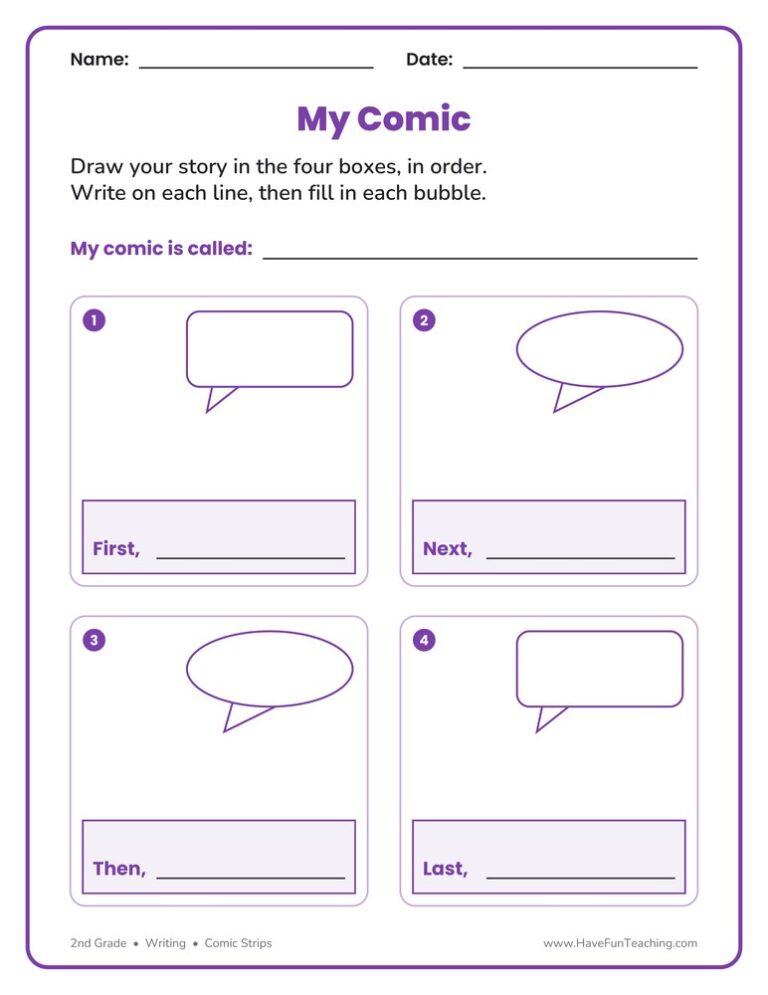
This speech bubbles and boxes comic strip worksheet lets 2nd grade students draw a four-part story, tell what happens in narration boxes, and write what characters say in speech bubbles.
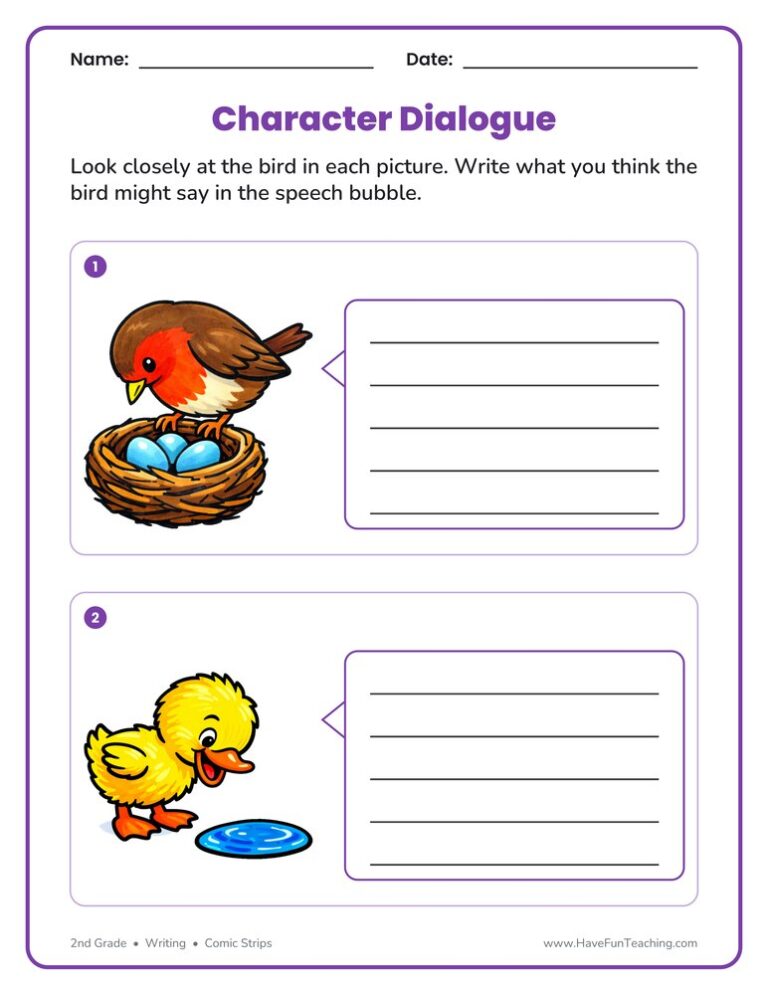
This Birds Character Dialogue Worksheet invites 2nd graders to study a proud robin and an excited duckling, then write what each bird might say in a big speech bubble. Open-ended, no-prep writing fun.

Using this 6 Circles Comic Strip Worksheet, studentswrite stories using characters, drawings, and speech bubbles in a fun and engaging way.

Using this Different Shapes Comic Strip Worksheet, studentswrite stories using characters, drawings, and speech bubbles in a fun and engaging way.

The Alphabet Songs Pack - Animated will help support your visual learners gain a better understanding of letter names and sounds by listening to this song.




Reviews
There are no reviews yet