
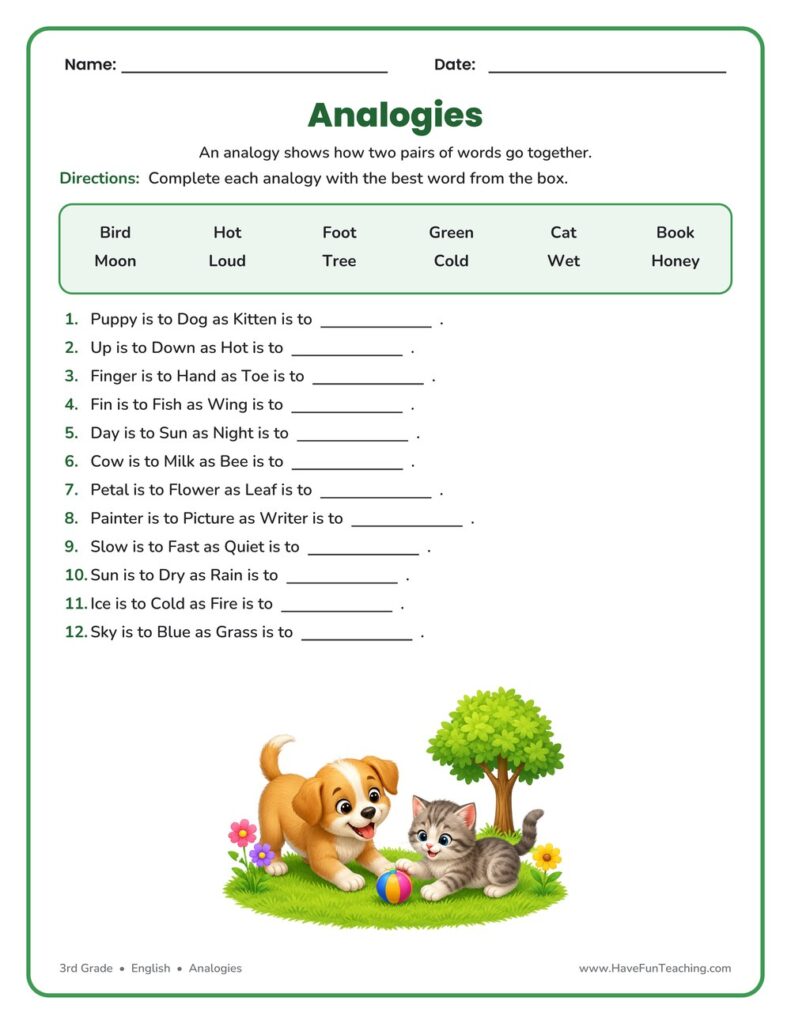
Analogy Fill in the Blanks Worksheet
A word-box Analogy Fill in the Blanks Worksheet where 3rd graders complete 12 analogies to build vocabulary and word-relationship reasoning. Answer key included—perfect for quick, no-prep practice at home or in class.
$6.97
Or free with a membership — members pay $3.33/mo for all 10,000+ resources. See plans
Want this one free?
Tell us where to send it and it’s yours — no card, no catch.
One free resource per teacher. We’ll also send free teaching ideas each week — unsubscribe anytime.
Teaching is easier with a membership
Unlimited printables, games & videos for PreK–6th — for your classroom or homeschool. Cancel anytime.
Start your 3-day free trial$0 today · cancel anytime · Instant access to 10,000+ resources
About this resource
Description
Analogies help students see how two pairs of words are related, strengthening vocabulary and logical thinking at the same time. This Analogy Fill in the Blanks Worksheet gives third graders clear, guided practice with word relationships such as opposites, part-to-whole, and category matches. By finishing each analogy, children learn to spot the pattern in the first pair and apply that same pattern to the second pair—a reasoning skill that supports reading comprehension, test-taking, and everyday word use.
On this printable 3rd grade analogies worksheet, students read twelve analogies written in the familiar “A is to B as C is to ___” form and complete each one using the best word from the word box at the top of the page. The word box keeps the activity approachable for younger learners while still asking them to think carefully about how each pair connects. Teachers can use it for independent practice, morning work, a literacy center, or homework, and the included answer key makes checking quick and simple.
What’s Included
- 1 print-ready PDF worksheet
- Answer key
- 12 fill-in-the-blank analogy questions with a word box
This Analogy Fill in the Blanks Worksheet helps kids in three ways. First, the word box lowers frustration so students can focus on reasoning instead of spelling. Second, the mix of relationships—opposites, part-to-whole, and category pairs—stretches vocabulary and flexible thinking. Third, the clean one-page layout keeps young learners on task and builds confidence as they complete each analogy correctly.
To extend the learning, invite children to create their own analogies about their favorite animals, foods, or toys and challenge a partner to solve them. Play a quick oral analogy game during transitions, or sort word cards into pairs before writing full analogies. Parents can turn everyday moments into practice by asking, “A puppy is to a dog as a kitten is to a…?” while cooking or riding in the car.
Related Resources
What teachers say
Reviews
You must be logged in to post a review.
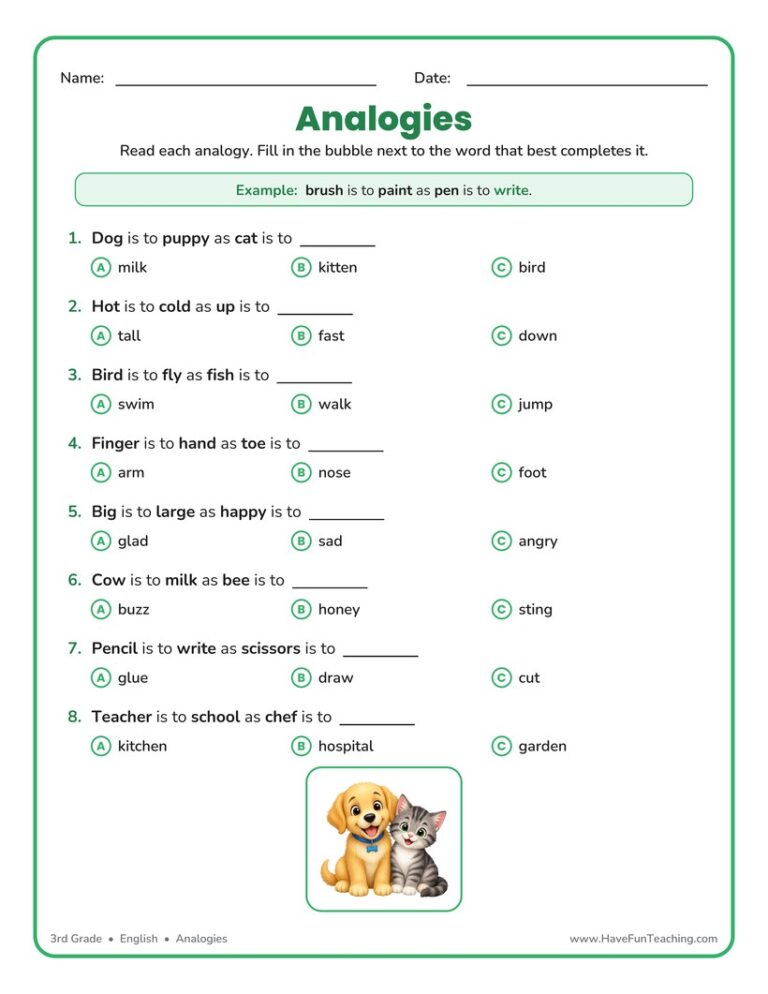
This Analogies Multiple Choice Worksheet helps 3rd graders complete word analogies by choosing the answer that matches each relationship. Includes a complete answer key—a fun, no-prep way to build vocabulary and reasoning skills.
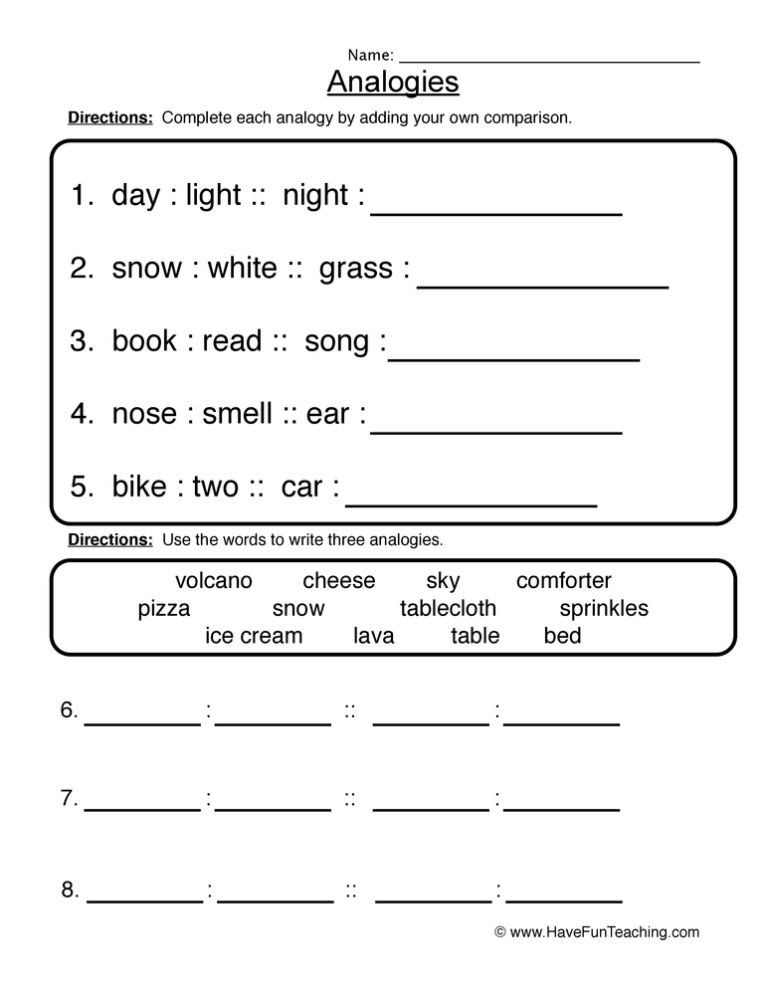
A Completing Analogies Worksheet for 3rd grade, with word bank, multiple choice, and write-and-explain practice in naming word relationships. Answer key included, so students build vocabulary and reasoning with no prep.
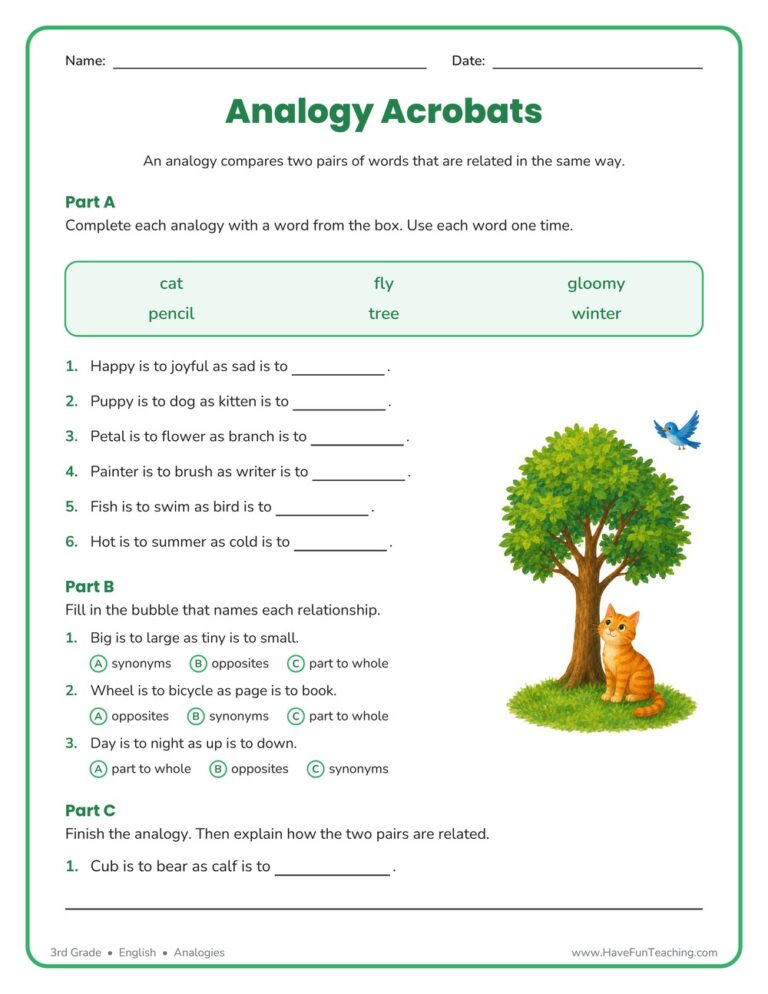
This Complete the Analogy Worksheet gives 3rd Grade students six word-bank analogies, three relationship-naming questions, and a short writing prompt. Answer key included, so analogy practice takes no prep at all.

This analogies word bank worksheet gives 3rd Grade students eight analogies, a ten-word bank with two distractors and an answer key, so vocabulary reasoning is practiced and checked in one page.
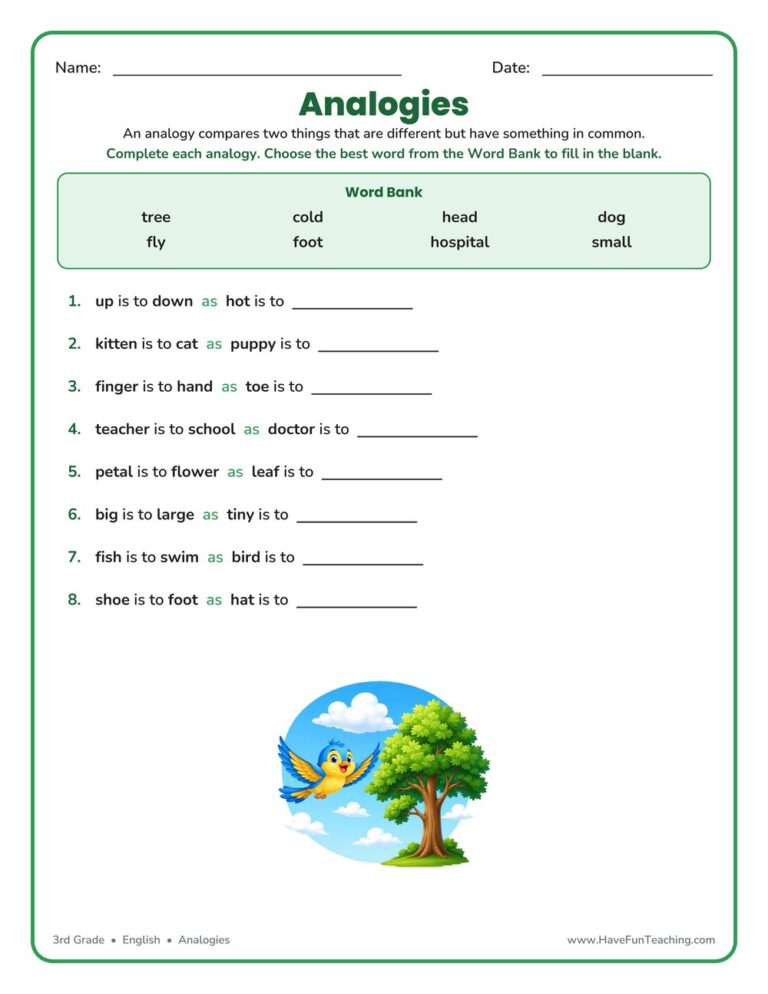
A word-bank analogies worksheet that helps 3rd graders complete word relationships like opposites, part-to-whole, and category. Includes a complete answer key — great for no-prep vocabulary practice.
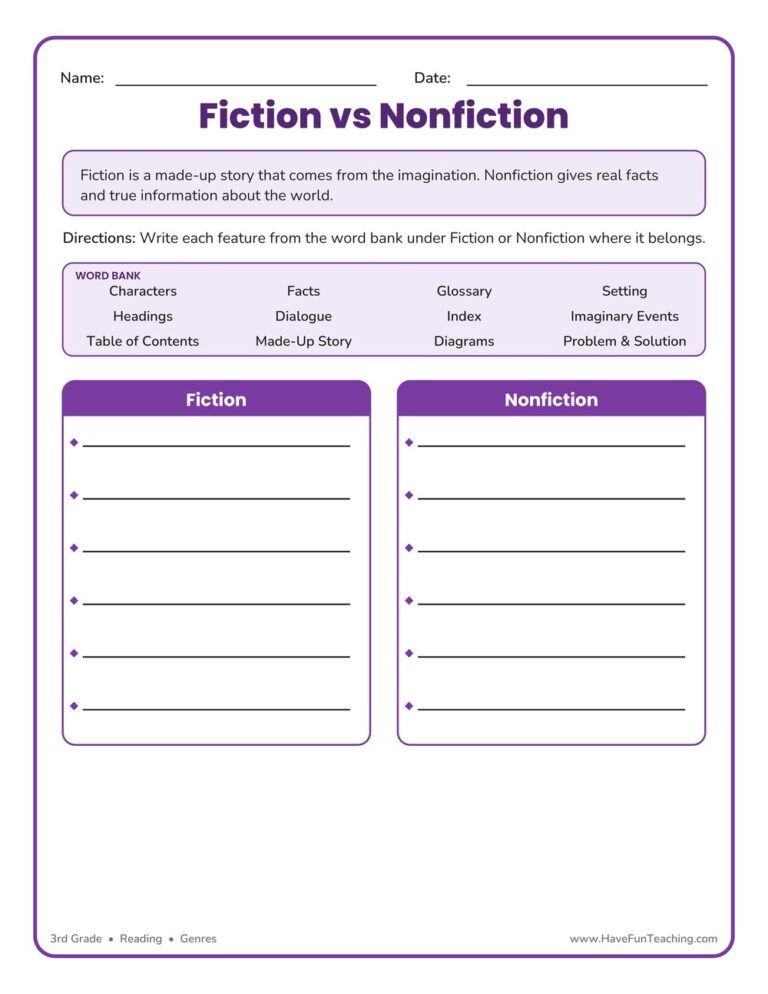
This fiction and nonfiction features worksheet has 3rd graders sort twelve text features into Fiction and Nonfiction columns. An answer key is included, making it a quick, no-prep way to build genre awareness.
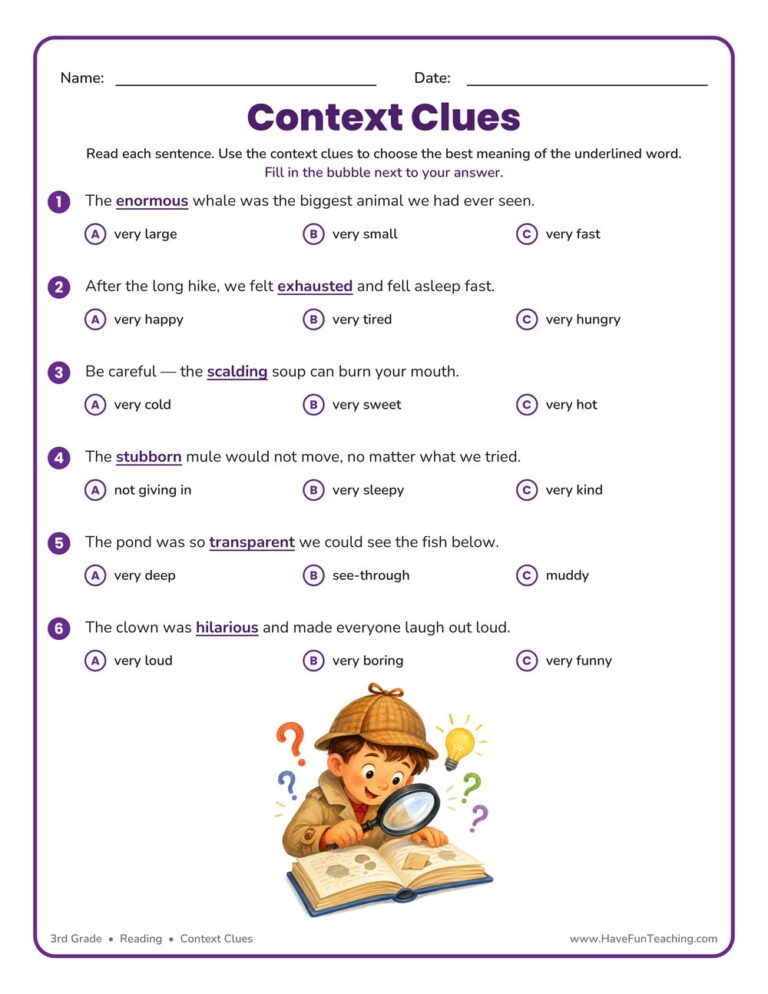
A 3rd grade Context Clues Worksheet with six multiple-choice sentences where students use the surrounding words to find the meaning of each underlined word. Answer key included for fast, no-prep vocabulary practice.
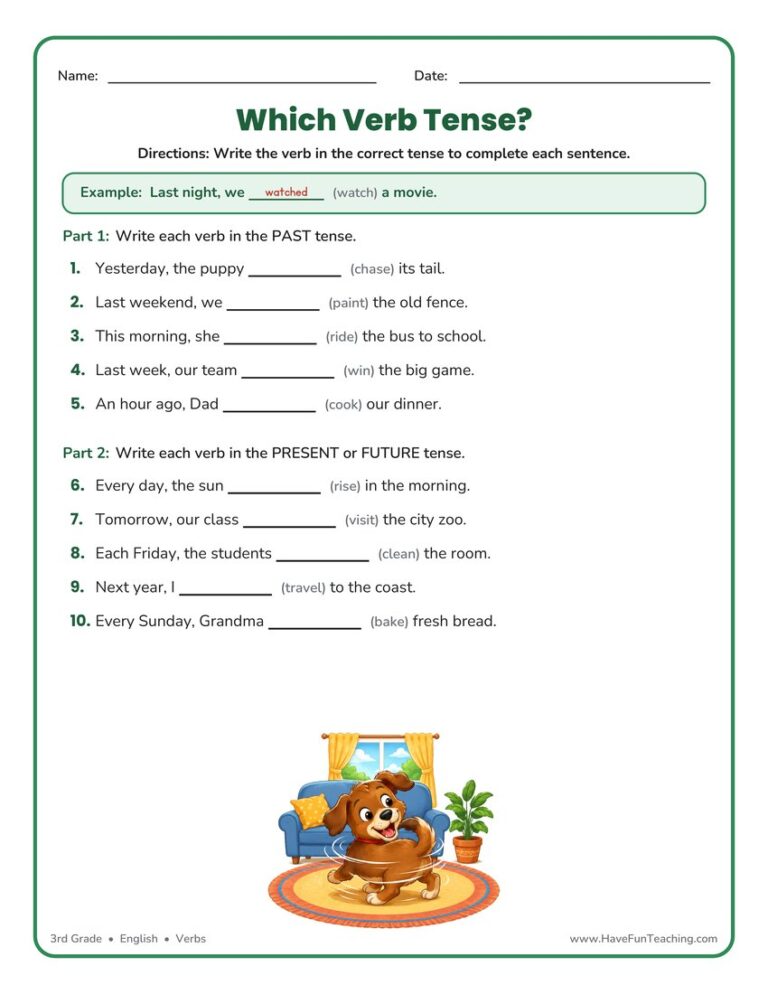
This Verb Tenses Fill in the Blank Worksheet helps 3rd graders choose the correct past, present, or future verb form using clear time clues. Answer key included—a quick, no-prep grammar practice for home or class.
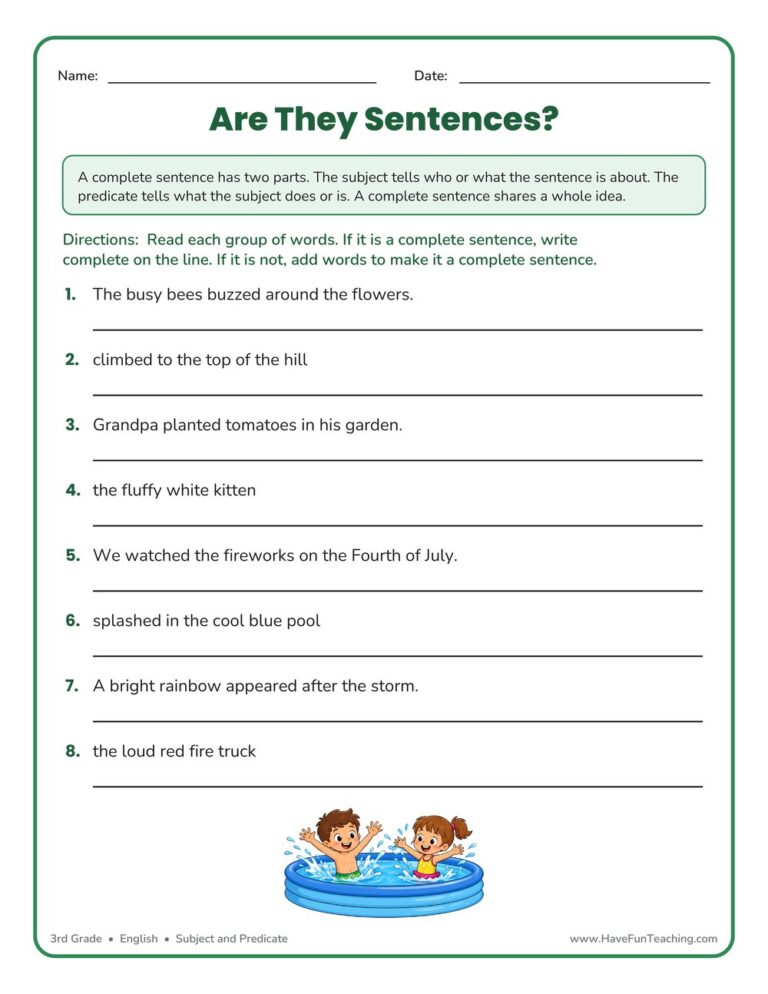
This Creating Complete Sentences Worksheet asks 3rd graders to spot complete sentences and fix fragments by adding a missing subject or predicate. Answer key included — perfect for quick, no-prep grammar practice at home or school.
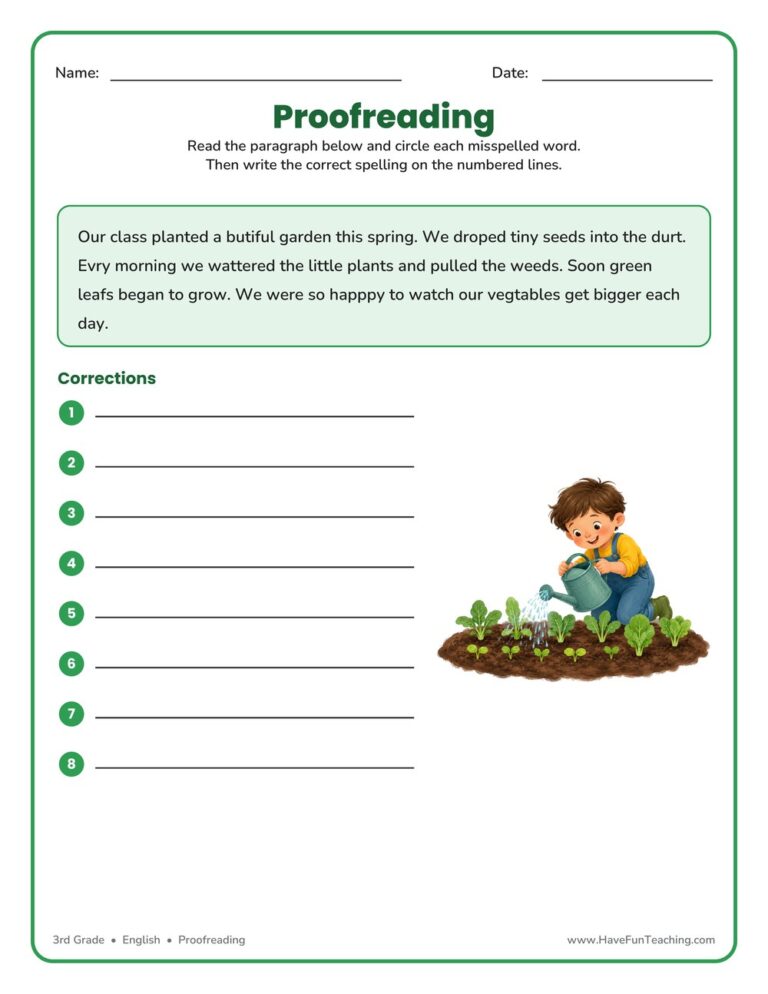
This 3rd grade proofreading worksheet has students hunt for and fix eight misspelled words in a fun garden paragraph. Answer key included — perfect for quick, no-prep spelling and editing practice at home or school.
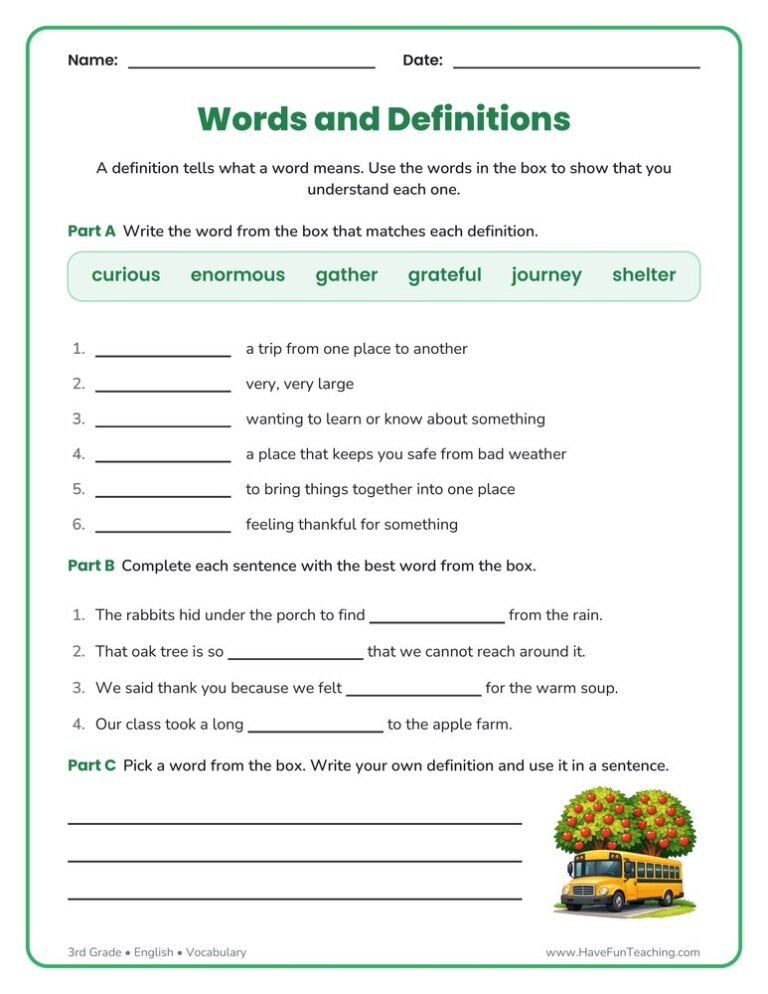
This Word and Definition Worksheet gives 3rd graders six vocabulary words to match with their meanings, use in real sentences, and define in their own words. An answer key is included, so checking takes seconds.
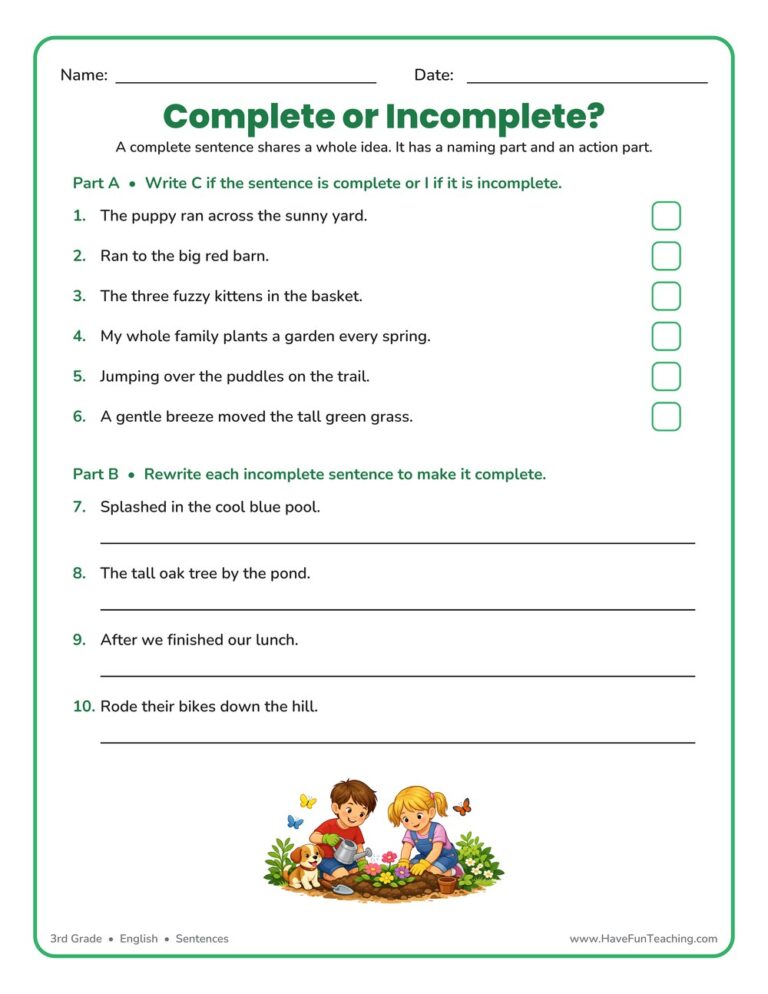
This rewriting incomplete sentences worksheet helps 3rd graders sort complete and incomplete sentences, then rewrite the fragments into full thoughts. Includes an answer key for fast, no-prep grammar practice at home or school.




Reviews
There are no reviews yet