
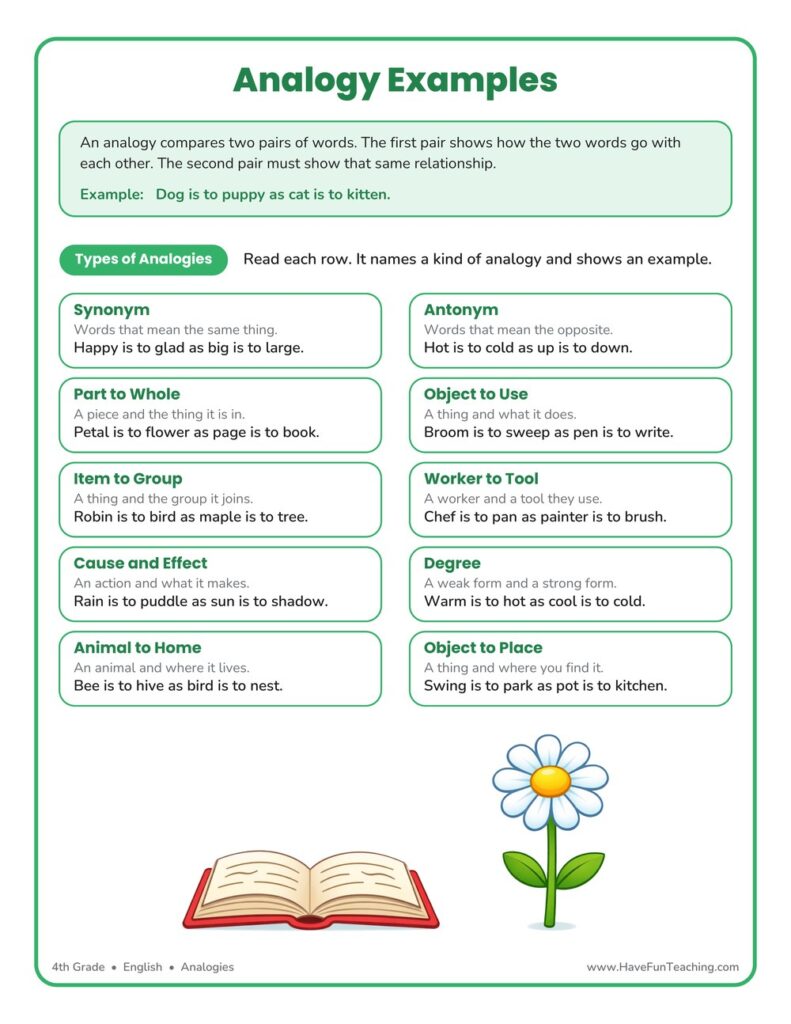
Analogy Type List
This Analogy Type List gives 4th Grade students a one-page reference chart naming ten analogy types, each with a short explanation and a finished example, so word relationships are easy to spot.
$6.97
Or free with a membership — members pay $3.33/mo for all 10,000+ resources. See plans
Want this one free?
Tell us where to send it and it’s yours — no card, no catch.
One free resource per teacher. We’ll also send free teaching ideas each week — unsubscribe anytime.
Teaching is easier with a membership
Unlimited printables, games & videos for PreK–6th — for your classroom or homeschool. Cancel anytime.
Start your 3-day free trial$0 today · cancel anytime · Instant access to 10,000+ resources
About this resource
Description
An analogy compares two pairs of words and asks a student to notice the relationship that both pairs share. This Analogy Type List gives fourth graders one organized reference for the ten relationships that turn up most often on reading tests, in vocabulary lessons, and in everyday classroom talk. Instead of guessing at what a question is really asking, students can look up the kind of pair in front of them — synonym, antonym, part to whole, cause and effect — and name the relationship out loud before they choose a word. The analogy type list turns an abstract skill into something a child can point to.
This printable reference chart opens with a plain-language definition of an analogy and a worked example, then lays out ten analogy types in a clean two-column chart. Each entry names the type, explains the relationship in one short sentence, and gives a complete example analogy so the pattern is easy to see. Print it and slide it into a reading folder, tape it inside a vocabulary notebook, or project it during a whole-class mini-lesson. Because it is a reference sheet rather than a practice page, students can keep it beside them while they work on any analogy activity you already use.
What’s Included
- 1 print-ready PDF reference chart, single page
- A student-friendly definition of an analogy with a worked example
- 10 analogy types, each explained in one short sentence
- 10 complete example analogies, one for every type
- A clean two-column layout built for printing and projecting
Three things make this list of analogy types work in a real classroom. First, naming the relationship is the hardest part of solving an analogy, and a chart that names all ten removes the memory load so students can spend their thinking on the words themselves. Second, every type is paired with a finished example, so a child who cannot hold a definition in mind can still match the shape of the problem to the shape of the example. Third, keeping one reference in front of students all year builds the vocabulary teachers actually use — part to whole, degree, cause and effect — so class discussion about word relationships gets more precise over time.
Teachers and parents can stretch this chart well past reference use. Ask students to cover the example column and invent their own analogy for each type, then trade papers with a partner and check each other’s work. Play a quick sorting game: read an analogy aloud and let students race to name its type from the chart. Send a copy home and challenge families to find one real analogy in a book, a recipe, or a sports broadcast during the week. Stronger readers can add two rows of their own for any types they discover while reading.
Related Resources
What teachers say
Reviews
You must be logged in to post a review.

This analogies word bank worksheet gives 3rd Grade students eight analogies, a ten-word bank with two distractors and an answer key, so vocabulary reasoning is practiced and checked in one page.
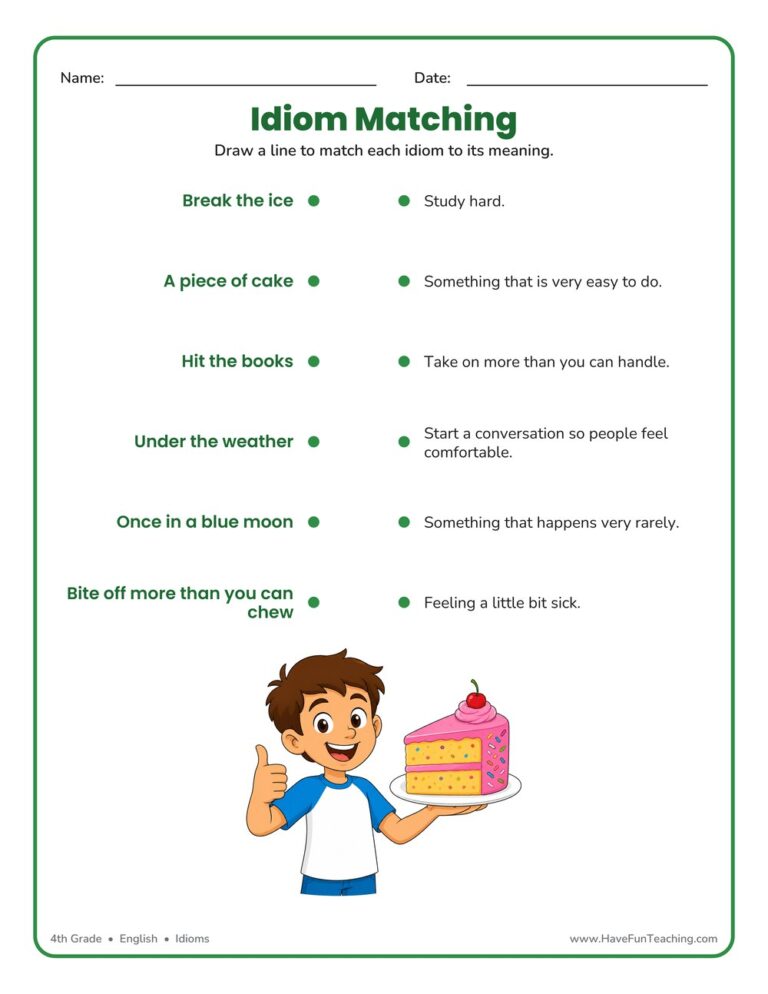
A matching idioms worksheet where 4th graders draw a line to connect six common idioms to their meanings. Includes an answer key for quick, no-prep figurative language practice.

This simple, compound, and complex sentences worksheet helps 4th grade students identify and combine sentence types using clauses and conjunctions. Includes a complete answer key for fast, no-prep grammar practice at home or school.
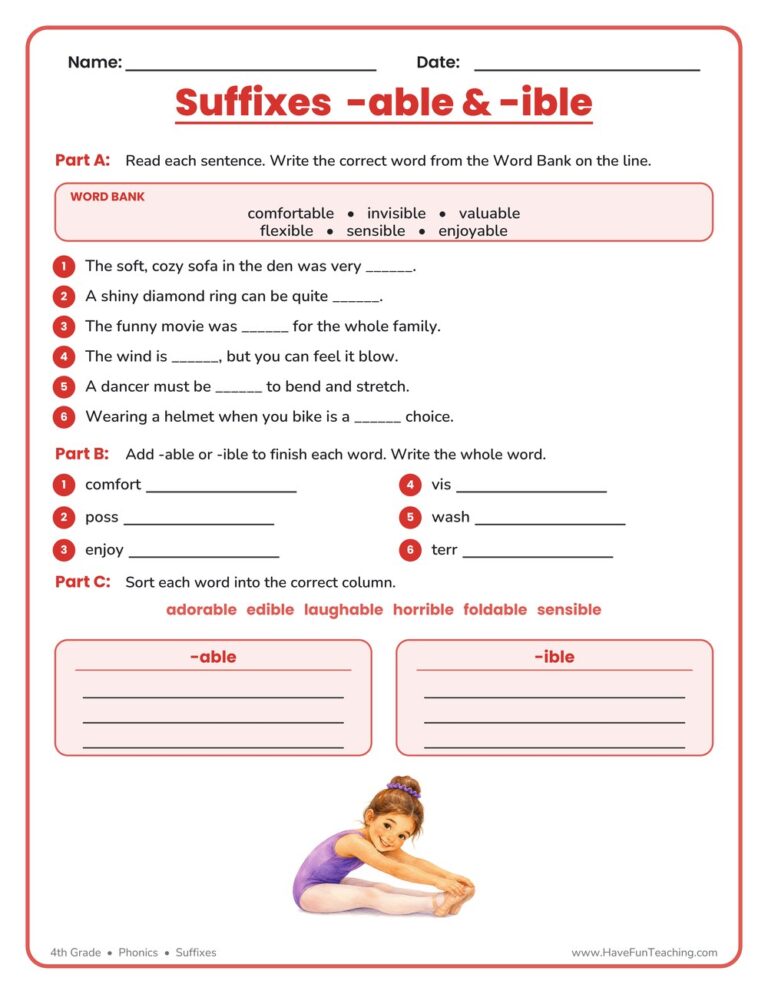
This Suffix ABLE and IBLE Worksheet helps 4th graders add -able or -ible and sort words by their ending across three quick activities. Answer key included — perfect for no-prep phonics and spelling practice.
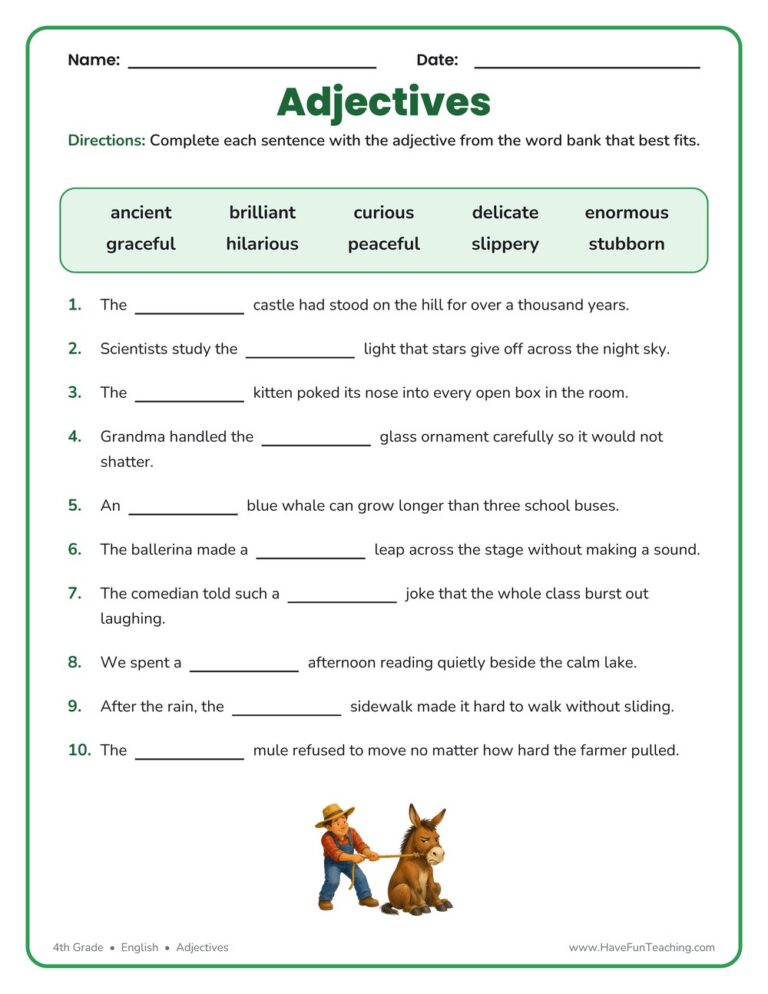
This Adjectives Fill in the Blanks Worksheet gives 4th graders ten sentences and a word bank of vivid describing words to complete, with an answer key included — perfect for building descriptive vocabulary and no-prep grammar practice.
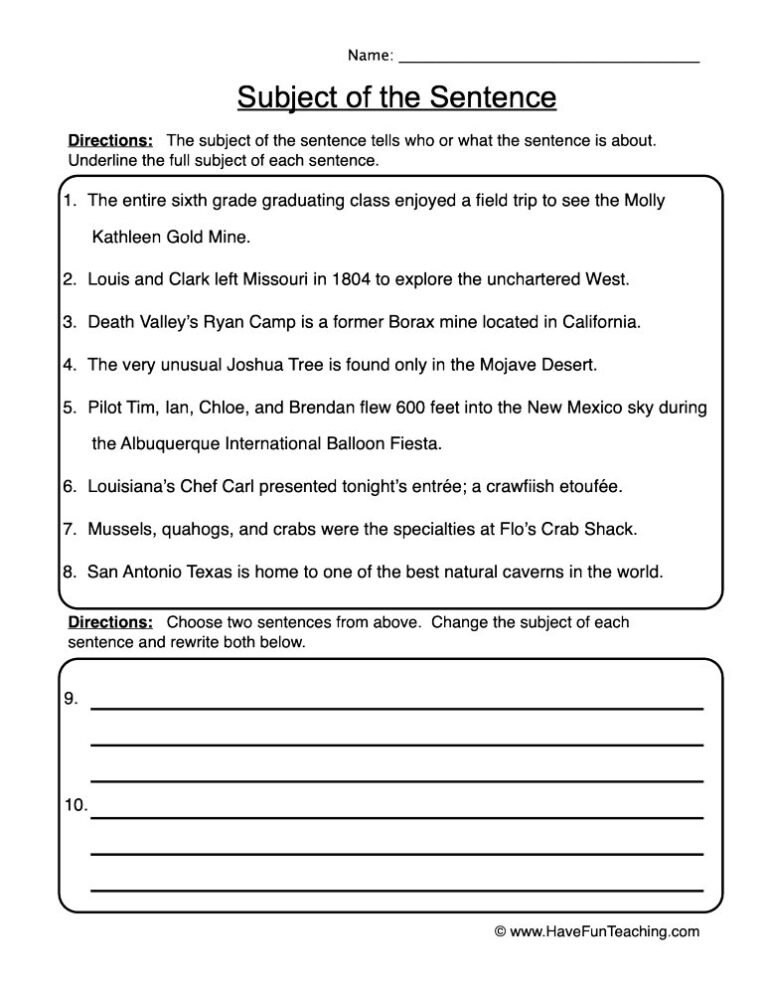
Students underline, write, and build complete subjects in this Subject of the Sentence Worksheet, a three-part grammar page for 4th grade. An answer key is included, so checking work takes only seconds.
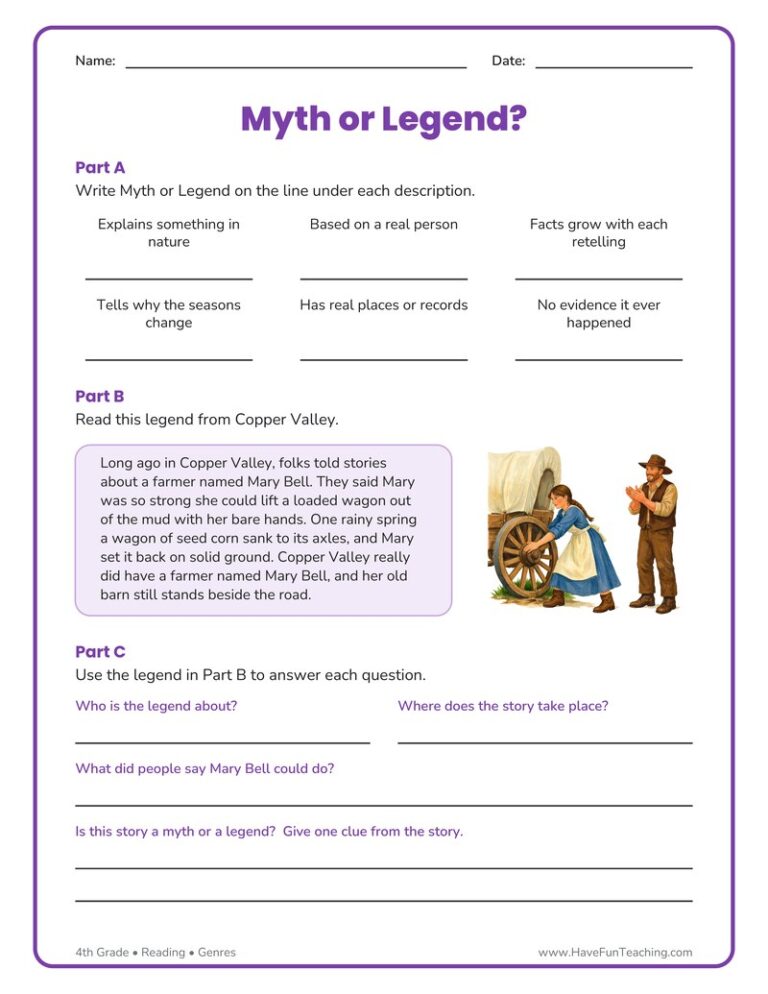
This Myths Legends Worksheet helps 4th graders tell the two genres apart, then apply what they learn to an original legend passage. Answer key included — a no-prep way to build genre knowledge and text evidence skills.
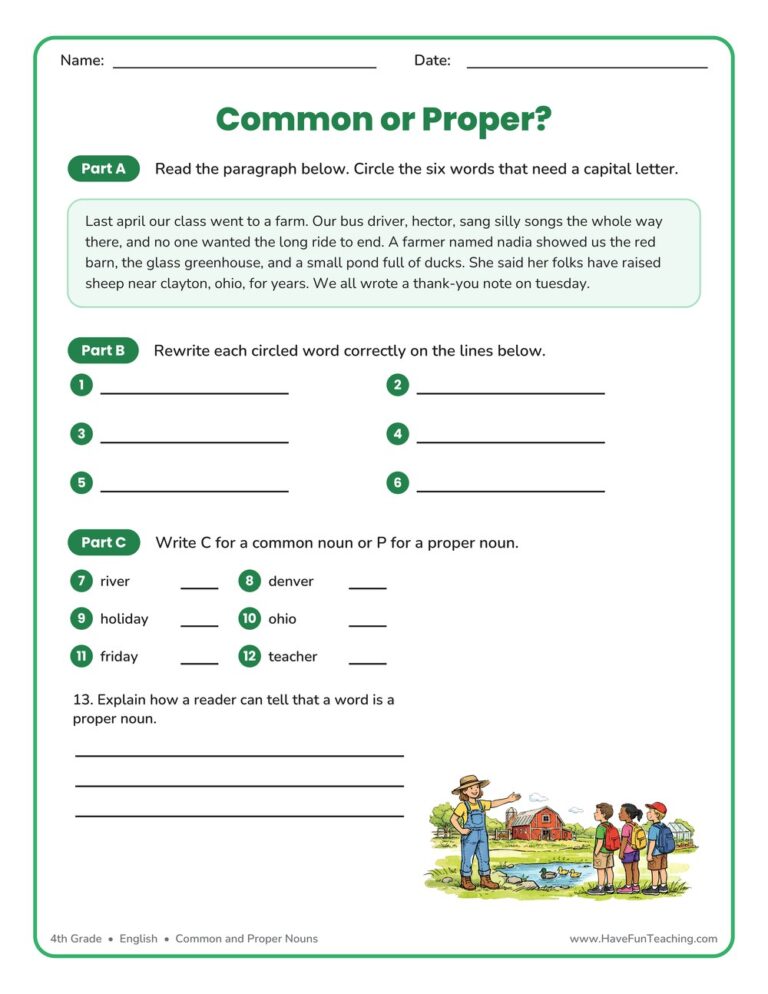
The Edit Common or Proper Nouns Worksheet has 4th Grade students proofread a paragraph for missing capital letters, rewrite each proper noun, and sort nouns as common or proper. Answer key included.

This 4.MD.7 Common Core Worksheet gives 4th graders practice finding unknown complementary and supplementary angles using right angles and straight lines. Includes a complete answer key — perfect for no-prep angle measurement practice.

Using the Science Songs (MP3 Album), students learn about different science concepts while listening to these upbeat and catchy songs.

This complete incomplete chocolate sentences worksheet helps 4th graders spot sentence fragments and fix them by adding subjects and predicates. An answer key is included for easy checking.
Using the Noun Song (Lyric Music Video), students will be able to define, give examples and use adjectives in their own writing using the catchy and memorable lyrics.
Reviews
There are no reviews yet