

Christmas Capitalization Worksheet
This Christmas Capitalization Worksheet has 2nd graders rewrite lowercase holiday sentences with every capital letter in place, then circle the proper nouns. An answer key is included, so checking takes seconds.
$6.97
Or free with a membership — members pay $3.33/mo for all 10,000+ resources. See plans
Want this one free?
Tell us where to send it and it’s yours — no card, no catch.
One free resource per teacher. We’ll also send free teaching ideas each week — unsubscribe anytime.
Teaching is easier with a membership
Unlimited printables, games & videos for PreK–6th — for your classroom or homeschool. Cancel anytime.
Start your 3-day free trial$0 today · cancel anytime · Instant access to 10,000+ resources
About this resource
Description
Capital letters tell a reader which words are special. Second graders learn to capitalize the first word of every sentence, the pronoun I, people’s names, days of the week, months of the year, holidays, and the names of real places. This Christmas Capitalization Worksheet gives students a festive way to practice all of those rules at once, using sentences about wreaths, cookies, and December days that second graders already know how to read.
This 2nd grade capitalization worksheet has two parts. In Part A, students read three sentences printed entirely in lowercase and rewrite each one on the solid handwriting lines with every missing capital letter put back. In Part B, students look at four rows of three words and circle the one word in each row that must always begin with a capital letter. Teachers can use it as morning work in December, as a quick review before a writing assignment, or as an independent literacy-center activity while small groups meet.
What’s Included
- 1 print-ready PDF worksheet
- Answer key
- 3 rewrite-the-sentence items and 4 circle-the-proper-noun rows
Three things make this Christmas Capitalization Worksheet work. First, students do not just spot the error, they rewrite the whole sentence by hand, which builds the muscle memory that carries capitalization into their own writing. Second, every item mixes several rules together, so children have to decide why a word needs a capital instead of following one pattern down the page. Third, the circling section sets proper nouns and common nouns side by side, which is exactly the discrimination that trips young writers up when they capitalize the wrong word.
At home or in the classroom, keep the practice going. Have children hunt for capital letters on a cereal box, a holiday card, or the cover of a favorite book and explain why each one is there. Write a family thank-you note together and let your child be the capital-letter checker. Make a two-column chart on the refrigerator and add one proper noun and one common noun to it every day. Read a page aloud and ask your child to clap whenever they hear a name, a day, a month, or a holiday.
Related Resources
What teachers say
Reviews
You must be logged in to post a review.
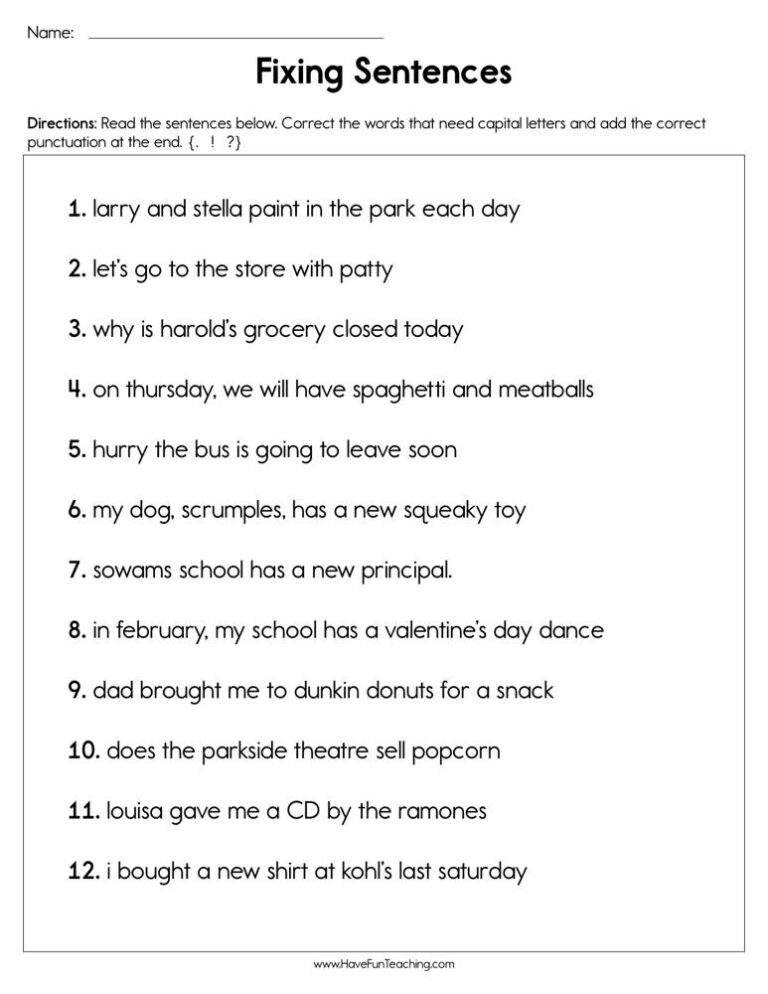
This editing sentences worksheet gives 2nd graders eight sentences to rewrite with the correct capital letters and end marks. Includes a complete answer key—perfect for quick, no-prep proofreading practice at home or school.
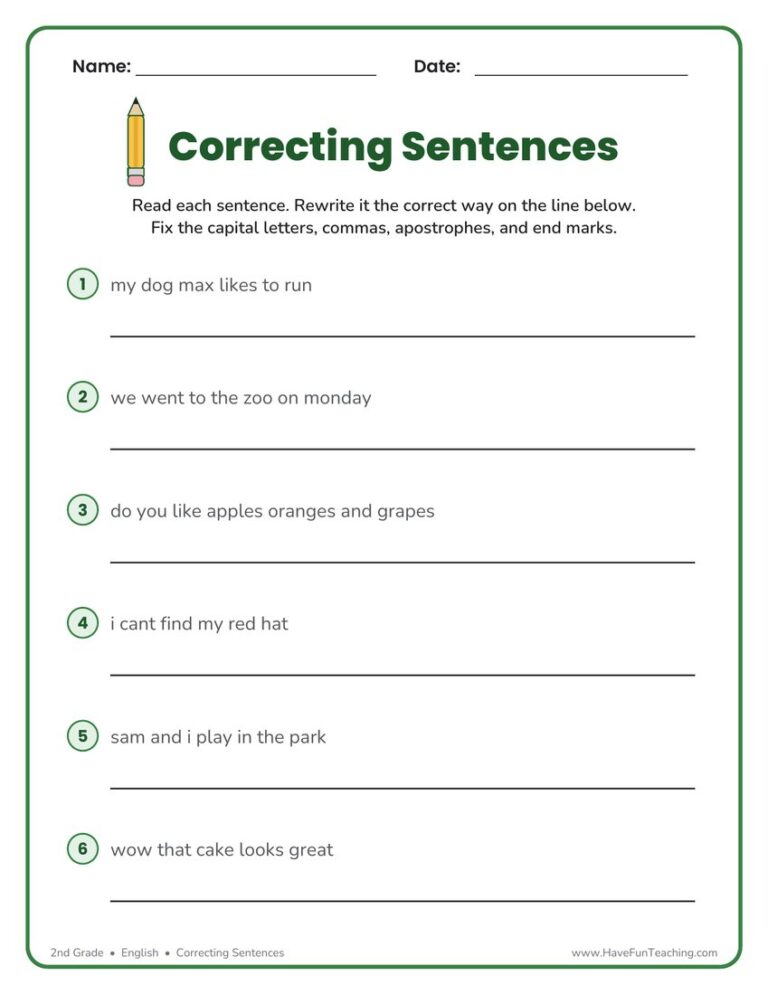
A 2nd grade correcting sentences worksheet where students rewrite six sentences to fix capital letters, commas, apostrophes, and end marks. Includes an answer key for quick, no-prep proofreading practice.
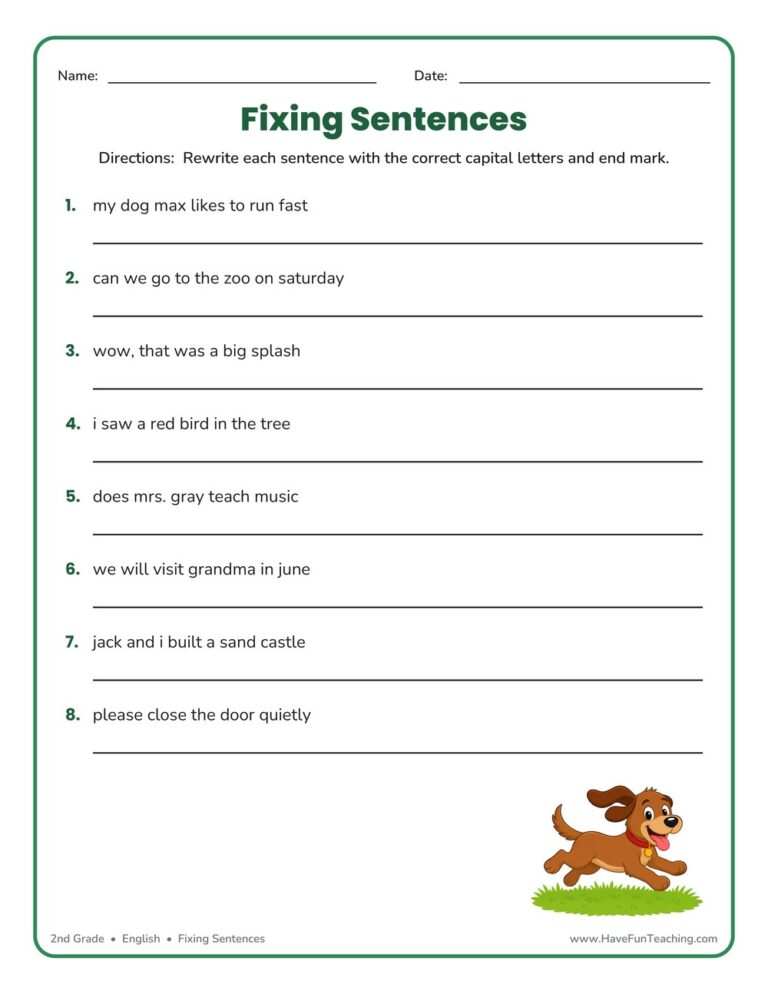
This Fixing Sentences Worksheet gives 2nd graders eight sentences to rewrite with the correct capital letters and end marks. Includes a complete answer key — perfect for no-prep grammar and editing practice.

This Correcting Capitalization Worksheet gives 2nd graders six sentences to fix, rewriting each one with capital letters for names, places, months, and sentence beginnings. Answer key included for quick, no-prep grammar practice.

This Correcting Punctuation Worksheet helps 2nd graders rewrite eight sentences with correct capital letters, commas, and apostrophes. Includes an answer key for quick, no-prep editing practice.

This capitalization and end punctuation worksheet gives 2nd graders practice choosing end marks and rewriting sentences with correct capital letters. Includes an answer key to build careful, confident writers.
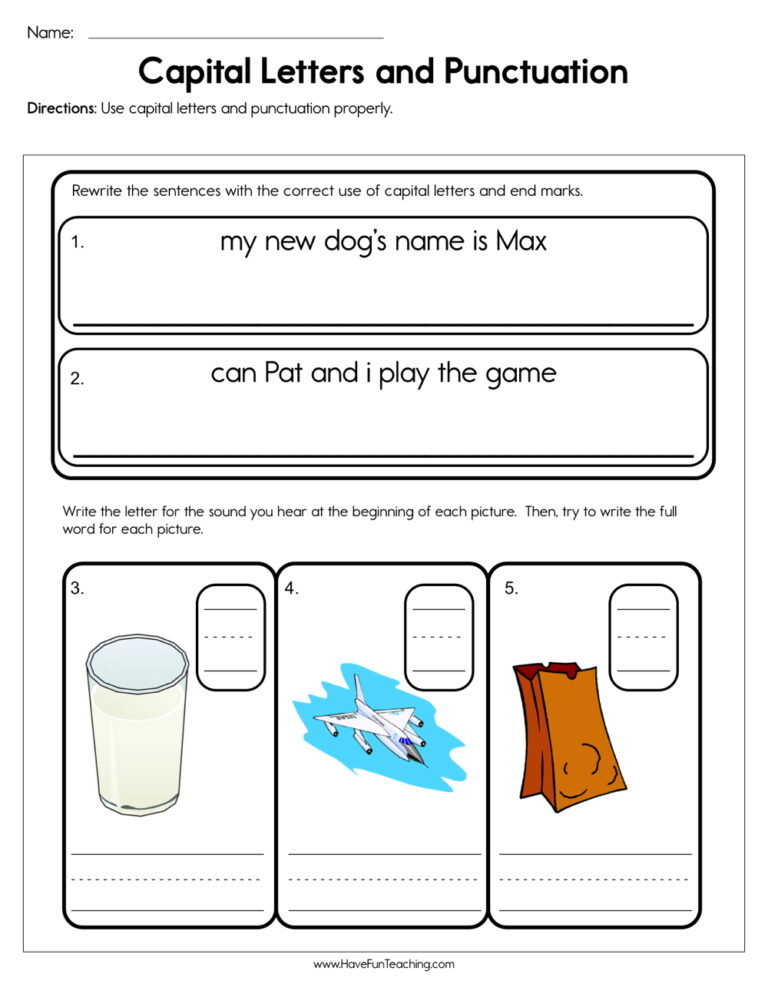
This capital letters and punctuation worksheet asks 2nd grade writers to find the word needing a capital in four sentences, then rewrite two more with every capital and the right end mark. Answer key included.

The Capital Letters Find It Worksheet has 2nd Grade students hunt for the names, days, and months that need capitals, then rewrite five words correctly. An answer key is included so checking takes seconds.
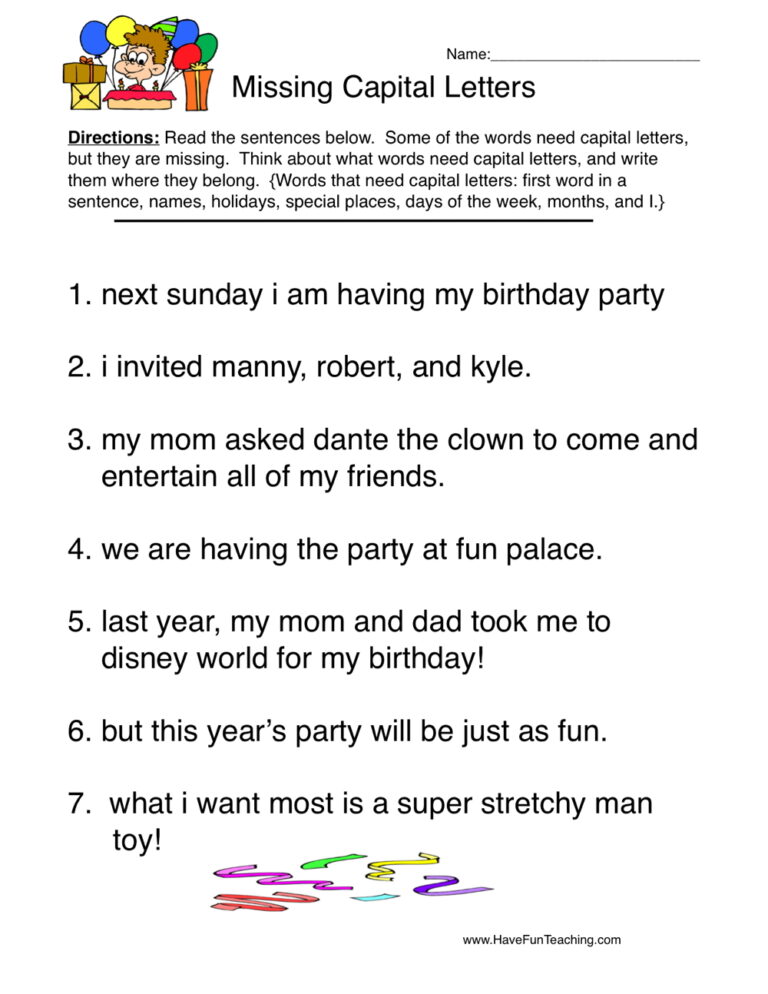
This editing capitalization worksheet has 2nd graders underline missing capital letters and rewrite three sentences correctly. An answer key is included, so proofreading practice takes only minutes to assign and score.

Rewriting Capitalization Worksheet gives 2nd grade students four lower-case sentences to write out again with every capital in place, plus two words and a full answer key.

This capitalization errors worksheet asks 2nd graders to rewrite four lower case sentences and fix four words with the correct capital letters. An answer key is included, so it prints and grades fast.
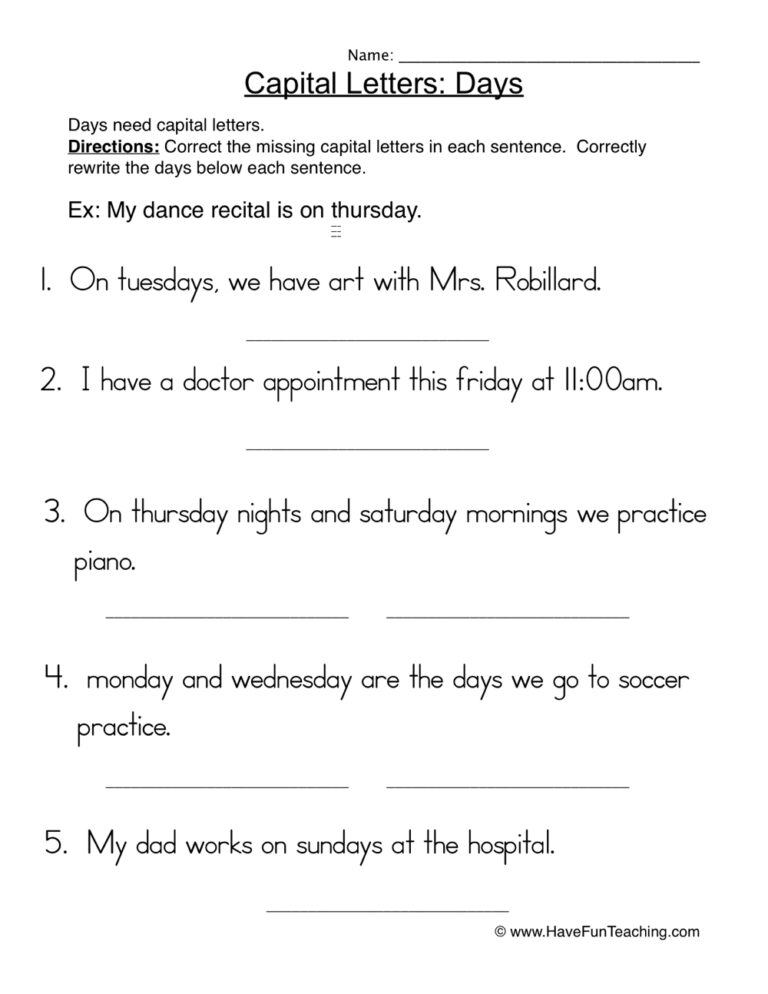
This Capital Letters Days Sentences Worksheet asks 2nd grade students to fix four lower-case days inside sentences and name two more from calendar clues, with a full answer key included.

Reviews
There are no reviews yet