

Commas Punctuation Worksheet
This commas punctuation worksheet helps 5th grade students add commas to a series and after introductory phrases, then write their own sentence. An answer key is included for quick, confident checking.
$6.97
Or free with a membership — members pay $3.33/mo for all 10,000+ resources. See plans
Want this one free?
Tell us where to send it and it’s yours — no card, no catch.
One free resource per teacher. We’ll also send free teaching ideas each week — unsubscribe anytime.
Teaching is easier with a membership
Unlimited printables, games & videos for PreK–6th — for your classroom or homeschool. Cancel anytime.
Start your 3-day free trial$0 today · cancel anytime · Instant access to 10,000+ resources
About this resource
Description
Commas help readers pause in the right places, and this commas punctuation worksheet gives students focused practice with two of the most useful comma rules. Fifth graders learn to place commas between three or more items in a series and after an introductory word or phrase that opens a sentence, two skills that show up in nearly every piece of writing they produce.
The worksheet begins with a short reminder of both rules. Students then add every missing comma to five sentences, sort four more sentences by the comma rule each one follows, and finish by writing an original sentence that uses commas both ways. It works well as a mini-lesson follow-up, a morning warm-up, homework, or a quick grammar check before a writing assignment. As a 5th grade punctuation worksheet, it lines up with the language standards for commas in a series and after introductory elements.
What’s Included
- Part 1: five sentences where students add all of the missing commas
- Part 2: four fill-in-the-bubble items that ask which comma rule a sentence shows
- Part 3: a constructed response where students write their own sentence using both rules
- A complete answer key with every comma marked and a sample sentence
Why This Worksheet Helps Kids
This commas punctuation worksheet helps in three ways. First, students do not just spot commas; they have to decide exactly where each one belongs, which builds careful editing habits. Second, the sorting section makes children explain the reason behind a comma, so the rule sticks instead of becoming a guess. Third, writing an original sentence moves the skill straight into their own writing, where it matters most.
Ideas for Teachers and Parents
Read the sentences aloud and have students clap at every pause before they write in the commas. Ask partners to trade their Part 3 sentences and check each other’s punctuation. You can also pull a paragraph from a class read-aloud and hunt for commas in a list and after opening phrases together.
Related Resources
What teachers say
Reviews
You must be logged in to post a review.
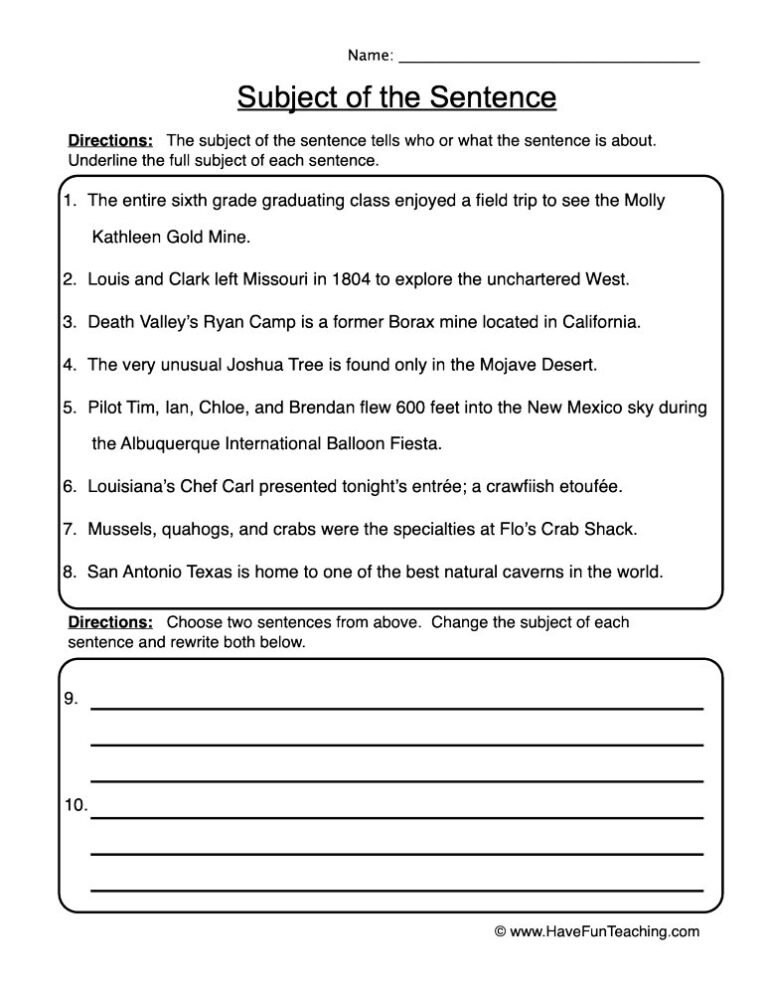
Students underline, write, and build complete subjects in this Subject of the Sentence Worksheet, a three-part grammar page for 4th grade. An answer key is included, so checking work takes only seconds.

Using the Science Songs (MP3 Album), students learn about different science concepts while listening to these upbeat and catchy songs.

Using the Subject and Predicate Song (Original Music Video), students will be able to define, give examples and use subjects and predicates in their own writing using the catchy and memorable lyrics.
Using the Verb Rap Song (MP3), students will be able to define, give examples and use verbs in their own writing using the catchy and memorable lyrics.

Using this Subject Predicate New Sentences Worksheet, students rewrite the subject or predicate to make a new sentence.

Songs for Kids Download by Have Fun Teaching has 18 fun and educational songs for kids.

Using the Verb Rap Song (Original Music Video), students will be able to define, give examples and use verbs in their own writing using the catchy and memorable lyrics.
Using this Simile Song (Original Music Video), your students learn about how to use similes in order to bring emotion and feeling into their writing.

Using Quotation Marks Practice Worksheet, students write quotation marks correctly where they belong in each sentence so they can set off a quote or dialogue in their own writing.

Using When do you Capitalize? Worksheet, students write examples of words for each category.

This Creating Abbreviations Worksheet has 3rd graders build the short form of eight words, rewrite three sentences using them, and explain why abbreviations help. Answer key included for fast, no-prep practice.
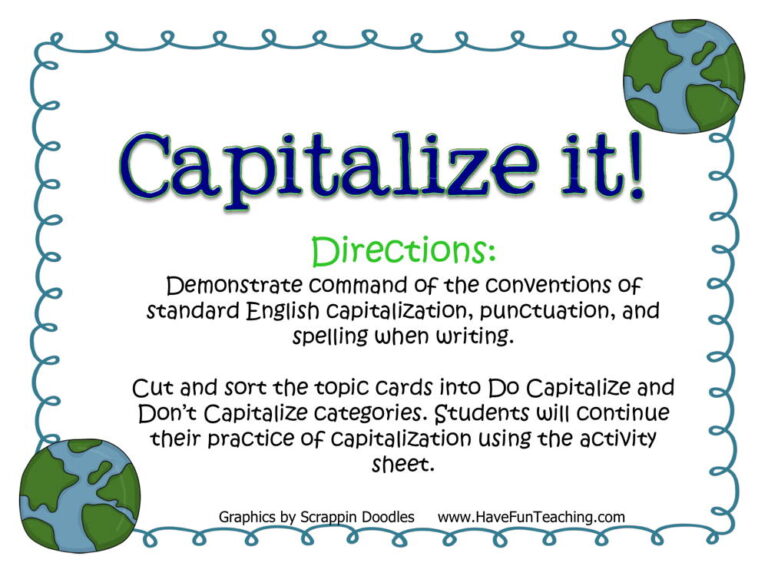
Using Capitalize It Activity, students sort the topic cards into Do Capitalize and Don't Capitalize categories.




Reviews
There are no reviews yet