

Conjunction Junction Worksheet
This conjunction junction worksheet helps 2nd Grade writers join two short sentences with and, but, or, or because. An answer key is included, making sentence combining practice simple to check.
$6.97
Or free with a membership — members pay $3.33/mo for all 10,000+ resources. See plans
Want this one free?
Tell us where to send it and it’s yours — no card, no catch.
One free resource per teacher. We’ll also send free teaching ideas each week — unsubscribe anytime.
Teaching is easier with a membership
Unlimited printables, games & videos for PreK–6th — for your classroom or homeschool. Cancel anytime.
Start your 3-day free trial$0 today · cancel anytime · Instant access to 10,000+ resources
About this resource
Description
Conjunctions are the small joining words, like and, but, or, and because, that let a writer turn two short, choppy sentences into one smooth sentence. This Conjunction Junction Worksheet gives second graders focused practice with that skill. Each item shows two simple sentences, and students join them into a single sentence using the conjunction that best fits the meaning, which builds stronger and more varied writing.
This 2nd grade conjunctions worksheet starts with a worked example so children can see exactly how two sentences become one. In the first part, students read four pairs of sentences and rewrite each pair as one new sentence on the lines, choosing and, but, or, or because. In the second part, they read a short clue about what a joining word does, such as telling why or showing a change, and write the conjunction that matches. A full answer key is included.
What’s Included
- 1 print-ready PDF worksheet
- A worked example of joining two sentences
- Four sentence-combining items with two writing lines each
- Two conjunction clue questions
- A complete answer key
Here are three reasons this Conjunction Junction Worksheet helps kids. First, it connects grammar to real writing, because students must write the whole new sentence rather than circle a word. Second, each item calls for a different conjunction, so children have to think about meaning: adding an idea, showing a contrast, giving a choice, or telling a reason. Third, the clue questions check that students understand what each joining word does, not just how it looks.
Teachers and parents can read the example aloud and ask children to explain why so works in that sentence. After the worksheet, have students look for conjunctions in a favorite book, or write two short sentences about their day and join them with and, but, or, or because. Partners can swap sentences and check that each joined sentence still makes sense.
Related Resources
What teachers say
Reviews
You must be logged in to post a review.

The Combining and Expanding Sentences Worksheet helps second graders use conjunctions to join sentences and add describing words. Grade 2, answer key included — a simple way to build stronger sentence writing.

Using this Rewrite Compound Predicates Worksheet, students combine two sentences about the same subject by using 'and', 'but', and 'or'.
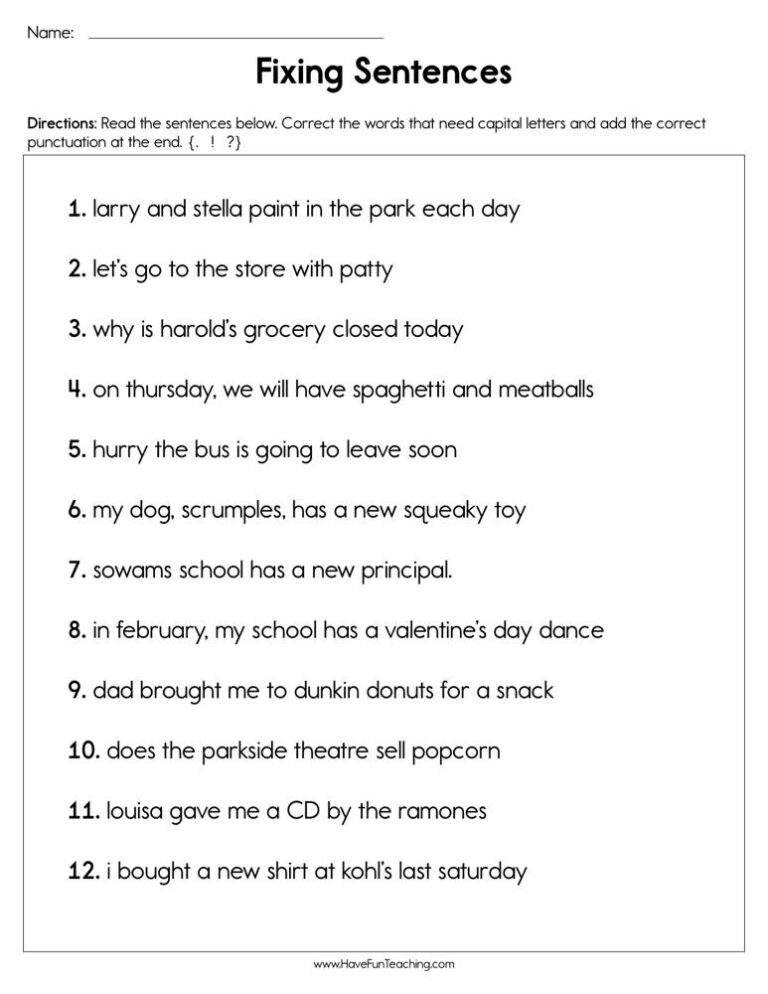
This editing sentences worksheet gives 2nd graders eight sentences to rewrite with the correct capital letters and end marks. Includes a complete answer key—perfect for quick, no-prep proofreading practice at home or school.
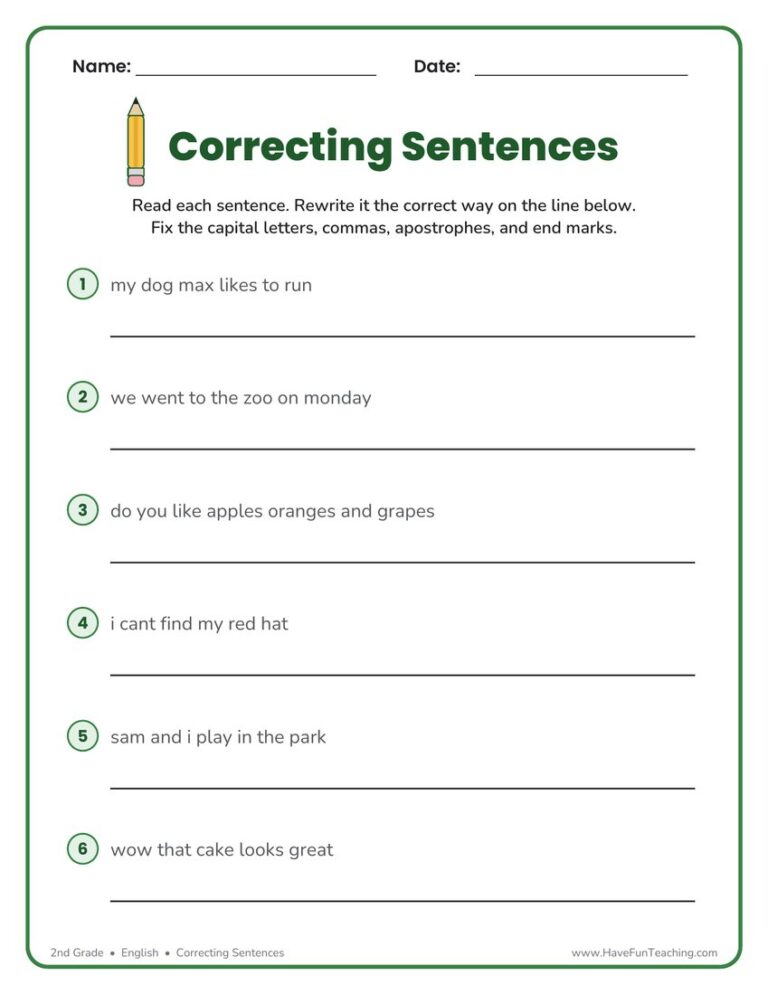
A 2nd grade correcting sentences worksheet where students rewrite six sentences to fix capital letters, commas, apostrophes, and end marks. Includes an answer key for quick, no-prep proofreading practice.
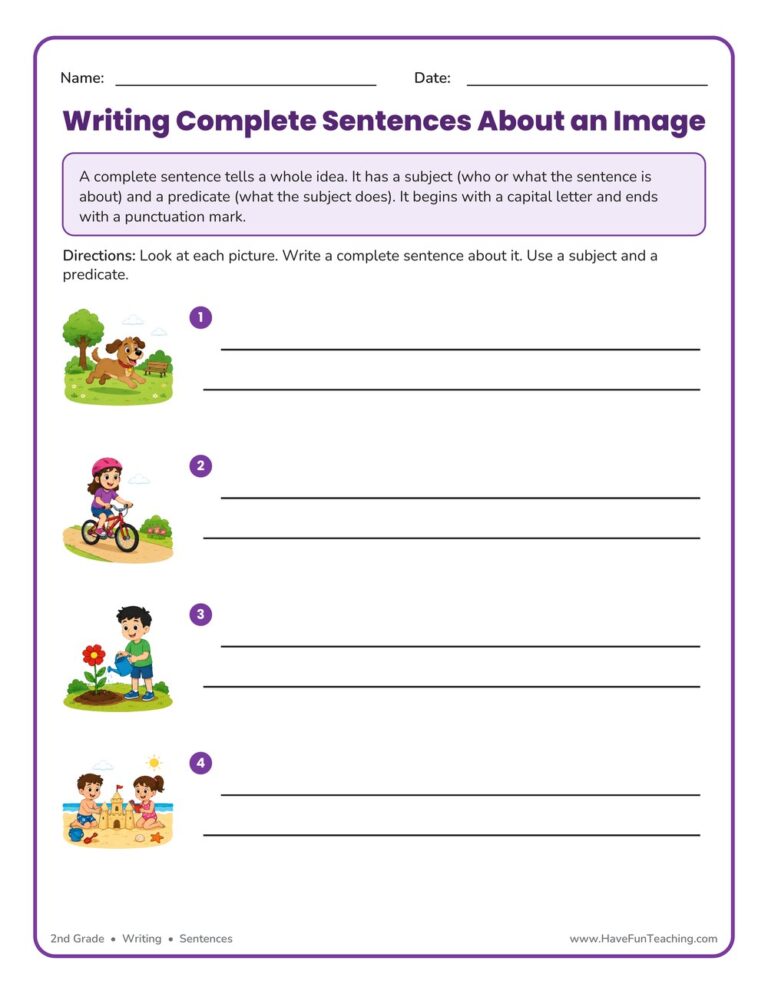
This Writing Complete Sentences About an Image Worksheet gives 2nd graders four picture prompts to practice building sentences with a subject and predicate. Includes sample answers — great for no-prep grammar and writing practice.
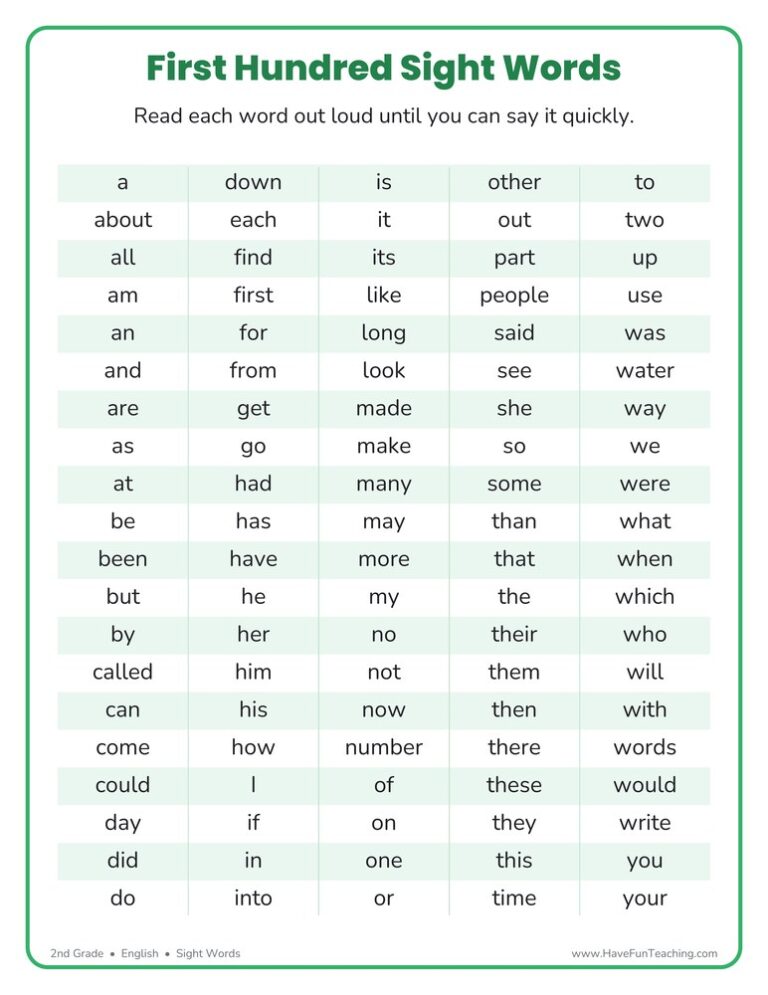
A three-page Fry's 300 Sight Words List reference chart for 2nd grade, sorted into the first, second, and third hundred words. Print it once and build fast, confident word recognition all year long.
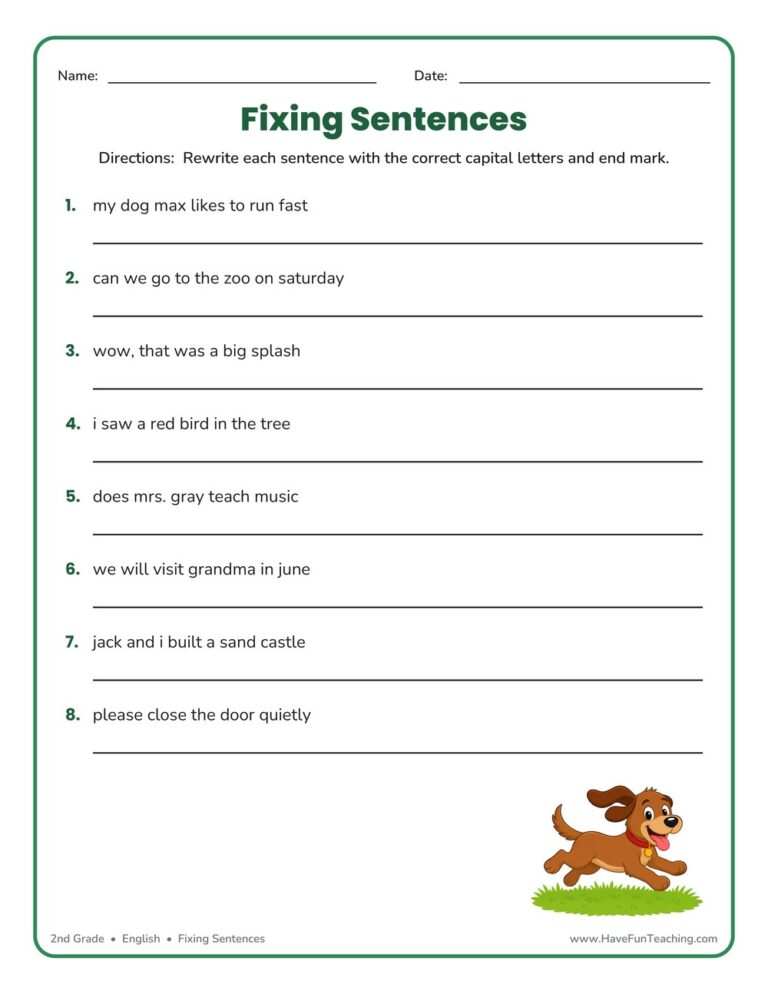
This Fixing Sentences Worksheet gives 2nd graders eight sentences to rewrite with the correct capital letters and end marks. Includes a complete answer key — perfect for no-prep grammar and editing practice.
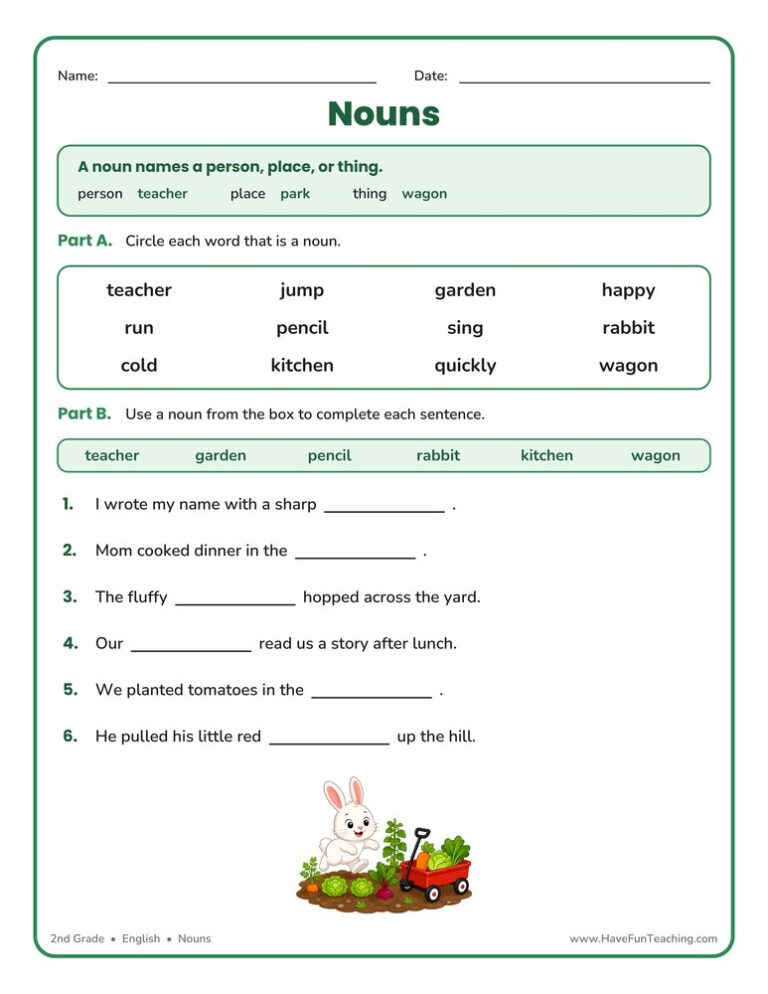
This Noun Fill in the Blanks Worksheet helps 2nd grade students identify nouns in a word box and complete sentences with the correct noun. Includes a complete answer key for quick, no-prep grammar practice at home or in the classroom.

This Correcting Capitalization Worksheet gives 2nd graders six sentences to fix, rewriting each one with capital letters for names, places, months, and sentence beginnings. Answer key included for quick, no-prep grammar practice.
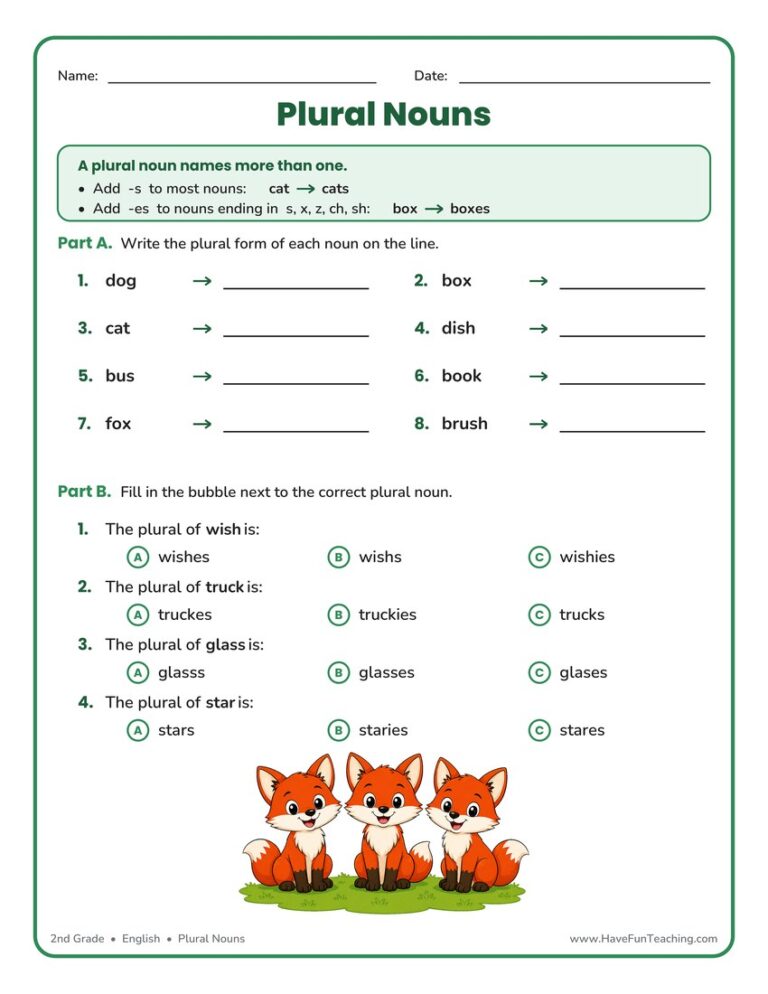
The Creating Plural Nouns Worksheet gives 2nd graders two-part practice turning singular nouns into plurals with the -s and -es rules. Includes a complete answer key for quick, no-prep grammar practice at home or school.

A free second grade using irregular nouns worksheet where students circle the correct irregular plural in eight sentences. Includes a complete answer key for quick, no-prep grammar practice.

This possessive pronouns worksheet gives 2nd graders eight sentences for practicing her, its, our, their, and your. An answer key is included, so families and teachers can check the work in seconds.




Reviews
There are no reviews yet