

Describe it Using Adverbs Worksheet
This Describe it Using Adverbs Worksheet gives 3rd graders nine sentences that practice adverbs telling how, when, and where. An answer key is included, so grammar practice takes minutes to assign and score.
$6.97
Or free with a membership — members pay $3.33/mo for all 10,000+ resources. See plans
Want this one free?
Tell us where to send it and it’s yours — no card, no catch.
One free resource per teacher. We’ll also send free teaching ideas each week — unsubscribe anytime.
Teaching is easier with a membership
Unlimited printables, games & videos for PreK–6th — for your classroom or homeschool. Cancel anytime.
Start your 3-day free trial$0 today · cancel anytime · Instant access to 10,000+ resources
About this resource
Description
An adverb is the word that answers how, when, or where something happens, and it is the fastest way for a young writer to turn a plain sentence into a picture. The Describe it Using Adverbs Worksheet gives third graders steady practice with all three jobs an adverb can do, using short school-day sentences they can read on their own. Students learn to hear the question hiding inside a sentence, then choose the one adverb that answers it.
This 3rd grade adverbs worksheet works in two directions, which is what makes it stick. In the first part, each sentence is missing its adverb and the question is printed at the end of the line, so students read three adverb choices and write the only one that answers how, when, or where. In the second part the work flips: the adverb is already printed and underlined, and students name the question it answers. Use it as guided practice after a grammar mini-lesson, as morning work, as a quick check before a parts-of-speech quiz, or as homework that parents can score in a minute with the answer key that comes with this describe it using adverbs worksheet.
What’s Included
- 1 print-ready PDF worksheet
- Answer key
- 5 choose-the-adverb sentences and 4 name-the-question sentences
Three things make this practice work. First, every item has exactly one right answer, because only one of the three choices answers the question that is asked, so students cannot guess their way through the page. Second, the two parts practise the same skill from opposite ends, which is what moves adverbs from something a child recognizes to something a child can use. Third, the sentences are short, concrete, and on grade level, so the thinking goes into the grammar instead of into decoding.
Keep the learning going after the page is finished. Ask students to reread one of their own stories and underline every adverb they find, then label each one how, when, or where. Play a quick round of charades where a volunteer acts out a verb and the class describes it with an adverb. Write a plain sentence on the board, such as “The dog barked,” and let students take turns rebuilding it three ways. Sorting adverbs into how, when, and where columns on sticky notes also makes a fast, hands-on center.
Related Resources
What teachers say
Reviews
You must be logged in to post a review.
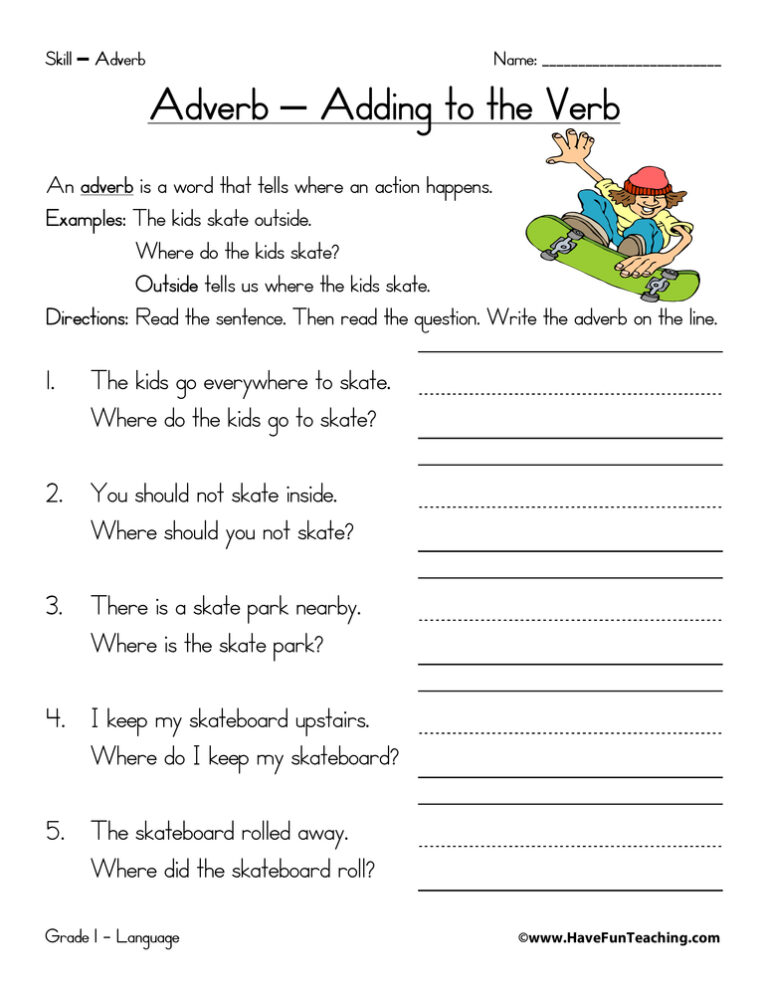
This Adverb Where Worksheet gives 2nd grade students practice finding and writing adverbs that tell where an action happens, with a word box and an answer key included for quick, confident checking.
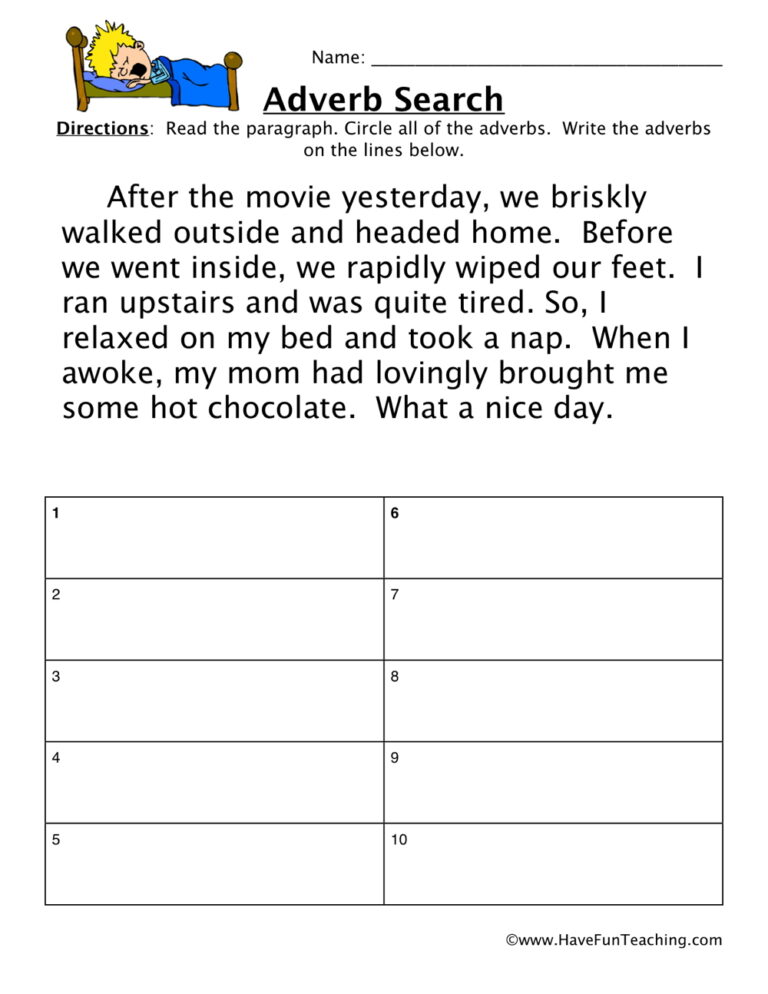
The Adverb Movie Worksheet has 2nd graders circle the adverbs in a fun movie-day story, then sort them by how, when, and where. An answer key is included for quick, easy checking.

This adverbs tell when worksheet has 2nd grade students find the time adverb in four sentences, then choose one from a word box for three more. An answer key is included, so children can check their own work.
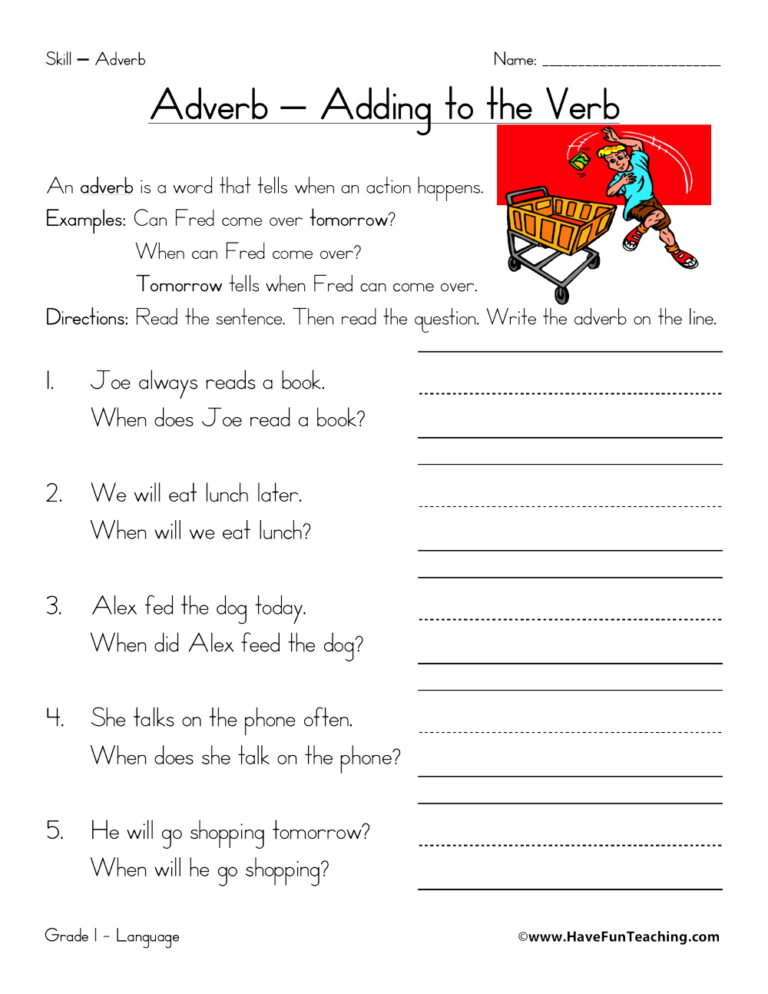
This When Adverbs Worksheet has 2nd graders find the time word in each sentence and sort six adverbs into past and future. An answer key is included, so grammar practice takes minutes to check.
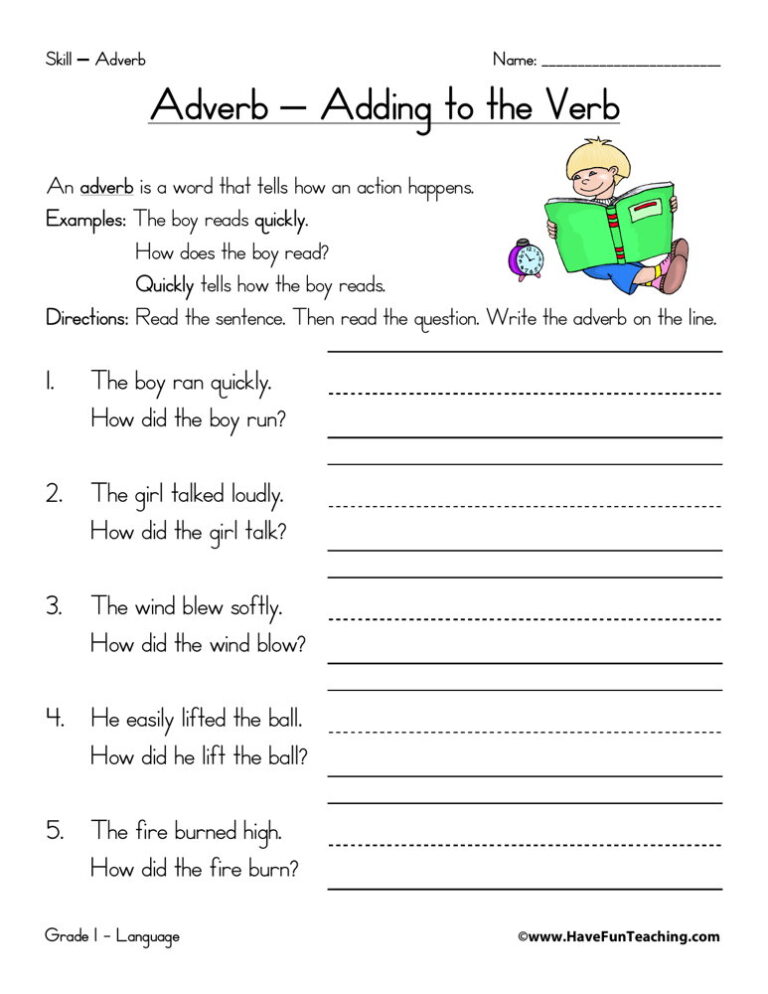
Practice adverbs that tell how with this Adverb How Worksheet for 2nd Grade. Kids find adverbs in sentences, pick words from a box, and check their work with the answer key.
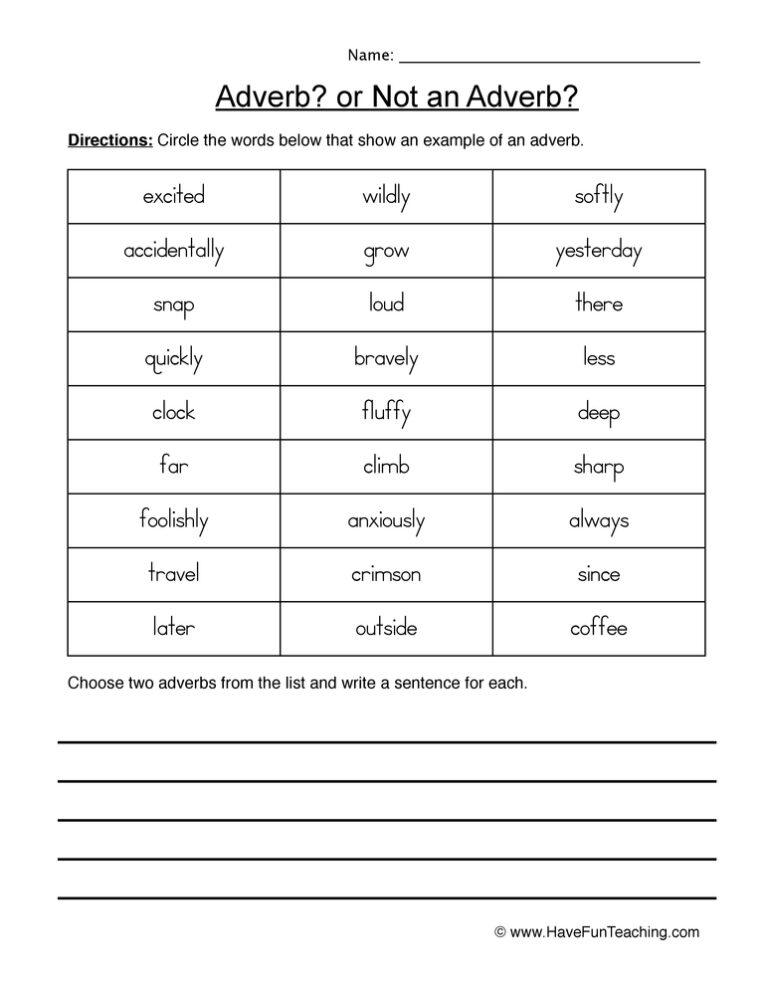
The Circle Adverbs Worksheet gives 2nd Grade students a chart of eighteen words to sort by circling the nine adverbs, plus a writing block and an answer key, so the part of speech sticks.

Using L.2.6 Second Grade Common Core Lesson, students use words and phrases acquired through conversations, reading and being read to.

This adverbs jewelry making worksheet helps 2nd grade students find adverbs that tell how, when and where, then finish sentences from a word box. An answer key is included.
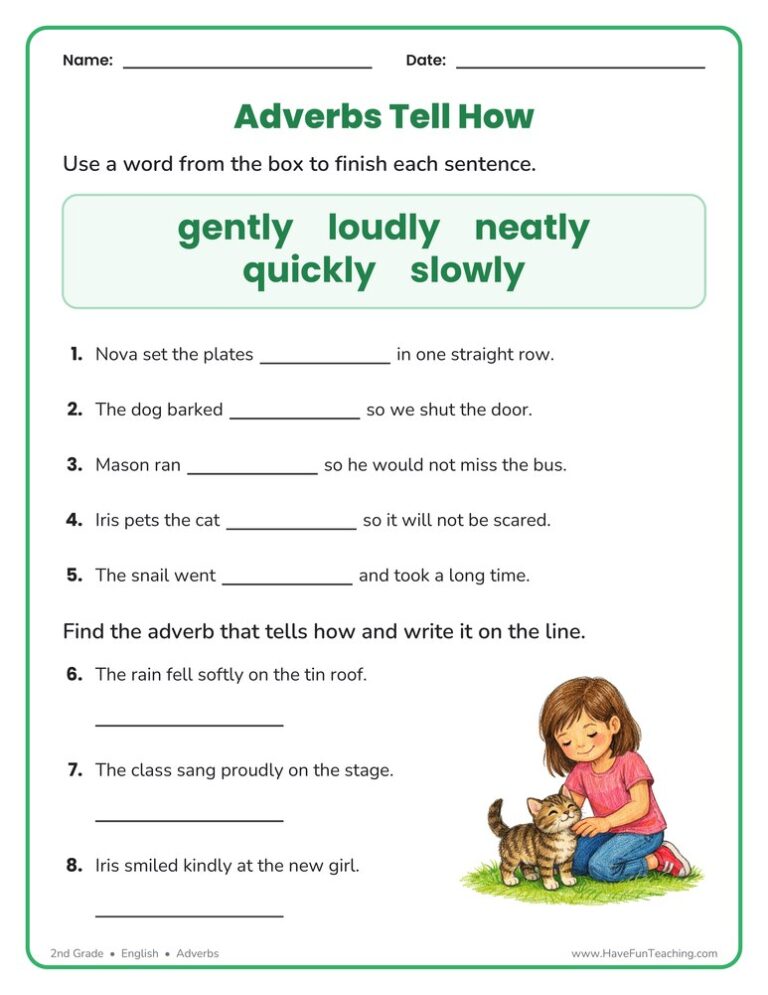
This Adverbs Tell How Worksheet gives 2nd graders eight quick items on adverbs of manner, from word-box sentence completions to finding the adverb already at work in a sentence. Answer key included, so checking takes seconds.
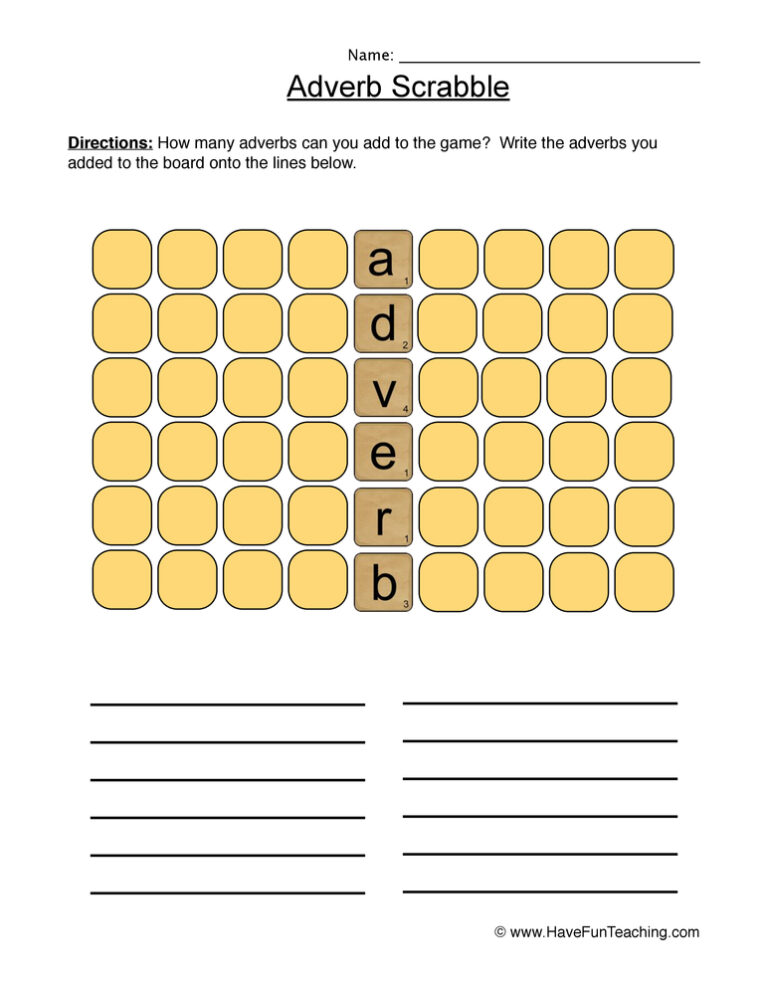
Using this Play Scrabble Adverbs Worksheet, students will be able to write adverbs while playing Scrabble to build their describing skills.
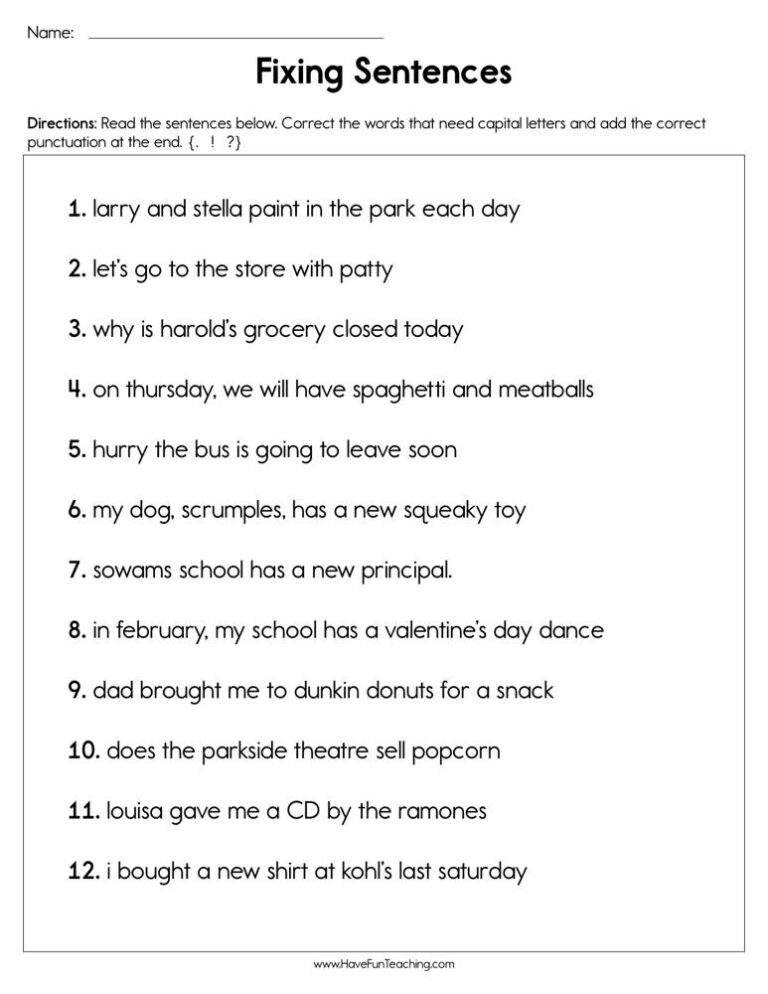
This editing sentences worksheet gives 2nd graders eight sentences to rewrite with the correct capital letters and end marks. Includes a complete answer key—perfect for quick, no-prep proofreading practice at home or school.
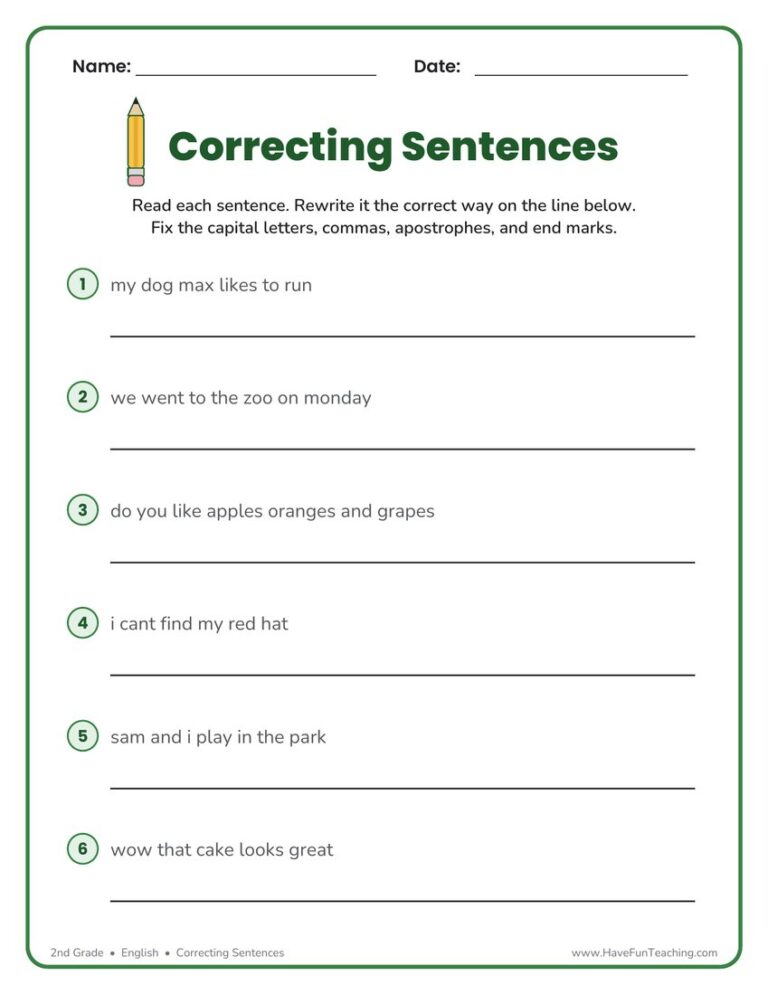
A 2nd grade correcting sentences worksheet where students rewrite six sentences to fix capital letters, commas, apostrophes, and end marks. Includes an answer key for quick, no-prep proofreading practice.

Reviews
There are no reviews yet