

Haiku Blank Worksheet
This Haiku Blank Worksheet gives 3rd grade students syllable practice, a missing-line poem to solve, and a five-seven-five frame for writing their own haiku. An answer key is included.
$6.97
Or free with a membership — members pay $3.33/mo for all 10,000+ resources. See plans
Want this one free?
Tell us where to send it and it’s yours — no card, no catch.
One free resource per teacher. We’ll also send free teaching ideas each week — unsubscribe anytime.
Teaching is easier with a membership
Unlimited printables, games & videos for PreK–6th — for your classroom or homeschool. Cancel anytime.
Start your 3-day free trial$0 today · cancel anytime · Instant access to 10,000+ resources
About this resource
Description
Writing a haiku is one of the friendliest ways to teach syllables, because the poem itself does the teaching. This Haiku Blank Worksheet gives students a five-seven-five frame and asks them to hear the beats in ordinary words before they ever try to write a poem of their own. Counting syllables out loud, choosing a line that fits an exact beat count, and then building an original three-line poem are three different levels of the same skill, and this haiku blank worksheet walks students through all three on a single page.
The page opens with a short definition of the form, then moves into guided practice. Students count the syllables in four nature words, study a haiku with its middle line missing and circle the only choice that has seven syllables, and finish by writing a haiku of their own on labeled lines. This 3rd grade poetry worksheet works beautifully as a poetry-unit warm up, a Writing Workshop mini-lesson, or an independent center activity, and it prints cleanly in black and white or color.
What’s Included
- One printable worksheet page with a plain-English definition of the haiku form
- Four syllable-counting items using familiar nature words
- A haiku with the middle line missing and three candidate lines to choose from
- Three labeled writing lines for the student’s own five-seven-five haiku
- A complete answer key, including a model haiku for the writing section
Three Reasons This Helps Kids
- It makes syllables audible, not abstract. Students say each word aloud and count the beats they hear, which is exactly how syllable awareness transfers to reading longer words.
- It asks for a decision, not a guess. The middle-line activity has one defensible answer, so students have to count all three choices instead of picking the one that simply looks right.
- It ends in real writing. Composing an original poem inside a strict syllable count is genuine application, and the finished haiku gives students something they are proud to read aloud.
Ideas for Teachers and Parents
- Clap or tap the beats of each word together before students write any numbers down.
- Read the three candidate lines aloud as a class and count them on fingers, then vote before revealing the answer.
- Take students outside for two minutes and have them collect one image to build their own haiku around.
- Post the finished poems on a seasonal bulletin board and let students illustrate them.
- Extend the lesson by rewriting a favorite haiku with different nature words but the same beat pattern.
Related Resources
What teachers say
Reviews
You must be logged in to post a review.
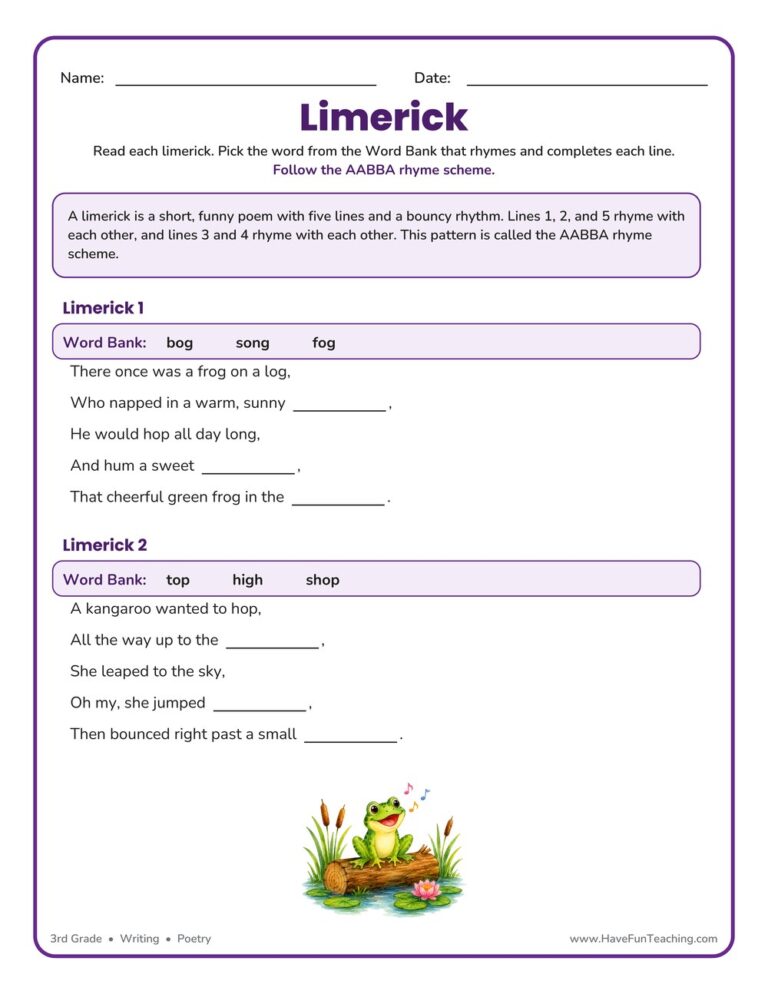
The Limerick Fill in the Blank Worksheet lets 3rd graders complete two silly limericks using word banks and the AABBA rhyme scheme. Answer key included — a fun, no-prep way to make poetry approachable.

This Haiku Pictures Worksheet gives 3rd Grade students syllable counting practice, a model poem, and a picture prompt for writing their own haiku. Answer key included, so poetry practice is ready in minutes.

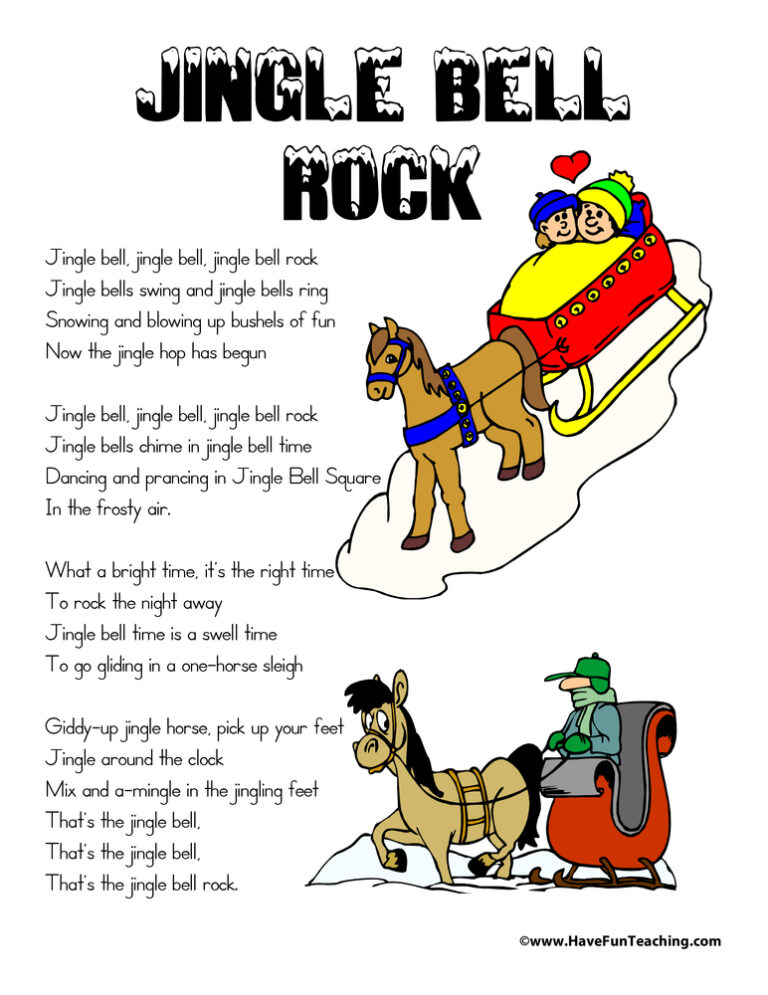
Using Jingle Bells Lyrics, students can follow along with the memorable song in order to know the which words to sing!
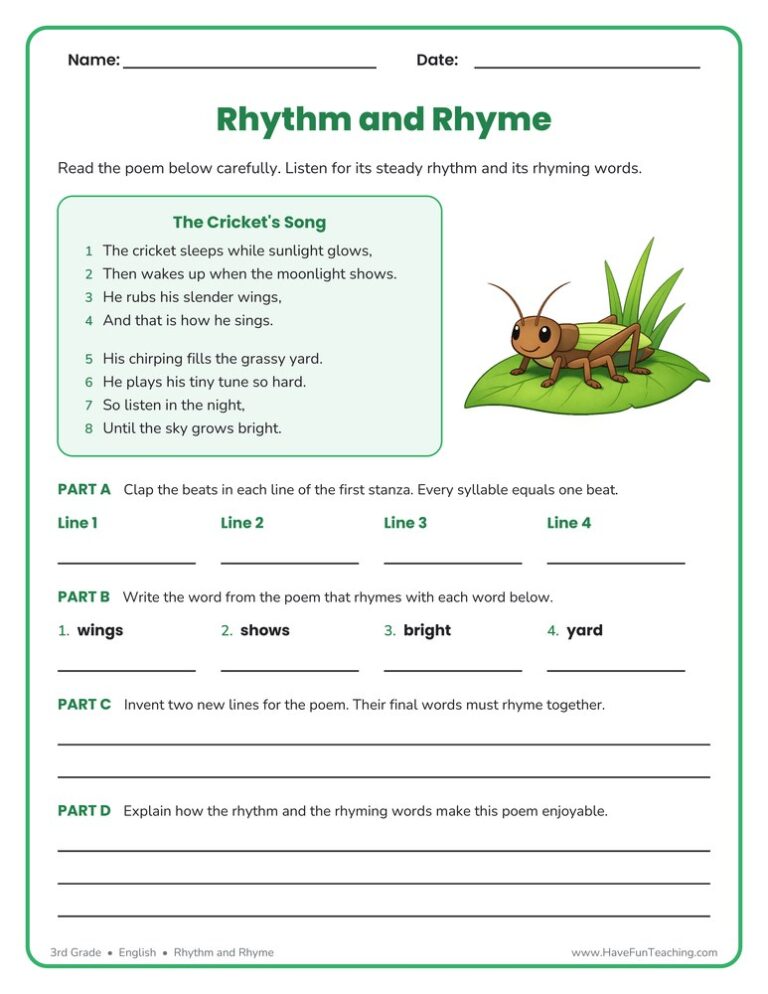
This rhythm and rhyme worksheet gives 3rd grade students an original cricket poem, beat counting, rhyming pairs, and a write-your-own couplet. Answer key included, so poetry practice is ready to print.

Using Reading Prose and Poetry Worksheet, students keep track of the stories they read this year by writing the title and the rating each book.

This rhyme and rhythm worksheet gives 3rd grade students a short granite poem to read aloud, count beats in, and mine for rhyming pairs. An answer key is included, so poetry practice takes minutes to check.
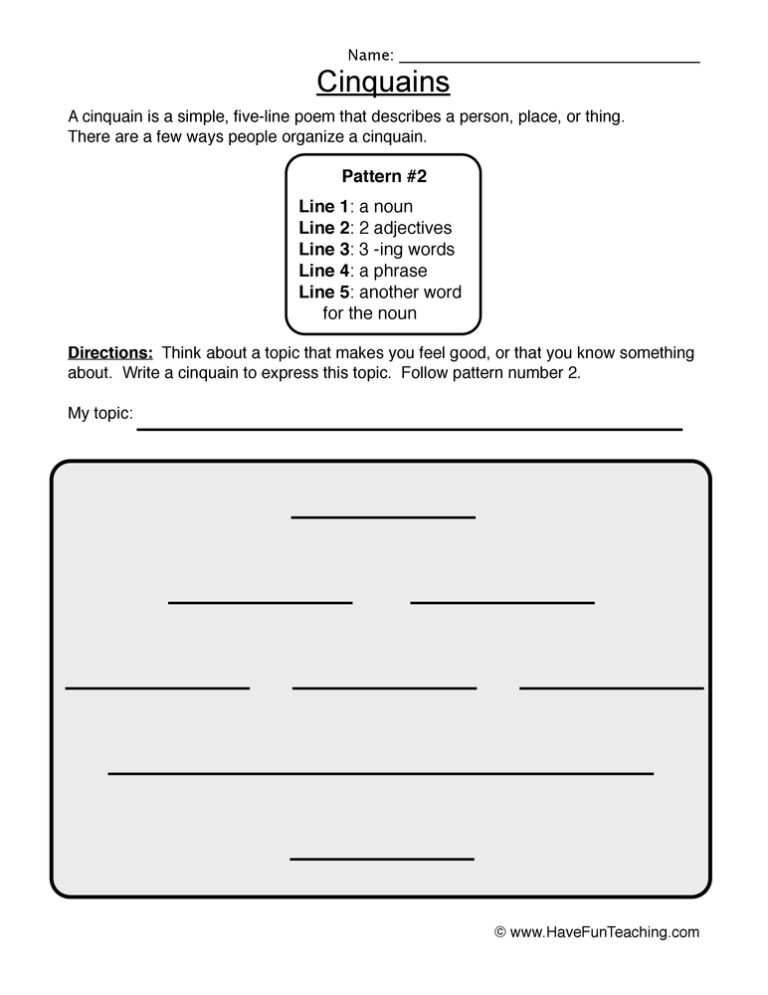
This Cinquain Worksheet - Pattern 2 walks 3rd grade writers through a model poem and then a five-line frame of their own. An answer key is included, so students leave with a finished poem and real confidence.

This Elements of Poetry Worksheet gives 3rd Grade students an original poem and five questions on stanzas, lines, rhyme, and repetition, plus an answer key, so poetry terms finally have something real to point at.
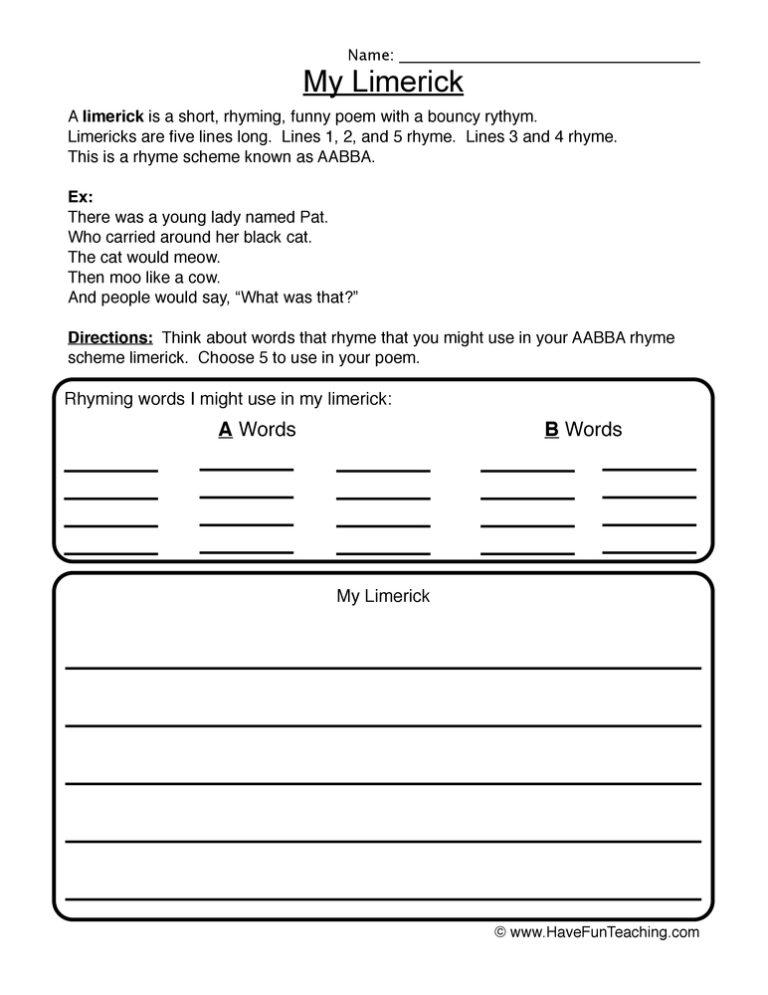
My Limerick Worksheet gives 4th graders a five-line poem to label, two rhyming word columns to fill, and space to write a limerick of their own. Answer key included for fast, no-prep poetry practice.
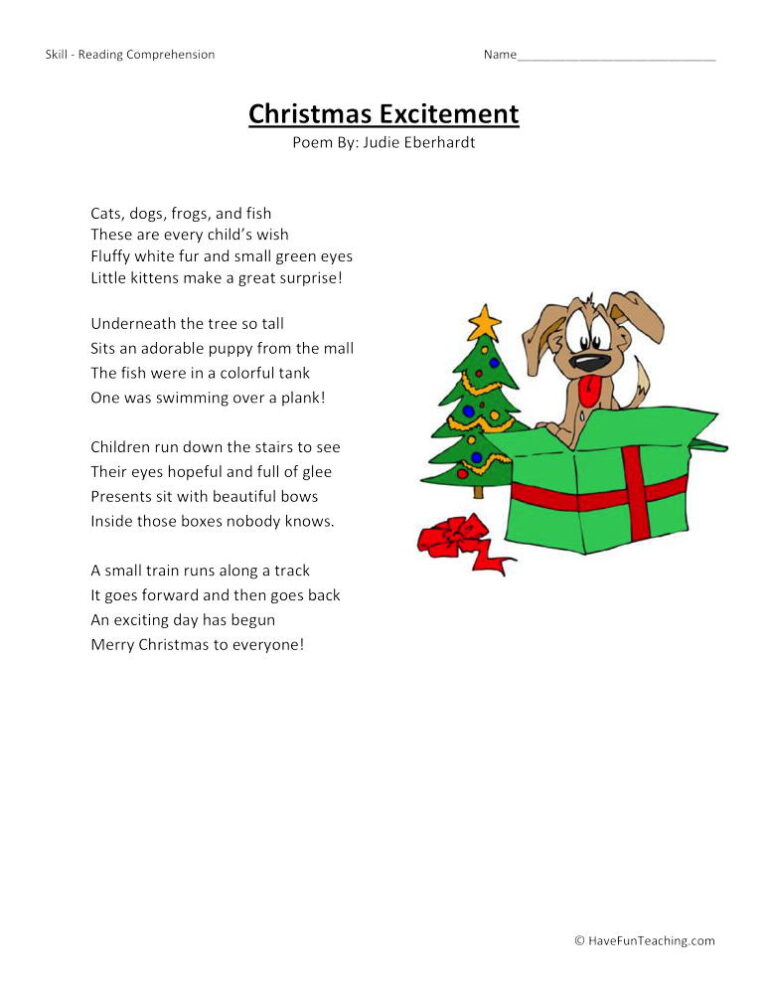
This Christmas Excitement - Reading Comprehension Worksheet gives 3rd grade students an original holiday poem, detail and vocabulary questions, and an answer key to build careful reading.

A St. Patrick’s Day Limerick Worksheet where 3rd graders label a poem’s rhyme pattern, match rhyming words, and write a limerick of their own. Answer key included, so poetry practice ends in a laugh instead of a blank page.




Reviews
There are no reviews yet