Skip to content
Start My 3 Free Days $0 today · cancel anytime

2nd Grade Poetry Worksheets

13 2nd grade poetry worksheets. Teacher favorites: Poetry Rhyme and Rhythm Worksheet and Jingle Bells Lyrics. How teachers use these

2nd Grade Poetry Worksheets

13 2nd grade poetry worksheets. Teacher favorites: Poetry Rhyme and Rhythm Worksheet and Jingle Bells Lyrics. How teachers use these

Worksheet
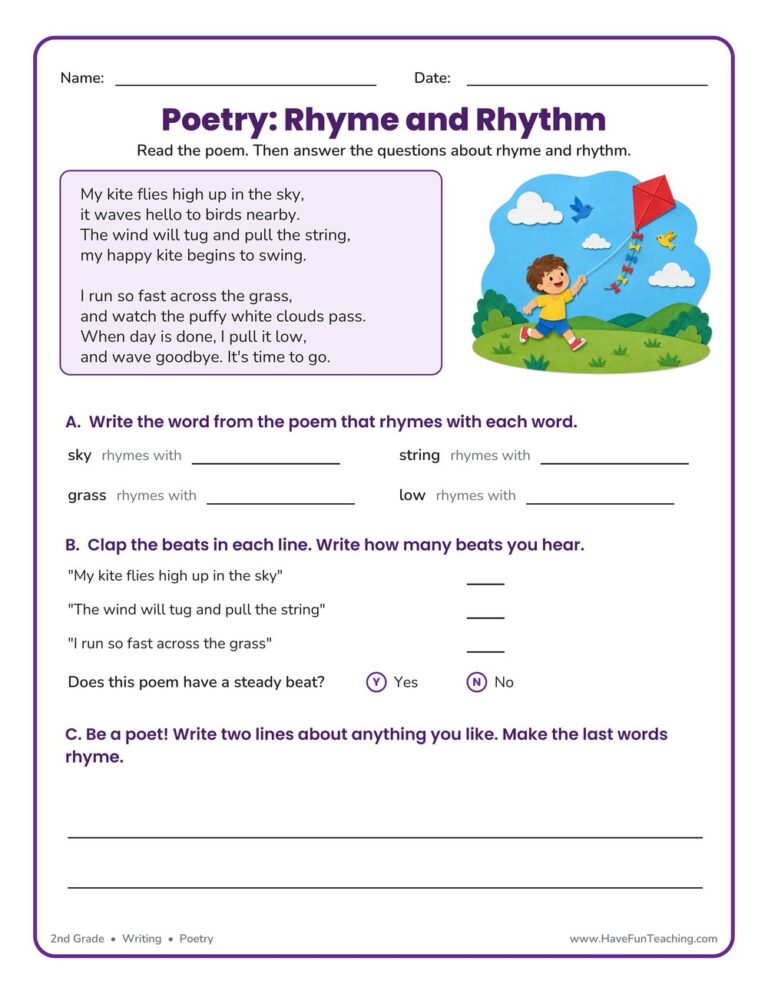
Worksheet2nd GradePoetry Rhyme and Rhythm Worksheet

A kite-themed Poetry Rhyme and Rhythm Worksheet where 2nd graders read a poem, find rhyming words, clap out the beat, and write their own rhyming lines. Includes an answer key for quick, no-prep poetry practice.

Worksheet
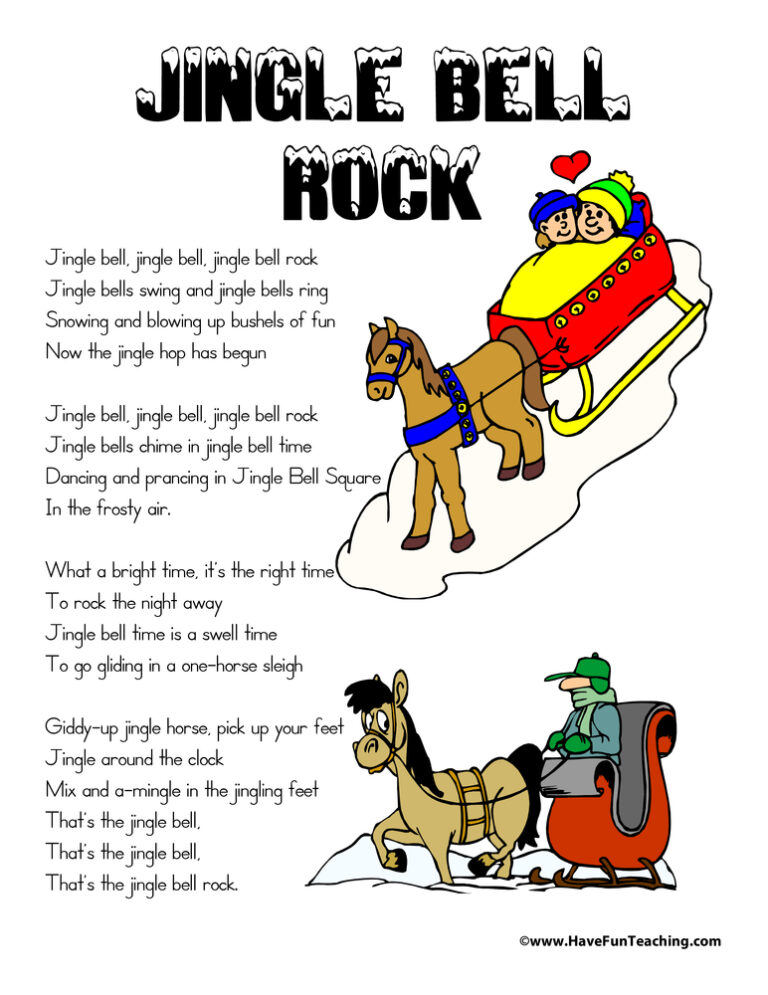
Worksheet2nd GradeJingle Bells Lyrics

Using Jingle Bells Lyrics, students can follow along with the memorable song in order to know the which words to sing!

Worksheet
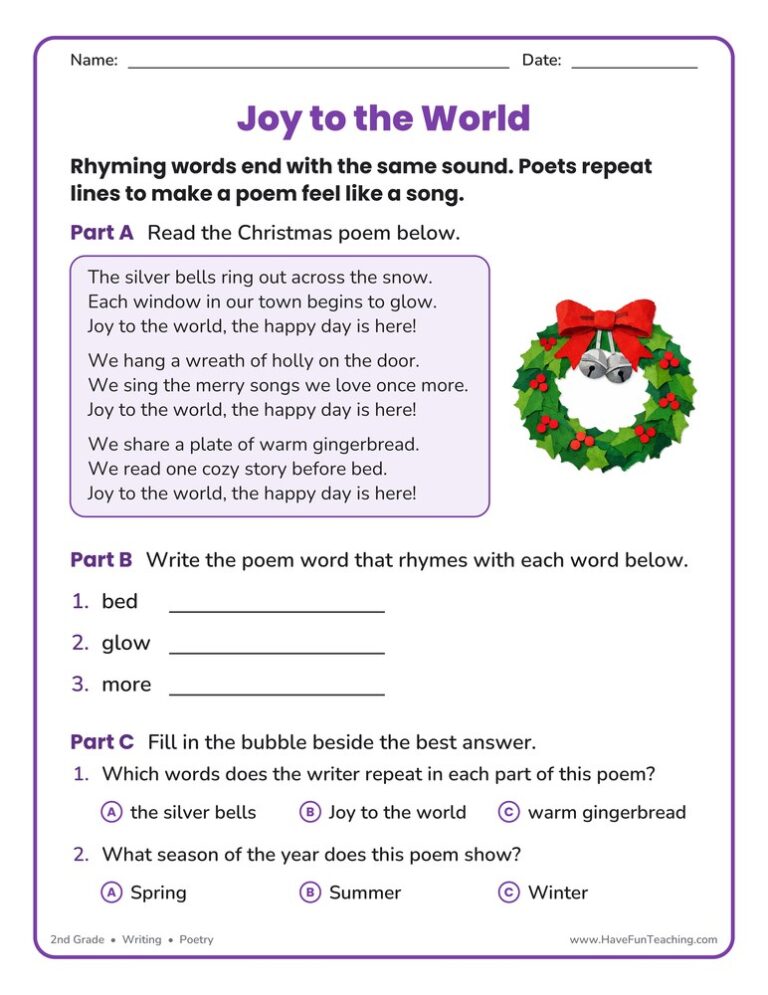
Worksheet2nd GradeJoy to the World Lyrics

A Joy to the World Lyrics page where 2nd graders read an original Christmas poem, find its rhyming pairs, and spot the repeated refrain. Answer key included, so practice checks itself.

Worksheet
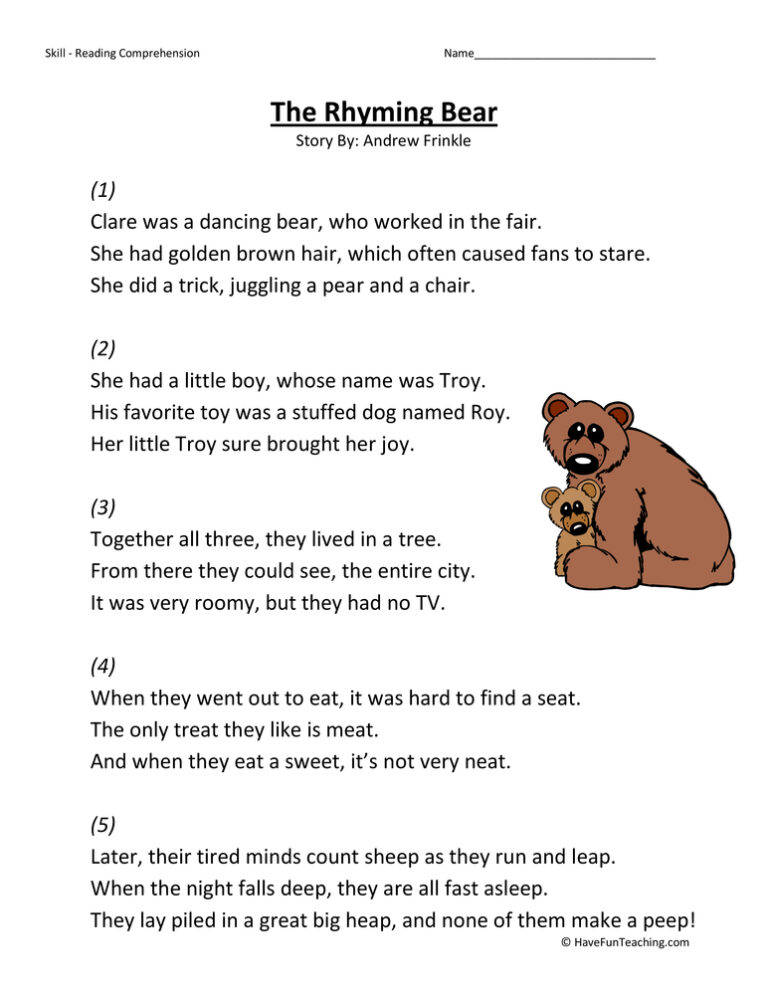
Worksheet2nd GradeRhyming Bear Reading Comprehension Worksheet

This Rhyming Bear Reading Comprehension Worksheet gives 2nd grade readers an original five-stanza poem plus four multiple-choice questions and a written response. An answer key is included, so students build reading stamina and teachers grade in seconds.

Worksheet
Worksheet2nd GradeDozen Donuts - Reading Comprehension Worksheet

This dozen donuts reading comprehension worksheet gives 2nd grade students a short bakery story, four multiple-choice questions, and a written response. An answer key is included, so checking the work is quick.

Worksheet
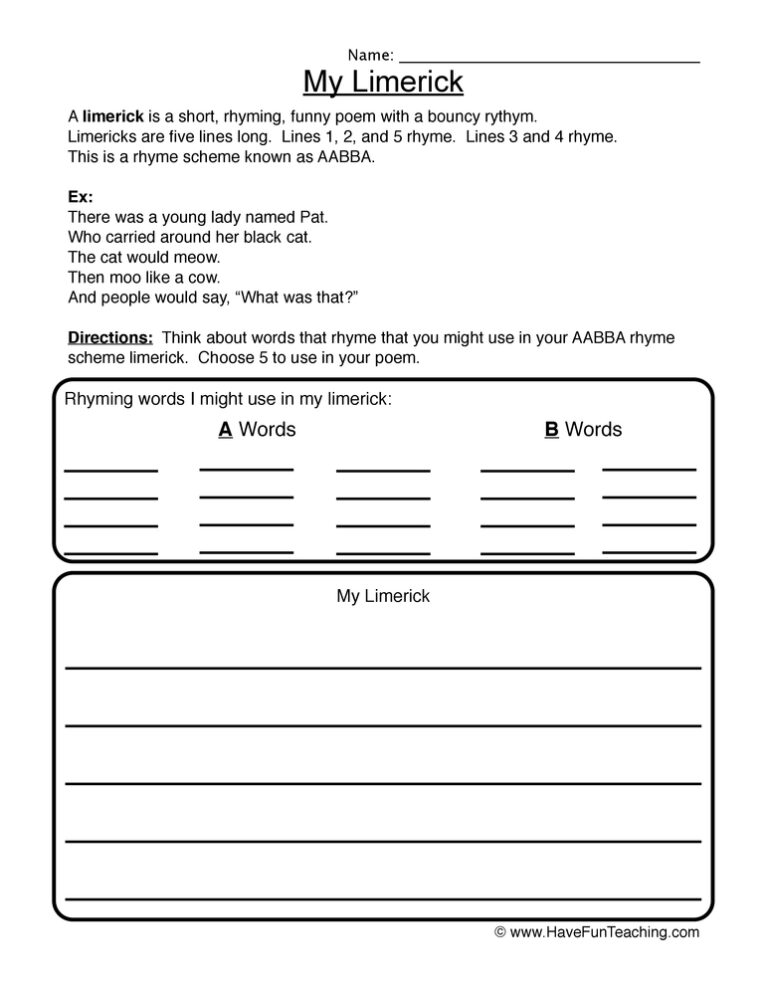
Worksheet2nd GradeMy Limerick Worksheet

My Limerick Worksheet gives 4th graders a five-line poem to label, two rhyming word columns to fill, and space to write a limerick of their own. Answer key included for fast, no-prep poetry practice.

Worksheet
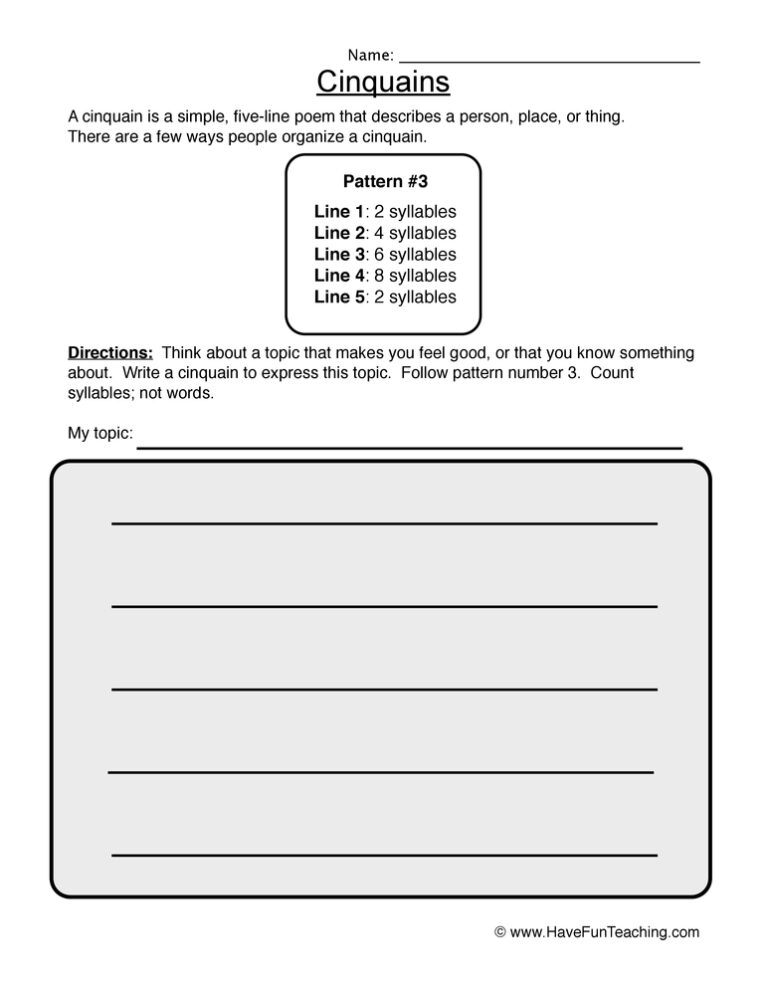
Worksheet2nd GradeCinquain Worksheet - Pattern 3

This Cinquain Worksheet - Pattern 3 has 4th grade writers count syllables, fix a line that breaks the 2-4-6-8-2 pattern, and write their own poem. An answer key is included for quick, confident checking.

Worksheet
Worksheet2nd GradeRL.2.4 Common Core Worksheet

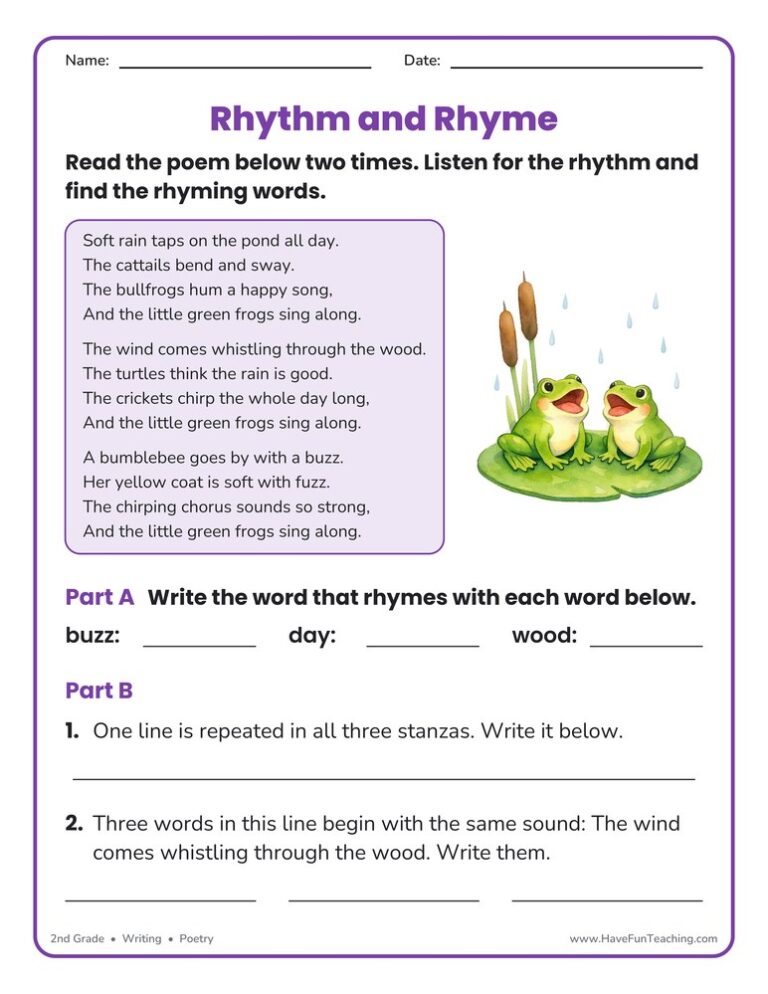
This RL.2.4 Common Core Worksheet gives 2nd graders an original rain-and-pond poem, then asks for its rhyming words, its repeated line, and three alliteration words. Answer key included for quick poetry practice.

Worksheet
Worksheet2nd GradeCinquain Worksheet - Pattern 2

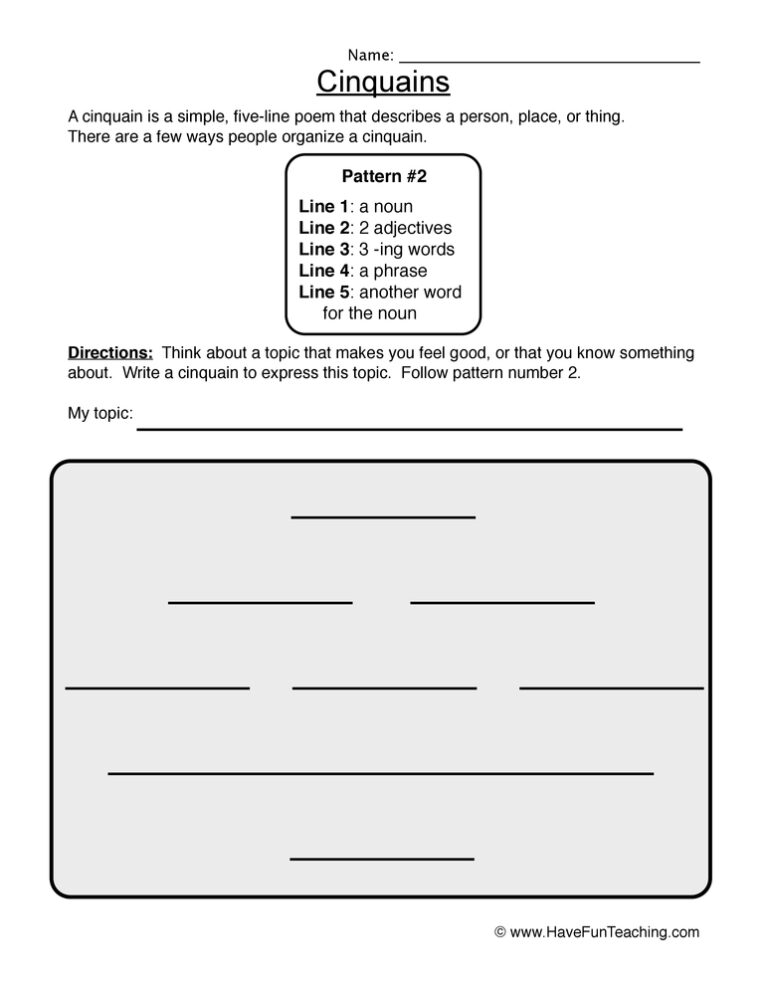
This Cinquain Worksheet - Pattern 2 walks 3rd grade writers through a model poem and then a five-line frame of their own. An answer key is included, so students leave with a finished poem and real confidence.

Worksheet
Worksheet2nd GradeHaiku Brainstorming Worksheet

This haiku brainstorming worksheet has 2nd graders clap and sort nature words by syllables, then write a 5-7-5 poem about a picture. An answer key is included for easy checking.

Worksheet
Worksheet2nd GradeChristmas Acrostic Poem Worksheet

This Christmas acrostic poem worksheet helps 2nd graders write a holiday poem, one line for each letter of CHRISTMAS, building vocabulary and creative writing skills in a fun, festive way.

Worksheet
Worksheet2nd GradeCinquain Worksheet - Pattern 1

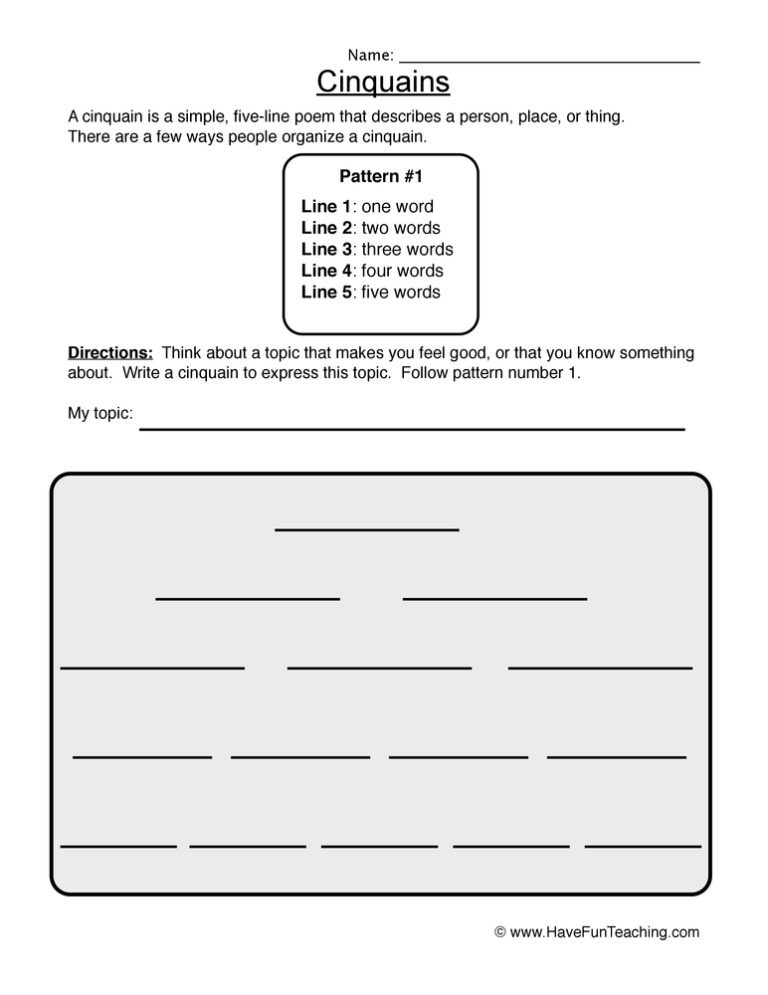
Cinquain Worksheet - Pattern 1 asks 2nd graders to count words, put a shuffled cinquain back in order, then write a five-line poem of their own. An answer key is included for quick, no-prep poetry practice.

From our teachers' playbook

Rhyme it, clap it, shape it!

What do 2nd graders learn about poetry?

Second graders discover that poems play with sound and shape. They hear rhyme, rhythm and repeated lines, and they notice how word choice adds feeling. They try writing simple forms like haiku, cinquains, limericks and shape poems, counting syllables as they go: a haiku has 5 – 7 – 5 syllables. The click moment comes when a child claps out a line, realizes it has the perfect beat, and reads it again just to hear it.

Our favorite ways to make poetry stick

Poetry clicks when kids hear it, move to it and write their own. These moves do all three.

Clap the rhythm

Read a poem aloud and have kids clap along to the beat. Point out the rhyming words at the ends of lines. Then reread it together. Hearing and feeling the rhythm helps kids write lines that sound like poems.

Why it works: handing over the work step by step, from teacher to student, is one of the most widely used teaching frameworks (Pearson and Gallagher, 1983).

Poetry Rhyme and Rhythm WorksheetTry it withPoetry Rhyme and Rhythm WorksheetWorksheetsOpen it →

Brainstorm before you write

Before writing a haiku, kids list words about one topic and count each word's syllables. Then they build lines from the list. Brainstorming first makes the strict syllable pattern much less stressful.

Why it works: the U.S. Department of Education's guide for teaching elementary math recommends moving from hands-on objects to drawings to numbers.

Haiku Brainstorming WorksheetTry it withHaiku Brainstorming WorksheetWorksheetsOpen it →

Write in the shape

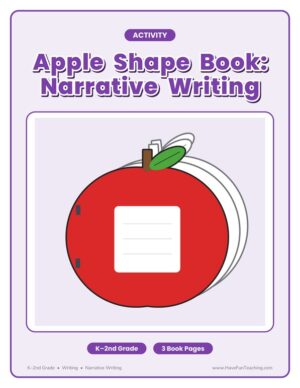
Kids write a short poem inside an apple outline, letting the words follow the shape. Shape poems make poetry visual, and reluctant writers love them.

Why it works: pairing a picture with each word gives kids two ways to remember it, a well-tested principle of how people learn (Mayer, 2009).

Apple Shape Book ActivityTry it withApple Shape Book ActivityActivitiesOpen it →

Questions teachers and parents ask

What kinds of poems do 2nd graders write?

Second graders often write rhyming poems, haiku, cinquains, acrostics, limericks and shape poems. Simple patterns help them get started.

How do I teach poetry to 2nd graders?

Read lots of poems aloud, clap the rhythm and point out rhymes. Then give a simple pattern and let kids write about something they love.

What is a haiku for kids?

A haiku is a short three-line poem with five syllables, then seven, then five. It's often about nature.

How can I encourage poetry at home?

Read funny poems together, make up rhymes in the car, and write a short poem as a card for a family member.