

Identifying Parts of a Story Worksheet
This identifying parts of a story worksheet helps kindergarten readers name the characters, setting, and beginning, middle, and end of a short bird story, with an answer key included for easy checking.
$6.97
Or free with a membership — members pay $3.33/mo for all 10,000+ resources. See plans
Want this one free?
Tell us where to send it and it’s yours — no card, no catch.
One free resource per teacher. We’ll also send free teaching ideas each week — unsubscribe anytime.
Teaching is easier with a membership
Unlimited printables, games & videos for PreK–6th — for your classroom or homeschool. Cancel anytime.
Start your 3-day free trial$0 today · cancel anytime · Instant access to 10,000+ resources
About this resource
Description
Kindergarten readers learn that every story has parts: the characters, the setting, and the events that happen at the beginning, middle, and end. This identifying parts of a story worksheet gives young readers a short, sweet story to read and five simple questions that help them name each of those parts. As a kindergarten story elements worksheet, it is a gentle first step toward retelling and understanding what they read.
The worksheet opens with a colorful picture and a 55-word story about a little mother bird who builds a nest, sits on her eggs, and welcomes three baby birds. Signal words like “at the start,” “next,” and “at the end” help children notice how the story moves from beginning to middle to end. On the next page, students fill in the bubble to answer who is in the story, where the nest is, and what happens at the start, in the middle, and at the end. Read the story aloud together first, then let children answer on their own or with a partner.
What’s Included
- A short kindergarten story with a full-color picture
- Five fill-in-the-bubble questions with three choices each
- Questions on character, setting, beginning, middle, and end
- An answer key for quick checking
Why It Helps Kids
First, it builds the habit of asking who, where, and what happened, which is the heart of reading comprehension. Second, the clear beginning, middle, and end structure makes sequencing concrete for young learners. Third, answering from the text teaches children to look back at the story for evidence instead of guessing.
Ideas for Teachers and Parents
Use this identifying parts of a story worksheet in a small reading group, a literacy center, or as homework. After the questions, ask children to draw their own picture of the beginning of the story, or to retell the bird story in three sentences using first, next, and last. You can also pair it with a favorite picture book and ask the same five questions about that story.
Related Resources
What teachers say
Reviews
You must be logged in to post a review.
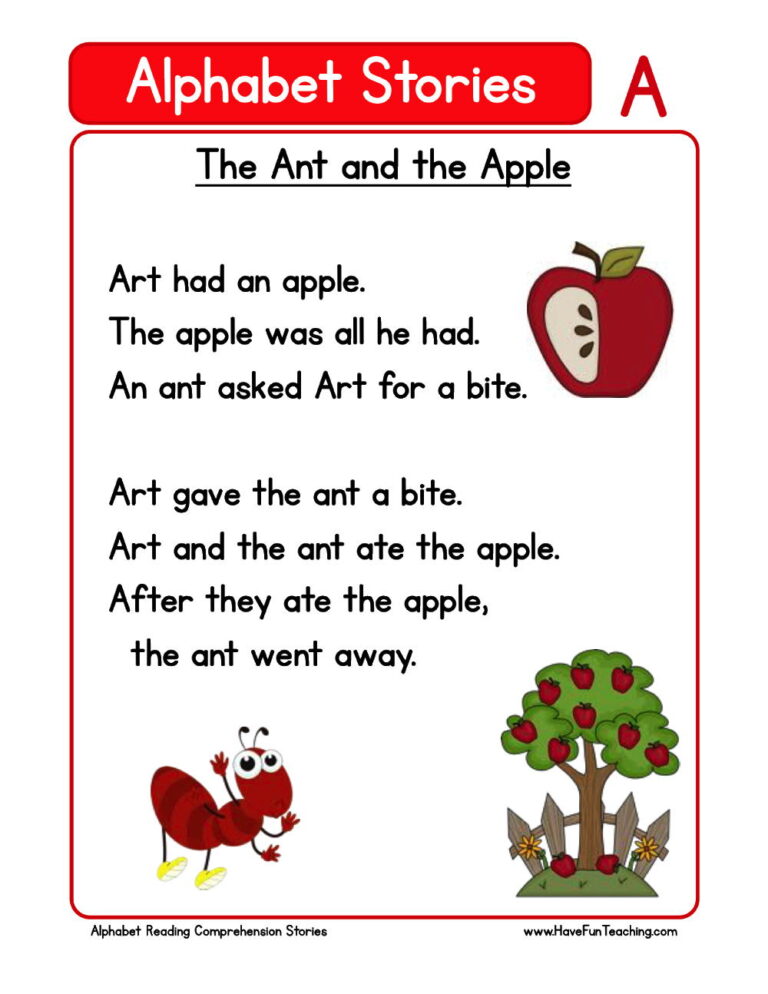
This free Alphabet Stories Letter A Reading Comprehension Worksheet pairs a short letter A story with fill-in-the-bubble questions for kindergarten readers. Includes an answer key — a fun, no-prep way to practice phonics and comprehension.

Using Chrysanthemum Worksheet, students read Chrysanthemum and describe what she says and does when her school friends make fun of her adored name.
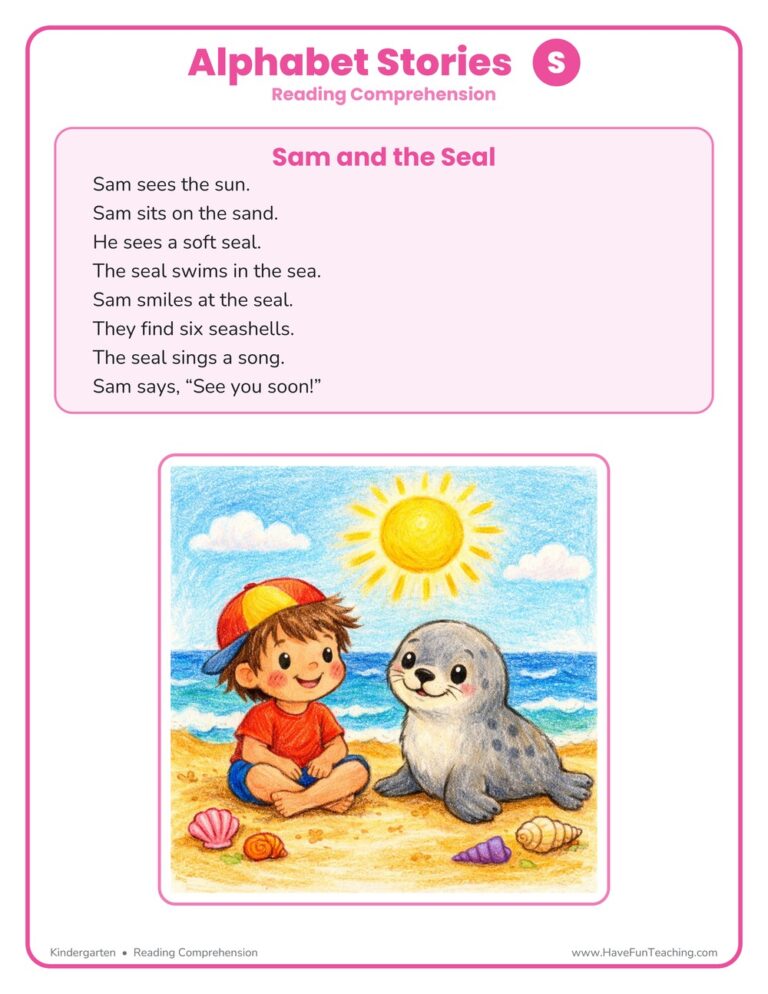
The Alphabet Stories Letter S Reading Comprehension Worksheet gives Kindergarten readers a fun beach story full of the /s/ sound plus five comprehension questions. Answer key included for quick, no-prep Letter S practice.
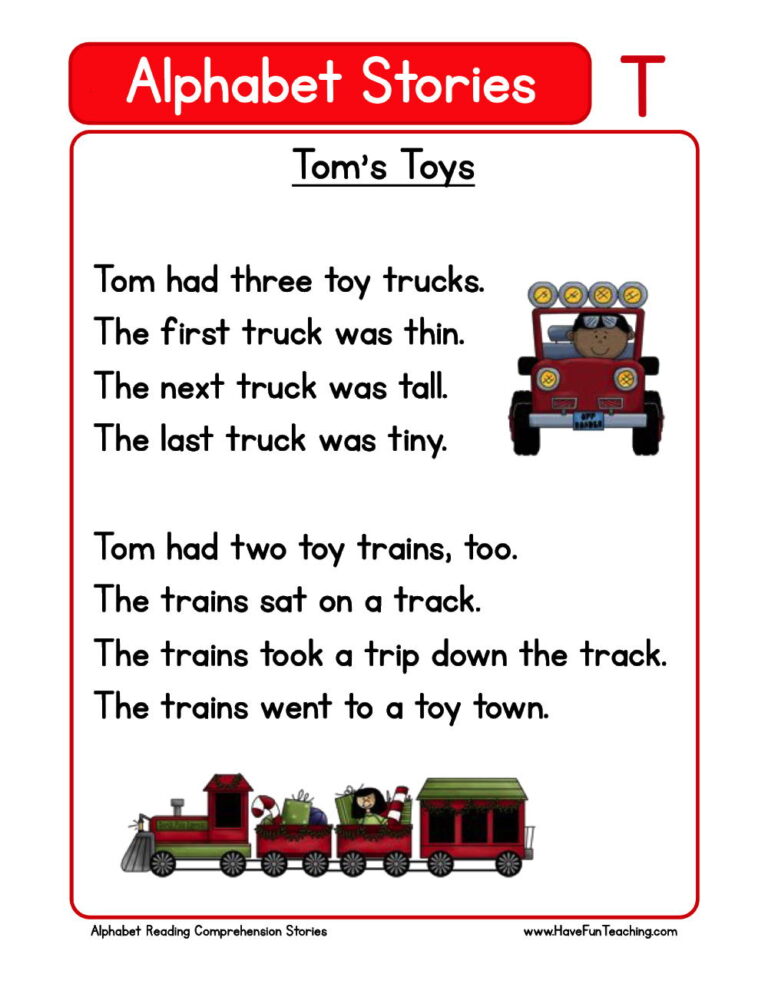
The Alphabet Stories Letter T Reading Comprehension Worksheet gives kindergarten readers a short, decodable story about Tom's toys with five fill-in-the-bubble questions. Answer key included — a no-prep way to practice the letter T and early comprehension.

This All About Summer reading comprehension worksheet pairs a short, sunny passage with four picture-friendly questions and a beach scene to color. Includes an answer key—perfect for kindergarten reading practice at home or school.

The Alphabet Stories Letter D Reading Comprehension Worksheet gives kindergarten readers a short Letter D story with five questions and an answer key, building early reading confidence one letter sound at a time.
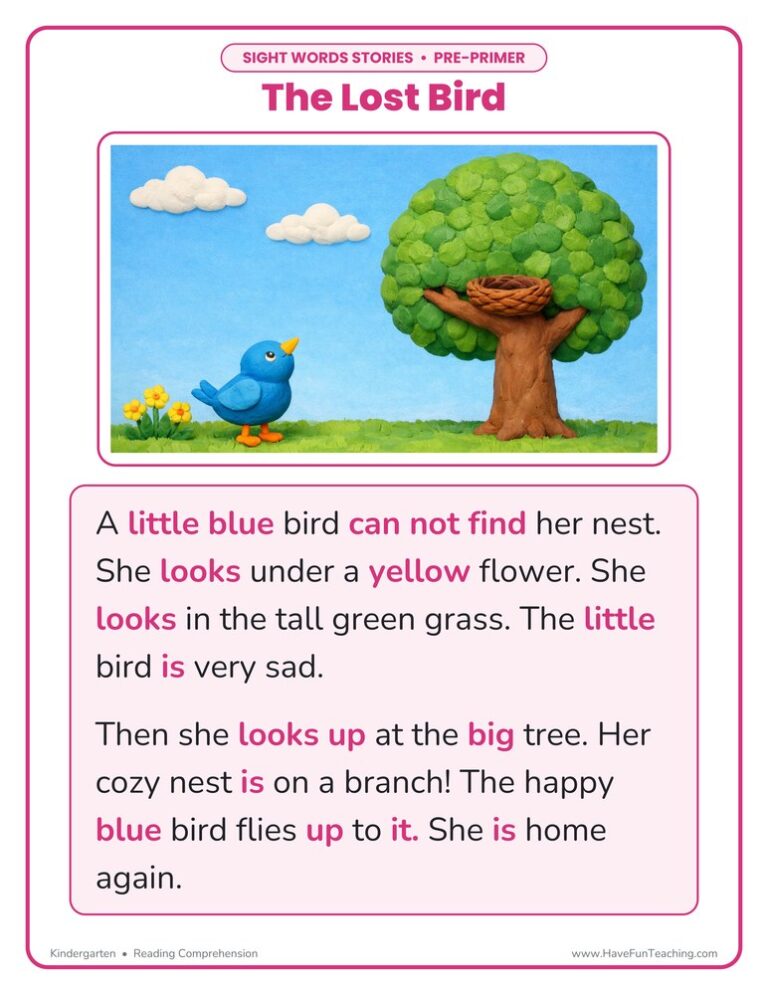
The Lost Bird Pre-Primer Sight Words Reading Comprehension Worksheet pairs a bold-print sight word story with five bubble-in questions for Kindergarten. Answer key included, so early readers build word recognition and understanding together.
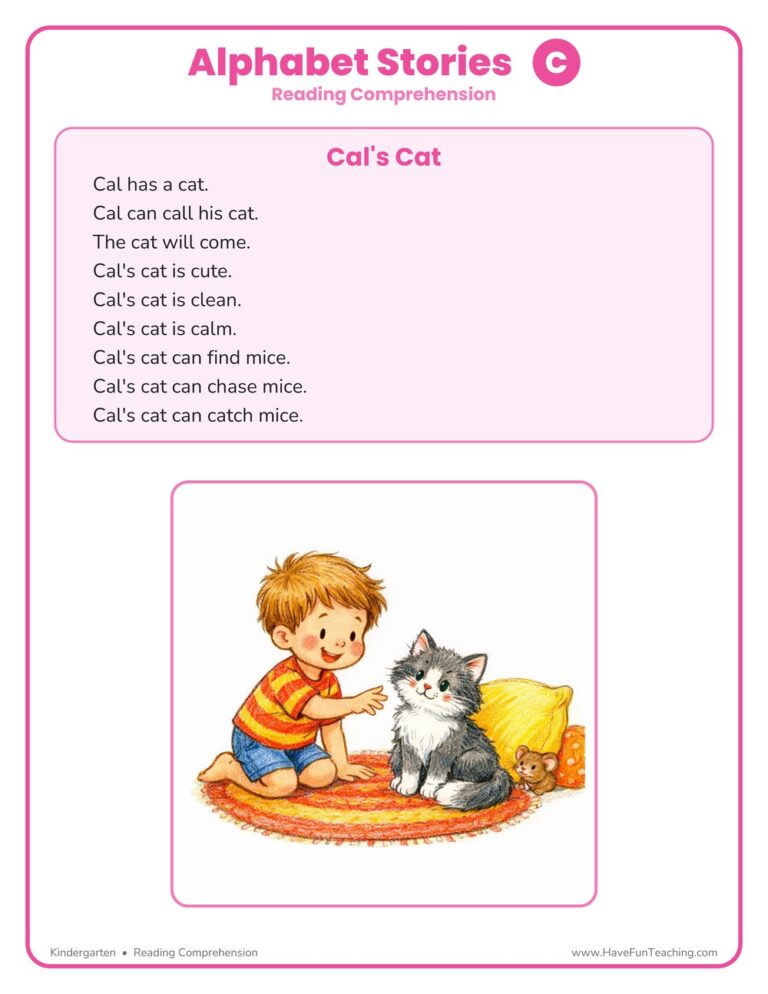
The Alphabet Stories Letter C Reading Comprehension Worksheet lets Kindergarten readers enjoy the short story “Cal’s Cat” and answer five picture-supported questions. Answer key included — a no-prep way to build early reading and phonics skills.
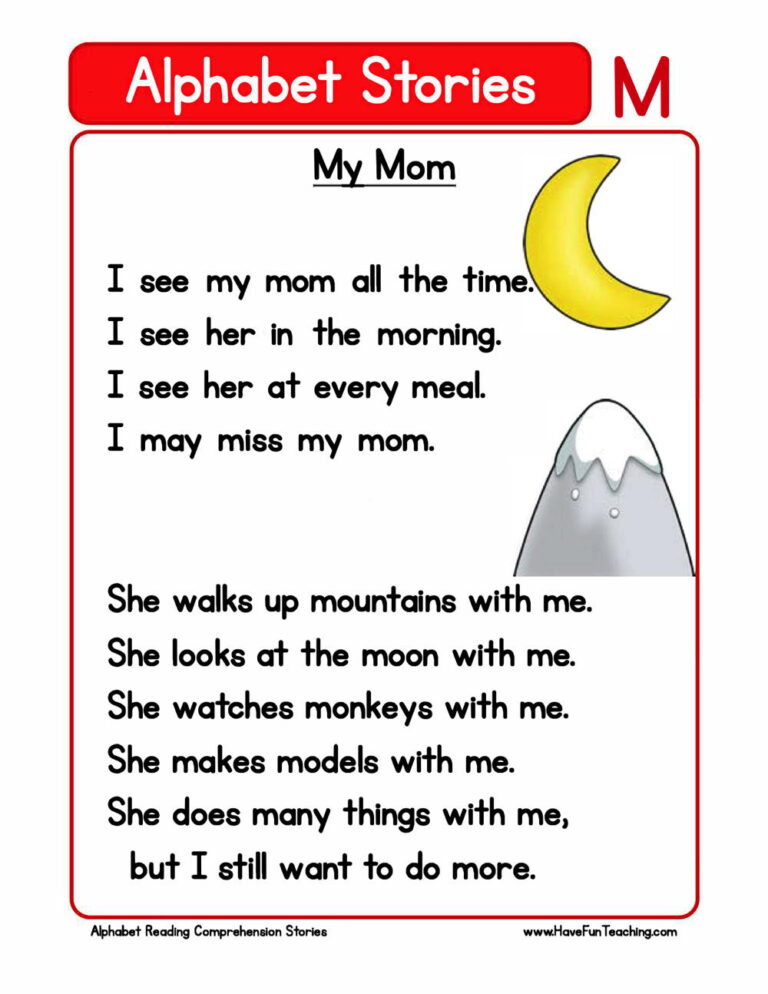
The Alphabet Stories Letter M Reading Comprehension Worksheet gives kindergarten readers a short letter-M story with fill-in-the-bubble questions. Includes an answer key for quick, no-prep beginning-sounds and comprehension practice.
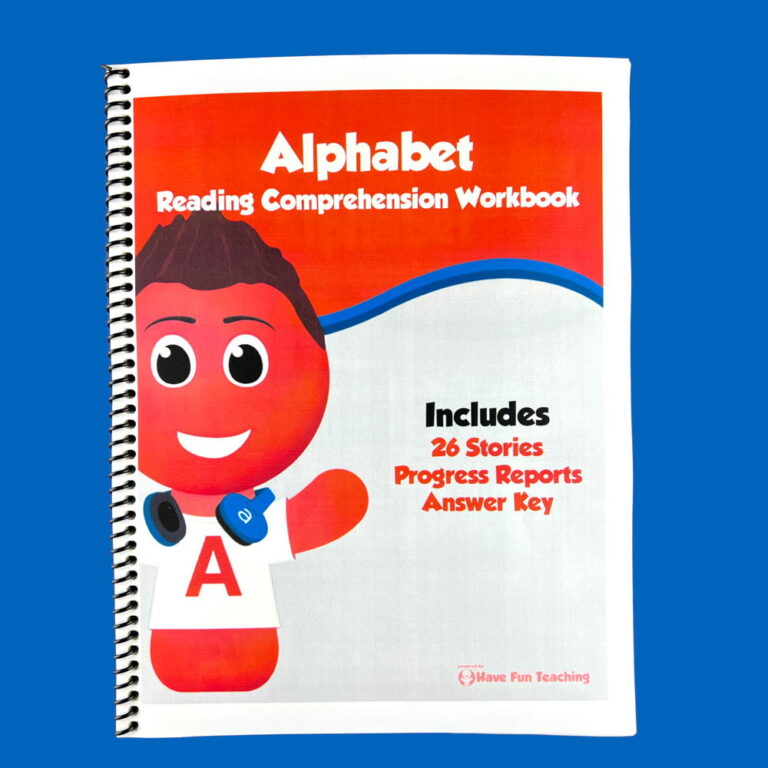
Use Alphabet Reading Comprehension Workbook Download to build student reading comprehension skills using the Alphabet Stories.
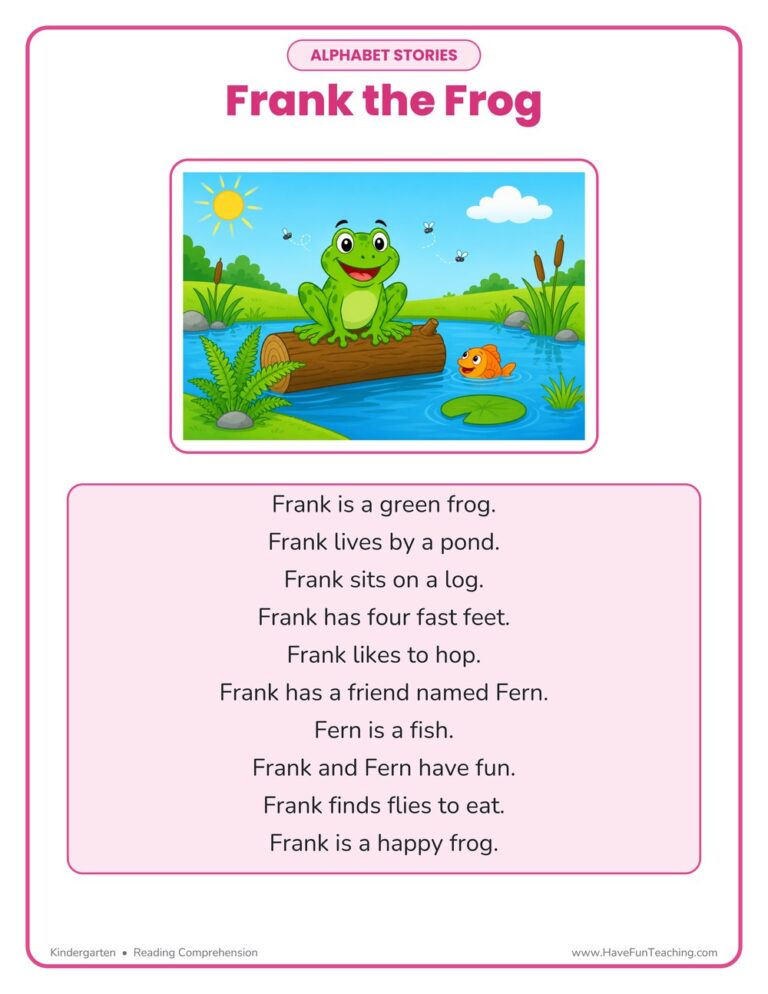
This Alphabet Stories Letter F Reading Comprehension Worksheet gives kindergarten readers a short Frank the Frog story and five picture-supported questions, with an answer key included, so they build letter F skills and reading confidence together.
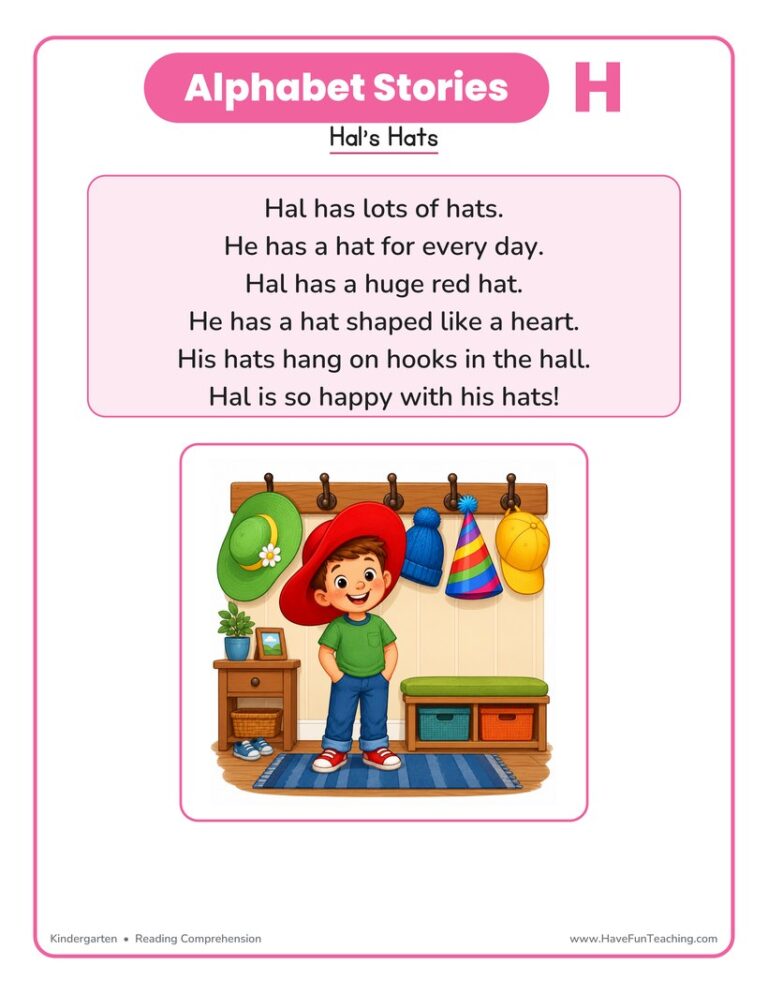
The Alphabet Stories Letter H Reading Comprehension Worksheet gives Kindergarten readers a playful “Hal’s Hats” story full of letter-H words plus five comprehension questions. Answer key included — a fun, no-prep way to build early reading and phonics skills.
Reviews
There are no reviews yet