
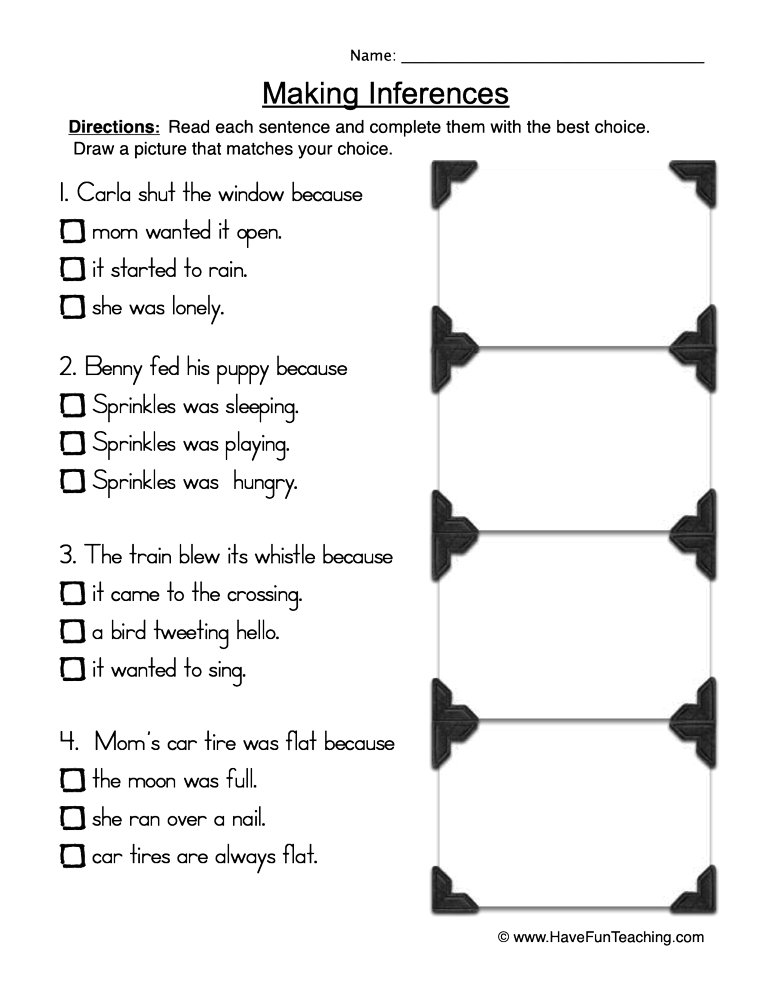
Inference Drawings Worksheet
This inference drawings worksheet asks 2nd graders to choose the ending that fits the clues and then draw it. An answer key is included, so it is easy no-prep reading practice at home or in class.
$6.97
Or free with a membership — members pay $3.33/mo for all 10,000+ resources. See plans
Want this one free?
Tell us where to send it and it’s yours — no card, no catch.
One free resource per teacher. We’ll also send free teaching ideas each week — unsubscribe anytime.
Teaching is easier with a membership
Unlimited printables, games & videos for PreK–6th — for your classroom or homeschool. Cancel anytime.
Start your 3-day free trial$0 today · cancel anytime · Instant access to 10,000+ resources
About this resource
Description
Making an inference means using clues to figure out something the words do not say directly. Young readers do this all the time without naming it: a character reaches for a coat, and the reader decides that it must be cold outside. This inference drawings worksheet gives second graders a clear, friendly place to practice that thinking one sentence at a time. Each sentence names something a character did, and the reader has to decide why it happened. The reason is never written down, so the only way forward is to weigh the endings and choose the one the clues support.
This 2nd grade inference worksheet holds four short sentences, each with three possible endings. Students read the sentence, fill in the bubble beside the ending that makes the most sense, and then draw a picture of what they chose in the box beside it. The drawing step is what makes the thinking visible: a child who understands why Luke put on his mittens will draw cold weather, not a hot sunny afternoon. Use it as morning work, as a small-group warm-up, or as a quick check before a longer reading lesson.
What’s Included
- 1 print-ready PDF worksheet
- Answer key
- 4 sentence-and-picture inference activities
There are three reasons this inference drawings worksheet helps children learn the skill. First, every sentence is short and built from familiar words, so students spend their energy on the reasoning instead of on decoding. Second, the three endings are written so that only one of them fits the clues, which teaches readers to rule an answer out rather than to guess. Third, drawing the answer turns a quiet thought into something a child can look at and explain, and it gives teachers an easy way to see whether the inference was real or lucky.
Try reading a picture book aloud and pausing to ask why a character did something, then ask students to point to the clue that told them. Play a quick guessing game where you describe an action and the class infers the reason behind it. Let children write their own because sentence and trade it with a partner to finish. Inference practice also belongs in science and social studies, where a photograph or a chart often says more than its caption does.
Related Resources
What teachers say
Reviews
You must be logged in to post a review.
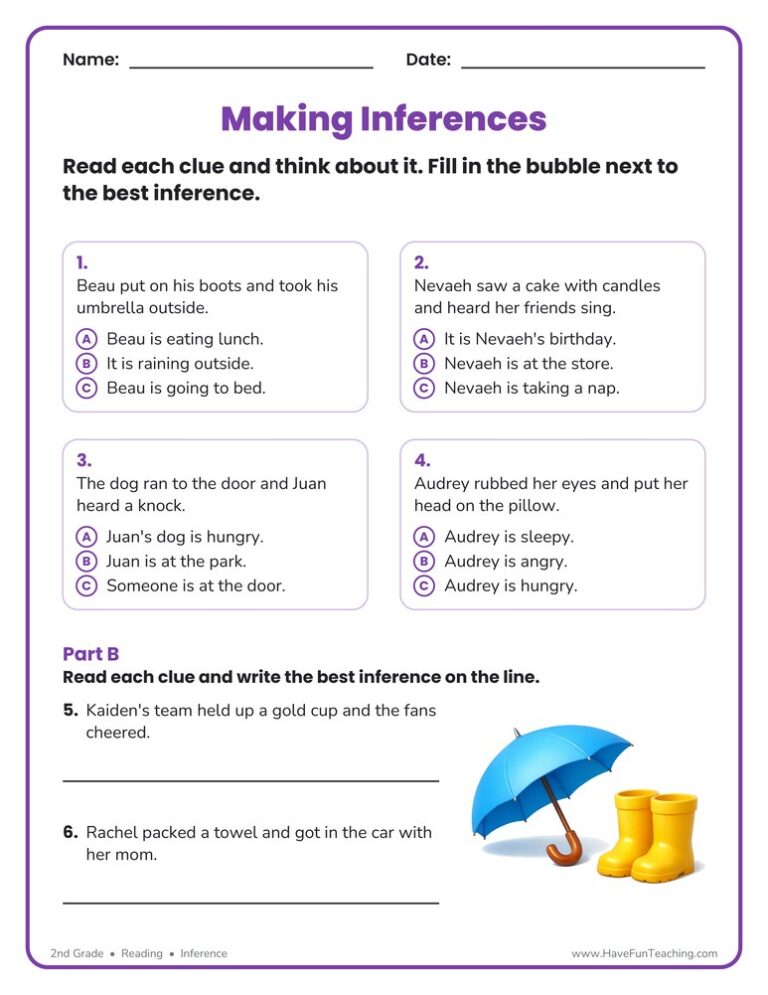
Students use this drawing inferences worksheet to read short clues, choose the best inference, and write two of their own. Made for 2nd grade, with an answer key included so checking work takes seconds.
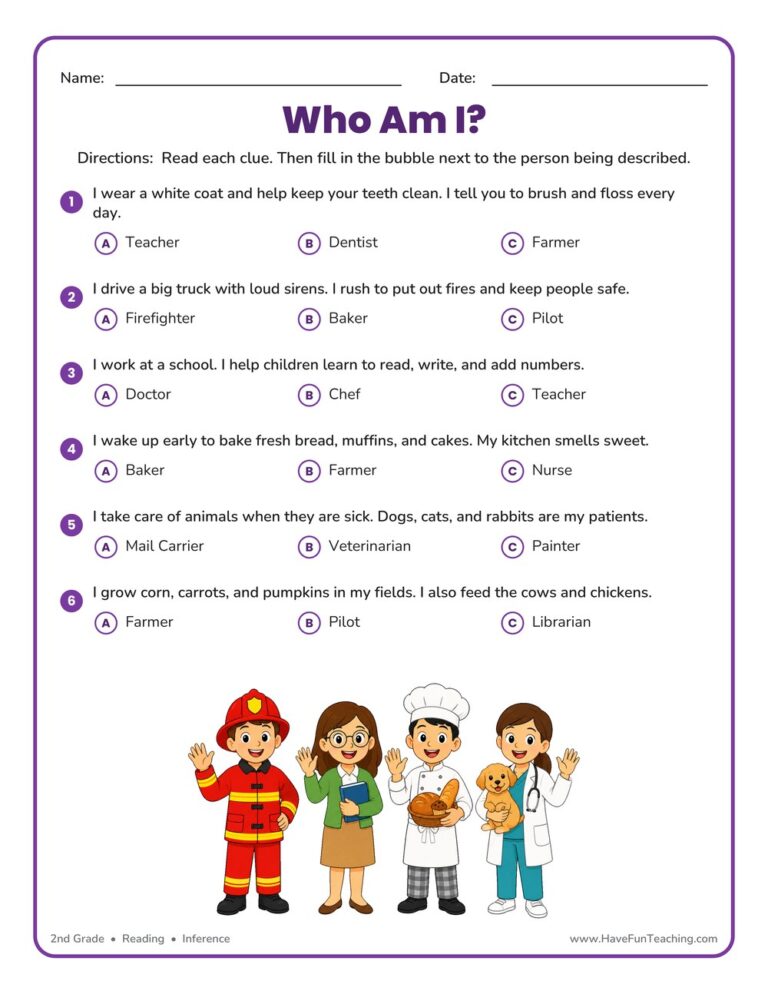
A 2nd grade people inferences worksheet where readers solve six “Who Am I?” clues about community helpers using text evidence. Includes a complete answer key — great for no-prep reading-comprehension practice at home or school.
A Making Inferences Story Worksheet for 2nd grade: read one short story about a snowy morning, then use the clues to answer four questions and write your own evidence. Answer key included for quick, no-prep practice.
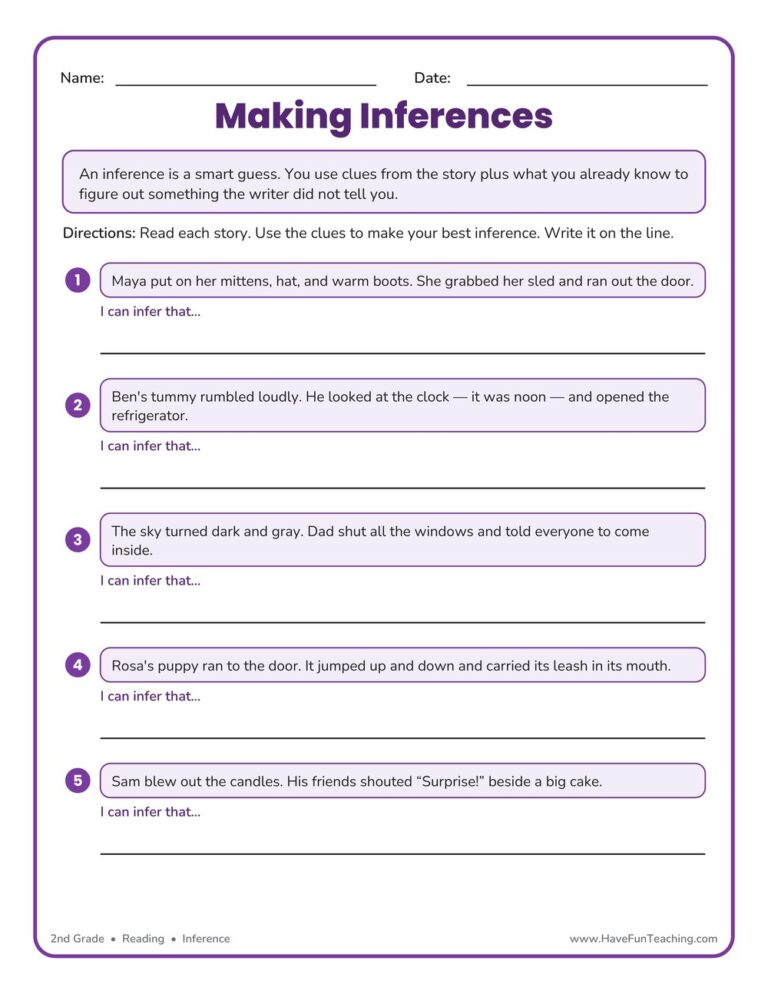
This making inferences worksheet gives 2nd graders five short stories to read for clues and draw smart conclusions. Includes an answer key — perfect for quick, no-prep reading practice at home or in class.
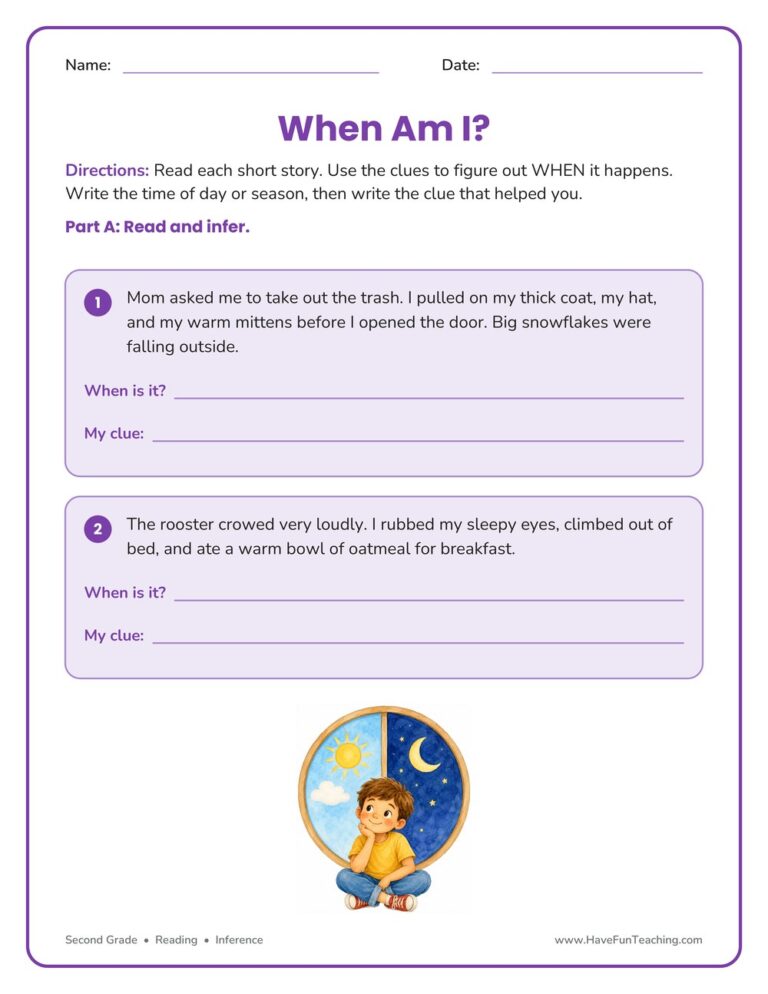
The Time Inferences Worksheet helps 2nd graders use story clues to infer the time of day and season. Includes an answer key — perfect for building evidence-based reading and comprehension practice at home or school.
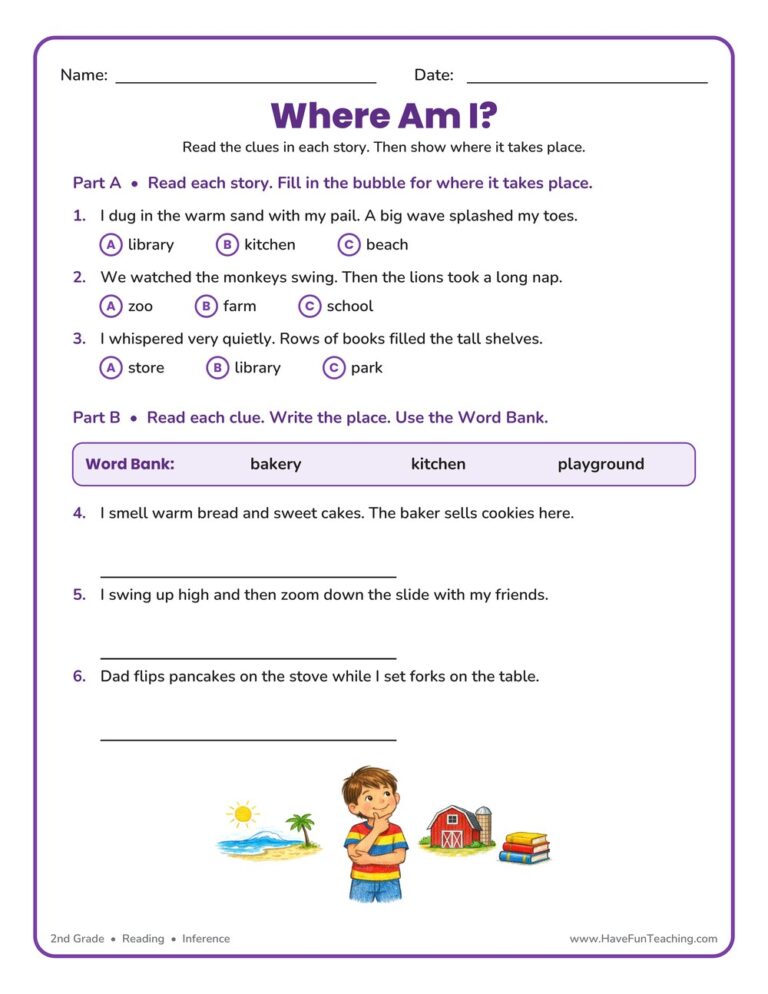
The Locations Inferences Worksheet gives 2nd graders fun practice reading clues to figure out where each story happens. Includes a complete answer key, a quick, no-prep way to build inference and reading comprehension skills.

This making inferences special night worksheet asks 2nd graders to pick the ending the campout clues support and draw it. An answer key is included, so it is ready to print and teach.

The Plant Predict and Infer Worksheet asks 2nd grade students to predict and infer how much each seed will grow from the water and sun it gets. An answer key is included, so checking work takes seconds.

Using Making Inferences Activity, students look at pictures and make inferences based on what they see to match descriptions. This is perfect for making inferences and drawing conclusions.

Using Hurricanes Reading Comprehension Activity, students refer to details to explain what the text says explicitly and when drawing inferences. This is perfect for making inferences and drawing conclusions.

Using Making Inferences Graphic Organizer, students record their schema and textual evidences while reading and making inferences.
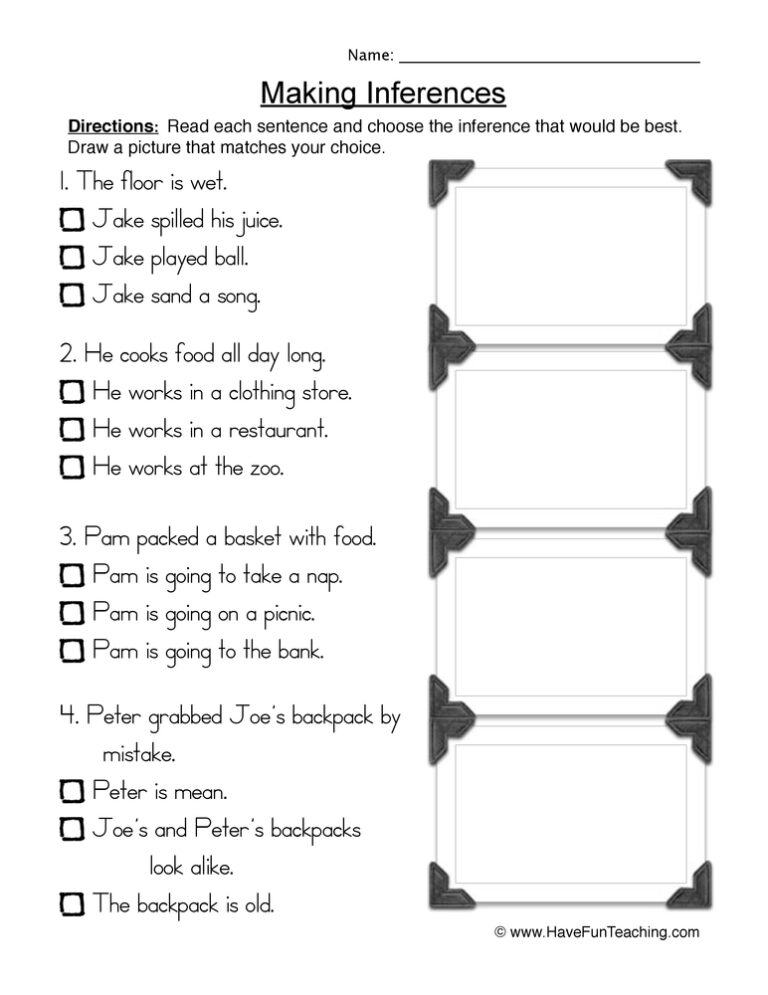
Using Making Inferences Pictures Activity, students look at pictures and make inferences based on what they see to match descriptions. This is perfect for making inferences and drawing conclusions.
Reviews
There are no reviews yet