
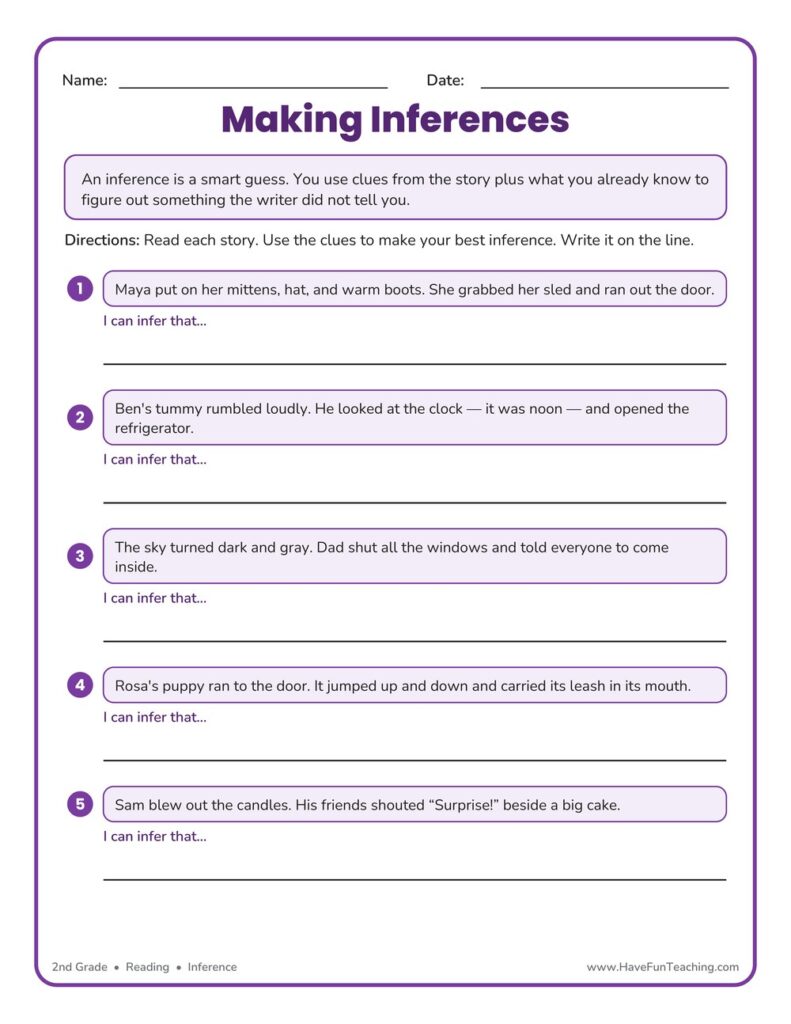
Making Inferences Worksheet
This making inferences worksheet gives 2nd graders five short stories to read for clues and draw smart conclusions. Includes an answer key — perfect for quick, no-prep reading practice at home or in class.
$6.97
Want this one free?
Tell us where to send it and it’s yours — no card, no catch.
One free resource per teacher. We’ll also send free teaching ideas each week — unsubscribe anytime.
Free teacher account · no credit card
Membership
Get every game, song, & printable
- Every game, on any device
- 10,000+ printables
- Assign online with HFT Classroom
Then $39.97/year · cancel anytime · See plans
- Instant digital download
- Printable PDF + answer key
- Made by real teachers
Teacher / Family membership
Teaching is easier with every resource
One membership for your whole year: 10,000+ worksheets, games, songs and videos for Preschool–6th, for your classroom or homeschool.
- Unlimited printables & downloads
- Every game, on any device
- Assign online with HFT Classroom
- Cancel anytime
Teacher / Family membership · 3 days free
Yearly
Monthly would be $119.64 a year
$3.33/month
Billed $39.97 once a year
You save $79.67 every year
Start My 3 Free Days$0 today · cancel anytime
Monthly
$9.97/month
Flexible, month to month
Yearly is just $3.33/mo. Switch and save $79.67
Start My 3 Free Days$0 today · cancel anytime
About this resource
Description
Making inferences is one of the most important reading comprehension skills a young reader can build. When students infer, they combine clues from the text with what they already know to figure out ideas the author does not state directly. This making inferences worksheet gives 2nd grade readers focused, low-pressure practice reading short stories and drawing smart conclusions from the details they find.
Designed as a simple, no-prep 2nd grade inference worksheet, this printable presents five short, everyday scenarios. Students read each mini-story, notice the clues, and write what they can infer on the line provided. Use it as morning work, a guided-reading follow-up, a reading-center task, or a quick homework check. A definition box at the top reminds students exactly what an inference is before they begin, so they can work independently.
What’s Included
- 1 print-ready PDF worksheet
- Answer key
- 5 short-story inference activities
This making inferences worksheet helps children learn in three ways. First, the short, relatable stories keep struggling and reluctant readers engaged while they hunt for clues. Second, the “I can infer that…” sentence starter models how to turn evidence into a clear conclusion, building confidence and academic language. Third, the included answer key lets teachers and parents check thinking instantly and talk through why each inference makes sense, turning a worksheet into a real conversation about reading.
Beyond the page, there are many fun ways to strengthen inference skills. Read a picture book aloud and pause to ask, “What do you think will happen next, and how do you know?” Play a guessing game where children infer an object from three clues, or act out a feeling and have them infer the emotion from your face. Pointing out real-life clues — dark clouds, a packed lunchbox, a wagging tail — helps kids see that they make inferences every day.
Related Resources
What teachers say
Reviews
Write a review, earn store credit
Get 25¢ in credit for every approved review of a resource you’ve downloaded, played or purchased — up to 15 a month. Credit applies automatically to your membership payments, so your reviews can help pay for your membership.
Honest reviews only — any star rating earns the same. Program rules
Log in to write a review and earn store credit.
A Making Inferences Story Worksheet for 2nd grade: read one short story about a snowy morning, then use the clues to answer four questions and write your own evidence. Answer key included for quick, no-prep practice.
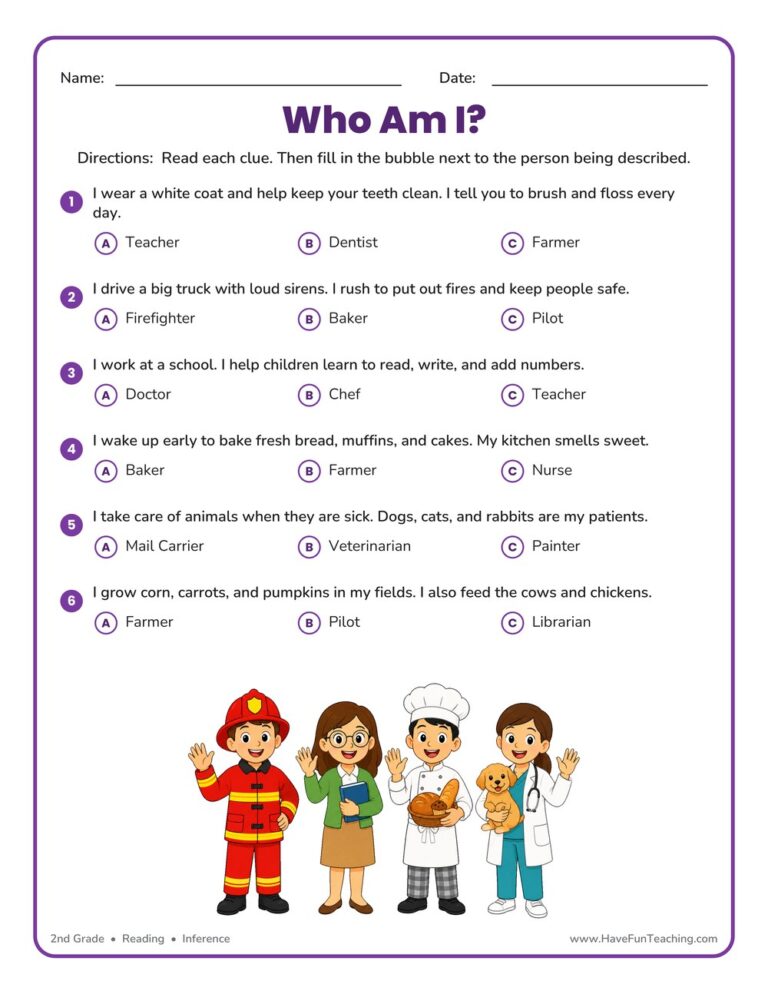
A 2nd grade people inferences worksheet where readers solve six “Who Am I?” clues about community helpers using text evidence. Includes a complete answer key — great for no-prep reading-comprehension practice at home or school.
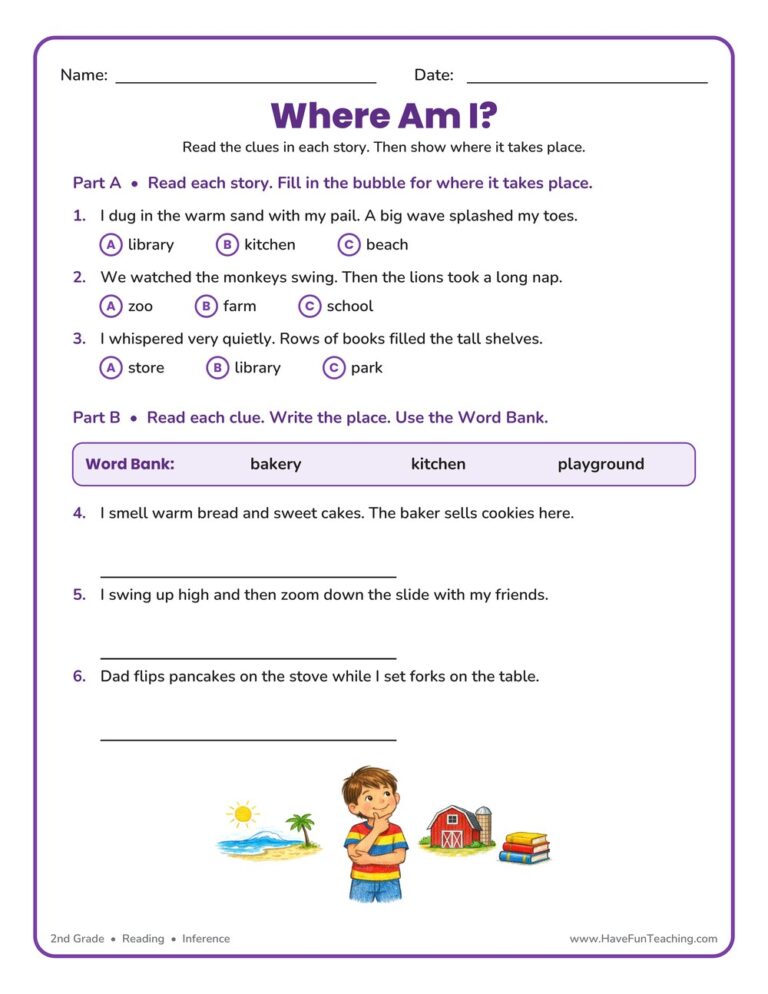
The Locations Inferences Worksheet gives 2nd graders fun practice reading clues to figure out where each story happens. Includes a complete answer key, a quick, no-prep way to build inference and reading comprehension skills.
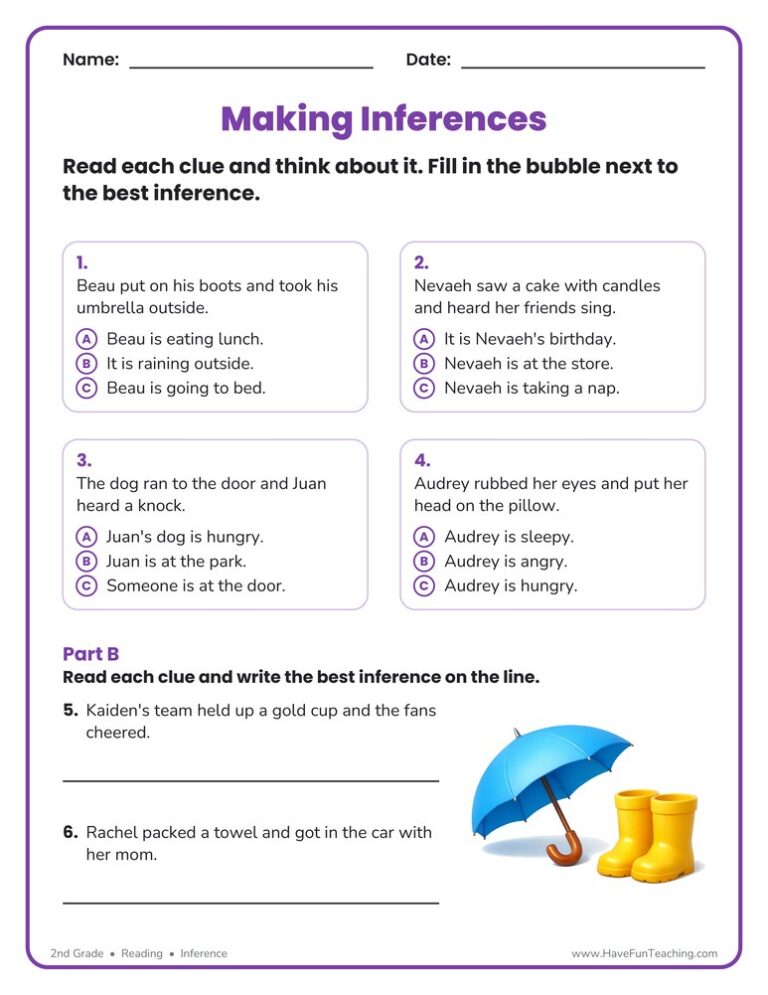
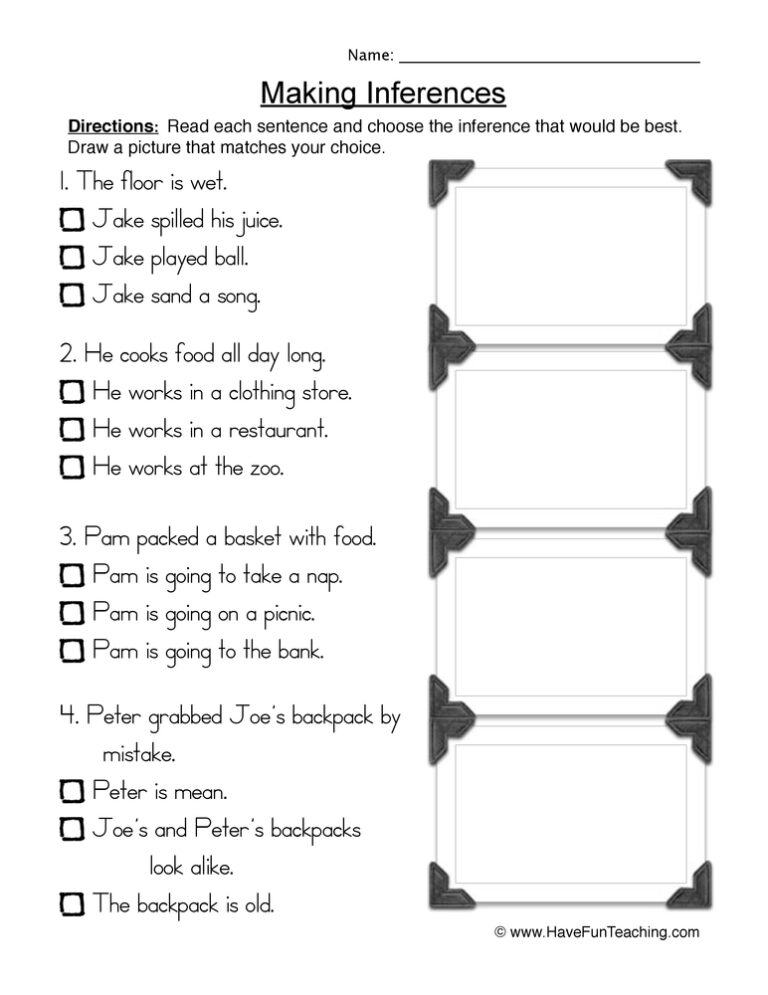
Students use this drawing inferences worksheet to read short clues, choose the best inference, and write two of their own. Made for 2nd grade, with an answer key included so checking work takes seconds.
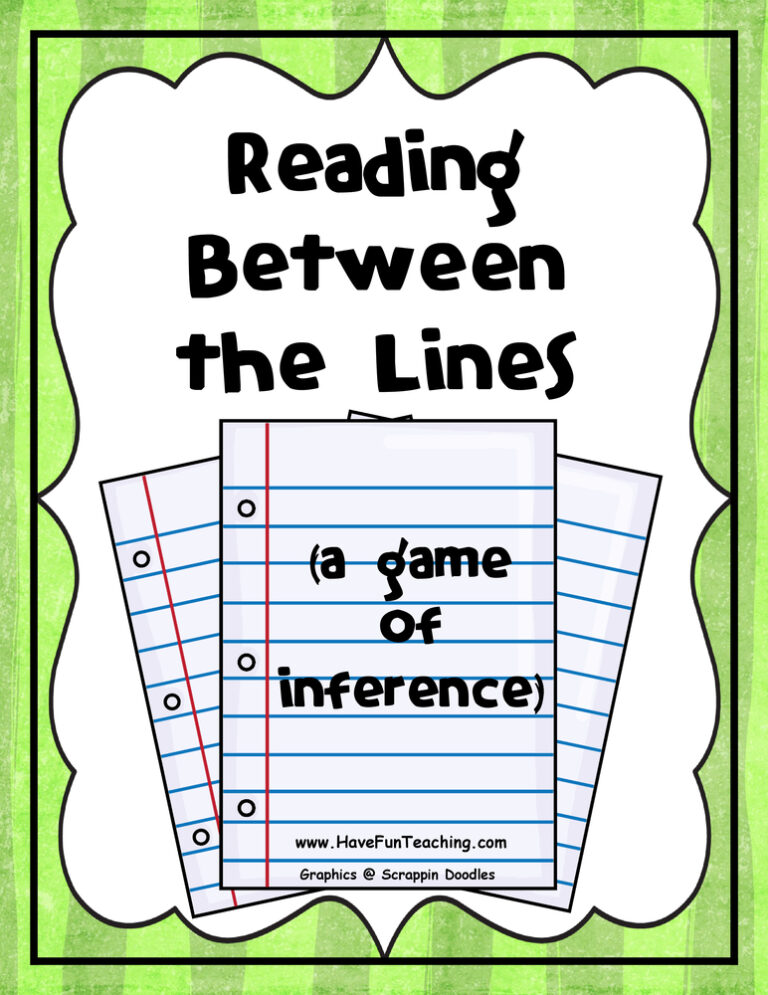
This reading between the lines inference activity lets 1st to 3rd grade students use story clues to figure out how a character feels. An answer key is included for easy checking.
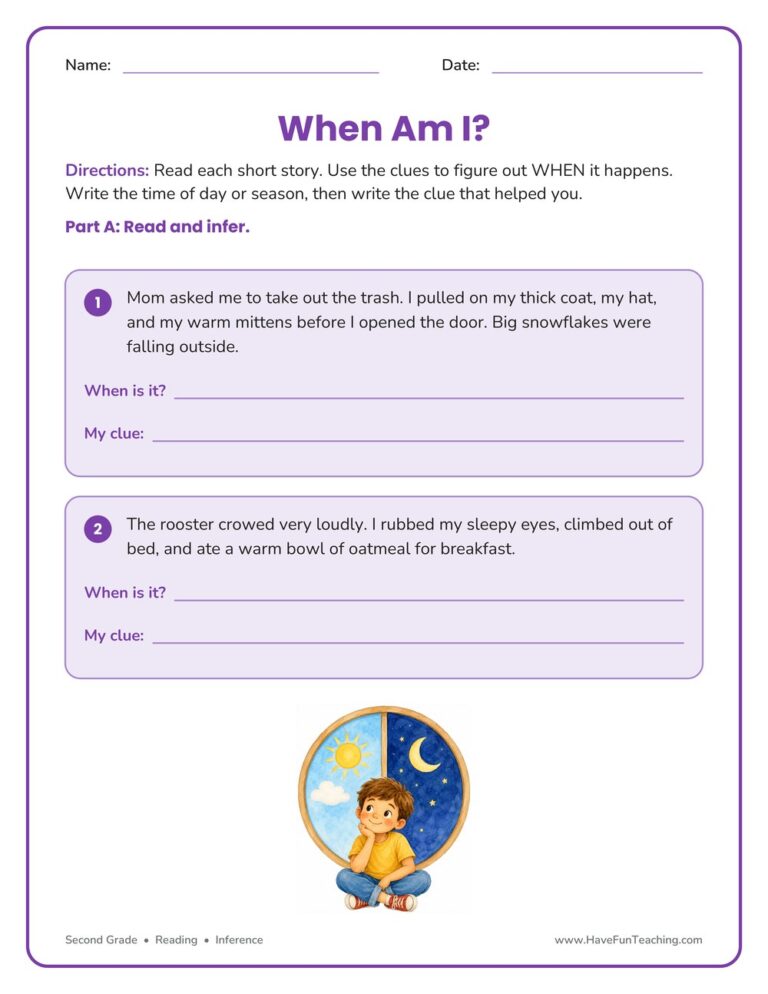
The Time Inferences Worksheet helps 2nd graders use story clues to infer the time of day and season. Includes an answer key — perfect for building evidence-based reading and comprehension practice at home or school.

This making inferences special night worksheet asks 2nd graders to pick the ending the campout clues support and draw it. An answer key is included, so it is ready to print and teach.

The Plant Predict and Infer Worksheet asks 2nd grade students to predict and infer how much each seed will grow from the water and sun it gets. An answer key is included, so checking work takes seconds.
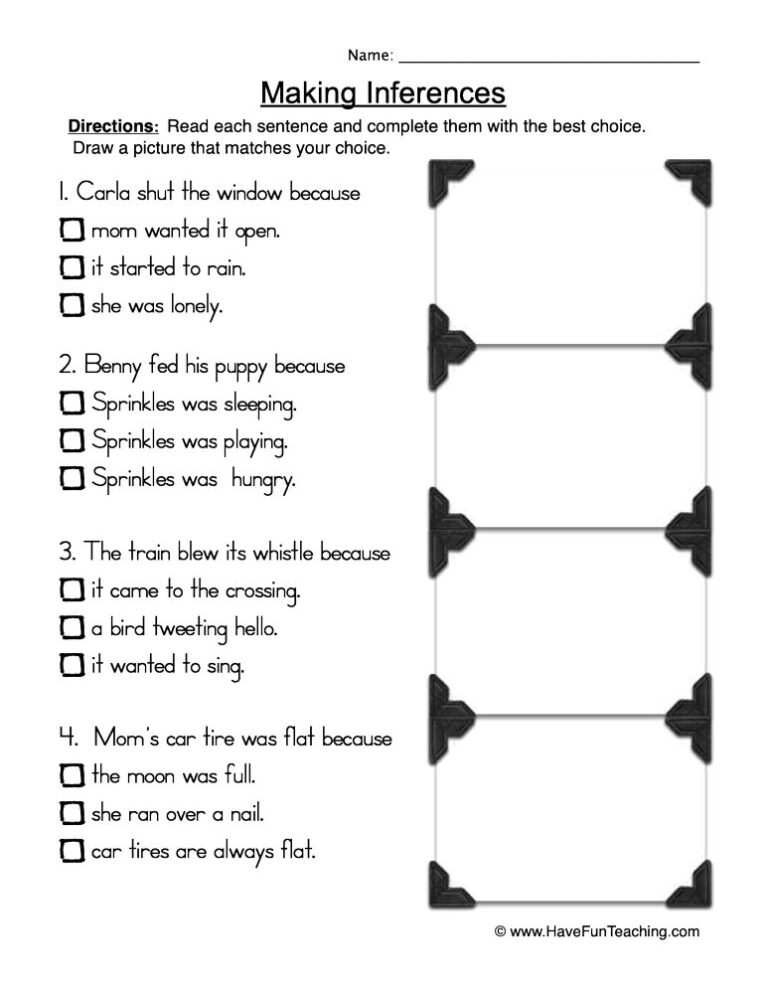
This inference drawings worksheet asks 2nd graders to choose the ending that fits the clues and then draw it. An answer key is included, so it is easy no-prep reading practice at home or in class.
This making inferences pictures activity has 1st to 3rd Grade readers use tool clues to infer which community helper uses them. Includes a record sheet, practice page and answer key.

This making inferences graphic organizer helps 2nd graders read three short stories, find clues, and add what they know to make an inference. An answer key is included for easy checking.

The You Make The Call Inferences Worksheet has 2nd graders read short stories, spot the clues, and predict what happens next. An answer key is included, making prediction practice quick to check.




Reviews
There are no reviews yet