
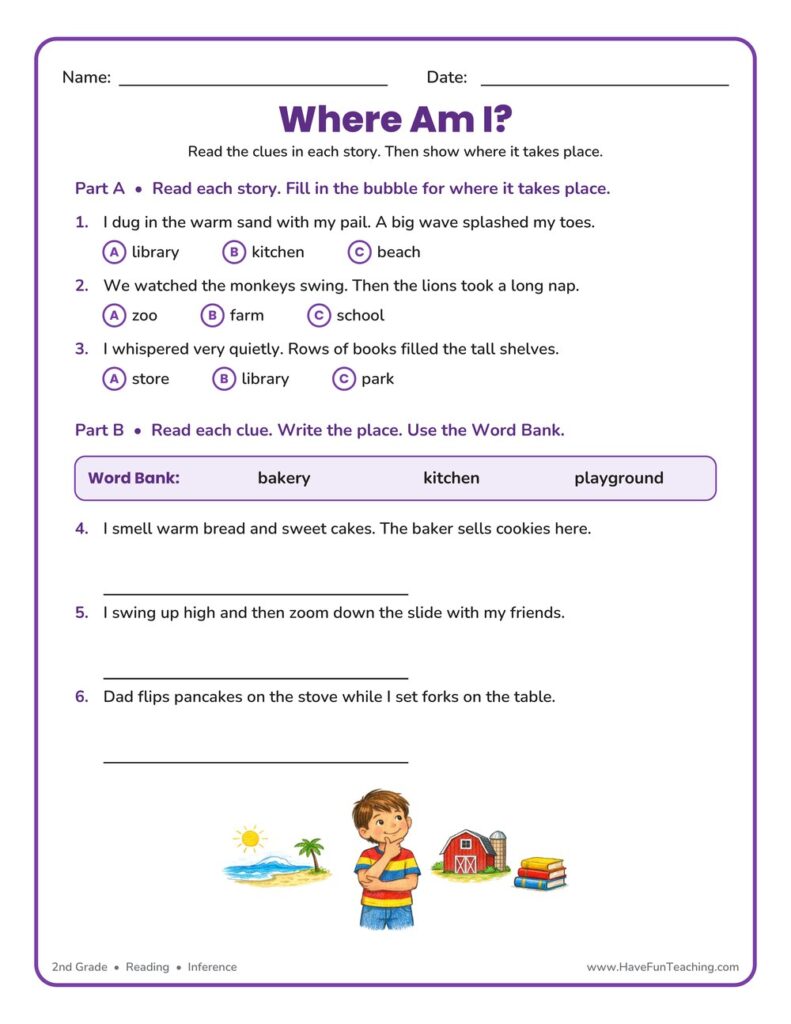
Locations Inferences Worksheet
The Locations Inferences Worksheet gives 2nd graders fun practice reading clues to figure out where each story happens. Includes a complete answer key, a quick, no-prep way to build inference and reading comprehension skills.
$6.97
Want this one free?
Tell us where to send it and it’s yours — no card, no catch.
One free resource per teacher. We’ll also send free teaching ideas each week — unsubscribe anytime.
Free teacher account · no credit card
Membership
Get every game, song, & printable
- Every game, on any device
- 10,000+ printables
- Assign online with HFT Classroom
Then $39.97/year · cancel anytime · See plans
- Instant digital download
- Printable PDF + answer key
- Made by real teachers
Teacher / Family membership
Teaching is easier with every resource
One membership for your whole year: 10,000+ worksheets, games, songs and videos for Preschool–6th, for your classroom or homeschool.
- Unlimited printables & downloads
- Every game, on any device
- Assign online with HFT Classroom
- Cancel anytime
Teacher / Family membership · 3 days free
Yearly
Monthly would be $119.64 a year
$3.33/month
Billed $39.97 once a year
You save $79.67 every year
Start My 3 Free Days$0 today · cancel anytime
Monthly
$9.97/month
Flexible, month to month
Yearly is just $3.33/mo. Switch and save $79.67
Start My 3 Free Days$0 today · cancel anytime
About this resource
Description
The Locations Inferences Worksheet helps second graders practice inference, one of the most important reading comprehension skills. When children make an inference, they use clues in the text plus what they already know to figure out something the writer did not say directly. On this locations inferences worksheet, students read short stories and use the details to decide where each one takes place, which strengthens close reading and careful thinking.
This 2nd grade inference worksheet gives students clear, friendly practice from start to finish. In Part A, readers study three short scenes and fill in the bubble for the correct location. In Part B, they read a clue and write the matching place using a helpful word bank. To use it, hand out the page, read the directions together, and let students underline the clue words that helped them decide. A complete answer key makes checking fast and easy.
What’s Included
- 1 print-ready PDF worksheet
- Answer key
- 6 read-and-infer location activities (fill-in-the-bubble and word bank)
There are three big reasons this locations inferences worksheet works so well. First, it turns an abstract skill into something children can picture, because every clue points to a real, familiar place. Second, the two different formats, multiple choice and written answers, keep readers engaged and check understanding in more than one way. Third, the clean layout and answer key make it simple for teachers and parents to give feedback right away.
For even more practice, turn inference into a game. Describe a room or place and let children guess where you are, then have them describe one for you. Read a favorite picture book and pause to ask, “How do you know?” whenever the setting changes. You can also cut apart the clues and sort them into location piles, or have students write their own “Where am I?” riddles to trade with a friend.
Related Resources
What teachers say
Reviews
You must be logged in to post a review.
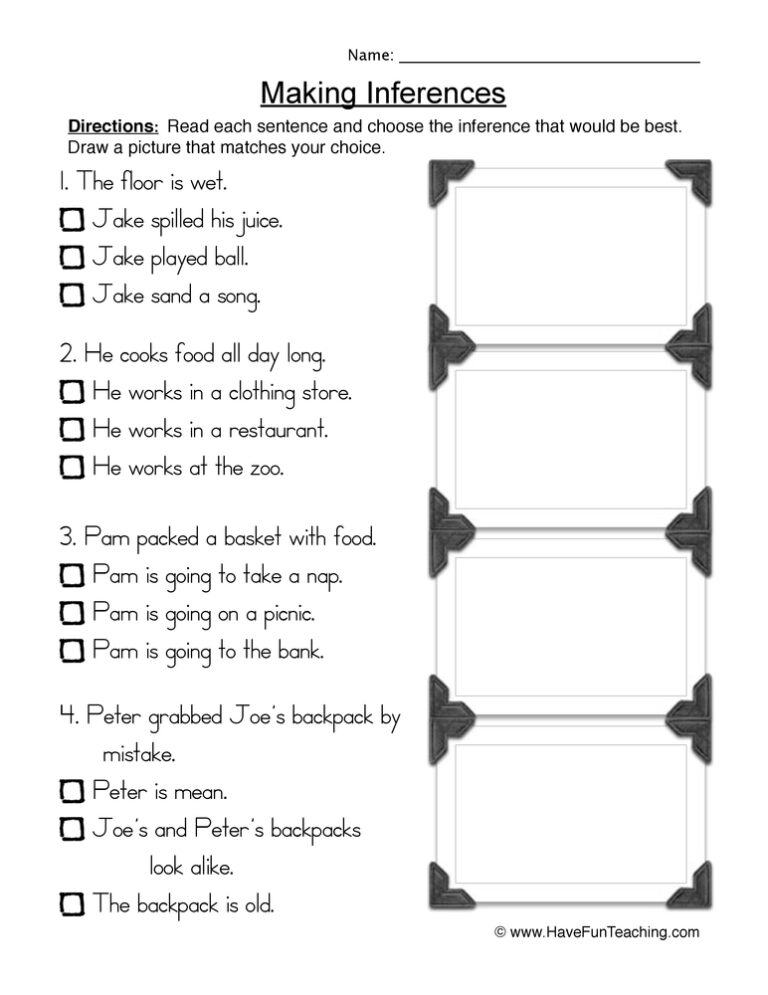
A Making Inferences Story Worksheet for 2nd grade: read one short story about a snowy morning, then use the clues to answer four questions and write your own evidence. Answer key included for quick, no-prep practice.
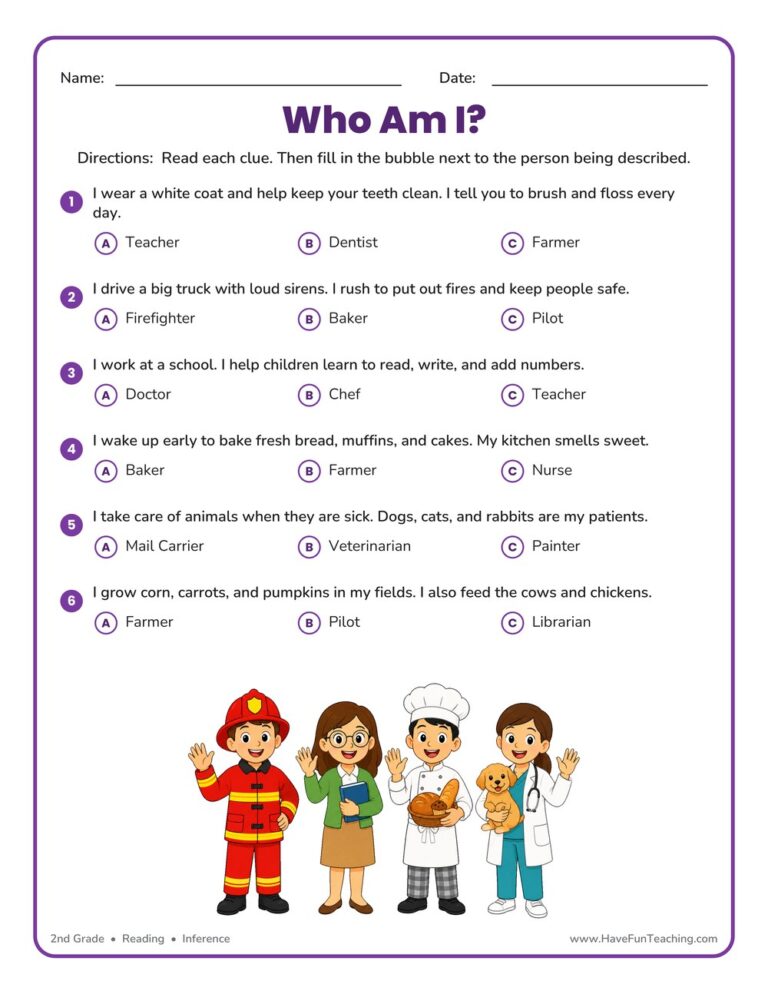
A 2nd grade people inferences worksheet where readers solve six “Who Am I?” clues about community helpers using text evidence. Includes a complete answer key — great for no-prep reading-comprehension practice at home or school.
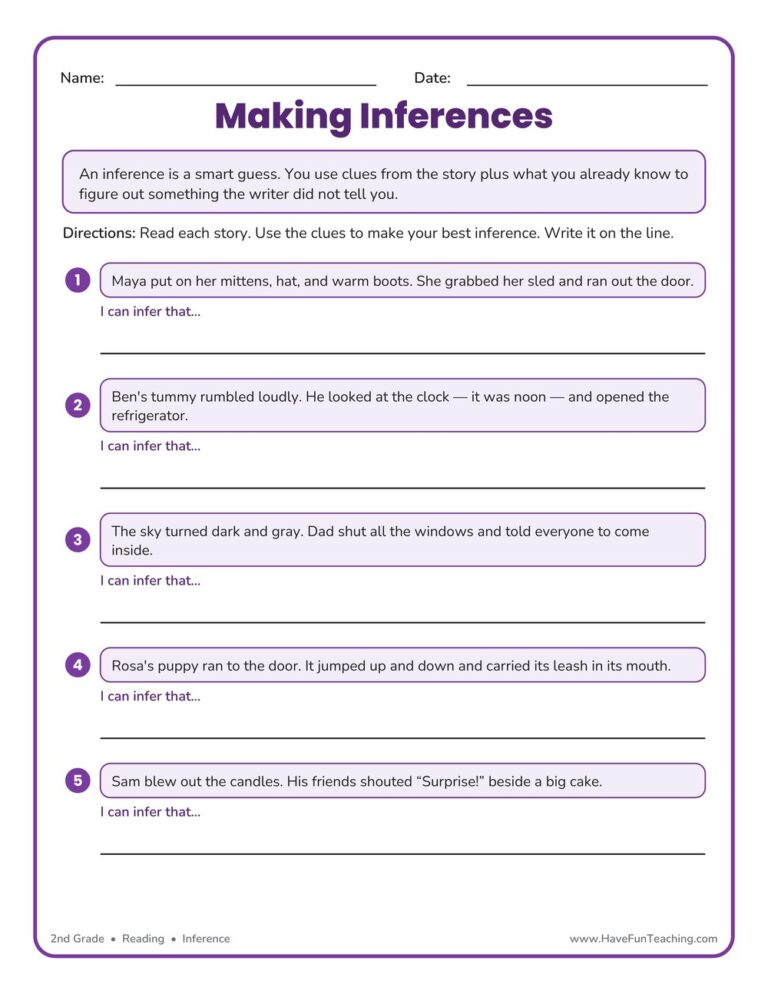
This making inferences worksheet gives 2nd graders five short stories to read for clues and draw smart conclusions. Includes an answer key — perfect for quick, no-prep reading practice at home or in class.
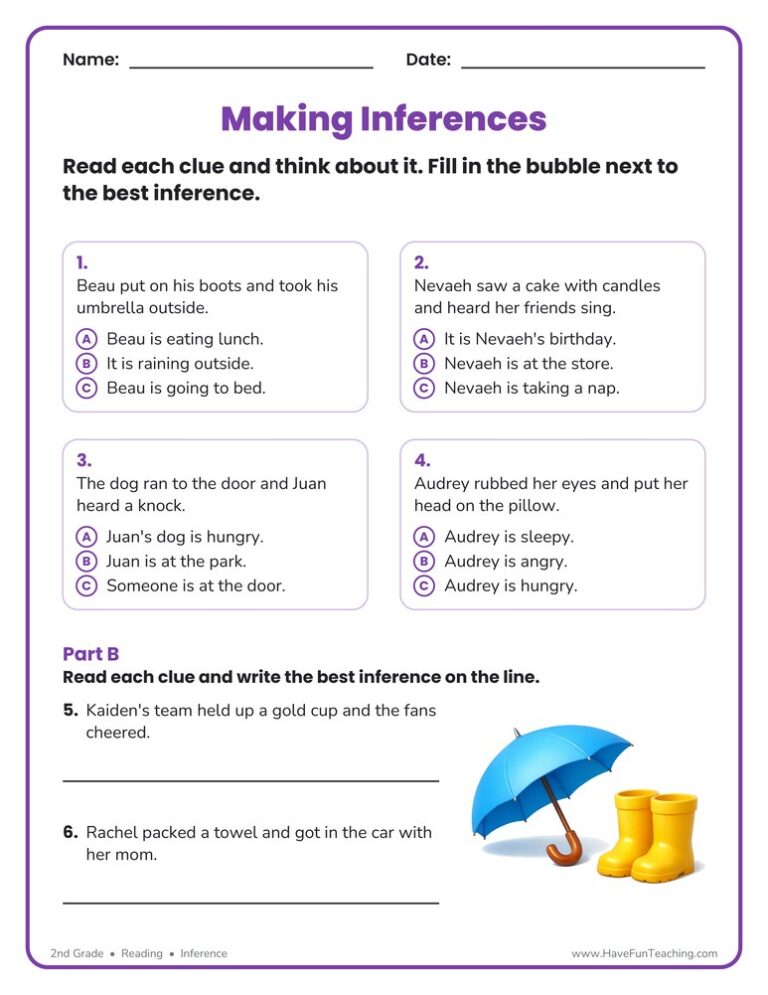
Students use this drawing inferences worksheet to read short clues, choose the best inference, and write two of their own. Made for 2nd grade, with an answer key included so checking work takes seconds.
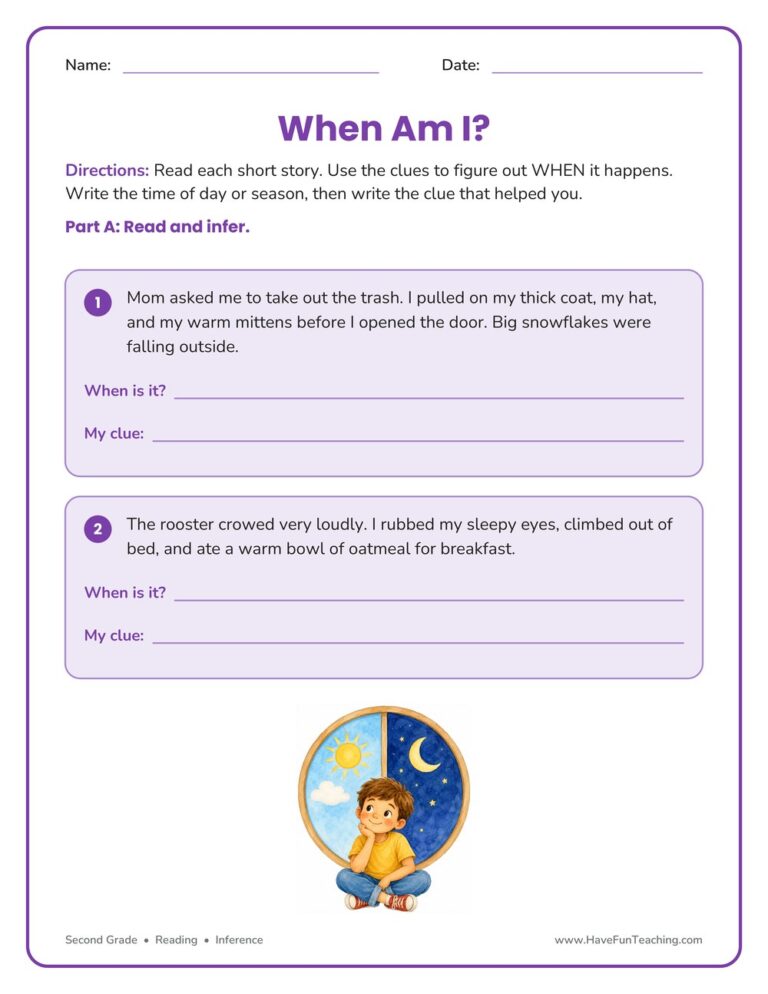
The Time Inferences Worksheet helps 2nd graders use story clues to infer the time of day and season. Includes an answer key — perfect for building evidence-based reading and comprehension practice at home or school.
Using Reading Between The Lines Inference Activity, students match the Statement Card to the Emotion Card to build their inference skills. This is perfect for making inferences and drawing conclusions.
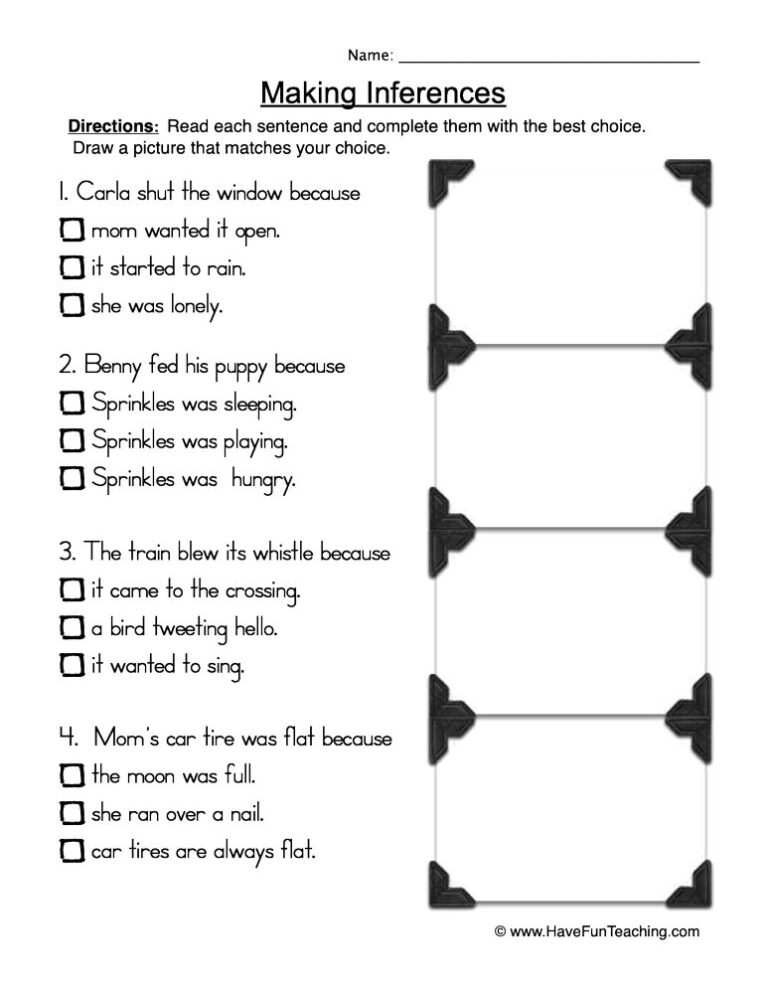
This inference drawings worksheet asks 2nd graders to choose the ending that fits the clues and then draw it. An answer key is included, so it is easy no-prep reading practice at home or in class.

This making inferences special night worksheet asks 2nd graders to pick the ending the campout clues support and draw it. An answer key is included, so it is ready to print and teach.

The Plant Predict and Infer Worksheet asks 2nd grade students to predict and infer how much each seed will grow from the water and sun it gets. An answer key is included, so checking work takes seconds.

This making inferences graphic organizer helps 2nd graders read three short stories, find clues, and add what they know to make an inference. An answer key is included for easy checking.
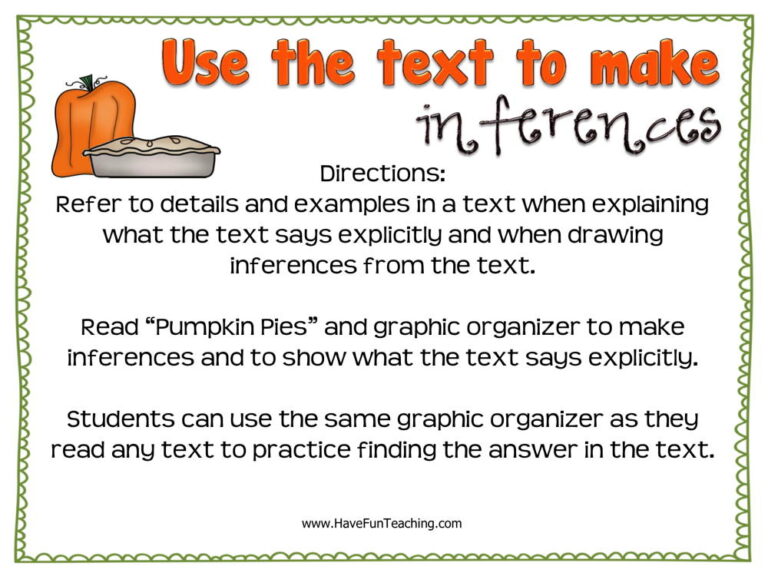
This Use the Text to Make Inferences Activity can be a great way to help them explore how to infer based on the text and what they already know. This is perfect for making inferences and drawing conclusions.

Using Hurricanes Reading Comprehension Activity, students refer to details to explain what the text says explicitly and when drawing inferences. This is perfect for making inferences and drawing conclusions.
Reviews
There are no reviews yet