

Make a Map Worksheet
This Make a Map Worksheet gives 3rd graders a real town map to label and read, covering the title, map key, compass rose, and scale bar. Answer key included for fast, no-prep geography practice.
$6.97
Or free with a membership — members pay $3.33/mo for all 10,000+ resources. See plans
Want this one free?
Tell us where to send it and it’s yours — no card, no catch.
One free resource per teacher. We’ll also send free teaching ideas each week — unsubscribe anytime.
Teaching is easier with a membership
Unlimited printables, games & videos for PreK–6th — for your classroom or homeschool. Cancel anytime.
Start your 3-day free trial$0 today · cancel anytime · Instant access to 10,000+ resources
About this resource
Description
Every map a child meets — a zoo guide, a bus route, a folded state road map — is built from the same four parts: a title, a map key, a compass rose, and a scale bar. Learning to spot those four parts, and then actually use them, is the first real geography skill of the elementary grades. A student who can find the key knows what the little shapes mean, a student who can read the compass rose can say which way to travel, and a student who can use the scale bar can turn inches on paper into miles on the ground. This Make a Map Worksheet introduces all four map elements together and asks students to put every one of them to work on a real town map.
This 3rd grade map elements worksheet is built around Willow Park Town, a clean community map with a street grid, four places marked by symbols, a compass rose, and a scale bar. Students start by naming each numbered element from the word bank, then move into four questions that send them straight back into the map: reading a symbol out of the key, taking a cardinal direction off the compass rose, and converting city blocks into miles with the scale bar. Print one copy per student, work through the labeling section together as a class, and then let students finish the questions on their own.
What’s Included
- 1 print-ready PDF worksheet
- Answer key
- 4 map-element labeling blanks with a word bank
- 4 map questions using the key, the compass rose, and the scale bar
Three things make this Make a Map Worksheet work. First, it teaches the vocabulary and the application on the same page, so students never learn the words “compass rose” without immediately using one. Second, the town map is deliberately uncluttered, which keeps the thinking on the geography instead of on decoding a busy picture. Third, the scale-bar question is genuinely multi-step: students count blocks, read the bar, and multiply to reach the answer in miles, which is exactly the kind of reasoning third-grade assessments ask for.
To stretch the lesson further, have students draw a map of their own classroom, bedroom, or playground with all four elements included, then trade papers with a partner and answer each other’s questions. Take a walk around the school and build a class map on chart paper, adding a symbol and a key entry for every landmark you pass. At home, hand a child the map at a zoo, a museum, or a state park and let them lead the way. A road atlas works just as well — hunt together for the title, the key, the compass rose, and the scale.
Related Resources
What teachers say
Reviews
You must be logged in to post a review.
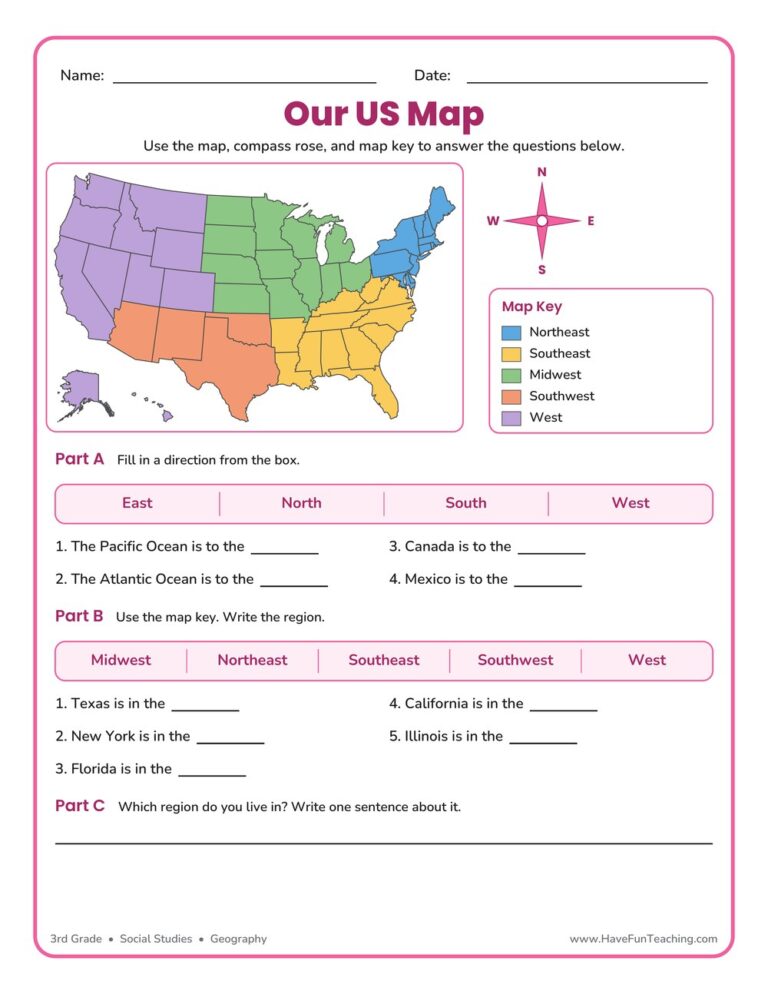
This US Map Worksheet helps 3rd grade students name the five regions of the United States, use a compass rose, and read a map key. An answer key is included, making map skills easy and fun to practice.
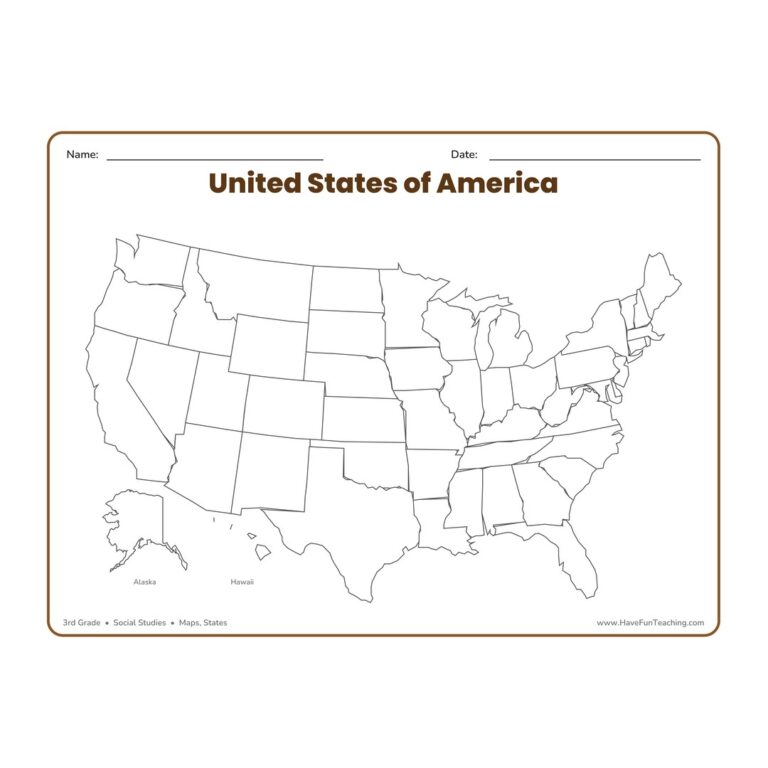
The United States Blank Map Worksheet gives 3rd graders a full, landscape outline map of the USA with all fifty states left blank and ready to label, color, or study for hands-on geography and map-skills practice.
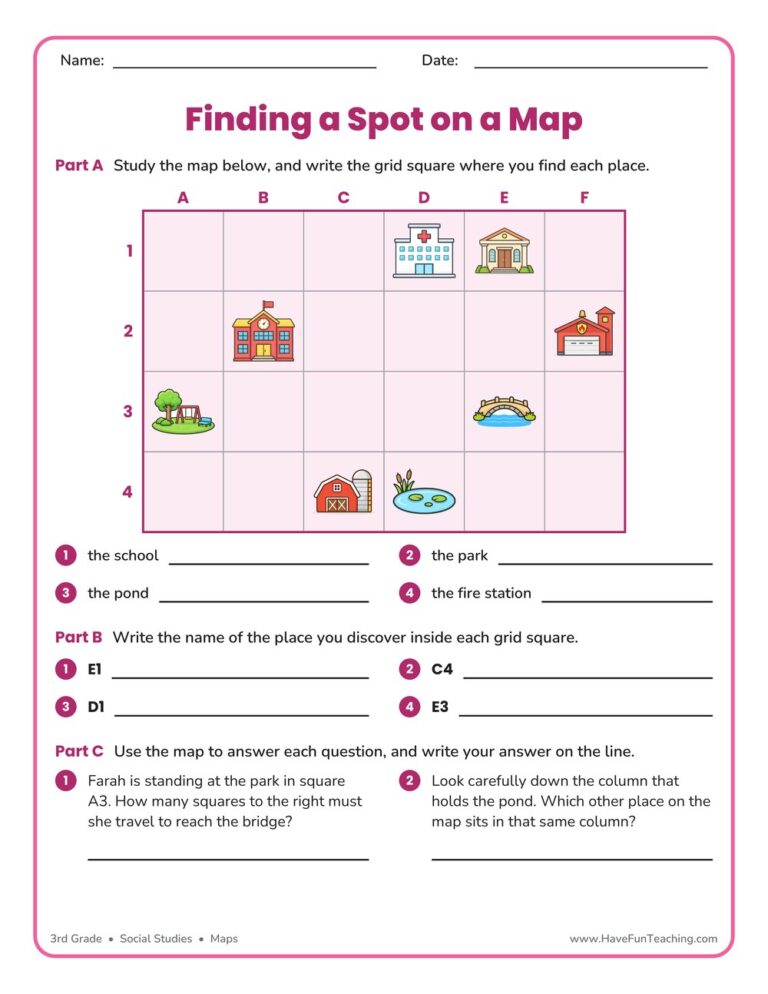
A finding a spot on a map worksheet for 3rd grade, built on one labeled town grid with place-to-square, square-to-place, and reasoning questions. Answer key included for quick no-prep map skills practice.
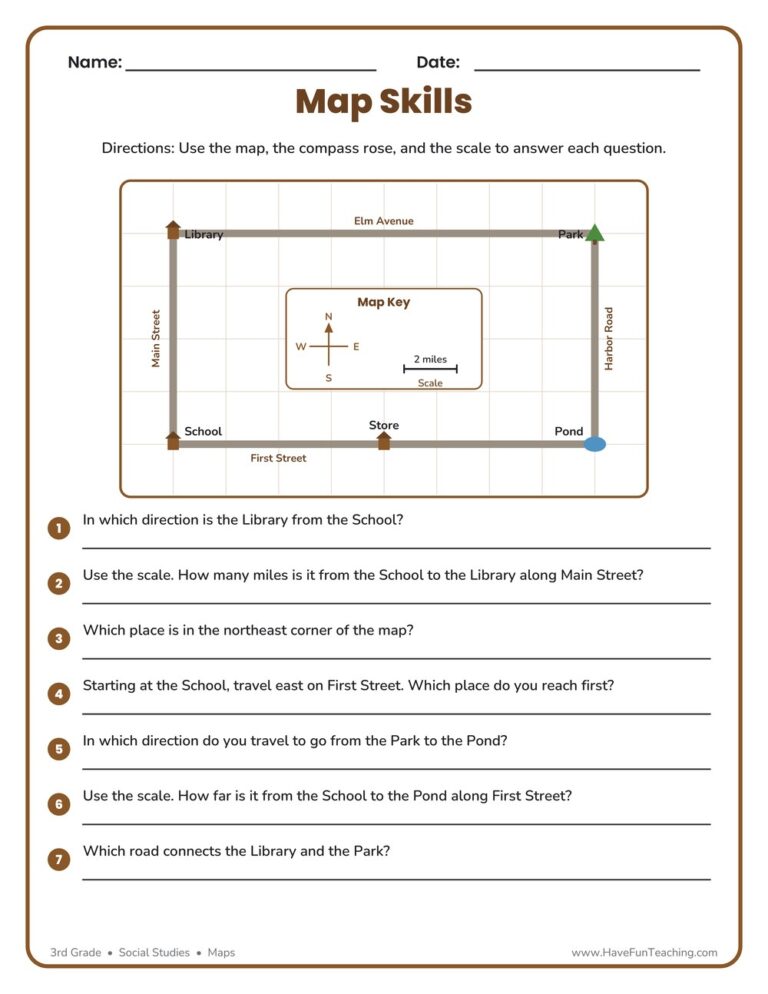
This Map Skills Worksheet gives 3rd graders a friendly town map for practicing the compass rose, legend, and scale to find places and measure distances. Includes a complete answer key for quick, no-prep social studies practice.

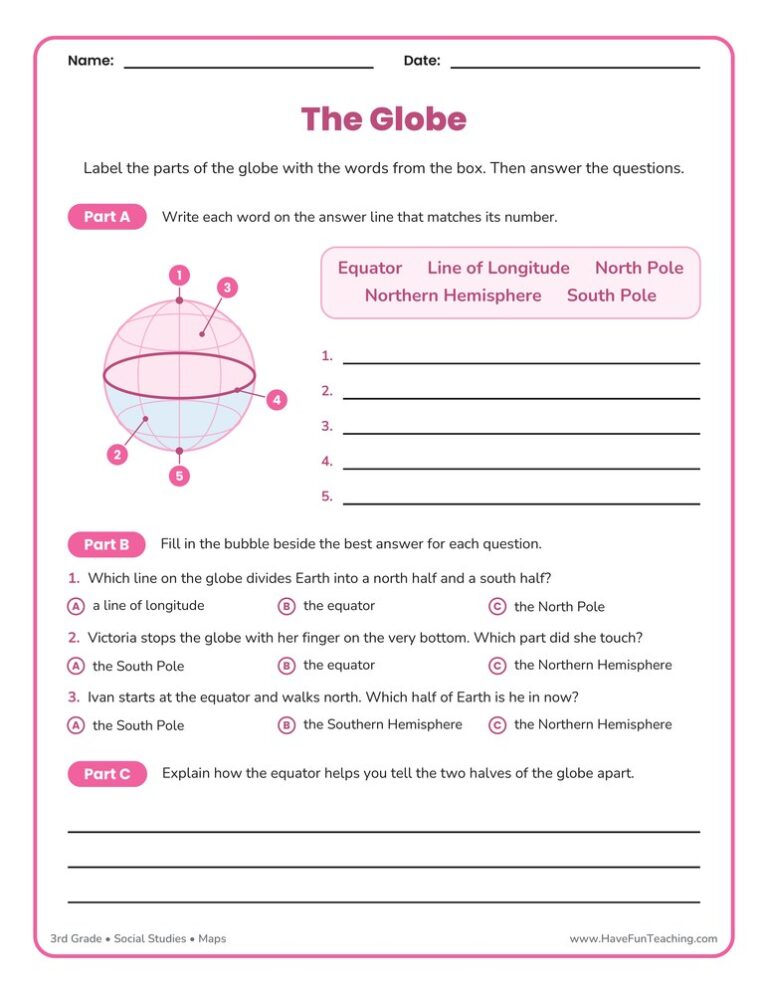
This globes worksheet has 3rd graders label the equator, the poles, the hemispheres, and a line of longitude on a clear globe diagram, then answer questions about them. Answer key included for fast, no-prep geography practice.
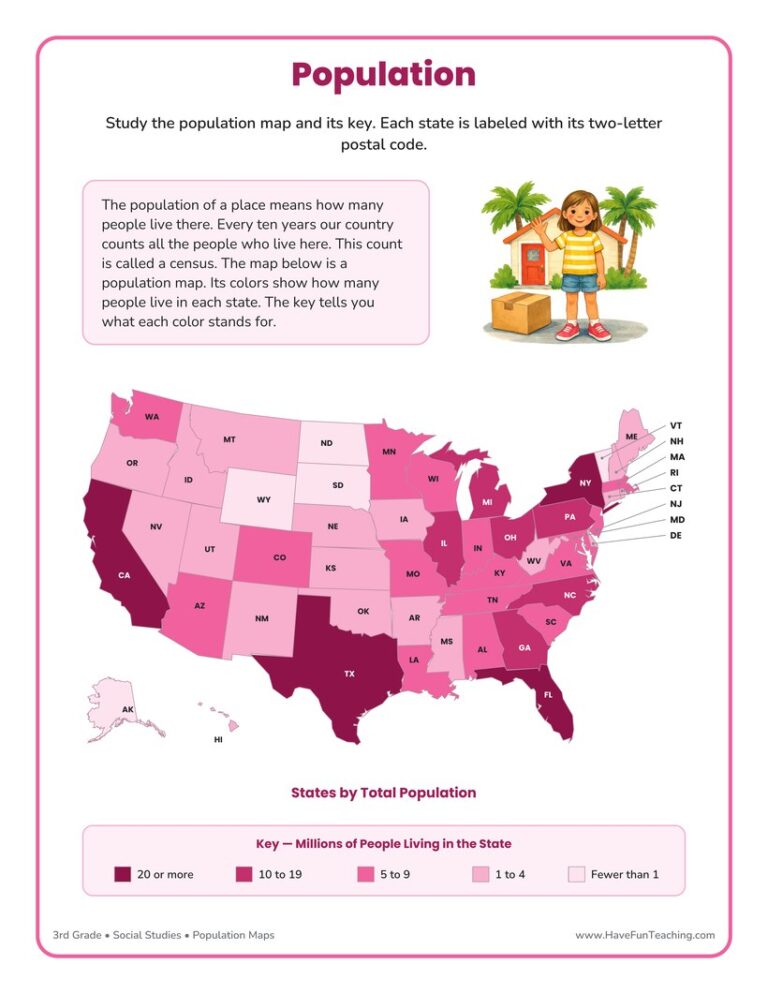
Students read a full-color U.S. population map worksheet, use the map key to compare states, and explain their thinking. Built for 3rd grade with a complete answer key - no-prep geography practice.

This climate map worksheet has 3rd Grade students read a color-coded map of the United States and use its key to name the climate of any state. Answer key included, so checking work takes seconds.
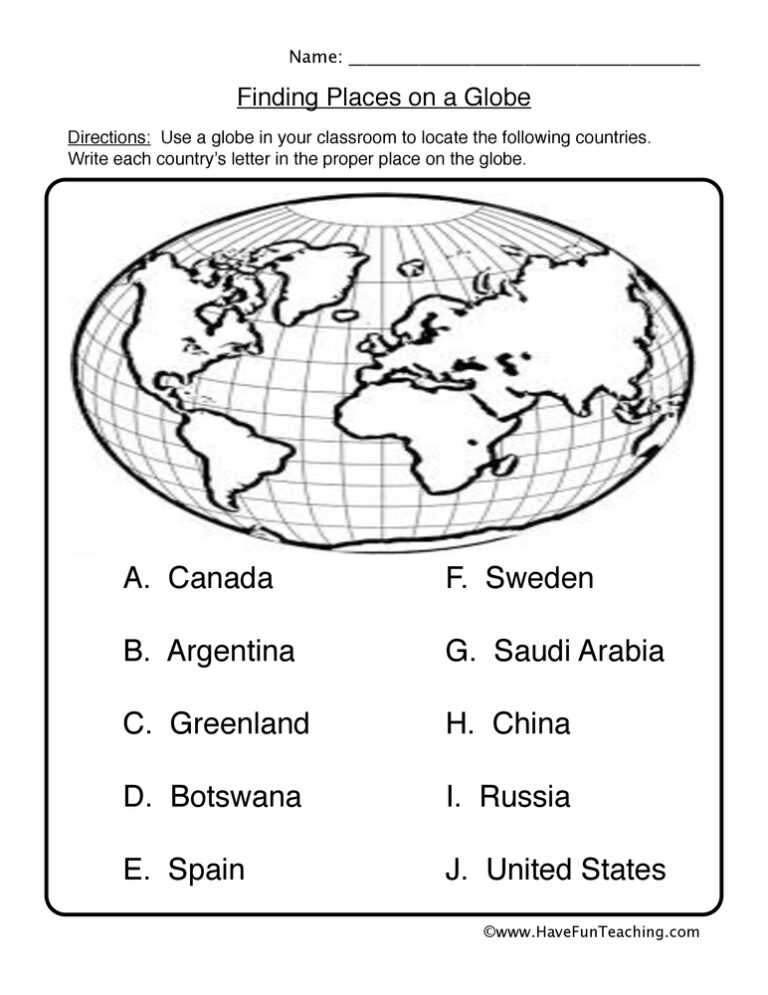
This Finding Places on a Globe Worksheet has 3rd graders label the North Pole, equator, prime meridian, and three continents on a real globe. An answer key is included, so checking work takes seconds.
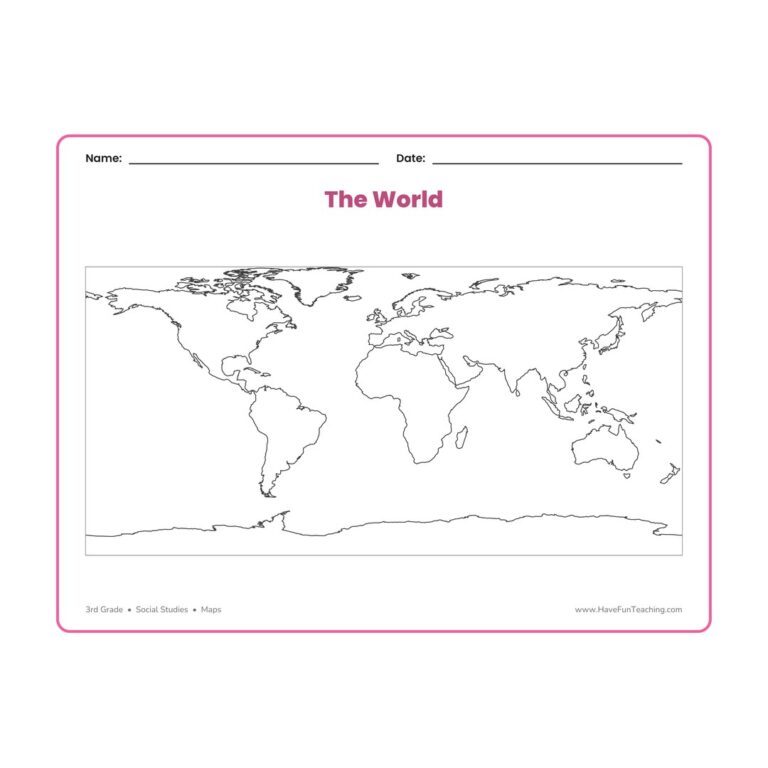
This world blank map worksheet gives 3rd grade students a clean outline map of every continent to label, color, and study, so geography lessons stay hands-on and easy to remember all year.
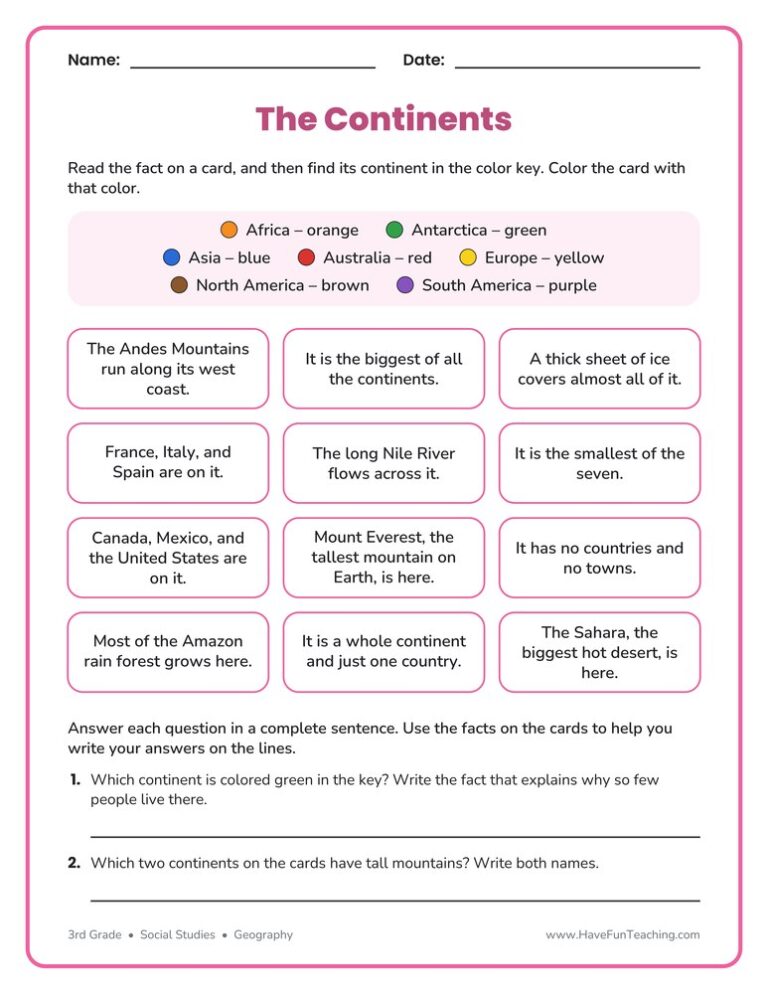
This Coloring Continents Worksheet lets 3rd graders color twelve fact cards by continent and answer two questions using the facts. An answer key is included, so checking the work is quick and easy.

This maps worksheet gives 3rd graders a printed town map with a key and a compass rose, then four reading questions and two route questions. An answer key is included, so map skills practice needs no prep.
Reviews
There are no reviews yet