

My Haiku Worksheet
This My Haiku Worksheet gives 4th grade students a model haiku to read, four questions about it, and a labeled frame for writing a haiku of their own. An answer key is included.
$6.97
Or free with a membership — members pay $3.33/mo for all 10,000+ resources. See plans
Want this one free?
Tell us where to send it and it’s yours — no card, no catch.
One free resource per teacher. We’ll also send free teaching ideas each week — unsubscribe anytime.
Teaching is easier with a membership
Unlimited printables, games & videos for PreK–6th — for your classroom or homeschool. Cancel anytime.
Start your 3-day free trial$0 today · cancel anytime · Instant access to 10,000+ resources
About this resource
Description
This My Haiku Worksheet gives students a clear, friendly way to meet one of the oldest forms of poetry and then write one of their own. A haiku is a short nature poem built on a fixed pattern of five, seven and five syllables, and that tight shape is exactly what makes it such a good writing lesson: every word has to earn its place. Students read a model haiku about a maple tree dropping its leaves into a creek, study how the poet packs a whole season into seventeen syllables, and then take the pattern for a walk with a topic of their own choosing.
The My Haiku Worksheet moves from reading to writing in three short parts. Part A prints the model poem beside an autumn illustration. Part B asks four multiple-choice questions about it, covering the sense the poet appeals to, the detail the text supplies, the line that carries the action, and the main idea of the poem as a whole. Part C turns the page over to the student with a topic line and three labeled writing rules, so the syllable pattern is right there while the drafting happens. An answer key is included on the last page.
What’s Included
- One printable two-page PDF worksheet, sized for standard letter paper
- An original model haiku with an autumn maple illustration
- Four multiple-choice questions on imagery, text evidence, structure and main idea
- A composing frame with a topic line and labeled five, seven and five syllable rules
- A full answer key on the final page
Three Reasons This Helps Kids
- It makes revision feel natural. A syllable count gives young writers an honest reason to swap a word, cut a word, or find a shorter way to say the same thing, which is the heart of revising.
- It builds close reading. Answering four questions about seventeen syllables forces students back into the text for evidence rather than guessing from memory.
- It lowers the risk of writing. Three short lines is a poem a reluctant writer can actually finish, so success arrives quickly and the next attempt feels possible.
Ideas for Teachers and Parents
- Clap the syllables of the model poem as a class before anyone picks up a pencil.
- Take the class outside for five minutes and have everyone collect three nature details to draft from.
- Post the finished haiku on a season wall and let students read each other’s aloud.
- Pair this 4th grade poetry worksheet with a second draft the following day, so students revise rather than start over.
Related Resources
What teachers say
Reviews
You must be logged in to post a review.

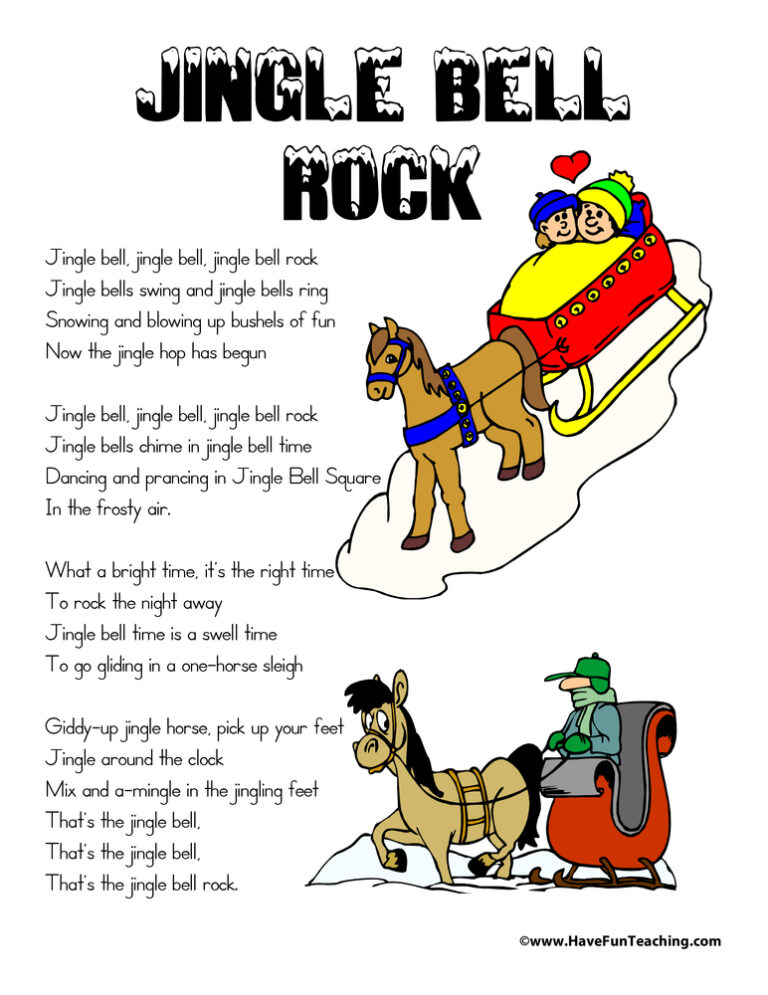
Using Jingle Bells Lyrics, students can follow along with the memorable song in order to know the which words to sing!

Using Reading Prose and Poetry Worksheet, students keep track of the stories they read this year by writing the title and the rating each book.
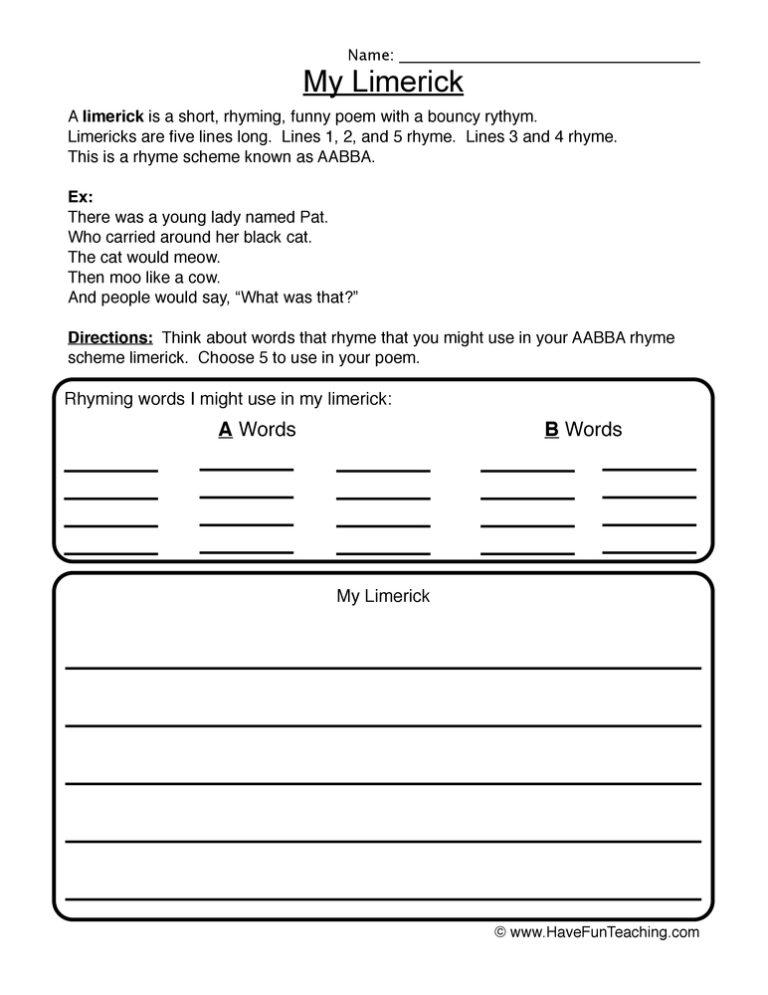
My Limerick Worksheet gives 4th graders a five-line poem to label, two rhyming word columns to fill, and space to write a limerick of their own. Answer key included for fast, no-prep poetry practice.

This shape poem worksheet guides 4th grade writers to brainstorm sensory words about a tree, then write a poem on lines shaped like a tree. A creative, printable poetry activity.
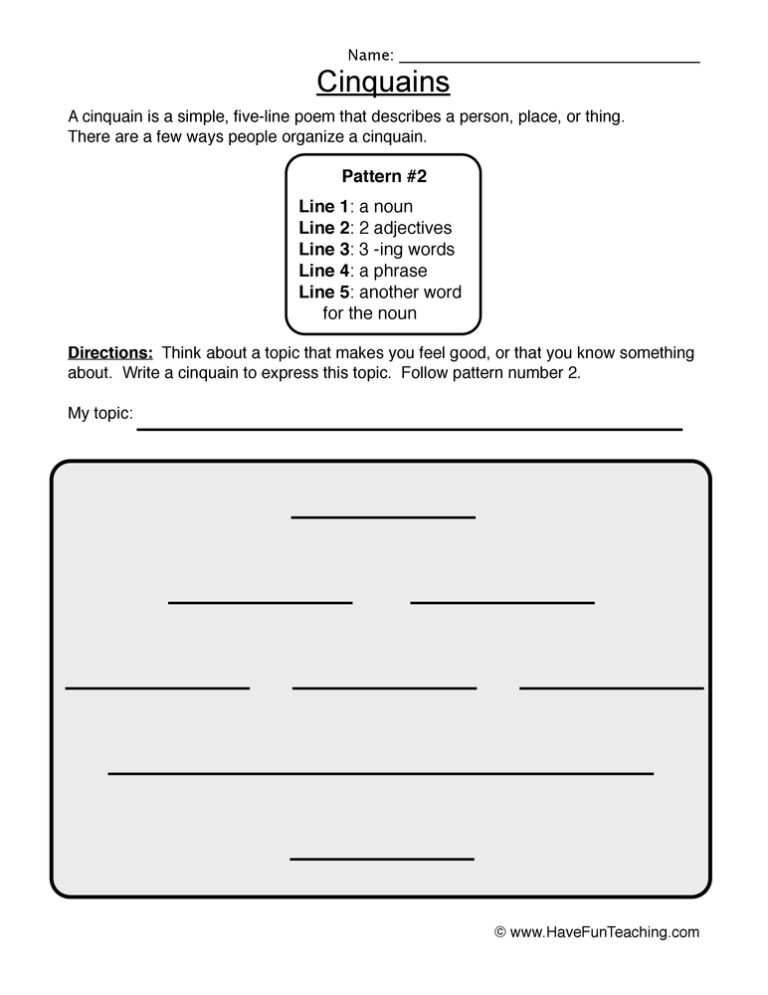
This Cinquain Worksheet - Pattern 2 walks 3rd grade writers through a model poem and then a five-line frame of their own. An answer key is included, so students leave with a finished poem and real confidence.

This my shape poem worksheet gives 4th grade students a model poem written in the outline of its subject, three questions about it, and a planning organizer for a poem of their own. An answer key is included.

The Prose and Poetry Worksheet gives 4th grade readers a one-page reading log with a reference strip, columns for the title and the form, and a five-star rating for every book they finish.

This haiku brainstorming worksheet has 2nd graders clap and sort nature words by syllables, then write a 5-7-5 poem about a picture. An answer key is included for easy checking.
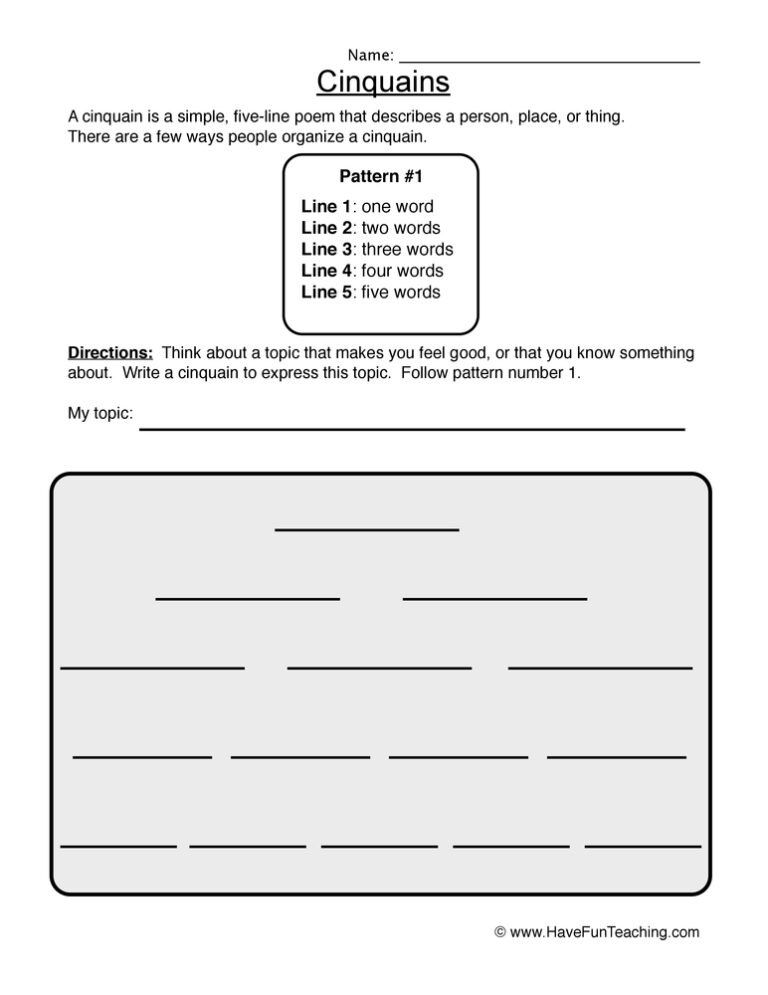
Cinquain Worksheet - Pattern 1 asks 2nd graders to count words, put a shuffled cinquain back in order, then write a five-line poem of their own. An answer key is included for quick, no-prep poetry practice.

Using this Three Amigos Poetry Drama Prose Activity, students sort the word cards by genre (prose, poetry, and drama). Use the sorted cards to label and fill out a Venn Diagram.
Using RL.4.5 Fourth Grade Common Core Lesson, students explain major differences between poems, drama, and prose, and refer to the structural elements of poemsand dramawhen writing or speaking about a text.




Reviews
There are no reviews yet