

Compare and Contrast Greek Myths Worksheet
This compare and contrast Greek myths worksheet helps 4th graders record how two myths are alike and different, then give a reason for the one they liked more.
$6.97
Or free with a membership — members pay $3.33/mo for all 10,000+ resources. See plans
Want this one free?
Tell us where to send it and it’s yours — no card, no catch.
One free resource per teacher. We’ll also send free teaching ideas each week — unsubscribe anytime.
Teaching is easier with a membership
Unlimited printables, games & videos for PreK–6th — for your classroom or homeschool. Cancel anytime.
Start your 3-day free trial$0 today · cancel anytime · Instant access to 10,000+ resources
About this resource
Description
Comparing two stories is one of the first places young readers have to hold two texts in mind at once, and Greek myths are a natural pair to practise with because so many of them share a shape: a hero, a challenge and a lesson at the end. This compare and contrast Greek myths worksheet gives students a clear, roomy page for that thinking, so they can move from simply retelling each myth to explaining how the two stories connect and where they split apart.
This 4th grade compare and contrast worksheet is a one-page graphic organizer that works with any two Greek myths your class is reading. Students write the title of each myth on the lines at the top. Next, they record three ways the myths are alike and three ways they are different, using signal words like both, but and too to make each sentence a real comparison rather than a list. The last box asks which myth they liked more and why, so students must support an opinion with details from the stories. Because every response comes from the myths the student chooses, answers will vary.
What’s Included
- 1 print-ready PDF worksheet
- 2 title lines for the myths being compared
- 3 numbered lines for how the myths are alike
- 3 numbered lines for how the myths are different
- 1 opinion-and-reason response box
Three things make this compare and contrast Greek myths worksheet worth using. First, it separates similarities and differences into their own numbered sections, which stops students from mixing the two into one muddled paragraph. Second, it works with any pair of texts, so it fits whichever myths are already in your reading unit or library. Third, the final question pushes students past recall into inference, because deciding which story worked better means weighing the characters, the problem and the ending.
Teachers and parents can build on the sheet in several ways. Read two myths aloud and fill in the first line of each section together before students finish on their own. Turn the numbered lines into a class chart and see which similarities come up most often. Partners can swap sheets and add one more difference the other reader missed. Students can also use a finished organizer as the plan for a short compare-and-contrast paragraph.
Related Resources
What teachers say
Reviews
You must be logged in to post a review.

This Compare and Contrast Similarities and Differences Graphic Organizer Worksheet gives 4th graders two short texts about bees and butterflies plus a clear organizer for sorting them. Answer key included, so checking work takes seconds.

This compare and contrast worksheet fiction and non-fiction pairs a sea otter article with a short story so 4th graders can chart what is alike and different. Answer key included for fast, no-prep paired-text practice.

Using Compare and Contrast Across Cultures Activity, students compare and contrast two or more versions of the same story by different authors or from different cultures.

Using this Comparing Seasons Venn Diagram Worksheet, students compare two seasons using a Venn Diagram.
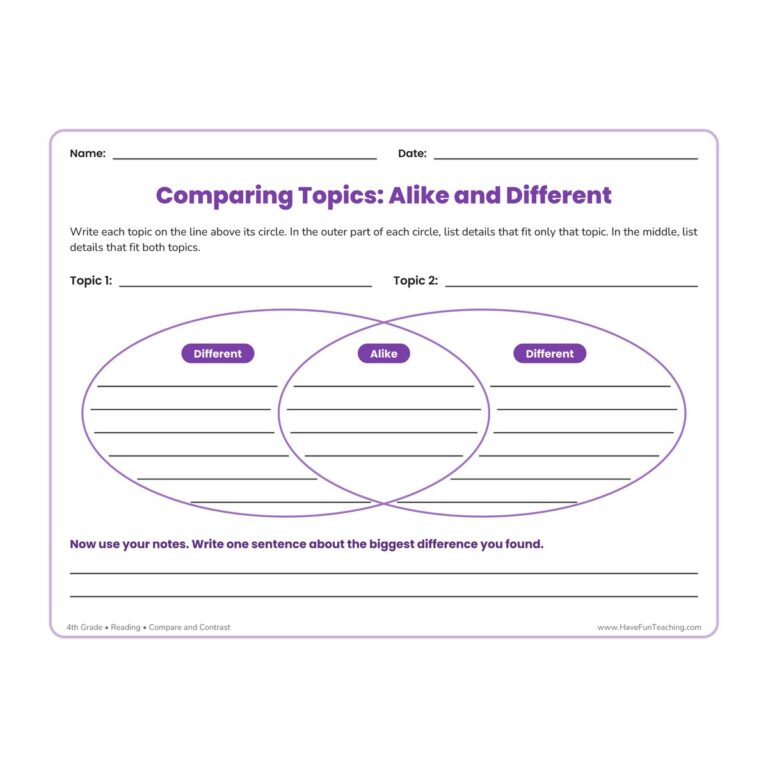
This Comparing Topics Alike and Different Graphic Organizer Worksheet gives 4th graders a two-circle Venn to sort details for any two topics, then a prompt to explain the biggest difference in writing.
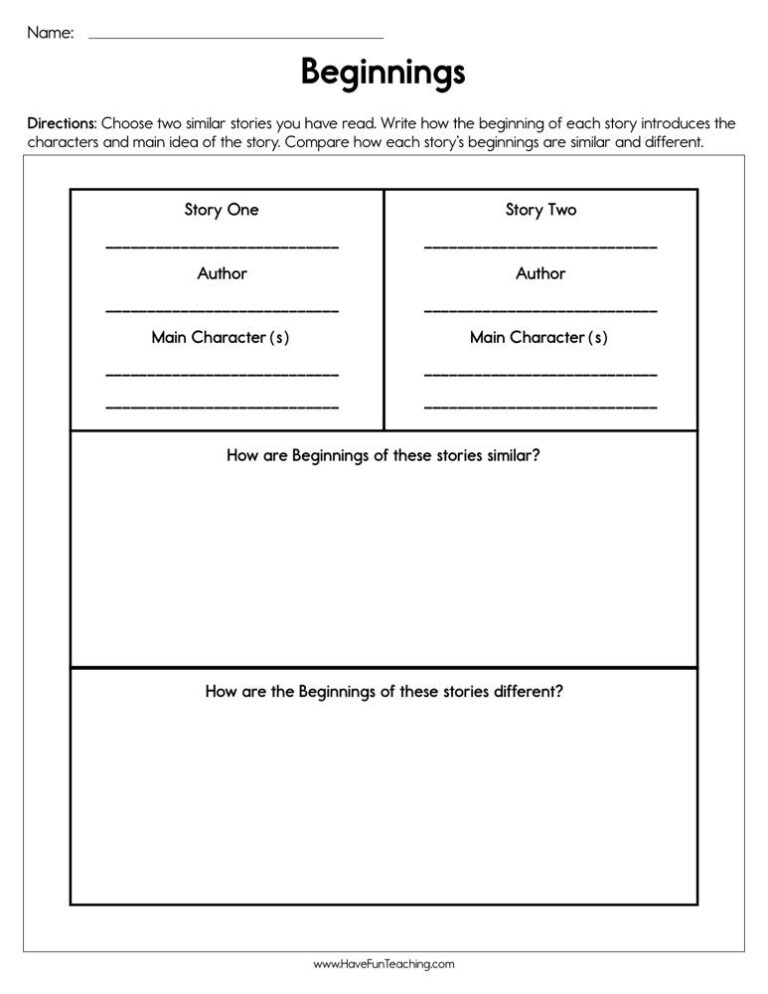
Using Beginnings Worksheet, students write how the beginning of each story introduces the characters and main idea of the story to compare the two similar stories read.

Using Determining Theme Activity, students determine the theme of a story or poem from details in the text to learn a lesson that can be used in their life.

Using Identifying Theme Activity, students determine the theme of a story, drama, or poem from details in the text in order to apply to their own life.

Using Math Same Different Worksheet, students look at the two examples and determine if they represent the same or different thing.

Using the Comparing Themes of Two Stories Activity, students use a Venn Diagram to compare and contrast the theme of two passages.

Using this Compare and Contrast Graphic Organizer Activity, students organize their ideas using any of the provided graphic organizers in order to compare and contrast the structure of events, ideas, concepts, and information in two or more texts.
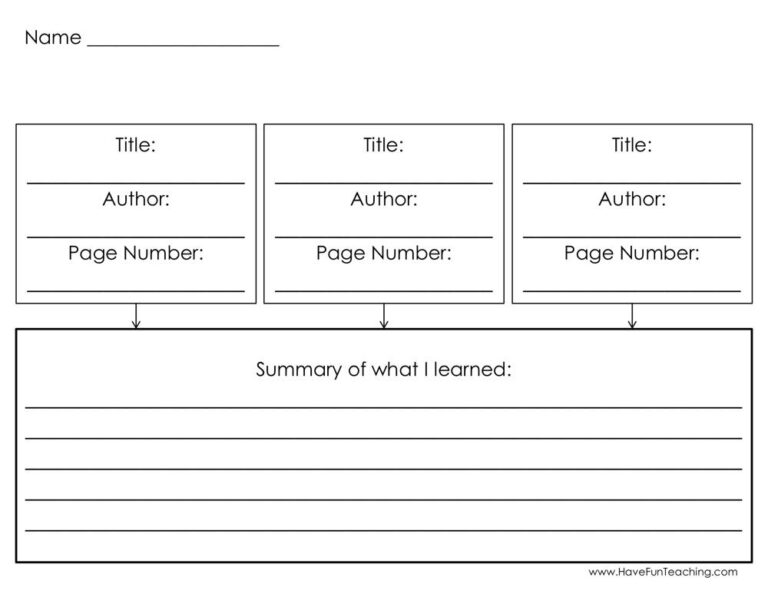
With thisComparing Three Texts Graphic Organizer Worksheet, your students will compare three texts they are reading. They will then write a brief summary
Reviews
There are no reviews yet