
Reading Fluency Checklist Worksheet
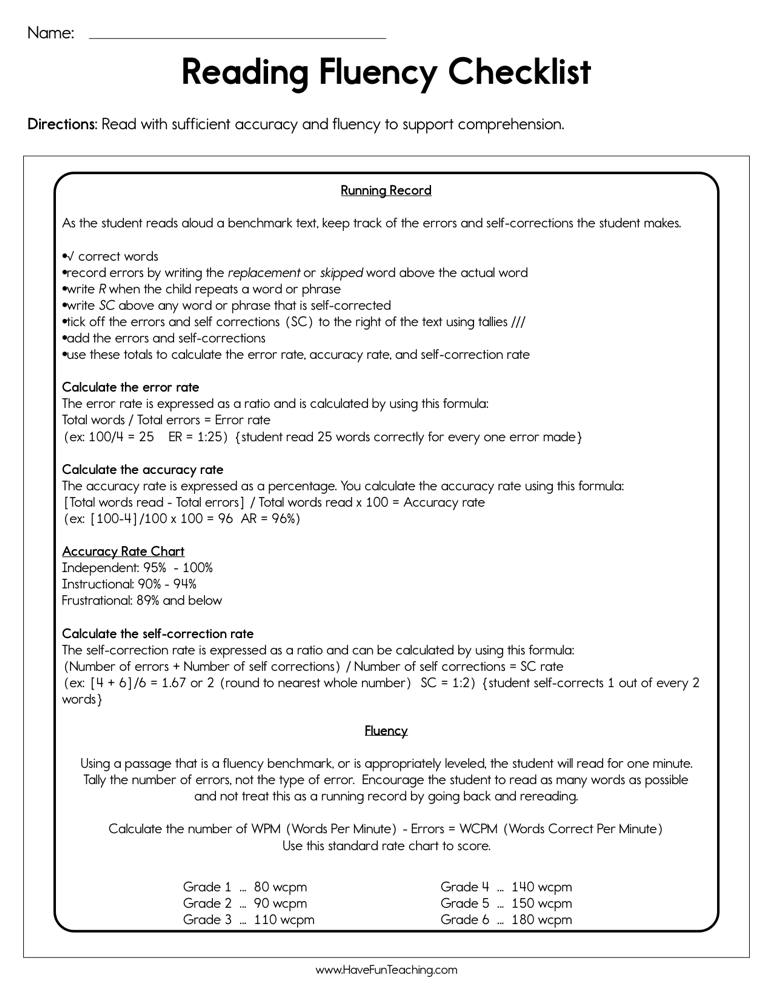
This Reading Fluency Checklist Worksheet gives 1st Grade teachers a one-page conference tool: running record marks, fluency look-fors, accuracy bands and end-of-year rate targets. Print one for every reading conference.
$6.97
Or free with a membership — members pay $3.33/mo for all 10,000+ resources. See plans
Want this one free?
Tell us where to send it and it’s yours — no card, no catch.
One free resource per teacher. We’ll also send free teaching ideas each week — unsubscribe anytime.
Teaching is easier with a membership
Unlimited printables, games & videos for PreK–6th — for your classroom or homeschool. Cancel anytime.
Start your 3-day free trial$0 today · cancel anytime · Instant access to 10,000+ resources
About this resource
Description
Reading fluency is what lets a first grader stop working on every single word and start hearing the story. A fluent reader moves in phrases, pauses at commas, stops at periods and lifts the voice at a question mark, and that smooth delivery is what makes comprehension possible. This Reading Fluency Checklist Worksheet gives the teacher a single page to hold while a student reads aloud, so accuracy and expression are recorded as they happen instead of remembered afterward.
Use this first grade fluency checklist during a one-minute oral reading conference. Choose a benchmark passage, mark your own copy with the running record codes printed at the top of the page, then tick each fluency behavior you actually hear. The accuracy bands and the end-of-year words-correct-per-minute targets sit at the bottom of the same sheet, so you can place the reading at independent, instructional or needs-support level before the student leaves the table.
What’s Included
- 1 print-ready PDF worksheet
- A running record mark legend with 5 scoring codes
- A 7-item fluency observation checklist
- An accuracy rate guide with 3 reading levels
- End-of-year words-correct-per-minute targets for grades 1 through 5
Three things make this Reading Fluency Checklist Worksheet worth keeping in a conference folder. First, it turns a vague impression into evidence, because a checked box is something you can show a parent or a reading specialist. Second, it puts the marks, the look-fors and the rate targets in one place, so nothing has to be looked up mid-conference and the student is not left waiting. Third, running the same page across several weeks makes growth visible: the boxes that were empty in September start filling in, and the words-correct-per-minute number climbs toward the grade target.
Try reading the same short passage twice in a week and comparing the two checklists side by side. Echo reading, where you read a sentence and the child reads it right back, builds phrasing quickly, and so does letting a child rehearse a page before performing it for the class. Parents can use the same look-fors at home by listening for the pauses rather than correcting every word. Poetry, readers theater scripts and song lyrics all give a child a natural reason to reread, which is the single fastest route to fluent, expressive reading.
Related Resources
What teachers say
Reviews
You must be logged in to post a review.

This 1st Grade Decoding Words Worksheet lets young readers sound out decodable words aloud and circle the correctly spelled word. Answer key included — a quick, no-prep way to build reading fluency and phonics confidence.

This Snake Rebus Worksheet gives 1st graders a picture-supported story to read aloud, then four pictures to label with the matching word. Answer key included, so fluency practice takes almost no prep.

This reading fluency worksheet gives 2nd Grade students a 129-word passage to read out loud in one minute, with a running word count and a six-row chart for tracking their score week by week.

Use this Accuracy and Fluency Reading Assessment Worksheet to record a 1st grade reading conference. Printed formulas score accuracy, self-correction, and words correct per minute in seconds.
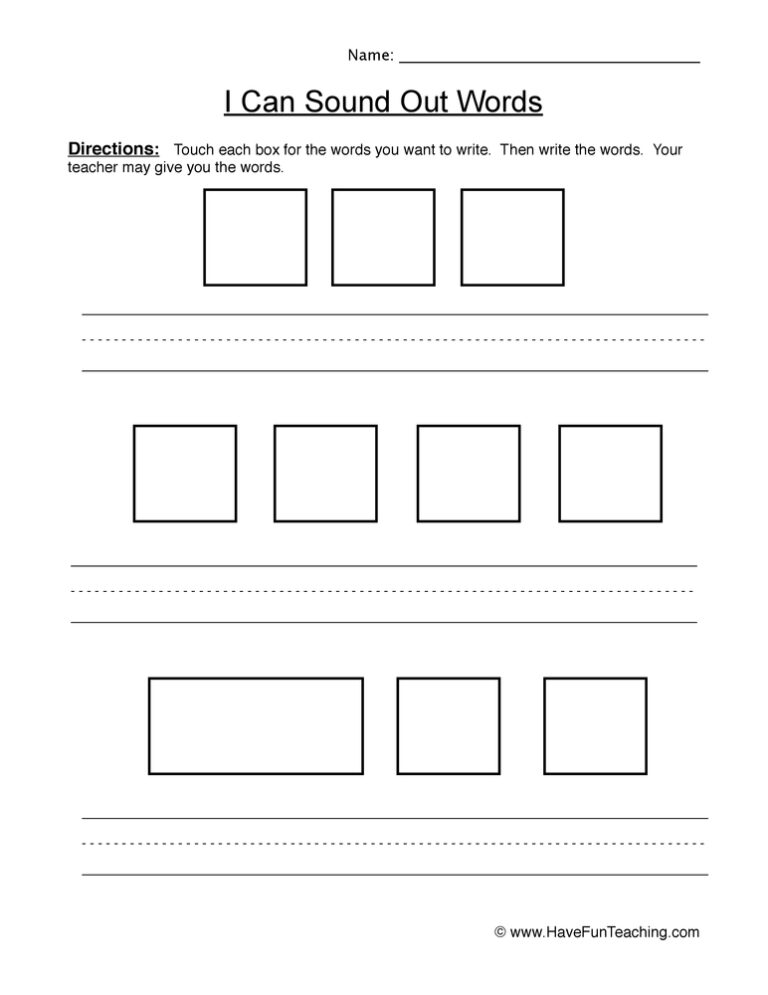
This sound out words worksheet gives 1st grade readers four picture words to split into sound boxes, three words to count letters and sounds, and an answer key for easy checking.

This reading with fluency worksheet gives 1st graders a short timed story, a running word count, and a three-try practice log. Answer key included, so every one-minute read shows real, chartable progress.

The I Can Read Worksheet has 1st grade students put mixed-up words in order and write real sentences with capitals and periods. An answer key is included for fast, easy checking.

This reading fluency and accuracy worksheet helps first grade teachers keep a running record of errors, self-corrections and words correct per minute while a student reads aloud.
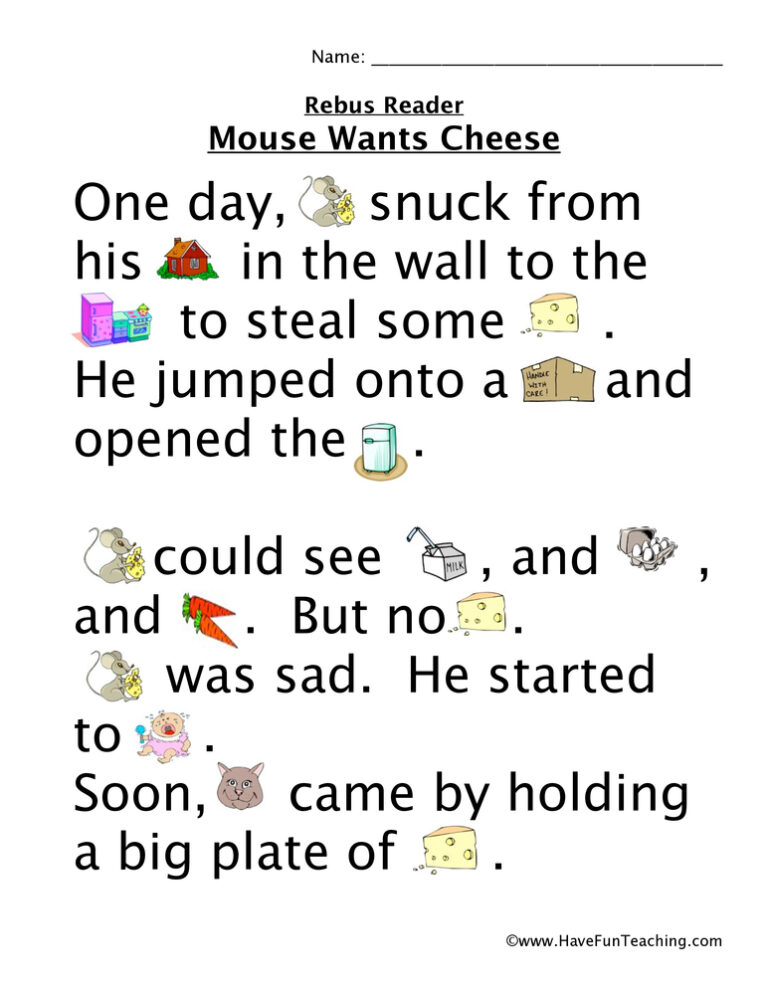
This Mouse Wants Cheese Rebus Worksheet lets 1st graders read a short story with pictures standing in for three words, then write each word on its own card. Answer key included for quick, no-prep fluency practice.
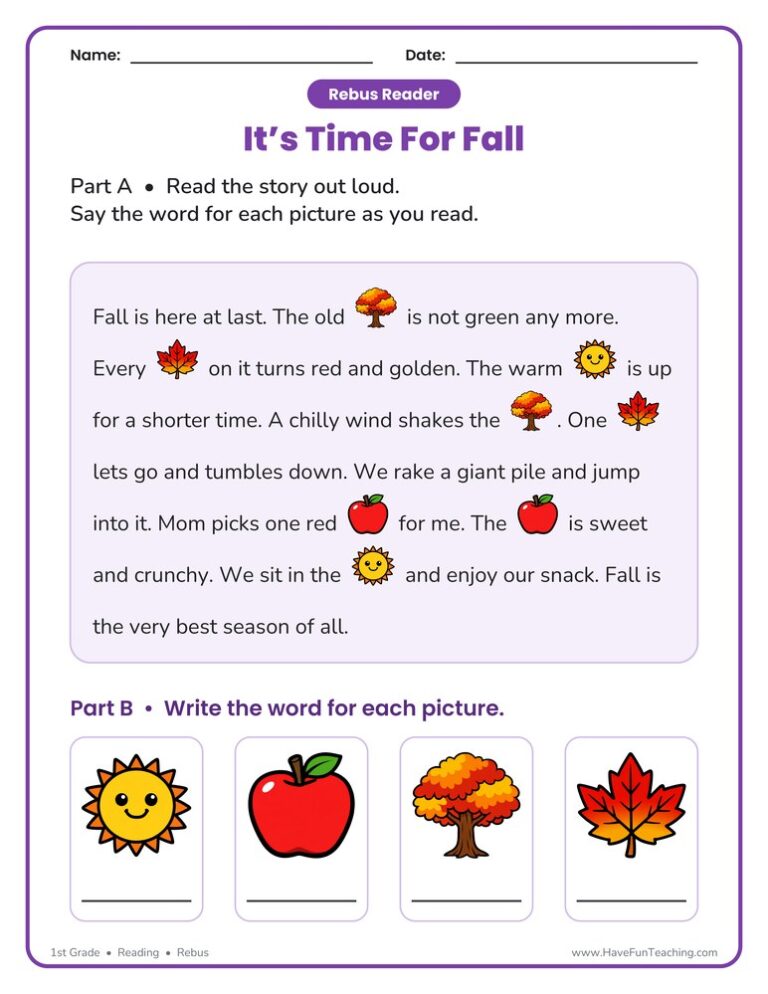
This Time for Fall Rebus Worksheet gives 1st graders an autumn story to read aloud, with pictures standing in for tree, leaf, sun, and apple. An answer key is included for quick fluency practice.
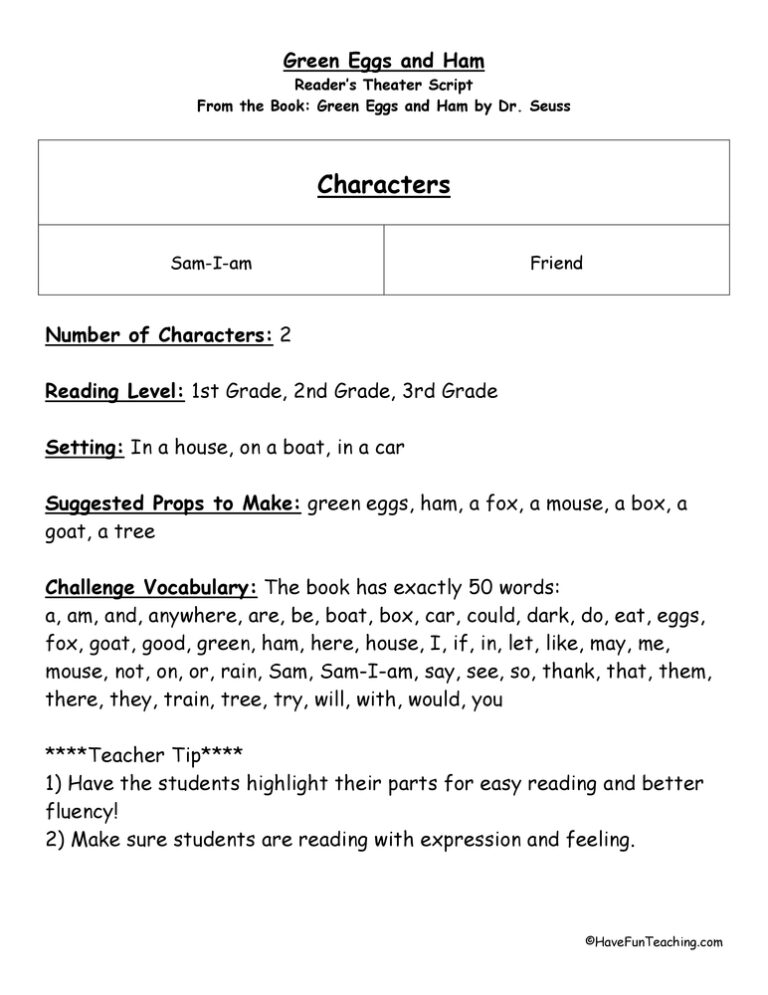
Using Green Eggs and Ham Reader's Theater, students act out different parts in the story Green Eggs and Hall to learn more about Dr. Seuss.

Using this One to One Reading Practice Worksheet, students practice reading these sentences one word at a time to build reading accuracy and fluency skills.

Reviews
There are no reviews yet