
Story Map Graphic Organizer
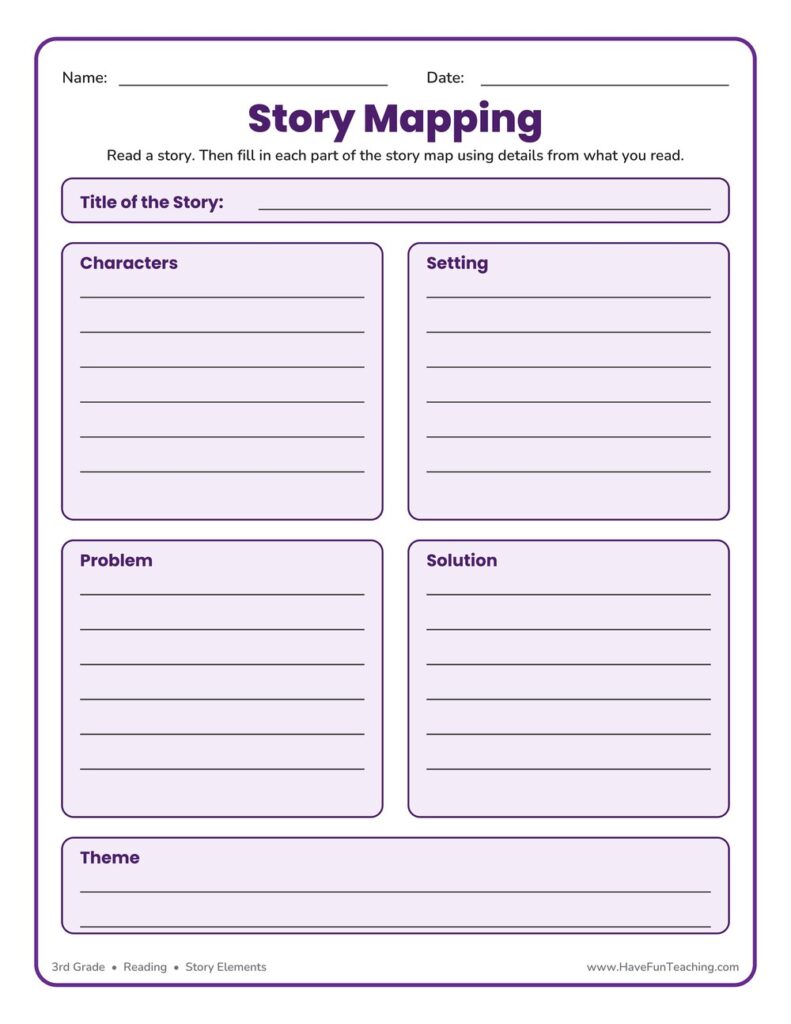
This 3rd grade Story Map Graphic Organizer Worksheet has students record a story’s characters, setting, problem, solution, and theme in one clear, reusable page that strengthens reading comprehension.
$6.97
Or free with a membership — members pay $3.33/mo for all 10,000+ resources. See plans
Want this one free?
Tell us where to send it and it’s yours — no card, no catch.
One free resource per teacher. We’ll also send free teaching ideas each week — unsubscribe anytime.
Teaching is easier with a membership
Unlimited printables, games & videos for PreK–6th — for your classroom or homeschool. Cancel anytime.
Start your 3-day free trial$0 today · cancel anytime · Instant access to 10,000+ resources
About this resource
Description
This Story Map Graphic Organizer Worksheet helps students break down and truly understand the parts of any story they read. Using this story map graphic organizer worksheet, learners record the characters, setting, problem, solution, and theme in one clear, easy-to-follow layout. It is a flexible reading tool that works just as well with picture books, chapter books, and short passages.
The Story Mapping worksheet gives students a single, uncluttered page with a labeled box for each story element and a space to write the title of the story. After reading, students fill in each section using details from the text: naming who the story is about, where and when it takes place, the main problem, how that problem is solved, and the lesson or theme. Because it is open-ended, the same organizer can be reused again and again with different books all year long.
What’s Included:
- One printable Story Mapping graphic organizer (PDF)
- Labeled sections for Title, Characters, Setting, Problem, Solution, and Theme
- Plenty of ruled writing space in every box
This story map graphic organizer worksheet builds stronger reading comprehension in three ways. First, it helps students identify and organize the key elements of a story so they read with purpose. Second, mapping the problem and the solution deepens their understanding of plot and cause and effect. Third, writing out the theme pushes readers to think beyond the events and consider the story’s bigger meaning.
Teachers and parents can use this worksheet during guided reading, as an independent reading response, or in a literature circle. Try modeling it together with a read-aloud first, then let students complete one on their own. It also makes a quick, meaningful comprehension check and a great springboard for retelling and summary writing.
Related Resources:
What teachers say
Reviews
You must be logged in to post a review.

This who what when where why graphic organizer worksheet helps 3rd graders record the five key details — who, what, when, where, and why — from any story or article. A clear, reusable note-taking template.

A Who What When Where Why Summary Graphic Organizer Worksheet that walks 3rd graders from a short story to the five W answers and on to a written summary. Answer key included, so students get quick feedback and real confidence.

This Fictional Narrative Worksheet gives 3rd Grade students one page to plan a story from a book they love, with lines for the main idea, four events and a closing statement, so drafting starts easy.

Using Feeling Words Activity, students read Amy Goes to First Grade to find words and phrases that describe Amy's feelings on the first day of school.
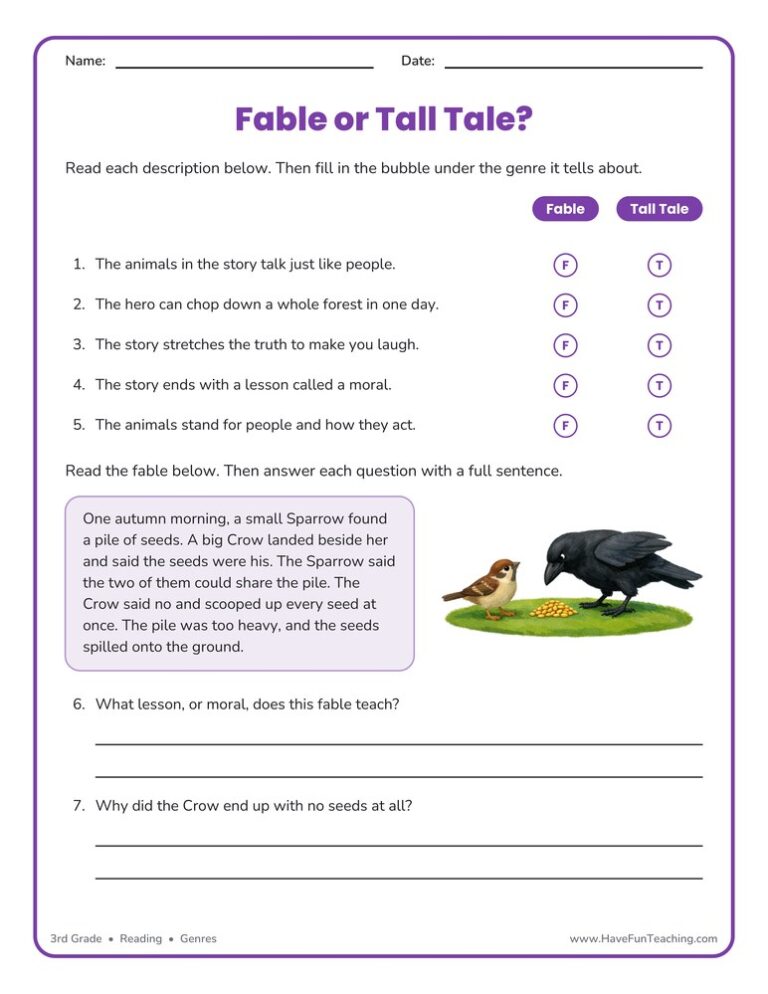
This Fables Tall Tales Worksheet helps 3rd graders sort genre clues and read an original fable about a greedy crow. An answer key is included, so folklore practice takes no prep at all.
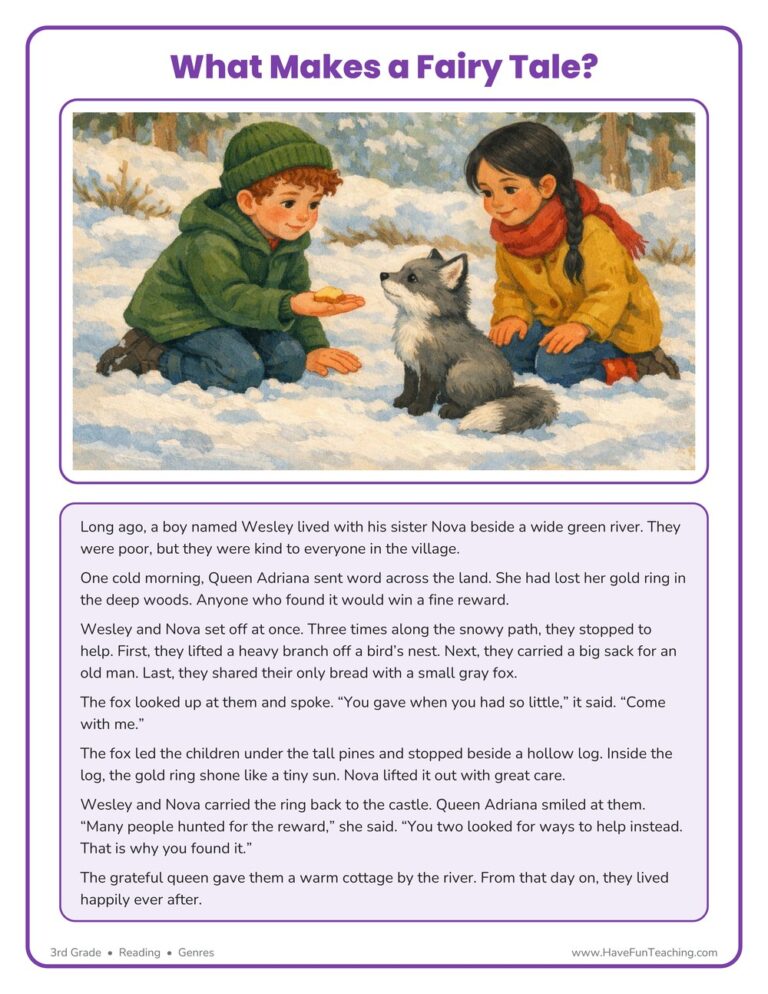
The Fairy Tales Elements Worksheet gives 3rd Grade readers an original fairy tale, a six-row elements chart, and two written responses, with an answer key included, so a genre lesson is ready to hand out.
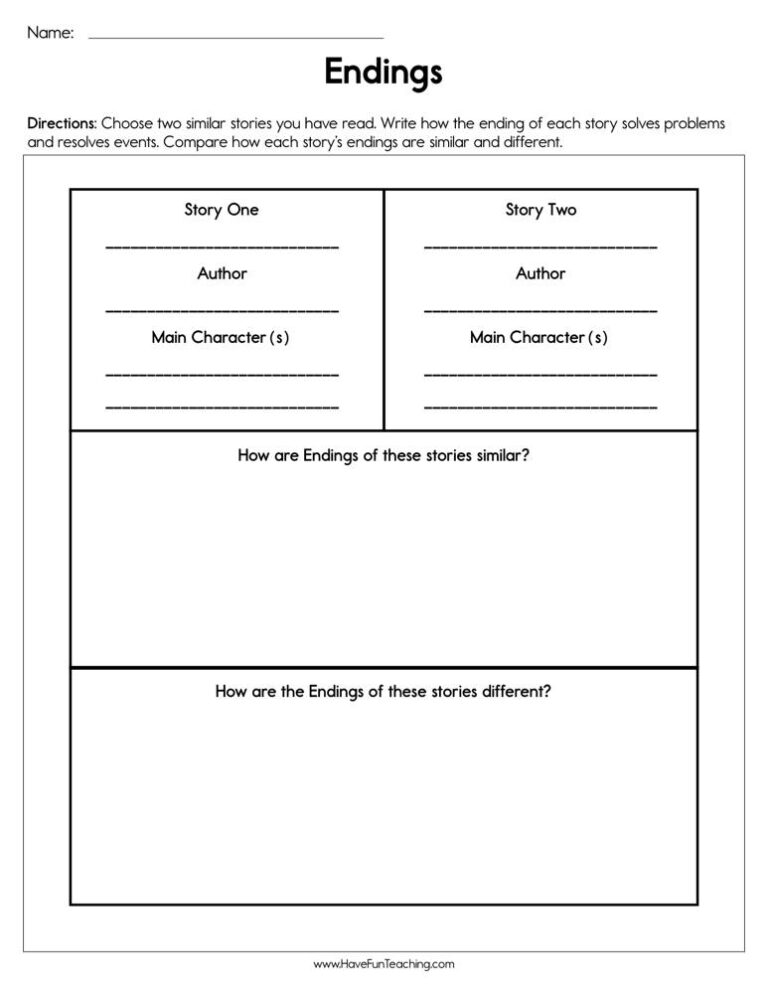
This endings worksheet helps 3rd grade students compare how two stories they have read end, explaining each ending and how the two are alike and different to build strong reading skills.

The Who Is Talking Now Worksheet gives 3rd Grade readers three short stories and asks who is telling each one. An answer key is included, so students build point of view skills with quick feedback.

This story map worksheet lets 3rd grade students record the characters, setting, problem, main events, and solution of any story they read, building stronger comprehension and retelling skills.
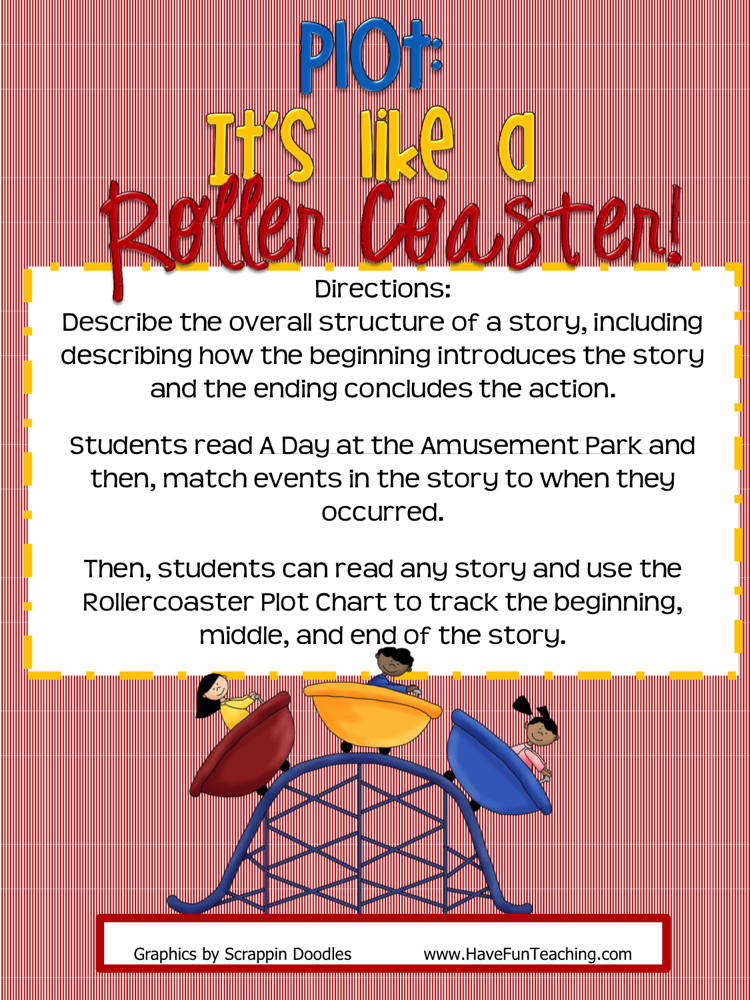
Using Beginning Middle End Plot Activity, students describe the overall structure of a story, including describing how the beginning introduces the story and the ending concludes the action.
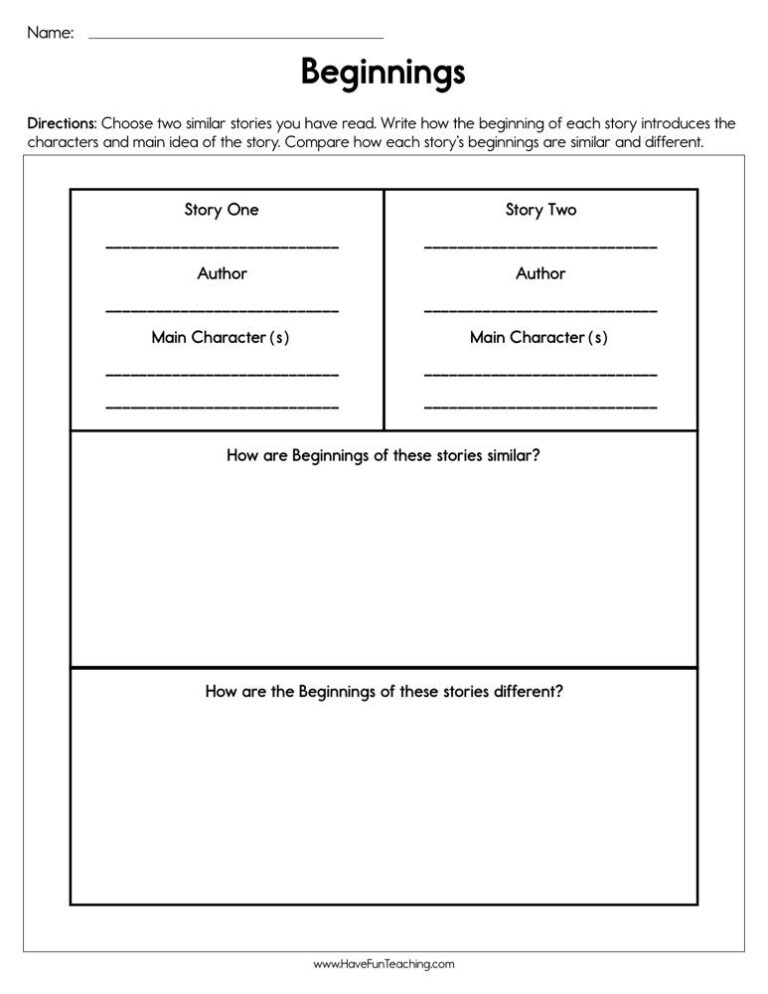
Using Beginnings Worksheet, students write how the beginning of each story introduces the characters and main idea of the story to compare the two similar stories read.
Using this Story Elements Song (MP3), your students learn about how to find examples of story elements in order to build comprehension as they read.
Reviews
There are no reviews yet