

Write Cause and Effect Worksheet
This Write Cause and Effect Worksheet has 3rd graders write the missing cause or effect, match five pairs, and compose their own sentence. Answer key included — no-prep practice that makes the skill stick.
$6.97
Or free with a membership — get this and 10,000+ resources. See plans
Teaching is easier with a membership
Unlimited printables, games & videos for PreK–6th — for your classroom or homeschool. Cancel anytime.
Start your 3-day free trialNo commitment · Cancel anytime · Instant access to 10,000+ resources
About this resource
Description
Cause and effect is the link between why something happened and what happened as a result, and it is one of the reading skills third graders lean on in every subject. Once students can spot the signal words — so, because, since, as a result — they can follow a story, a science explanation, or a history lesson far more closely. This Write Cause and Effect Worksheet asks students to do more than circle an answer: they write the cause or the effect in their own words, which is where real understanding shows up.
This 3rd grade cause and effect worksheet works through the skill in three steps. Part A gives four sentences and asks students to write the missing cause or effect on the line. Part B is a matching section where five causes are paired with the effect each one produced. Part C moves to independent writing: students study the garden picture, write one sentence of their own using so or because, and then supply an effect for a cause the sheet provides. Use it as guided practice, a reading center, homework, or a quick check before moving on.
What’s Included
- 1 print-ready PDF worksheet
- Answer key
- 4 write-the-missing-part sentences, 5 cause and effect matching pairs, and 2 independent writing prompts
There are three reasons this Write Cause and Effect Worksheet helps students learn the skill. First, it separates the two ideas clearly, so students stop guessing which half of a sentence is the cause and which is the effect. Second, the matching section builds speed and confidence with familiar, everyday events before the writing section raises the difficulty. Third, the final prompts ask students to produce their own cause and effect sentence, which is the step that turns recognition into something they can actually use in their writing.
Teachers and parents can keep the practice going in simple ways. Pause during a read-aloud and ask what caused a character to make a choice. Post a signal-word chart with so, because, since, and as a result, and have students add sentences they find in their own books. Try a quick partner game where one child names a cause and the other names a likely effect. Everyday moments work too — ask why the ice melted on the porch or why the seeds in the classroom cup sprouted, and let students answer in a full cause and effect sentence.
Related Resources
What teachers say
Reviews
You must be logged in to post a review.

Using this Find the Cause Cause and Effect Worksheet, students read each given effect and give a possible cause that could have occurred as a result.
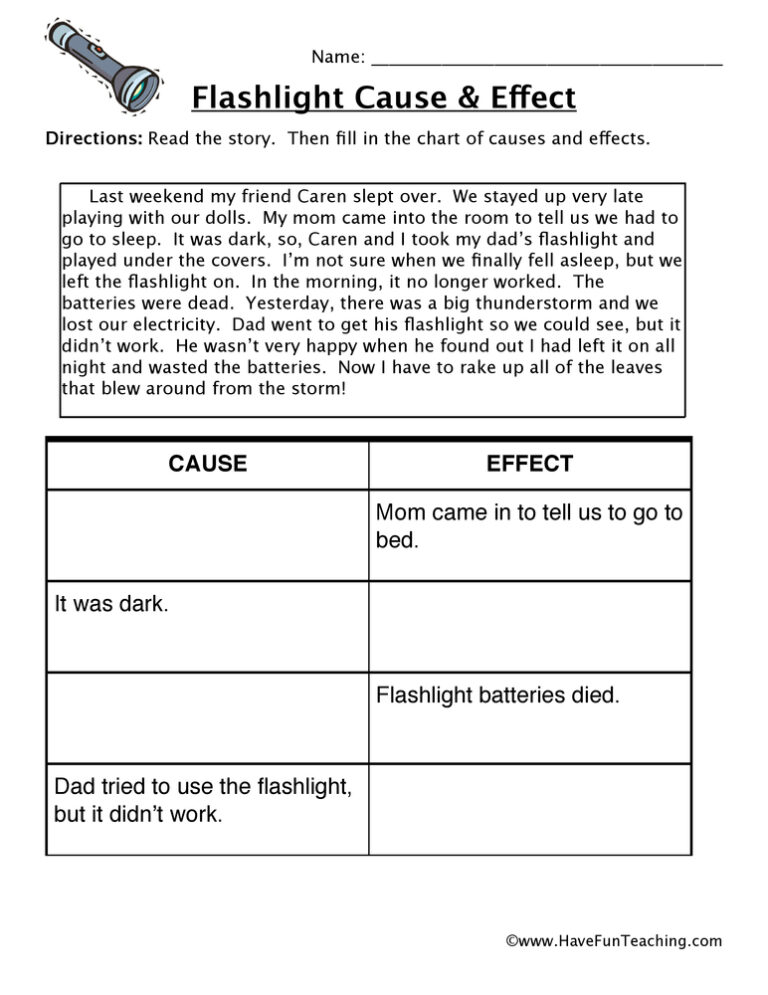
Using this Flashlight Cause and Effect Worksheet, students identify the cause and effect after reading a story about Caren's sleepover.

Using this Why did it happen? Cause and Effect Worksheet, students read two sentences and combine them to show both the cause and effect.
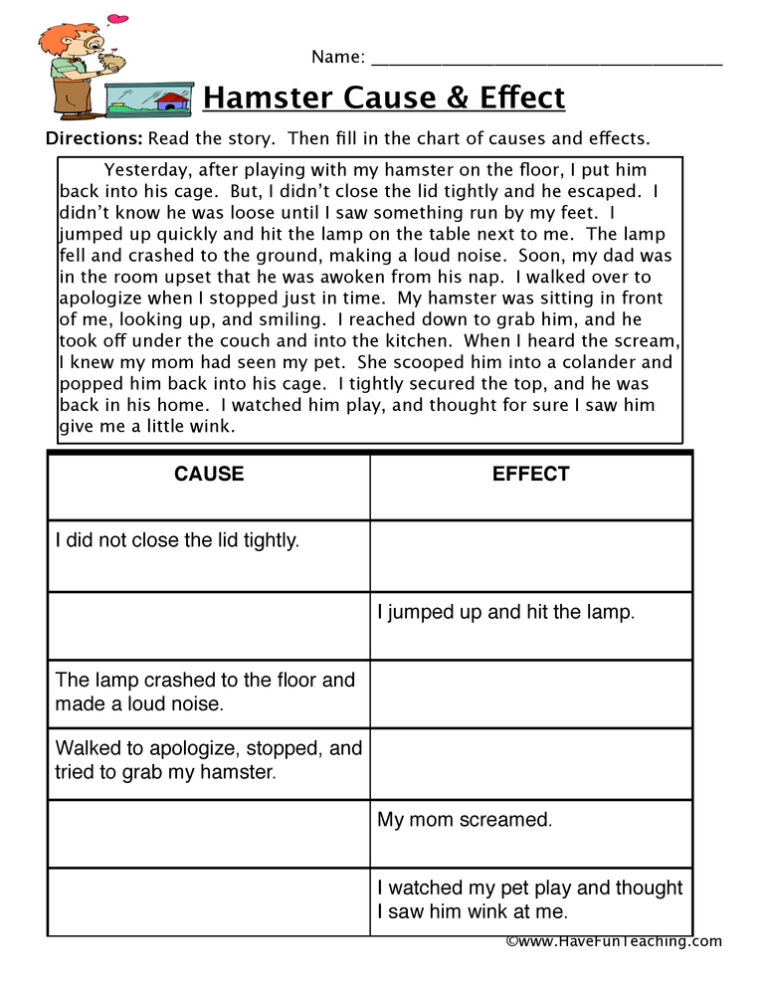
Using this Hamster Cause and Effect Worksheet, students identify the cause and effect after reading a story about a hamster.

Using this What Happened? Cause and Effect Worksheet, students read two sentences and combine them to show both the cause and effect.

This cause and effect graphic organizer worksheet helps 3rd graders read a short story and match each cause with its effect. Includes a complete answer key for quick, no-prep reading practice at home or school.
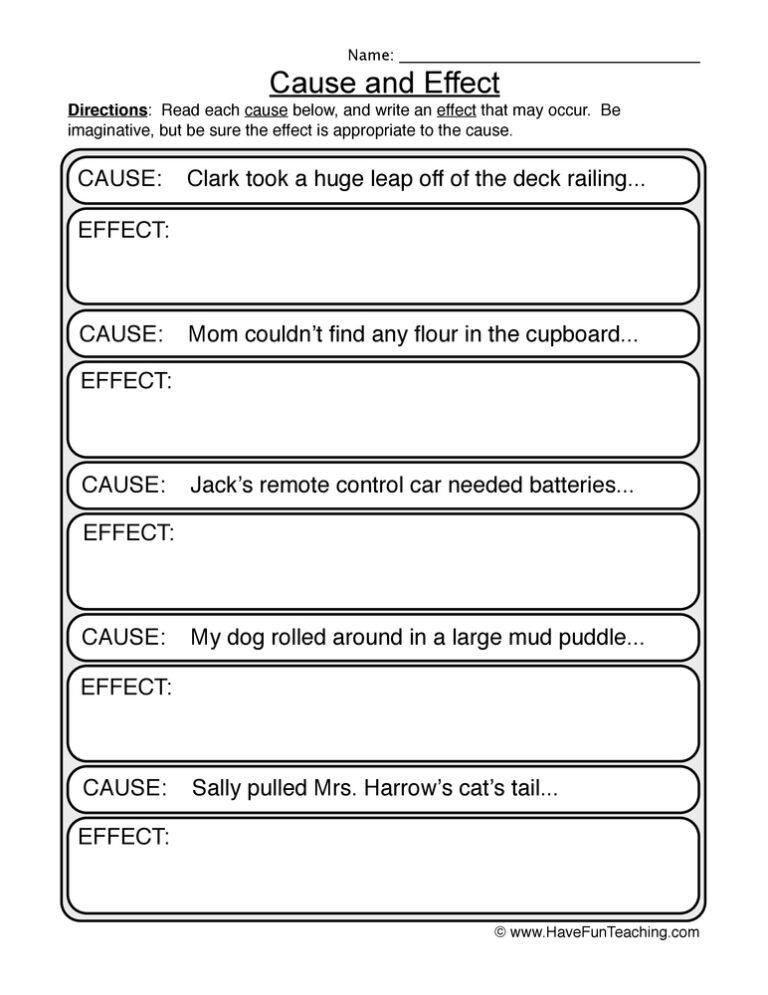
Using this Find the Effect Cause and Effect Worksheet, students read each given cause and give a possible effect that could have occurred as a result.
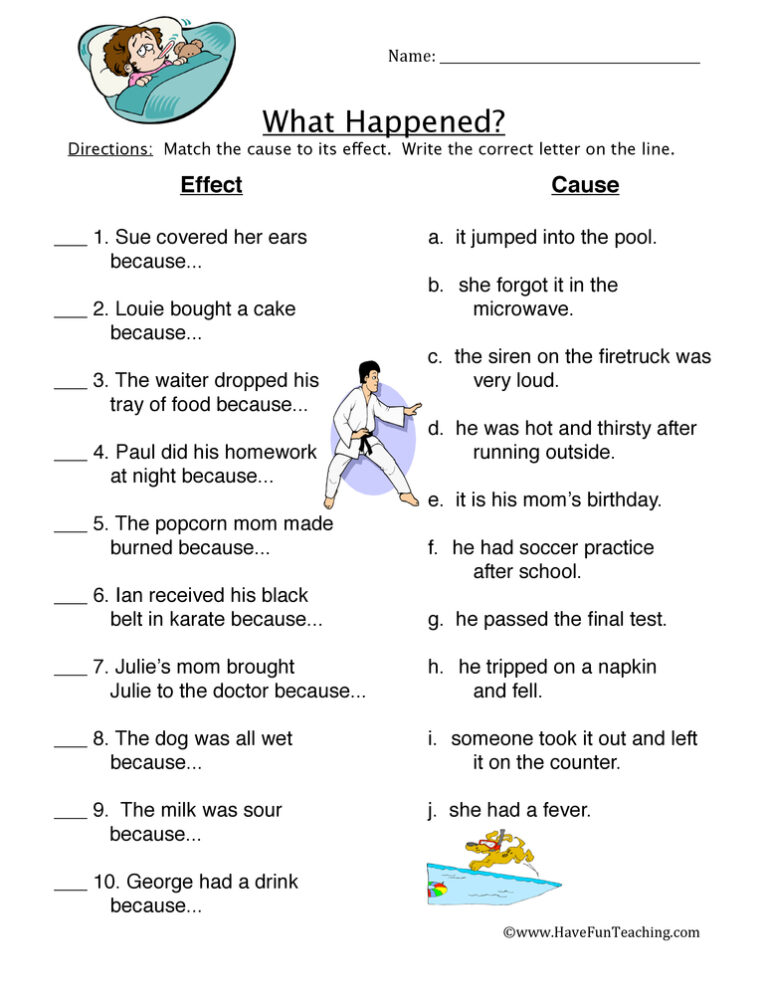
Using this What Happened Cause Effect Worksheet, students match the cause to the effect.
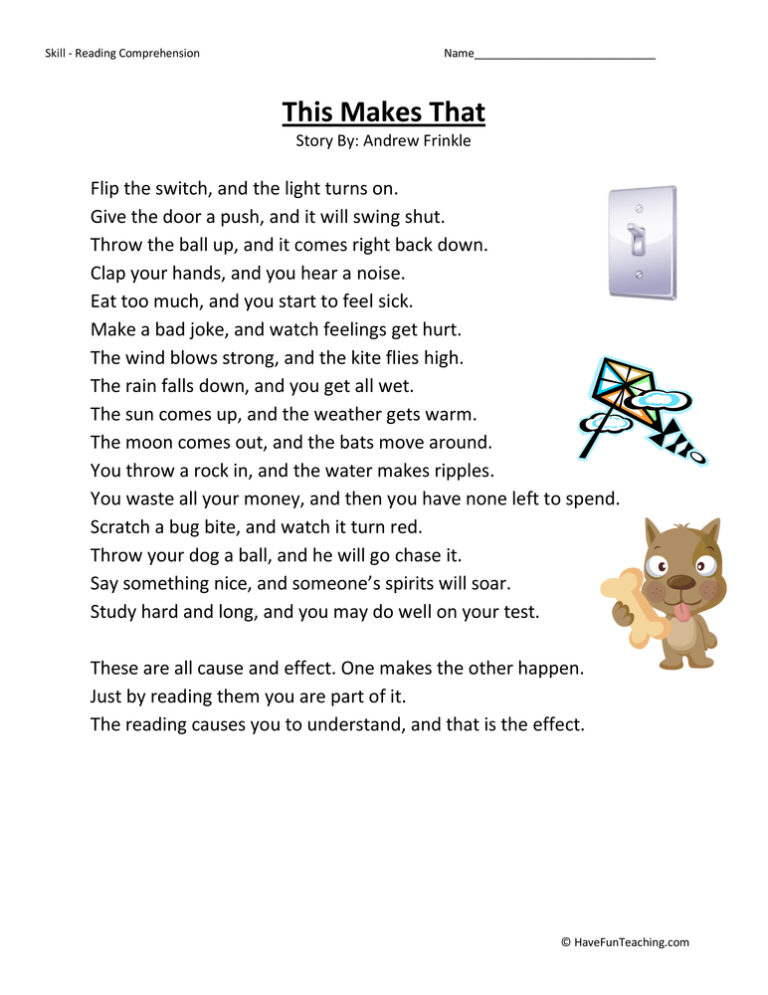
This Makes That Reading Comprehension Worksheet will help your students build their reading comprehension skills while reading about cause and effect.
Using this Cause and Effect Sequencing Activity, students explain the reasons why the situations were caused.
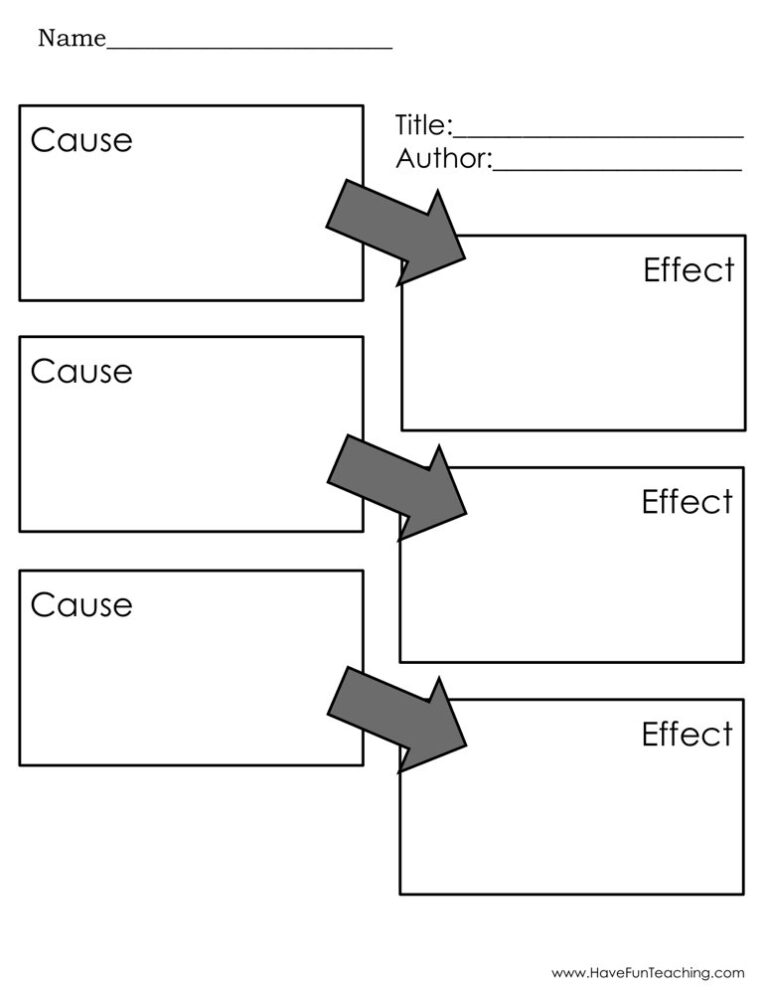
Using this Cause and Effect Graphic Organizer Worksheet, your students will locate an event and the cause of that event and place them into boxes.

Using this Compare and Contrast Cause and Effect Graphic Organizer Worksheet, your students will find two events in two separate stories and compare them.
Reviews
There are no reviews yet