
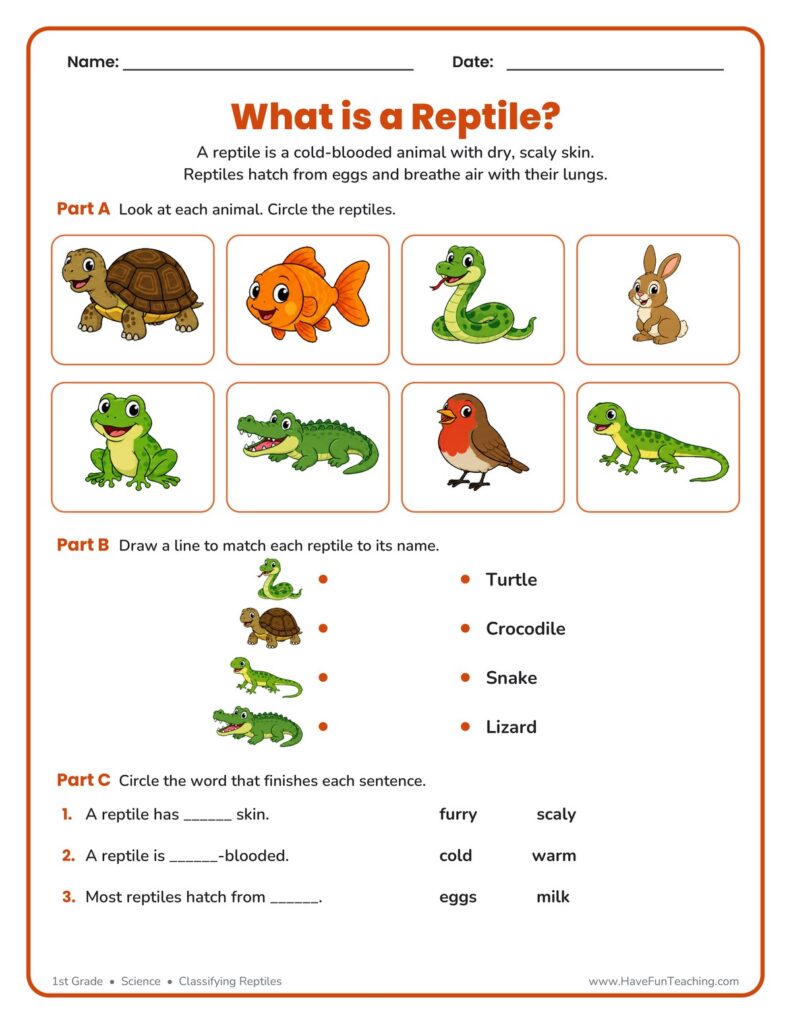
Reptile Classification Worksheet
This reptile classification worksheet helps 1st graders sort animals by circling reptiles, matching them to their names, and completing simple reptile facts. Includes a complete answer key for fast, no-prep life science practice.
$6.97
Or free with a membership — members pay $3.33/mo for all 10,000+ resources. See plans
Want this one free?
Tell us where to send it and it’s yours — no card, no catch.
One free resource per teacher. We’ll also send free teaching ideas each week — unsubscribe anytime.
Free teacher account · no credit card
- Instant digital download
- Printable PDF + answer key
- Made by real teachers
Teaching is easier with a membership
Unlimited printables, games & videos for PreK–6th — for your classroom or homeschool. Cancel anytime.
Start your 3-day free trial$0 today · cancel anytime · Instant access to 10,000+ resources
About this resource
Description
Learning to sort animals into groups is one of the first big ideas in life science, and this reptile classification worksheet gives first graders a friendly way to begin. Reptiles are cold-blooded animals with dry, scaly skin that hatch from eggs and breathe air with their lungs. By looking closely at real animals and deciding which ones are reptiles, students build the careful observation and sorting skills that all science learning depends on.
This classifying reptiles worksheet is a colorful, no-prep printable your first grader can finish in one sitting. Students begin by circling the reptiles in a picture set, then draw lines to match each reptile to its name, and finish by choosing the words that complete simple reptile facts. Print it for morning work, a science center, homework, or a quick review, and use the included answer key to check the work in seconds.
What’s Included
- 1 print-ready PDF worksheet
- Answer key
- 3 activities: a circle-the-reptiles picture sort, picture-to-name matching, and reptile fact questions
This reptile classification worksheet helps children learn in three ways. First, the picture sort trains careful observation as students notice scaly skin and other reptile features. Second, matching pictures to names strengthens early reading and animal vocabulary at the same time. Third, the fact questions lock in the key idea that reptiles are cold-blooded, scaly, and hatch from eggs, so the science sticks long after the page is done.
For even more fun, take the skill beyond the page. Go on a backyard or zoo reptile hunt and talk about the animals you spot, or sort toy animals into reptile and not-a-reptile piles at home. Read a picture book about turtles, snakes, or lizards, then have your child draw a favorite reptile and label its scaly skin. A quick “reptile or not?” guessing game in the car keeps the classifying skill sharp all week.
Related Resources
What teachers say
Reviews
You must be logged in to post a review.
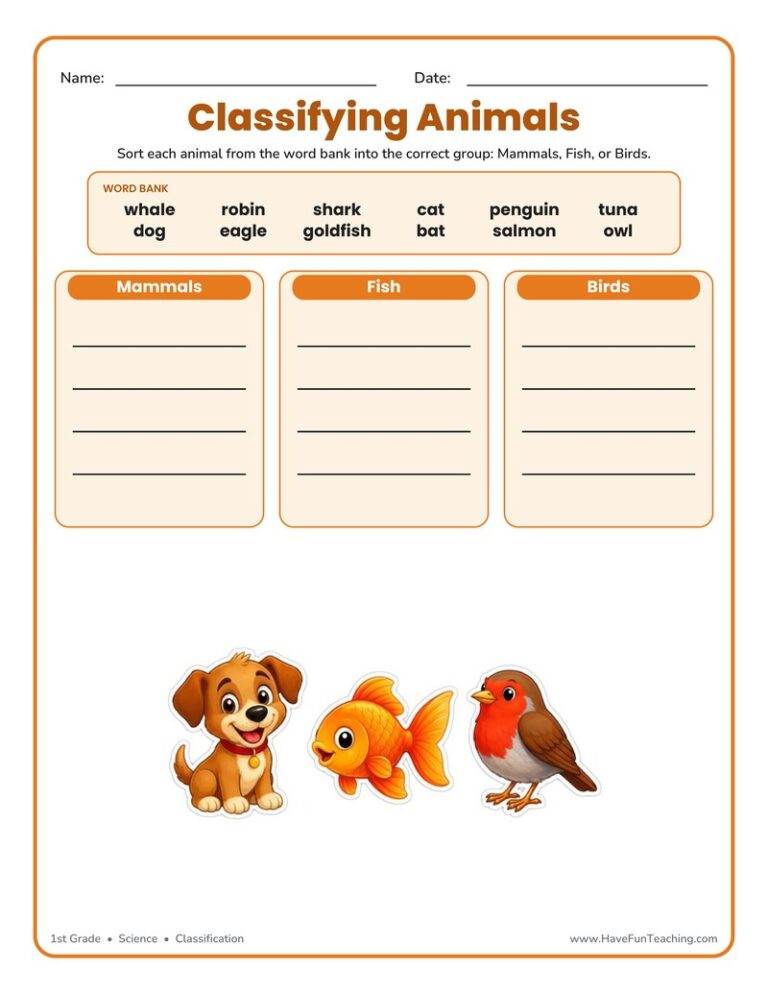
A 1st grade Mammals, Fish, or Birds Classifying Animals Worksheet where students sort a word bank of animals into three groups. Includes a complete answer key for quick, no-prep science practice.

This Snake Rebus Worksheet gives 1st graders a picture-supported story to read aloud, then four pictures to label with the matching word. Answer key included, so fluency practice takes almost no prep.
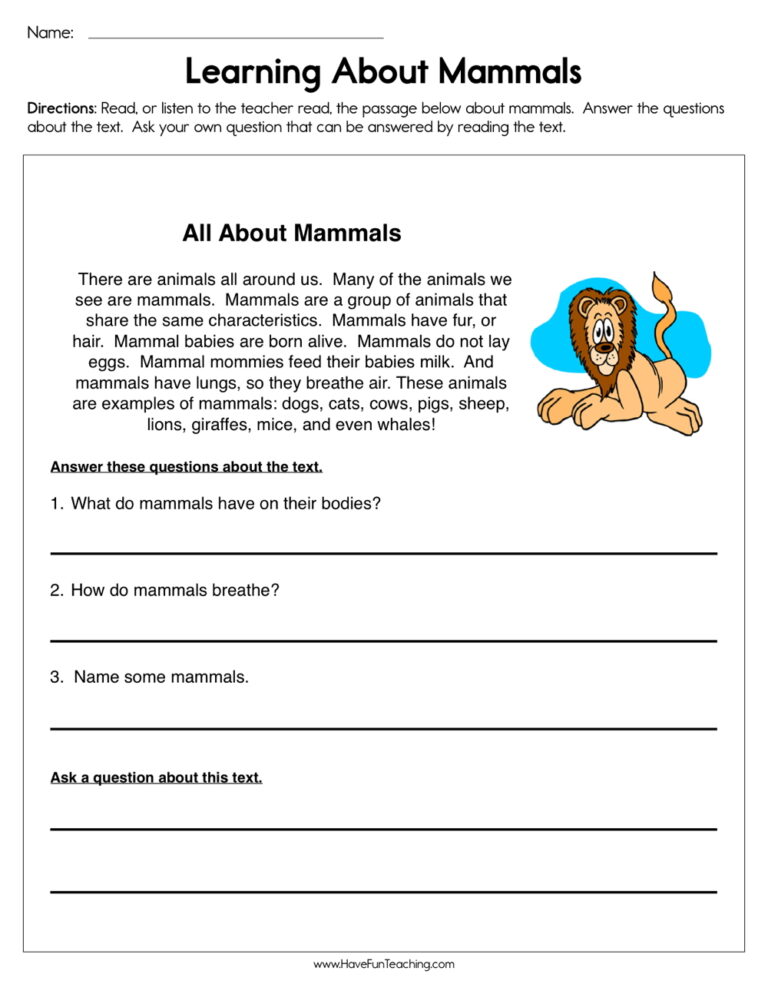
This Learning about Mammals Worksheet gives 1st graders a short informational passage and five fill-in-the-bubble questions about mammal traits. An answer key is included, so reading comprehension practice takes no prep at all.

Use this Importance of Farming Worksheet to help 1st Grade students sort six farm foods into plants and animals and decide what farms really give people. Answer key included for fast, no-prep science practice.

Using this Animal Song (Animated Music Video), your students learn about different types of animals and their sounds by watching this fun, catchy video.
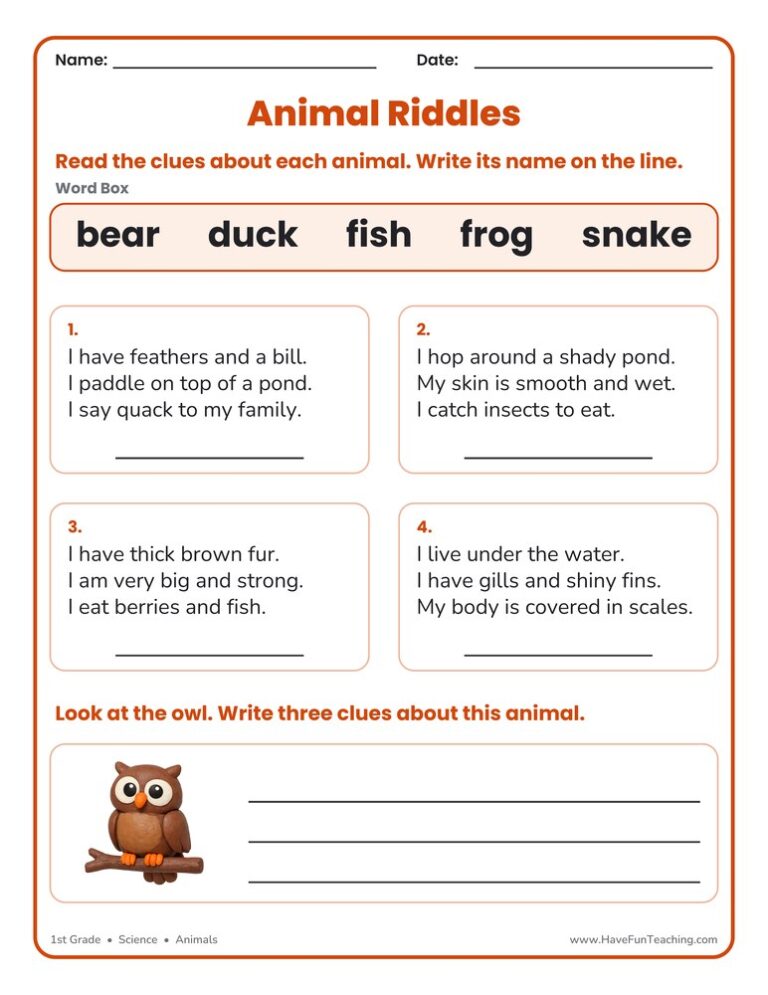
This animal riddles worksheet has first graders read three clues about an animal, choose its name from a word box, and then write their own clues about an owl. Answer key included for quick, no-prep science practice.

This Ocean Animal Habitat Worksheet has 1st graders circle the animals that live in the sea, then write the three names on wide handwriting lines. Answer key included for quick, no-prep science practice.

Students label nine friendly animal pictures using a nine-word bank in this animal names worksheet. Built for 1st Grade science, with an answer key included so checking work takes seconds.
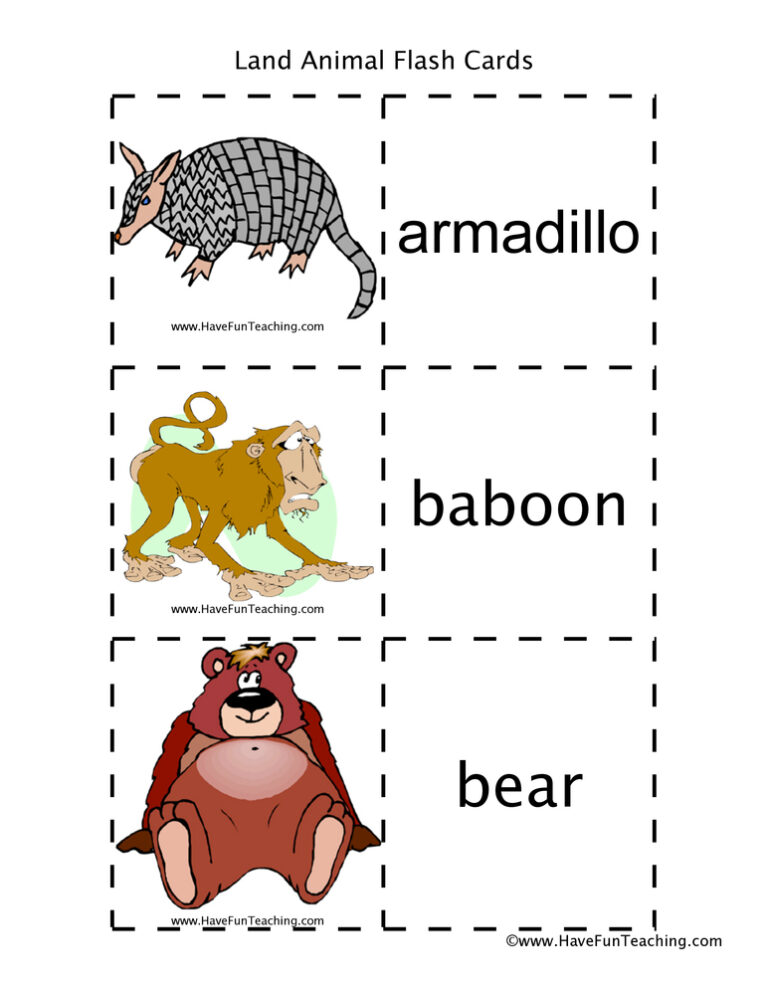
Using these Land Animal Flash Cards, students improve their Insect vocabulary by having a complete set of animal names they can use in their writing and discussions.

This Basic Fish Parts Worksheet asks 1st graders to label six numbered parts on a big, friendly fish using a word box. An answer key is included, so science practice takes no prep at all.

This animal habitats matching worksheet has first graders match five animals to their homes, then write the animal that lives in each pictured habitat. Answer key included.
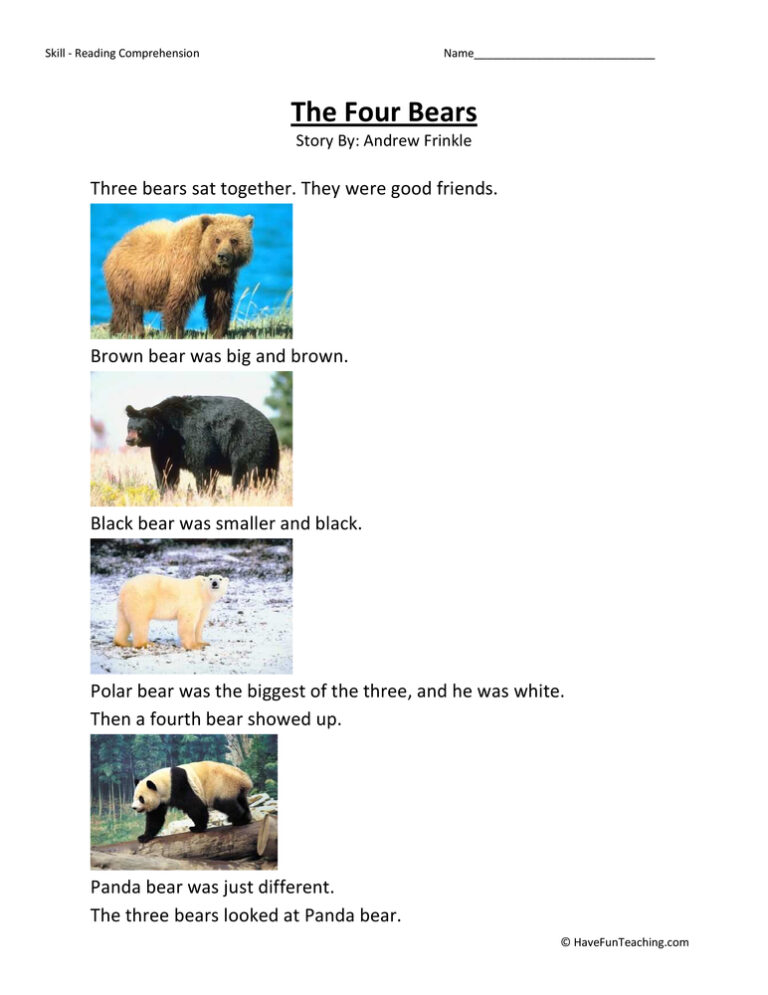
The Four Bears Reading Comprehension Worksheet helps 1st grade readers meet four kinds of bears in a friendship story, answer five questions and check their work with the answer key.
Reviews
There are no reviews yet