Skip to content
Start My 3 Free Days $0 today · cancel anytime

1st Grade Main Idea Worksheets

11 1st grade main idea worksheets. Teacher favorites: Details of an Informational Text Worksheet and Main Details Whales Worksheet. How teachers use these

1st Grade Main Idea Worksheets

11 1st grade main idea worksheets. Teacher favorites: Details of an Informational Text Worksheet and Main Details Whales Worksheet. How teachers use these

Worksheet
Worksheet1st GradeDetails of an Informational Text Worksheet

A 1st Grade details of an informational text worksheet built around a short nonfiction text about sunflowers, with bubble questions on the main topic and key details. Answer key included for fast, no-prep nonfiction practice.

Worksheet
Worksheet1st GradeMain Details Whales Worksheet

This Main Details Whales Worksheet pairs a short first grade whale passage with five main topic and key detail questions. An answer key is included, so comprehension practice needs no prep at all.

Worksheet
Worksheet1st GradeUsing Your Five Senses Worksheet

The Using Your Five Senses Worksheet helps 1st grade students find the main topic of a five senses passage and match each sense to its body part. Answer key included to build reading confidence.

Worksheet
Worksheet1st GradeTaking Notes Worksheet

This Taking Notes Worksheet gives 1st grade readers a short apple passage, one main-idea question and four key-idea questions. An answer key is included, so children can check their own notes.

Worksheet
Worksheet1st GradeKey Ideas Worksheet

This key ideas worksheet gives first grade readers a short illustrated story and five bubble questions on the main idea and its supporting details. An answer key is included, so checking work takes seconds.

Worksheet
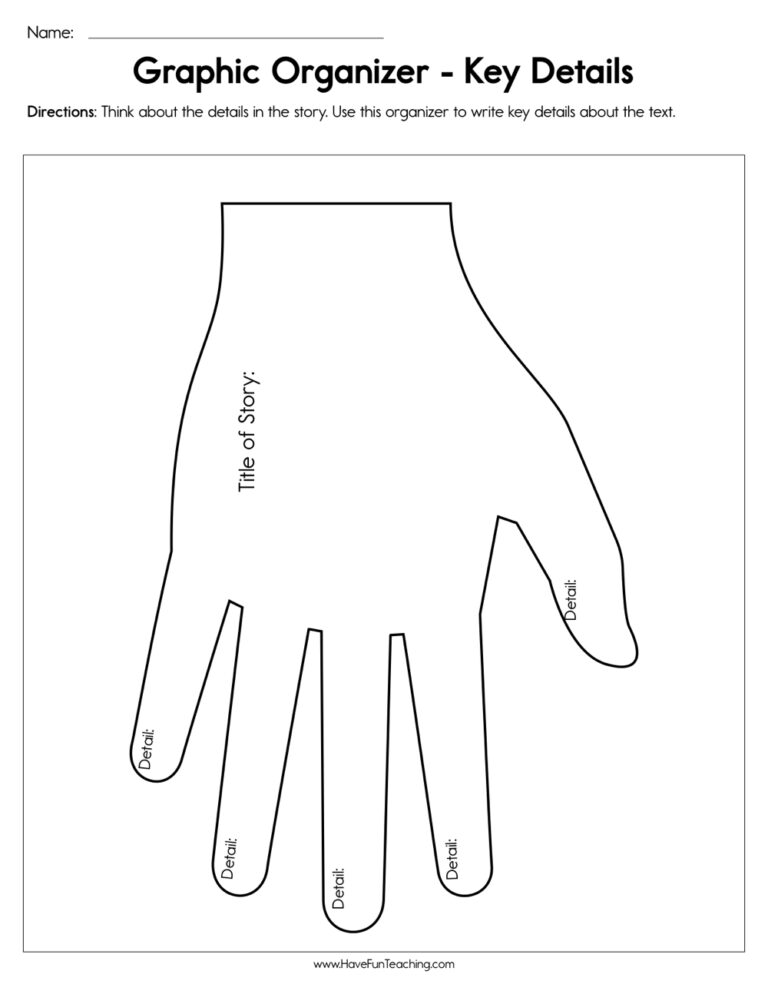
Worksheet1st GradeKey Details Graphic Organizer Worksheet

Use this key details graphic organizer worksheet with any book as 1st grade students name the main topic and write three details that tell more about the story.

Worksheet
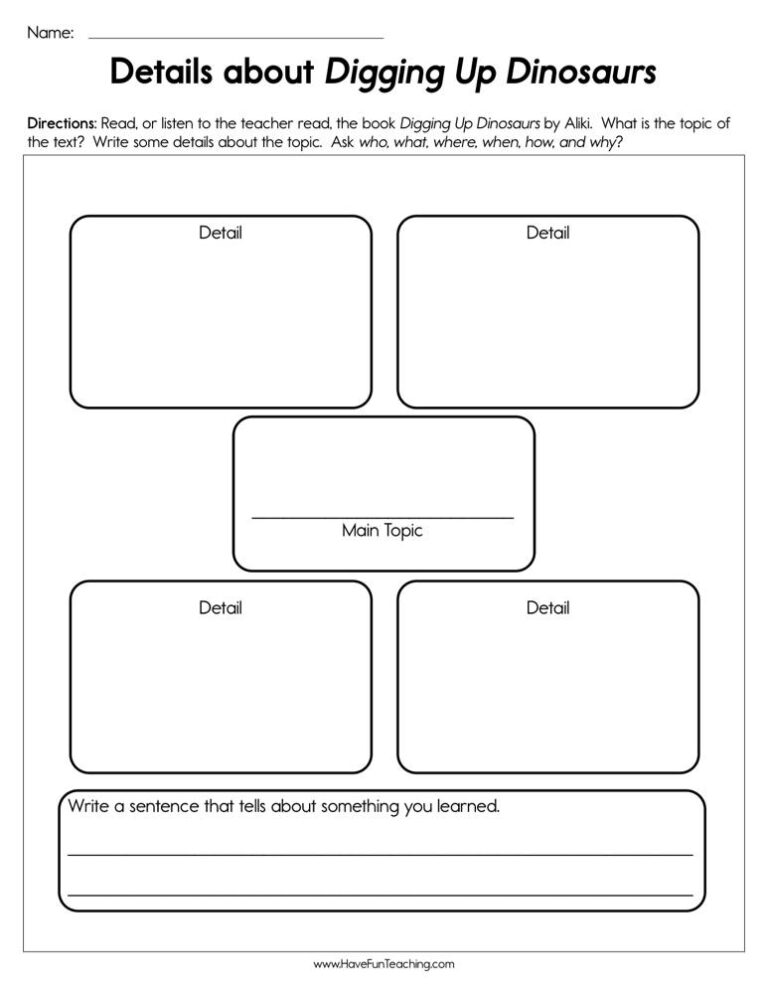
Worksheet1st GradeDetails about Digging Up Dinosaurs Worksheet

This Details about Digging Up Dinosaurs Worksheet helps students identify the main idea and key details while reading a passage about dinosaurs.

Worksheet
Worksheet1st GradeStory Details Graphic Organizer Worksheet

A story details graphic organizer worksheet for 1st grade readers. Children write the story title, then record who, what, where, and when in four labeled boxes, building a retelling routine that works with any book.

Worksheet
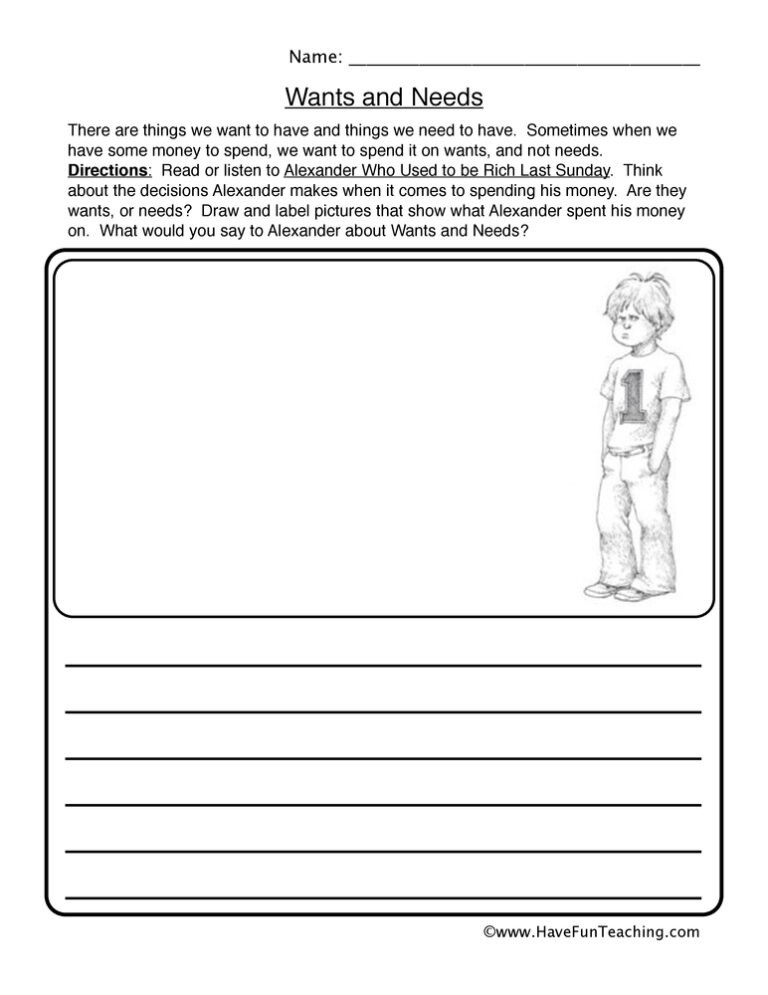
Worksheet1st GradeWants Needs Reading Response Worksheet

Using this Wants Needs Reading Response Worksheet, students readAlexander Who Used to be Rich Last Sunday to build their understanding of wants and needs.

Worksheet
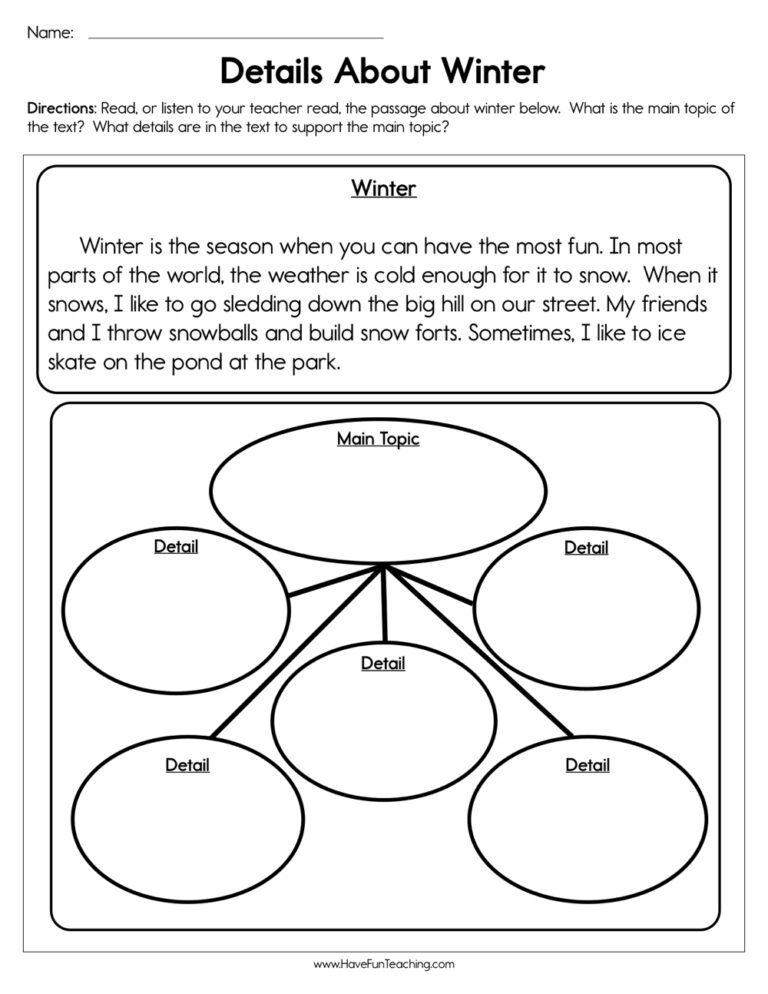
Worksheet1st GradeDetails about Winter Worksheet

This details about winter worksheet gives 1st graders a short non-fiction passage and five bubble-in questions on main topic and supporting details. An answer key is included, so comprehension practice takes no prep.

Worksheet
Worksheet1st GradeThe Itsy Bitsy Spider Graphic Organizer Worksheet

The Itsy Bitsy Spider Graphic Organizer Worksheet lets 1st grade readers finish a main idea sentence and four key details from a word bank. An answer key is included for quick checking.

From our teachers' playbook

What's it mostly about?

What do 1st graders learn about main idea?

First graders learn to answer one big question: What is this mostly about? That's the main topic. Then they find key details, the little facts that tell more about it. In a page about whales, the main topic is whales, and details might be "whales breathe air" and "whales live in the ocean." Kids learn the difference between the whole idea and one interesting fact. The click moment is when a child holds up one hand and says, "The palm is the main idea and my fingers are the details!"

Our favorite ways to teach main idea

Main idea is a big thinking skill for little readers. These moves make it concrete.

Fill the detail boxes

Use an organizer with one big box on top and three small boxes below. After reading, kids write or draw the topic on top and one detail in each small box. If a detail doesn't fit the topic, they talk about why.

Why it works: the U.S. Department of Education's guide for teaching elementary math recommends moving from hands-on objects to drawings to numbers.

Key Details Graphic Organizer WorksheetTry it withKey Details Graphic Organizer WorksheetWorksheetsOpen it →

Read, then ask the big question

After a short nonfiction page, think aloud: "Most of these sentences tell about dinosaurs' teeth. So the main topic is dinosaur teeth." Point to each detail as you say it. Kids copy the same question on the next page.

Why it works: handing over the work step by step, from teacher to student, is one of the most widely used teaching frameworks (Pearson and Gallagher, 1983).

Details of an Informational Text WorksheetTry it withDetails of an Informational Text WorksheetWorksheetsOpen it →

Quick check passages

Short passages with two or three questions make great warm-ups. Kids read, name the main topic and circle a detail. Retrieval practice like this beats rereading the same book.

Why it works: a big review of study methods ranked quick self-quizzing among the most powerful ways to remember (Dunlosky and colleagues, 2013).

Main Details Whales WorksheetTry it withMain Details Whales WorksheetWorksheetsOpen it →

Questions teachers and parents ask about 1st grade main idea

What is main idea in 1st grade?

It's what a text is mostly about. First graders name the main topic and find a few key details that tell more about it.

How do I explain main idea to a 1st grader?

Use your hand: the palm is the main idea, and each finger is a detail that holds it up. Or ask "If you had to tell me this in a few words, what would you say?"

What's the difference between main idea and details?

The main idea is the big picture. Details are the small facts that explain it. "Dogs make good pets" is a main idea, and "dogs are loyal" is a detail.

How can I practice main idea at home?

After reading a page together, ask "What was that mostly about?" Then ask for one fact that proves it. Picture books and kids' magazines work great.