
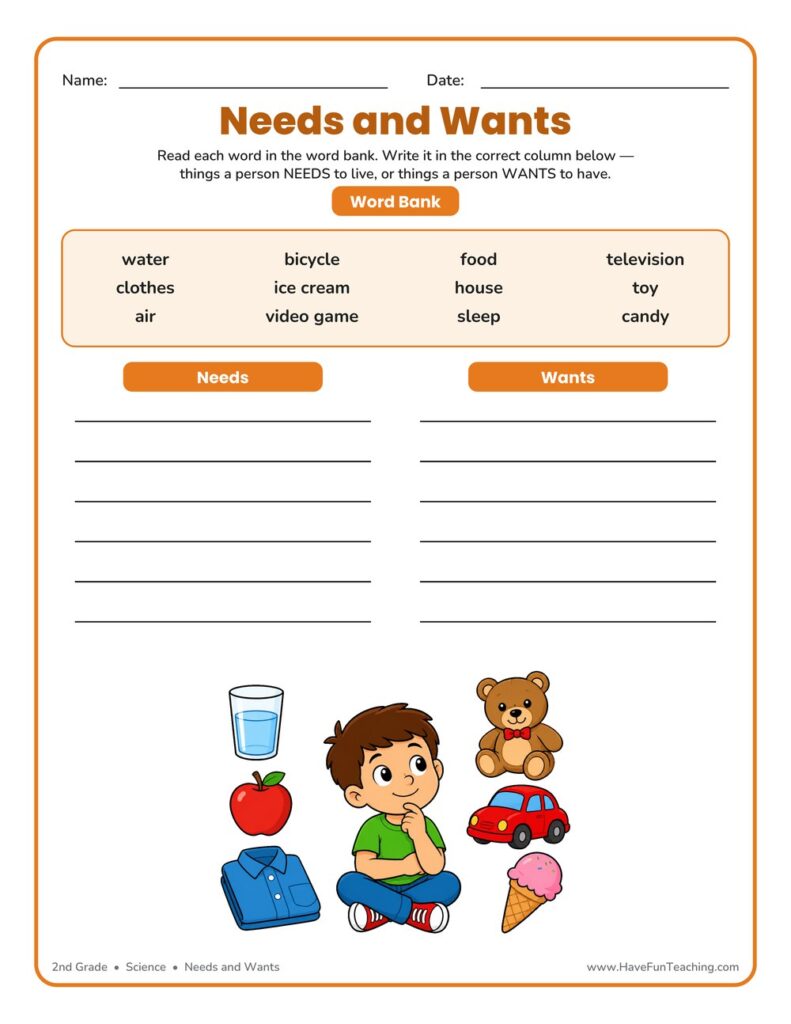
Needs and Wants Sorting Worksheet
This Needs and Wants Sorting Worksheet helps 2nd graders sort a word bank of everyday items into needs and wants. A complete answer key is included—perfect for quick, no-prep practice at home or in class.
$6.97
Or free with a membership — members pay $3.33/mo for all 10,000+ resources. See plans
Want this one free?
Tell us where to send it and it’s yours — no card, no catch.
One free resource per teacher. We’ll also send free teaching ideas each week — unsubscribe anytime.
Teaching is easier with a membership
Unlimited printables, games & videos for PreK–6th — for your classroom or homeschool. Cancel anytime.
Start your 3-day free trial$0 today · cancel anytime · Instant access to 10,000+ resources
About this resource
Description
Understanding the difference between what a person truly needs and what a person simply wants is one of the first steps toward smart thinking about money, choices, and resources. This Needs and Wants Sorting Worksheet gives second graders a clear, hands-on way to explore that difference. Needs are the things a person must have to live and stay healthy—food, water, clothing, and shelter—while wants are the extra things that make life more fun but are not necessary for survival. Sorting everyday items into these two groups helps students think carefully about how people use and value the resources around them.
This needs versus wants sorting activity presents a word bank of familiar items along with two clearly labeled columns, Needs and Wants. Students read each word, decide which category it belongs to, and write it in the correct column. To use it, hand out the printable, read the directions together, and let students work on their own or with a partner. Because several choices spark good discussion, the sheet works well as a warm-up, a sorting center, or a quick check for understanding. A complete answer key is included so checking work is fast and easy.
What’s Included
- 1 print-ready PDF worksheet
- Answer key
- 12 word-sort items in two Needs and Wants columns
This Needs and Wants Sorting Worksheet helps kids learn in three ways. First, sorting real items builds the critical-thinking skill of classifying, which carries over into science and math. Second, connecting the words to everyday life makes the lesson stick, because children already know these objects. Third, the discussion that follows teaches students to explain and defend their choices, strengthening reasoning and communication. Together, these skills build a solid foundation for later lessons on resources, economics, and the environment.
Teachers and parents can extend the lesson in many fun ways. Go on a “needs and wants hunt” around the classroom or home and sort what you find. Cut pictures from old magazines and glue them into two groups. Play a quick sorting game with real objects, or ask children to draw one need and one want and explain each. At the store, invite kids to point out which items are needs and which are wants before you buy. These simple activities turn an everyday routine into a memorable learning moment.
Related Resources
What teachers say
Reviews
You must be logged in to post a review.
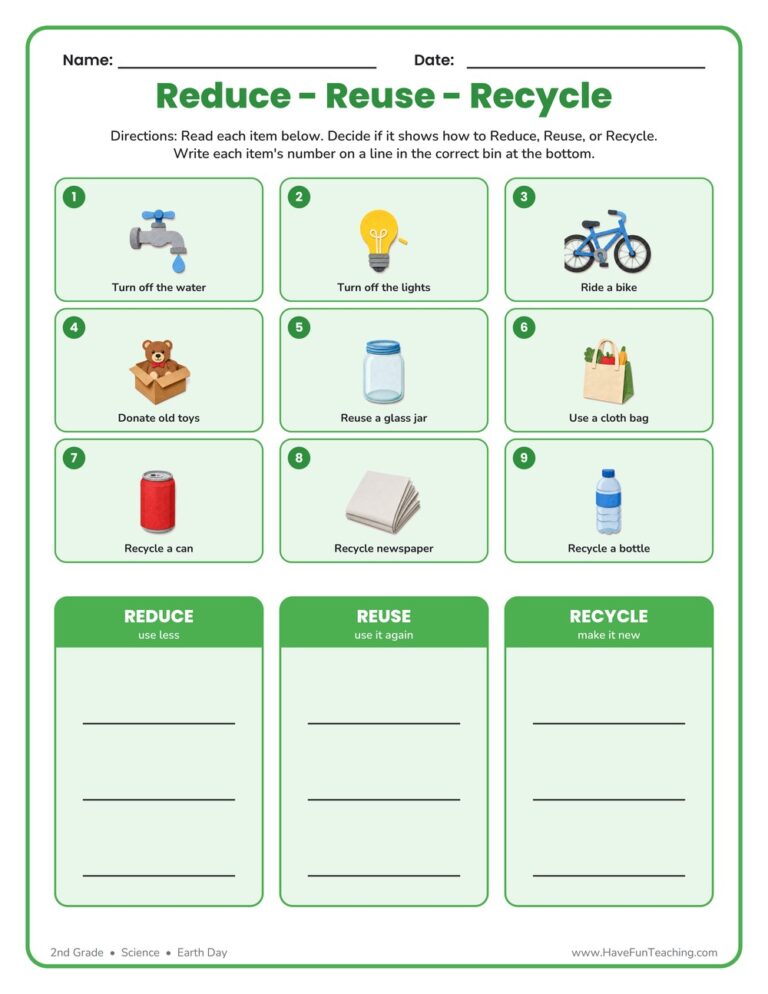
A second grade Reduce, Reuse, Recycle Sorting Worksheet where students sort nine everyday items into the correct earth-friendly bin. Answer key included — a quick, no-prep Earth Day activity for home or classroom.

The Seasons Song by Have Fun Teaching is perfect for teaching and learning all about the seasons of the year. This is a fun way for kids to learn the seasons. With this seasons song, your kids can learn about Spring, Summer, Fall, and Winter. While listening to the Seasons…
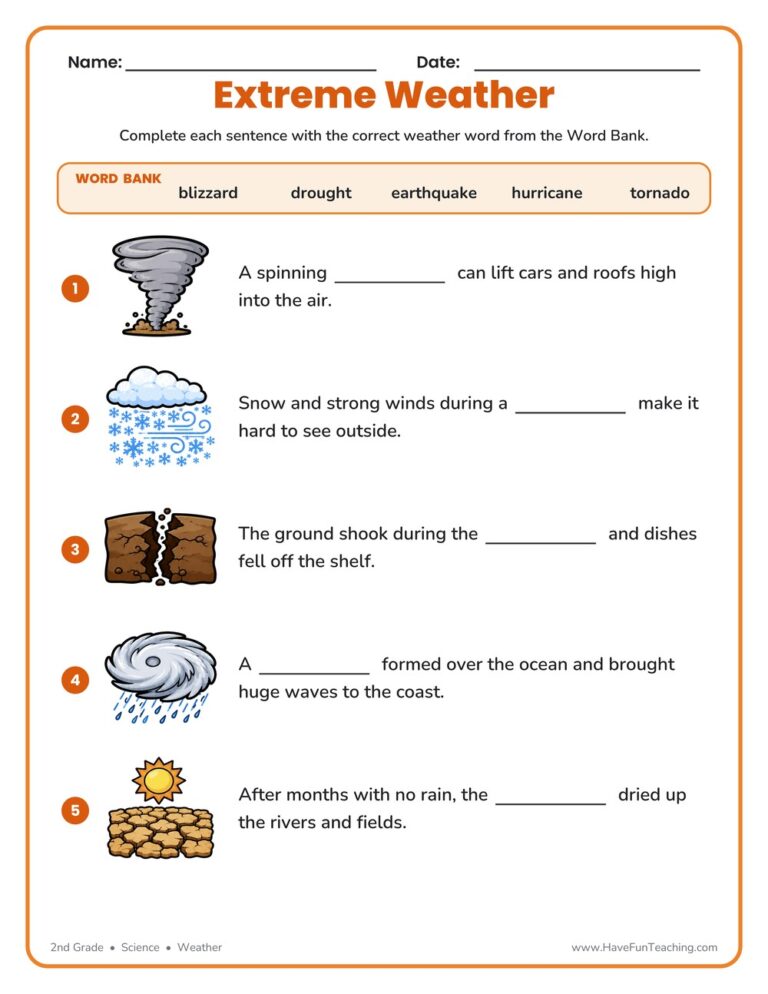
This Natural Disasters Fill in the Blanks Worksheet has 2nd graders match blizzards, droughts, earthquakes, hurricanes, and tornadoes to picture-clue sentences. Answer key included — perfect for no-prep extreme weather vocabulary practice.
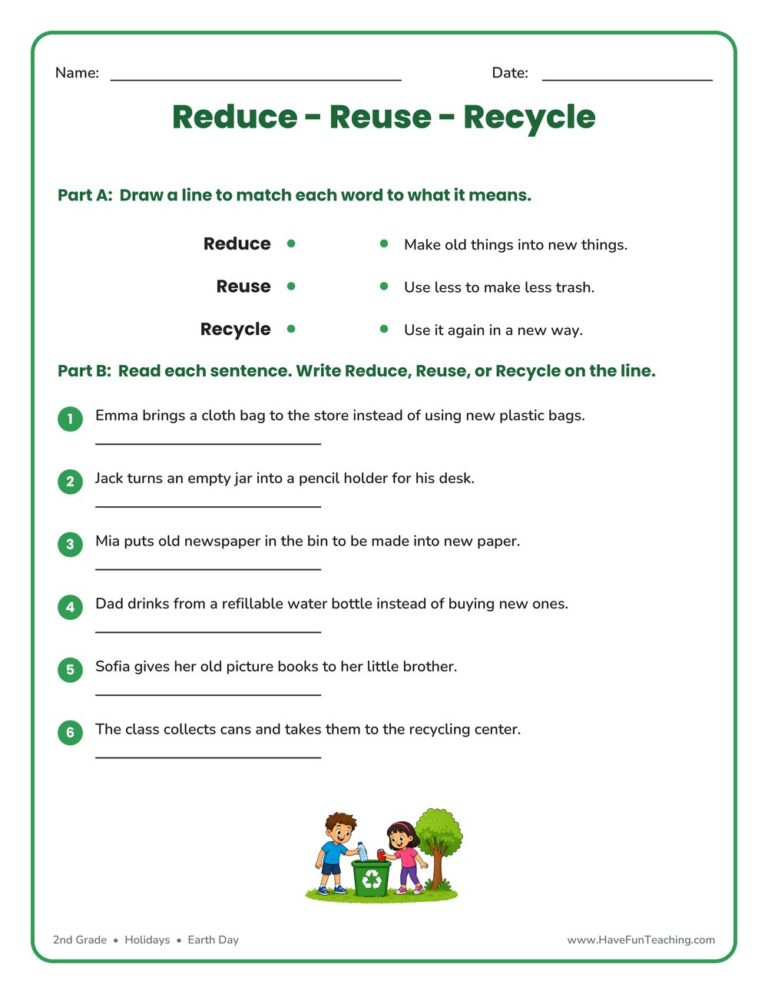
This Reduce, Reuse, Recycle worksheet helps 2nd grade students learn the three Rs by matching each word to its meaning and sorting Earth Day scenarios. Answer key included for quick, no-prep practice.
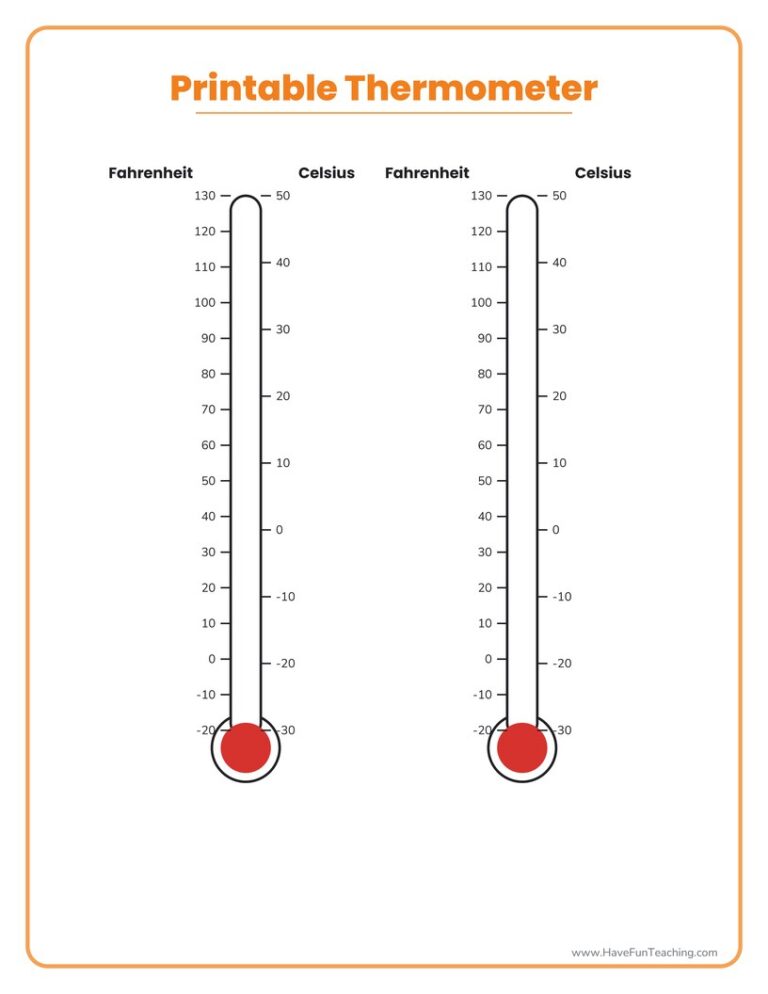
This Printable Thermometer shows Fahrenheit and Celsius scales side by side, giving 2nd grade students an easy classroom tool for tracking temperature and weather. Print, mark, and reuse all year long.
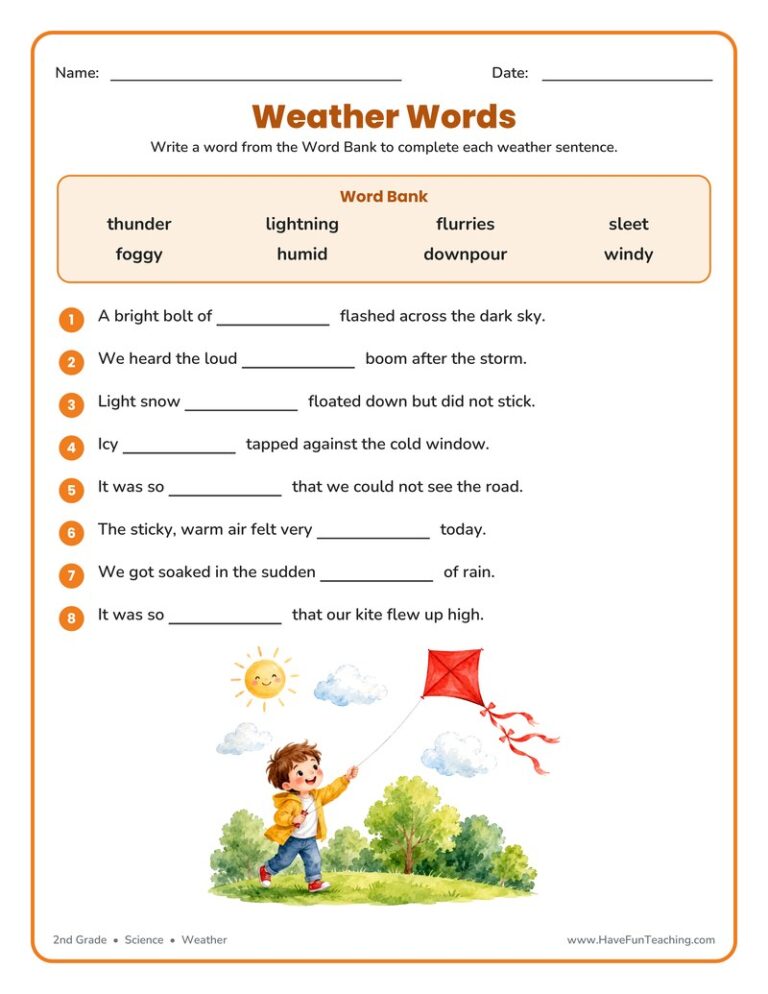
This Weather Fill in the Blank Worksheet lets 2nd graders complete eight weather sentences using a word bank of terms like thunder, sleet, and downpour. Includes an answer key for quick, no-prep science vocabulary practice.
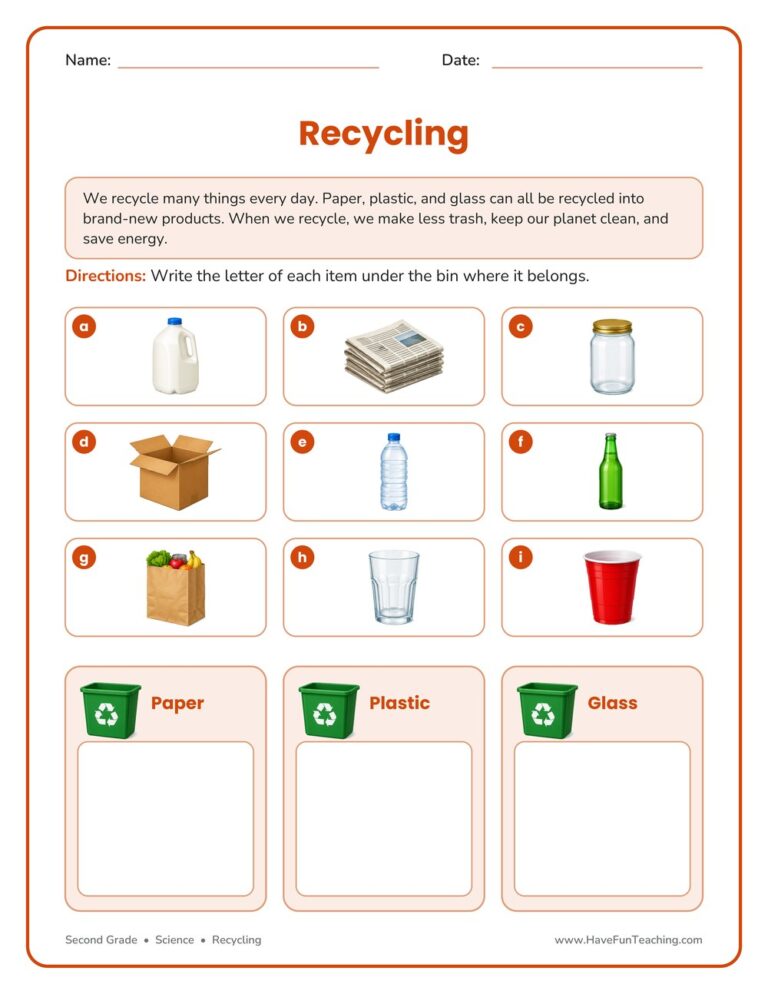
A recycling sort worksheet for second grade, where students sort paper, plastic, and glass items into the correct bins. Includes an answer key—a hands-on Earth Day science activity for classrooms and homeschool.
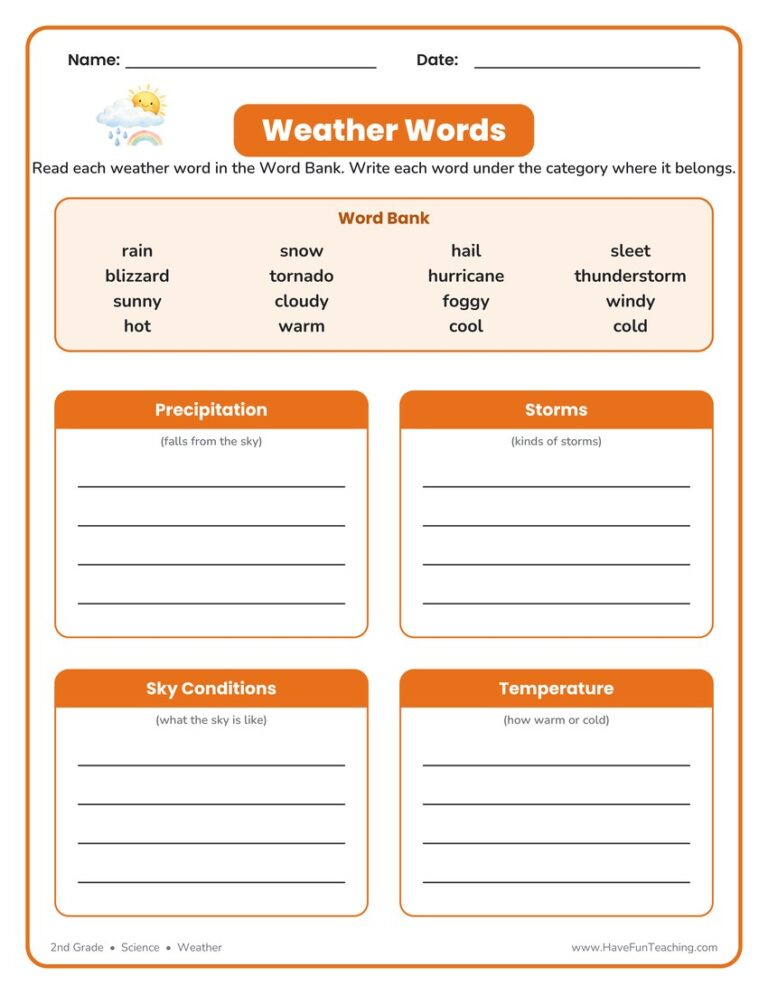
This Weather Words Worksheet helps 2nd graders sort sixteen weather terms into precipitation, storms, sky conditions, and temperature. Answer key included — a quick, no-prep way to grow earth science vocabulary.
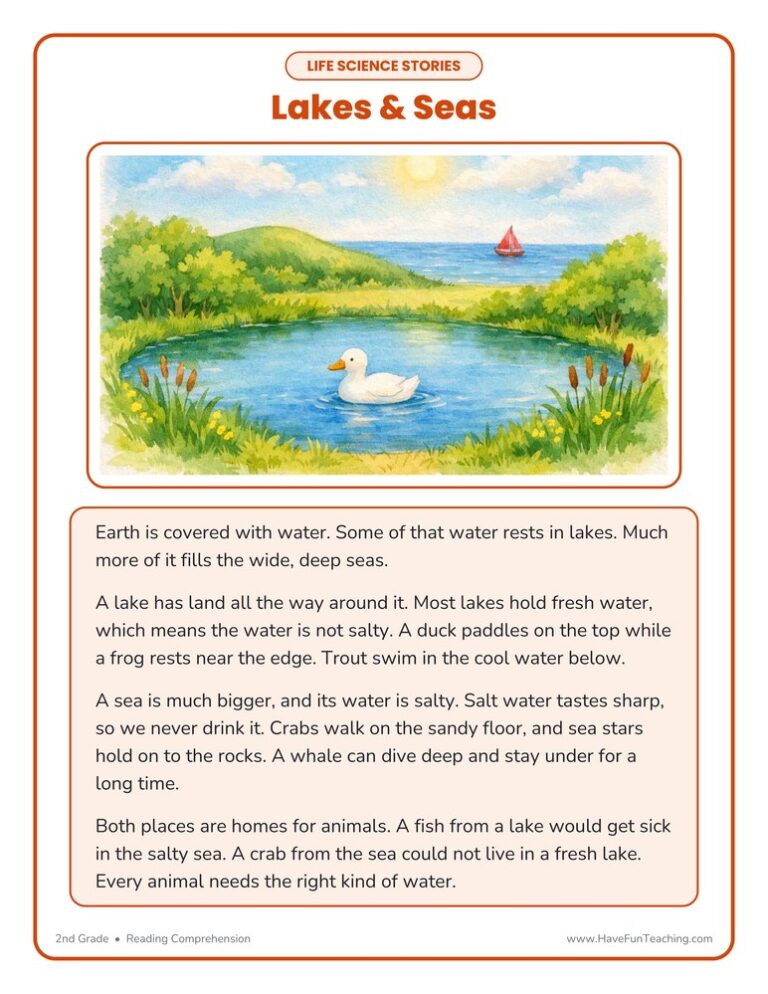
This Lakes and Seas Life Science Reading Comprehension Worksheet gives 2nd Grade students an original passage about fresh water and salt water habitats, with bubble, fill-in, and writing questions. Answer key included.

This Natural Disasters Matching Worksheet gives 2nd Grade students six weather words, six clues to match them to and an answer key, so severe-weather vocabulary is learned by its features.
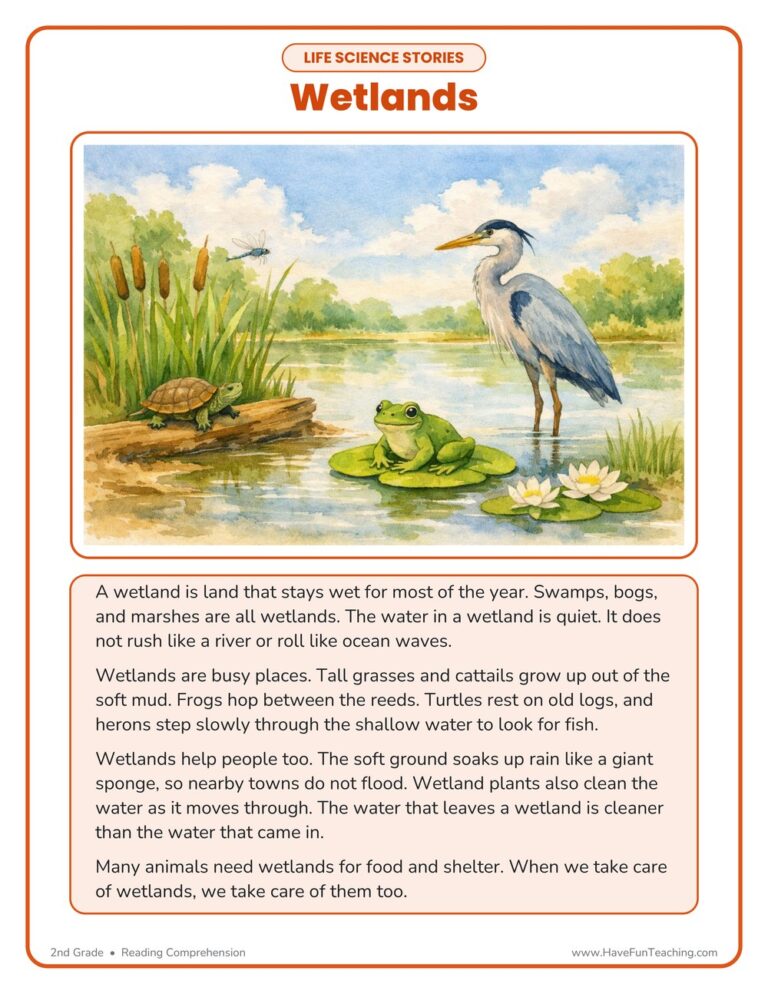
Explore swamps, bogs, and marshes with this wetlands life science reading comprehension worksheet. Second graders read a short nonfiction passage and answer six questions, and an answer key is included, so learning about habitats stays easy and fun.
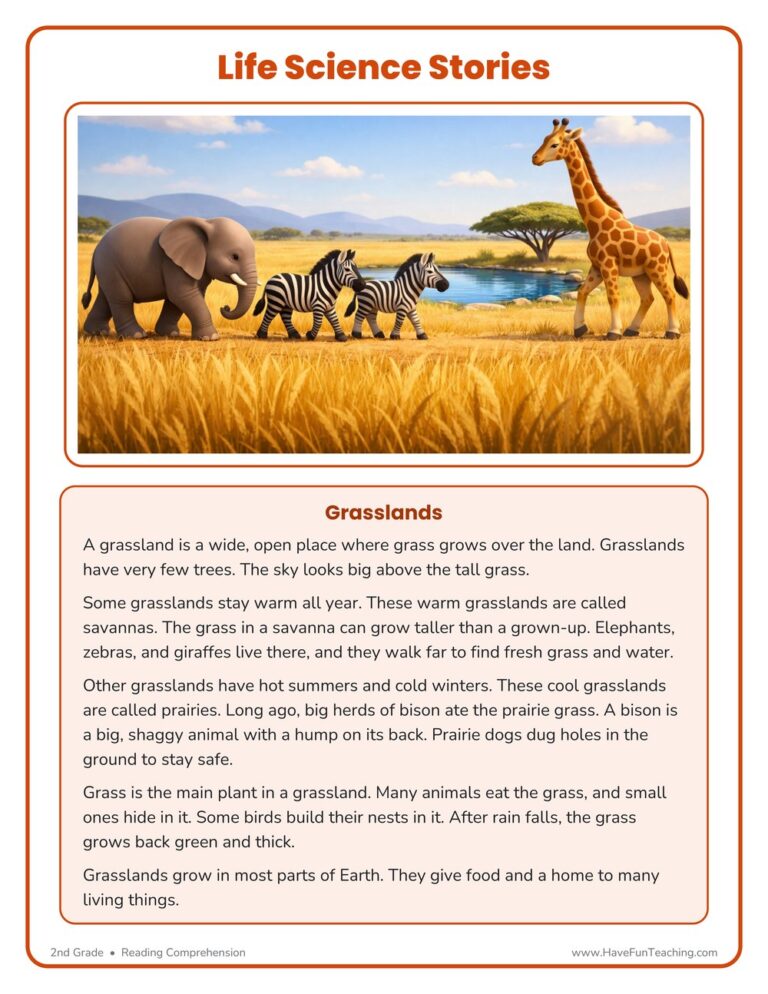
This Grasslands Life Science Reading Comprehension Worksheet gives 2nd Grade readers a nonfiction passage about savannas and prairies, seven text-based questions, and an answer key included for fast checking.




Reviews
There are no reviews yet