

Circling Needs Wants Worksheet
This circling needs wants worksheet asks 1st graders to circle every picture that shows a need, then write one need and one want of their own. An answer key is included.
$6.97
Or free with a membership — members pay $3.33/mo for all 10,000+ resources. See plans
Want this one free?
Tell us where to send it and it’s yours — no card, no catch.
One free resource per teacher. We’ll also send free teaching ideas each week — unsubscribe anytime.
Teaching is easier with a membership
Unlimited printables, games & videos for PreK–6th — for your classroom or homeschool. Cancel anytime.
Start your 3-day free trial$0 today · cancel anytime · Instant access to 10,000+ resources
About this resource
Description
Young children hear the words need and want every day, but telling them apart takes practice. A need is something that keeps a person healthy and safe — food, clean water, a home, sleep, warm clothes. A want is something fun to have, like a toy or a treat. This circling needs wants worksheet gives first graders a clear, friendly way to sort the two, using pictures instead of long sentences so that reading level never gets in the way of the thinking.
This needs and wants worksheet for first grade shows six familiar pictures: a teddy bear, a glass of water, a house, a toy race car, a balloon, and a plate of healthy food. Students look at each picture and draw a circle around every one that shows a need. Because the marking is a circle rather than a written word, the page moves quickly and every child can take part. A short Think About It section follows, where students write one thing they need to be healthy and one fun thing they only want, which turns the sorting into their own words.
What’s Included
- 1 print-ready PDF worksheet
- Answer key
- 6 pictures to sort by circling the needs
- 2 short written response prompts
There are three reasons this circling needs wants worksheet helps children learn. First, pictures carry the meaning, so a beginning reader can reason about needs and wants before they can read a paragraph about them. Second, circling is a low-pressure way to commit to an answer, which invites children to explain their thinking out loud. Third, the two writing prompts move students from recognizing an example to producing one, which is the step that shows a teacher whether the idea has really landed.
Teachers and parents can stretch the lesson all week. Cut pictures from a grocery flyer and sort them into two piles on the kitchen table. Ask children to name one need and one want at dinner and explain the difference in their own words. Read a picture book about a family sharing what they have and talk about which items in the story were needs. Take a walk and count the needs you pass: a house, a market, a water fountain, a doctor’s office.
Related Resources
What teachers say
Reviews
You must be logged in to post a review.
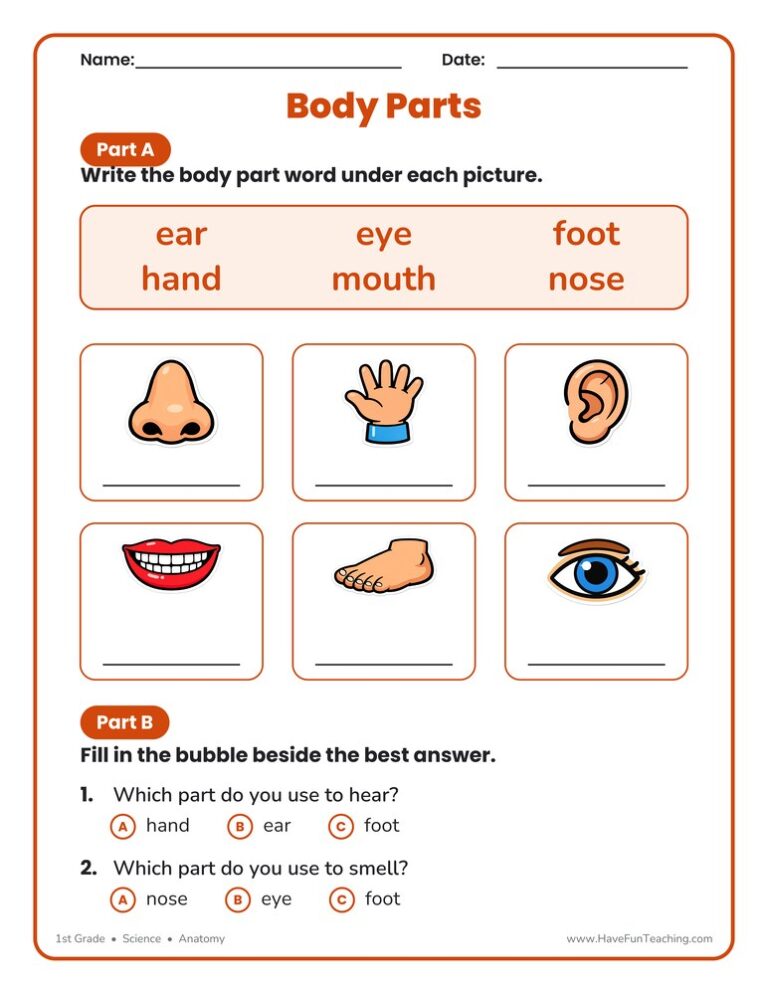
This Body Parts Worksheet helps 1st Grade students name the nose, hand, ear, mouth, foot, and eye with a picture word bank, then show what each part does. Answer key included.
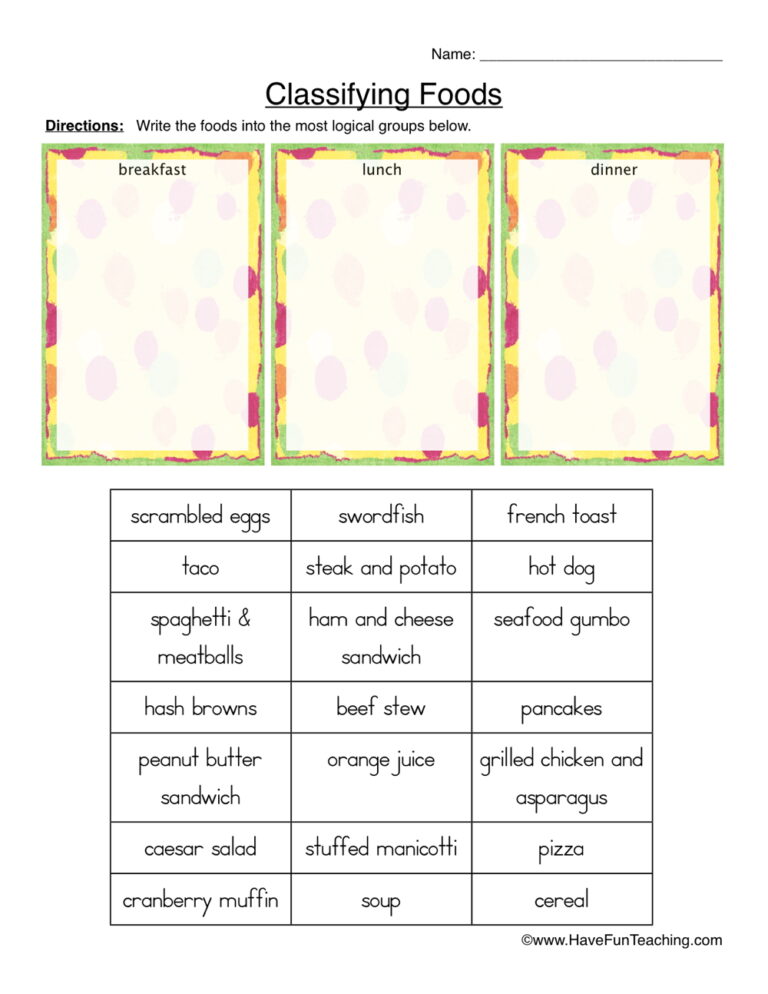
This Breakfast, Lunch, or Dinner Classifying Food Worksheet has 1st Grade students sort nine familiar foods into three meal columns. Answer key included, so sorting practice checks itself in minutes.
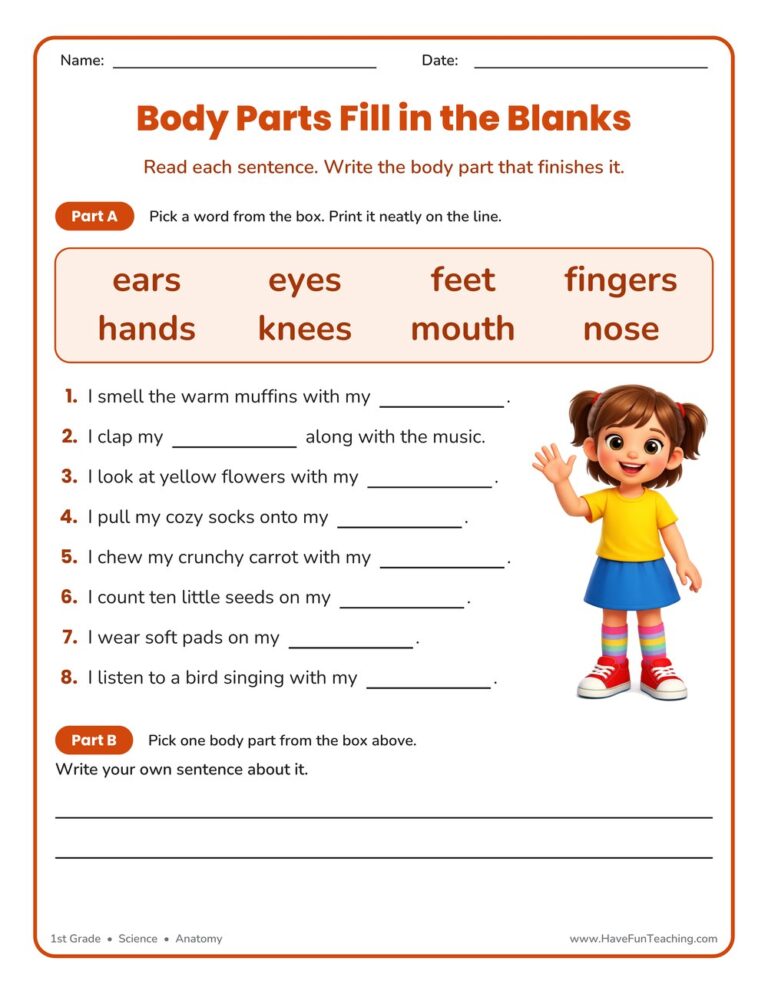
Students use a word box to complete eight sentences with the body parts fill in the blanks worksheet, then write one of their own. Built for 1st Grade with an answer key included, it makes naming body parts simple.

This brushing your teeth sequencing worksheet asks 1st graders to number four pictures and four sentences to rebuild a familiar routine. An answer key is included, so checking sequencing practice takes only a moment.


This Plant Parts We Eat Worksheet helps 1st graders match eight foods to the plant part we eat, using a helpful word box. Includes an answer key for easy, no-prep plant science practice.
The Brain Break Song (MP3) is perfect for classroom brain breaks, transitions, indoor recess, and physical activities.

Using this Walking Song (Original Music Video), your students will be working up a sweat as they walk along with the catchy beat.

These Donut Cut Outs quickly give you templates that can be easily cut and applied for classroom decoration or student activities

This Fitness Package Download provides you and your students with all of the Have Fun Teaching Fitness DVDs, CDs, and Reading Comprehension Workbook.
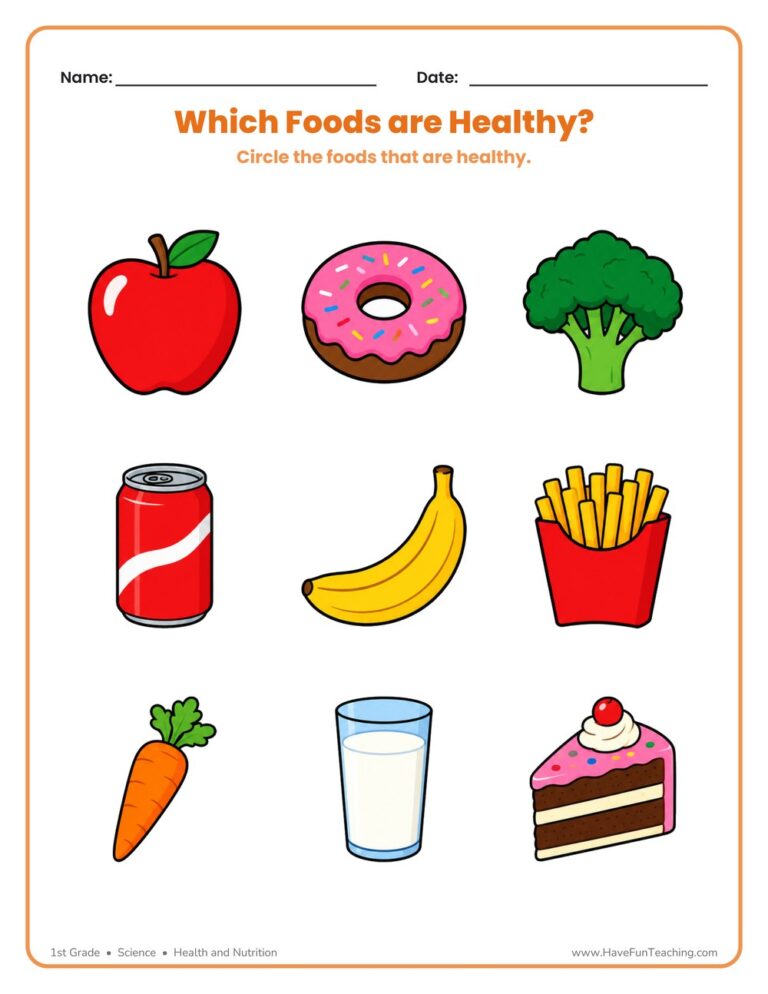
A colorful Which Foods are Healthy Worksheet where 1st graders circle nourishing foods like apples, broccoli, and milk among treats such as soda and cake. Answer key included for quick, no-prep nutrition practice.
Reviews
There are no reviews yet