
Seasonal Tilt Worksheet
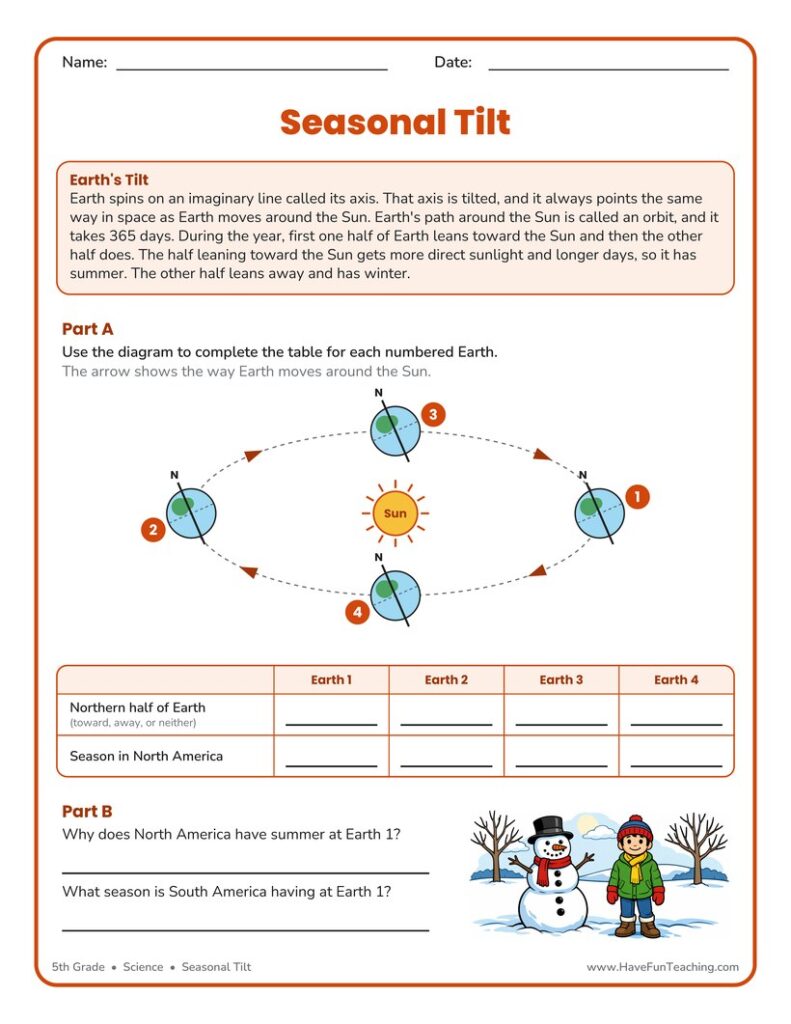
This Seasonal Tilt Worksheet asks 5th graders to read an Earth and Sun orbit diagram, name the season at four positions, and explain what causes the change. Answer key included for fast, confident grading.
$6.97
Or free with a membership — members pay $3.33/mo for all 10,000+ resources. See plans
Want this one free?
Tell us where to send it and it’s yours — no card, no catch.
One free resource per teacher. We’ll also send free teaching ideas each week — unsubscribe anytime.
Teaching is easier with a membership
Unlimited printables, games & videos for PreK–6th — for your classroom or homeschool. Cancel anytime.
Start your 3-day free trial$0 today · cancel anytime · Instant access to 10,000+ resources
About this resource
Description
Earth’s seasons are not caused by how close our planet gets to the Sun. They are caused by the tilt of Earth’s axis, which stays pointed the same way in space all year long. As Earth travels along its orbit, first one half of the planet leans toward the Sun and then the other half does. This Seasonal Tilt Worksheet gives students a clear way to see that pattern and to explain why North America can be having summer at the very same moment South America is having winter.
This 5th grade seasons worksheet opens with a short reference box that explains axis, orbit, and hemisphere in plain language, so students have the vocabulary they need before they begin. Below it, a labeled diagram shows Earth at four numbered points along its orbit around the Sun, with the tilted axis drawn at each point and an arrow showing the direction Earth travels. Students study the diagram, complete a table, and then write two short explanations. Use it as an introduction to a seasons unit, as guided practice after a lesson, as a science notebook insert, or as a quick check for understanding before a test.
What’s Included
- 1 print-ready PDF worksheet
- Answer key
- 1 labeled Earth and Sun orbit diagram with four numbered positions
- 8 diagram-reading table cells plus 2 short written responses
There are three reasons this Seasonal Tilt Worksheet helps students learn the skill. First, it moves them from labeling to reasoning: the table cannot be filled in from memory, because the only way to name each season is to compare the tilt of the axis with the position of the Sun. Second, the two middle positions look identical until students follow the travel arrow, so they have to think about the order of the year instead of guessing. Third, the written responses ask students to explain the cause rather than repeat the result, and to apply the same reasoning to the Southern Hemisphere, which is the step that separates real understanding from a memorized list of seasons.
Teachers and parents can model the diagram with a globe and a lamp: keep the globe’s tilt pointed at the same corner of the room while you carry it around the light, and stop at each of the four positions from the page. Ask students to put a finger where North America is and notice which stops put it in the direct beam. You can also keep a month-by-month sunset log, compare photographs of the same tree in different months, or have students write a letter to a pen pal in Australia describing what December feels like there. For an extension, ask students to research why places near the equator have far less seasonal change than places far to the north or south.
Related Resources
What teachers say
Reviews
You must be logged in to post a review.

While listening to the Seasons Song (MP3), students learn about the seasons of the year while listening to a catchy song.

This 4th of July Clip Art set is a perfect addition to any 4th of July bulletin board, flyer, or other printable that you create to celebrate the holiday!

Using this Comparing Seasons Venn Diagram Worksheet, students compare two seasons using a Venn Diagram.
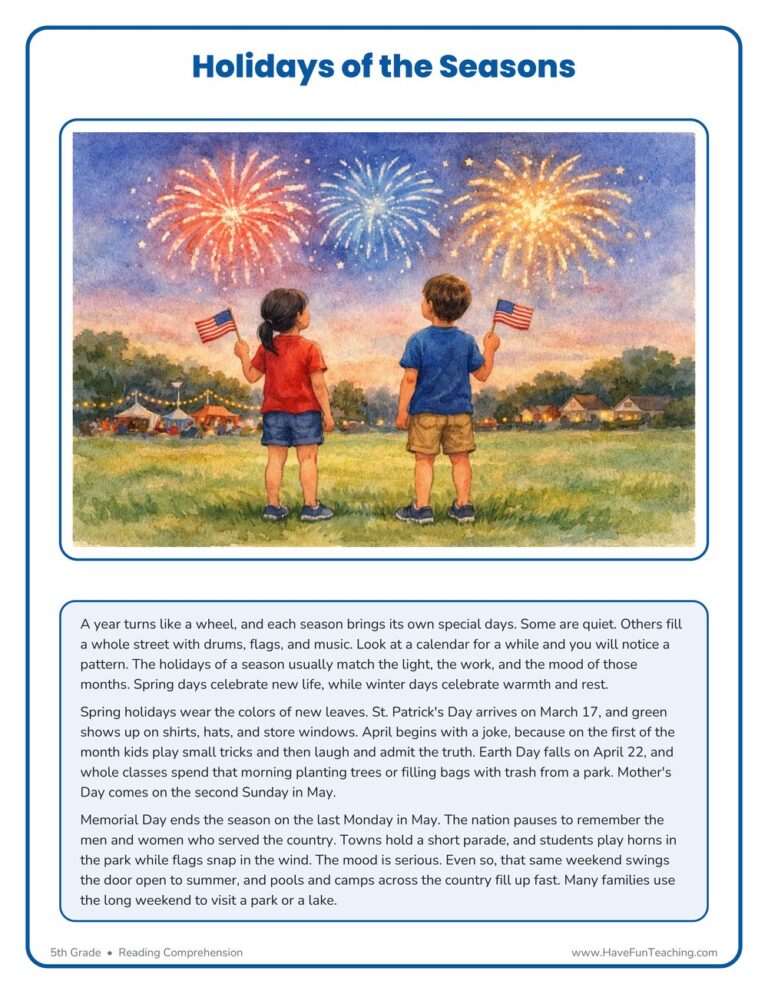
This Holidays by Season - Reading Comprehension Worksheet gives 5th grade readers a two-page informational passage about the holidays of every season, six text-evidence questions, and a complete answer key.
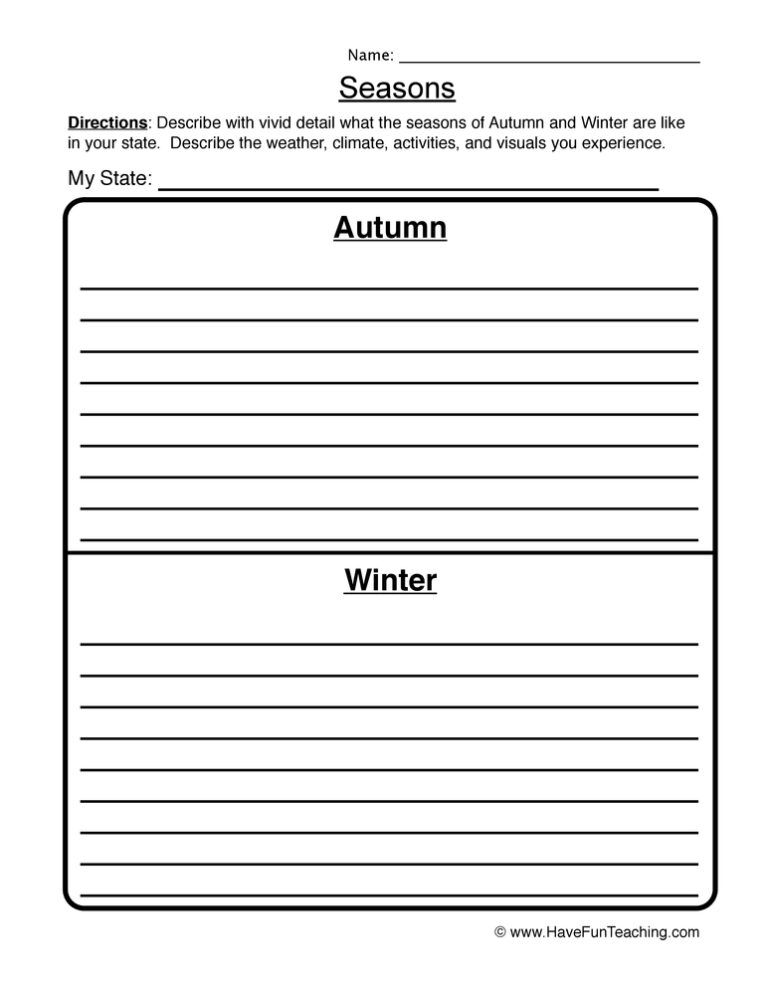
Using Seasons Descriptions Worksheet, students describe with vivid detail what the seasons of Autumn and Winter are like in your state.

Using Seasons Explanations Worksheet, students research to understand what causes seasons to occur.
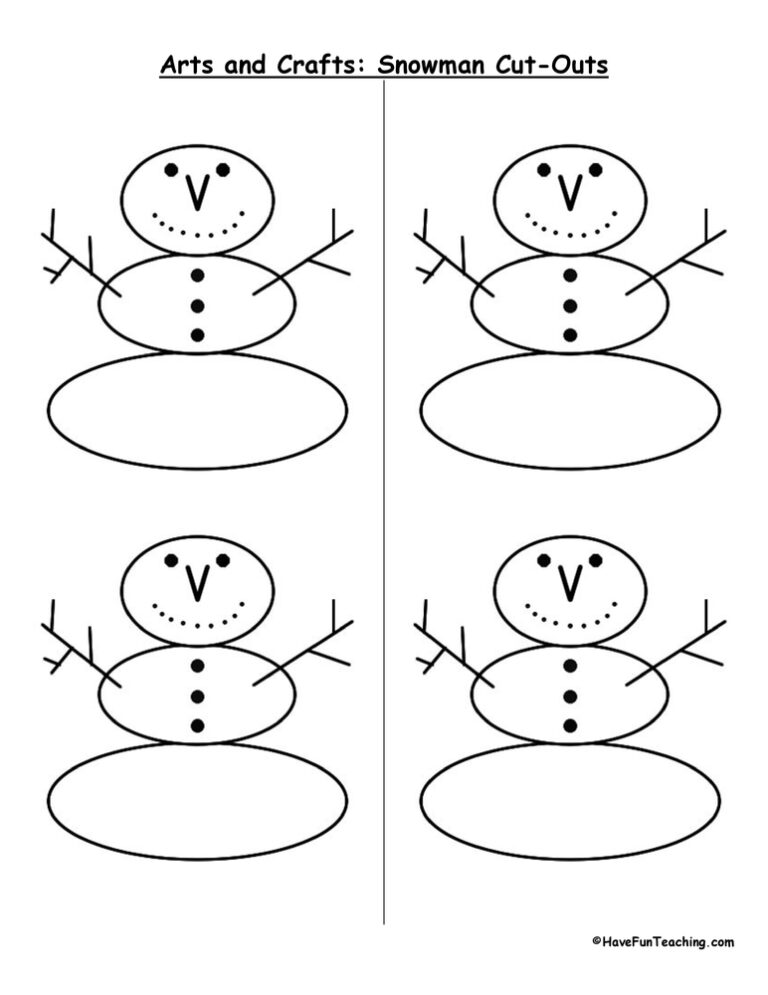
These Snowman Cut Outs will quickly give you templates for classroom decoration or student activities.

Using this Autumn Writing Paper, you will be able to showcase your students' fall writing to create a decorative, final draft.
This St. Patrick's Day Clip Art is a perfect addition to any bulletin board, flyer, or other printable that you use in your classroom.
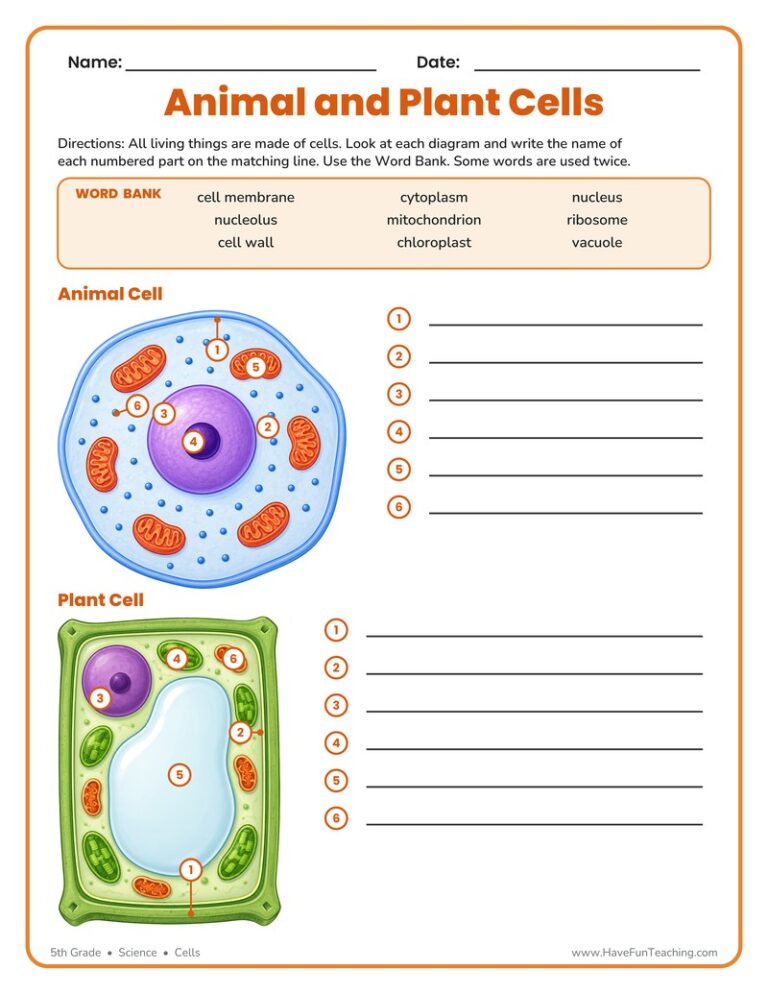
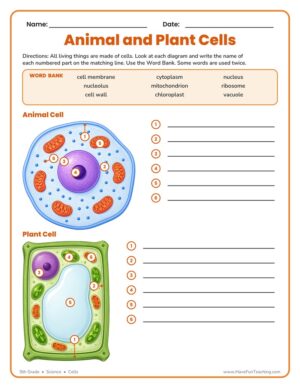
This Animal and Plant Cells Worksheet asks 5th grade students to label the organelles of an animal cell and a plant cell using a word bank. Answer key included for fast, no-prep science review.
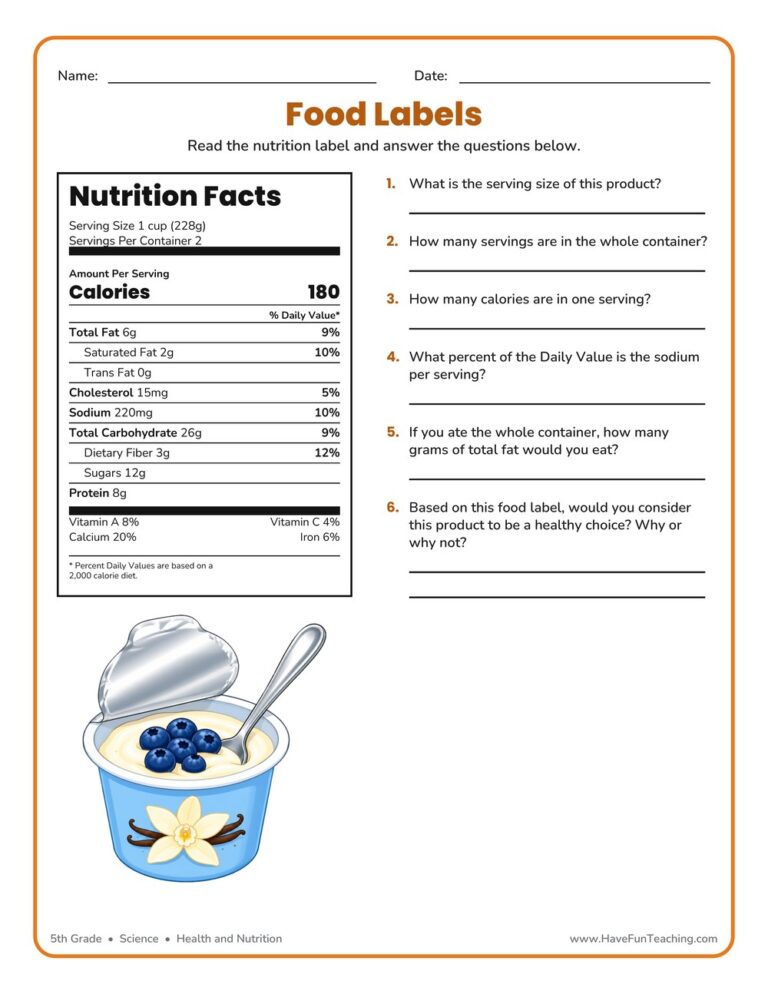
A 5th grade reading food labels worksheet where students study a real Nutrition Facts panel to find serving size, calories, and daily values. Includes a complete answer key for fast, no-prep nutrition practice.

Reviews
There are no reviews yet