
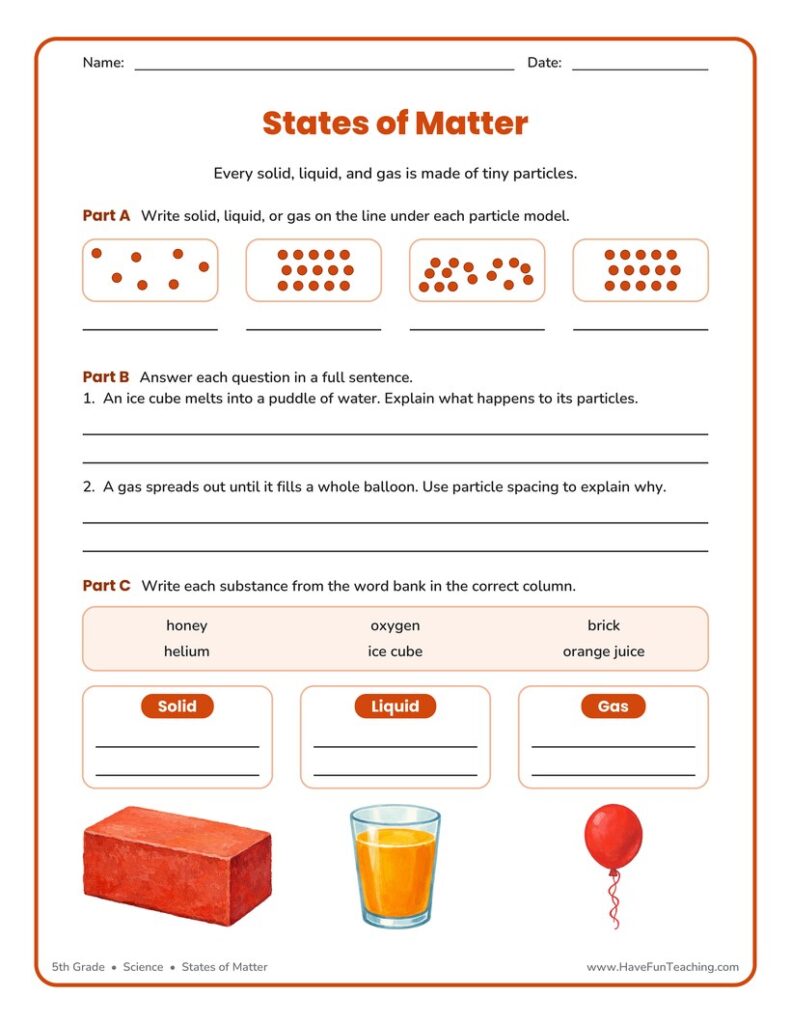
Identifying States of Matter Worksheet
This Identifying States of Matter Worksheet has 5th graders read particle models, explain melting and gas expansion, and sort six everyday substances into solids, liquids, and gases. An answer key is included for fast, confident grading.
$6.97
Want this one free?
Tell us where to send it and it’s yours — no card, no catch.
One free resource per teacher. We’ll also send free teaching ideas each week — unsubscribe anytime.
Free teacher account · no credit card
Membership
Get every game, song, & printable
- Every game, on any device
- 10,000+ printables
- Assign online with HFT Classroom
Then $39.97/year · cancel anytime · See plans
- Instant digital download
- Printable PDF + answer key
- Made by real teachers
Teacher / Family membership
Teaching is easier with every resource
One membership for your whole year: 10,000+ worksheets, games, songs and videos for Preschool–6th, for your classroom or homeschool.
- Unlimited printables & downloads
- Every game, on any device
- Assign online with HFT Classroom
- Cancel anytime
Teacher / Family membership · 3 days free
Yearly
Monthly would be $119.64 a year
$3.33/month
Billed $39.97 once a year
You save $79.67 every year
Start My 3 Free Days$0 today · cancel anytime
Monthly
$9.97/month
Flexible, month to month
Yearly is just $3.33/mo. Switch and save $79.67
Start My 3 Free Days$0 today · cancel anytime
About this resource
Description
Everything around us — the brick in a wall, the juice in a glass, and the helium inside a balloon — is matter, and every bit of it is built from particles far too small to see. How those particles are arranged, and how freely they move, is what makes a substance a solid, a liquid, or a gas. This Identifying States of Matter Worksheet gives 5th grade students focused practice reading particle models, explaining what happens when matter changes state, and sorting familiar substances into the correct category. Working at the particle level is exactly what the standards ask for at this grade, and it turns a memorized list of three words into a real mental model students can actually use.
This 5th grade states of matter worksheet is organized into three short parts so students build from recognition to reasoning. In Part A, they study four particle diagrams and name the state each one shows. In Part B, they write full-sentence explanations about a melting ice cube and about a gas filling a balloon. In Part C, they sort six everyday substances — brick, ice cube, honey, orange juice, helium, and oxygen — into Solid, Liquid, and Gas columns. Print one copy per student and use it as a lesson warm-up, an independent practice page, a homework assignment, or a quick check before a unit test.
What’s Included
- 1 print-ready PDF worksheet
- Answer key
- 4 particle-model identification items, 2 written-explanation questions, and a 6-substance sorting activity
There are three reasons this Identifying States of Matter Worksheet helps students learn. First, the particle diagrams make an invisible idea visible, so students can literally see the difference between tightly packed, loosely packed, and widely spaced particles. Second, the written-explanation questions push students past recall and into scientific reasoning, which is where fifth grade science actually lives. Third, the sorting activity connects the science back to objects students handle every day, so the concept sticks long after the page is finished.
Teachers and parents can extend this lesson in simple ways. Have students act out the three states with their bodies — standing shoulder to shoulder and vibrating for a solid, sliding past one another for a liquid, and bouncing around the room for a gas. Set out an ice cube and time how long it takes to melt on a warm windowsill, then talk about where the energy came from. Ask students to walk through the kitchen and list five solids, five liquids, and one gas they can name. A quick states of matter scavenger hunt around the classroom also works well as a five-minute review.
Related Resources
What teachers say
Reviews
You must be logged in to post a review.
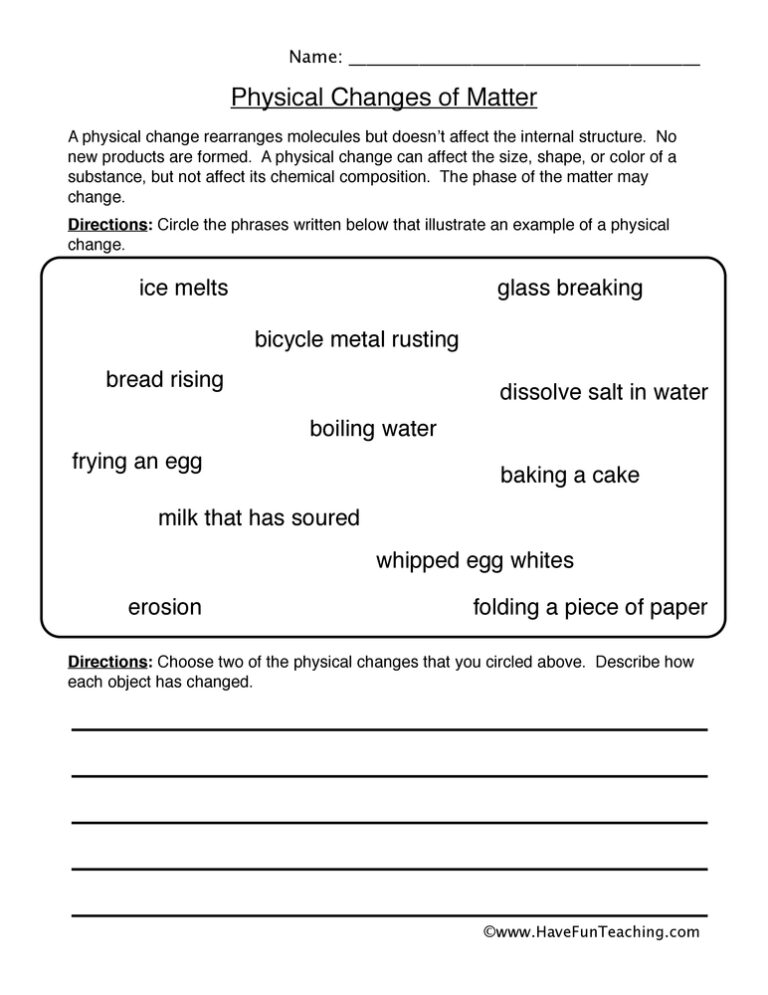
This physical changes matter worksheet asks 5th Grade students to sort eight everyday changes, label three states of matter, and explain their thinking, with an answer key included for fast grading.

The Matter Song teaches all about matter and the states of matter. With this states of matter song, students learn about solid, liquid, and gas, as well as the phases of matter, properties of matter, physical changes, chemical changes, and so much more. Matter has mass and takes up space.…

This Physical Changes Examples Worksheet gives 5th Grade students six sorting items and two written-response questions on physical and chemical change, answer key included, so classifying matter becomes second nature.

This Classifying Matter Worksheet helps 5th graders sort substances into elements, compounds, and mixtures using a handy reference chart. Includes an answer key — perfect for no-prep physical science practice at home or in class.
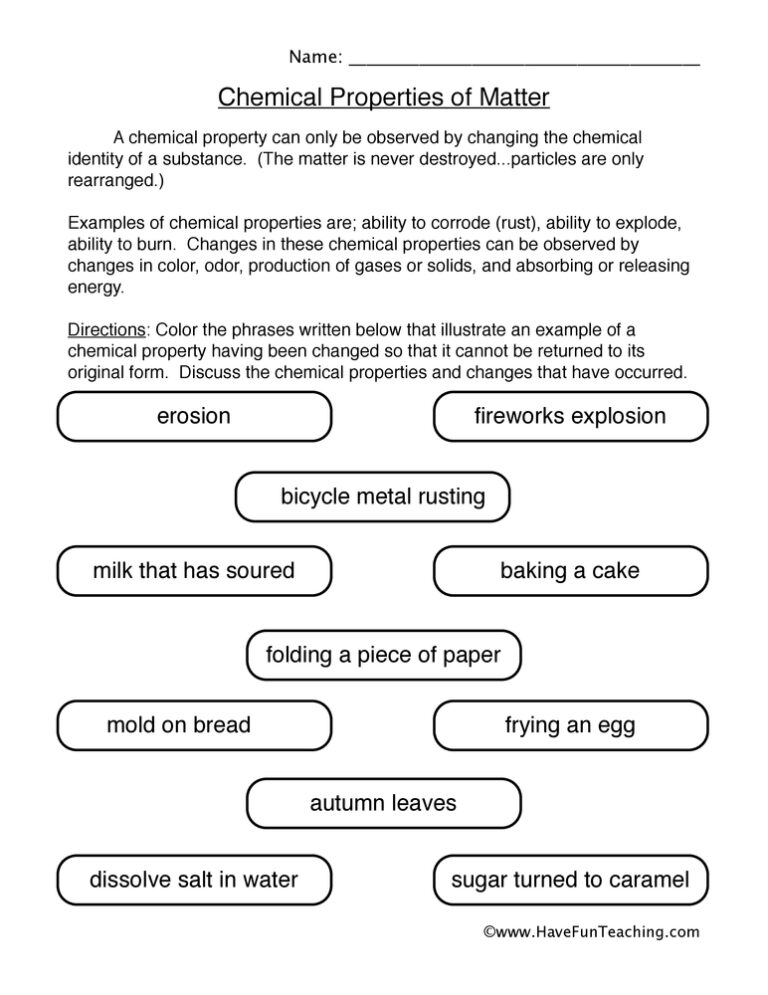
This chemical properties matter worksheet has 5th grade students sort eight everyday events into chemical and physical changes, then explain their reasoning with evidence. An answer key is included for fast, no-prep science practice.

This Chemical Changes Examples Worksheet gives 5th graders vocabulary practice, picture sorting, and a written explanation task for telling physical changes from chemical ones. An answer key is included, so checking work takes seconds.
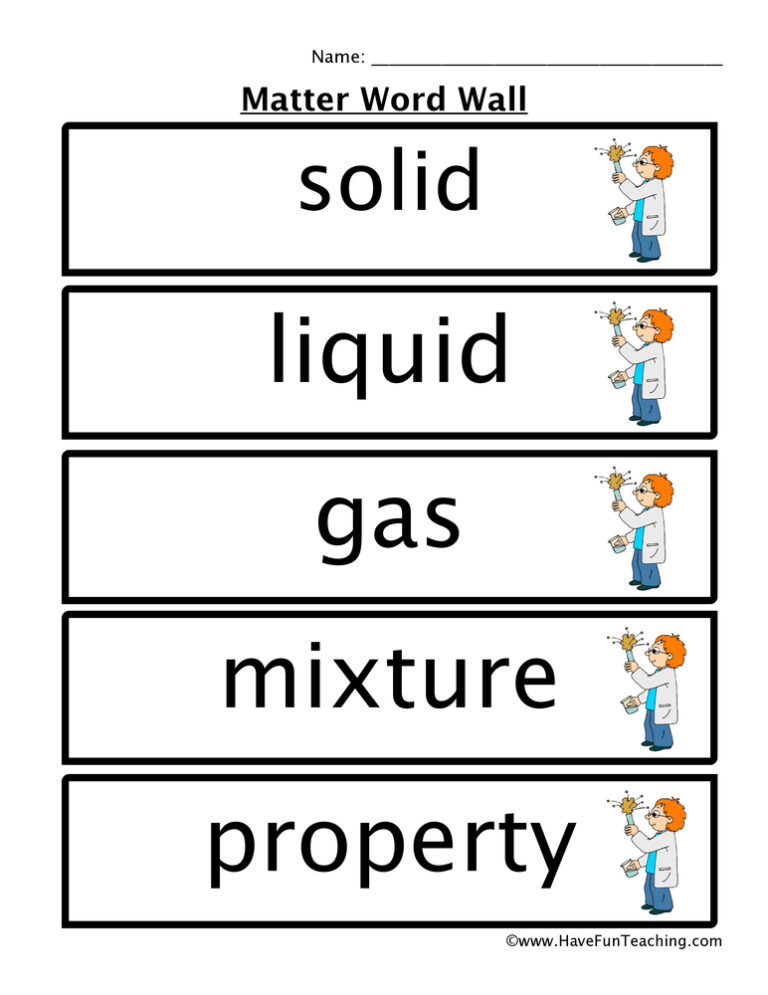
Using this Matter Word Wall, students use these common States of Matter terms in your science word wall to build their vocabulary.
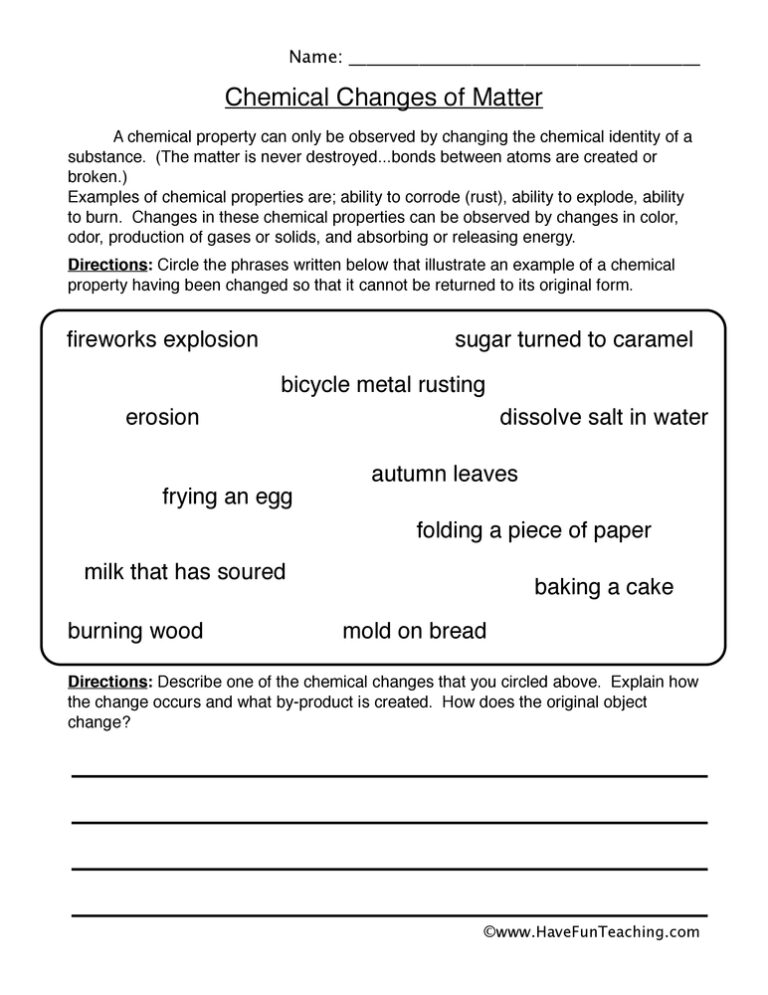
This chemical changes matter worksheet has 5th grade students name the signs of a chemical change and explain their thinking with evidence. An answer key is included for quick, easy checking.

While listening to the Matter Song (MP3), students learn about the states of matter, phases of matter, properties of matter, physical changes, chemical changes, solid, liquid, and gas and more.

Use this matter worksheet to help 5th grade students decide what is and is not matter and explain mass, volume, and particles in writing. A full answer key is included.
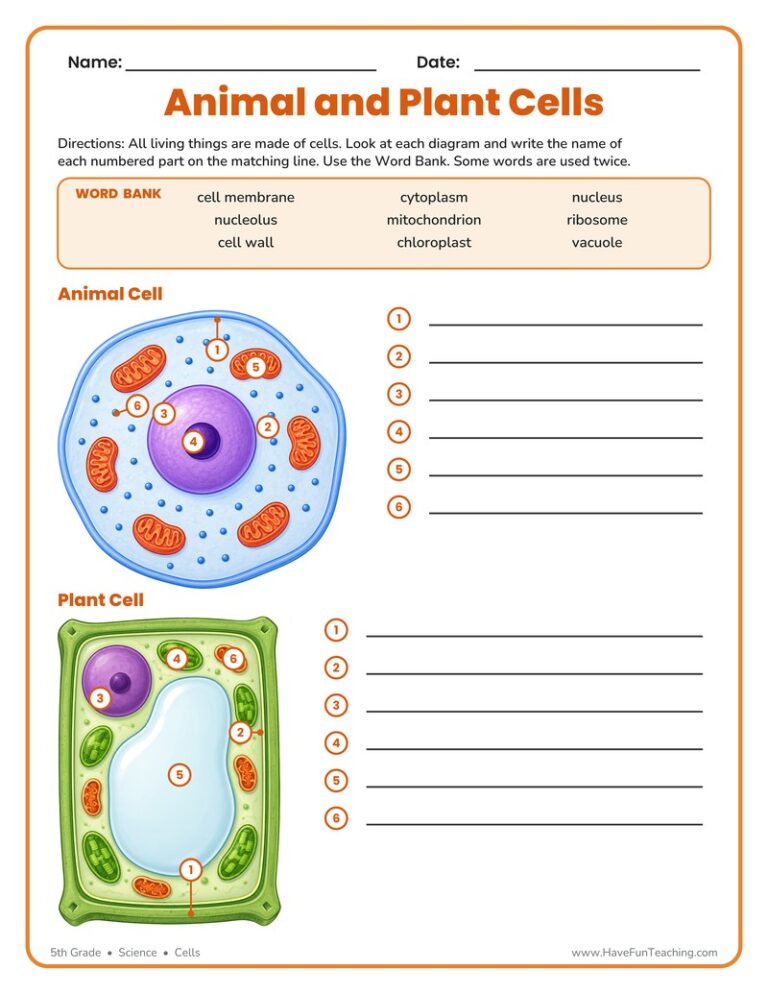
This Animal and Plant Cells Worksheet asks 5th grade students to label the organelles of an animal cell and a plant cell using a word bank. Answer key included for fast, no-prep science review.
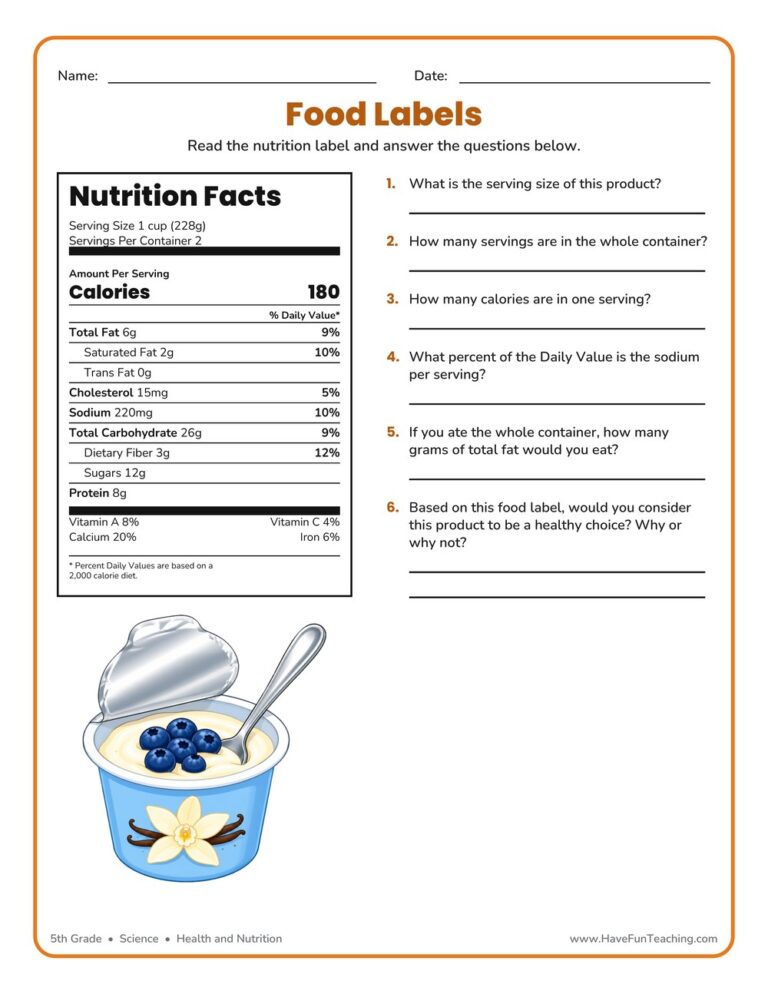
A 5th grade reading food labels worksheet where students study a real Nutrition Facts panel to find serving size, calories, and daily values. Includes a complete answer key for fast, no-prep nutrition practice.

Reviews
There are no reviews yet