

Sorting Coins Worksheet
This sorting coins worksheet asks 1st graders to sort eight coins into penny, nickel, dime and quarter groups, then circle the coin worth the most. Answer key included for fast, confident coin recognition.
$6.97
Or free with a membership — members pay $3.33/mo for all 10,000+ resources. See plans
Want this one free?
Tell us where to send it and it’s yours — no card, no catch.
One free resource per teacher. We’ll also send free teaching ideas each week — unsubscribe anytime.
Teaching is easier with a membership
Unlimited printables, games & videos for PreK–6th — for your classroom or homeschool. Cancel anytime.
Start your 3-day free trial$0 today · cancel anytime · Instant access to 10,000+ resources
About this resource
Description
Sorting coins is the first real money skill a child owns, and it is the one every later money standard is built on. Before a student can count a handful of change or make a purchase, she has to look at a coin and know instantly which coin it is — a penny, a nickel, a dime or a quarter. That means noticing the things that actually tell coins apart: the copper colour of the penny, the smooth rim of the nickel, the ridged edge of the dime, and the size of the quarter. This sorting coins worksheet gives first graders eight coins to look at closely and sort by name, so the four coins stop blurring together and become four separate, familiar objects.
The worksheet works in two parts, and both are ready to hand out with no preparation. In the first part, eight numbered coin cards are printed in mixed order — never grouped by kind — and the child writes each coin’s number in the box for that coin. Because the coins are drawn to their true relative sizes, a student who is guessing quickly finds out that guessing does not work. The second part of this 1st grade money worksheet pushes a little further: three rows of three coins, and the child circles the coin in each row that is worth the most. One of those rows deliberately puts a nickel next to a dime, which is the single most useful lesson on the page — the nickel is the bigger coin, and the dime is worth twice as much. Use it as morning work, as a small-group station, as a quick check before a counting-money unit, or as homework that a parent can grade in a minute using the included key.
What’s Included
- 1 print-ready PDF worksheet
- Answer key
- 8 coin cards to sort into a four-column penny, nickel, dime and quarter chart
- 3 compare-the-value rows — circle the coin worth the most
There are three reasons this sorting coins worksheet helps children learn to tell coins apart. First, it separates recognition from counting. Most money pages ask a child to add values before she can reliably name the coins, so a wrong total hides a naming problem; here the naming comes first and stands on its own. Second, the coins are drawn accurately rather than as generic circles, so students practise on the real visual cues — colour, relative size and the ridged versus smooth edge — that they will use with actual change. Third, the compare section attacks the most common money misconception head on: young children assume the bigger coin is worth more, and putting the nickel beside the dime corrects that idea while it is still easy to correct.
Bring the skill off the page with a few simple activities. Give each child a small cup of real coins and have them sort into four piles, then trade piles with a partner and check each other’s work. Play a quick round of “show me” where you call out a coin name and everyone holds one up. Tape four labelled envelopes to the wall as a classroom sorting station and let early finishers use it. At home, let your child sort the change from your pocket at the end of the day, or hunt for the oldest date on a penny. Once the four coins are automatic, move on to counting like coins by fives and tens, then to mixed collections.
Related Resources
What teachers say
Reviews
You must be logged in to post a review.
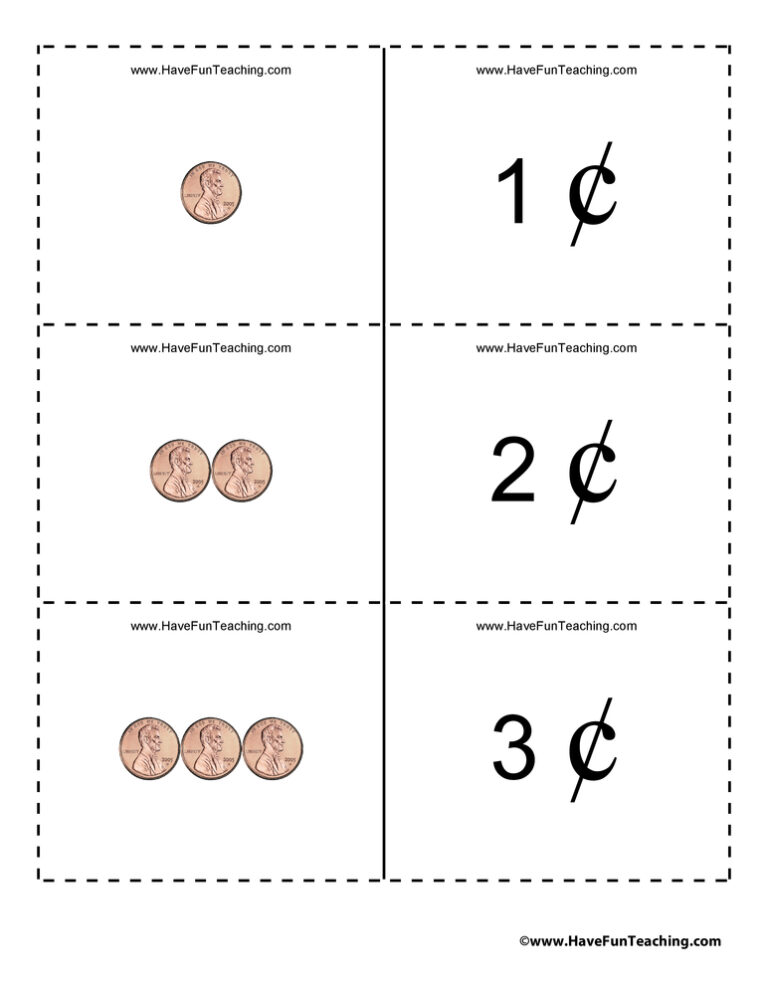
Using these Money Flash Cards, students identifying the dollar amount which represents the picture provide in order toimprove their coin counting skills.

Count groups of pennies and nickels, then solve two money word problems, with this Counting Pennies and Nickels Worksheet for 1st Grade. Answer key included so checking work takes seconds.

This Pennies Matching Worksheet helps 1st grade students count groups of pennies, match each group to its value, write totals, and solve a money story. An answer key is included for fast checking.

This Nickels Matching Worksheet has 1st grade students count groups of nickels by fives, match each group to its amount, write two totals, and solve a money problem. Answer key included for quick checking.
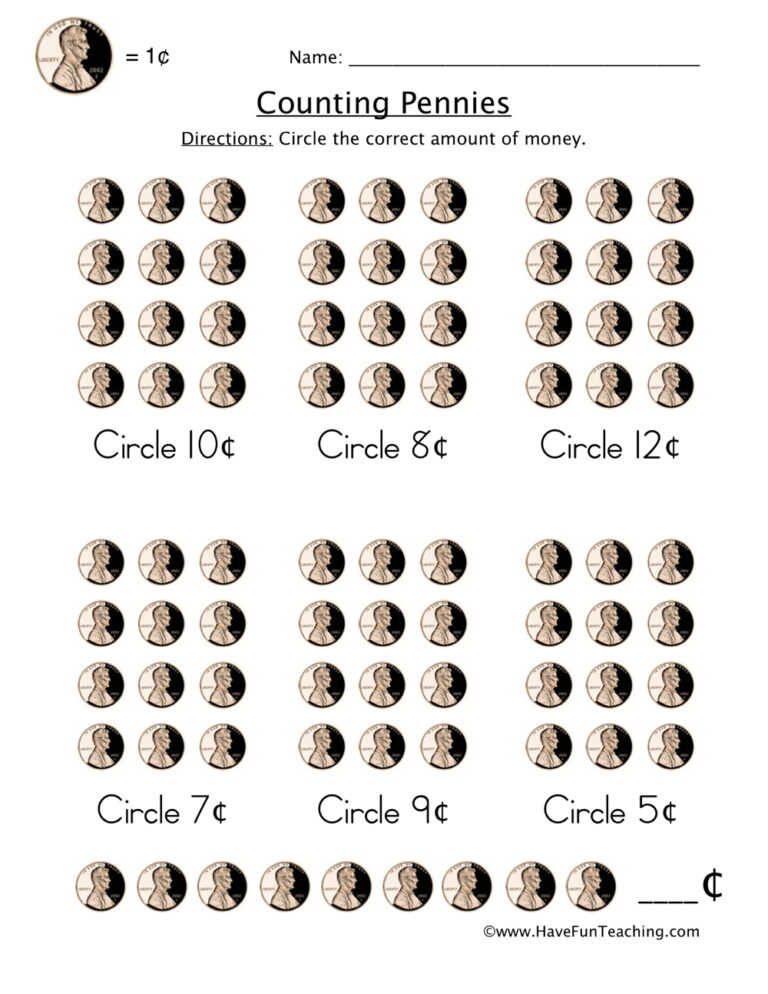
This Pennies Circle Worksheet has 1st graders circle the pennies that make 7¢, 3¢ and 6¢, count and total three rows of pennies, and solve a coin purse story problem. Answer key included.

This Penny Nickel Dime Worksheet helps 1st grade students count coins to match price tags and draw coins to buy toys. An answer key is included, making money practice quick and easy to check.
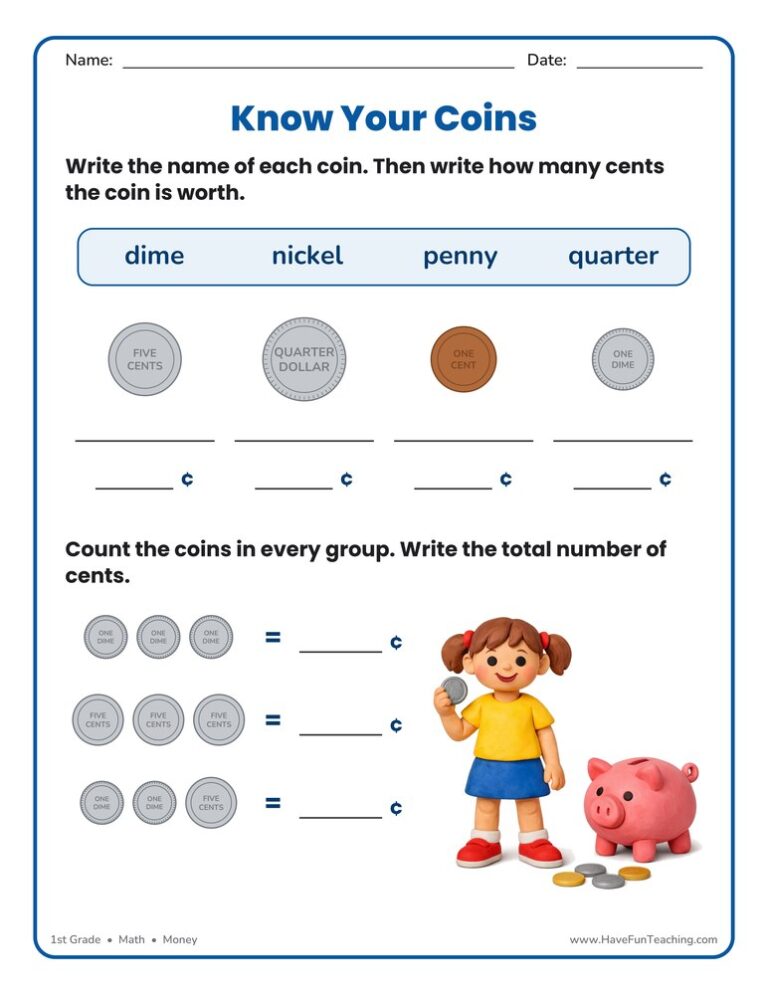
This identifying coins worksheet helps 1st graders name the penny, nickel, dime, and quarter, write each coin's value, and count small coin groups. Answer key included for fast, no-prep money practice.
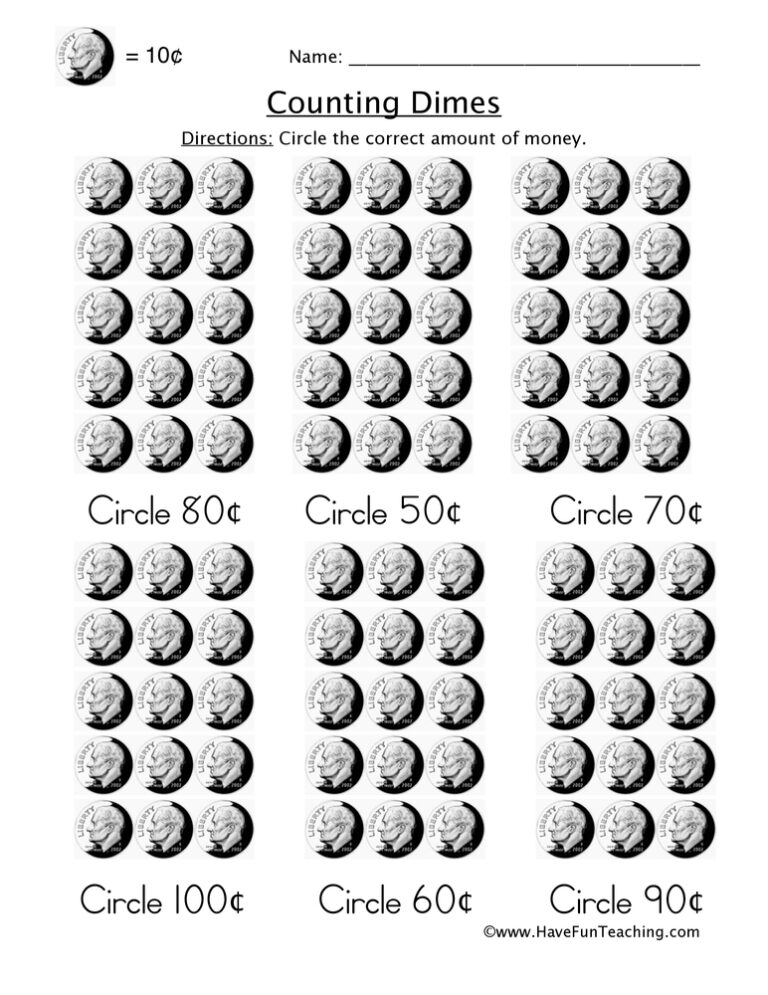
This dimes circle worksheet lets 1st graders circle dimes to make an amount, count dimes by tens, and solve a piggy bank story problem. An answer key is included for quick checking.
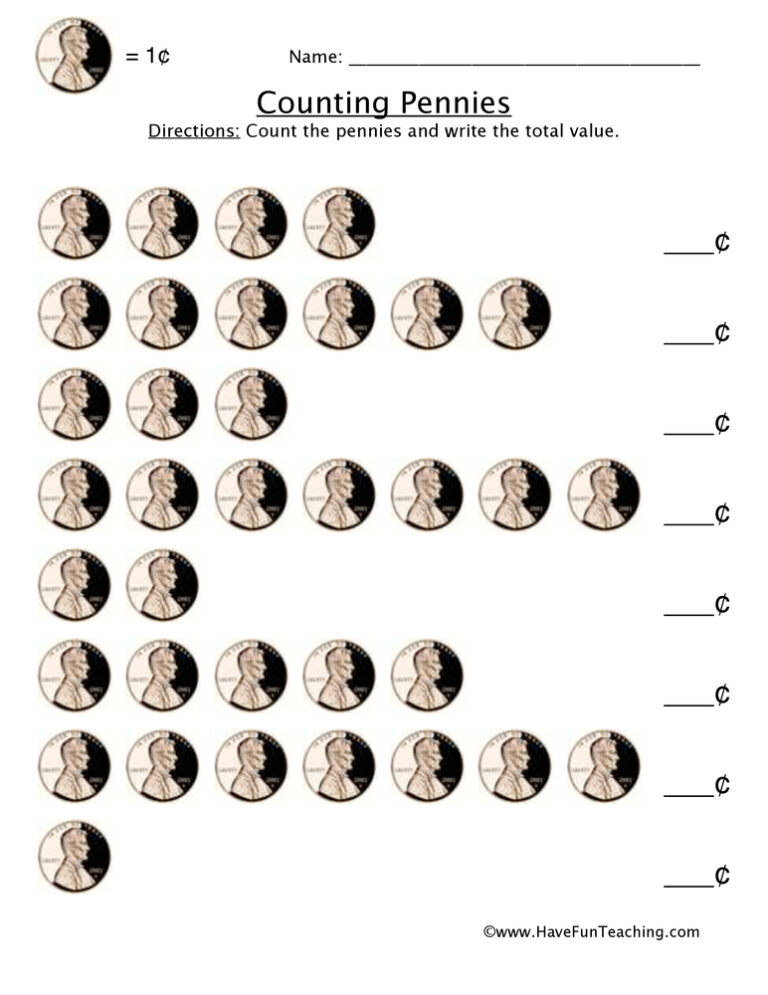
This counting money worksheet has 1st graders count rows of pennies, add two sets together, and solve a coin story problem. An answer key is included, so money practice takes no prep at all.

This Counting Coins Worksheet gives 1st Grade students practice counting pennies, nickels and dimes, circling coins to make an amount and solving a story problem, with an answer key included.
Using this Sweet Summer Treats Money Addition Activity, students Match the money cards with the food cards to match the prices of the items.

This penny nickel worksheet has first graders compare coin groups and draw the fewest pennies and nickels to buy fruit, with an answer key included for fast checking.

Reviews
There are no reviews yet