

Sound Volume Worksheet
This sound volume worksheet asks first grade students to circle the loudest sound in each row, then color circles that grow louder. An answer key is included, so children learn to compare loud and soft sounds.
$6.97
Want this one free?
Tell us where to send it and it’s yours — no card, no catch.
One free resource per teacher. We’ll also send free teaching ideas each week — unsubscribe anytime.
Free teacher account · no credit card
Membership
Get every game, song, & printable
- Every game, on any device
- 6,500+ resources
- Assign online with HFT Classroom
Then $39.97/year · cancel anytime · See plans
- Instant digital download
- Printable PDF + answer key
- Made by real teachers
Teacher / Family membership
Teaching is easier with every resource
One membership for your whole year: 6,500+ worksheets, games, songs and videos for Preschool–6th, for your classroom or homeschool.
- Unlimited printables & downloads
- Every game, on any device
- Assign online with HFT Classroom
- Cancel anytime
Teacher / Family membership · 3 days free
Yearly
Monthly would be $119.64 a year
$3.33/month
Billed $39.97 once a year
You save $79.67 every year
Start My 3 Free Days$0 today · cancel anytime
Monthly
$9.97/month
Flexible, month to month
Yearly is just $3.33/mo. Switch and save $79.67
Start My 3 Free Days$0 today · cancel anytime
About this resource
Description
Volume is the first property of sound a child can measure without any equipment: is it loud, or is it soft? This sound volume worksheet gives first graders nine familiar objects and asks them to compare, three at a time, which one makes the loudest sound. Comparing is the move that matters. Asked in the abstract whether a fan is loud, a six-year-old has no way to decide; asked whether a fire truck is louder than a wind chime, every child on the carpet knows the answer and can say why.
The page holds two short parts. In Part A, three rows of three flat-cartoon pictures give a wide comparison each time – a fire truck against a wind chime and a feather, a drum against a pillow and a leaf, a jet airplane against a dripping faucet and a pencil – and the child circles the loudest one in each row. In Part B, four circles grow from small to large, and the child colors them while learning the idea that carries into later grades: a bigger vibration means a louder sound. Print the page, hand it out with crayons, and let students work down the sheet.
What’s Included
- One printable worksheet page plus a complete answer key
- Part A: nine pictures in three rows, one clearly loudest sound in each
- Part B: four circles that grow left to right, showing louder and louder sound
- Original flat cartoon illustrations drawn for this page
- Comparisons wide enough that every row has one defensible answer
- A Name and Date line so finished work is easy to collect and file
Three Reasons This Helps Kids
- It asks a question a child can actually answer. Loudness is relative, so the sheet compares three sounds at a time instead of demanding an absolute verdict on one.
- It connects sound to real objects. A fire truck, a drum and a jet are sounds first graders have heard, so the science starts from what they already know.
- It plants the vibration idea early. The growing circles in Part B give children a picture for amplitude years before they meet the word.
Ideas for Teachers and Parents
Before students pick up a crayon, make the comparison audible: tap a pencil on a desk, then clap, then ask which was louder and how they knew. After the circling, walk the hallway and collect three loud sounds and three soft ones on a class chart. This first grade sound worksheet also pairs well with a simple rubber-band experiment – pluck it gently, then hard, and watch the bigger vibration make the bigger sound, which is exactly what Part B draws. At home, this sound volume worksheet takes about ten minutes, and the answer key lets a parent check the work at a glance.
Related Resources
What teachers say
Reviews
Write a review, earn store credit
Get 25¢ in credit for every approved review of a resource you’ve downloaded, played or purchased — up to 15 a month. Credit applies automatically to your membership payments, so your reviews can help pay for your membership.
Honest reviews only — any star rating earns the same. Program rules
Log in to write a review and earn store credit.

This magnet activity has kindergarten to 3rd grade students sort picture cards into things a magnet will pull and things it will not, with a sorting mat, practice page and answer key.
A things that give light activity for kindergarten to 2nd grade: a board game with 12 picture cards about light sources, a practice page and an answer key included.
The All About Autumn Reading Comprehension Worksheet gives 1st graders a short fall passage and multiple-choice questions to build reading comprehension. An answer key is included for quick, no-prep practice at home or school.

While listening to the Seasons Song (Animated Music Video), students learn about the seasons of the year while listening to a catchy song. Here we go, oh, seasons of the year! Your kids will be singing this song about the seasons over and over. Bring joy into your classroom with…

The Seasons Song by Have Fun Teaching is perfect for teaching and learning all about the seasons of the year. This is a fun way for kids to learn the seasons. With this seasons song, your kids can learn about Spring, Summer, Fall, and Winter. While listening to the Seasons…
The Mammal Song by Have Fun Teaching is perfect for teaching and learning all about mammals. This animated music video teaches that mammals breathe air with lungs, are warm-blooded, have fur or hair, give birth to live young and feed their babies milk. While watching the Mammal Song, students learn…
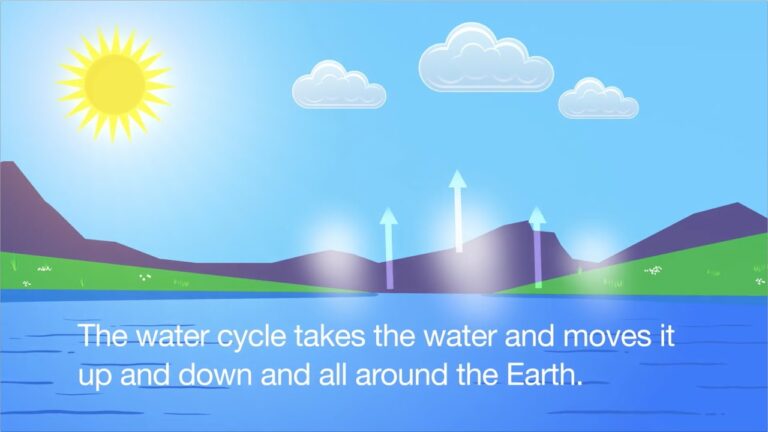
While watching the Water Cycle Song (Animated Music Video), students learn about the process of the water cycle by listening to the repetitive lyrics loaded with key vocabulary.

The Matter Song teaches all about matter and the states of matter. With this states of matter song, students learn about solid, liquid, and gas, as well as the phases of matter, properties of matter, physical changes, chemical changes, and so much more. Matter has mass and takes up space.…
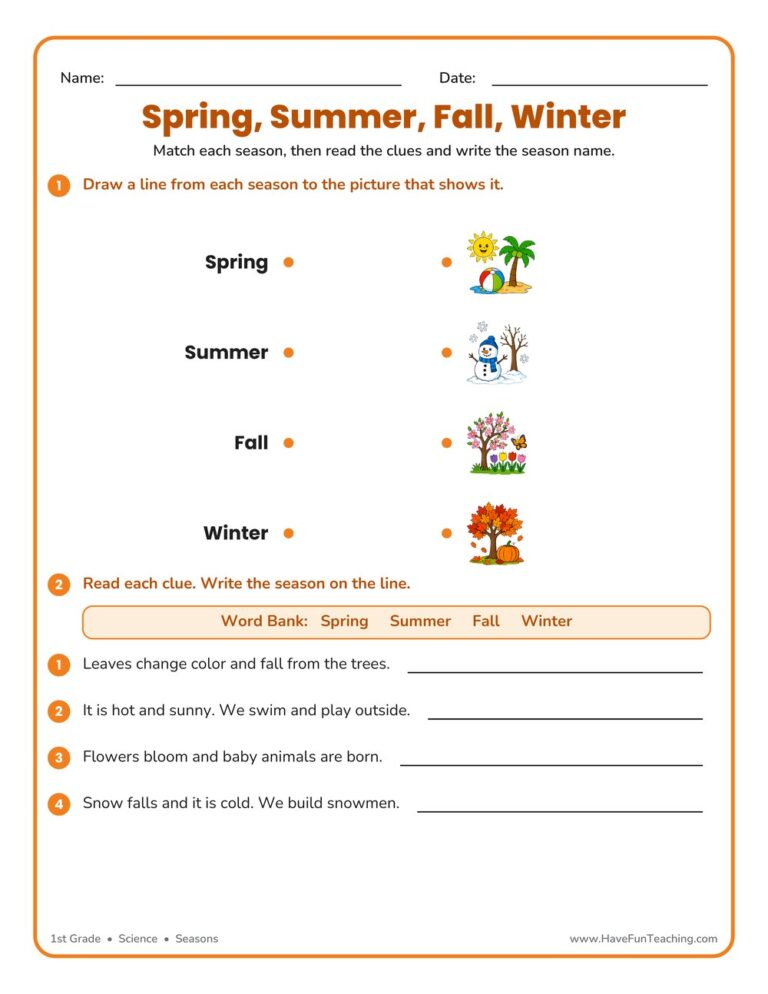
A colorful seasons of the year matching worksheet where 1st graders match spring, summer, fall, and winter to pictures, then write each season from a clue. Answer key included — perfect for no-prep science practice.
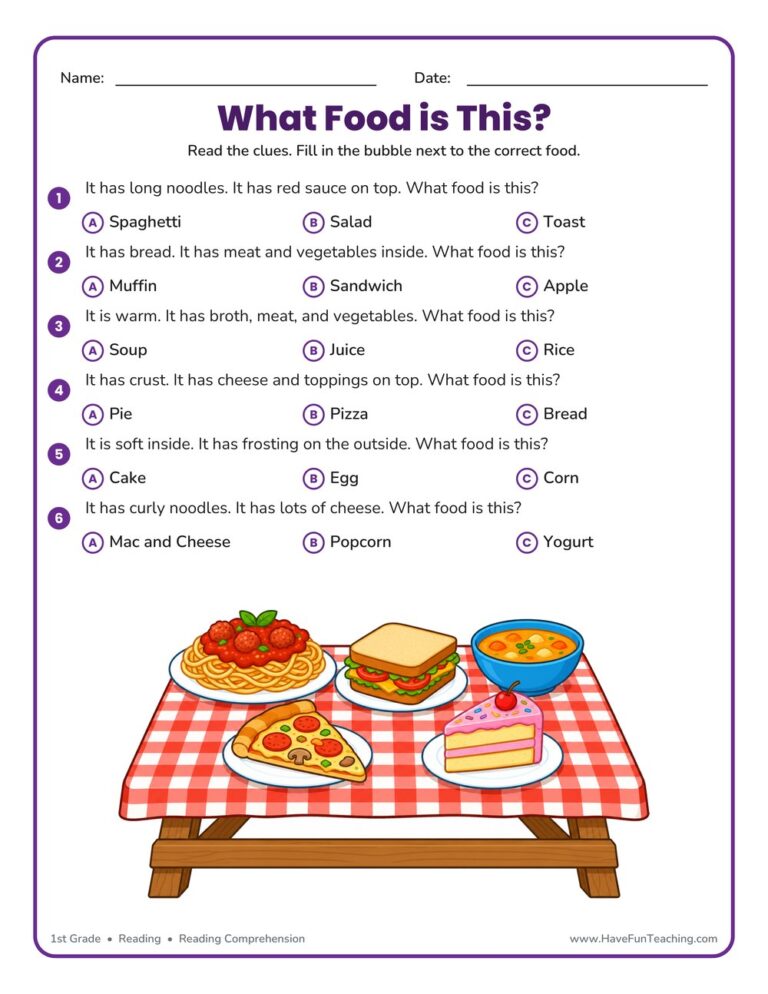
This what food is this reading comprehension worksheet lets 1st graders read food clues and choose the correct food in six fun riddles. Includes a complete answer key — great for quick, no-prep reading practice.

While watching the Planets Song (Animated Music Video), students learn about the order of planets in our solar system as well as cool facts about each planet.
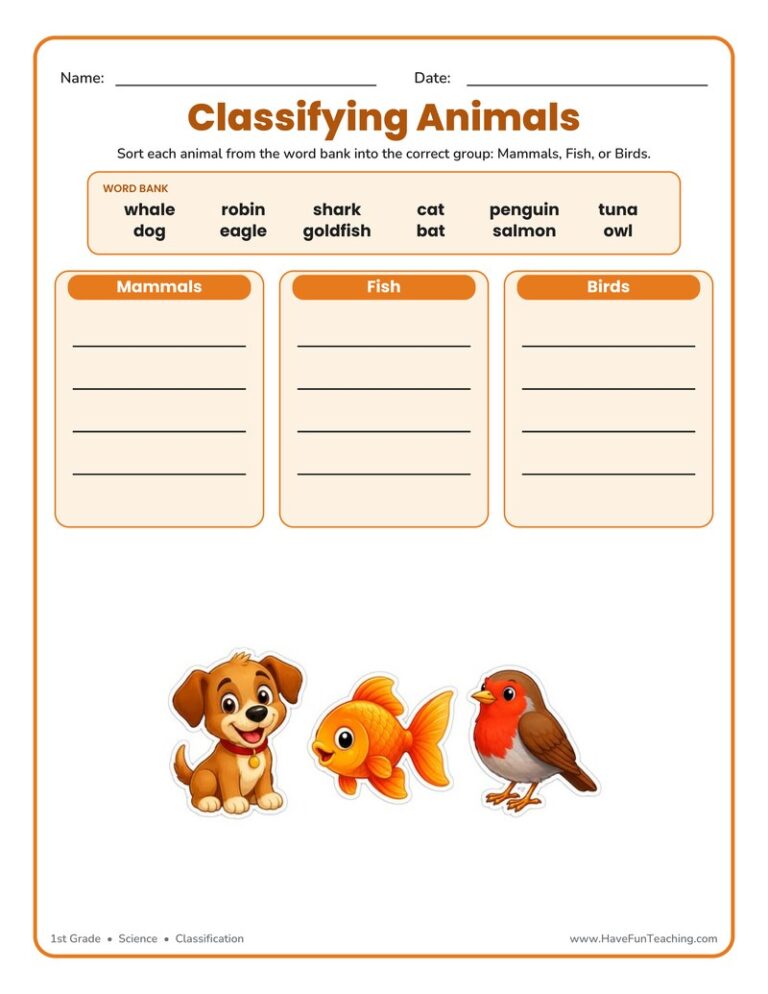
A 1st grade Mammals, Fish, or Birds Classifying Animals Worksheet where students sort a word bank of animals into three groups. Includes a complete answer key for quick, no-prep science practice.




Reviews
There are no reviews yet