

Subtract Three Matching Worksheet
The Subtract Three Matching Worksheet asks first grade students to match six subtraction facts to their differences and solve four more in answer boxes. An answer key is included.
$6.97
Or free with a membership — members pay $3.33/mo for all 10,000+ resources. See plans
Want this one free?
Tell us where to send it and it’s yours — no card, no catch.
One free resource per teacher. We’ll also send free teaching ideas each week — unsubscribe anytime.
Teaching is easier with a membership
Unlimited printables, games & videos for PreK–6th — for your classroom or homeschool. Cancel anytime.
Start your 3-day free trial$0 today · cancel anytime · Instant access to 10,000+ resources
About this resource
Description
Taking away three is one of the first subtraction patterns a child can hold in their head, and the Subtract Three Matching Worksheet turns that pattern into a game of pairs. Six subtraction facts sit in bright blue chips down the left side of the page, the six differences wait on the right, and students draw a line from each problem to its answer. Four more problems follow underneath, each with a box to write the difference in. Every fact on the page takes away three, so the repetition does the teaching.
This first grade subtraction worksheet works as a warm up, a math center card, homework, or a quick check before a unit test. The minuends run from four to thirteen, so a few facts cross ten and ask a child to think past counting on their fingers. An answer key is included, which makes the page easy to grade or to let a partner check.
What’s Included
- One printable worksheet page and a full answer key page
- Six matching pairs: subtraction facts in chips on the left, differences on the right
- Four solve and write problems with large answer boxes
- Big, bold numerals sized for young readers
- A name and date line, clear directions, and plenty of white space
Three Reasons This Helps Kids
- Fluency: every item takes away three, so a child meets the same fact family ten times in one page and starts to recall instead of count.
- Two ways of thinking: matching asks students to recognize an answer, and the boxes ask them to produce one, which is harder and shows what they really know.
- Confidence: the answers are scrambled, so a child has to read each problem rather than pair the first chip with the first number.
Ideas for Teachers and Parents
Start with counters. Put out eight cubes, take three away, and count what is left before anyone picks up a pencil. Then let students work the Subtract Three Matching Worksheet on their own and share how they found a tricky one, such as twelve take away three. Ask a child to prove a match by drawing a quick picture in the margin. Pair the page with an adding three lesson and talk about how the two operations undo each other, or cut the chips apart and use them as a memory game with the answer cards.
Related Resources
What teachers say
Reviews
You must be logged in to post a review.
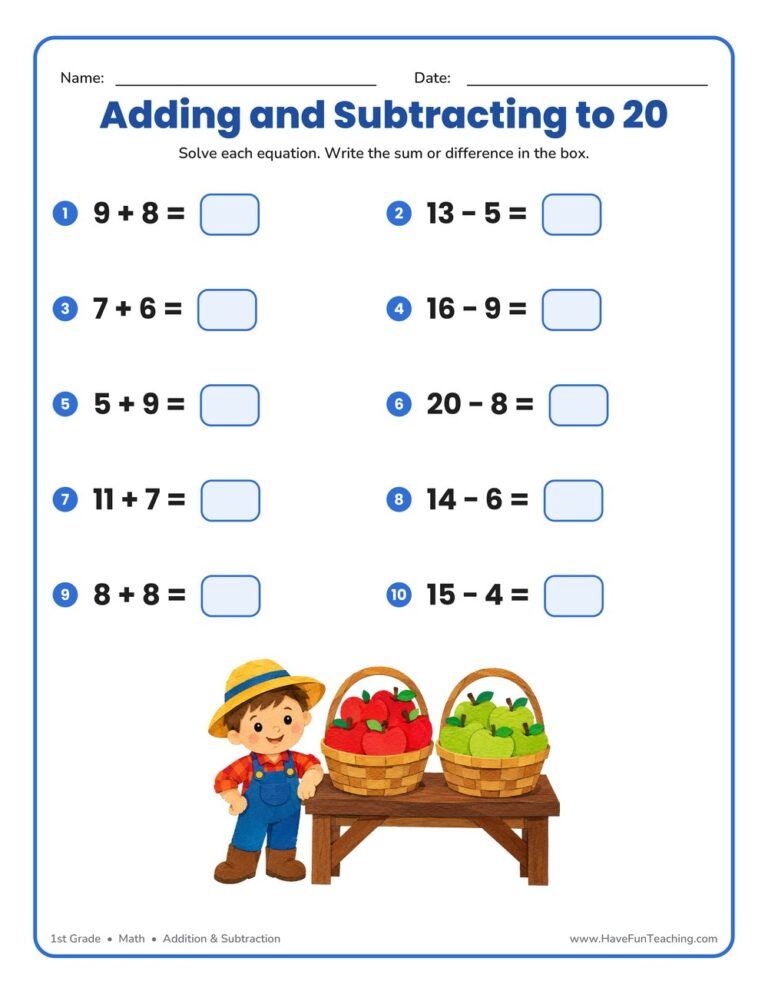
This adding and subtracting to 20 worksheet gives 1st graders ten mixed addition and subtraction equations to solve within 20. Answer key included — perfect for quick, no-prep math fact practice at home or school.

This adding and subtracting within 20 worksheet gives first graders mixed addition and subtraction fact practice with a helpful number line. Includes a complete answer key for quick, no-prep math review.
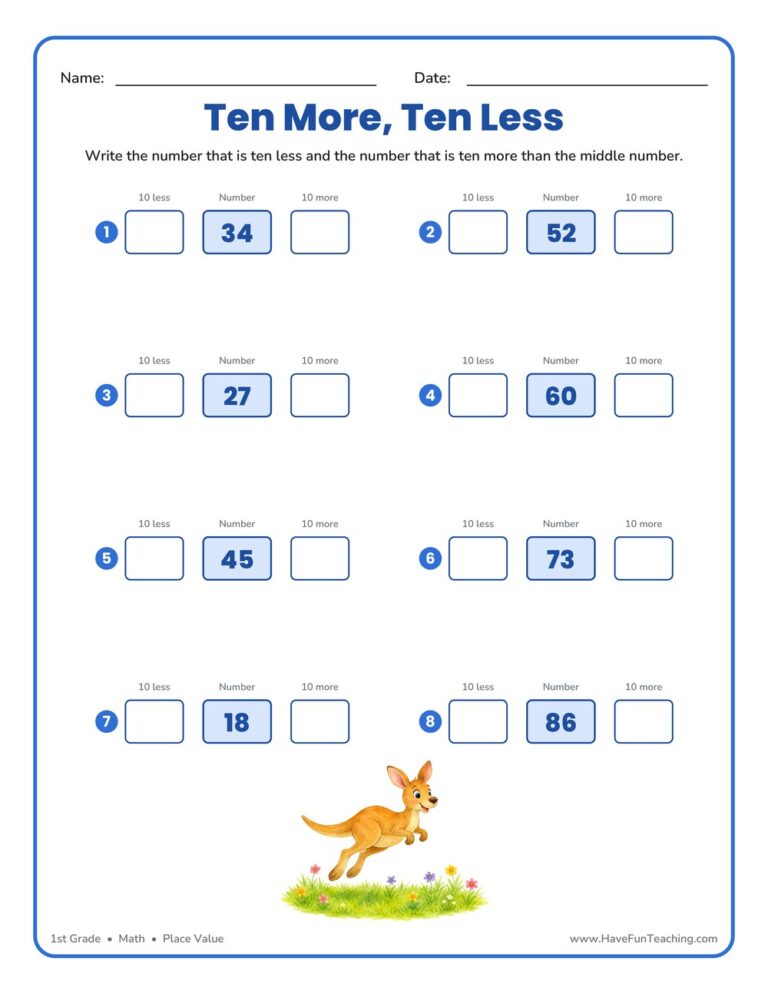
This Ten More Ten Less Worksheet gives 1st graders eight quick problems to find ten more and ten less than a two-digit number. Includes an answer key for fast, no-prep place value practice.

This finding the missing number worksheet gives first graders focused practice solving for the unknown number in addition and subtraction equations within 20. Includes an answer key — a quick, no-prep way to build number sense and fact fluency.

This counting back to subtract worksheet gives 1st graders number-line hops, six equations within 20, and a word problem, with an answer key included, so subtraction becomes a quick, confident count.
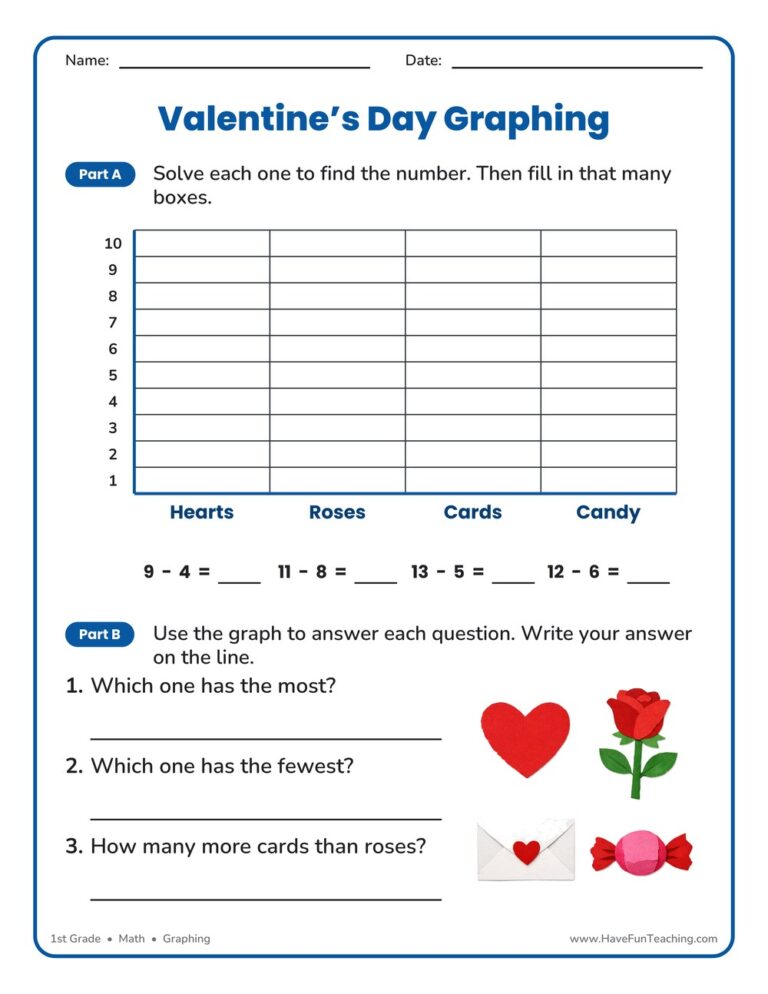
This Valentine's Day Graphing Worksheet has 1st Grade students solve four subtraction facts, fill in a bar for each answer, and read the graph they built. Answer key included, so checking takes seconds.

This Adding to Solve Subtraction Problems Worksheet helps 1st graders solve subtraction facts within 20 by finding the missing addend. Six paired problems and a story problem, with an answer key included, build quick and confident fact fluency.
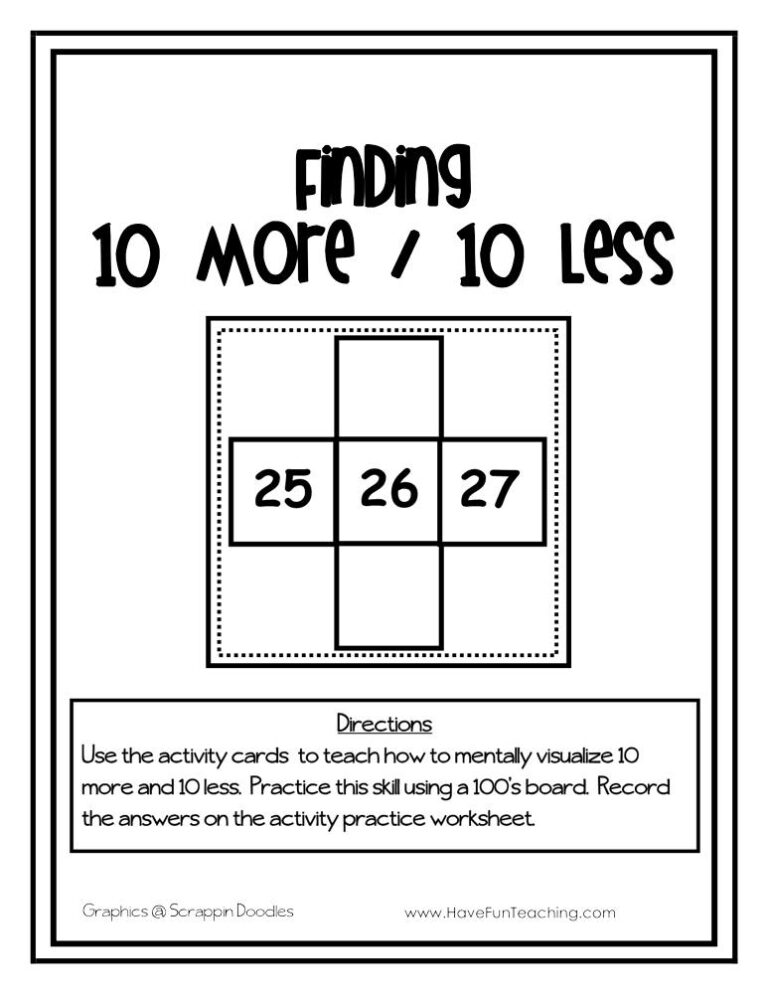
In this Finding 10 More 10 Less Activity, students practice finding 10 more and less than a given number to build skip counting and base ten skills.

This ten more and ten less worksheet gives 1st Grade students eight number-chart problems and two story problems for mental math with tens. An answer key is included, so checking work takes seconds.

This Count Up to Subtract Worksheet gives 1st Grade students a quick strategy for subtracting within 20 using paired equations, a number line, and two word problems. An answer key is included.

This word problem practice worksheet gives 1st graders five real-life addition and subtraction problems to solve within 20. An answer key is included, so checking work takes seconds.
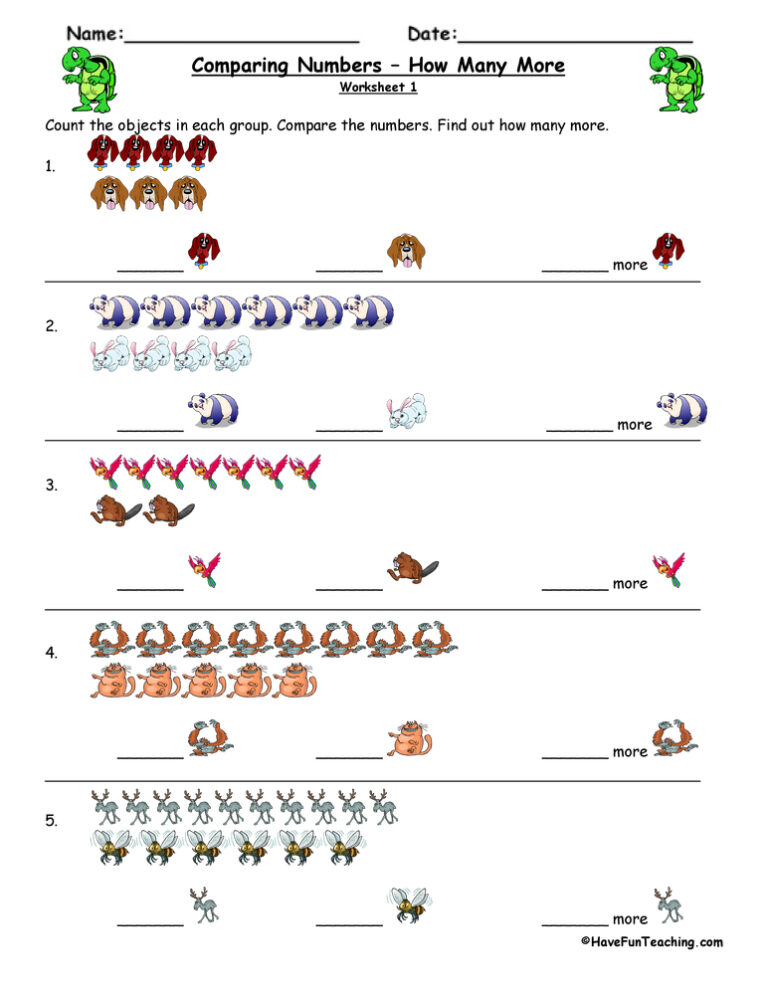
This comparing numbers subtraction worksheet has 1st graders count two groups of pictures, write each number, and subtract to find how many more. Answer key included for fast, no-prep practice.

Reviews
There are no reviews yet