
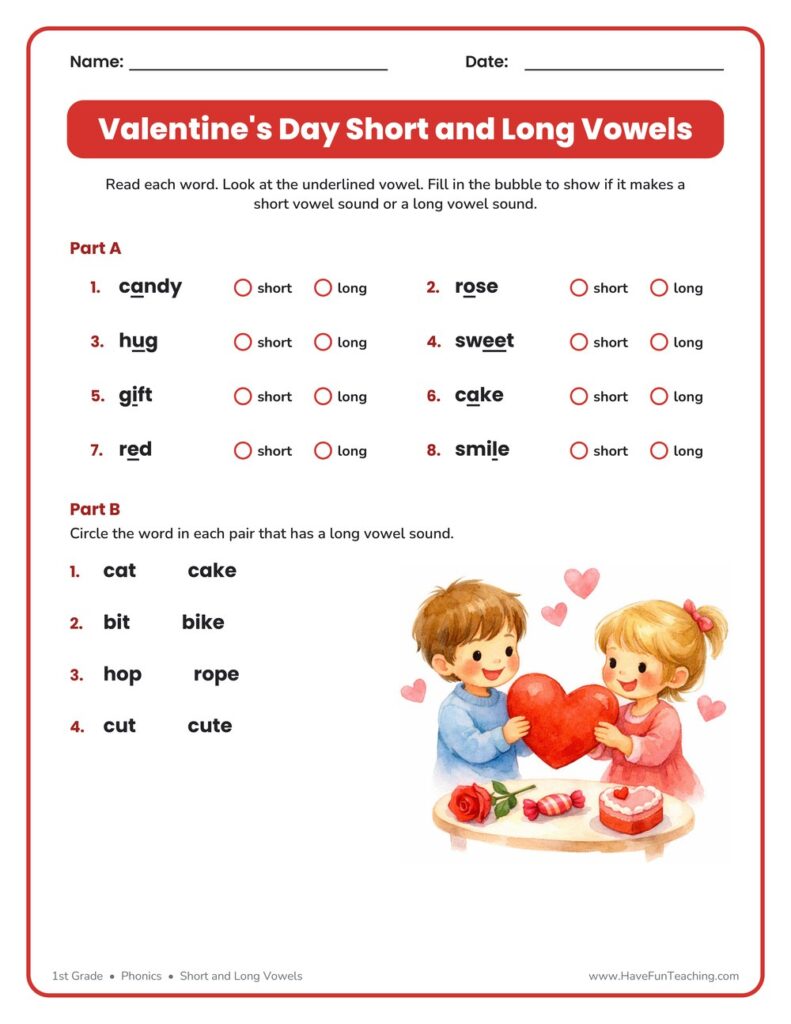
Valentine’s Day Short and Long Vowels Worksheet
This Valentine’s Day short and long vowels worksheet helps 1st graders listen for short and long vowel sounds in fun holiday words. Includes an answer key for quick, no-prep phonics practice.
$6.97
Or free with a membership — members pay $3.33/mo for all 10,000+ resources. See plans
Want this one free?
Tell us where to send it and it’s yours — no card, no catch.
One free resource per teacher. We’ll also send free teaching ideas each week — unsubscribe anytime.
Teaching is easier with a membership
Unlimited printables, games & videos for PreK–6th — for your classroom or homeschool. Cancel anytime.
Start your 3-day free trial$0 today · cancel anytime · Instant access to 10,000+ resources
About this resource
Description
The Valentine’s Day Short and Long Vowels Worksheet helps first graders hear the difference between short and long vowel sounds using fun, holiday-themed words. Knowing whether a vowel is short, as in candy, or long, as in rose, is one of the most important early reading skills, because it helps young readers sound out and spell brand-new words with confidence.
This first grade long vowels worksheet gives students two friendly activities. In Part A, children read ten sweet Valentine’s Day words, look closely at the underlined vowel, and fill in the bubble to show whether it makes a short or a long vowel sound. In Part B, they circle the word in each pair that has a long vowel sound, practicing the silent-e pattern with words like cake, bike, and rope. Simply print the page and let students work on their own, with a partner, or in a small group.
What’s Included
- 1 print-ready PDF worksheet
- Answer key
- 2 vowel activities: 10 short/long vowel words and 4 long-vowel word pairs
This Valentine’s Day Short and Long Vowels Worksheet supports learning in three ways. First, the clear fill-in-the-bubble format lets children focus on listening for each vowel sound instead of on writing. Second, pairing short and long examples side by side helps students notice how a silent e can change a vowel from short to long. Third, the cheerful Valentine’s theme keeps young learners engaged, so practicing phonics feels like play. The included answer key makes it easy to check work and review any tricky sounds together.
Teachers and parents can extend this skill in many playful ways. Say a word aloud and have children give a thumbs up for a long vowel and a thumbs down for a short vowel. Go on a vowel hunt around the classroom or home, sorting objects by their vowel sounds. Or write Valentine’s Day words on paper hearts and have students sort them into “short vowel” and “long vowel” piles. Singing vowel songs and reading decodable books together builds strong listening skills too.
Related Resources
What teachers say
Reviews
You must be logged in to post a review.
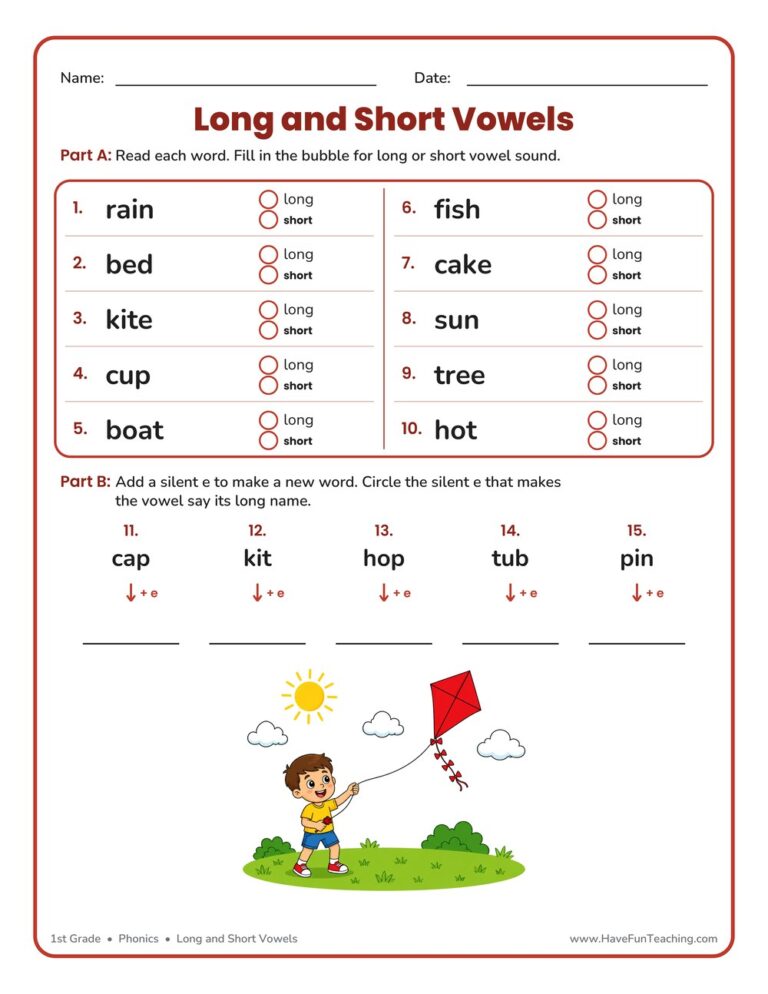
This Long and Short Vowels Worksheet helps 1st graders identify long and short vowel sounds and practice silent-e words. Answer key included, making it perfect for quick, no-prep phonics practice at home or school.
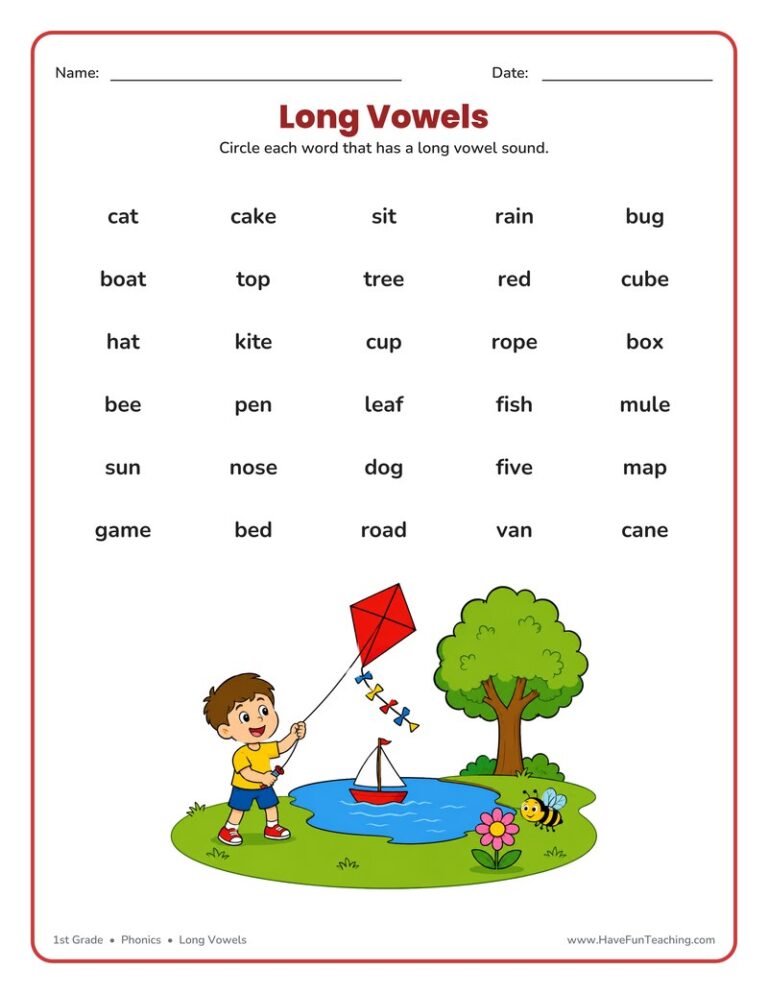
This Long Vowels Circling Worksheet gives 1st graders a 30-word grid where they circle every word that has a long vowel sound. Answer key included — perfect for quick, no-prep phonics practice at home or school.

The Pie Guy Phonics Reading Comprehension Story Worksheet - Long Vowel I Sound gives 1st graders a fun, decodable long-I story with five comprehension questions and a complete answer key for quick, no-prep reading practice.

This long vowel o worksheet has first graders circle pictures with the long o sound and write long o words to finish sentences. An answer key makes checking quick and easy.
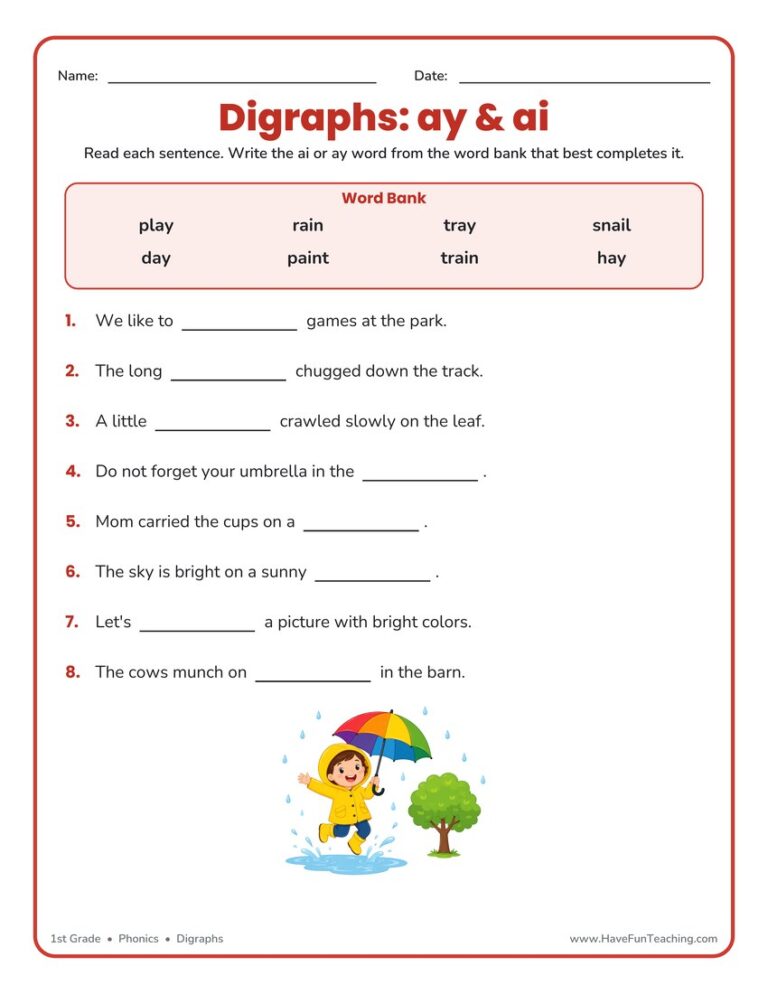
This AI AY Digraphs Fill in Blanks Worksheet lets 1st graders use a word bank to complete eight sentences with long-a words spelled ai and ay. An answer key is included for quick, no-prep phonics practice.
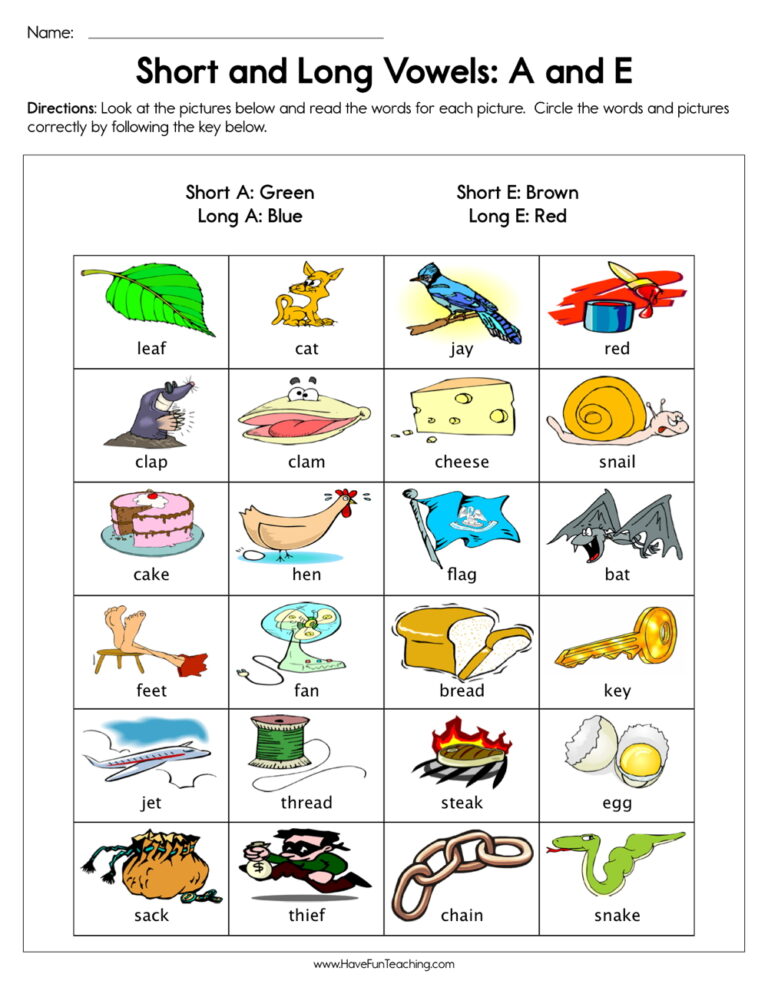
This short and long vowels a and e worksheet gives 1st Grade students a word sort plus four picture words for hearing short and long a and e. An answer key is included, so checking takes seconds.
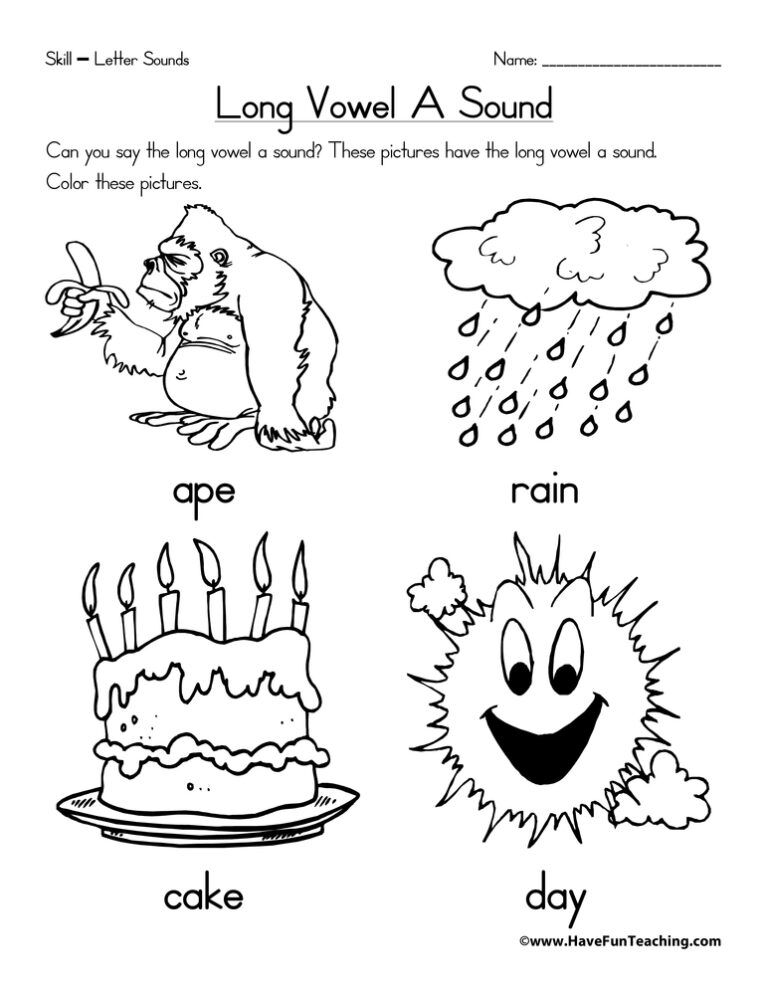
This long vowel a worksheet helps 1st graders spell the long a sound with the vowel teams ai and ay, using six picture words and four sentences. An answer key is included for fast, no-prep phonics practice.

The Davey and the Cheese Phonics Reading Comprehension Story Worksheet - Long Vowel E Sound gives 1st graders a silly long E story and comprehension questions. An answer key is included for quick, no-prep phonics practice.

A clean, no-prep AI, AY Vowel Worksheet where 1st graders sort eight long a words into ai and ay columns and write each one out. Answer key included, so phonics practice is ready in seconds.

A picture-and-word-pair long vowel words worksheet that helps 1st graders spell and spot the long a, e, i, o and u sounds. Answer key included, so practice is quick to check and easy to reuse.

A spelling long o worksheet that asks 1st graders to finish five sentences with oa and ow words like boat, snow, and window. Answer key included, so practice takes minutes.

This Long or Short Vowel Sounds Worksheet has 1st grade students sort six words by vowel sound and label four more. Answer key included, so checking takes a moment.




Reviews
There are no reviews yet