
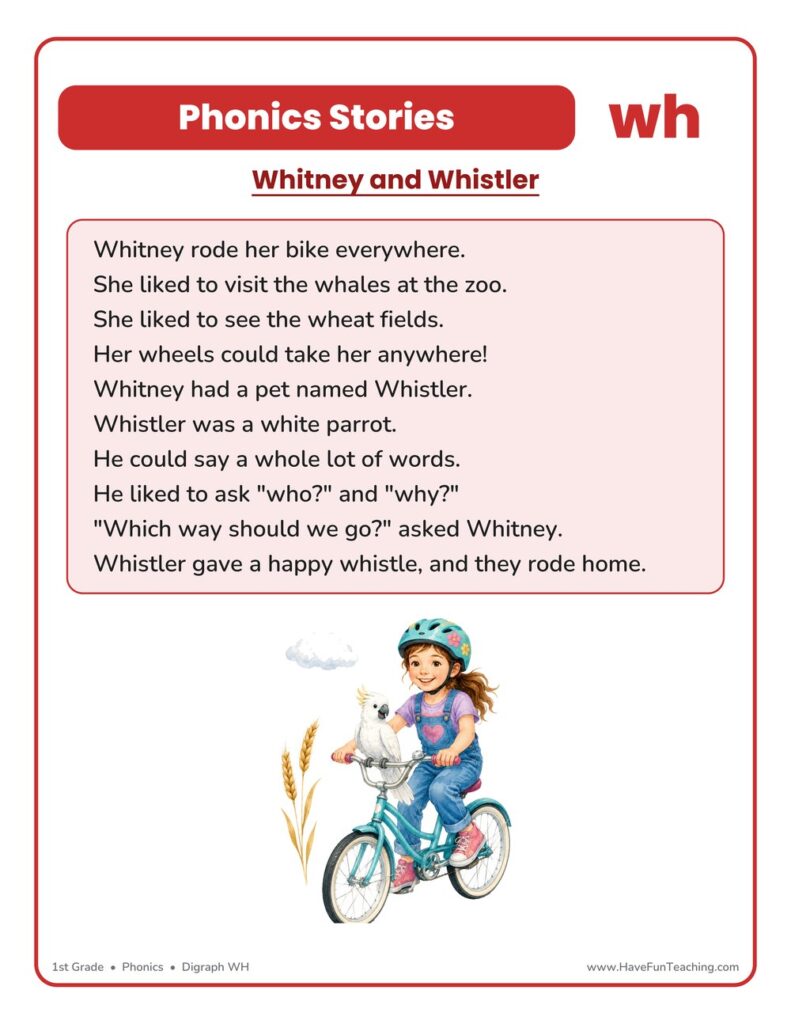
Whitney and Whistler WH Phonics Stories Reading Comprehension Worksheet
This Whitney and Whistler WH Phonics Reading Comprehension Worksheet has 1st graders read a wh-digraph story, answer bubble questions, and complete a word bank. Includes an answer key for easy, no-prep phonics practice.
$6.97
Or free with a membership — members pay $3.33/mo for all 10,000+ resources. See plans
Want this one free?
Tell us where to send it and it’s yours — no card, no catch.
One free resource per teacher. We’ll also send free teaching ideas each week — unsubscribe anytime.
Teaching is easier with a membership
Unlimited printables, games & videos for PreK–6th — for your classroom or homeschool. Cancel anytime.
Start your 3-day free trial$0 today · cancel anytime · Instant access to 10,000+ resources
About this resource
Description
The Whitney and Whistler WH Phonics Reading Comprehension Worksheet helps first graders master the wh digraph while they read for meaning. When two letters like w and h team up to make one new sound, young readers need practice hearing that sound and spotting it inside real words. This worksheet blends phonics and comprehension so children learn the wh sound in the very place they use it — inside a fun, decodable story about a girl named Whitney and her cheerful white parrot, Whistler.
This WH digraph reading worksheet begins with a short, on-grade story packed with wh words such as whales, wheat, wheels, white, whole, who, why, and which. Children read the story, then answer four fill-in-the-bubble comprehension questions and finish a five-sentence word bank. Use it for guided reading groups, morning work, a phonics center, or quick homework — read the story aloud together first, then let students work through the questions on their own.
What’s Included
- 1 print-ready PDF worksheet
- Answer key
- A decodable WH story, 4 comprehension questions, and a 5-word word bank activity
The Whitney and Whistler WH Phonics Reading Comprehension Worksheet helps kids in three ways. First, it pairs decoding with meaning, so children practice sounding out wh words and understanding what they read at the same time. Second, the fill-in-the-bubble questions build test-taking confidence and check for real understanding. Third, the word bank reinforces correct spelling of tricky wh words, turning recognition into writing.
Teachers and parents can extend the wh digraph in playful ways. Go on a “wh word hunt” around the house or classroom and list every wh word you find. Ask silly wh questions — who, what, when, where, and why — and have children answer in complete sentences. You can also invite students to write their own short story about Whitney and Whistler using as many wh words as they can, then read it aloud with expression.
Related Resources
What teachers say
Reviews
You must be logged in to post a review.
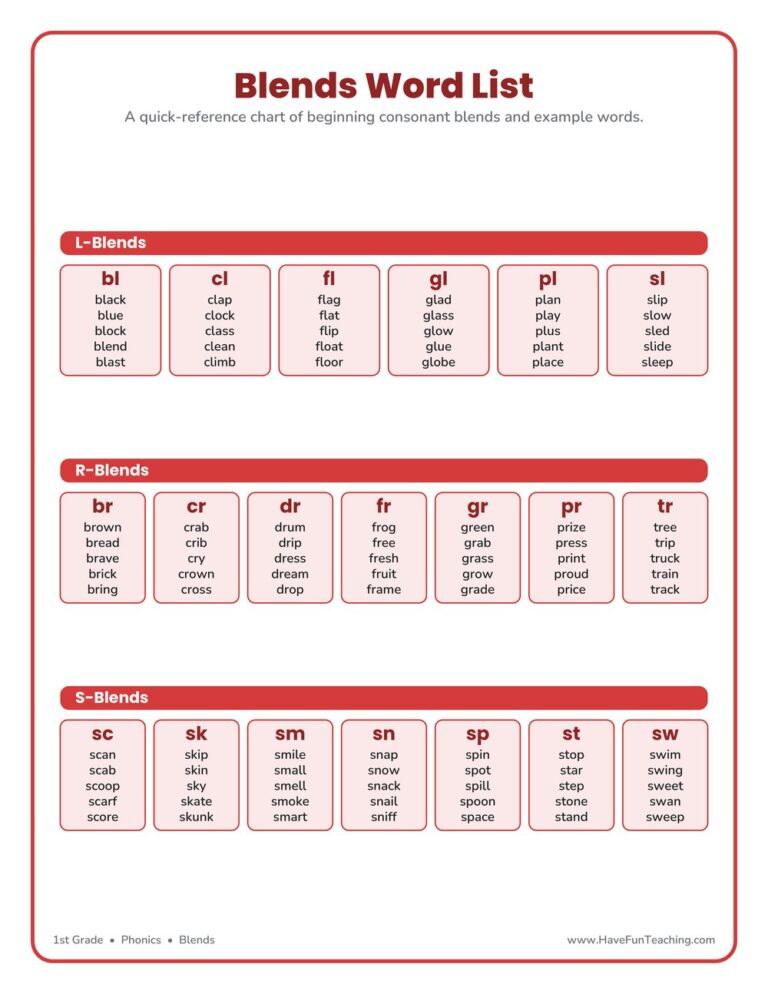
This Blends Word List is a single-page phonics reference chart grouping L-blends, R-blends, and S-blends with example words for each. A clean, no-prep tool that helps 1st graders read and build blend words with confidence.
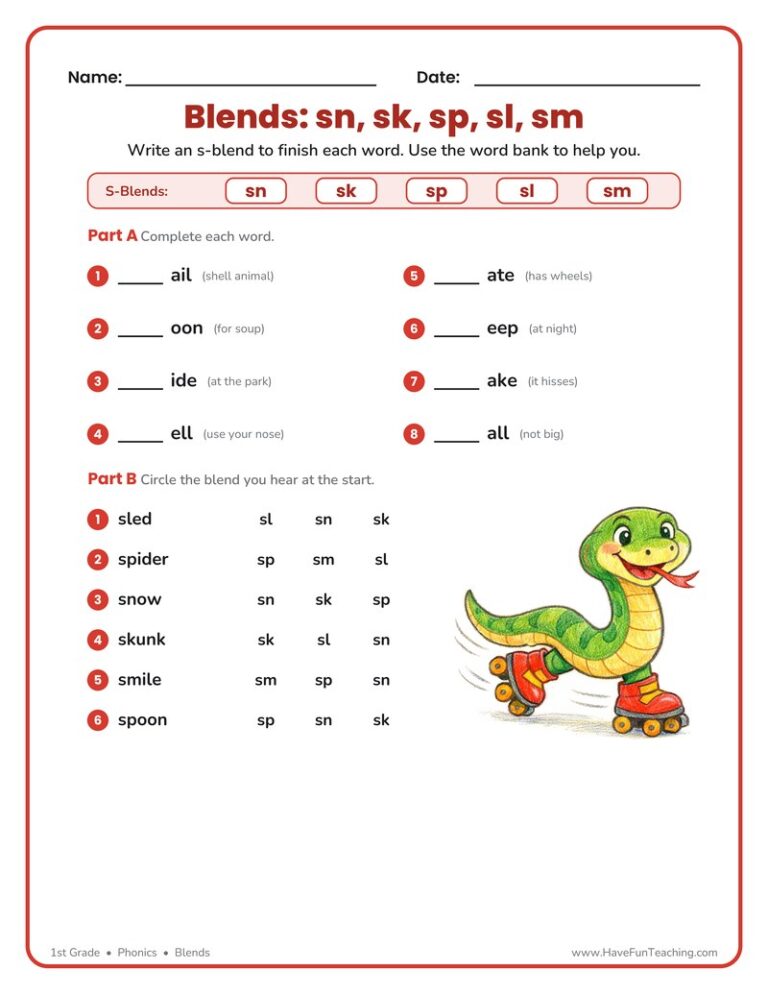
This S Blends Worksheet helps first graders spell and hear the beginning blends sn, sk, sp, sl, and sm by completing real words. Includes a complete answer key, perfect for no-prep phonics practice at home or school.

This NG/NK digraph worksheet asks 1st graders to sort six words by their ending sound and then build four more. Answer key included for fast, no-prep phonics practice.
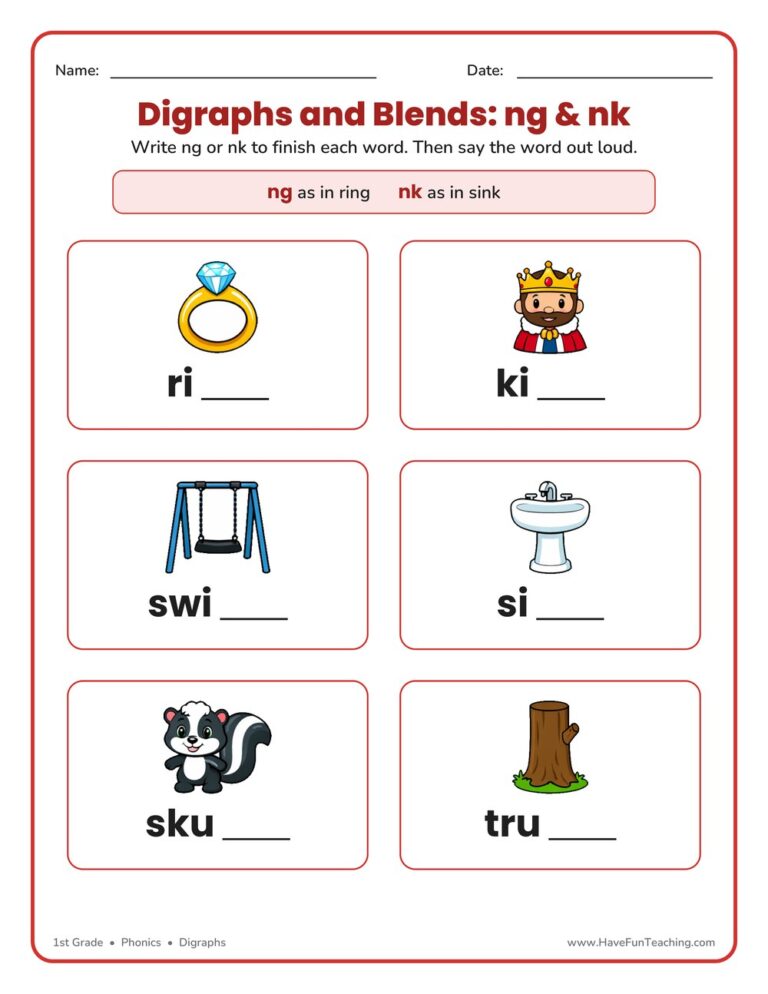
This ng and nk digraph worksheet gives 1st graders picture-clue practice writing the ending sounds in words like ring and skunk. An answer key is included for quick, no-prep phonics practice.

This Blends SC, SK Worksheet gives 1st graders six picture clues and a word sort for the beginning blends sc and sk. An answer key is included, so blend practice takes no prep.
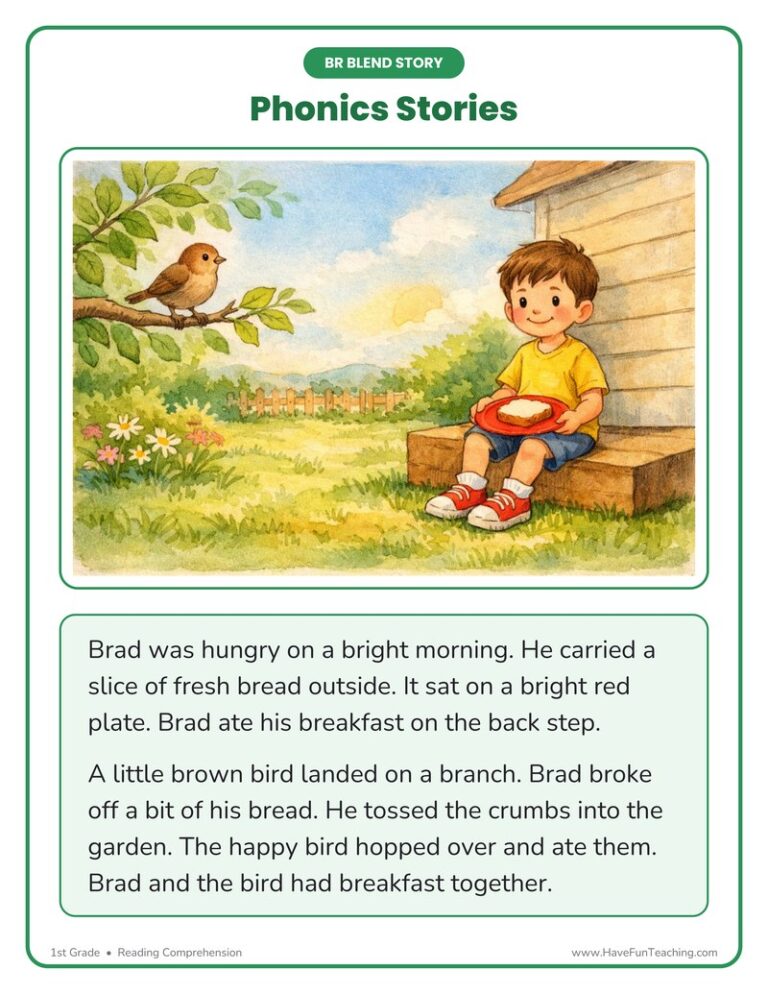
The Brad Eats Bread BR Phonics Stories Reading Comprehension Worksheet pairs a short decodable br-blend story with five comprehension questions for 1st Grade. Answer key included, so blending practice and understanding are checked in one no-prep page.
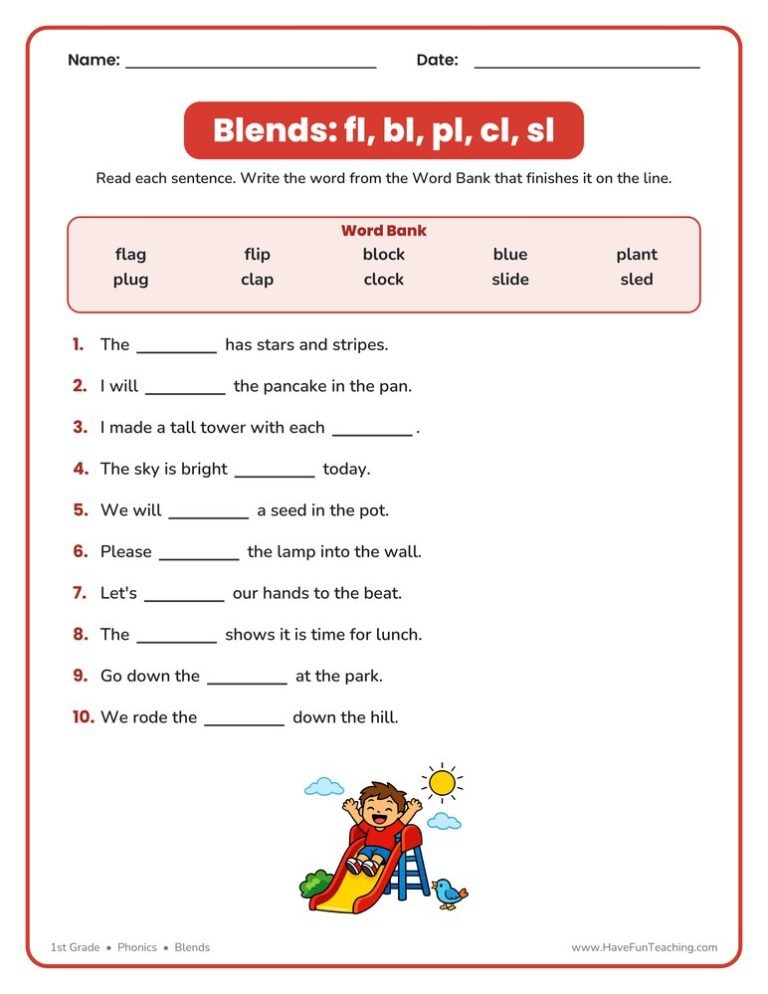
The L Blends Fill in the Blank Worksheet gives 1st graders ten sentences and a word bank to practice fl, bl, pl, cl, and sl blends. Answer key included for quick, no-prep phonics practice at home or school.
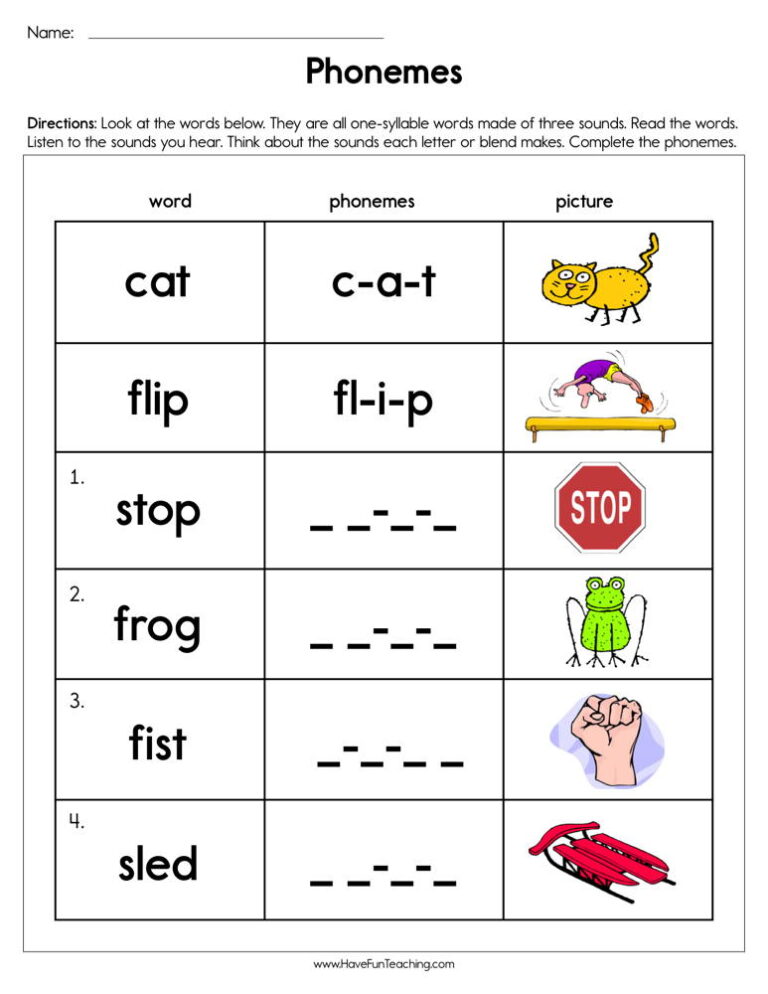
This Phonemes Worksheet gives 1st graders hands-on practice segmenting short words into their individual sounds, with picture cues and worked blend examples. Includes an answer key to build the phonemic awareness that powers reading and spelling.
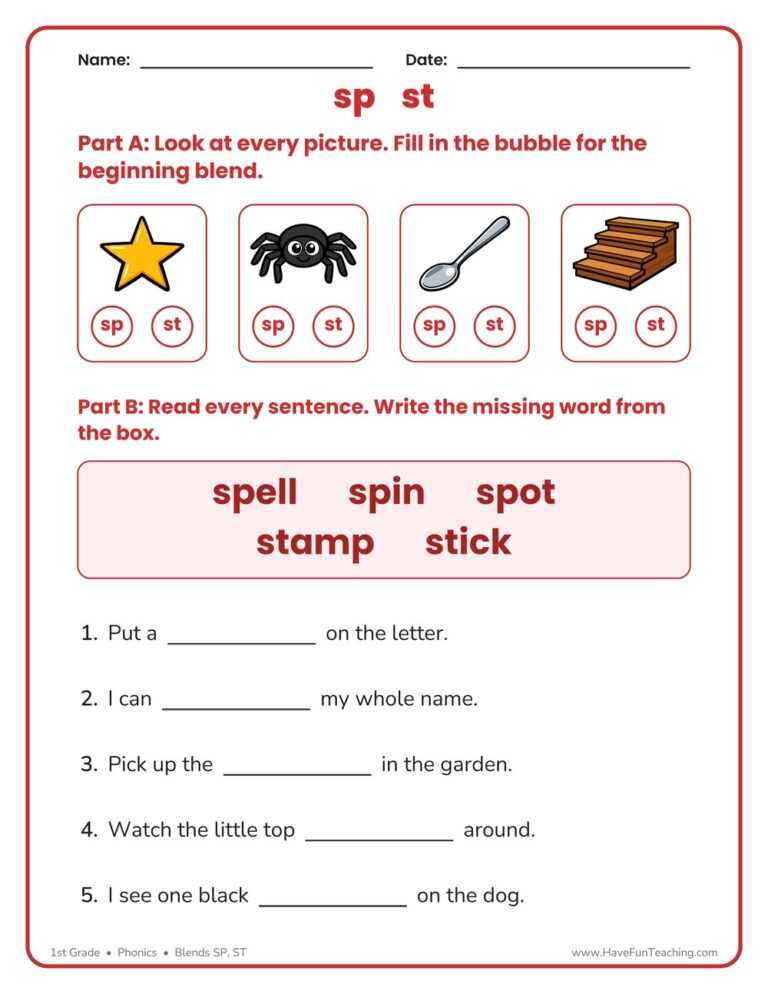
Practice the Blends SP, ST Worksheet with picture bubbles and word-box sentences made for 1st Grade readers. An answer key is included, so beginning blends turn into quick, confident reading.
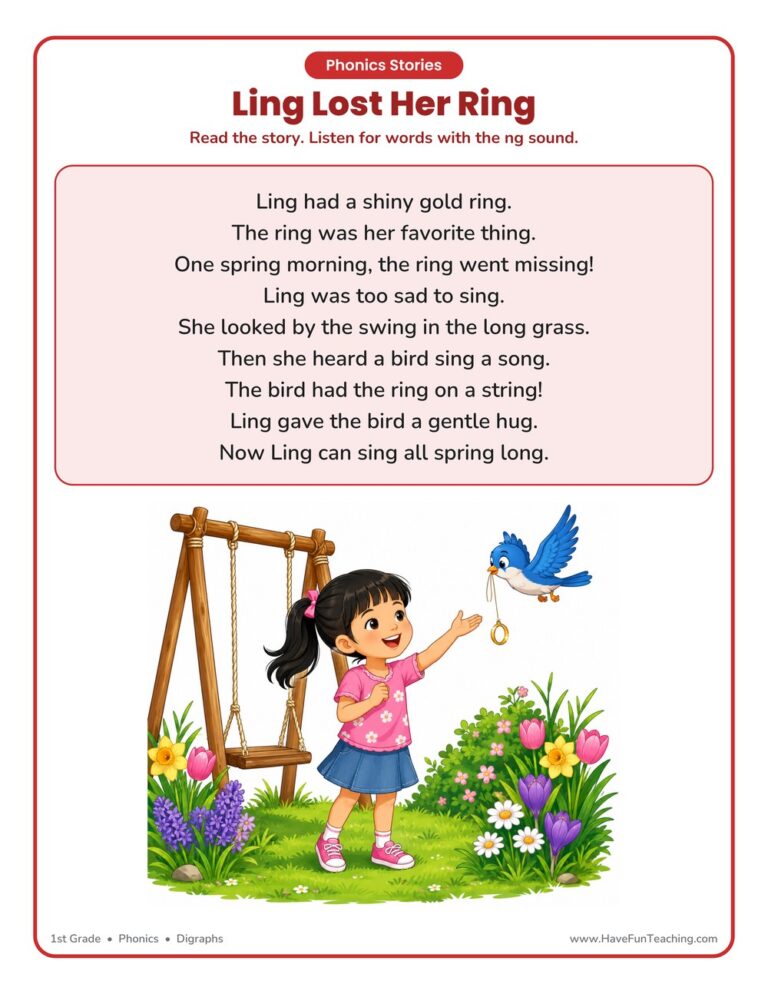
This NG Phonics Stories worksheet gives first graders a decodable ng story with reading comprehension questions and a word-building activity. An answer key is included, so young readers build phonics and comprehension skills with confidence.

Using the Blends, Digraphs, and Trigraphs Activity, students create lists of words that have beginning and ending blends, digraphs, or trigraphs.

This Blends BL BR Worksheet has 1st graders write the missing blend under six pictures, then spell two whole words. An answer key is included for quick, no-prep phonics practice.




Reviews
There are no reviews yet