Skip to content
Start My 3 Free Days $0 today · cancel anytime

Kindergarten Short Vowels Worksheets

11 kindergarten short vowels worksheets. Teacher favorites: CVC Vowel Sounds Worksheet and Short I Matching Game Worksheet. How teachers use these

Kindergarten Short Vowels Worksheets

11 kindergarten short vowels worksheets. Teacher favorites: CVC Vowel Sounds Worksheet and Short I Matching Game Worksheet. How teachers use these

Worksheet
WorksheetKindergartenCVC Vowel Sounds Worksheet

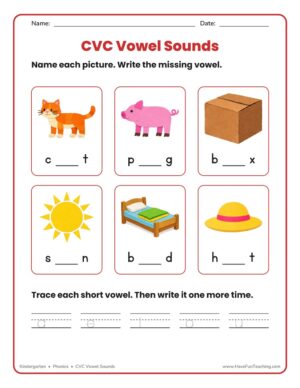
This CVC vowel sounds worksheet asks Kindergarten students to name six pictures and write the short vowel they hear in the middle. Answer key included, so beginning readers get quick, no-prep practice hearing every short vowel.

Worksheet
WorksheetKindergartenShort I Matching Game Worksheet

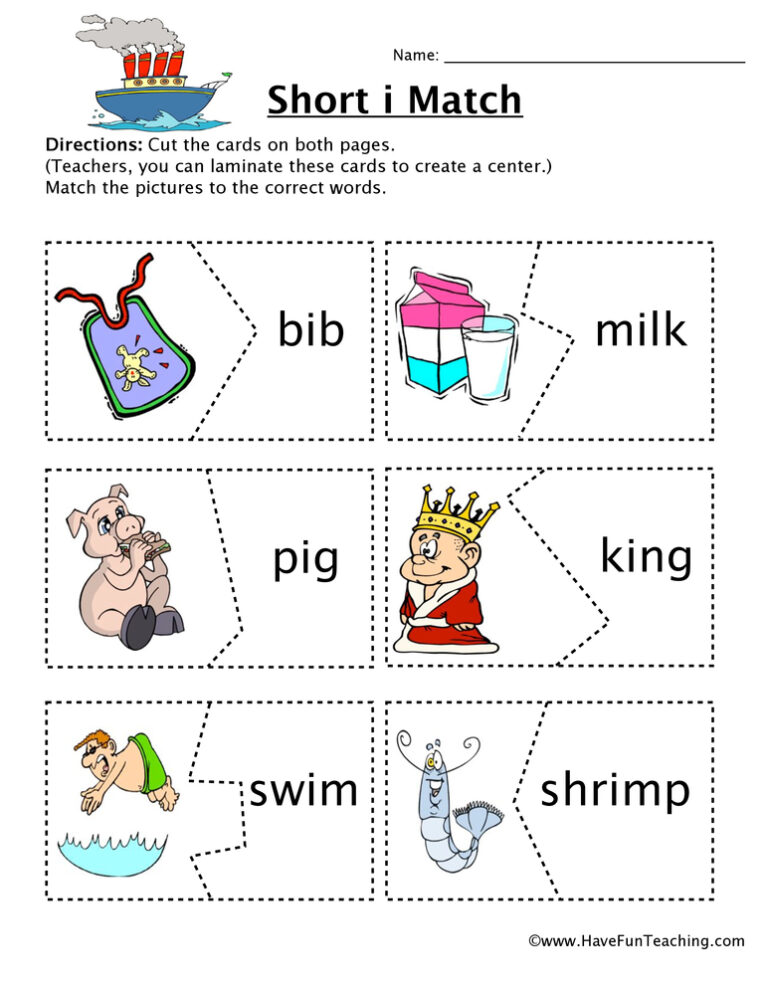
This short i matching game worksheet lets kindergarten students name six pictures and write the matching short i word from a word box. An answer key is included for fast, easy checking.

Worksheet
WorksheetKindergartenShort Vowel A Worksheet

This Short Vowel A Worksheet asks Kindergarten students to circle short a pictures, then trace and write cat, hat and fan. An answer key is included, so checking takes only seconds.

Worksheet
WorksheetKindergartenShort U Beginning and Ending Sounds Worksheet

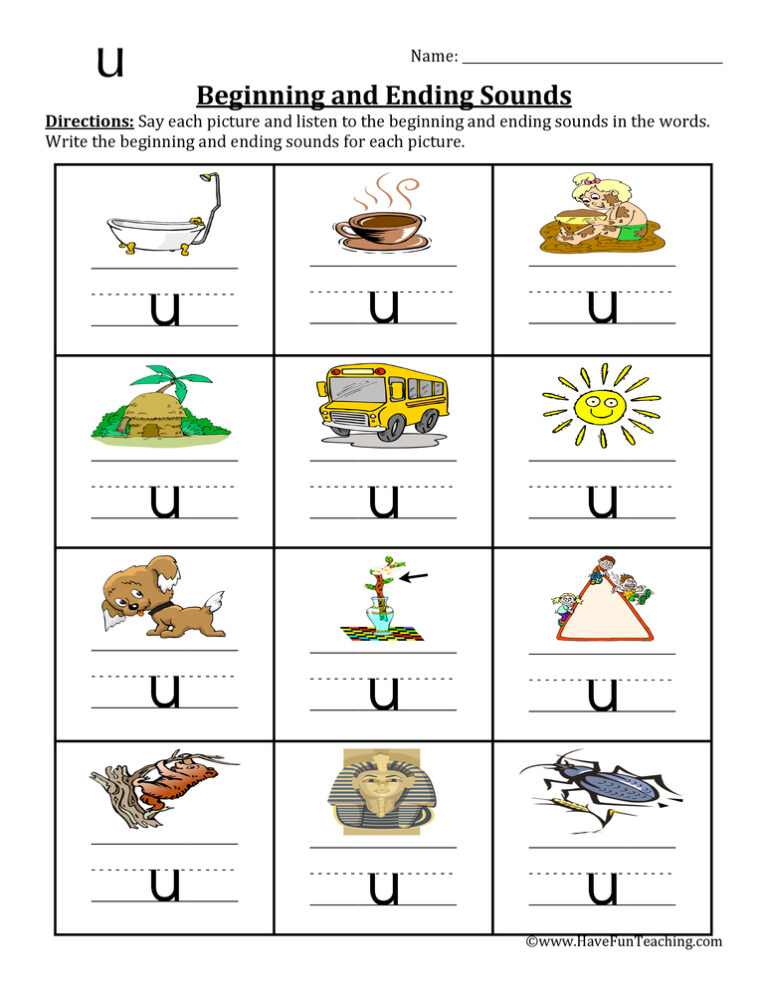
This Short U Beginning and Ending Sounds Worksheet asks Kindergarten students to name six pictures and write the letter they hear at each end of the word. Answer key included for fast, no-prep phonics practice.

Worksheet
WorksheetKindergartenFill in the Vowel CVC Worksheet

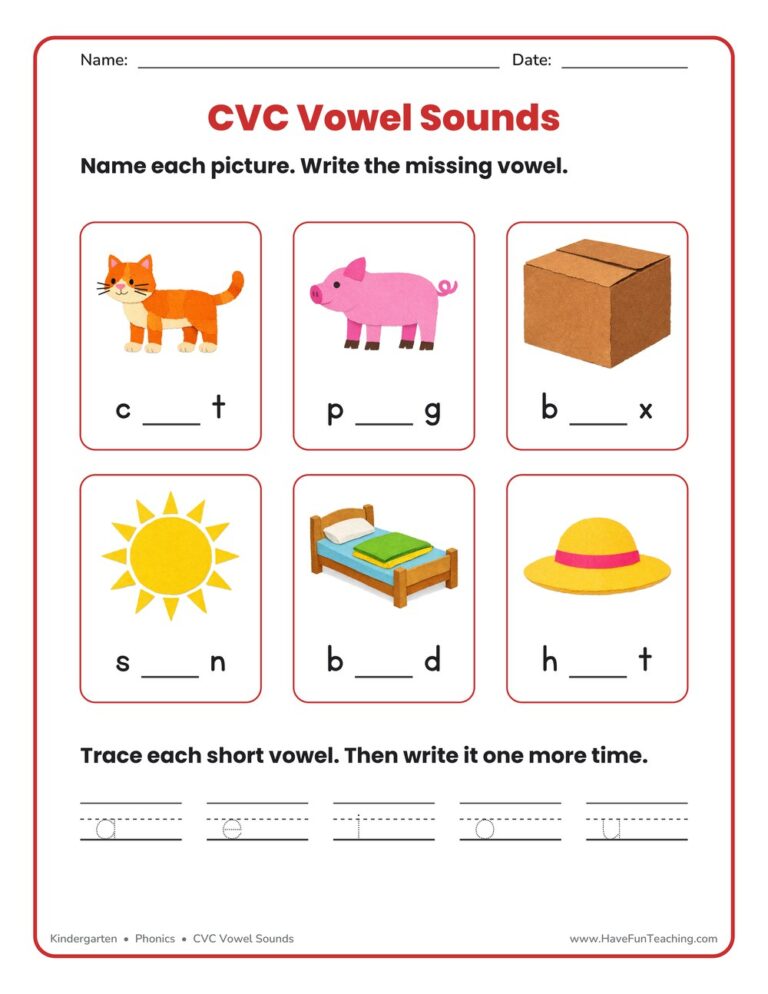
This Fill in the Vowel CVC Worksheet has Kindergarten students trace the five short vowels, then say each picture and write the vowel missing from its CVC word. Answer key included, so checking takes seconds.

Worksheet
WorksheetKindergartenShort E Matching Game Worksheet

This short e matching game worksheet helps kindergarten students say each picture name, hear the short e sound and write the matching word. An answer key makes checking easy.

Worksheet
WorksheetKindergartenShort U Matching Game Worksheet

This short u matching game worksheet helps kindergarten students say each picture name, hear the short u sound and write the matching word. An answer key makes checking easy.

Worksheet
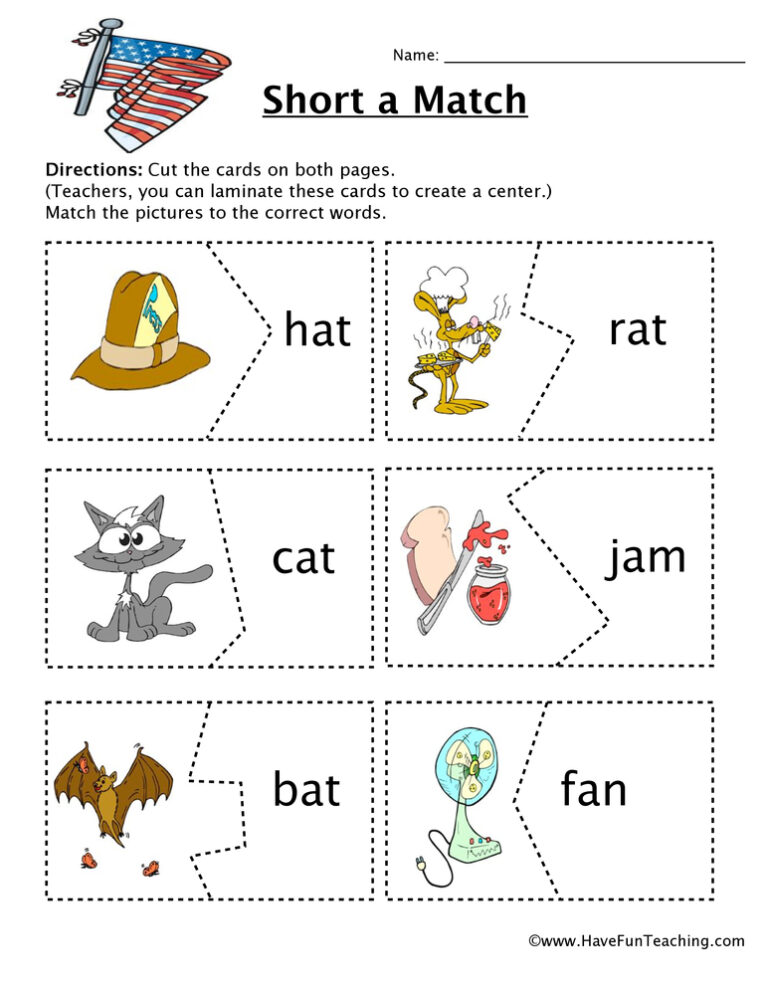
WorksheetKindergartenShort A Matching Game Worksheet

This short a matching game worksheet gives Kindergarten students six pictures to name and six short a words to write, with an answer key included, so they build the vowel sound they need for reading.

Worksheet
WorksheetKindergartenShort O Matching Game Worksheet

This short o matching game worksheet helps kindergarten students name six pictures and write the matching short o word from a word box. An answer key is included for quick checking.

Worksheet
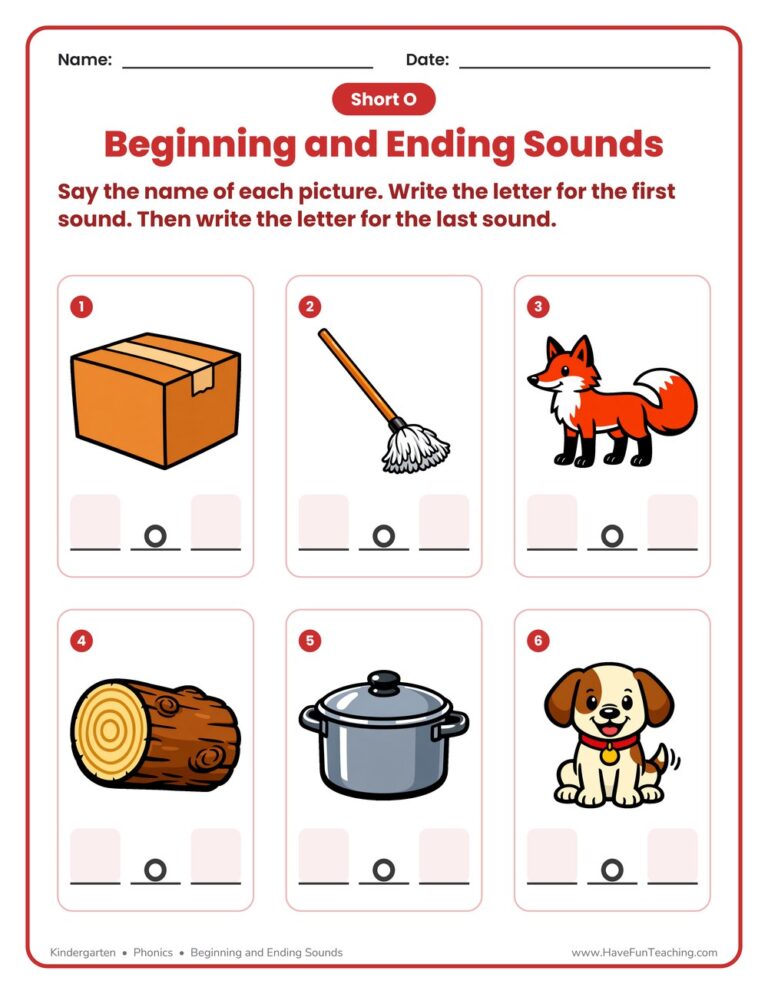
WorksheetKindergartenShort O Beginning and Ending Sounds Worksheet

The Short O Beginning and Ending Sounds Worksheet asks Kindergarten students to name six pictures and write the sound they hear at each end of the word. An answer key is included, so practice stays quick and confident.

Worksheet
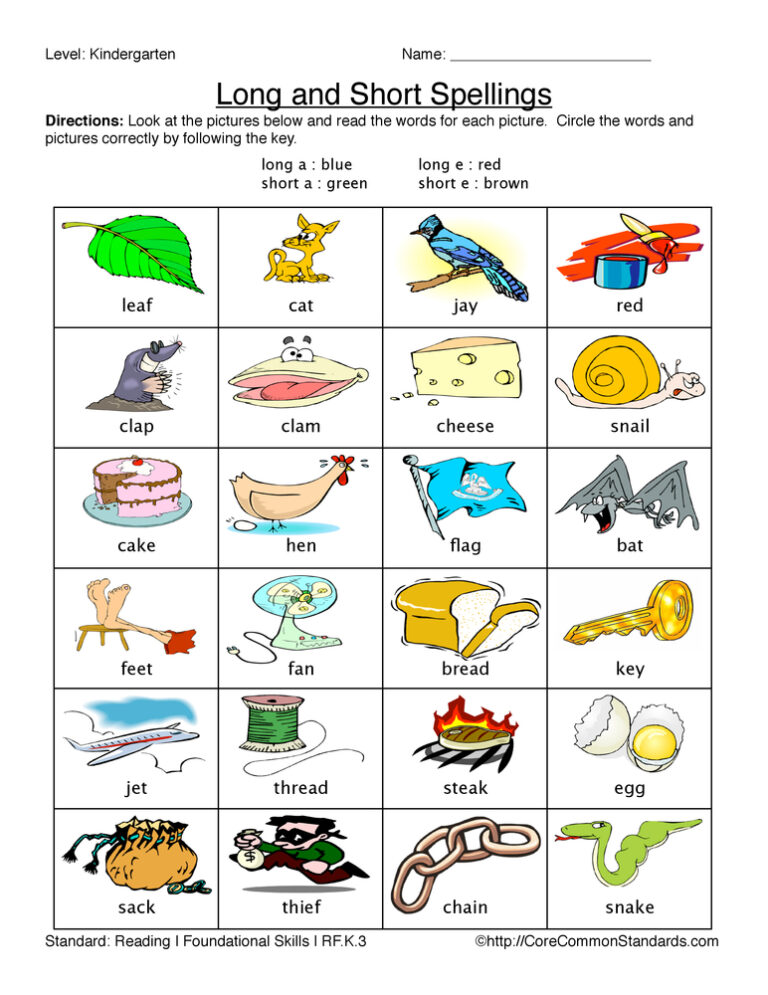
WorksheetKindergartenRF.K.3 Common Core Worksheet

This RF.K.3 common core worksheet has kindergarten students say each word and circle the one with a long vowel in every row. A simple answer key is included for quick checking.

From our teachers' playbook

A, e, i, o, u, here we go!

What do kindergarteners learn about short vowels?

Kindergarteners learn the five short vowel sounds: /a/ as in apple, /e/ as in egg, /i/ as in itch, /o/ as in octopus and /u/ as in up. They learn that every word needs a vowel, and they hear the middle sound in short words. Then they blend sounds to read simple CVC (consonant-vowel-consonant) words: c-a-t → cat, p-i-g → pig. They also spell CVC words by listening for each sound. The click moment comes when a child changes one vowel to turn "hat" into "hit" and gets the joke.

Our favorite ways to teach short vowels in kindergarten

Short vowels are the heart of early reading. These moves make the sounds stick.

One sound, lots of play

Introduce a short vowel with a game where kids listen for that sound. Play it a few times during the week. Hearing the sound again and again in a game makes it automatic.

Why it works: teaching letter sounds directly and in order is one of the best-supported findings in reading research (National Reading Panel, 2000).
Letter A Sound GameTry it withLetter A Sound GameGamesOpen it →

Fill in the middle

Show a CVC picture like "cat" with a blank in the middle. Kids say the word slowly, find the middle sound and fill in the vowel. Listening for the middle sound is the tricky part, so stretch the word like a rubber band.

Why it works: going from real objects to pictures to symbols is a core recommendation of the U.S. Department of Education's elementary math guide.

Fill in the Vowel CVC WorksheetTry it withFill in the Vowel CVC WorksheetWorksheetsOpen it →

Picture and sound match

Show pictures of CVC words and have kids sort them by vowel sound. Start with just two vowels, like a and o, before adding more. Fewer choices means more success early on.

Why it works: pairing a picture with each word gives kids two ways to remember it, a well-tested principle of how people learn (Mayer, 2009).

CVC Vowel Sounds WorksheetTry it withCVC Vowel Sounds WorksheetWorksheetsOpen it →

Questions parents and teachers ask us

What are short vowels for kindergarten?

Short vowels are the sounds a, e, i, o and u make in simple words like cat, bed, pig, hot and bug. Kindergarteners learn these sounds to read and spell CVC words.

What is a CVC word?

A CVC word has a consonant, a short vowel and a consonant, like cat, sun or big. These are often the first words kids learn to sound out.

Which short vowel should I teach first?

Many teachers start with short a, then short i or o, since those sounds are easier to tell apart. Short e and short i are often taught later because they sound so similar.

How can I practice short vowels at home?

Play "I spy" with middle sounds or make CVC words with magnetic letters. Change one letter at a time, like cat to cut to hut, and read each new word together.