
3 days free
Ready for the whole library?
You’ve had your freebie — but members download 10,000+ resources for every grade, all year long. Try it free — $0 today, cancel anytime.
Free for teachers
Pick your grade. We’ll send 10 free resources.
Worksheets, activities and a video — picked for your classroom, ready to print tonight.
One free bundle per teacher. We’ll also send free teaching ideas each week — unsubscribe anytime.



A kindergarten characters, settings, and events worksheet that helps young readers identify story elements—who is in a story, where it happens, and what happens—using a simple three-column graphic organizer for retelling any story.
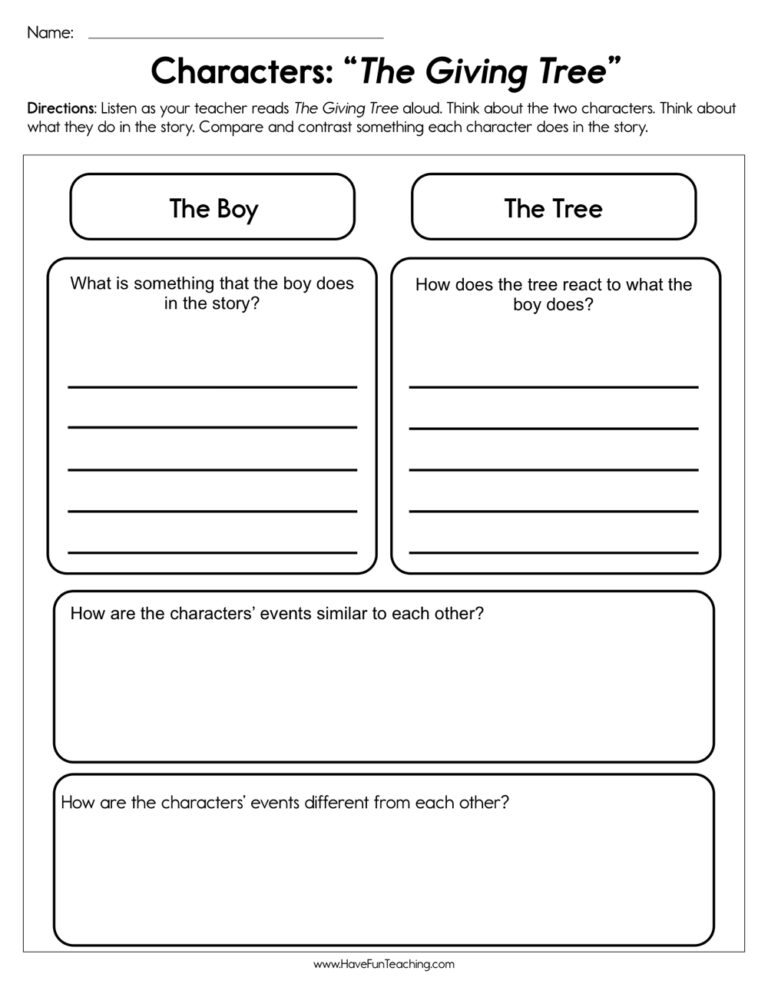
Using Characters, Settings, and Big Events Worksheet, students draw pictures and write a sentence for each to tell about the story elements in a book.
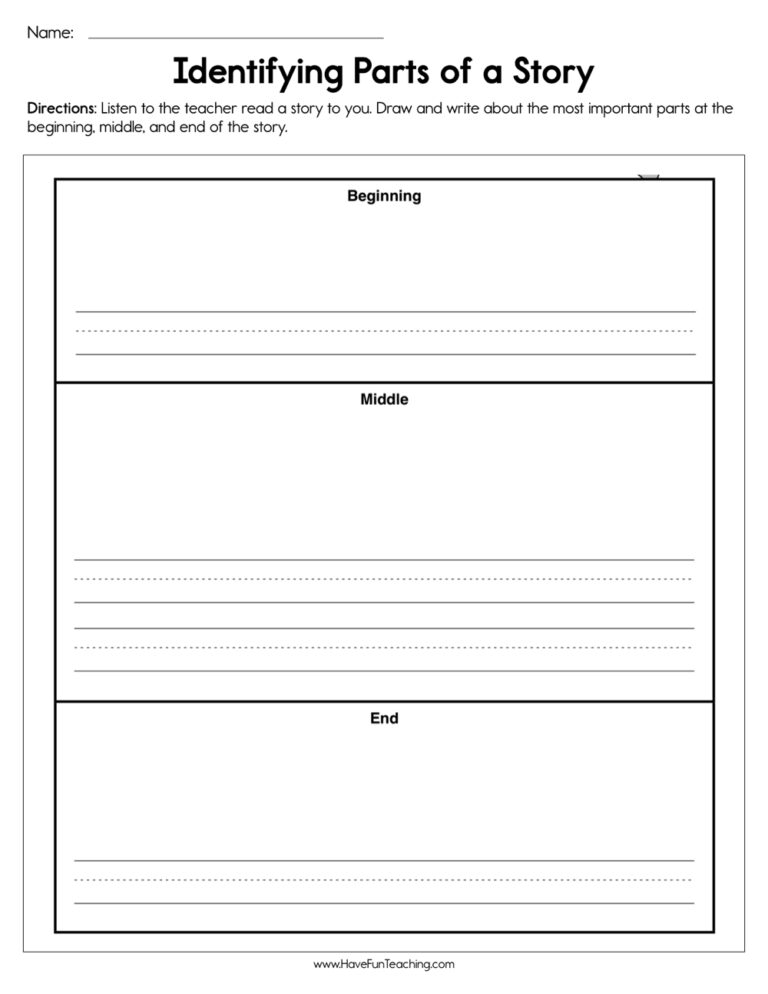
This identifying parts of a story worksheet helps kindergarten readers name the characters, setting, and beginning, middle, and end of a short bird story, with an answer key included for easy checking.

Using Compare Contrast Book Covers Worksheet, students compare two books using information from the book cover to determine how they are alike and different.
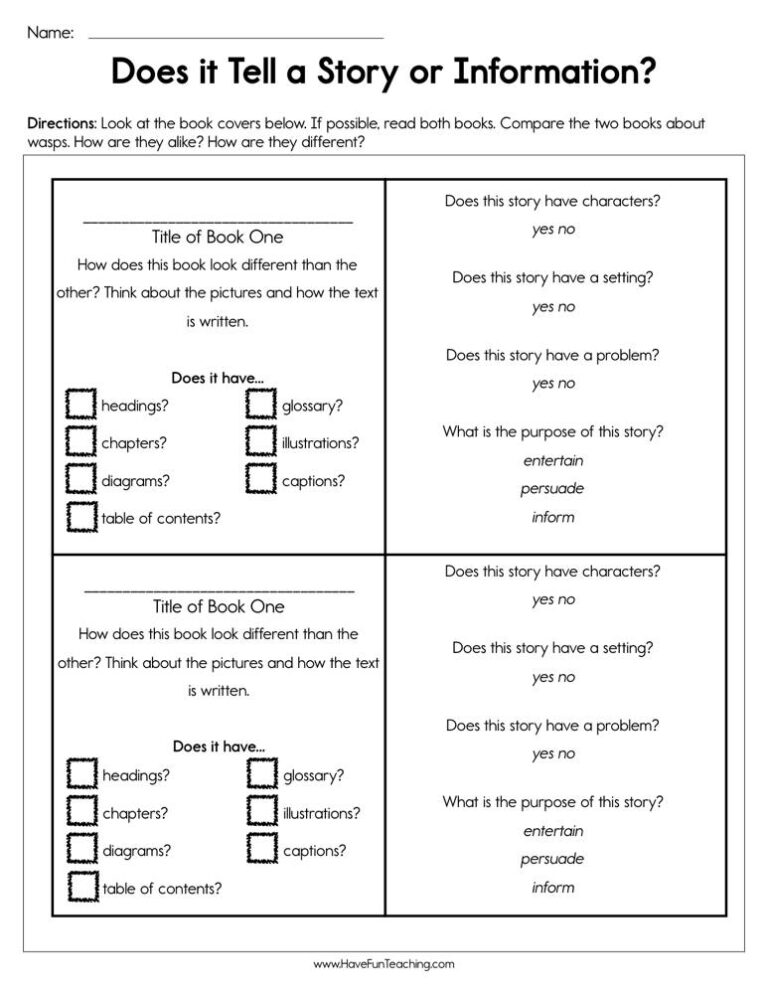
Using Does it Tell a Story or Information Worksheet, students compare two texts about wasps to determine how they are alike and different.
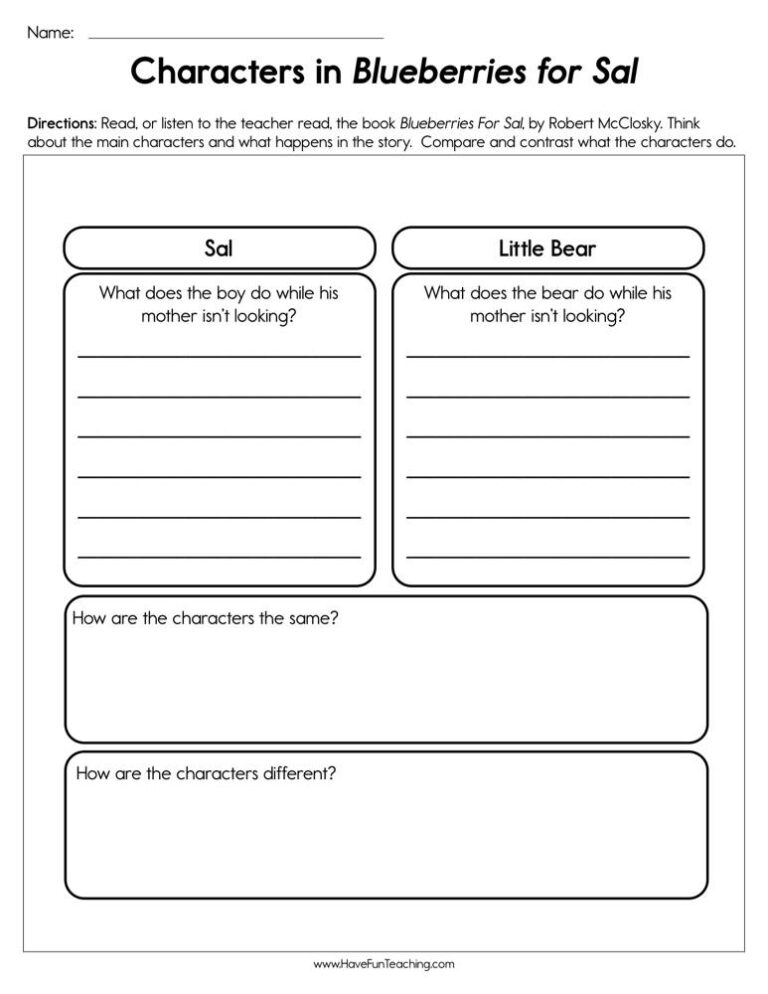
Using Characters in Blueberries for Sal Worksheet, students compare two characters from a story to determine how they are alike and different.
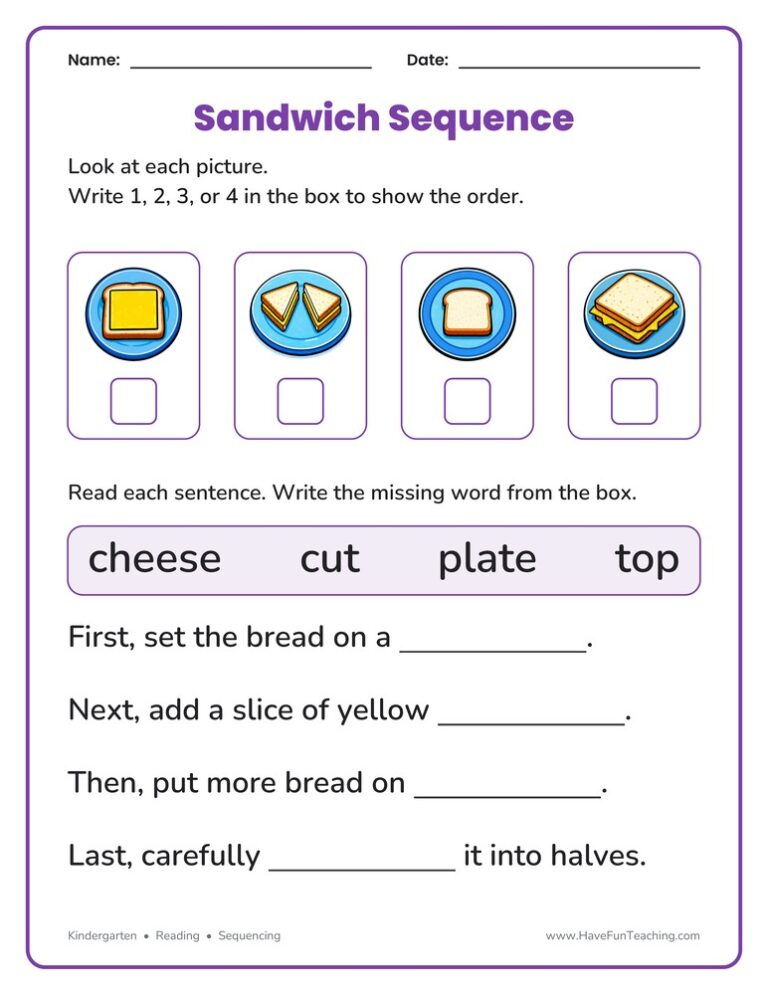
This sequencing pictures worksheet has kindergarten students number four sandwich-making pictures in order and finish four First, Next, Then, Last sentences. An answer key is included to make checking quick.
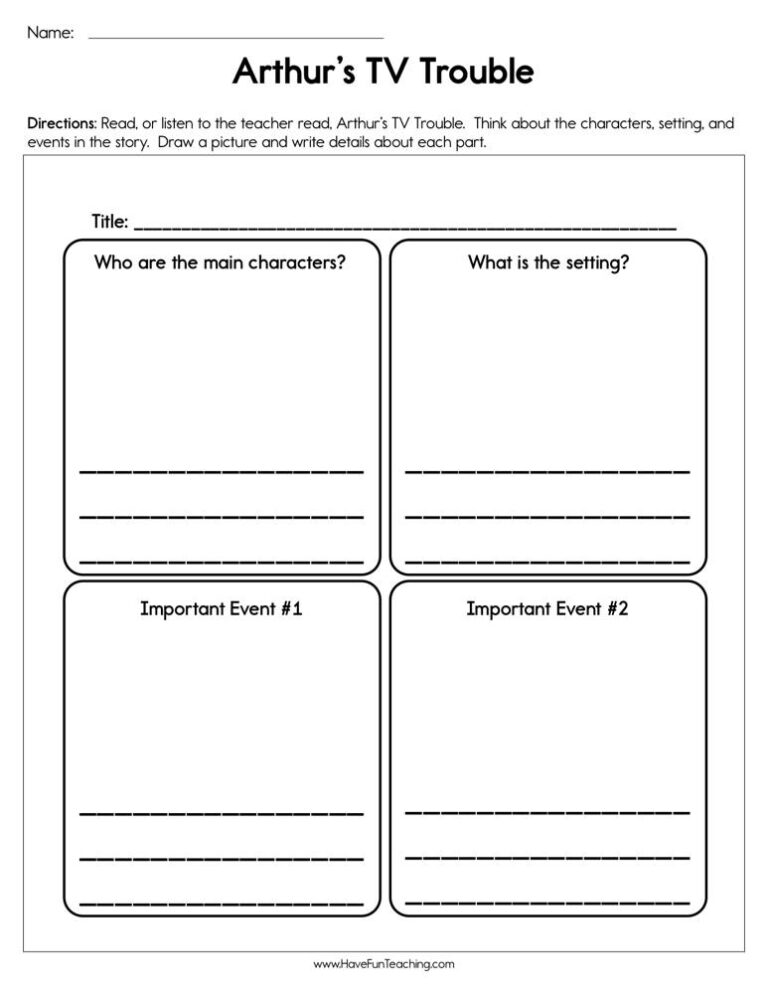
Using Arthur's TV Trouble Worksheet,students retell the story by describing the story elements of any given story to build their reading comprehension.
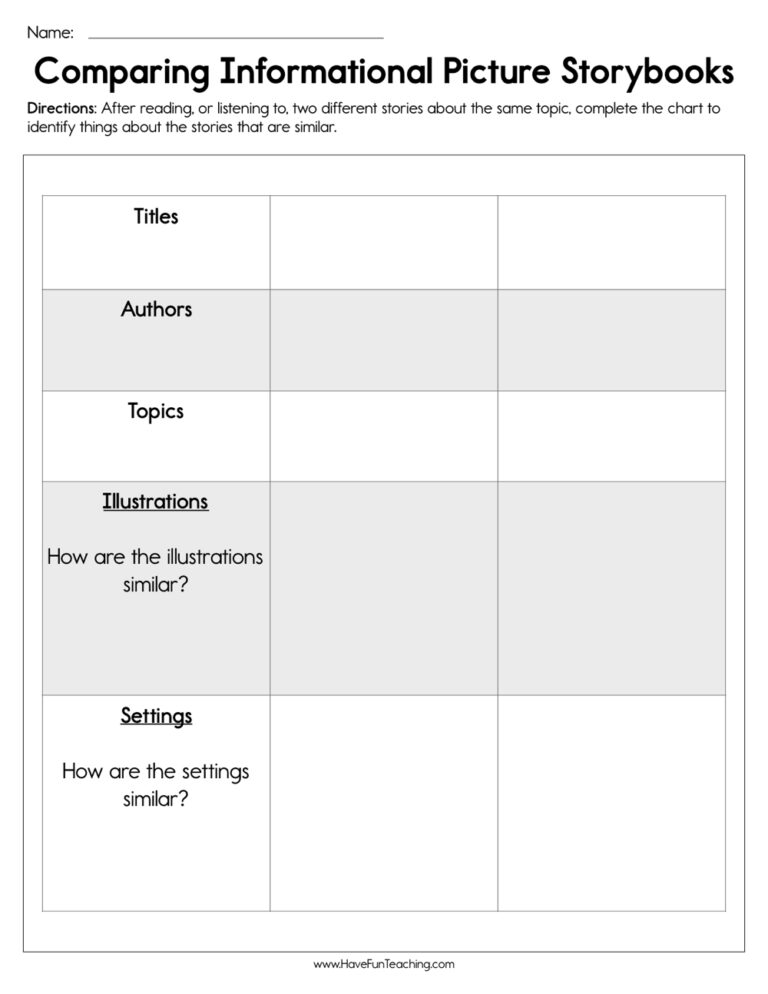
Using Comparing Informational Picture Storybooks Worksheet, students compare story elements intwo different stories about the same topic to determine how they are alike and different.



