
Skip to content
Start My 3 Free Days $0 today · cancel anytime

Kindergarten Animals Worksheets

13 kindergarten animals worksheets. Teacher favorites: Animal Words Matching Worksheet and Fish Parts Worksheet. How teachers use these

Kindergarten Animals Worksheets

13 kindergarten animals worksheets. Teacher favorites: Animal Words Matching Worksheet and Fish Parts Worksheet. How teachers use these

Worksheet
WorksheetKindergartenAnimal Words Matching Worksheet

This animal words matching worksheet has Kindergarten students match four animal names to their pictures, then trace three more. Answer key included for fast, no-prep science and sight-word practice.

Worksheet
WorksheetKindergartenFish Parts Worksheet

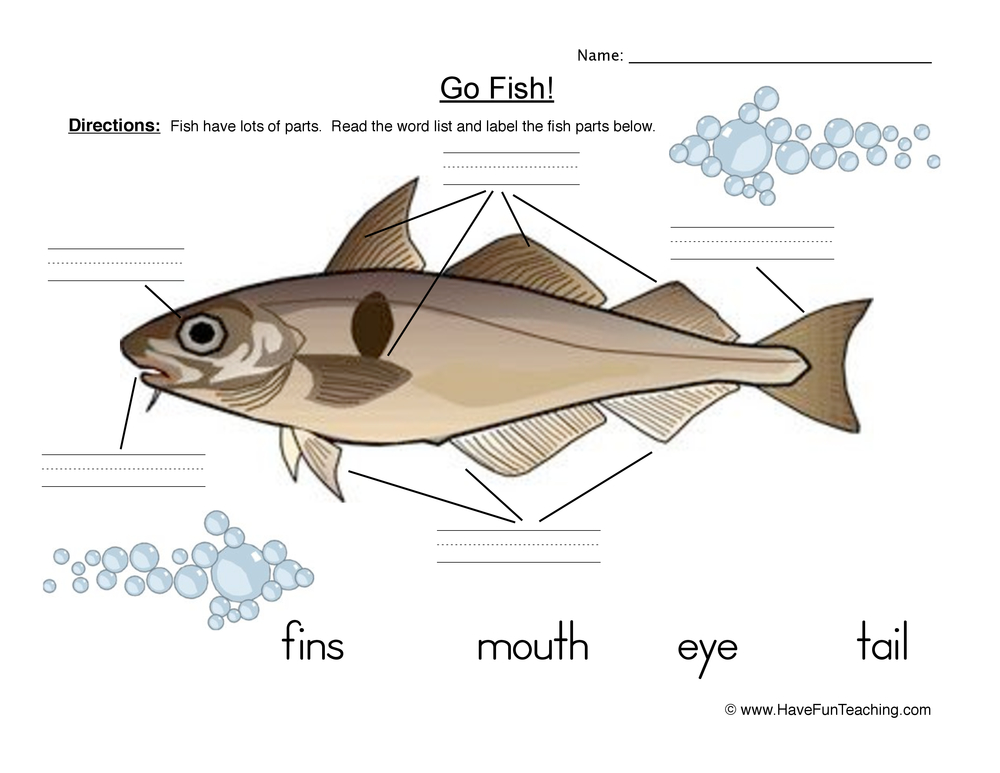
This Fish Parts Worksheet has kindergarten students label the eye, fin, mouth, and tail on a big numbered fish using a word box. An answer key is included for fast, easy checking.

Worksheet
WorksheetKindergartenBasic Fish Parts Worksheet

This Basic Fish Parts Worksheet asks 1st graders to label six numbered parts on a big, friendly fish using a word box. An answer key is included, so science practice takes no prep at all.

Worksheet
WorksheetKindergartenDrawing Farm Animals Worksheet

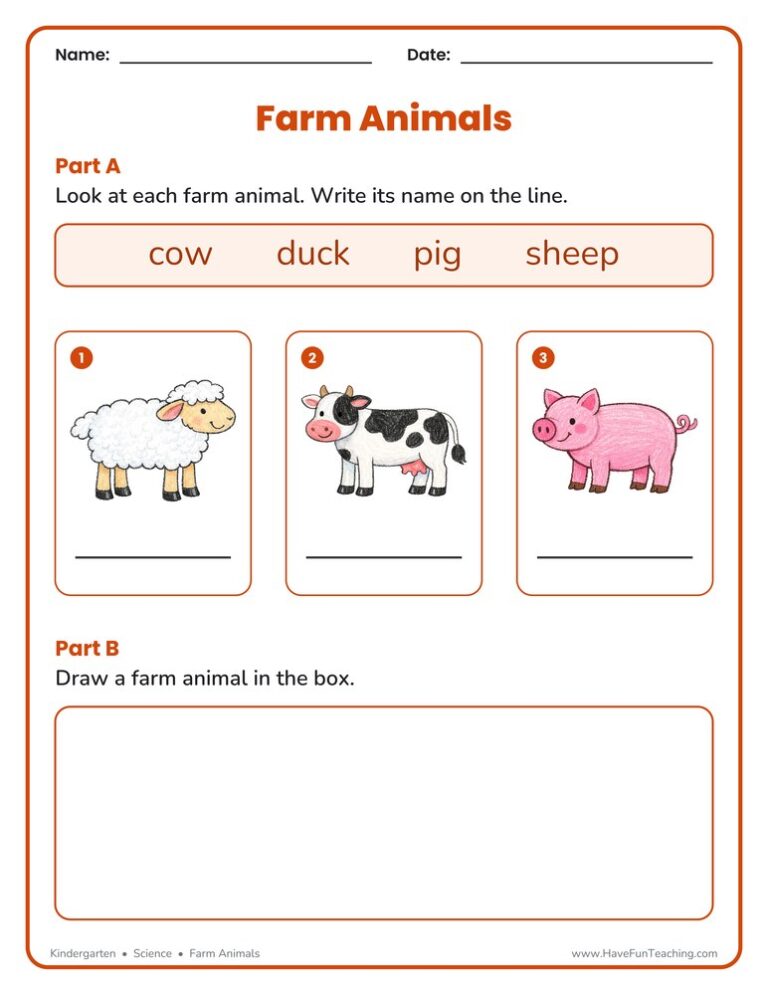
This Drawing Farm Animals Worksheet has Kindergarten students name a sheep, a cow, and a pig from a word box, then draw a farm animal of their own. Answer key included, so checking takes seconds.

Worksheet
WorksheetKindergartenFarm Animals Examples Worksheet

With this farm animals examples worksheet, kindergarten kids circle the one farm animal in each row of pictures. A fun animal sorting page for young scientists, with an answer key.

Worksheet
WorksheetKindergartenDrawing Ocean Animals Worksheet

This Drawing Ocean Animals Worksheet asks Kindergarten learners to circle the animals that live in the sea, then draw one of their own. An answer key is included, so sorting practice takes no prep at all.

Worksheet
WorksheetKindergartenBeginning Animal Sounds Worksheet

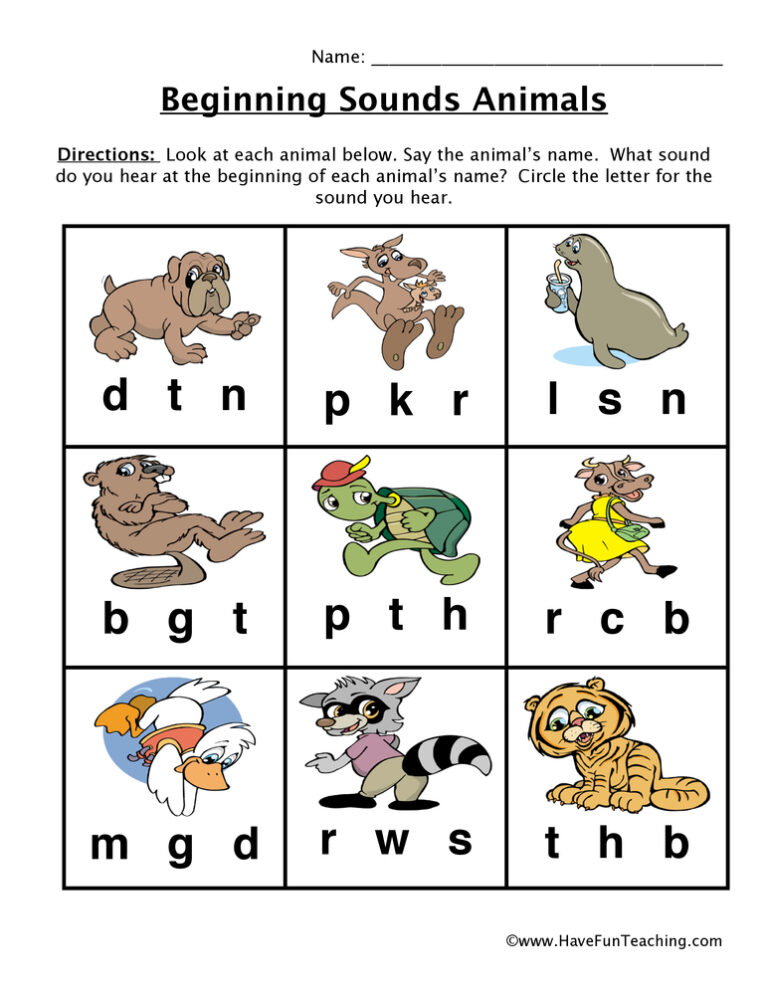
This beginning animal sounds worksheet has kindergarten students name nine animals and fill in the first letter they hear. An answer key is included for quick, easy checking.

Worksheet
WorksheetKindergartenBeginning Sounds Animals Worksheet

Use this beginning sounds animals worksheet to help kindergarten students name six animals and match each one to its first letter. An answer key is included for quick, easy checking.

Worksheet
WorksheetKindergartenAnimal Pictures Beginning Sounds Worksheet

The animal pictures beginning sounds worksheet gives kindergarten students nine animal cards and one letter to write on each. An answer key is included, so a child can practice letter sounds with no prep.

Worksheet
WorksheetKindergartenMy Pet Rabbit Reading Comprehension Worksheet

The My Pet Rabbit Reading Comprehension Worksheet gives Kindergarten readers a short pet story, five fill-in-the-bubble questions, and an answer key, so beginning readers practice finding answers right in the text.

Worksheet
WorksheetKindergartenFrog, Bird, Turtle, Polar Bear Animal Habitats Worksheet

This animal habitats worksheet asks kindergarten students to match a frog, bird, sea turtle, and polar bear to their homes and draw each habitat. An answer key is included for quick checking.

Worksheet
WorksheetKindergartenWhat Animal Is That Reading Comprehension Worksheet

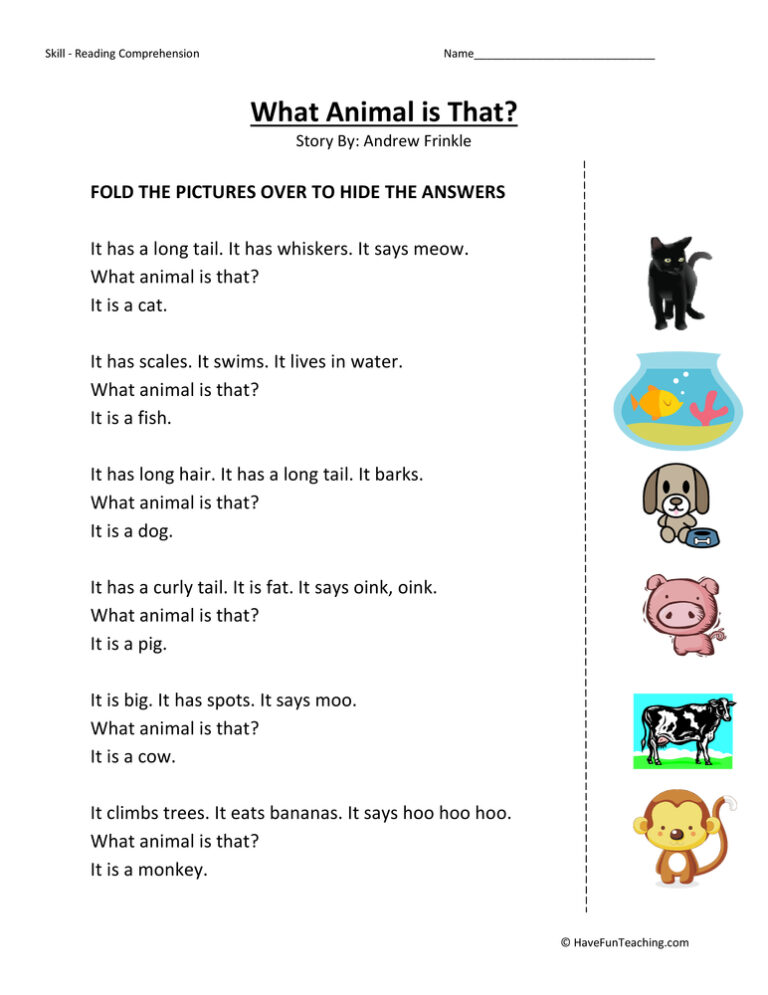
This What Animal Is That reading comprehension worksheet gives Kindergarten readers three short animal riddles, five multiple-choice questions and an answer key, so early comprehension practice and checking both happen on one printable.

Worksheet
WorksheetKindergartenCrab, Worm, Cow, Duck Animal Habitats Worksheet

This crab, worm, cow, duck animal habitats worksheet has kindergarten students draw each animal's home and write its habitat word. An answer key is included to make checking easy.

From our teachers' playbook

Moo, hop, swim and slither

What do kindergartners learn about animals?

Kindergartners learn that animals are living things with needs, just like us: food · water · air · shelter. They notice how animals move, what they eat and where they live, from farms to oceans to forests. They sort living and nonliving things, learn simple groups like fish, birds and insects and spot body parts like fins, wings and legs. The click moment is when a child explains that a bird builds a nest because it needs a safe home, just like their family does.

Our favorite ways to teach animals

Kindergartners are animal-crazy. These moves turn that love into real science thinking.

Sing and move like animals

Play the Animal Song and have kids act out each animal as it's sung. Then ask, "How does that animal move? Why?" Movement and music make the facts unforgettable.

Why it works: words set to a repeating melody are easier to recall than the same words spoken (Wallace, 1994).

Animal Song (Animated Music Video)Try it withAnimal Song (Animated Music Video)SongsOpen it →
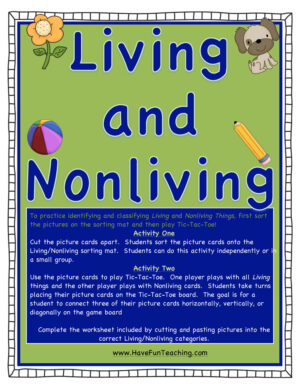
Alive or not alive?

Gather toys, rocks, plants and animal pictures. Kids sort them into living and nonliving and explain one clue, like "It eats" or "It grows." This is the foundation for all life science.

Why it works: the U.S. Department of Education's guide for teaching elementary math recommends moving from hands-on objects to drawings to numbers.

Living and Nonliving ActivityTry it withLiving and Nonliving ActivityActivitiesOpen it →

Flash and name

Flash land animal cards and kids shout the name and one fact. Mix in sounds and movements for extra fun. Quick rounds grow vocabulary fast.

Why it works: researchers who compared ten study methods found practice testing is one of the two that work best (Dunlosky and colleagues, 2013).

Land Animal Flash CardsTry it withLand Animal Flash CardsFlash CardsOpen it →

Questions teachers and parents ask

What do kindergartners learn about animals?

Kindergartners learn what animals need to live, where they live, how they move and what they eat. They also sort living and nonliving things and name simple animal groups.

What are the basic needs of animals?

Animals need food, water, air and shelter to survive. Kindergartners compare these needs to their own.

How do I teach animals to kindergartners?

Use songs, pictures, real observations and lots of sorting games. Visit a farm, zoo or backyard to see animals in action.

What animal activities can I do at home?

Go on a backyard bug hunt, watch birds at a feeder or visit a pet store. Ask your child what each animal needs and where it lives.



