Skip to content
Start My 3 Free Days $0 today · cancel anytime

History Worksheets

44 history worksheets. Teacher favorites: Native American Groups Worksheet and American Revolution Worksheet. How teachers use these

History Worksheets

44 history worksheets. Teacher favorites: Native American Groups Worksheet and American Revolution Worksheet. How teachers use these

Worksheet
Worksheet4th GradeNative American Groups Worksheet

This Native American Groups Worksheet gives 4th graders four illustrated culture region cards, four inference clues, and a written response about how the land shaped homes. Answer key included for fast review.

Worksheet
Worksheet4th GradeAmerican Revolution Worksheet

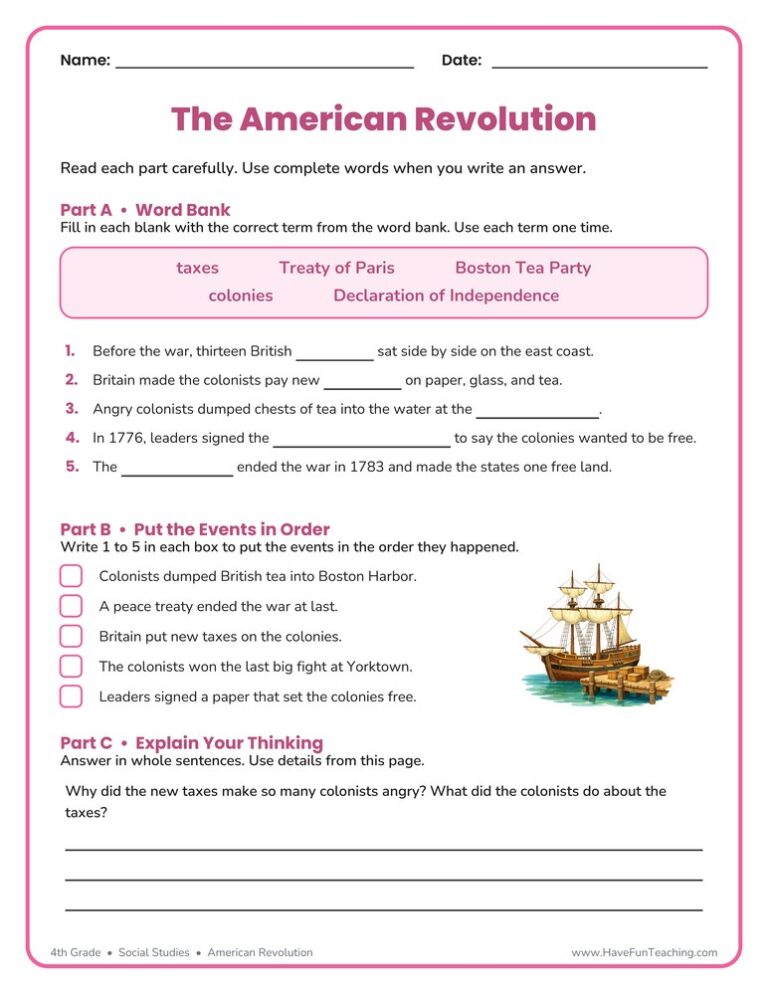
This American Revolution worksheet gives 4th graders word-bank vocabulary, a five-event timeline to put in order, and a short written response. An answer key is included, so review takes no prep at all.

Worksheet
Worksheet5th GradeConstitution Worksheet

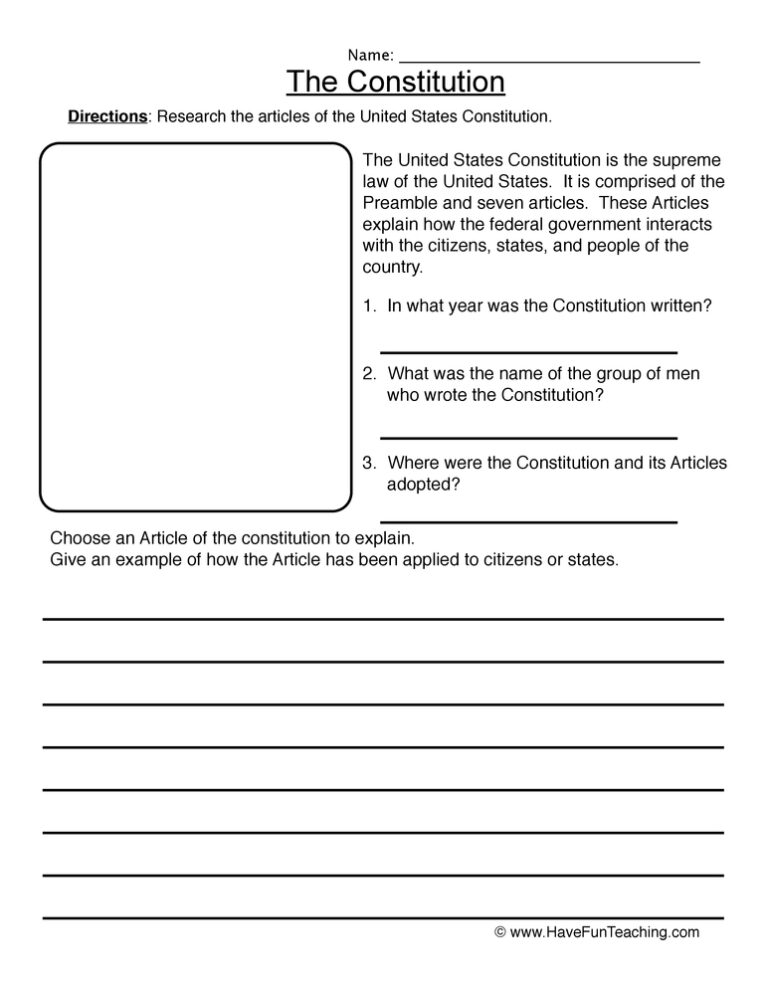
This Constitution Worksheet gives 5th grade students word bank, matching, and short answer practice on the Preamble, the Framers, amendments, and the three branches of government. Answer key included for fast, no-prep civics review.

Worksheet
Worksheet4th GradeTimeline Worksheet

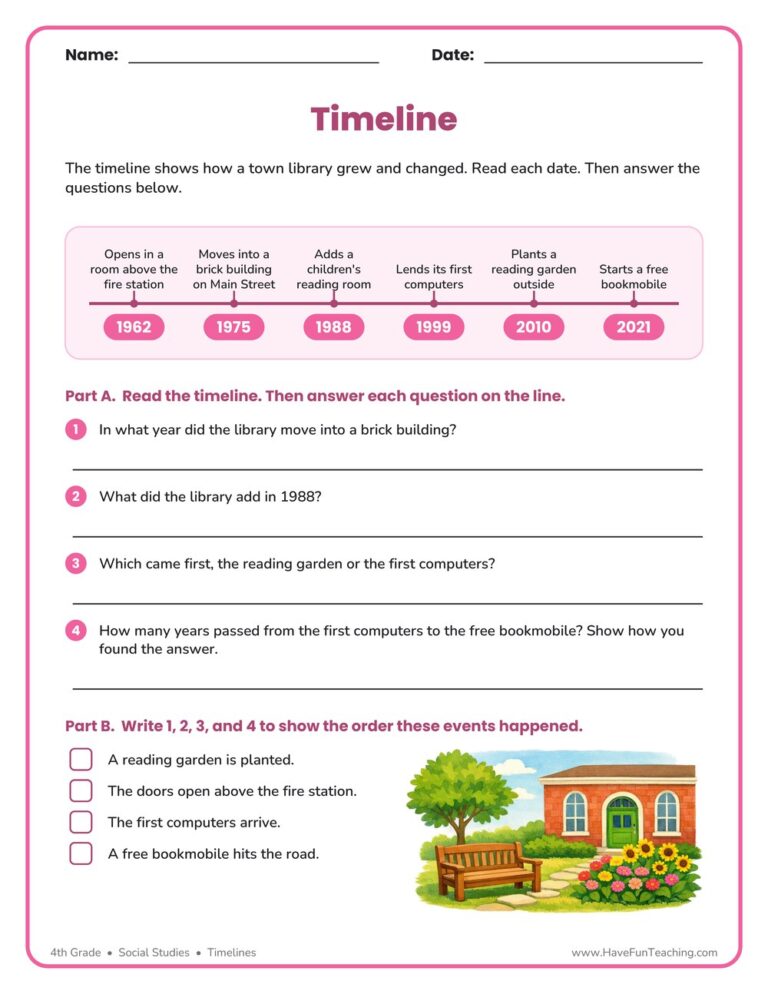
This timeline worksheet gives 4th graders a six-event town library timeline to read, question, and put in order. Answer key included, so students get real practice reading dates and events with no prep at all.

Worksheet
Worksheet3rd GradeMayflower Compact Worksheet

This Mayflower Compact worksheet gives 3rd graders a short passage about the 1620 voyage and the promise the men signed at Cape Cod, plus four questions and a writing prompt. An answer key is included.

Worksheet
Worksheet4th GradeHistorical Timeline Worksheet

A historical timeline worksheet where 4th graders place five national park events on a dated scale and figure out the years between them. Answer key included, for no-prep practice in reading time lines.

Worksheet
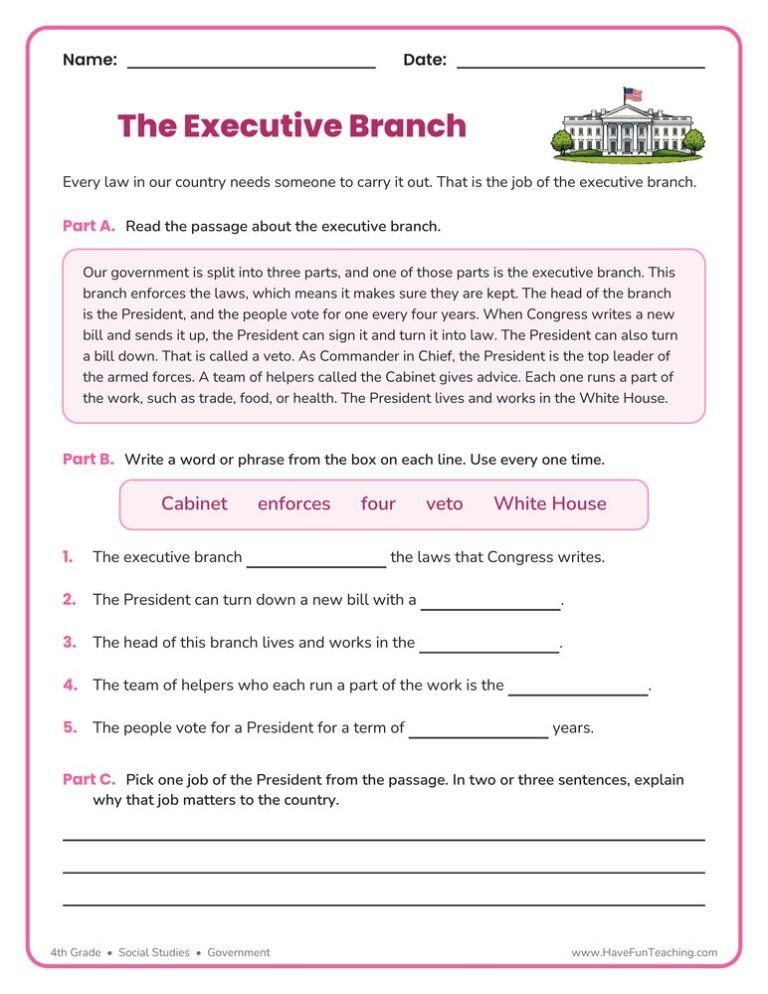
Worksheet4th GradeExecutive Branch Worksheet

An executive branch worksheet for 4th grade, with a short passage, a word-bank activity, and a written response on the President, the veto, and the Cabinet. Answer key included for quick, no-prep civics practice.

Worksheet
Worksheet3rd GradeColonial America Worksheet

This Colonial America worksheet gives 3rd graders a short passage about Jamestown, the thirteen colonies, and colonial work, plus four questions and a writing prompt. An answer key is included.

Worksheet
Worksheet4th GradeIndustrial Revolution Worksheet

This Industrial Revolution worksheet asks 4th graders to match key history and economics terms to clues, then explain how steam power and railroads made everyday goods cheaper. Answer key included.

Worksheet
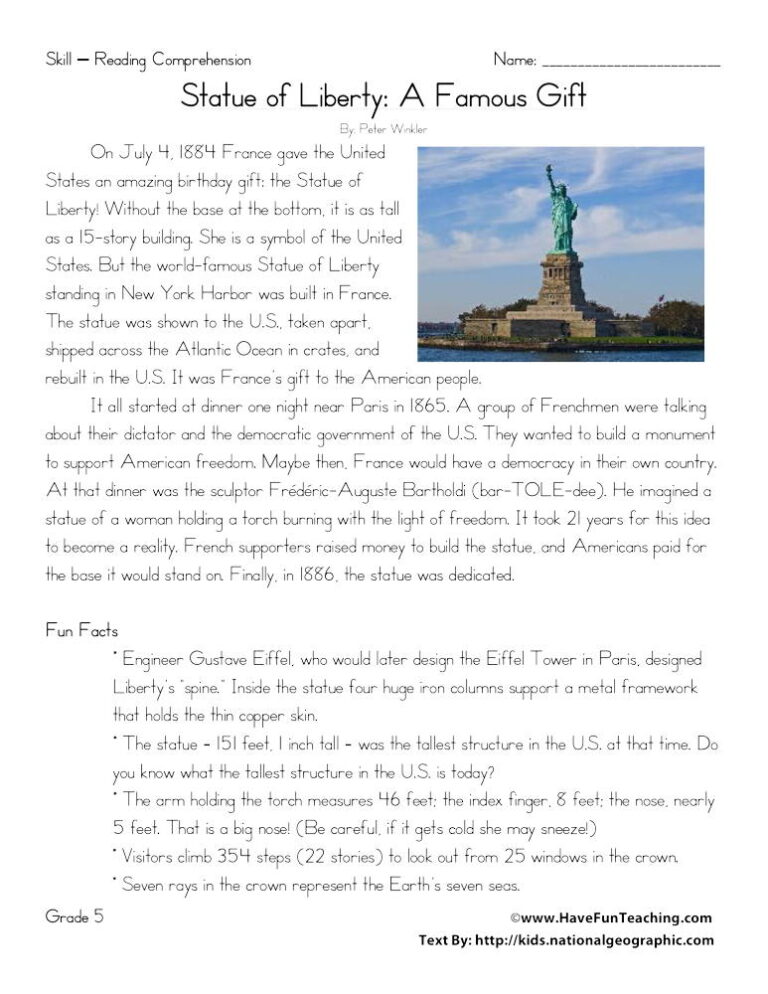
Worksheet5th GradeStatue of Liberty: A Famous Gift Reading Comprehension Worksheet

The Statue of Liberty: A Famous Gift Reading Comprehension Worksheet gives 5th Grade readers a two-page true story plus six text-evidence questions, answer key included, so comprehension practice feels like real history.

Worksheet
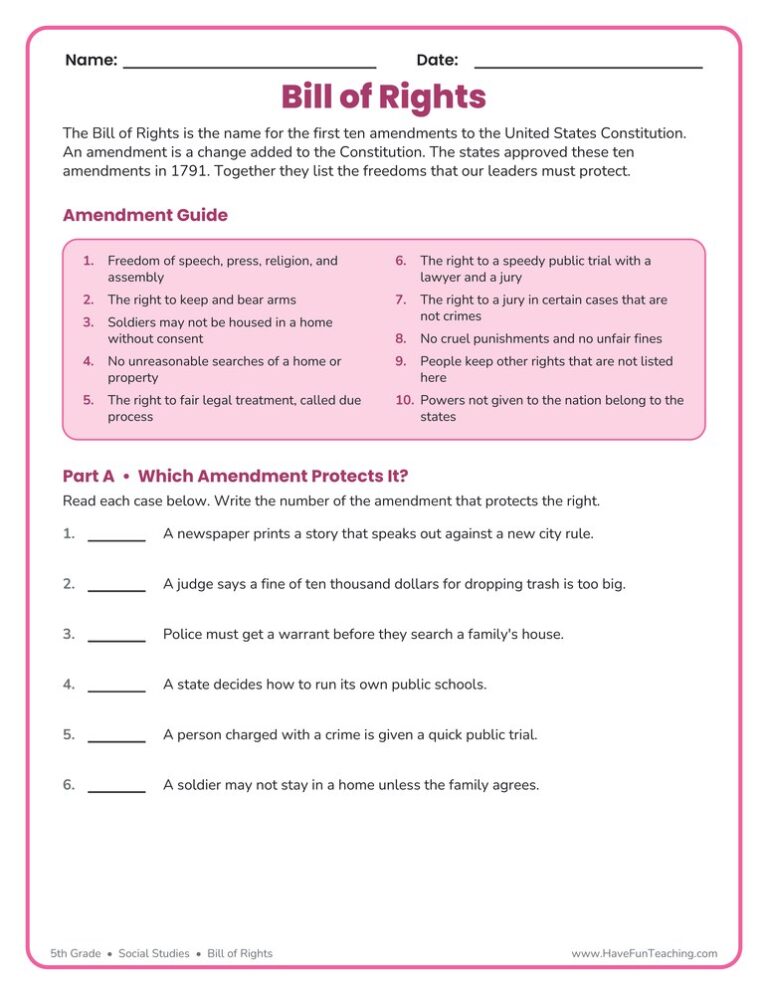
Worksheet5th GradeBill of Rights Worksheet

This Bill of Rights Worksheet gives 5th graders a plain-language Amendment Guide, then asks them to match real situations to the right amendment. Answer key included for fast, no-prep civics practice.

Worksheet
Worksheet3rd GradeLandmarks Worksheet

This landmarks worksheet has 3rd graders sort eight famous landmarks into Natural and Man-Made columns, then name three more from clues. Answer key included for quick, no-prep geography practice.

Worksheet
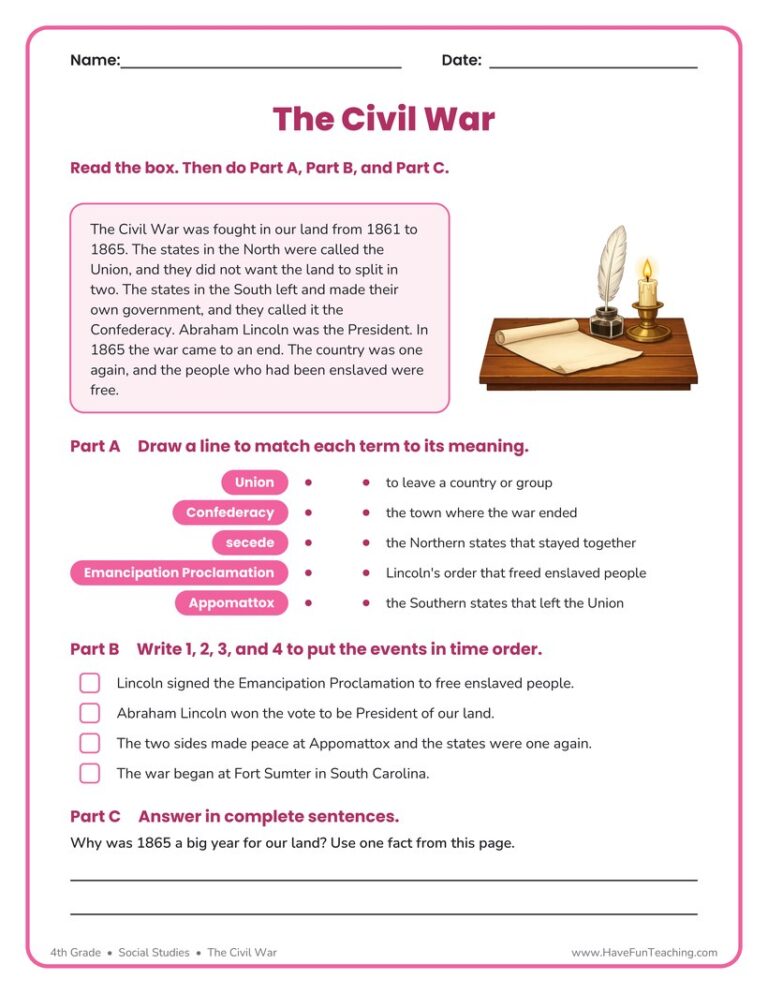
Worksheet4th GradeCivil War Worksheet

Students read a short passage, match Civil War terms, put four events in time order, and write a supported answer. This Civil War Worksheet fits 4th grade classrooms and homeschools, and an answer key is included.

Worksheet
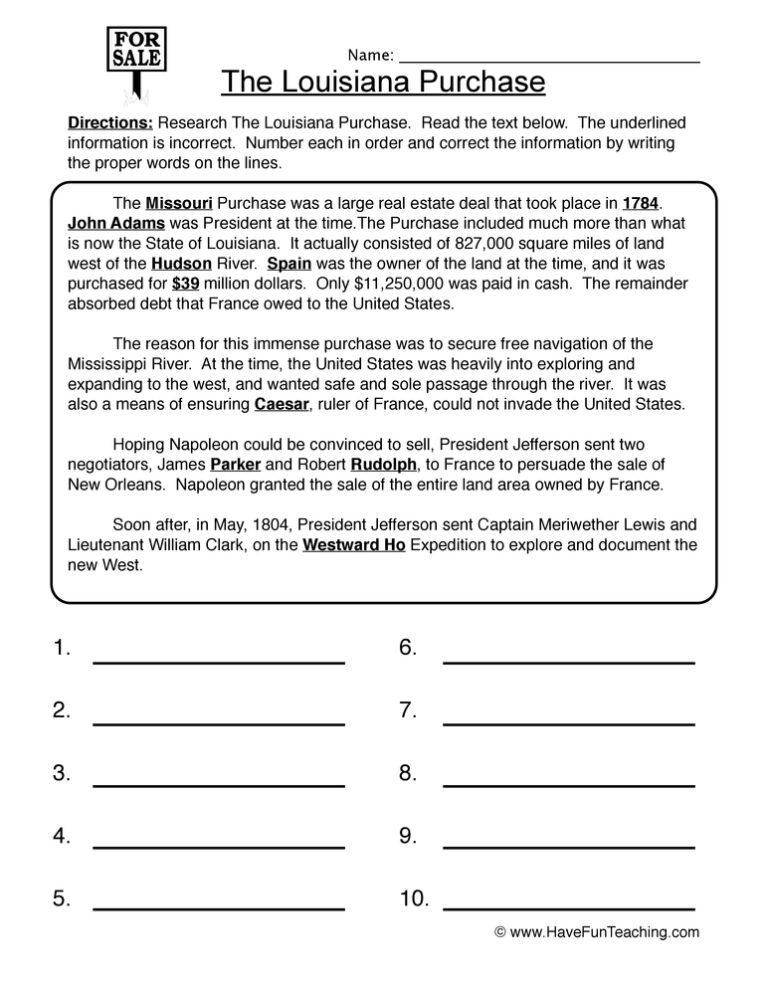
Worksheet4th GradeLouisiana Purchase Worksheet

This Louisiana Purchase Worksheet gives 4th graders a short article and a labeled map of the fifteen states formed from the 1803 deal, plus six questions and two written responses. Answer key included for quick checking.

Worksheet
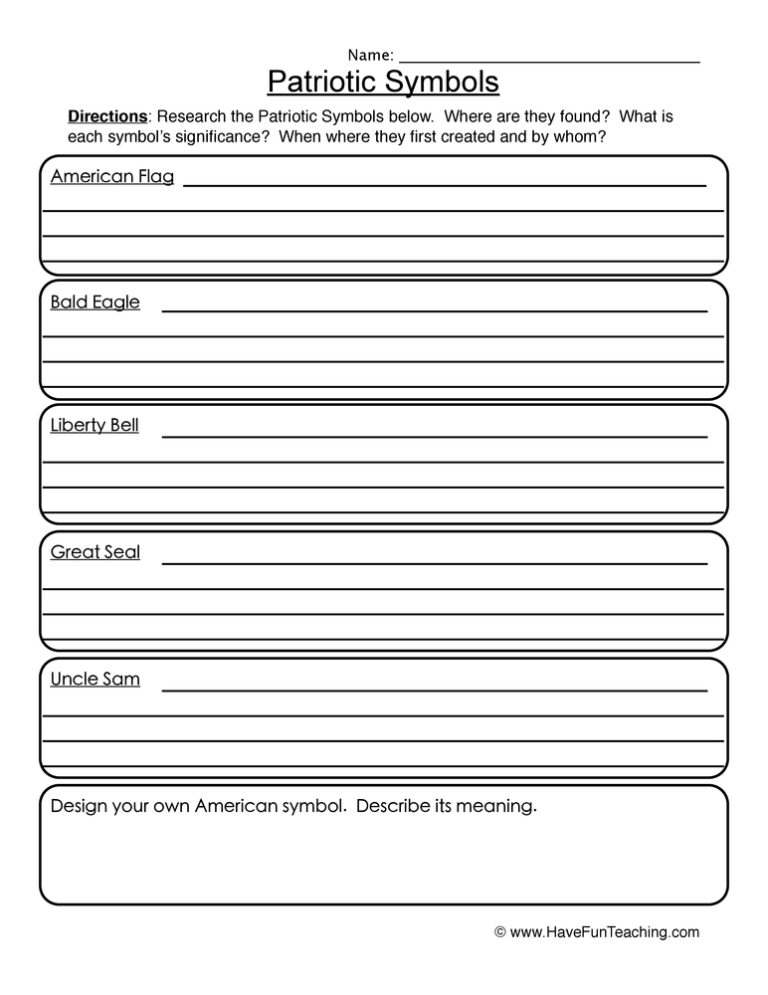
Worksheet3rd GradePatriotic Symbols Worksheet

This patriotic symbols worksheet teaches 3rd grade students about the flag, bald eagle, Liberty Bell, Great Seal, and Uncle Sam, with an answer key included to build civic pride.

Worksheet
Worksheet3rd GradePeople in US History Worksheet

This People in US History Worksheet asks 3rd graders to match five famous Americans to their contributions and then explain one in writing. Answer key included for quick, no-prep social studies practice.

Worksheet
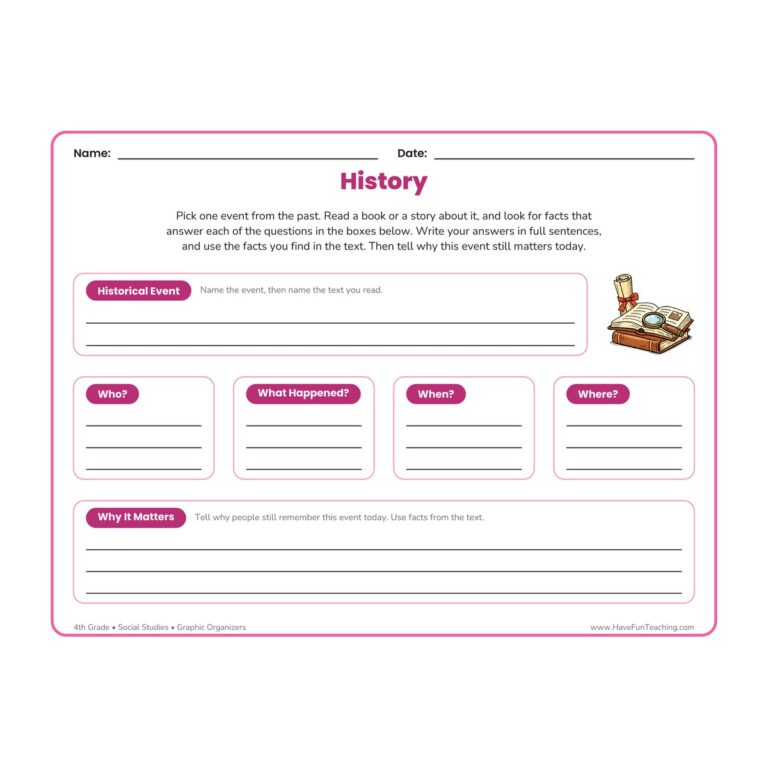
Worksheet4th GradeHistory Graphic Organizer Worksheet

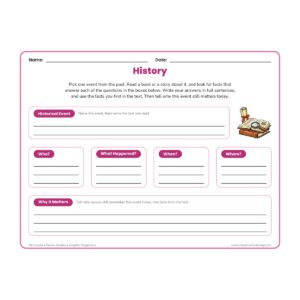
A landscape history graphic organizer worksheet that helps 4th graders record the who, what, when, and where of any historical event from a non-fiction text, then explain in writing why it still matters today.

Worksheet
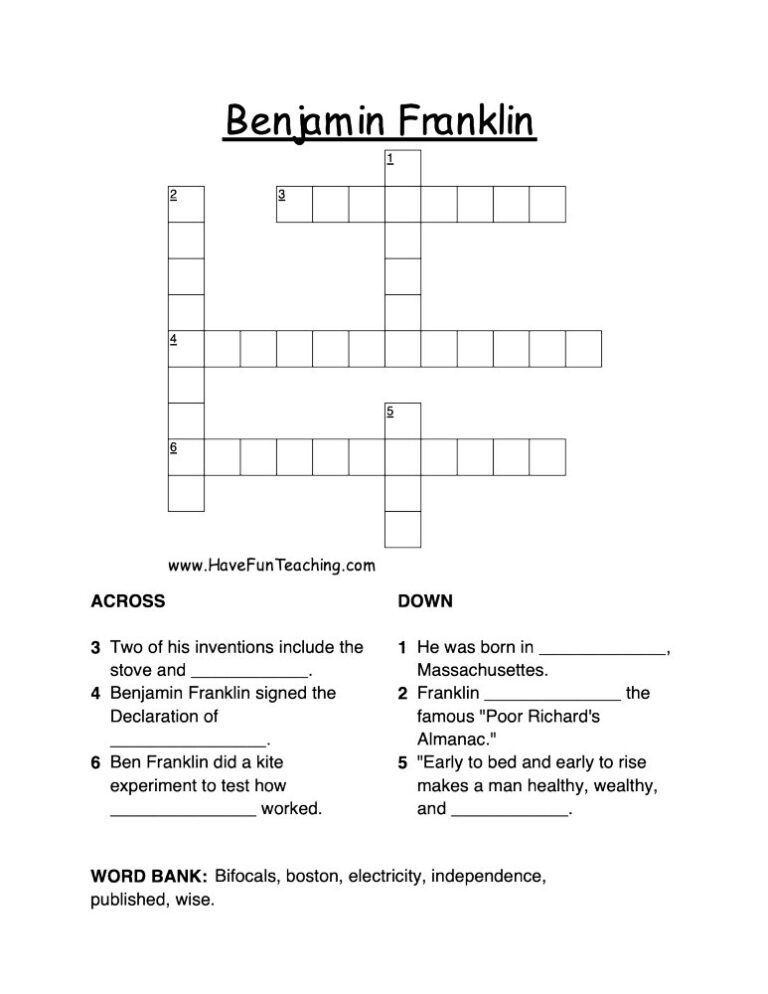
Worksheet3rd GradeBenjamin Franklin Crossword Puzzle

This Benjamin Franklin crossword puzzle worksheet lets 3rd grade students review the life and inventions of Ben Franklin, with a short writing question and an answer key for easy checking.

Worksheet
Worksheet4th GradeExplorers Worksheet

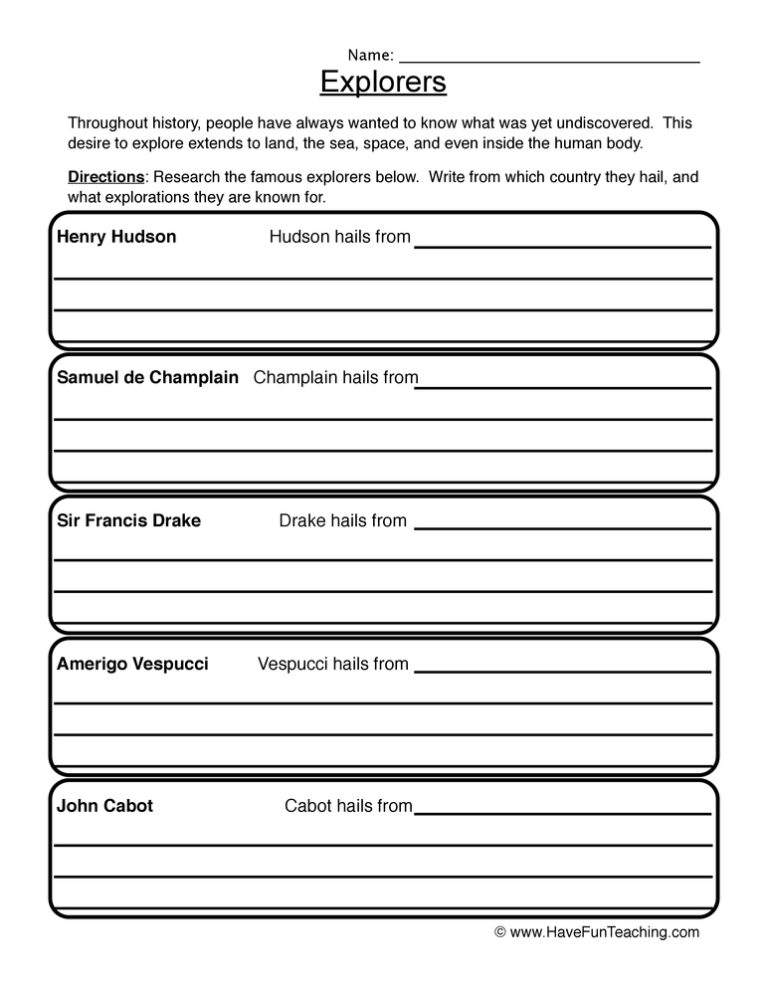
This explorers worksheet has 4th graders research five famous explorers, record each home country, and explain what each one is known for. An answer key with model answers is included.

From our teachers' playbook

Stories that made our country

What do kids learn about history in elementary school?

Elementary history starts close to home and grows outward. Young kids learn about past and present, family timelines and national symbols like the flag and the Statue of Liberty. Older students study Native American groups, the Mayflower, colonial life, the American Revolution, the Constitution and Bill of Rights, westward expansion and the Civil War. They place events on a timeline and ask why things happened. The click comes when history stops being dates and becomes stories about real people making choices.

Our favorite ways to teach history

History sticks when kids can see the order, read the stories and organize the big ideas.

Build a timeline

Stretch a string across the room and clip events on index cards as you study them: Mayflower, Revolution, Constitution. Kids walk the timeline and see how far apart events really were. It turns "a long time ago" into something they can picture.

Why it works: kids understand an idea best when they touch it, then draw it, then write it, the order the U.S. Department of Education recommends for elementary math.
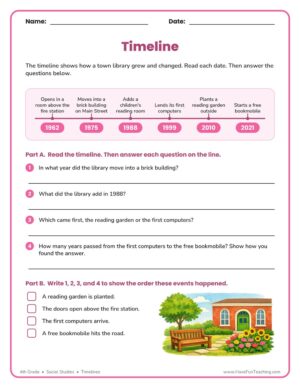
Timeline WorksheetTry it withTimeline WorksheetWorksheetsOpen it →

Read the real story

Pair each unit with a short nonfiction passage, like the story of how the Statue of Liberty came to America. Kids answer questions and underline the proof. History reading builds comprehension and background knowledge at the same time.

Why it works: shuffled practice teaches kids to choose the right strategy, not just repeat one, and it improved test scores in research (Rohrer and Taylor, 2007).

Statue of Liberty: A Famous Gift Reading Comprehension WorksheetTry it withStatue of Liberty: A Famous Gift Reading Comprehension WorksheetWorksheetsOpen it →

Organize the who, what, why

For every event, kids fill in a simple organizer: who was there, what happened, why it mattered. Over a unit, the stack of organizers becomes a study guide they made themselves.

Why it works: children learn more from words and pictures together than from words alone (Mayer, 2009).

History Graphic Organizer WorksheetTry it withHistory Graphic Organizer WorksheetWorksheetsOpen it →

Questions parents and teachers ask

What history is taught in elementary school?

Younger grades cover past and present, national symbols and holidays. Upper elementary usually studies Native Americans, colonial America, the American Revolution, the Constitution, westward expansion and the Civil War.

How do I make history interesting for kids?

Tell it as a story with real people and choices. Use timelines, pictures, short readings and role-play, and connect events to places kids know.

What grade do kids learn about the Constitution?

Many students first meet the Constitution and Bill of Rights in 4th or 5th grade, often alongside the American Revolution. Younger kids may learn about rules and laws in simpler terms.

How can I teach timelines to kids?

Start with their own life: birth, first steps, starting school. Then move to class events and historical events. Placing things in order before adding dates makes timelines easier.