

UsingGuess Who Matching Game Activity, students take turns asking questions to figure out their partner's mystery person.
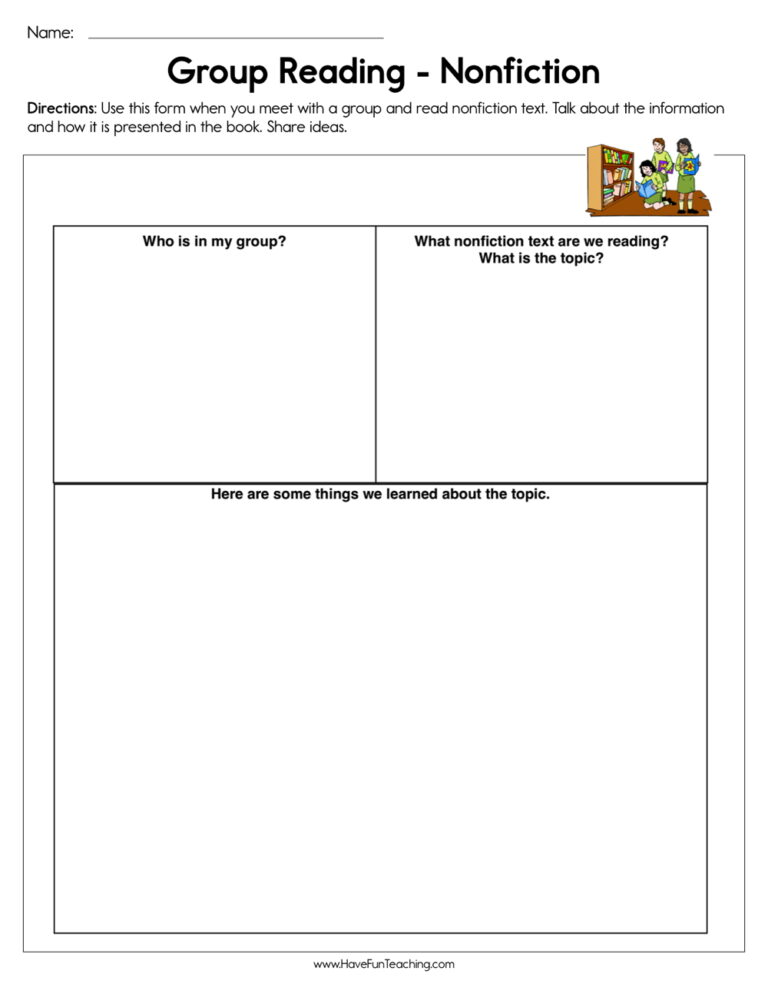
Use this group reading nonfiction worksheet in small groups: 1st graders record their book, group members, topic, a fact they learned and a new word, building reading and speaking skills.

This good citizenship worksheet has 3rd graders match six citizenship traits to their meanings, name the trait in three illustrated people examples, and explain their thinking. Answer key included for fast, no-prep character education practice.

This making mistakes puzzle activity helps preschool to 1st grade students match six oops moments to good ways to fix them, with a recording sheet and practice page. Answer key included.

Kids use this researching together worksheet to number and write the steps for planting a seed. A 1st grade how-to sequencing page with an answer key that builds clear informational writing.

This research together worksheet helps 1st grade partners choose a topic, read books, and write two facts they learned while listing their sources. It builds teamwork and early research skills.

This small group discussions worksheet asks 1st graders to read six short sentences about talking in a group and fill in Yes or No for each one. An answer key is included, so the rules are easy to review together.

Using this Seven Habits Character Education Activity, students choose a task card and a writing page about one of the Seven Habits.

This big and small mistakes sort activity helps PreK to 1st grade students sort 12 picture cards by how easy a mistake is to fix, with a practice page and answer key included.
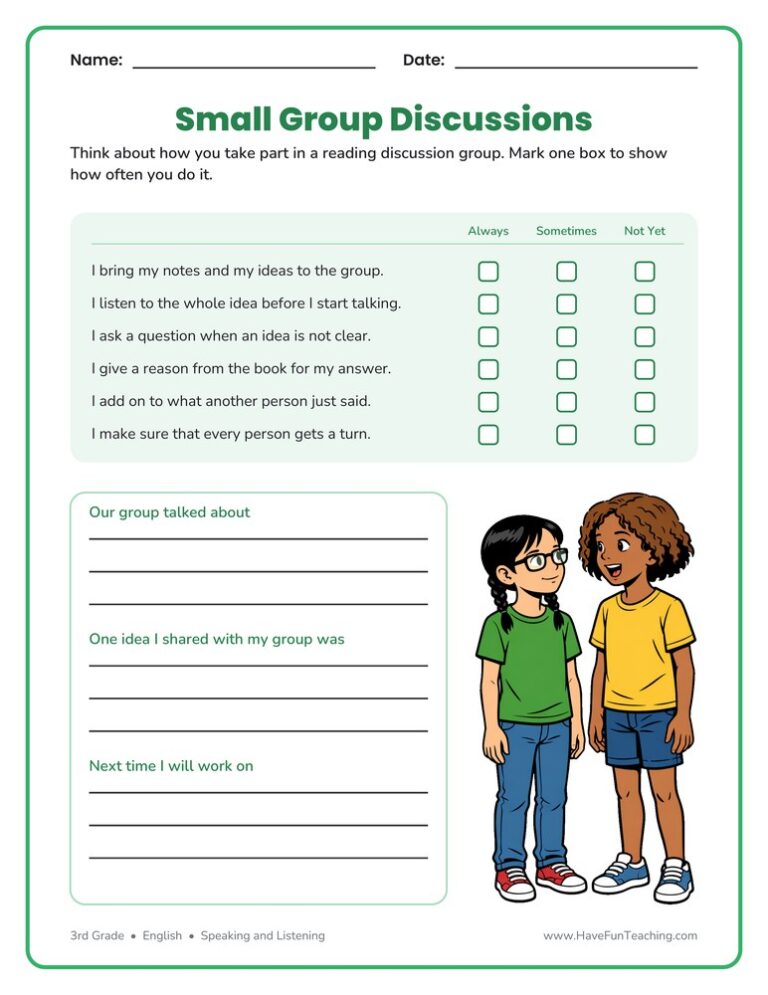
Use this small group discussions checklist worksheet to help 3rd grade students rate how they take part in a reading discussion and write a goal that makes their next group talk better.
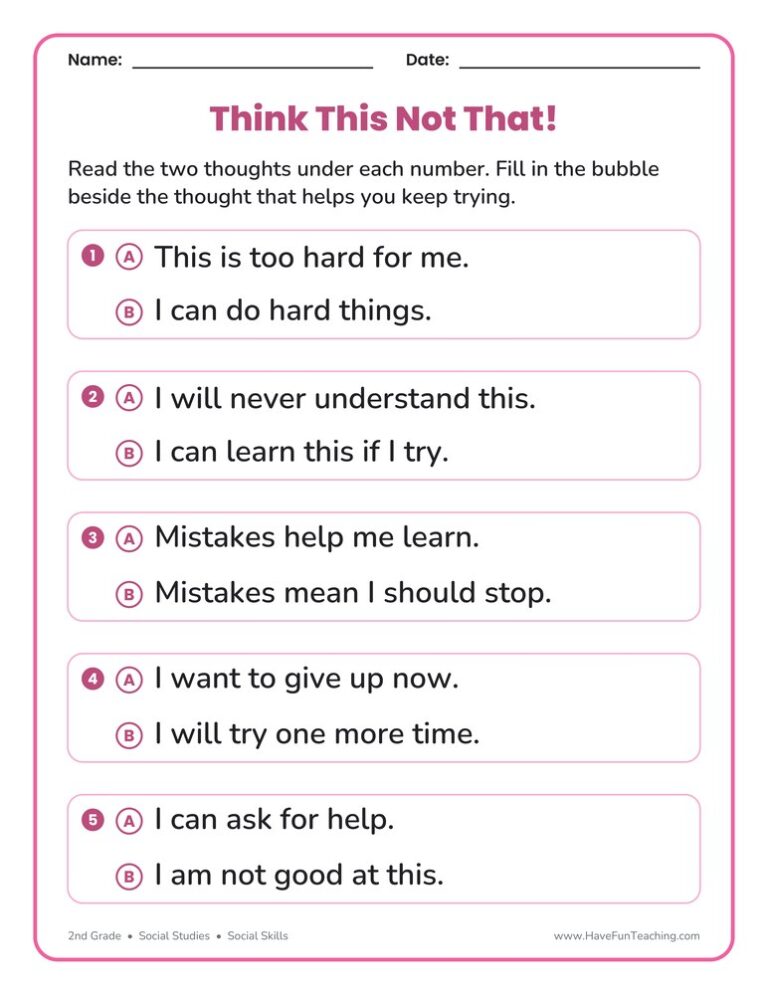
This think this not that worksheet asks 2nd grade students to choose the thought that keeps them trying on five two-choice cards. An answer key is included, so a quick check takes seconds.
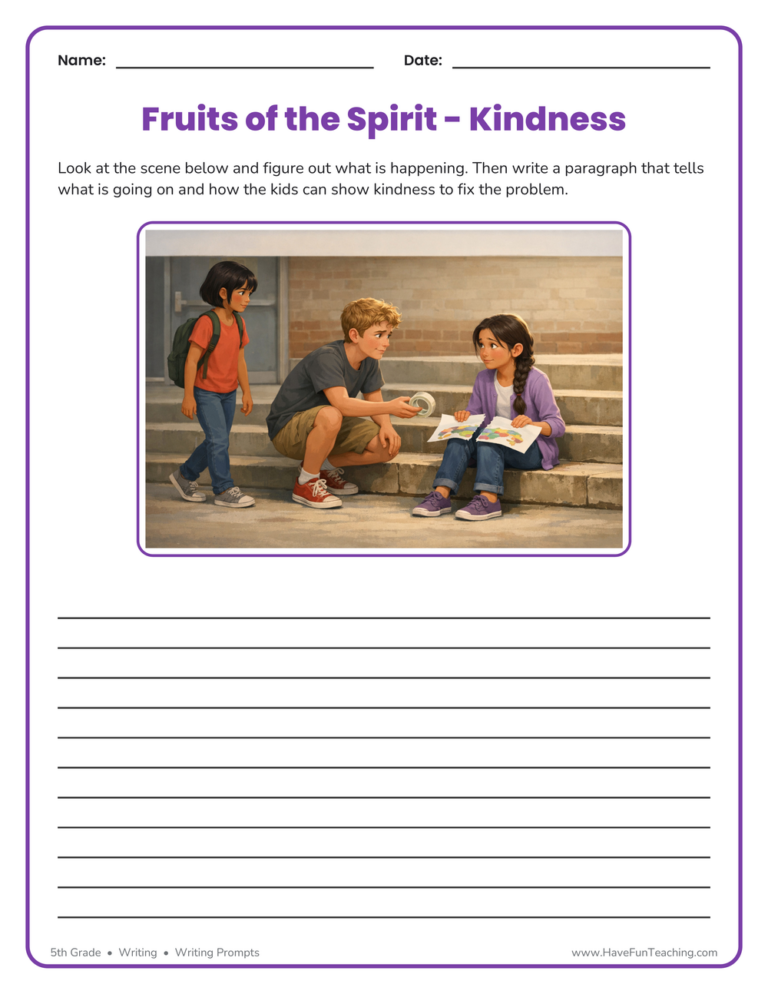
A fruits of the spirit writing prompt pair for 5th Grade students: two illustrated scenes — one serious, one funny — that each ask for a written paragraph about how the kids could show kindness. Open-ended, no prep, and genuinely fun to discuss.
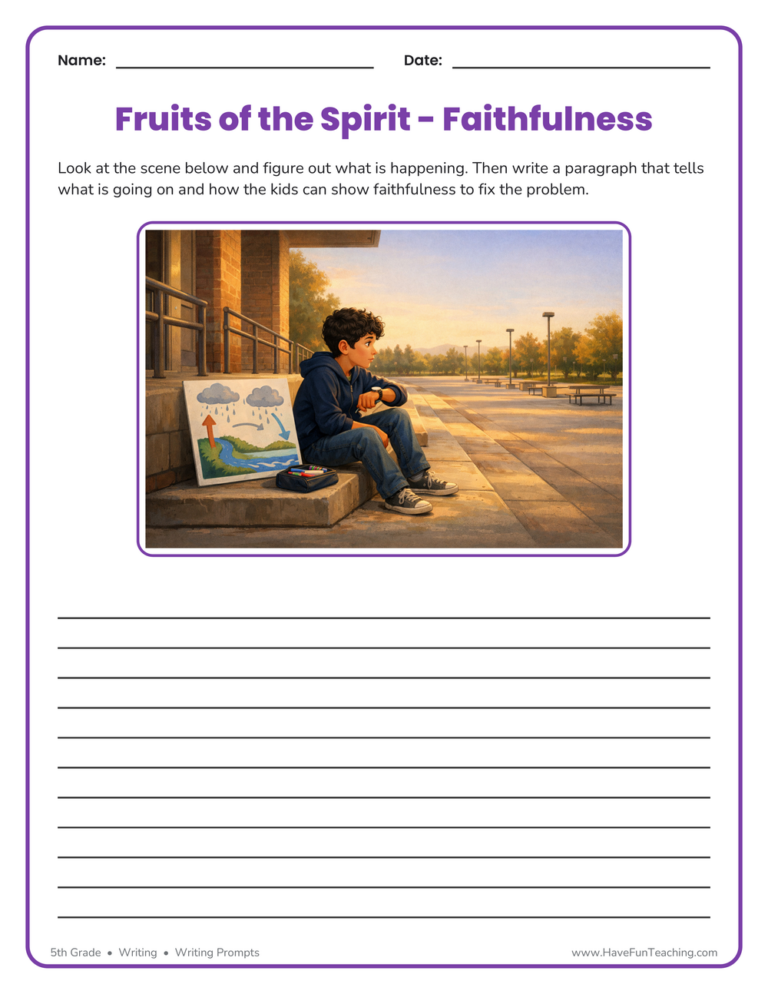
A fruits of the spirit writing prompt pair for 5th Grade students: two illustrated scenes — one serious, one funny — that each ask for a written paragraph about how the kids could show faithfulness. Open-ended, no prep, and genuinely fun to discuss.
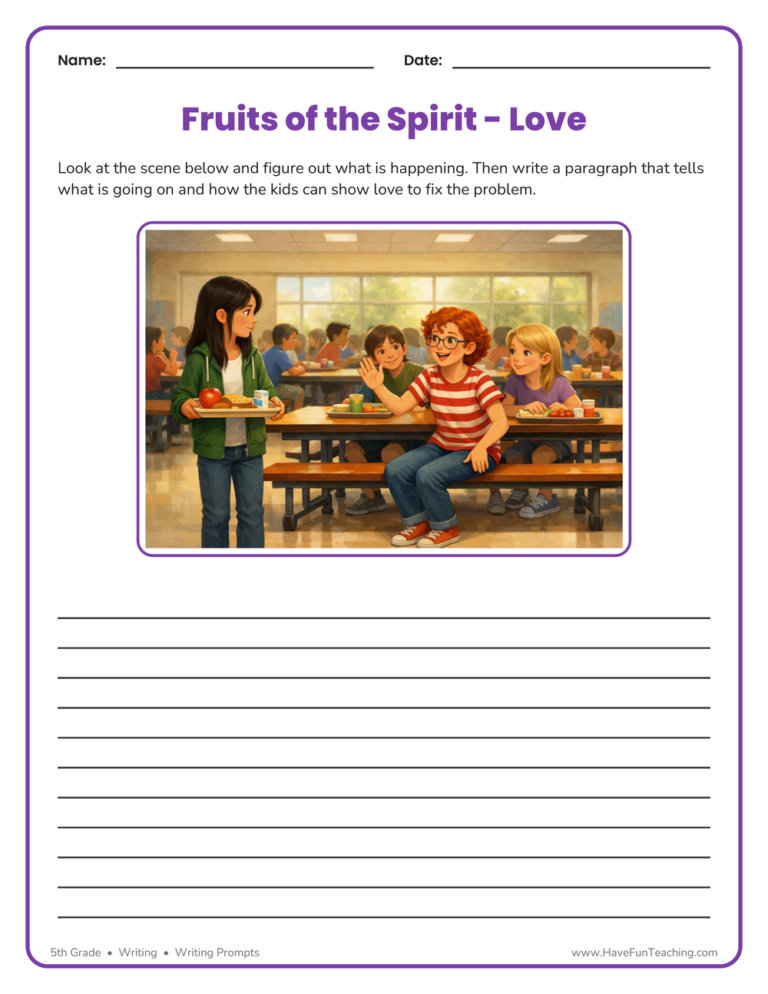
A fruits of the spirit writing prompt pair for 5th Grade students: two illustrated scenes — one serious, one funny — that each ask for a written paragraph about how the kids could show love. Open-ended, no prep, and genuinely fun to discuss.
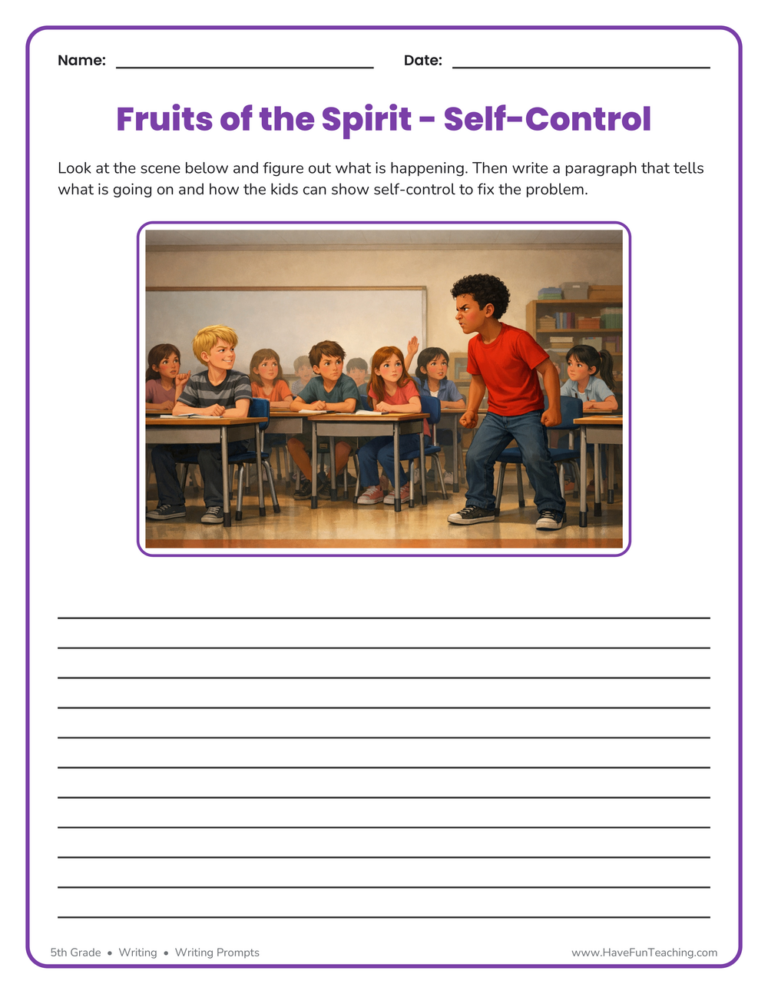
A fruits of the spirit writing prompt pair for 5th Grade students: two illustrated scenes — one serious, one funny — that each ask for a written paragraph about how the kids could show self-control. Open-ended, no prep, and genuinely fun to discuss.
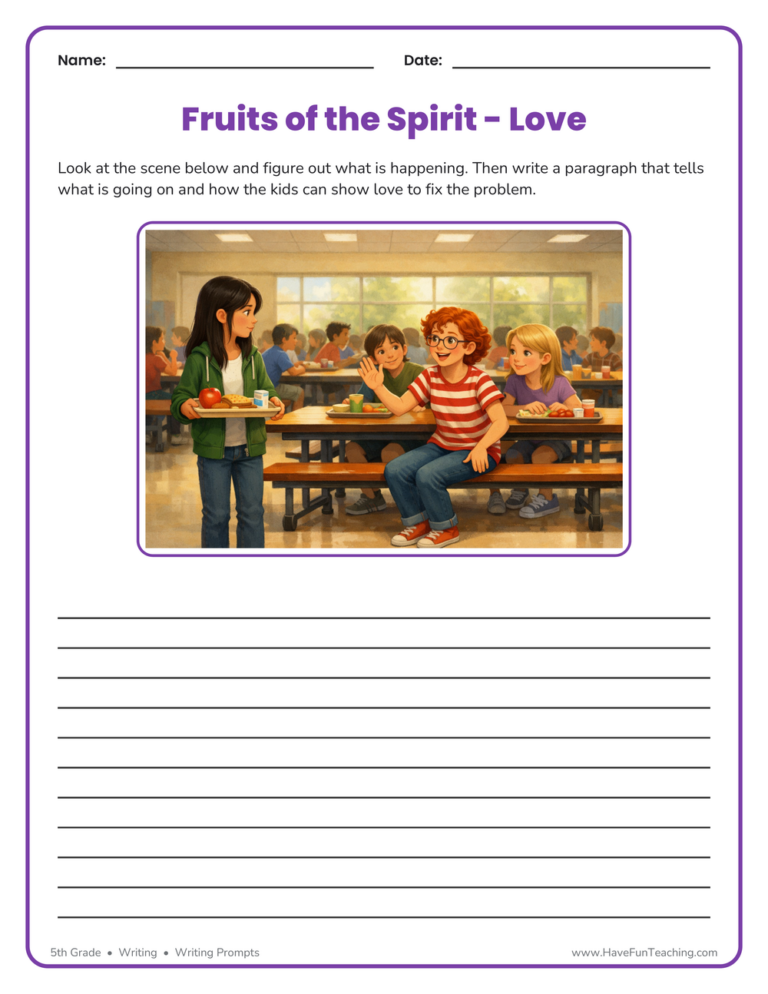
Eighteen fruits of the spirit writing prompts for 5th Grade — two illustrated scenes for each of the nine fruits, one serious and one funny, each with ruled lines for an open-ended paragraph. No prep, and every answer is the student's own.
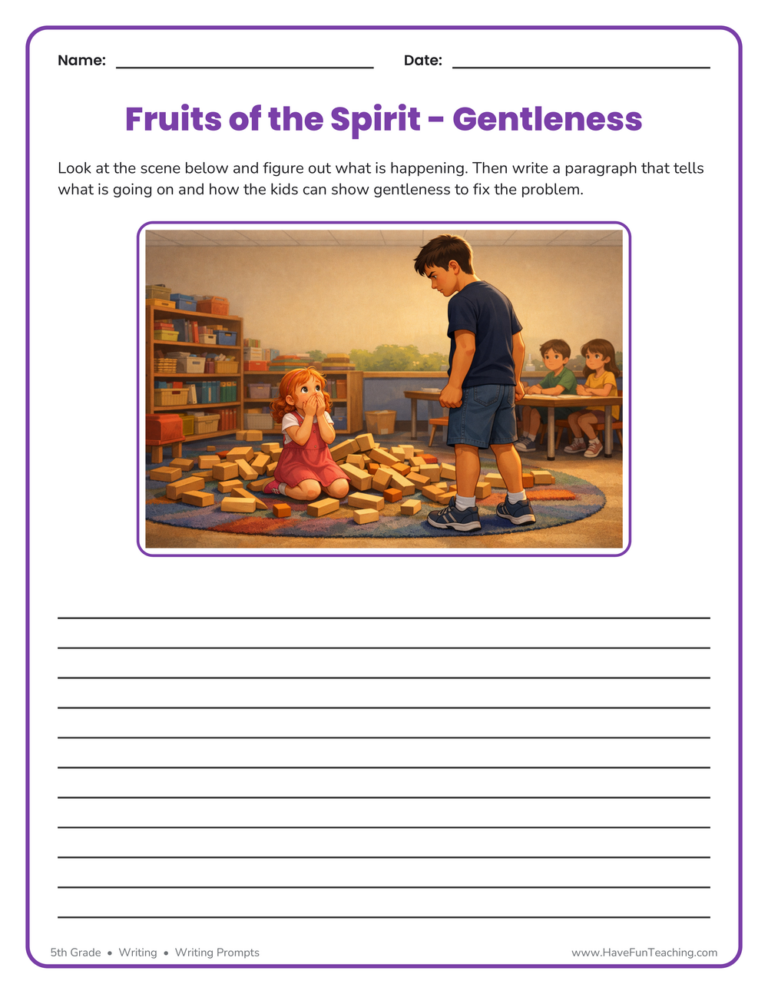
A fruits of the spirit writing prompt pair for 5th Grade students: two illustrated scenes — one serious, one funny — that each ask for a written paragraph about how the kids could show gentleness. Open-ended, no prep, and genuinely fun to discuss.
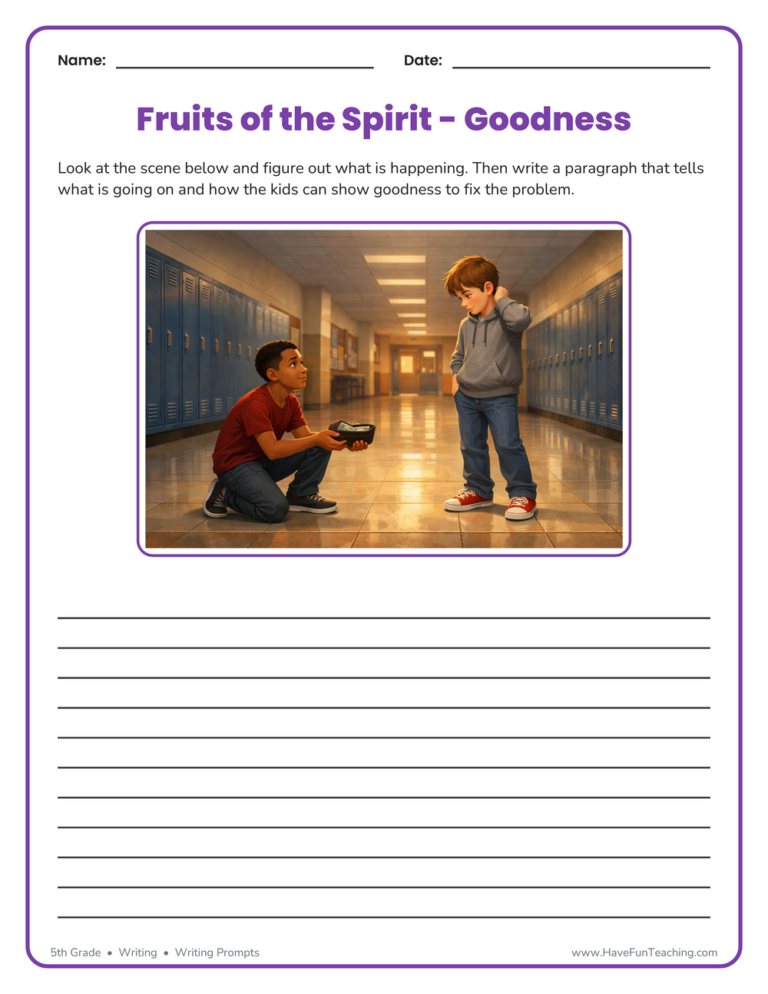
A fruits of the spirit writing prompt pair for 5th Grade students: two illustrated scenes — one serious, one funny — that each ask for a written paragraph about how the kids could show goodness. Open-ended, no prep, and genuinely fun to discuss.
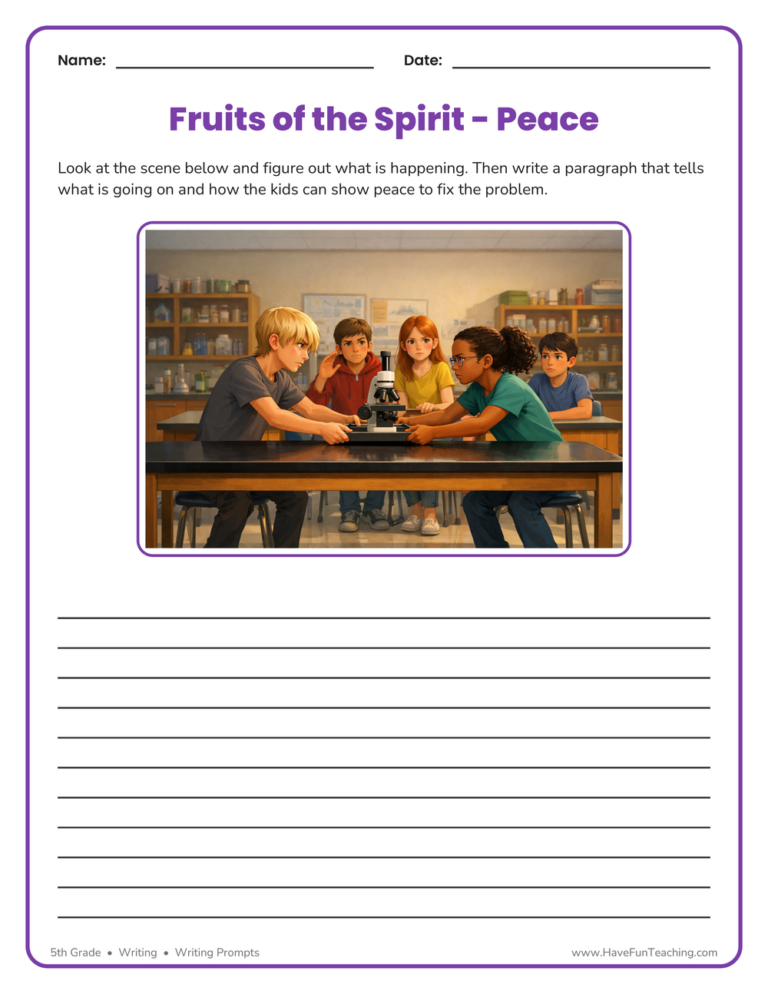
A fruits of the spirit writing prompt pair for 5th Grade students: two illustrated scenes — one serious, one funny — that each ask for a written paragraph about how the kids could show peace. Open-ended, no prep, and genuinely fun to discuss.
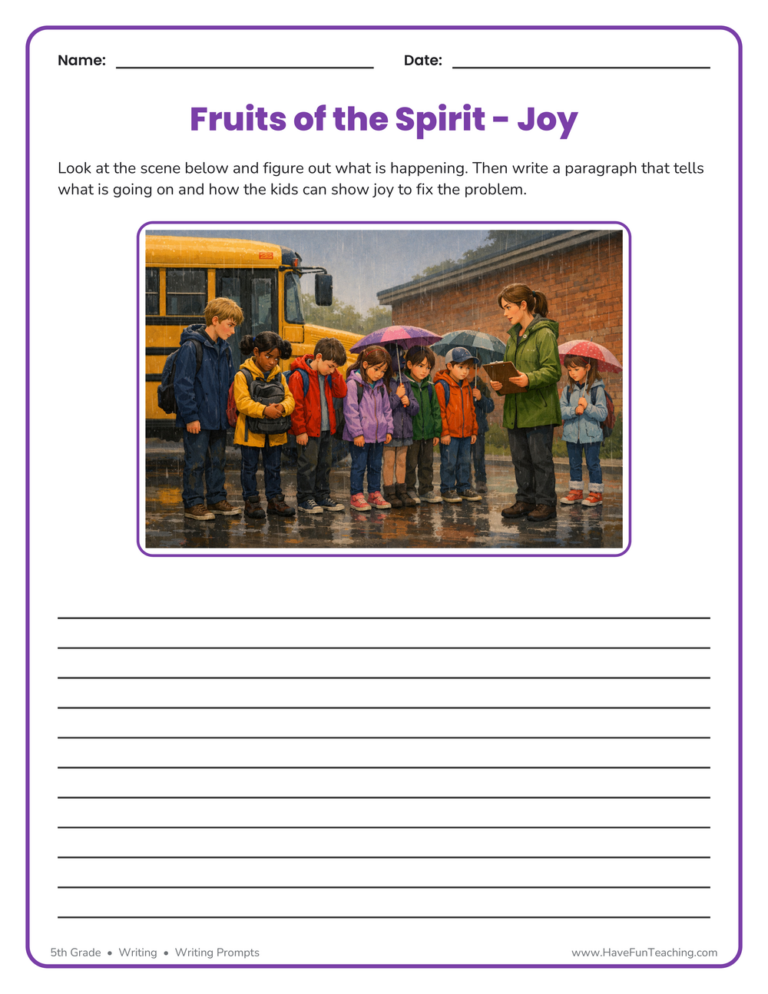
A fruits of the spirit writing prompt pair for 5th Grade students: two illustrated scenes — one serious, one funny — that each ask for a written paragraph about how the kids could show joy. Open-ended, no prep, and genuinely fun to discuss.



