Skip to content
Start My 3 Free Days $0 today · cancel anytime

Light Resources

11 light resources: 9 worksheets and 3 activities. How teachers use these

Light Resources

11 light resources: 9 worksheets and 3 activities. How teachers use these

Worksheet
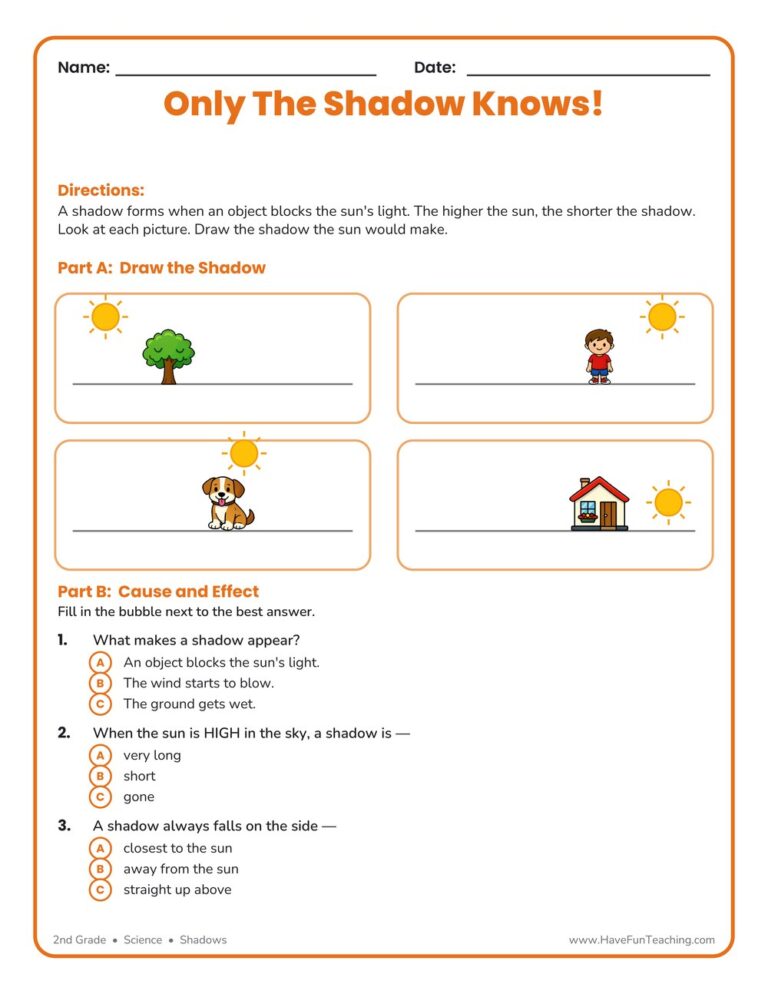
Worksheet2nd GradeShadows Worksheet

A hands-on Shadows Worksheet where 2nd graders draw each object's shadow based on the sun's position and explore how light causes shadows. Complete answer key included for quick, no-prep science practice.

Worksheet
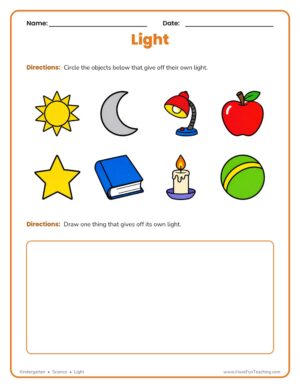
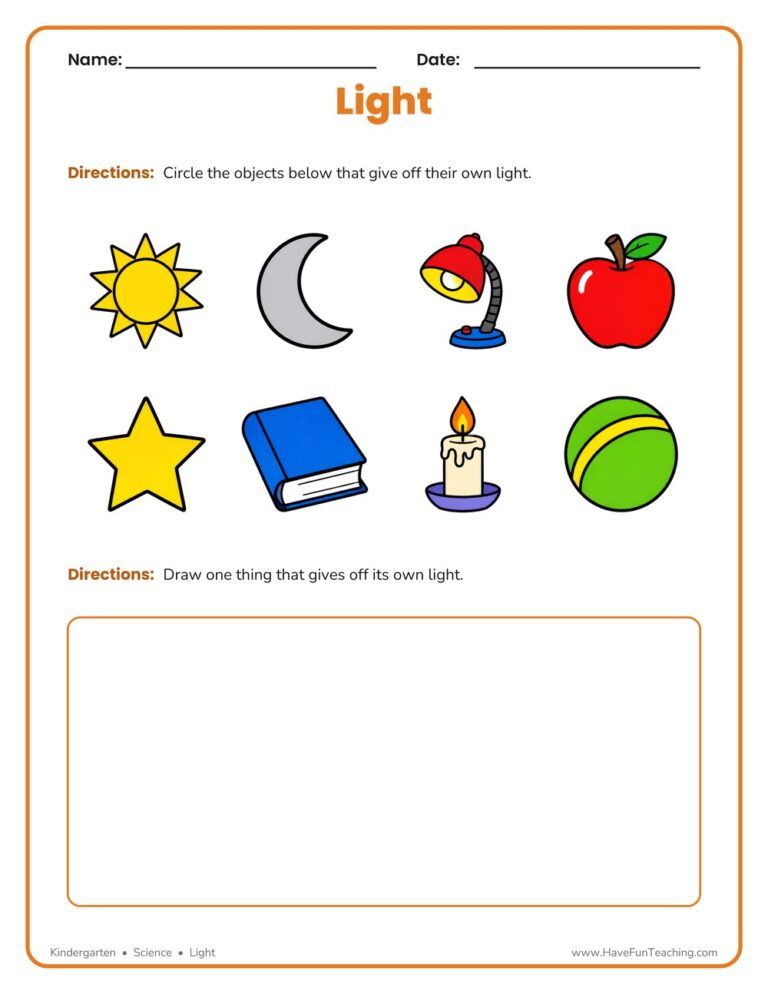
WorksheetKindergartenObjects that Give off Light Worksheet

This Objects that Give off Light Worksheet asks kindergarten students to circle the sun, lamp, star, and candle, then draw their own light source. Includes a complete answer key for quick, no-prep science practice.

Activity
Activity4th GradeLight Bulb Cut Outs

This light bulb cut outs worksheet gives 4th grade students four bulbs to fill with electricity facts, color and cut out, making a bright science bulletin board that celebrates what the whole class has learned.

Worksheet
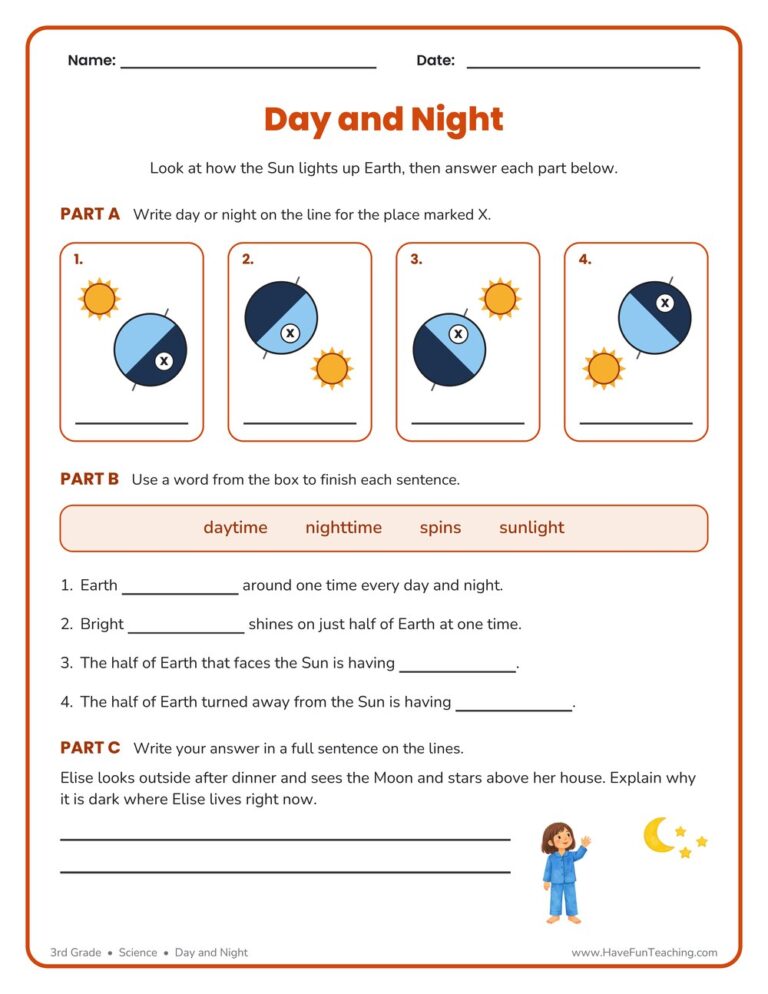
Worksheet3rd GradeDay and Night Worksheet

A hands-on day and night worksheet where 3rd graders read Sun and Earth diagrams, finish science sentences from a word box, and explain what makes it dark. Answer key included for quick, no-prep review.

Worksheet
Worksheet3rd GradeShadows Drawing Worksheet

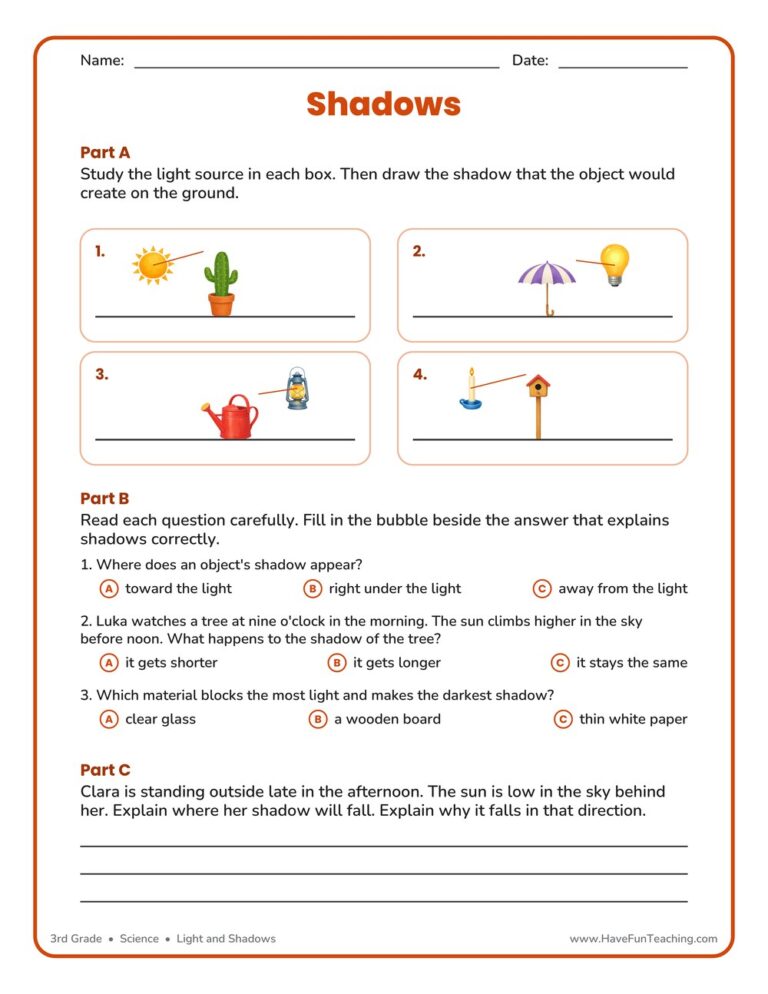
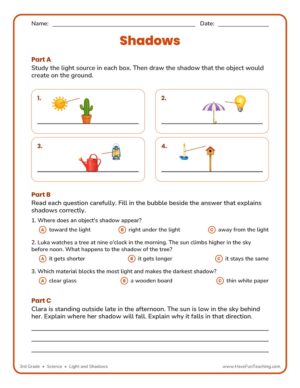
A shadows drawing worksheet where 3rd graders study four light sources, draw the shadow each object casts, and explain why it falls where it does. Answer key included for quick, no-prep science practice.

Worksheet
Worksheet3rd GradeShadows Movement Worksheet

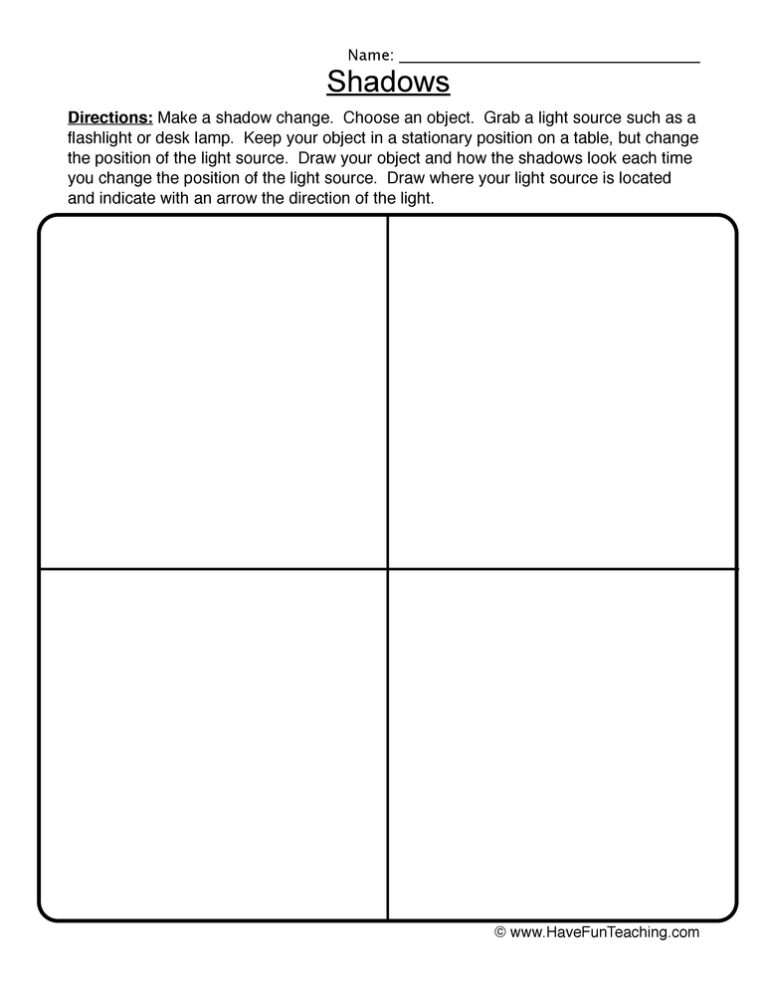
This shadows movement worksheet asks 3rd graders to sort eight light positions into longer and shorter shadows, then name what the light and the shadow did. Answer key included for no-prep science practice.

Worksheet
Worksheet5th GradeTotal Solar Eclipse Worksheet

A diagram-based total solar eclipse worksheet where 5th graders label the umbra and penumbra, then explain why the Moon can cover the Sun. Answer key included for fast, no-prep space science practice.

Worksheet
Worksheet2nd GradeDrawing Light Objects Worksheet

This drawing light objects worksheet has 2nd graders read six clues, draw each light source, and circle whether it needs electricity. An answer key is included for quick checking.

Activity
ActivityKindergartenThings That Give Light Activity

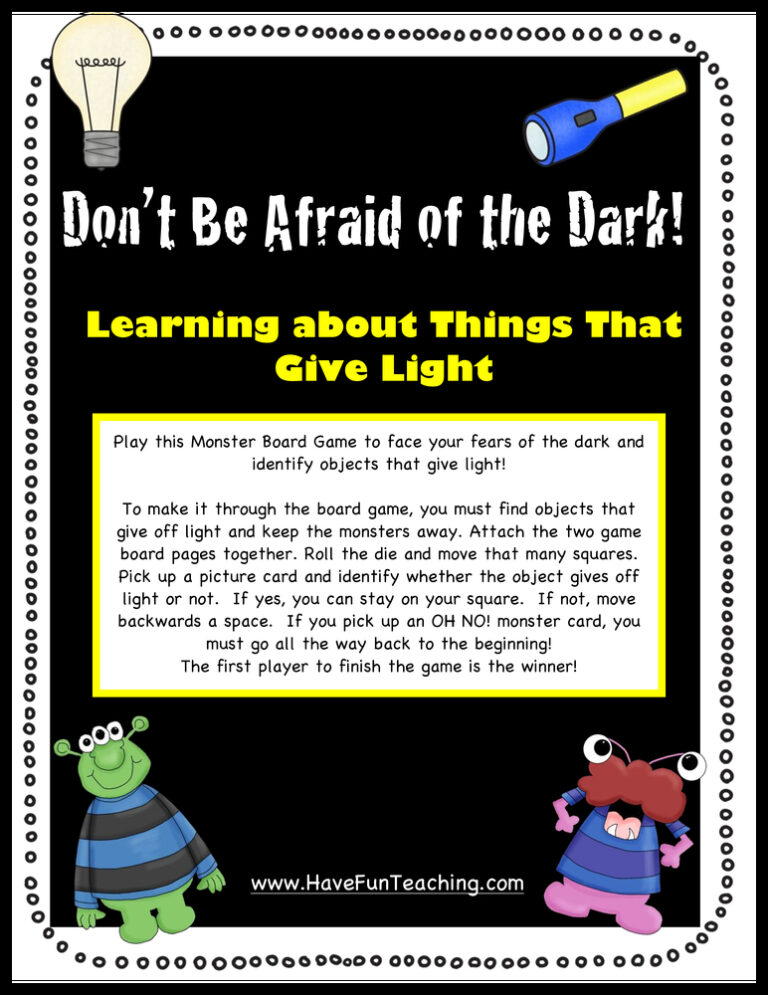
Using Things That Give Light Activity,students play this Monster Board Game to face your fears of the dark and identify objects that give light!

Worksheet
Worksheet2nd GradeSolar Eclipse Word Scramble Worksheet

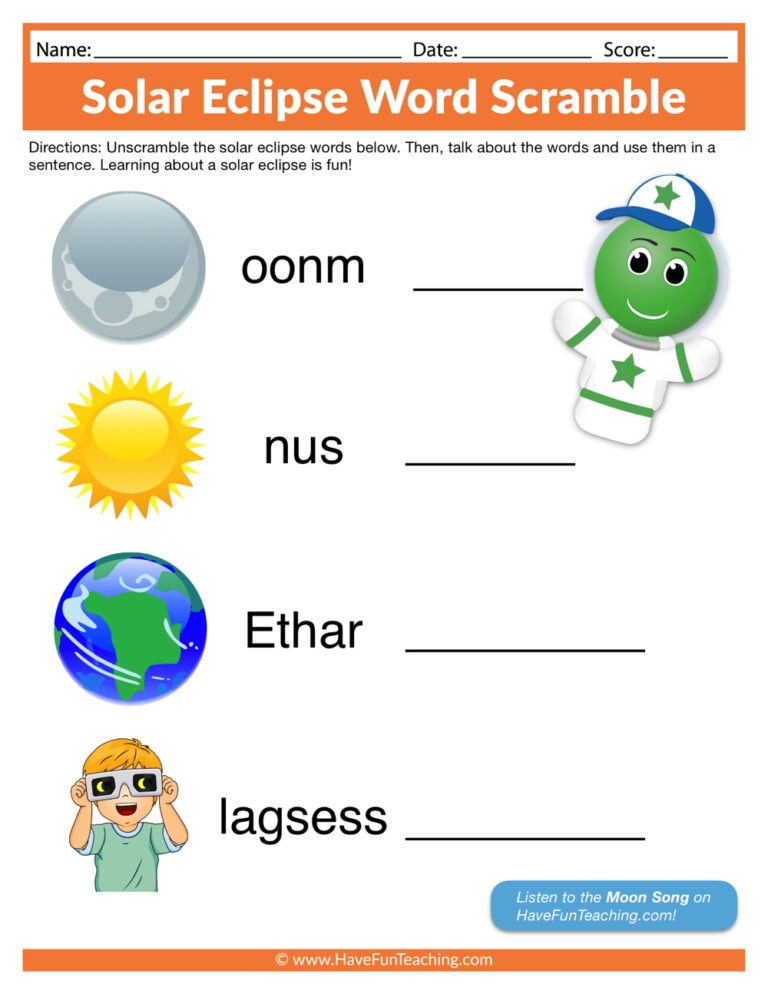
This Solar Eclipse Word Scramble Worksheet gives second grade students six scrambled science words and a word box to unscramble them. An answer key is included, so checking eclipse vocabulary takes only a moment.

Activity
ActivityPreschoolSun Cut Outs

This sun cut outs activity helps PreK-1st grade children sort picture cards into things that make light and things that do not, then color and cut out paper suns. An answer key is included.

From our teachers' playbook

Flashlights out, curiosity on!

What do kids learn about light?

Kids start by sorting the world into things that give off light (the sun, a lamp, a campfire) and things that don't. Then the big surprise: the moon doesn't glow on its own, it bounces the sun's light back to us! Next comes shadows. Light travels in straight lines, so when an object blocks it, a dark shape appears on the other side. Older kids test which materials let light through (glass), let a little through (wax paper) or block it completely (cardboard), and notice that shadows are long in the morning and short at noon.

Our favorite ways to make light make sense

Light is easy to see and tricky to explain. These moves turn it into something kids can test with their own hands.

Sort it before you name it

Dump a basket of objects on the rug: a flashlight, a mirror, a candle (unlit!), a spoon, a toy. Kids sort them into "makes its own light" and "doesn't." The mirror and spoon always start an argument, and that argument is the lesson. Finish with the activity so every kid records the sort.

Why it works: kids understand an idea best when they touch it, then draw it, then write it, the order the U.S. Department of Education recommends for elementary math.

Things That Give Light ActivityTry it withThings That Give Light ActivityActivitiesOpen it →
Draw the shadow first

Before you turn on the lamp, have kids sketch where they think the shadow will land. Then flip the switch and compare. Moving the light and drawing again shows kids that the shadow always lands on the far side, away from the light.

Why it works: pairing a picture with each word gives kids two ways to remember it, a well-tested principle of how people learn (Mayer, 2009).

Shadows Drawing WorksheetTry it withShadows Drawing WorksheetWorksheetsOpen it →

One light question a day

Post a quick "Does it give off light?" question each morning for two weeks: the moon, a firefly, a TV, a glow stick. Kids answer on a sticky note before the bell. A tiny daily dose keeps the idea fresh long after the unit wraps up.

Why it works: the brain holds on to what it meets again and again over time; spaced practice was rated among the very best methods (Dunlosky and colleagues, 2013).

Objects that Give off Light WorksheetTry it withObjects that Give off Light WorksheetWorksheetsOpen it →

Questions teachers and parents ask about light

How do you explain shadows to kids?

A shadow is the dark spot where light can't reach because something is in the way. Light travels in straight lines, so it can't bend around your body. Shine a flashlight at a toy and kids see it right away.

Is the moon a source of light?

No. The moon reflects sunlight, the same way a mirror bounces light from a lamp. This is one of the most common mix-ups, so it's worth a quick sort activity.

Why are shadows longer in the morning?

When the sun is low in the sky, light hits objects at a slant and stretches the shadow out. At midday the sun is high, so shadows are short. Trace a shadow at 9:00 and again at noon to prove it.

What age do kids learn about light?

Kindergarten and 1st grade kids sort light sources and play with shadows. By 3rd to 5th grade they explore how light reflects, passes through materials and lets us see objects.

Keep exploring